Farewell to the 'Casino' Mindset: The Next Wave of Crypto Applications Should Aim for Mass Adoption

marsbitPublished on 2026-03-05Last updated on 2026-03-05

Abstract

The article argues that by 2026, the crypto industry will shift from being a speculative casino to providing "crypto as a service," focusing on mass adoption by solving real-world problems while making the underlying blockchain technology invisible to users. Key trends include crypto's structural advantage of 24/7 market operation, Asia's growing role in areas like cross-border stablecoin payments and asset tokenization, and the rise of practical applications. Examples include Novig, which uses a decentralized order book to improve sports betting odds; Based, a consumer super app that abstracts away complex blockchain interactions; and Doppler, an infrastructure for secure asset issuance. The core advice for builders is to prioritize solving customer problems over showcasing technology, as true adoption occurs when the tech becomes so seamless that users don't notice it.

Author: Paul Veradittakit

Compiled by: AididiaoJP, Foresight News

2026 will be a pivotal year. We will witness the complete transformation of "crypto as an industry" into "crypto as a service".

The past decade in the crypto world has been filled with various gimmicks. The approval of the Bitcoin ETF in 2024 gained it recognition from mainstream finance. In 2025, everyone focused on building out the underlying infrastructure. By 2026, the real value will belong to those companies that leverage blockchain to solve long-standing problems in traditional industries while making users to be completely unaware of the blockchain's presence.

The future crypto unicorns will not be built on hype. They will be the kind of companies that use blockchain technology to improve product efficiency by an order of magnitude, thereby leveraging trillion-dollar markets, and completely hiding the complex technology.

Crypto Technology Won the 'Weekend'

When the Iran conflict broke out, the U.S. stock market was closed for the weekend and couldn't react to the sudden global risk. But the crypto market didn't stop; Bitcoin once rose to $74,000. Commodities completed price discovery first on the decentralized prediction market Hyperliquid, even before the traditional market opened. This is not an isolated incident—the same thing happened last month when China introduced new policies.

Traditional hedge funds are increasingly flooding into this space. The crypto market's "24/7 non-stop" operation is no longer just a slogan, but a structural advantage that traditional finance cannot match.

Nevertheless, the current valuation of the crypto market is still far below the level it should be based on its fundamentals. There's no doubt we are in another bear market (this is the fourth one I've experienced), but this time it's completely different: regulations are gradually becoming clearer, institutional funds have entered the market, and the infrastructure is increasingly mature.

This feeling was particularly strong at the recent Hong Kong Consensus conference. The vitality of the Asian market contrasted sharply with the West. There, support from bipartisan governments, newly entered institutional funds, and a focus on consumer-facing applications are all driving strong bullish sentiment.

What to watch in Asia in 2026:

  • Cross-border payments via stablecoins, especially in the B2B sector. For Asia's relatively fragmented economic systems, crypto payments are a natural choice.
  • Tokenization of gold, stocks, and real estate. Asian banks and fintech companies are catching up with the pace set in the U.S.
  • Perpetual contract trading on DeFi. Driven by retail investors, development speed may surpass that of the West.
  • Prediction markets are expected to become an important track, although their form may differ from that in the West.

Core Trend: 'Crypto as a Service'

The core theme for 2026 is the shift from "crypto as an industry" to "crypto as a service". The goal is no longer to make users see the blockchain, but to make them completely forget its existence.

For over a decade, we have been keen on building "crypto spectacles"—Gas fee wars, TPS competitions, modular stacks, ZK proofs. The 2024 ETF was a vote of approval from mainstream institutions. In 2025, we laid all the underlying infrastructure. In 2026, it's time to turn around.

Farewell to the 'Casino' Era

The new generation of unicorns will not be those "L3 networks built for AI-NFTs". They will be the companies that use blockchain to improve product efficiency tenfold, completely hide the technology, and thereby leverage trillion-dollar markets.

This exactly explains our recent investment logic:
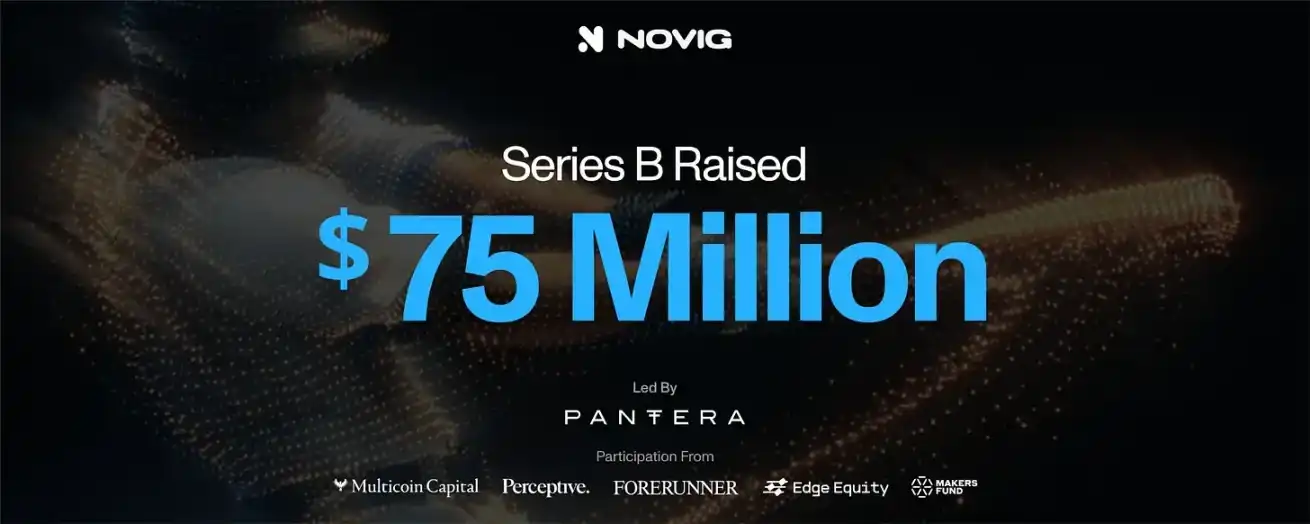
Novig: Farewell to the 'Vig' Era ($75 Million Series B)

Traditional sports betting is a monopolistic,畸形 (distorted/j畸形的 - likely meant 'distorted' or 'dysfunctional') market. Bookies take high commissions from every bet, resulting in a miserable user win rate of only 2%. We led Novig's $75 million round because they treat sports betting as a high-frequency financial product. Through a peer-to-peer trading model, Novig users achieve an average win rate of 23%. Most users don't care at all whether a decentralized order book is used in the backend; they just know they get the best odds in the US here. This is a vivid case of "crypto as a service".
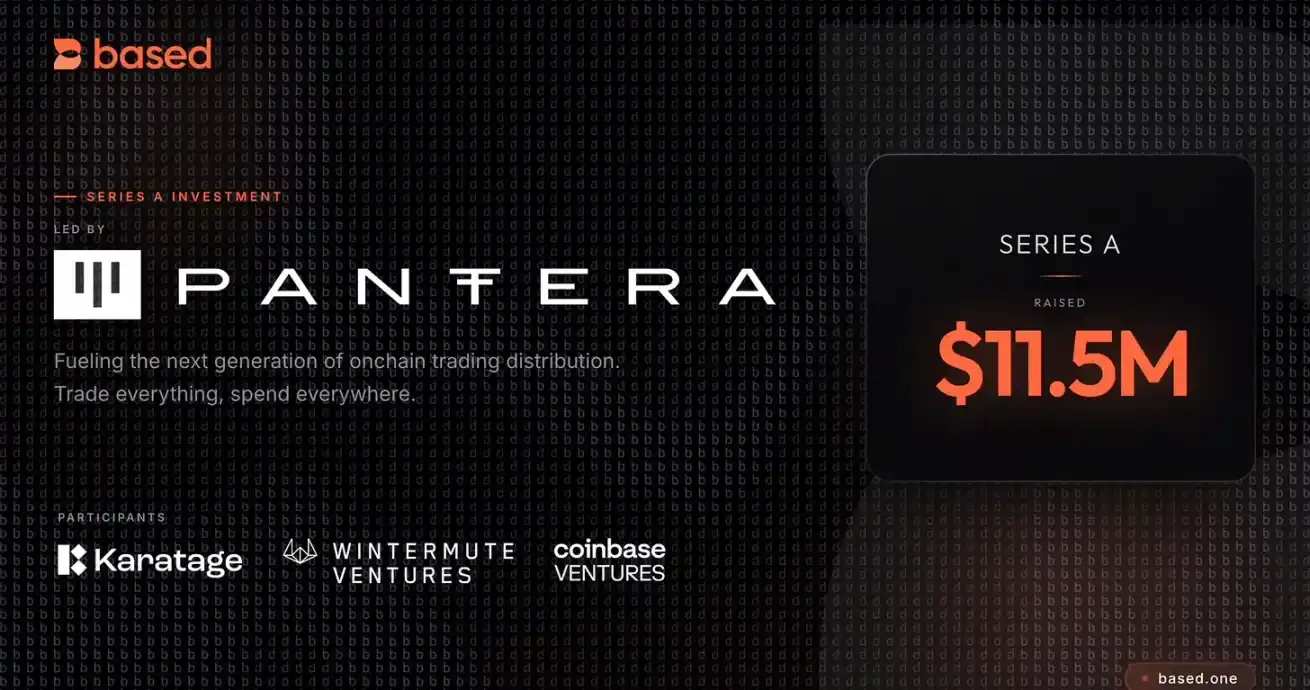
Based: Consumer-Grade Super App ($11.5 Million Series A)

We recently led the Series A funding for Based. This is a composable Web3 consumer-grade super app built on the Hyperliquid ecosystem. "Consumer-grade crypto" was often equated with "clunky experience". Based is changing that; it makes the on-chain interaction experience as smooth and seamless as a top-tier fintech app. Complex operations like cross-chain bridging and Gas fees are abstracted away; users are completely unaware. They only need to focus on the social and financial value brought by the assets.
Doppler: The Default Asset Issuance Infrastructure ($9 Million Seed Round)

If Based and Novig are cool new cars, then Doppler is the high-performance fuel system. We led Doppler's $9 million seed round, aiming for it to become the default infrastructure for on-chain asset issuance. It allows developers to issue assets with institutional-grade security and compliance standards without having to build all the underlying technology from scratch. Doppler is like the Stripe for on-chain assets—pure utility, all encapsulated behind a simple API.

Why 'Invisibility' is More Important Than 'Virality'

This trend of "invisibilization" also runs through our entire investment portfolio:

  • Real World Assets (RWA): Tokenized treasury bonds are no longer an experiment in the crypto world; they are becoming the backend liquidity cornerstone for global trade.
  • AI Agents: Blockchain provides a trusted "truth layer" for AI agents through prediction markets and verifiable data, enabling them to autonomously and trustworthily interact with digital assets.
  • Agent payments will accelerate all this. Payment standards like x402 allow AI agents to directly complete transactions using crypto assets. The gradual clarification of stablecoin regulations is making this payment轨道 (track/rail - likely meant 'rail') smoother.

Advice for Entrepreneurs

If you are planning to start a business in 2026, my advice is simple: Stop talking so much about the technology, and talk more about what practical problems you can solve. If the slide in your funding presentation about the consensus mechanism comes before the one about customer return rates, it means your thinking is still stuck in 2022.

We are looking for teams that are building the next Novig, Based, or Doppler—those who truly understand what "mass adoption" means: when a technology becomes so seamless that people completely ignore its existence, it has truly entered millions of households.


Related Questions

QWhat is the core theme for the crypto industry in 2026 according to the article?

AThe core theme for 2026 is the shift from 'crypto as an industry' to 'crypto as a service', where the goal is to solve real-world problems using blockchain technology while making it completely invisible to the end-user.

QWhat structural advantage does the crypto market have over traditional finance, as highlighted in the article?

AThe crypto market operates 24/7, which is a structural advantage over traditional finance that closes on weekends, allowing it to react to global events and complete price discovery without interruption.

QName one of the companies mentioned as an example of 'crypto as a service' and explain its approach.

ANovig is mentioned as an example. It treats sports betting as a high-frequency financial product using a peer-to-peer trading model, which increases user profitability to 23% compared to the traditional 2%, without users needing to know about the decentralized order book technology behind it.

QWhat are some key areas of focus for the Asian crypto market in 2026, as per the article?

AKey areas for Asia include cross-border payments via stablecoins (especially in B2B), tokenization of assets like gold and real estate, perpetual contract trading on DeFi driven by retail investors, and the potential growth of prediction markets.

QWhat advice does the article give to entrepreneurs looking to start a crypto business in 2026?

AThe advice is to focus on solving real-world problems rather than emphasizing the technology itself. If the pitch deck discusses consensus mechanisms before customer ROI, it's considered a mindset from 2022. The goal should be massive adoption through seamless, invisible technology integration.

Related Reads

Gensyn AI: Don't Let AI Repeat the Mistakes of the Internet

In recent months, the rapid growth of the AI industry has attracted significant talent from the crypto sector. A persistent question among researchers intersecting both fields is whether blockchain can become a foundational part of AI infrastructure. While many previous AI and Crypto projects focused on application layers (like AI Agents, on-chain reasoning, data markets, and compute rentals), few achieved viable commercial models. Gensyn differentiates itself by targeting the most critical and expensive layer of AI: model training. Gensyn aims to organize globally distributed GPU resources into an open AI training network. Developers can submit training tasks, nodes provide computational power, and the network verifies results while distributing incentives. The core issue addressed is not decentralization for its own sake, but the increasing centralization of compute power among tech giants. In the era of large models, access to GPUs (like the H100) has become a decisive bottleneck, dictating the pace of AI development. Major AI companies are heavily dependent on large cloud providers for compute resources. Gensyn's approach is significant for several reasons: 1) It operates at the core infrastructure layer (model training), the most resource-intensive and technically demanding part of the AI value chain. 2) It proposes a more open, collaborative model for compute, potentially increasing resource utilization by dynamically pooling idle GPUs, similar to early cloud computing logic. 3) Its technical moat lies in solving complex challenges like verifying training results, ensuring node honesty, and maintaining reliability in a distributed environment—making it more of a deep-tech infrastructure company. 4) It targets a validated, high-growth market with genuine demand, rather than pursuing blockchain integration without purpose. Ultimately, the boundaries between Crypto and AI are blurring. AI requires global resource coordination, incentive mechanisms, and collaborative systems—areas where crypto-native solutions excel. Gensyn represents a step toward making advanced training capabilities more accessible and collaborative, moving beyond a niche controlled by a few giants. If successful, it could evolve into a fundamental piece of AI infrastructure, where the most enduring value in the AI era is often created.

marsbit10h ago

Gensyn AI: Don't Let AI Repeat the Mistakes of the Internet

marsbit10h ago

Why is China's AI Developing So Fast? The Answer Lies Inside the Labs

A US researcher's visit to China's top AI labs reveals distinct cultural and organizational factors driving China's rapid AI development. While talent, data, and compute are similar to the West, Chinese labs excel through a pragmatic, execution-focused culture: less emphasis on individual stardom and conceptual debate, and more on teamwork, engineering optimization, and mastering the full tech stack. A key advantage is the integration of young students and researchers who approach model-building with fresh perspectives and low ego, prioritizing collective progress over personal credit. This contrasts with the US culture of self-promotion and "star scientist" narratives. Chinese labs also exhibit a strong "build, don't buy" mentality, preferring to develop core capabilities—like data pipelines and environments—in-house rather than relying on external services. The ecosystem feels more collaborative than tribal, with mutual respect among labs. While government support exists, its scale is unclear, and technical decisions appear driven by labs, not state mandates. Chinese companies across sectors, from platforms to consumer tech, are building their own foundational models to control their tech destiny, reflecting a broader cultural drive for technological sovereignty. Demand for AI is emerging, with spending patterns potentially mirroring cloud infrastructure more than traditional SaaS. Despite challenges like a less mature data industry and GPU shortages, Chinese labs are propelled by vast talent, rapid iteration, and deep integration with the open-source community. The competition is evolving beyond a pure model race into a contest of organizational execution, developer ecosystems, and industrial pragmatism.

marsbit11h ago

Why is China's AI Developing So Fast? The Answer Lies Inside the Labs

marsbit11h ago

3 Years, 5 Times: The Rebirth of a Century-Old Glass Factory

Corning, a 175-year-old glass company, is experiencing a dramatic revival as a key player in AI infrastructure, driven by surging demand for high-performance optical fiber in data centers. AI data centers require vastly more fiber than traditional ones—5 to 10 times as much per rack—to handle high-speed data transmission between GPUs. This structural demand shift, coupled with supply constraints from the lengthy expansion cycle for fiber preforms, has created a significant supply-demand gap. Nvidia has invested in Corning, along with Lumentum and Coherent, in a $4.5 billion total commitment to secure the optical supply chain for AI. Corning's competitive edge lies in its expertise in producing ultra-low-loss, high-density, and bend-resistant specialty fiber, which is critical for 800G+ and future 1.6T data rates. Its deep involvement in co-packaged optics (CPO) with partners like Nvidia further solidifies its position. While not the largest fiber manufacturer globally, Corning's revenue from enterprise/data center clients now exceeds 40% of its optical communications sales, and it has secured multi-year supply agreements with major hyperscalers including Meta and Nvidia. Financially, Corning's optical communications revenue has surged, doubling from $1.3 billion in 2023 to over $3 billion in 2025. Its stock price has risen nearly 6-fold since late 2023. Key future catalysts include the rollout of Nvidia's CPO products and the scale of undisclosed customer agreements. However, risks include high current valuations and potential disruption from next-generation technologies like hollow-core fiber. The company's long-term bet on light over electricity, maintained even through the telecom bubble crash, is now being validated by the AI boom.

marsbit12h ago

3 Years, 5 Times: The Rebirth of a Century-Old Glass Factory

marsbit12h ago

Trading

Spot
Futures
活动图片