Farewell to the 'Casino' Mindset: The Next Wave of Crypto Applications Should Aim for Mass Adoption

marsbitPublished on 2026-03-05Last updated on 2026-03-05

Abstract

The article argues that by 2026, the crypto industry will shift from being a speculative casino to providing "crypto as a service," focusing on mass adoption by solving real-world problems while making the underlying blockchain technology invisible to users. Key trends include crypto's structural advantage of 24/7 market operation, Asia's growing role in areas like cross-border stablecoin payments and asset tokenization, and the rise of practical applications. Examples include Novig, which uses a decentralized order book to improve sports betting odds; Based, a consumer super app that abstracts away complex blockchain interactions; and Doppler, an infrastructure for secure asset issuance. The core advice for builders is to prioritize solving customer problems over showcasing technology, as true adoption occurs when the tech becomes so seamless that users don't notice it.

Author: Paul Veradittakit

Compiled by: AididiaoJP, Foresight News

2026 will be a pivotal year. We will witness the complete transformation of "crypto as an industry" into "crypto as a service".

The past decade in the crypto world has been filled with various gimmicks. The approval of the Bitcoin ETF in 2024 gained it recognition from mainstream finance. In 2025, everyone focused on building out the underlying infrastructure. By 2026, the real value will belong to those companies that leverage blockchain to solve long-standing problems in traditional industries while making users to be completely unaware of the blockchain's presence.

The future crypto unicorns will not be built on hype. They will be the kind of companies that use blockchain technology to improve product efficiency by an order of magnitude, thereby leveraging trillion-dollar markets, and completely hiding the complex technology.

Crypto Technology Won the 'Weekend'

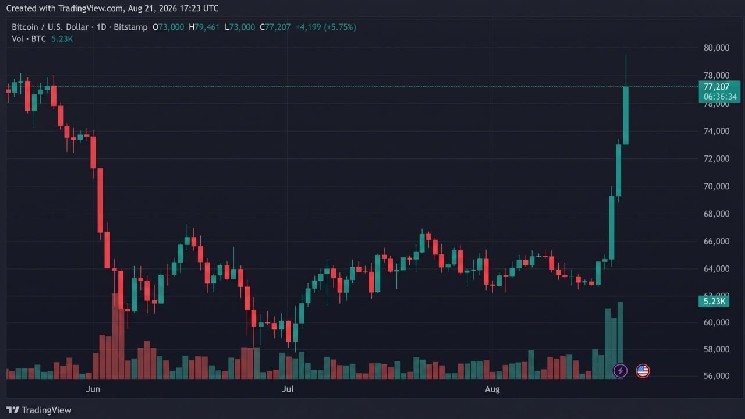
When the Iran conflict broke out, the U.S. stock market was closed for the weekend and couldn't react to the sudden global risk. But the crypto market didn't stop; Bitcoin once rose to $74,000. Commodities completed price discovery first on the decentralized prediction market Hyperliquid, even before the traditional market opened. This is not an isolated incident—the same thing happened last month when China introduced new policies.

Traditional hedge funds are increasingly flooding into this space. The crypto market's "24/7 non-stop" operation is no longer just a slogan, but a structural advantage that traditional finance cannot match.

Nevertheless, the current valuation of the crypto market is still far below the level it should be based on its fundamentals. There's no doubt we are in another bear market (this is the fourth one I've experienced), but this time it's completely different: regulations are gradually becoming clearer, institutional funds have entered the market, and the infrastructure is increasingly mature.

This feeling was particularly strong at the recent Hong Kong Consensus conference. The vitality of the Asian market contrasted sharply with the West. There, support from bipartisan governments, newly entered institutional funds, and a focus on consumer-facing applications are all driving strong bullish sentiment.

What to watch in Asia in 2026:

  • Cross-border payments via stablecoins, especially in the B2B sector. For Asia's relatively fragmented economic systems, crypto payments are a natural choice.
  • Tokenization of gold, stocks, and real estate. Asian banks and fintech companies are catching up with the pace set in the U.S.
  • Perpetual contract trading on DeFi. Driven by retail investors, development speed may surpass that of the West.
  • Prediction markets are expected to become an important track, although their form may differ from that in the West.

Core Trend: 'Crypto as a Service'

The core theme for 2026 is the shift from "crypto as an industry" to "crypto as a service". The goal is no longer to make users see the blockchain, but to make them completely forget its existence.

For over a decade, we have been keen on building "crypto spectacles"—Gas fee wars, TPS competitions, modular stacks, ZK proofs. The 2024 ETF was a vote of approval from mainstream institutions. In 2025, we laid all the underlying infrastructure. In 2026, it's time to turn around.

Farewell to the 'Casino' Era

The new generation of unicorns will not be those "L3 networks built for AI-NFTs". They will be the companies that use blockchain to improve product efficiency tenfold, completely hide the technology, and thereby leverage trillion-dollar markets.

This exactly explains our recent investment logic:
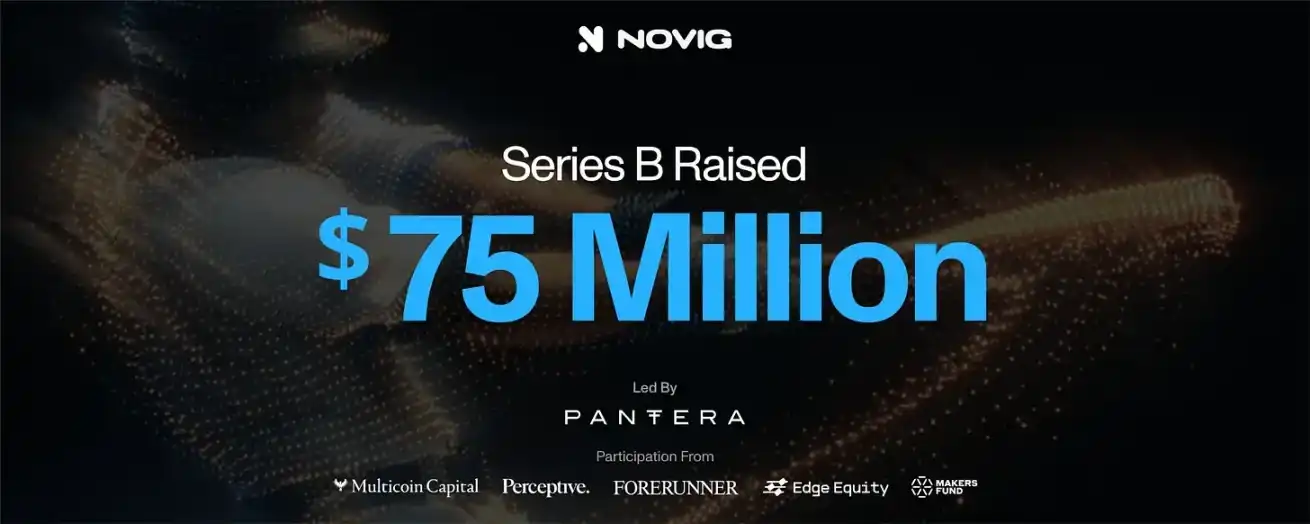
Novig: Farewell to the 'Vig' Era ($75 Million Series B)

Traditional sports betting is a monopolistic,畸形 (distorted/j畸形的 - likely meant 'distorted' or 'dysfunctional') market. Bookies take high commissions from every bet, resulting in a miserable user win rate of only 2%. We led Novig's $75 million round because they treat sports betting as a high-frequency financial product. Through a peer-to-peer trading model, Novig users achieve an average win rate of 23%. Most users don't care at all whether a decentralized order book is used in the backend; they just know they get the best odds in the US here. This is a vivid case of "crypto as a service".
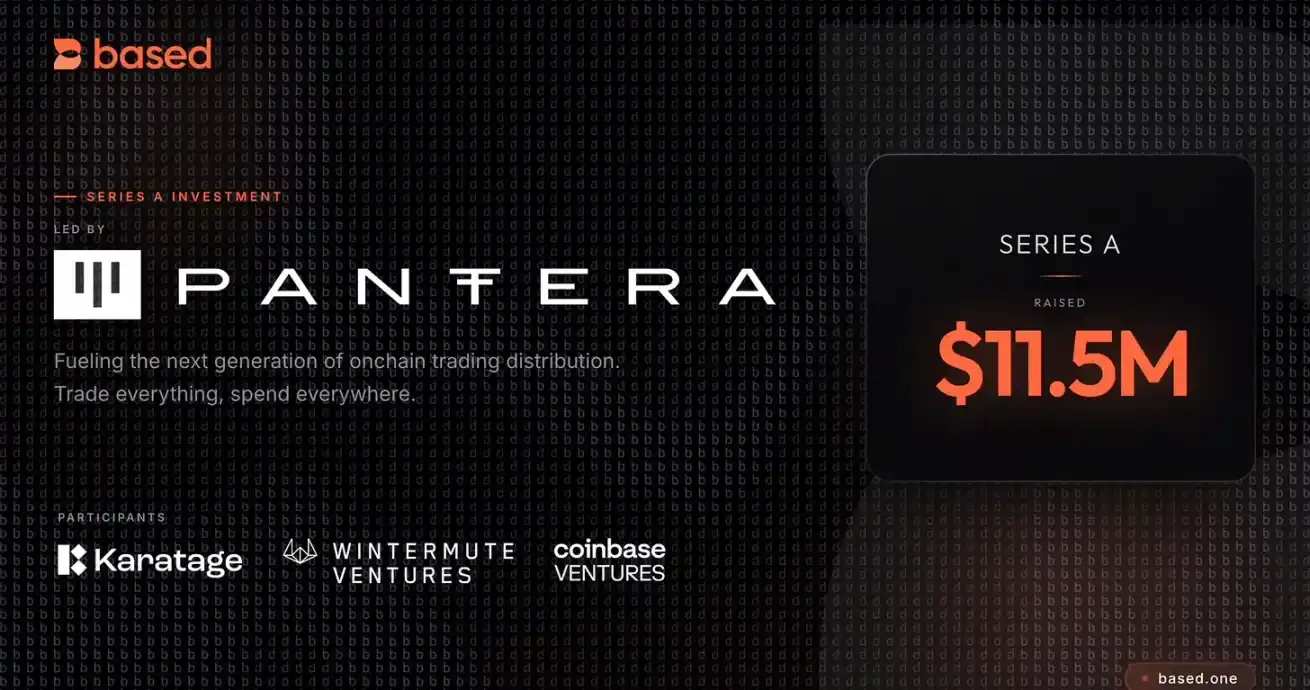
Based: Consumer-Grade Super App ($11.5 Million Series A)

We recently led the Series A funding for Based. This is a composable Web3 consumer-grade super app built on the Hyperliquid ecosystem. "Consumer-grade crypto" was often equated with "clunky experience". Based is changing that; it makes the on-chain interaction experience as smooth and seamless as a top-tier fintech app. Complex operations like cross-chain bridging and Gas fees are abstracted away; users are completely unaware. They only need to focus on the social and financial value brought by the assets.
Doppler: The Default Asset Issuance Infrastructure ($9 Million Seed Round)

If Based and Novig are cool new cars, then Doppler is the high-performance fuel system. We led Doppler's $9 million seed round, aiming for it to become the default infrastructure for on-chain asset issuance. It allows developers to issue assets with institutional-grade security and compliance standards without having to build all the underlying technology from scratch. Doppler is like the Stripe for on-chain assets—pure utility, all encapsulated behind a simple API.

Why 'Invisibility' is More Important Than 'Virality'

This trend of "invisibilization" also runs through our entire investment portfolio:

  • Real World Assets (RWA): Tokenized treasury bonds are no longer an experiment in the crypto world; they are becoming the backend liquidity cornerstone for global trade.
  • AI Agents: Blockchain provides a trusted "truth layer" for AI agents through prediction markets and verifiable data, enabling them to autonomously and trustworthily interact with digital assets.
  • Agent payments will accelerate all this. Payment standards like x402 allow AI agents to directly complete transactions using crypto assets. The gradual clarification of stablecoin regulations is making this payment轨道 (track/rail - likely meant 'rail') smoother.

Advice for Entrepreneurs

If you are planning to start a business in 2026, my advice is simple: Stop talking so much about the technology, and talk more about what practical problems you can solve. If the slide in your funding presentation about the consensus mechanism comes before the one about customer return rates, it means your thinking is still stuck in 2022.

We are looking for teams that are building the next Novig, Based, or Doppler—those who truly understand what "mass adoption" means: when a technology becomes so seamless that people completely ignore its existence, it has truly entered millions of households.


Related Questions

QWhat is the core theme for the crypto industry in 2026 according to the article?

AThe core theme for 2026 is the shift from 'crypto as an industry' to 'crypto as a service', where the goal is to solve real-world problems using blockchain technology while making it completely invisible to the end-user.

QWhat structural advantage does the crypto market have over traditional finance, as highlighted in the article?

AThe crypto market operates 24/7, which is a structural advantage over traditional finance that closes on weekends, allowing it to react to global events and complete price discovery without interruption.

QName one of the companies mentioned as an example of 'crypto as a service' and explain its approach.

ANovig is mentioned as an example. It treats sports betting as a high-frequency financial product using a peer-to-peer trading model, which increases user profitability to 23% compared to the traditional 2%, without users needing to know about the decentralized order book technology behind it.

QWhat are some key areas of focus for the Asian crypto market in 2026, as per the article?

AKey areas for Asia include cross-border payments via stablecoins (especially in B2B), tokenization of assets like gold and real estate, perpetual contract trading on DeFi driven by retail investors, and the potential growth of prediction markets.

QWhat advice does the article give to entrepreneurs looking to start a crypto business in 2026?

AThe advice is to focus on solving real-world problems rather than emphasizing the technology itself. If the pitch deck discusses consensus mechanisms before customer ROI, it's considered a mindset from 2022. The goal should be massive adoption through seamless, invisible technology integration.

Related Reads

Vitalik's Algorithmic Stablecoin Vision: Interpreting the Mechanism and Challenges from an Options Perspective

Vitalik Buterin's recent algorithmic stablecoin proposal envisions using an option-like mechanism to create a stablecoin without the liquidation risks inherent in traditional collateralized debt position (CDP) models. The design splits one unit of ETH into two components: a 'stable' leg (P) that maintains value up to a certain strike price, and an 'upside' leg (N) that captures any appreciation above that price. Together, they always sum to one ETH, eliminating the need for debt or liquidation mechanisms. From an options perspective, the stable leg essentially functions as a synthetic, covered call position. However, significant challenges exist. For the stable asset to maintain its peg, it must continuously roll deep in-the-money call options, leading to potential rollover slippage, predictable trading paths vulnerable to front-running, and liquidity issues. Crucially, the system's scalability depends on a constant demand for the upside leg—a form of leveraged ETH long position without funding rates or liquidation risk. It's unclear if such persistent, specific demand will materialize from speculators or market makers who have simpler alternatives like perpetual swaps. The author, drawing from experience with Rysk, argues that DeFi options have struggled as standalone trading products due to complexity and fragmented liquidity. Their potential lies instead as foundational infrastructure underpinning more complex financial primitives like stablecoins, structured yields, or index products—transforming from a direct product into a core pricing and risk distribution engine for the next generation of on-chain finance.

marsbit19m ago

Vitalik's Algorithmic Stablecoin Vision: Interpreting the Mechanism and Challenges from an Options Perspective

marsbit19m ago

GPT-5.6 Countdown: Abandon the Illusion of a Single API, Computational Iteration Can't Outpace a Single Page of Compliance

In mid-June, three seemingly independent industry events—the compliance-driven throttling of Fable 5, the open-sourcing of GLM-5.2, and the leaked release timeline for GPT-5.6—are pushing the global AI industry toward a watershed moment. These shifts signal a fundamental restructuring of the industry's underlying logic. First, **"usability" has substantially overtaken "advanced capabilities"** as the primary weight, pushing the global large language model (LLM) supply chain into a "dual-track" phase of controlled closed-source and local open-source coexistence. Second, **the competitive moats of closed-source giants are shifting**. Their technical focus is moving from "language intelligence" toward "spatial intelligence (world models)"—a domain heavily reliant on computing power. Third, faced with常态化 transnational compliance risks, **a "model-agnostic" decoupled design has become a survival necessity for application-layer developers to maintain business continuity.** The article details how Anthropic's Fable 5, despite its advanced engineering feats, was restricted for non-U.S. citizens within 72 hours of launch, highlighting how geopolitical compliance can instantly limit even the most advanced models. In response, the open-source camp, exemplified by Zhipu AI's MIT-licensed GLM-5.2, is gaining market share by offering stable performance improvements and significant cost advantages (up to 70% savings for enterprises), while achieving full adaptation with domestic semiconductor platforms. Meanwhile, closed-source leaders like OpenAI are pivoting. The anticipated GPT-5.6 reportedly shifts focus from language to spatial intelligence and world models, aiming to rebuild a generational gap in areas like 3D understanding, simulation, and industrial design that demand immense compute. The core conclusion is that the LLM supply chain's logic has changed. Enterprises must now evaluate infrastructure based on a composite of technical performance and policy compliance. For developers, complete reliance on a single closed-source API poses unacceptable risk. Implementing a truly model-agnostic architecture—enabling swift switches to compliant, locally deployable open-source alternatives—is no longer just good practice but a fundamental baseline for business continuity.

marsbit3h ago

GPT-5.6 Countdown: Abandon the Illusion of a Single API, Computational Iteration Can't Outpace a Single Page of Compliance

marsbit3h ago

Is the 'Token Subsidy War' Among AI Giants Almost Over?

The article discusses the ongoing "token subsidy war" among AI giants like OpenAI and Anthropic, questioning whether it's nearing its end. It reveals that current AI subscription prices are heavily subsidized, with some plans offering tokens at up to 70 times the actual cost to attract and retain heavy users, especially developers and enterprises. This strategy mirrors past internet-era subsidy battles, but with a key difference: AI tokens lack "lock-in" effects. Unlike ride-hailing or food delivery apps, users can easily switch between AI providers as APIs become standardized, making it difficult for companies to raise prices post-subsidy. The piece highlights a structural asymmetry in the competition. Giants like Google, with massive advertising revenue, can afford to subsidize tokens indefinitely, akin to using "tokens as a weapon." In contrast, venture-backed companies like OpenAI and Anthropic face pressure to become profitable, especially as they approach IPO. The article cites Google Ventures founder Bill Maris, who suggests Google could slash token prices by 80%, putting immense pressure on competitors. Two potential endgames are presented: the "internet service" model (subsidize, monopolize, then raise prices) and the "utility" model (tokens become a standardized, low-margin commodity like electricity). Given the low switching costs, the latter seems more likely. The competition may not have a single winner but could instead accelerate AI's evolution into a foundational, infrastructure-level technology, akin to a public utility. For now, users continue to benefit from heavily subsidized token costs.

marsbit3h ago

Is the 'Token Subsidy War' Among AI Giants Almost Over?

marsbit3h ago

Trading

Spot
Futures
活动图片