Expanding Glassnode: Macro and Traditional Finance Data

insights.glassnodePublished on 2026-04-16Last updated on 2026-04-16

Abstract

Glassnode is expanding its product offering to include macroeconomic and traditional finance (TradFi) data, recognizing that digital assets like Bitcoin are now a mainstream asset class increasingly influenced by global financial forces. As institutional participation grows—evidenced by Bitcoin ETFs surpassing $100 billion in AUM by early 2026—Bitcoin's price is more affected by monetary policy, geopolitical risks, and macroeconomic trends. Key metrics now integrated include central bank balance sheets, money supply (M2), interest rates, and government bond yields, which help contextualize Bitcoin within global liquidity cycles. The platform also tracks equity indices, fear gauges, forex rates, and commodities to assess risk appetite and market stress. This shift reflects a structural change: Bitcoin's correlation with traditional risk assets like the S&P 500 has strengthened, driven by institutional capital, post-COVID liquidity cycles, and ETF adoption. Glassnode aims to provide a unified platform for analyzing both on-chain and TradFi data, enabling users to better interpret market moves and regime shifts in a maturing digital asset ecosystem.

Our guiding principle in developing Glassnode's product offering has always been about enabling a comprehensive view of digital asset markets. This has meant delivering industry-leading on-chain and derivatives analytics, while also helping investors interpret the broader forces shaping market behavior.

As digital assets mature, these forces increasingly extend beyond on-chain data. Today, we are further expanding our product to reflect this ongoing shift. Glassnode now integrates macroeconomic and traditional finance (TradFi) data, bringing everything you need to understand Bitcoin and digital assets into a single platform.

Why Macro Now Matters More Than Ever

Digital assets are no longer a niche experiment. They are a mainstream asset class, with growing participation from institutions, ETFs, and traditional finance players. The recent approval and rapid growth of Bitcoin ETFs – now exceeding $100 billion in assets under management as of early 2026 – is a clear signal of this shift.

But with this integration comes a new dynamic: Bitcoin’s price is increasingly influenced by traditional financial forces. Geopolitical risks, monetary policy, and broader macroeconomic trends now play a critical role in shaping Bitcoin’s trajectory. For investors, traders, and institutions, this makes access to a broader set of actionable data more important than ever.

That is why Glassnode is expanding its data coverage to include TradFi and macro metrics. The goal is not to move beyond on-chain analysis, but to extend it — enabling users to connect the dots between digital asset markets, traditional financial data and the global economy.

From Digital Gold to Liquidity-Sensitive Asset

Bitcoin was created in the immediate aftermath of the Global Financial Crisis in 2009, as a direct response to what its creator saw as a fundamental flaw of modern finance: the ability of central banks and governments to create money at will. Bitcoin's fixed supply of 21 million coins is not just a technical detail; it is a political statement.

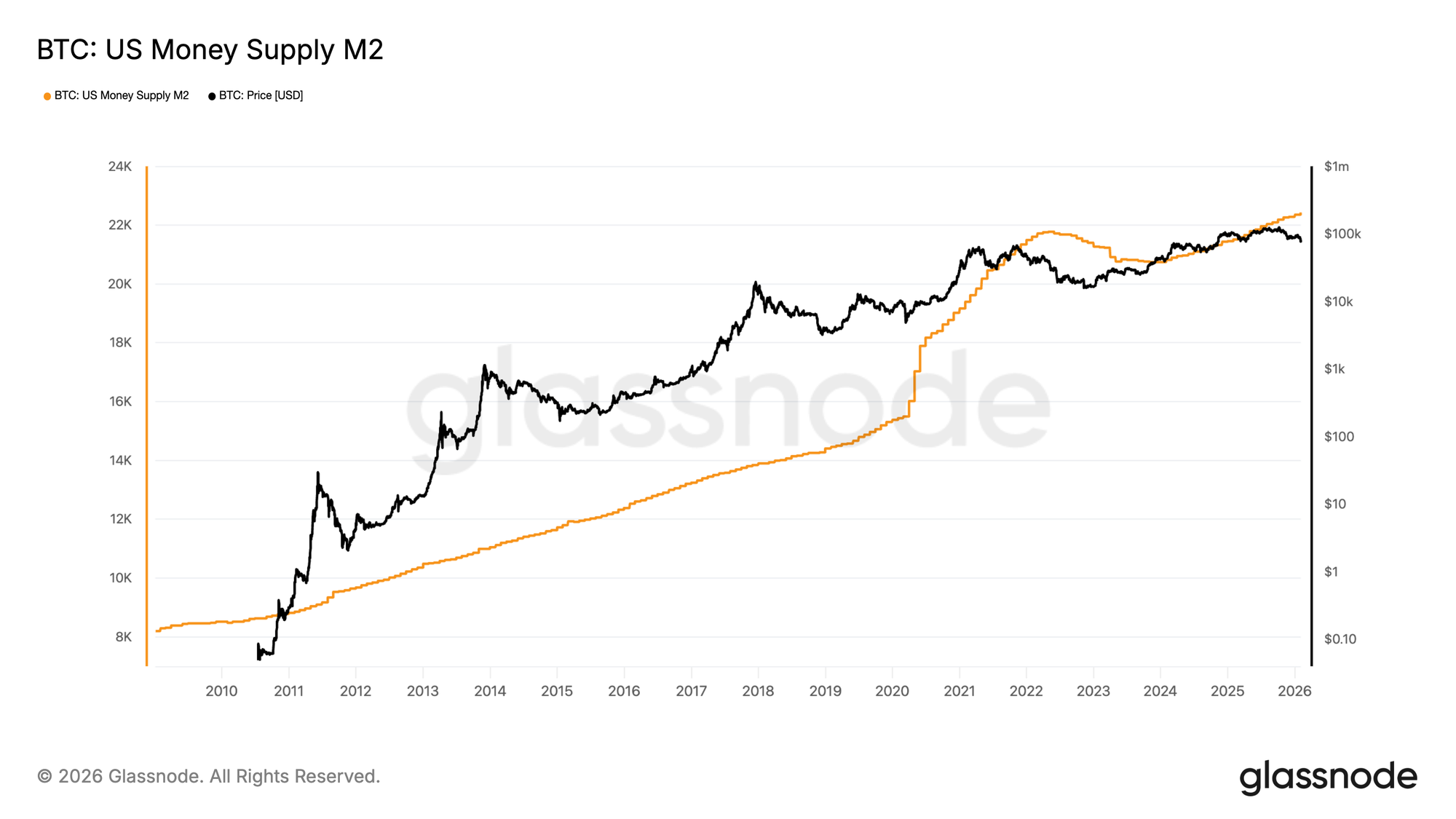
This aspect becomes most relevant when central banks are most active. When central banks expand their balance sheets, money supply grows, financial conditions become more supportive, and investors generally have more capital available to allocate across risk assets. In that environment, Bitcoin has often benefited alongside other liquidity-sensitive assets.

By contrast, periods of monetary tightening tend to create a more difficult backdrop. Higher rates, shrinking central bank balance sheets, and weaker liquidity conditions typically reduce risk appetite and can weigh on digital asset markets.

This is why it is useful to monitor metrics such as:

  • US Money Supply (M2)
  • US Central Bank Balance Sheet
  • Euro Area Money Supply (M2)
  • Euro Area Central Bank Balance Sheet

They help place Bitcoin price action in the broader context of global liquidity cycles and provide a clearer macro framework for interpreting market moves.
View live chart

From Dovish to Hawkish: How Interest Rate Shifts Impact Bitcoin

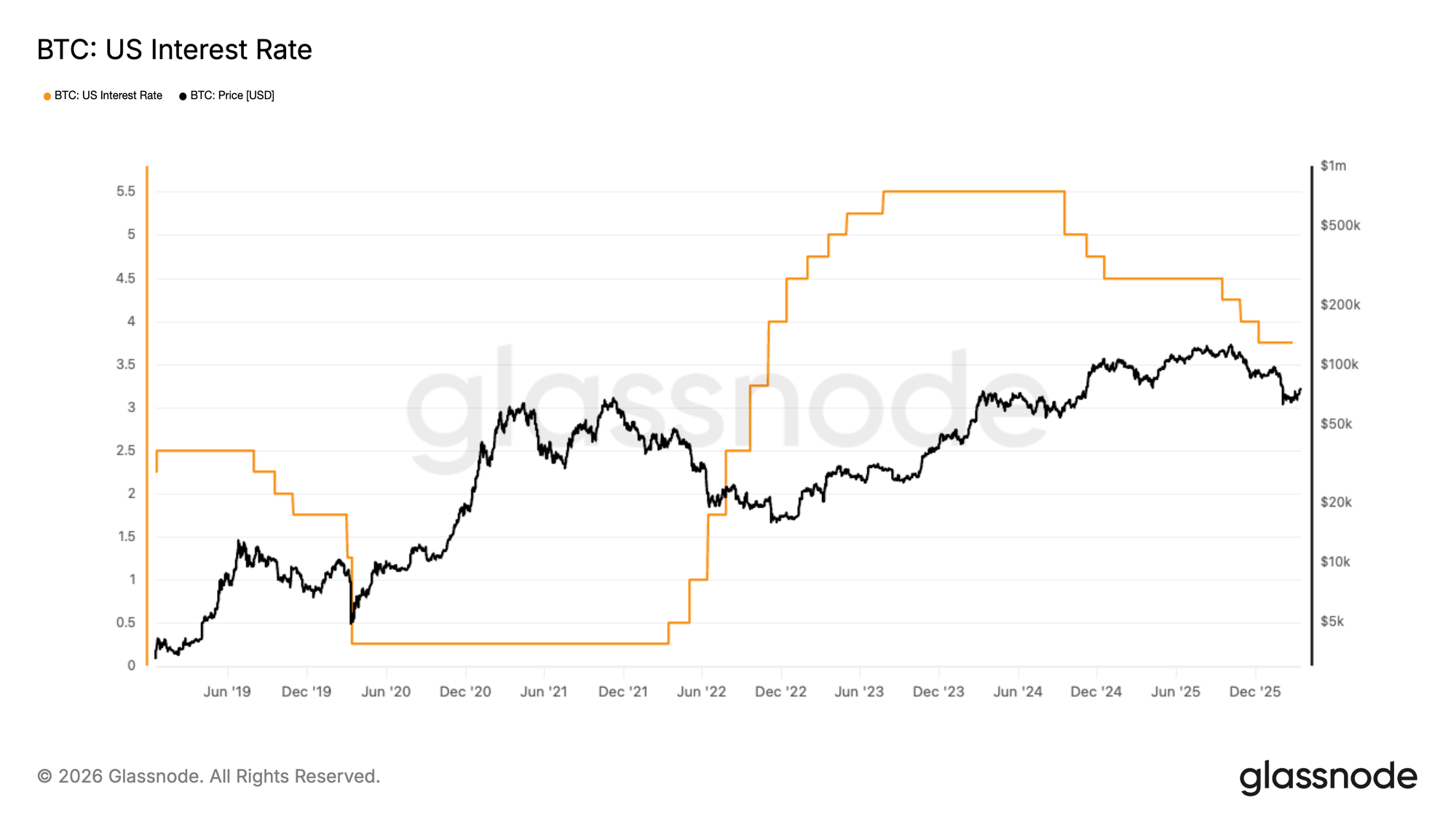
Interest rates are another key transmission channel. Bitcoin does not generate cash flow, so the opportunity cost of holding it changes meaningfully with monetary policy. In tighter regimes, higher rates tend to support the dollar, raise real yields, and reduce appetite for speculative assets. In looser regimes, easier financial conditions can support broader risk-taking. This is why metrics such as US Interest Rate, Euro Area Interest Rate, US 10Y Yield, and Germany 10Y Yield are relevant to digital asset investors, not just bond traders.

As illustrated above, periods of low interest rates tend to support Bitcoin and other risk assets, as cheaper capital and looser financial conditions encourage risk-taking. Conversely, rising interest rates increase the cost of capital and typically reduce investor appetite for risk, creating a more challenging environment for Bitcoin price performance.
View live chart

Traditional Finance Data in Digital Assets

As digital asset markets mature, they are becoming increasingly connected to the same macro forces that move equities, bonds, FX, and commodities. Bitcoin now trades in an environment shaped by interest rates, liquidity conditions, dollar strength, inflation expectations, and risk sentiment.

As a result, understanding digital asset markets requires more than on-chain data alone. By adding TradFi metrics, Glassnode gives users the context needed to interpret market moves, identify regime shifts, and assess whether a move is digital asset-specific or part of a broader cross-asset trend.
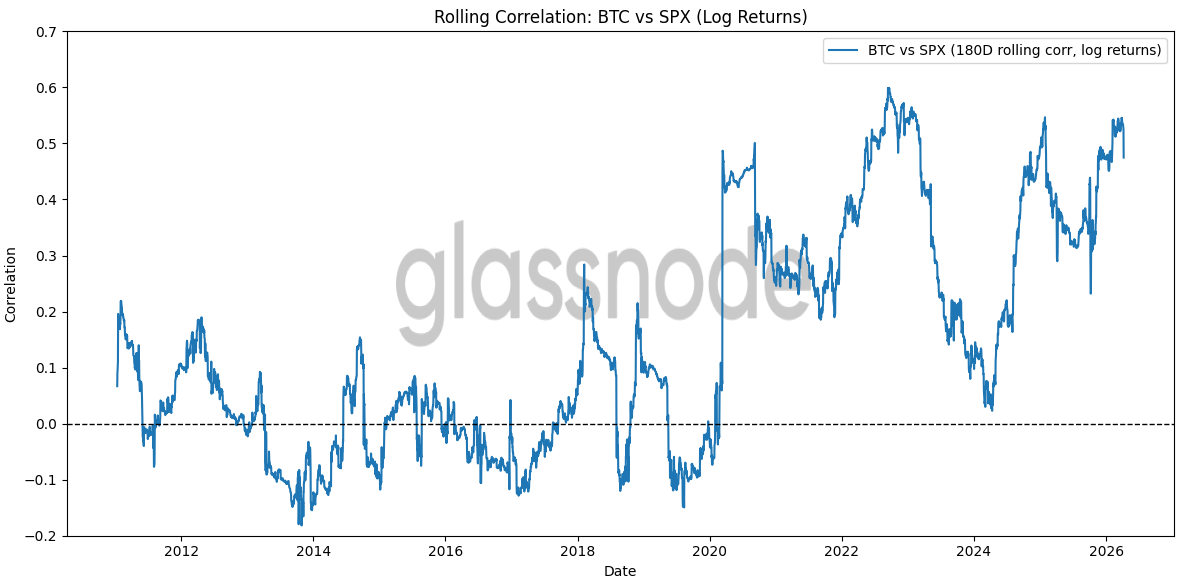
The chart above plots the 180-day rolling correlation between Bitcoin and the S&P 500 using log returns. The main signal is that BTC appears to have become more sensitive to macro and broader risk-asset dynamics over time. In earlier years, the correlation hovered around zero or was occasionally negative, while in recent years it has often been meaningfully positive.

This does not appear to be a temporary dislocation, but a structural shift, driven by three forces:

  • the entry of institutional capital that allocates across asset classes;
  • the post-COVID liquidity cycle, which inflated and then deflated risk assets simultaneously;
  • and the launch of spot Bitcoin ETFs, which embed BTC more directly into traditional portfolio flows.

This supports the view that Bitcoin is no longer solely a standalone, crypto-native asset; it now trades alongside broader liquidity and risk conditions more frequently than in the past.
View live chart

Using TradFi Metrics to Contextualize Digital Asset Markets

Glassnode's TradFi market metrics suite helps users understand the external forces that increasingly influence digital asset markets.

Rate and yield curve indicators provide insight into monetary policy, growth expectations, and recession risk. Relevant metrics: The US 10Y-2Y Spread, Germany 10Y-2Y Spread, US 2Y Yield, US 10Y Yield, Germany 2Y Yield, and Germany 10Y Yield.

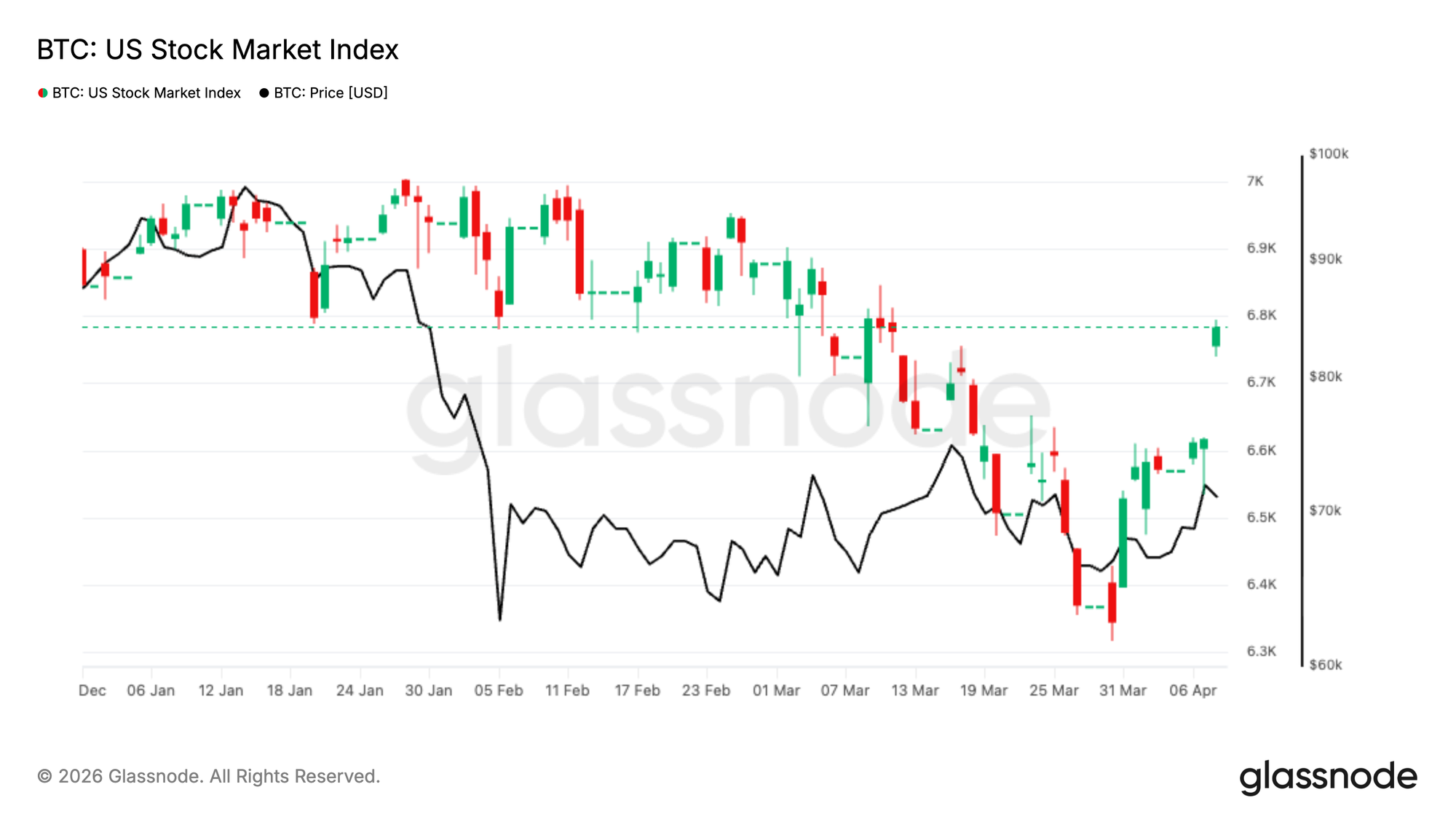
Equity benchmarks help gauge global risk appetite and market stress. Relevant metrics: The US 500 Stock Market Index and EU50 Stock Market Index, along with the US Fear Index and EU Fear Index

FX measures provide context on dollar strength and liquidity conditions, both of which can materially affect digital asset performance. Relevant metrics: EUR/USD and the U.S. Dollar Index

Commodity prices, including Gold, Silver, and WTI Crude Oil, add another layer by reflecting inflation expectations, safe-haven demand, and geopolitical risk.

One Platform, Full Market Context

The broader point is that digital asset markets are maturing. The arrival of spot ETFs, growing institutional participation, and stronger links to policy and geopolitics mean that digital assets increasingly sit within the same information ecosystem as equities, bonds, FX, and commodities. Glassnode’s Macro and TradFi metric categories are built for this environment.

Glassnode remains the home for deep digital asset-native intelligence. At the same time, delivering a comprehensive analytical view of the markets now requires tools to understand the macro and traditional financial forces that shape them.

Explore the new Macro and TradFi metrics in Glassnode Studio or compare pricing plans to gain access.

Compare plans

  • Follow us on X for timely market updates and analysis
  • Join our Telegram channel for regular market insights
  • For on-chain metrics, dashboards, and alerts, visit Glassnode Studio

Disclaimer: This report is for informational and educational purposes only. The analysis represents a limited case study with significant constraints and should not be interpreted as investment advice or definitive trading signals. Past performance patterns do not guarantee future results. Always conduct thorough due diligence and consider multiple factors before making investment decisions.


Related Questions

QWhat is the main reason Glassnode is expanding its product to include macroeconomic and traditional finance (TradFi) data?

ABecause digital assets have matured into a mainstream asset class and Bitcoin's price is increasingly influenced by traditional financial forces like geopolitical risks, monetary policy, and macroeconomic trends, making access to a broader set of actionable data more important than ever.

QAccording to the article, how do periods of monetary tightening by central banks typically affect Bitcoin?

APeriods of monetary tightening, characterized by higher interest rates, shrinking central bank balance sheets, and weaker liquidity conditions, tend to reduce risk appetite and create a more difficult backdrop that can weigh on digital asset markets like Bitcoin.

QWhat are two specific examples of macroeconomic metrics mentioned that help contextualize Bitcoin's price action within global liquidity cycles?

ATwo examples are the US Money Supply (M2) and the US Central Bank Balance Sheet. The article also mentions Euro Area equivalents of these metrics.

QThe article states that Bitcoin's correlation with the S&P 500 has changed over time. What is the described trend and what are the three driving forces behind this structural shift?

AThe trend is that Bitcoin's correlation with the S&P 500 has shifted from hovering around zero or being negative in earlier years to being meaningfully positive in recent years. The three driving forces are: 1) the entry of institutional capital that allocates across asset classes, 2) the post-COVID liquidity cycle, and 3) the launch of spot Bitcoin ETFs.

QBesides on-chain data, what four categories of TradFi metrics does Glassnode now provide to help users understand the external forces influencing digital asset markets?

AThe four categories are: 1) Rate and yield curve indicators, 2) Equity benchmarks, 3) FX measures, and 4) Commodity prices.

Related Reads

From South Korea to the United States: Blue-Collar Jobs Are Becoming Increasingly Popular, Thanks to AI

AI is reshaping the labor market's value proposition. The traditional four-year college degree is losing its appeal as a guaranteed career path, while skilled blue-collar trades like electricians, welders, and plumbers are experiencing historic demand and wage premiums. This shift is driven by dual pressures: AI's displacement of certain white-collar roles and a booming need for physical infrastructure and data center construction. Data confirms the trend. In the U.S., vocational school revenue surged, and a significant portion of recent layoffs are AI-related. Surveys show a majority of Gen Z adults plan to pursue blue-collar work, citing better job security against AI automation. Vocational education interest has exploded recently. Experts cite a psychological shift as younger generations seek tangible, AI-resistant careers and avoid high student debt. In many cases, salaries for skilled trades now match or exceed those requiring a bachelor's degree. In South Korea, semiconductor vocational high schools boast near-total employment, with graduates securing high-paying roles at companies like Samsung. The shortage is structural, exacerbated by a retiring baby boomer workforce and massive infrastructure projects. Companies like JPMorgan Chase, Meta, and Lowe's are investing heavily in training programs. However, overcoming historical stigma and a "perception gap" around trade careers remains a key challenge to closing the talent gap.

marsbit1h ago

From South Korea to the United States: Blue-Collar Jobs Are Becoming Increasingly Popular, Thanks to AI

marsbit1h ago

Qualcomm: AI Hype Subsides, When Will Smartphones Emerge from the Gloom?

Qualcomm reported its Q3 FY2026 results (ending June 2026), with revenue of $9.95B, down 4% YoY but above expectations. Gross margin declined to 53.1%, pressured by rising costs across manufacturing and memory. Key business segments showed mixed performance: Handset revenue fell 19.6% YoY to $5.09B, dragged by an 11% decline in non-Apple Android shipments and weaker high-end mix. Conversely, Automotive revenue surged 61% to $1.59B, and IoT grew 9% to $1.83B. Core operating profit dropped 41% YoY due to margin compression and higher expenses. Management's Q4 FY2026 guidance projects revenue of $9.7B-$10.5B, in line with consensus, but Non-GAAP EPS guidance of $2.05-$2.25 fell short of expectations. Amidst persistent weakness in its core handset market, Qualcomm is pursuing growth in AI, focusing on Edge AI (smartphones, PCs, automotive) and Data Center AI. Its data center strategy includes four pillars: AI accelerators (e.g., AI200), commercial CPUs (Dragonfly C1000), custom silicon, and connectivity solutions. While these initiatives initially boosted its stock, concerns over AI capital expenditure sustainability have since erased those gains. The company targets $5B in data center revenue for FY2027 and $15B for FY2029. The report concludes that with the traditional handset business still under pressure, the data center opportunity is currently viewed as a longer-term option, and a more conservative valuation based on core operations may be warranted until AI contributions materialize.

marsbit1h ago

Qualcomm: AI Hype Subsides, When Will Smartphones Emerge from the Gloom?

marsbit1h ago

From TPU to Self-Evolving Agents: How Jeff Dean Predicts the Next Step in AI

At the 2026 YC Startup School, Jeff Dean outlined his vision for AI's next phase, shifting focus from simply scaling models to building intelligent, autonomous systems. He believes AI's progress is no longer just about creating smarter models, but about integrating them into systems capable of long-term, iterative work, automated experimentation, and continuous learning. This evolution moves the competition from "who has the bigger model" to "who can best organize intelligence." Dean suggests AI capabilities are now comparable to a junior engineer, enabling the automation of complex workflows. However, the true challenge and opportunity lie in managing these AI "workers" at scale. He emphasizes the importance of **context engineering**—structuring tools, memory, and feedback loops—over raw model power. For startups, this means building deep expertise in niche domains where general models currently fail (near 0-1% success rates), leveraging proprietary data, specialized tools, and domain-specific evaluators. A recurring theme is re-examining fundamental constraints. Dean's past work, like moving Google's search index to memory or creating the TPU, stemmed from questioning outdated assumptions about hardware and cost. He sees similar inflection points today, particularly in **specialized inference hardware** to drastically reduce latency and energy consumption for real-time Agent operation. Notably, he points out that in modern AI systems, the dominant cost is often not computation but **data movement**. Reliable, long-running Agents require robust system design, borrowing concepts from distributed computing like checkpointing, state management, and parallel exploration to handle failures and maintain progress over days or weeks. As AI automates execution, the scarcest human skills will shift to **defining clear specifications**, **judging what problems are worth solving** (taste), and designing effective feedback loops. Ultimately, Dean's framework prioritizes understanding the problem deeply, identifying the true bottlenecks, and systematically building closed-loop systems where AI can not only perform tasks but also improve AI itself.

marsbit1h ago

From TPU to Self-Evolving Agents: How Jeff Dean Predicts the Next Step in AI

marsbit1h ago

Trading

Spot
活动图片




