Ex-Ripple Exec Shares What Burning XRP Means, But Does It Influence Price?

bitcoinistPublished on 2026-03-17Last updated on 2026-03-17

Abstract

Former Ripple CTO David Schwartz has challenged the common belief within the XRP community that burning tokens directly and immediately impacts the asset's price. This discussion arose after a community member questioned Ripple's recent $750 million share buyback, suggesting the company should instead burn the XRP held in escrow to benefit holders. To support his argument, Schwartz shared a price chart of Stellar (XLM), which burned half of its supply in 2019, showing no immediate price surge from the event. He asserted that while burns can have indirect market effects, they do not directly cause price rallies. The debate then expanded to question whether Ripple's other initiatives, such as its upcoming stablecoin RLUSD and Real-World Asset (RWA) tokenization, would provide any direct benefit to XRP's price if burns do not.

A former Ripple executive has weighed in on an ongoing debate over XRP token burns, shedding light on their actual impact on an asset’s value. In a heated discussion on X, the executive challenged the XRP community’s long-held belief that burning tokens directly influences their immediate price action or automatically triggers a sharp price rally.

Ex Ripple CTO Reveals Real Impact Of Burning XRP

David Schwartz, the former Chief Technology Officer (CTO) of Ripple, has taken to X to share new details about XRP burning and its direct influence on price. Notably, Schwartz’s statements come in response to the recent backlash and criticism stemming from Ripple’s latest $750 million share buyback.

In a post on March 12, a pseudonymous XRP community member known as ‘XRP Launch’ on X tagged several of Ripple’s top executives, including Schwartz, CEO Brad Garlinghouse, President Monica Long, and CLO Stuart Alderoty. The user questioned the company’s recent share buyback, asking why Ripple would prioritize this approach over initiatives that directly benefit XRP holders.

He urged the executives to consider burning the XRP currently held in escrow rather than pursuing share buybacks that primarily benefit Ripple as a company. In a sarcastic remark, he added that perhaps the escrow cannot be burned, as doing so might push XRP’s price beyond $1.39.

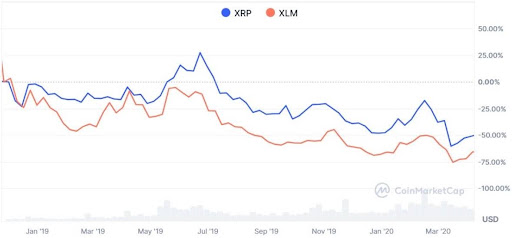
Responding to the remarks, Schwartz shared a price chart illustrating the historical performance of both XRP and Stellar (XLM). The chart highlights volatility in both assets, with notable price spikes in some months and relatively subdued action in others. The former Ripple CTO then challenged the XRP member to identify where, on the chart, XLM had burned half of its total supply.
Source: X

Notably, Stellar conducted a large-scale token burn in November 2019, eliminating half of its supply. Schwartz argued that, despite the significant reduction in supply, the move had no immediate, direct impact on XLM’s price. The chart showed no meaningful price surge throughout November that year or in the following months, with the only noticeable upward movement appearing around February to March of the next year.

Schwartz pushed back against the user’s claim that burning escrowed XRP would trigger a price rally, arguing that token burns have no direct impact on an asset’s performance or valuation. However, he acknowledged that such actions can, in some cases, exert indirect influence on market dynamics.

Concerns About RLUSD And RWA Impact On XRP Arise

As Schwartz debunked misconceptions about XRP burns, the debate quickly shifted to Ripple’s stablecoin, RLUSD, and the XRP Ledger’s (XRPL) Real-World Assets (RWAs) tokenization. A community member known as Spade reasoned that if burning tokens added no value to XRP, then, by extension, initiatives such as RLUSD, RWAs, and XRP’s role as a bridge asset may also provide little to no direct benefit to the cryptocurrency’s price.

He contended that the only immediate effect these activities would have on the ecosystem is burning XRP, which, according to Schwartz’s argument, would not positively influence the price. Spade further asserted that liquidity generated by using RLUSD does not increase XRP’s value. In his view, buying and holding XRP can increase its price. He also criticized the broader narrative that XRP “frees up capital,” arguing that the concept is counterproductive to the asset’s price growth.

Price goes on another uptrend | Source: XRPUSDT on TradingView.com

Related Questions

QWhat did the former Ripple executive, David Schwartz, claim about the direct impact of token burns on XRP's price?

ADavid Schwartz argued that token burns have no direct impact on an asset's performance or valuation, using Stellar's (XLM) 2019 burn of half its supply as an example which did not cause an immediate price surge.

QWhy was the XRP community member 'XRP Launch' critical of Ripple's recent $750 million share buyback?

AThe member was critical because they believed Ripple should prioritize initiatives that directly benefit XRP holders, like burning the escrowed XRP, instead of a share buyback which primarily benefits the company itself.

QAccording to the article, what was the community's concern regarding Ripple's stablecoin RLUSD and Real-World Asset (RWA) tokenization?

AThe concern was that if burning tokens doesn't add value, then initiatives like RLUSD, RWAs, and XRP's role as a bridge asset might also provide little to no direct benefit to XRP's price.

QWhat was the main point of the community member 'Spade' in the debate about what increases XRP's value?

ASpade contended that the only immediate way to increase XRP's price is through buying and holding it, and criticized the narrative that XRP 'frees up capital' as counterproductive to price growth.

QWhat evidence did David Schwartz use to support his argument against the effectiveness of token burns?

AHe shared a price chart comparing XRP and XLM and challenged others to identify where XLM burn occurred, pointing out that the massive burn in November 2019 did not result in an immediate price increase for XLM.

Related Reads

Trading

Spot
Futures

Hot Articles

What is XRP 2.0

XRP 2.0: A New Frontier in the Cryptocurrency Landscape Introduction to XRP 2.0 In the ever-evolving realm of cryptocurrency, new projects continuously emerge, vying for attention and adoption. One such promising initiative is XRP 2.0, a novel cryptocurrency project designed to leverage advanced blockchain technology and robust encryption methodologies. While the name draws parallels with Ripple’s XRP, it’s crucial to note that XRP 2.0 operates independently, focusing on enhancing transaction security, privacy, and scalability. As the digital financial landscape increasingly embraces decentralized solutions, XRP 2.0 aims to contribute meaningfully to web3 and the overall expansion of crypto projects. What is XRP 2.0? At its core, XRP 2.0 is a cryptocurrency project that aims to create a secure and decentralized digital currency ecosystem. Its foundational technology integrates sophisticated blockchain principles with cutting-edge encryption techniques. The overarching goal of XRP 2.0 is to establish itself as a reliable and efficient platform enabling swift transaction execution while prioritizing enhanced privacy protections for its users. The project is promoted as a solution to many limitations faced by existing cryptocurrencies, proposing a system that can handle a higher volume of transactions with improved speed and privacy. This versatility positions XRP 2.0 as a significant contender in a marketplace riddled with various digital currencies. Who is the Creator of XRP 2.0? The identity of the creator behind XRP 2.0 has been flagged as ‘Wilbur.’ However, comprehensive details regarding Wilbur or their associated entity remain elusive. The anonymity of many cryptocurrency creators is not an uncommon phenomenon in the industry, often designed to maintain a degree of privacy and security. Who are the Investors of XRP 2.0? As of now, specific information related to the investment foundations or organizations supporting XRP 2.0 is not publicly available. In the cryptocurrency sector, the backing by reputed investors can significantly influence a project's credibility and success, yet the transparency regarding the financial supporters of XRP 2.0 has not been established. How Does XRP 2.0 Work? XRP 2.0 stands out by employing a combination of blockchain technology and advanced encryption algorithms that ensures secure and decentralized transactions. Its innovative structure includes unique features designed to foster user engagement and broaden functionalities beyond conventional cryptocurrency transactions. Among these features, XRP 2.0 incorporates AI-powered capabilities, such as text-to-image and text-to-speech functionalities. These additions are designed to enhance the interactive experience for users, promoting broader applicability across various sectors. By bridging technological advancements with user-centered design, XRP 2.0 aims to capture the attention of a diverse range of individuals and enterprises looking to integrate cryptocurrency solutions into their operational frameworks. Timeline of XRP 2.0 Understanding XRP 2.0 requires examining the milestones that have defined its journey thus far: July 23, 2023: XRP 2.0 is introduced as a novel cryptocurrency project, aiming to revolutionize secure and decentralized transaction capabilities in the blockchain domain. September 8, 2023: The launching of another project, XRP20, occurs, marking the emergence of an ERC-20 token on the Ethereum blockchain that remains unrelated to XRP 2.0. November 13, 2023: The XRP Ledger undergoes a significant update with the release of rippled server software version 2.0.0. It is essential to note that this development is disconnected from the XRP 2.0 cryptocurrency project. Key Points About XRP 2.0 To distill the essence of XRP 2.0, several critical factors emerge: Unique Features: The inclusion of features like AI-powered text-to-image and text-to-speech further diversifies the potential applications of XRP 2.0. Blockchain Technology: The framework utilizes advanced blockchain mechanisms and encryption protocols, ensuring a secure and decentralized environment for transactions. Scalability and Privacy: XRP 2.0 prioritizes enhanced privacy protections in transaction processes and the scalability necessary to accommodate a growing user base. No Affiliation with Ripple: Importantly, despite its name, XRP 2.0 does not have any allegiance or collaboration with Ripple’s XRP, distinguishing its operational framework and objectives within the cryptocurrency ecosystem. Conclusion XRP 2.0 represents an ambitious venture into the cryptocurrency sphere, aiming to offer a combination of security, privacy, and efficiency in digital transactions. By integrating sophisticated technologies and user-friendly features, the project sets out to broaden the horizons of what cryptocurrency can achieve in today's digital economy. While the anonymity of its creator and lack of disclosed investors might raise questions for some, XRP 2.0's focus on advanced functionalities and decentralisation enhances its appeal amidst an increasingly crowded crypto market. As the cryptocurrency landscape continues to evolve, XRP 2.0 may yet emerge as a pivotal player in the expansion of secure and scalable blockchain solutions.

941 Total ViewsPublished 2024.04.01Updated 2024.12.03

What is XRP 2.0

Discussions

Welcome to the HTX Community. Here, you can stay informed about the latest platform developments and gain access to professional market insights. Users' opinions on the price of XRP (XRP) are presented below.

活动图片














