Author: katexbt.hl
Compiled by: Deep Tide TechFlow
Deep Tide Guide: If Evanss6's article was about finding a way out within a rational investment framework, then katexbt's long post is a "circle self-examination" that tears apart respectability. He starts with a spicy (even somewhat vulgar) metaphor, pointing directly at the real feelings of current crypto participants: awkward, ashamed, and repeating ineffective mistakes.
As we enter 2026, the crypto industry is facing an unprecedented credibility crisis. Kate points out that the outside world's sentiment towards cryptocurrency has shifted from "confrontation" to "aversion," while the circle has fallen into a "PVP" quagmire of mutual hunting. When AI, robotics, and space technology offer more real and interesting narratives, cryptocurrency is going further and further down a dead end with ATMs.
Main text as follows:
Tom and John were curious about a new thing called "group activities," so they organized a gathering with about a dozen friends, both men and women, but with more women.
It was their first time, so it was understandable that they were nervous. They decided to turn off the lights before starting—it would be easier, and there would be less performance anxiety.
When the time came, everyone took off their clothes and started.
Thump! Thump! Thump!
A faint cry came from the darkness.
"Is everyone okay?" Tom asked, turning on the light.
"It's fine! Let's continue!" John said.
The lights went out again. Thump! Thump! Thump!
The lights came on again.
John shouted: "Guys, can you please focus? This is already the second time I accidentally 'serviced' Tom!"
If you think the above story is just clickbait to trick you into reading further, you are wrong—this is exactly the real feeling most people have when participating in cryptocurrency:
- Group activities = shiny new thing (cryptocurrency)
- Turning off the lights = a slight sense of shame, but not enough to hinder the final decision
- Repeated attempts expecting different results = insanity
- Tom 'servicing' John = the same result, but with more steps, and when you end this journey, you feel more humiliated.
Over the past two years, negative sentiment (even mean hostility) towards cryptocurrency enthusiasts has been growing in almost all camps.
Yes, cryptocurrency has always been hated, but in the past, there were always supporters and staunch defenders who would say, "Wait and see, this time is different"—and indeed, every 4 years, these views were confirmed.
Each wave of new "normies" and non-believers was absorbed into Bitcoin or various other popular Ponzi schemes:
- 2017: ICOs and shitcoins.
- 2020: DeFi, smart contracts, NFTs, Ethereum/BSC/L1 trading, and of course LUNA and Celsius.
- 2023/24: Memecoins, Trenches.
Just by looking at the format and length of these words above, you can feel that most of the substantive action stayed in 2020. And this is exactly why people don't like us now.
Just think about it, here are a few reasons why people are hostile to cryptocurrency, in no particular order:
1. It's an Old Man's Game
Those who started promoting Bitcoin in their early 20s are now in the "certified uncle" stage. As a 40-year-old man, pasting contract addresses (CA) in group chats full of kids with some sense of superiority is really not heroic, even if you are indeed harvesting them to make money.
The younger generation seems to care more about physical collectibles, vibes, nostalgia, and memories. They want to yearn, not earn.
2. Crypto's Bad Reputation
Even if they want to make money, the reasons I list below make it seem almost impossible: Cryptocurrency is not fun, even if you are tech-savvy, a momentary lapse of reason—a click, an authorization signature—can cause irreparable permanent damage to your net worth.
- You got a little drunk and clicked on an airdrop ad on X, and your wallet was drained?
- You downloaded a pirated PS 6 months ago and forgot to delete it, a keylogger stole your private key?
- Tough luck, no refunds.
Even if you keep your device clean, you might get caught up in the Ledger data leak or Celsius's real-name information exposure, and your identity will forever be associated with "internet ghost coin gambling." Not to mention if you show off a little wealth, you might face kidnapping, torture, or just be disliked by those around you.

Caption: Look, I'm having so much fun here (sarcasm)
3. Crypto's Bad Reputation - The Presidential ATM
With the introduction of tokens like TRUMP, MELANIA, and WLF, the Overton window shifted. The funny thing is, these coins all fell; they became the death knell for the previous "AI + Solana" frenzy.
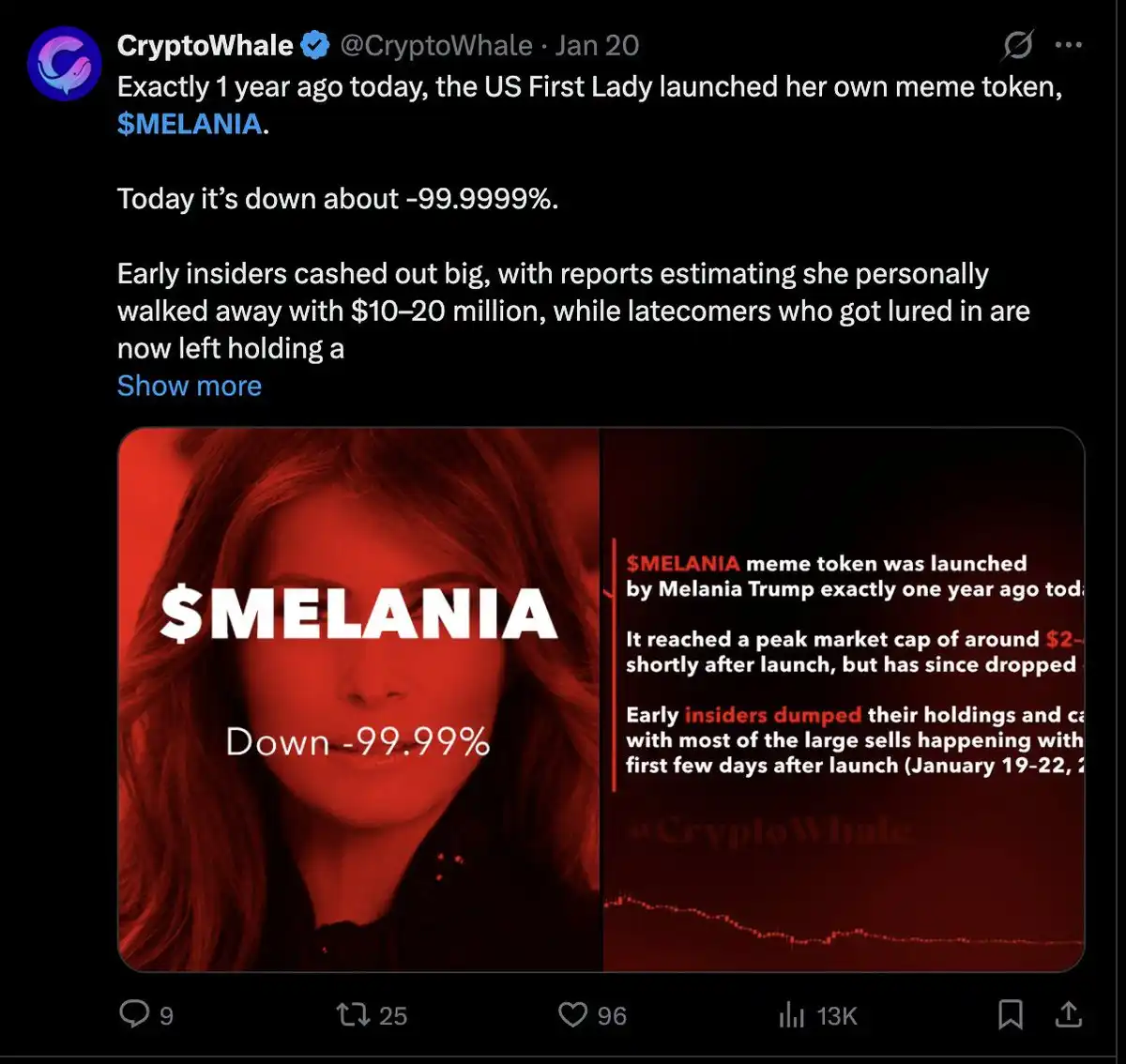
Caption: Thanks, Obama (meme)
The issue is not whether this marks the top, but who did it and what the consequences are. Considering that the TRUMP coin was launched two days before the official inauguration, and other tokens were made by people "associated but technically not him," good luck seeking a refund.
Even before this scene, "Extraction" was the name of the game. We often say that cryptocurrency is a zero-sum game—for me to make $50, there must be one person or a group of people losing a total of $50. Many people were burned in 2021/22, becoming exit liquidity for those savvy "on-chain predators," and then they came back in 2023 with a vengeance—starting to participate in the predation themselves.
This is the problem: There is no pure interest here anymore.
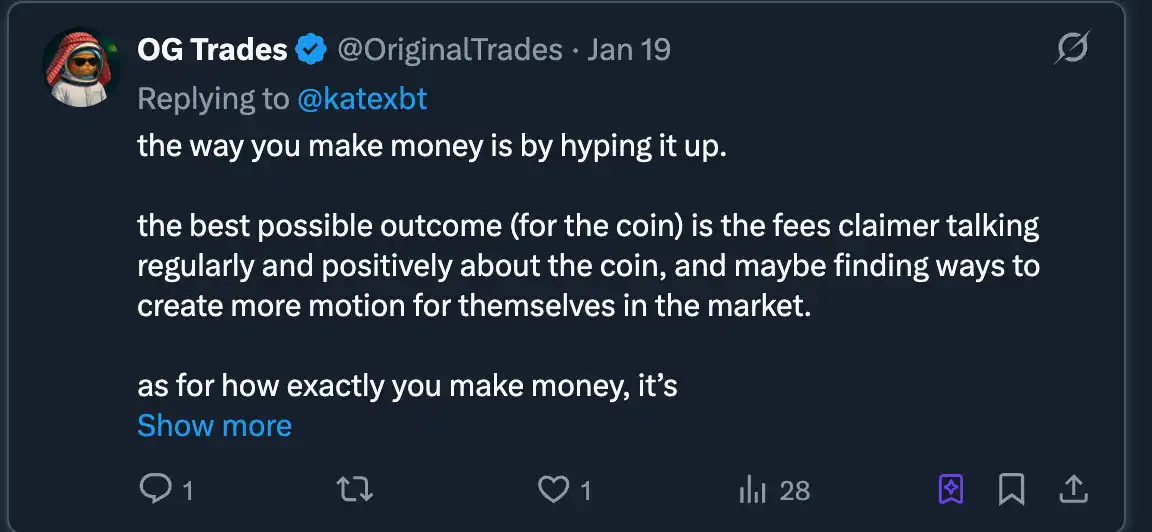
Now there are no new speculators willing to be "predated" because in 2021/2022, participating in this "party" was at least positive expected value (+EV), fun, and vibrant. But now, people have better places to go.
4. Crypto Is No Longer the Most Interesting Game
- AI
- Vibe Coding (building apps alone in hours, not leading teams for weeks)
- Robotics
All these areas are much more interesting than cryptocurrency because we can clearly see the impact they bring. The stories in these areas are not just "you'll get rich because it goes up." If there is a bubble now, it's in AI, not crypto.
This means opportunities are elsewhere, not in cryptocurrency.
As "a friend on my TG" said, his origin story (and many others):
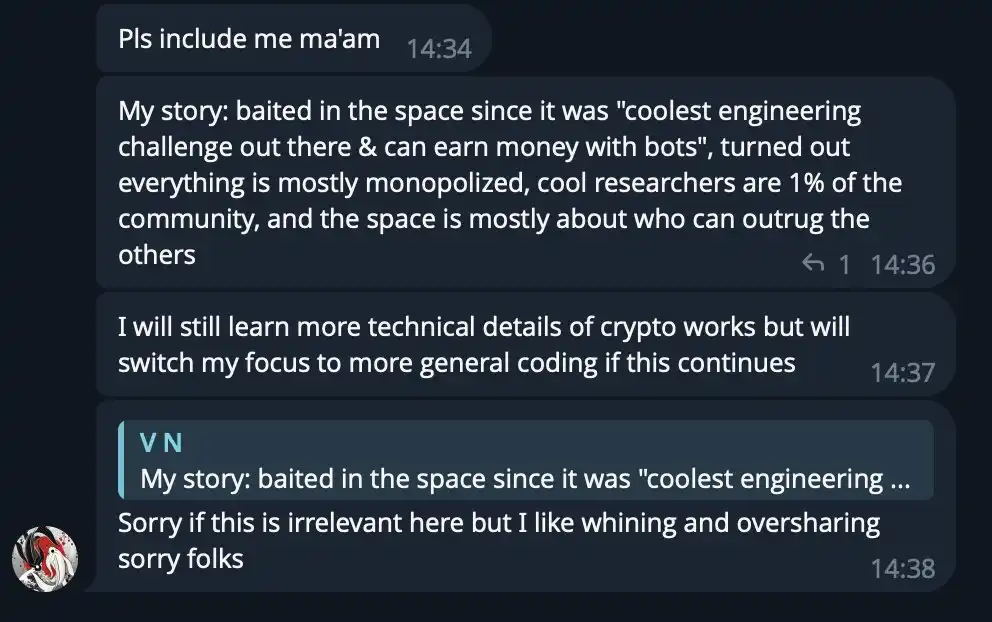
The logic here is: if you enter with pure intentions, trying to create value and tokenize, you will eventually encounter a truckload of fools complaining about the price (and the price is designed to fall because tokenomics mainly benefits the team).
So people simply choose the straightforward way—they design systems (presented as various flavors of Ponzi schemes depending on skill level) with the initial intention of taking money. This way is more direct and efficient.
5. Price Is the Best Advertisement, but the Ads Now Are Terrible
So far, these advertisements have performed very poorly. Since Solana (SOL) went up 10x and Hyperliquid (HYPE) went up 5x, the returns in the crypto market have been微不足道 compared to what you see in the stock market.
The legendary crypto trader GCR once lamented:
"When the macro environment is in risk-on mode, it is wise to bet on the fastest horse, and currently that horse is cryptocurrency." (Something like that, I can't find the screenshot).
But guess what? The Dow Jones hit a new all-time high, the Nikkei also hit a new all-time high, gold and silver—you guessed it, also hit new all-time highs. And cryptocurrency? Stagnant. This is different from anything we've seen before, and this is exactly what annoys many people.
The price of assets (their valuation) is also completely disconnected from the function of these assets. Does the "world computer" really need a $360 billion market cap? Is it really worth twice as much as Intel?
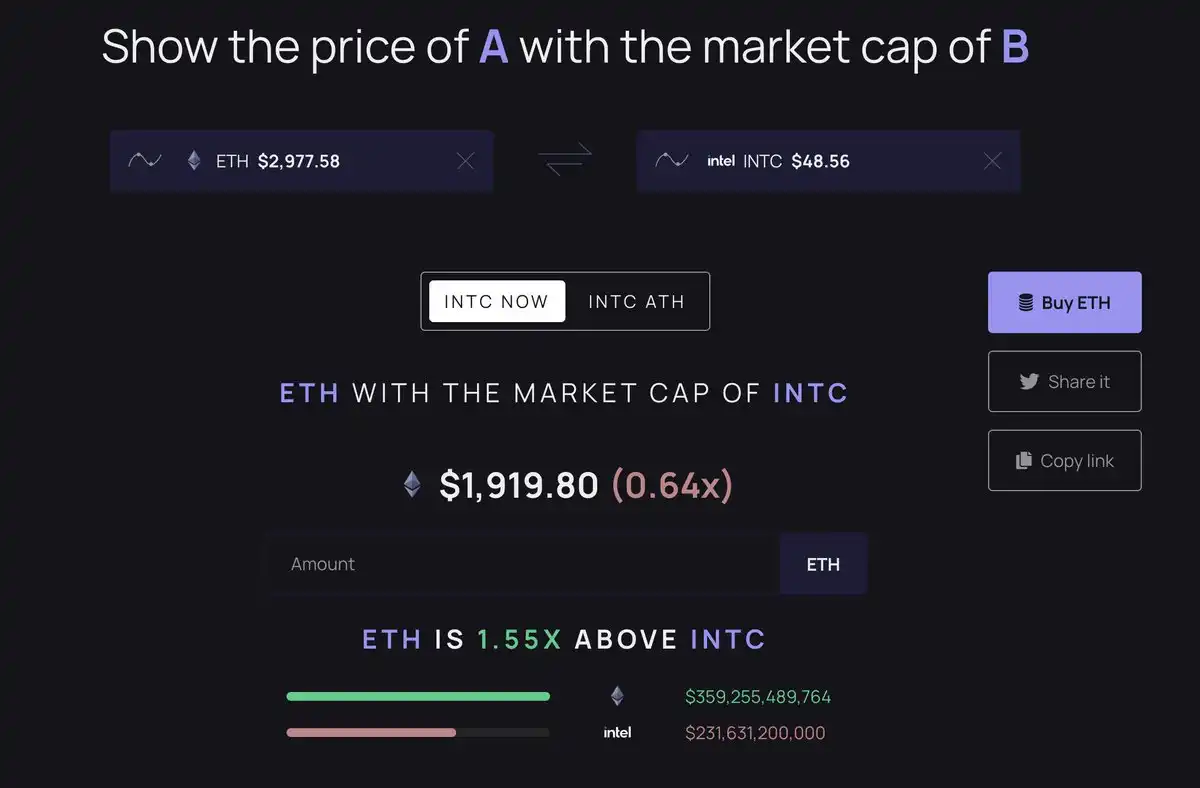
That's a company that has been making processors for nearly half a century. If Ethereum (ETH) were $400, would network security still be guaranteed? Most likely yes.
6. Normies Are Disgusted by Our "Culture"
One thing different from 2021 today is that no one is drinking the "Kool-Aid" anymore, no one believes that you can become rich, famous, or successful just by being in the crypto industry. If that were true, you would see more success stories, not people constantly losing money or even encountering violence (like having fingers chopped off).
On the contrary, when a person with social capital sees a crypto project or someone mentions it to them, they might play along for a while, probably a few hours, because in this day and age, entering and exiting with a bag of money only takes that long. On this website (X/Twitter), everything is pseudonymous or anonymous, which means the potential consequences are also minimal—almost non-existent.
We've been trying this "creator coin" garbage for almost three years now, and aside from a very few barely working cases, almost every version has become "Extraction Central." In economics, we call this "Adverse Selection":
- Real creators don't want a group of disgusting,卑微 like beetles speculators bothering them all day.
- Scammers will indulge in it for two hours, make money, and then laugh at how degenerate we are.
- Most high-net-worth individuals (HNWI) simply don't care, because the disadvantages far outweigh the benefits.
- Gamblers (indeed very degenerate) will gamble themselves into bankruptcy and then complain in their information cocoons.
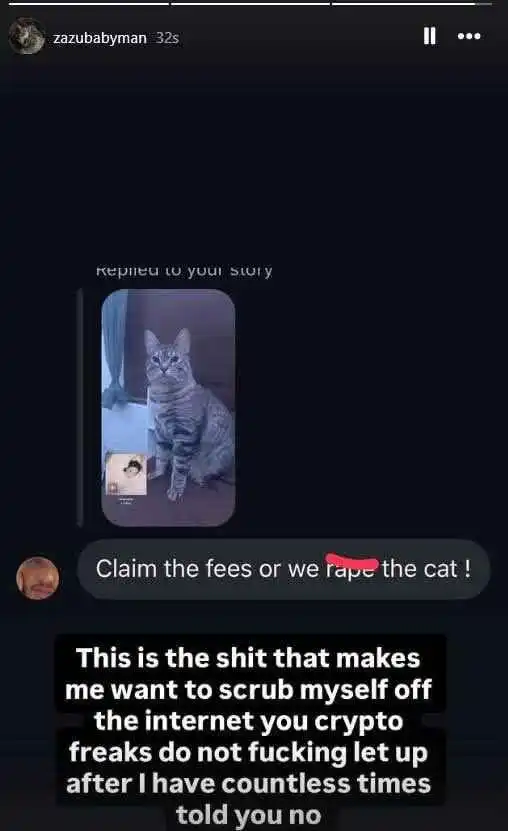
Wow, the Zora creator economy powered by Base and Solana capital markets is so cool, I love it so much, I want to get all my friends to join as soon as possible! (Note: Author's sarcasm here)
7. Tech People Are Also Disgusted by This Culture—Because the Crypto Industry Has No Substance
Five years ago, I would go to Hacker News to see how anti-crypto they were, or see how sour the comments on Gematsu were, but in the end, those people often became the highest bag holders. But now, I feel like they don't even actively express hatred as much as before—they are just彻底 disgusted and hope it all ends quickly.
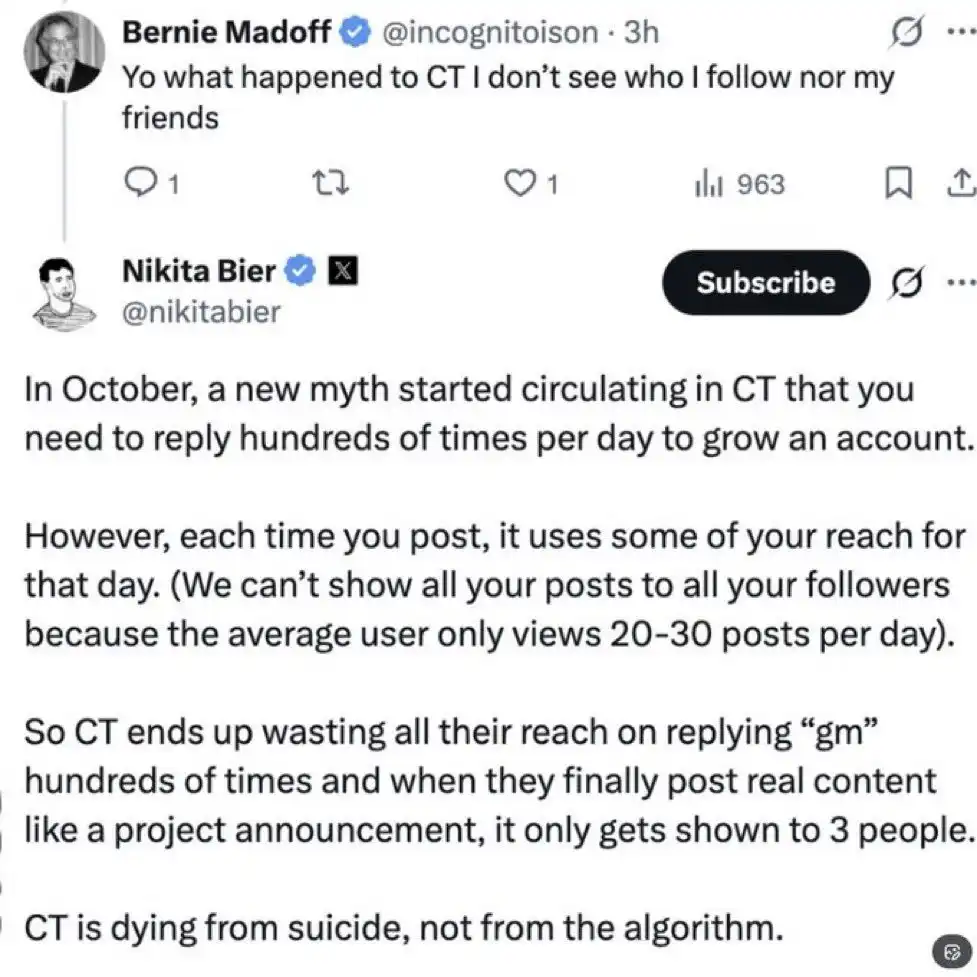
They want it to end because, whether founders or thinkers, no matter what their stance on cryptocurrency is, the only significant use cases they see are "zero-sum money games" and "scams." Except for a very few life-changing airdrops (like Jito, Hyperliquid, or some already dead infrastructure projects), the vast majority of so-called "opportunities" are landmines.
From my perspective:
- Although technically feasible, Web3 wallet connection (Wallet connect) has not been implemented in any well-known Web2 applications.
- The real-life adoption of stablecoins is actually not that amazing; instead, as mentioned before, it increases government regulation and operational security (Opsec) risks.
- For savvy investors, other markets have better returns.
- Valuations for new projects are crazy across the board, no matter the price, and we now have over 8 years of strong data to confirm this (underperformance).
- Even projects like Privy, which have been called the biggest winners in the past 4 years due to their broad appeal, have not driven any applications that can be called "success stories" for the crypto industry.
If, as a collective, you were given a full 10 years to build something, and the best you could come up with is "a better wallet," "a better blockchain explorer," or "a simpler way to gamble with lower fees"—can you blame people for thinking cryptocurrency has little value and is a failed experiment?
8. Yield Compression
Since I entered the industry in 2020, the thing that attracted me and kept me investing money has been DeFi protocols. The return on USD (in the traditional field) is at most 3-4%, and banks require all kinds of KYC/AML (anti-money laundering) proof for basic operations. In countries like Japan or China, it's even hard to get such returns.
DeFi offered a new way to earn yield, which was more or less (usually less, lol) safe, especially considering potential airdrops, the returns could be very substantial. But as the African-American community often says, the hit rate of "hitting a lick in the bando" has dropped significantly.
This is not because of AI advancement or people suddenly becoming smarter, but because of the imbalance in the ratio: new entrants willing to endure this crap and its risks / seasoned players who know the rules of the game ...... this ratio is dropping sharply.
If you want to know more, you can翻翻 @rami_poker's past随笔, it's all been written about.
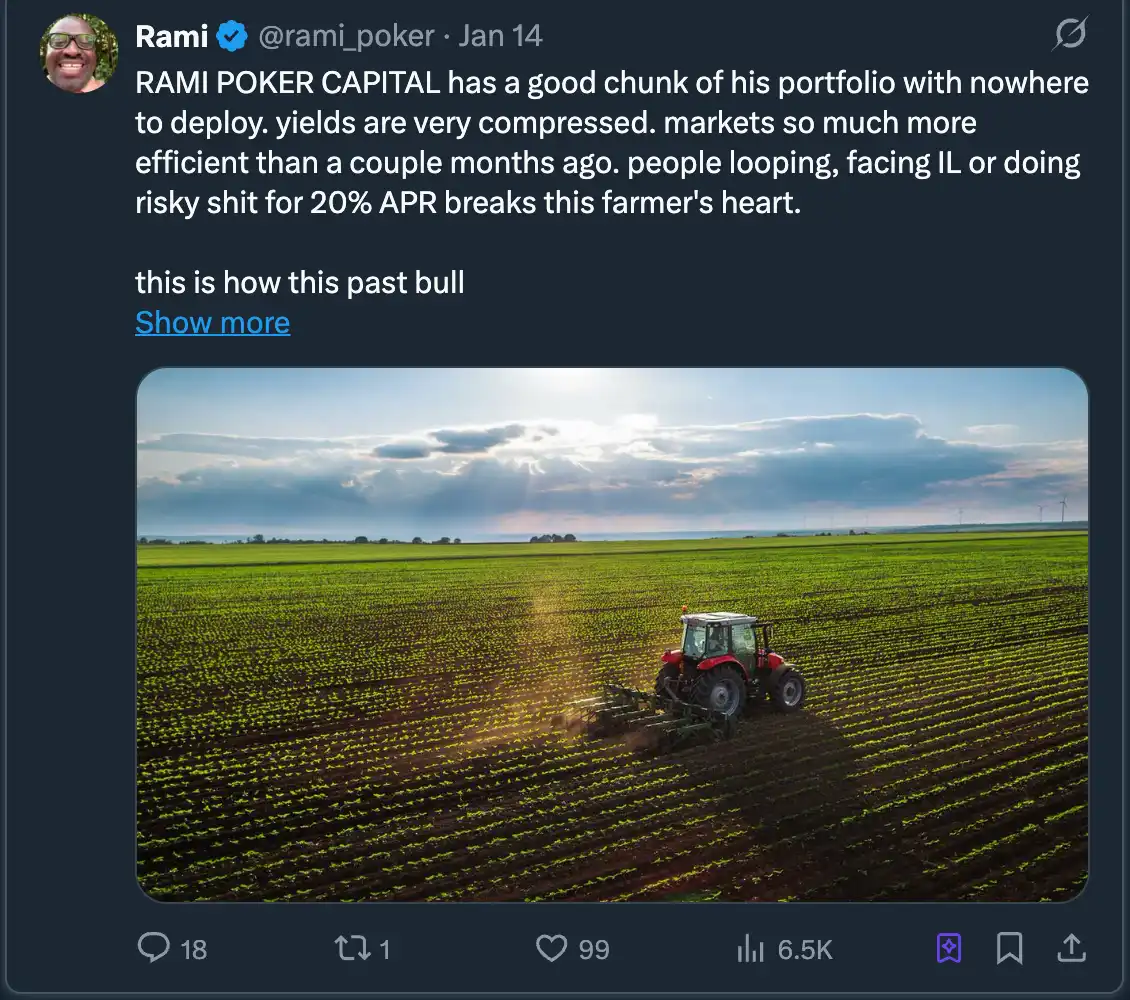
I also dare to bet that Pendle has exacerbated this situation to some extent. Although it is very genius, the innovation of YT (yield tokens) opened the door for unethical teams to accelerate this speculative fraud at the expense of those who think they are smart but are actually mediocre (like me, lol).
The compression of yield corresponds to my previous point: a疯狂轮动的 hot money ball is not so hot anymore, now it looks like leftovers. From personal experience, only 3 people in my circle are DeFi fans and really care about it:
- One who always hates it and wants to quit because he feels too old to play these烂事了.
- Another from Singapore, who cares a lot about it, but he is only 20 and can pivot to anything at any time.
- The last one is me—I have pivoted to writing on X for a living because I don't have time to do due diligence on whether someone will directly hard rug, steal my yield, or just waste my time while juggling work, travel, and managing life.
9. We Don't Trust Anyone Anymore
All the "metas" seem to be accelerating, and any particular narrative faces greater resistance to spread and diffusion. We also no longer trust companies or centralized exchanges (CEXes)......
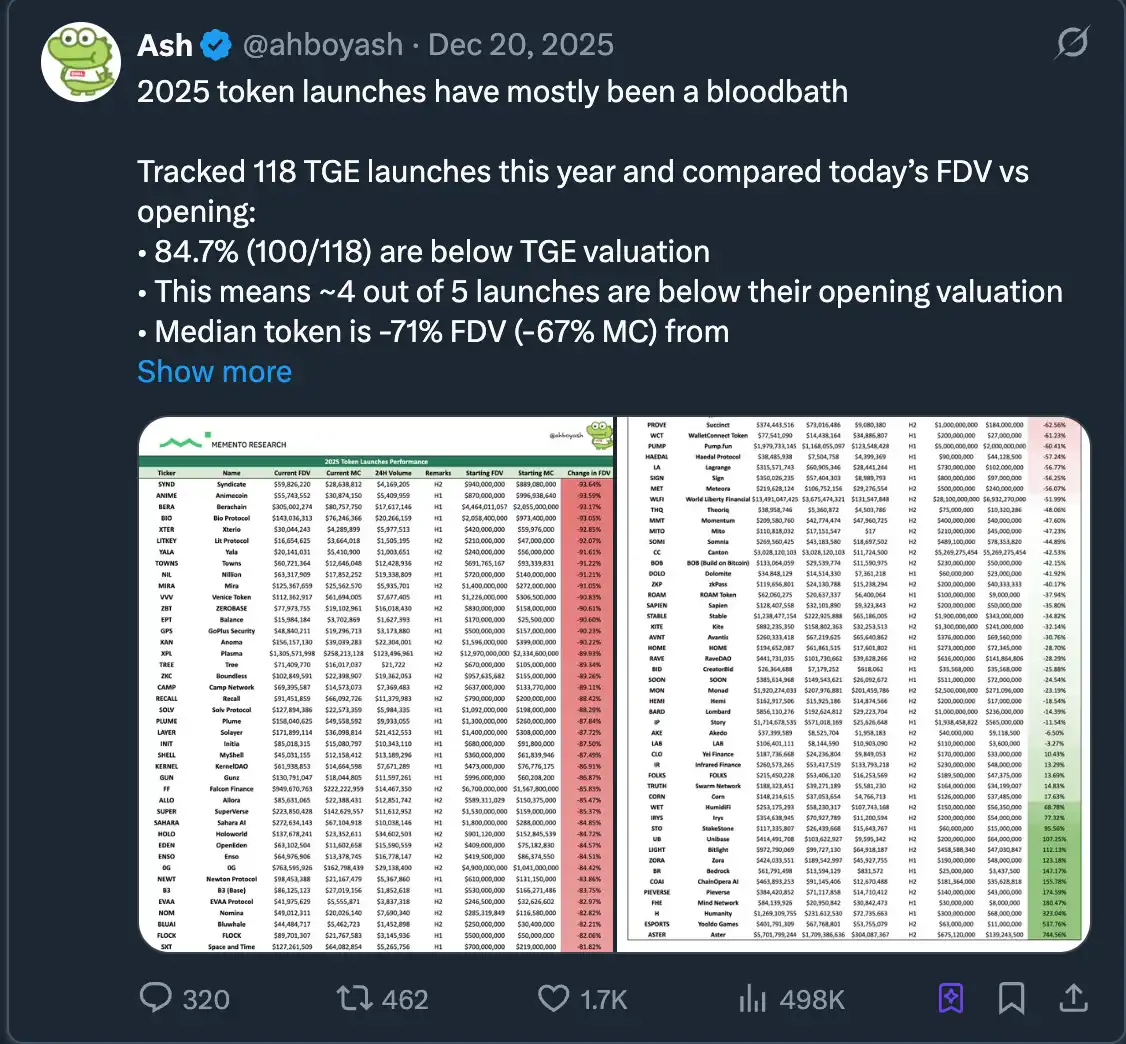
- We don't trust CZ and Binance.
- We don't trust Coinbase, Brian, or the Base/Zora folks.
- We absolutely do not trust Ledger.
- We especially don't trust those "tourist" founders—if you've been in the circle for ten years before coming out to issue a token, what were you doing all these ten years?

10. Infighting Within the Circle
Since the end of 2022, the term "PVP market" has become ubiquitous. It used to refer to the game of on-chain metrics, but now, this "hatred" has spread inside cryptocurrency.
- Posthumous whipping on Crypto Yelp: Everyone is tearing each other apart on social platforms. Although the出发点 is good, it's already too late.
- Rising by "spitting": Many accounts have gained followers quickly recently, with the only "value output" being posting two lines of witty remarks or screenshots mocking other CT (Crypto Twitter) big Vs or projects.
- Misogynistic and unpleasant community atmosphere: A group of people who think they are cool搞准入 in their respective "cesspools" (NFT or token communities). When the community market cap drops 90% a year later, they start疯狂 biting each other.
Imagine how disgusting it will be when you have to tell your descendants that your achievement in your 20s and 30s was this crap.

Whether love or hate, it was this "ignorant optimism" that once supported the prices of our altcoins. But now, the lights are on, and the party should be over.






