Ethereum MicroStrategy Tom Lee: ETH Has Bottomed Out, The Last Chance to Get On Board

marsbitPublished on 2025-12-11Last updated on 2025-12-11

Abstract

Tom Lee, Chairman of BitMine Immersion Technologies (BMNR), believes Ethereum has bottomed after recently falling below $3,000. His company, the largest public Ethereum treasury, backed this view by purchasing 138,452 ETH worth $460 million last week—its largest acquisition since October. BitMine now holds 3.2 million ETH, about 3.2% of the circulating supply, with a goal to reach 5%. Lee expects both Bitcoin and Ethereum to see significant moves by year-end, though he is more bullish on Ethereum's long-term prospects over the next 10-15 years. He argues Wall Street is adopting Ethereum’s blockchain for future financial infrastructure, starting with stablecoins and expanding to tokenize all assets. This aligns with BlackRock executives’ recent comments that tokenization is the next major market evolution. Ethereum currently leads in tokenized real-world assets (RWA), hosting $12.1 billion, or nearly 66% of the distributed asset total.

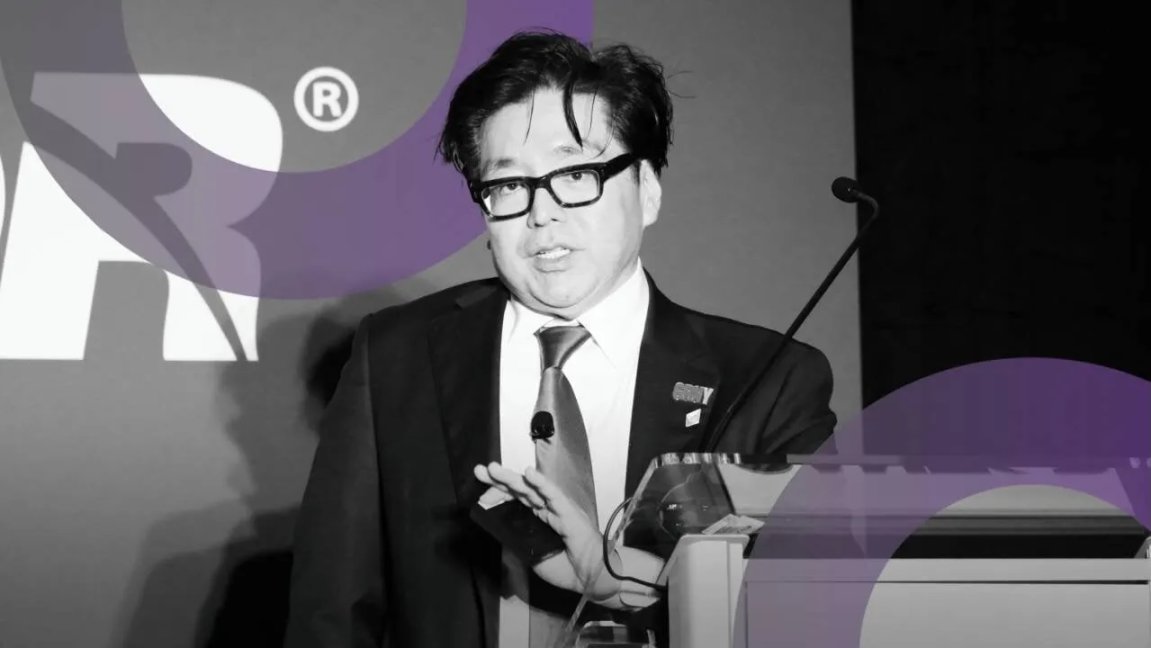
Tom Lee, Chairman of BitMine. Image Credit: André Beganski/Decrypt

Key Points:

  • Tom Lee, Chairman of BitMine, believes Ethereum has hit its bottom for the year.
  • Lee's company, the world's largest Ethereum treasury firm, increased its holdings by $460 million worth of Ethereum last week, "putting its money where its mouth is."
  • Lee stated that Ethereum is still expected to perform strongly before the end of the year; and over the next 10 to 15 years, he is more optimistic about Ethereum's development prospects compared to Bitcoin.


Tom Lee believes that the price of Ethereum, the second-largest cryptocurrency, has bottomed out after it fell below the $3,000 mark recently.

The Chairman of BitMine Immersion Technologies (who also serves as Chief Investment Officer of Fundstrat) stated that this Ethereum treasury company is currently backing its view with action by significantly increasing its Ethereum holdings at current price levels.

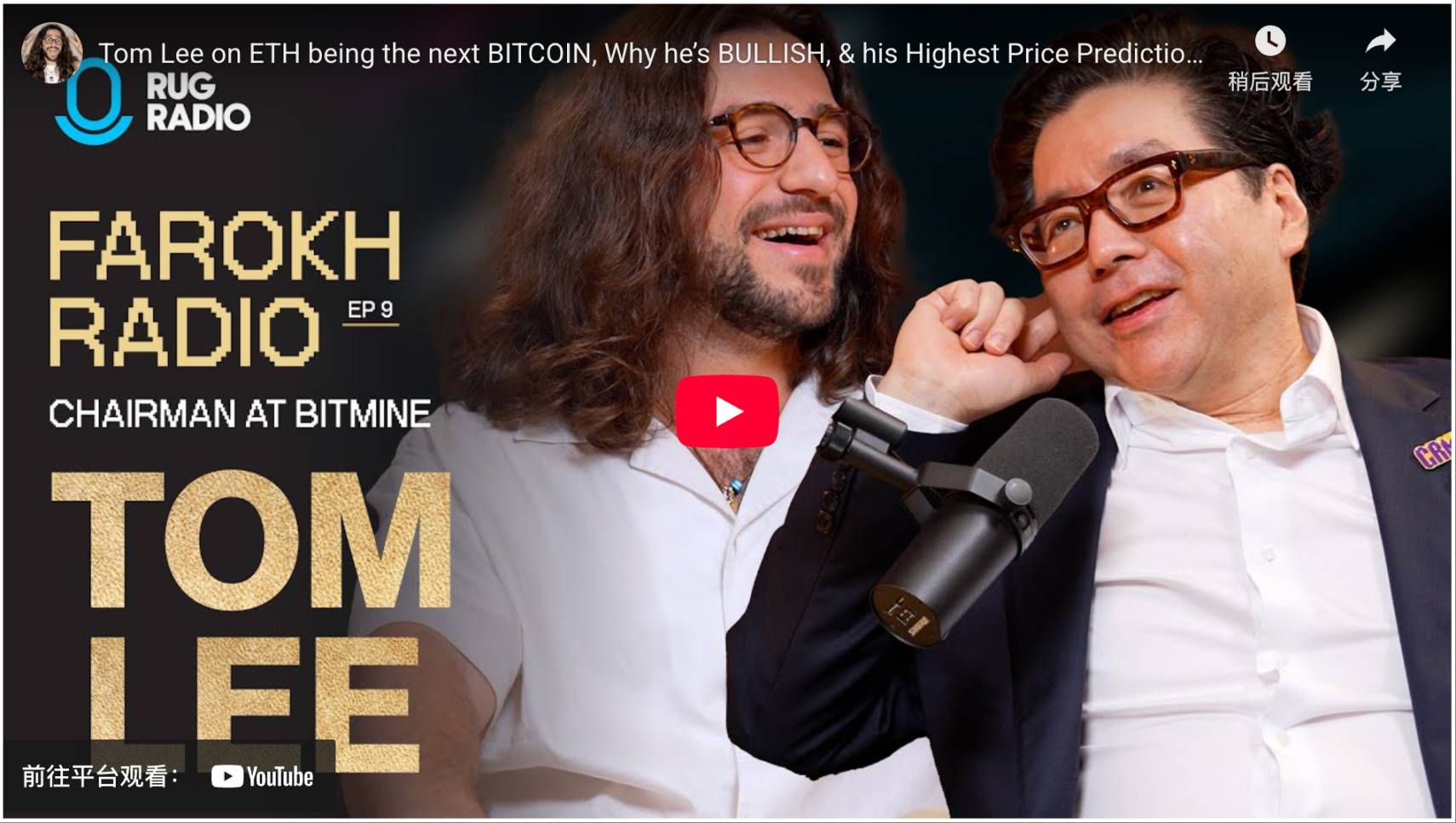
"BitMine believes the price of Ethereum has bottomed," Lee said in a video interview with Farokh Sarmad, President of Dastan, the parent company of Decrypt. "We are buying more than twice as much Ethereum now compared to two weeks ago."
The Ethereum treasury company recently significantly increased its holdings of the asset — purchasing 138,452 Ethereum last week, worth approximately $460 million.

This is BitMine's largest purchase since it acquired over 200,000 Ethereum in October, and the company aims to hold 5% of Ethereum's circulating supply.

As of Wednesday, BitMine holds approximately 3.864 million Ethereum, representing 3.2% of Ethereum's circulating supply, with a market value of $12.85 billion. Currently, the company is the largest publicly traded holder of Ethereum treasury reserves, ranking second among all cryptocurrency treasury firms — second only to Strategy, which holds over $61 billion worth of Bitcoin.

Additionally, BitMine holds 193 Bitcoin (worth approximately $18 million) and $1 billion in cash.

Although the prices of Bitcoin and Ethereum have retreated from their all-time highs, Ethereum has recently led the rebound: it has risen about 8% in the past 7 days and is currently trading at $3,376; meanwhile, Bitcoin's price has remained largely flat over the past week, recently trading at $92,248.

The BitMine executive (BitMine stock ticker: BMNR) stated that he believes both assets could experience significant volatility before the end of the year.

Previously, Lee had predicted that Bitcoin could reach a high of $150,000 by the end of 2025; however, as Bitcoin's price remained below $100,000 in the last week of November, he softened his stance, saying Bitcoin "maybe" could still reach that target.

Regardless, Lee and BitMine are more optimistic about Ethereum's development over the next 10 to 15 years — especially as Wall Street has embraced this Layer-1 blockchain network and recognized its role in the future financial landscape.

"The reason we are bullish on Ethereum is that Wall Street is choosing its blockchain for future development," Lee said. "This trend started with stablecoins — an important 'aha moment' for Wall Street... but stablecoins are just tokenizing the U.S. dollar. Now, Wall Street wants to tokenize all assets, and they won't achieve that on Bitcoin — because they need a smart contract platform."

This view aligns with statements from BlackRock executives Larry Fink and Rob Goldstein — who stated last week that tokenization is "the next major evolution in market infrastructure."

Ethereum is leading this trend: according to RWA.xyz data, Ethereum hosts $12.1 billion in tokenized real-world assets (RWA), accounting for nearly 66% of the total distributed asset share.


Related Questions

QAccording to Tom Lee, has Ethereum reached its bottom price for the year?

AYes, Tom Lee believes that the price of Ethereum has bottomed out for the year.

QWhat action did BitMine take to demonstrate its confidence in Ethereum's price?

ABitMine significantly increased its holdings by purchasing an additional 138,452 ETH, worth approximately $460 million, last week.

QWhat percentage of Ethereum's circulating supply does BitMine currently own?

ABitMine currently holds approximately 3.2% of Ethereum's circulating supply.

QWhy is Tom Lee more bullish on Ethereum's long-term prospects compared to Bitcoin?

AHe is more bullish because Wall Street is choosing the Ethereum blockchain for its future development, particularly for asset tokenization, which requires a smart contract platform that Bitcoin does not provide.

QWhat is the total value of tokenized real-world assets (RWA) currently on the Ethereum blockchain according to the article?

AAccording to RWA.xyz data cited in the article, the value of tokenized real-world assets on Ethereum is $12.1 billion.

Related Reads

China's AI Circle Has Just Established a Pecking Order, and Capital Is Already Changing the Rules Again

The article describes how the valuation logic for major Chinese AI model companies has undergone three dramatic shifts between 2022 and 2026, driven by capital's changing priorities. The first phase (around 2022) was **technology-driven valuation**, where funding was based on model performance and benchmark scores. This logic was disrupted when DeepSeek's R1 model demonstrated that comparable capabilities could be achieved at a fraction of the cost, challenging the notion of technical superiority as an unassailable moat. The second phase shifted to **IPO window-driven valuation**. Following favorable listing conditions in Hong Kong, capital flowed to companies like Zhipu and MiniMax with the clearest path to a public listing. However, this focus on liquidity over fundamentals became apparent as their Annual Recurring Revenue (ARR) lagged far behind international peers like Anthropic. The third and current phase is **national strategy-driven valuation**. This shift was marked by the state-backed "Big Fund" leading a major investment in DeepSeek, signaling that leading domestic AI models are now viewed as strategic national assets comparable to semiconductor manufacturing. This new logic, combined with soaring US valuation benchmarks (e.g., OpenAI at $850B), propelled the combined valuation of China's top AI firms ("The Four Dragons"/"Five Strong") past 1 trillion RMB. The article presents a "pricing leap model": each shift is triggered by a key event that invalidates the old logic, leading to rapid capital reallocation under a new narrative before its flaws (particularly the gap in fundamental ARR metrics) become evident. It concludes that the next major test for these valuations will be a return to scrutinizing core business fundamentals, specifically ARR growth, suggesting a fourth pricing shift is imminent.

marsbit10m ago

China's AI Circle Has Just Established a Pecking Order, and Capital Is Already Changing the Rules Again

marsbit10m ago

'Stock God' Trump's 3,642 Trades Disclosed: The 'Perfect Closed Loop' of Policy and Portfolio

Summary: Donald Trump's First Quarter stock trades, totaling 3,642 transactions, have been disclosed. While the White House maintains the trades were managed by an advisor and complied with disclosure laws, they reveal a portfolio heavily aligned with his policy agenda. The trades show a rotation away from major tech stocks like Microsoft, Amazon, and Meta, and into semiconductor and AI hardware companies such as NVIDIA, AMD, Broadcom, Dell, and Intel. Notably, Trump's account purchased Dell stock before he publicly praised the company, after which its stock rose. The Dell family also pledged funds to a Trump-affiliated policy project. A critical case is Intel. The Trump administration converted $8.9 billion in CHIPS Act subsidies into a 9.9% equity stake, making the U.S. government Intel's largest shareholder. Months later, Trump's personal account also bought Intel stock. This intertwines national industrial policy with potential personal financial interest. Unlike typical insider trading concerns, this situation creates a "closed loop": policy decisions (e.g., subsidies, tariffs, crypto regulation) can boost the value of his holdings, and those holdings may, in turn, influence future policy directions. This blending of presidential power and personal portfolio, while legally disclosed, raises profound questions about conflicts of interest that current rules do not address.

marsbit26m ago

'Stock God' Trump's 3,642 Trades Disclosed: The 'Perfect Closed Loop' of Policy and Portfolio

marsbit26m ago

Dialogue with Figure Robotics Founder: Behind the $39 Billion Valuation Lies Ambition to Mass-Produce Millions of Units

Title: Figure's Founder on the $39B Valuation and the Ambition to Mass Produce a Million Humanoid Robots In a Sourcery podcast interview, Figure founder and CEO Brett Adcock discusses the rapid rise of his humanoid robotics company. With a valuation that surged 15x in 18 months to $39 billion, Figure aims to create general-purpose humanoid robots for work in factories and homes. Adcock states that the company's primary goal is to make robots that perform real, paid work autonomously. He shares Figure's aggressive scaling plan: producing thousands of robots this year, with an ultimate ambition to reach one million units annually. Adcock explains Figure's vertically integrated strategy, designing its own motors, sensors, and joints to control its supply chain and destiny. He details the challenges, including achieving long-term, reliable, end-to-end autonomous operation—a feat no one has yet accomplished. The biggest risk is executing this complex vision at scale, but Adcock believes the potential market is enormous, representing a significant portion of global GDP. The interview also covers his departure from OpenAI, citing that Figure's internal AI team eventually surpassed OpenAI's capabilities for robotics applications. Adcock concludes by highlighting his focus for the year: large-scale commercial deployment of robots and advancing toward a "general robot" capable of any human task, potentially seeing the first signs of AGI (Artificial General Intelligence) in the physical world at Figure.

marsbit26m ago

Dialogue with Figure Robotics Founder: Behind the $39 Billion Valuation Lies Ambition to Mass-Produce Millions of Units

marsbit26m ago

Why Did OpenAI Decide to Make a Phone? ChatGPT Is Taking the Permissions Apple Won't Give

The article discusses OpenAI's surprising move into developing its own AI-powered smartphone, reportedly targeting a 2027 launch. Initially driven by faith that superior AI models alone would secure its dominance—evidenced by ChatGPT's viral success—OpenAI now faces a strategic pivot. Key challenges include slower-than-expected revenue growth and competition from rivals like Anthropic's Claude Code, which successfully monetized a specific, high-value user base (developers) by deeply integrating into workflows. OpenAI recognizes that for ChatGPT to evolve from a conversational tool into a true "AI Agent" that completes tasks (e.g., booking travel, managing files), it needs direct system-level permissions and a default user interface. Currently, as a service integrated into platforms like Apple's iOS and Microsoft's Windows, ChatGPT lacks the necessary access and control ("sovereignty") over hardware, data, and user interactions. Building its own device is seen as a way to give ChatGPT its "first body"—a dedicated terminal where it can operate with full autonomy, bypassing the limitations imposed by partner ecosystems. This shift underscores a broader realization: in the AI Agent era, owning the end-user device and experience is critical to capturing value and maintaining competitive advantage, even if it means directly competing with former allies like Apple.

marsbit33m ago

Why Did OpenAI Decide to Make a Phone? ChatGPT Is Taking the Permissions Apple Won't Give

marsbit33m ago

Trading

Spot
Futures

Hot Articles

Discussions

Welcome to the HTX Community. Here, you can stay informed about the latest platform developments and gain access to professional market insights. Users' opinions on the price of ETH (ETH) are presented below.

活动图片