ETH Staking Data Reversal: Exits Drop to Zero VS Entries Surge by 1.3 Million—When to Buy the Dip?

Odaily星球日报Published on 2026-01-07Last updated on 2026-01-07

Abstract

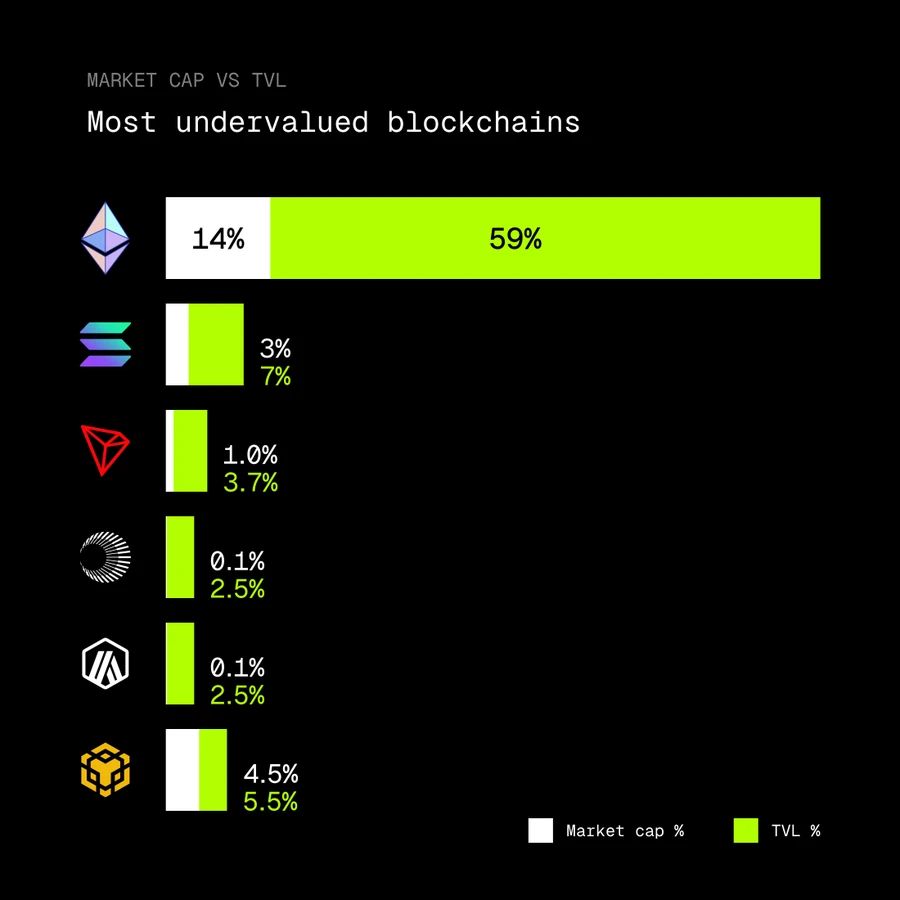
Ethereum's staking dynamics have recently undergone a notable shift. As of January 7, the exit queue for ETH staking has been fully cleared, indicating that the prolonged period of withdrawal pressure has been absorbed. Concurrently, the entry queue has surged significantly, with approximately 1.3044 million ETH now waiting to be staked—a stark contrast to the situation in mid-September when over 2.66 million ETH were queued to exit amid higher prices. This reversal, while reflecting improved market structure, is largely driven by institutional reallocation rather than broad retail momentum. Notably, BitMine, a major digital asset treasury, staked around 771,000 ETH in recent weeks, accounting for a substantial portion of the new entries. This suggests the trend is influenced more by long-term yield strategies than immediate bullish sentiment. Beyond staking, Ethereum's fundamentals show signs of broader improvement: Q4 2024 saw a record 8.7 million smart contracts deployed, stablecoin transfer volume exceeded $8 trillion, and gas fees hit all-time lows. Exchange reserves of ETH remain near multi-year lows, reducing immediate sell-side pressure. Additionally, the significant disparity between Ethereum’s TVL dominance (59%) and its market cap share (~14%) may indicate undervaluation relative to its economic activity. In summary, while the staking shift alone may not signal a price turnaround, it aligns with other strengthening on-chain metrics, suggesting Ethereum is underg...

Original | Odaily Planet Daily (@OdailyChina)

Author | Ding Dang (@XiaMiPP)
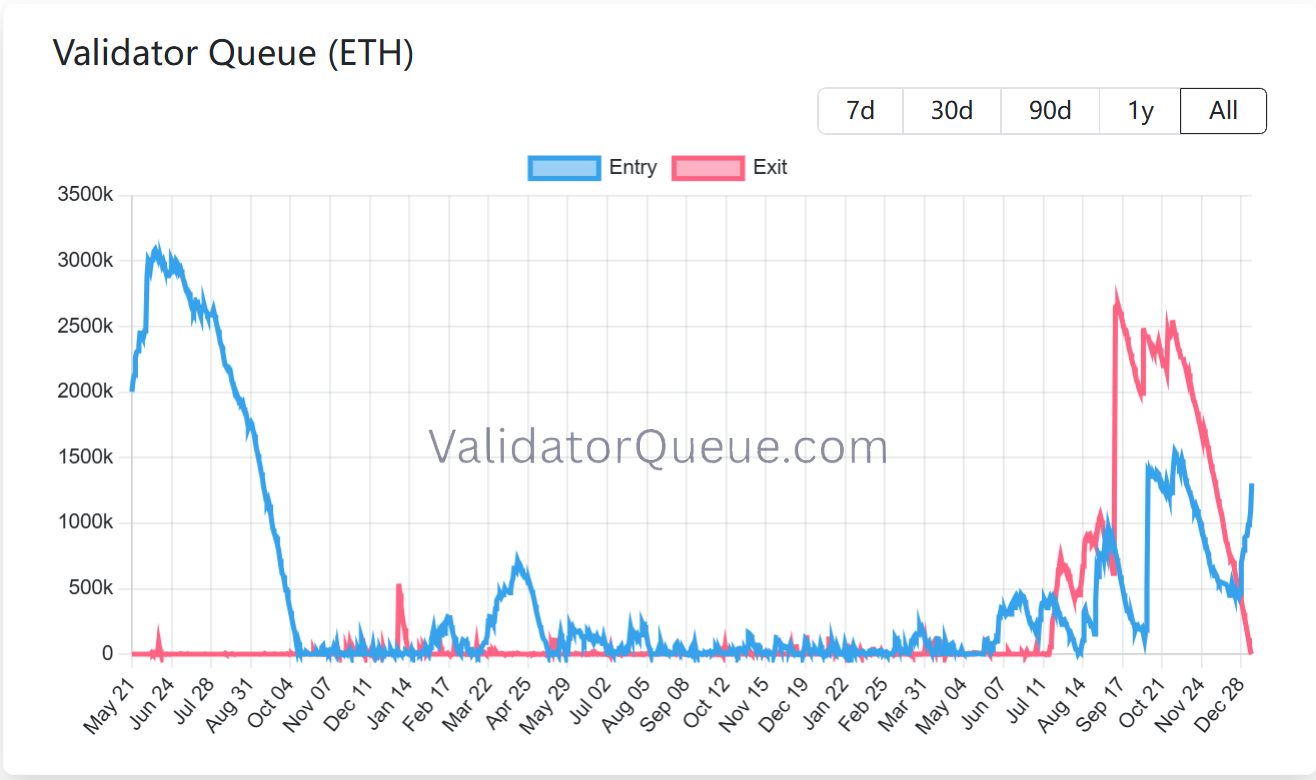
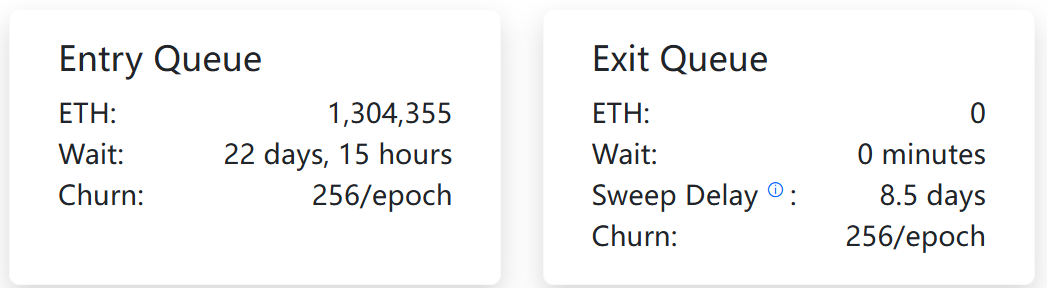
On January 7, the exit queue for Ethereum's Proof-of-Stake (PoS) mechanism officially cleared. At least from on-chain data, the sustained exit pressure over the past months has finally been fully digested, with no new large-scale redemption requests currently observed.

At the same time, the size of the staking entry queue has significantly increased, now reaching approximately 1.3044 million ETH, with a waiting time of about 22 days and 15 hours. This situation is a complete reversal compared to mid-September last year.

At that time, ETH's price was at a阶段性高点 of around $4,700, and market sentiment was high, but the staking side showed a different attitude: 2.66 million ETH chose to exit staking, with exit queue wait times一度 exceeding 40 days. In the following three and a half months, ETH's price fell by about 34%, dropping from $4,700 to $3,100.

Now, after a deep price correction, the exit queue has finally been fully digested.
Staking Queue as a "Sentiment Indicator," But Not a Price Signal?

Typically, changes in the validator queue are seen as an important barometer for gauging market sentiment. The logic behind this is that Ethereum's PoS, to ensure consensus stability, does not allow nodes to enter or exit arbitrarily. Instead, it uses a flow control mechanism to regulate the pace of staking and exit behaviors.

Therefore, when ETH's price is at a high stage, exit demand tends to accumulate. Some stakers may choose to cash out profits, but the potential selling pressure is not released instantly; instead, it is "stretched out" on-chain through the exit queue. When exit demand gradually dries up and is fully digested, it may indicate that a structural selling pressure is coming to an end.

From this perspective, the clearing of the current exit queue, coupled with the simultaneous rise in the entry queue, does constitute a noteworthy change. However, I believe that while this change appears to form a positive resonance on the surface, its impact on market prices—note, "impact"—is not equivalent to the "high exits, low entries" phase in September. This is because ETH entering the staking queue does not equate to "new funds actively buying ETH at the moment." A significant portion of the筹码 entering staking likely completed accumulation at an earlier stage and is only choosing to reallocate at the current time. Therefore, the rise in the staking queue reflects more a change in preference for long-term returns, network security, and the stability of staking rewards, rather than a significant strengthening of immediate price demand. This also means that the current improvement in queue structure is more about expectation repair than an equally strong boost to short-term prices.

Nevertheless, the significant growth in the current staking entry queue is still worth attention. The main driving force behind this comes from BitMine, the largest DAT treasury company for Ethereum. CryptoQuant data shows that BitMine has staked approximately 771,000 ETH in the past two weeks, accounting for 18.6% of its holdings of about 4.14 million ETH.

This means that this shift in staking trends is driven by a single large institution's asset allocation behavior, rather than a synchronized回暖 in overall market risk appetite. Therefore, it cannot be simply interpreted as a "return of全面看多 sentiment." However, in an emerging market like crypto, where liquidity distribution is uneven, the actions of large institutions are often more likely to, and can more easily, provide a certain degree of emotional support and expectation repair in the short term.

Whether this trend can continue or spread to a broader range of participants remains to be seen over time. But from on-chain fundamental data, several core metrics of Ethereum are simultaneously showing signs of marginal improvement.

From "Staking Changes" to "Coordinated Fundamental Improvement"

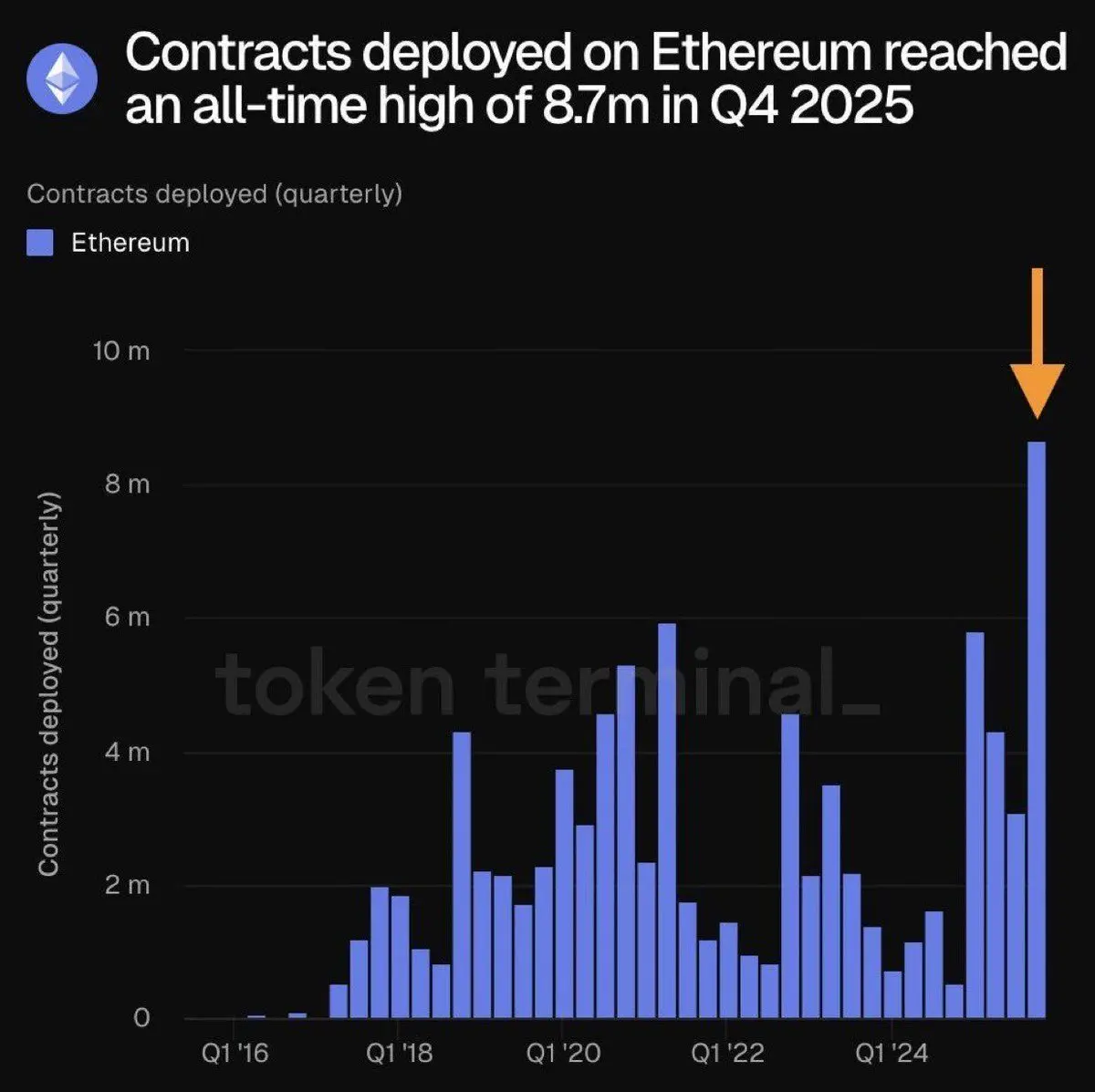
First, in terms of developers, Ethereum's development activity is hitting all-time highs. Data shows that in Q4 2025, Ethereum deployed approximately 8.7 million smart contracts, setting a new historical record for a single quarter. This change is closer to sustained product and infrastructure development rather than short-term speculative behavior. More contract deployments mean more DApps, RWA, stablecoins, and infrastructure are being launched, continuously strengthening Ethereum's role as a core execution and settlement layer.
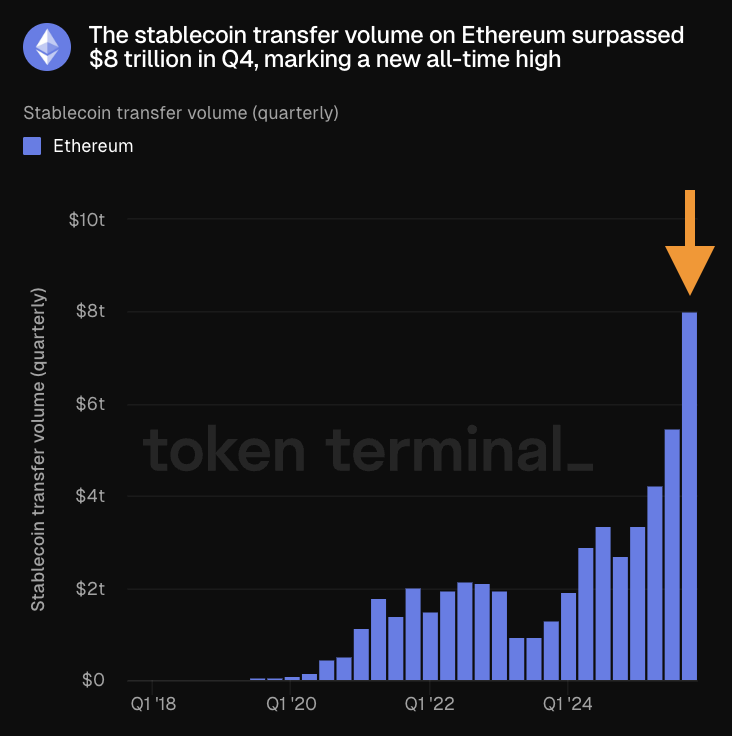
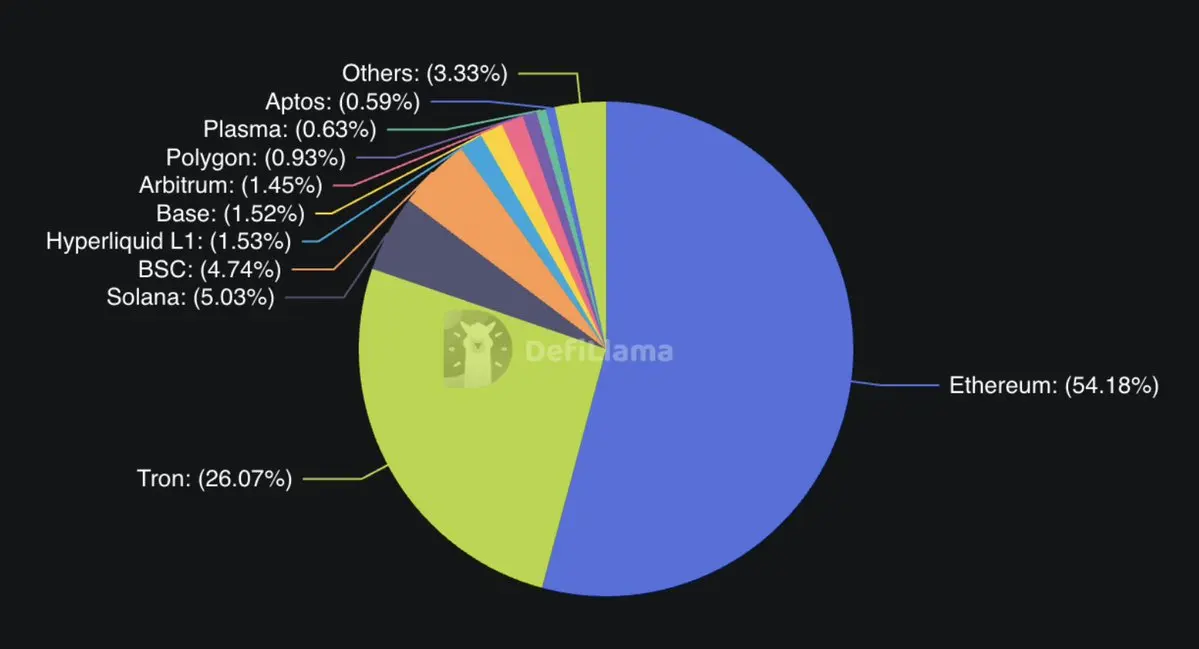
In the stablecoin sector, the on-chain transfer volume of stablecoins on Ethereum in Q4 exceeded $8 trillion, also setting a new historical record. In terms of issuance structure, Ethereum's advantage in the stablecoin ecosystem remains significant. Data shows that the share of stablecoin issuance on Ethereum is as high as 54.18%, far exceeding other mainstream blockchain networks like TRON (26.07%), Solana (5.03%), and BSC (4.74%).
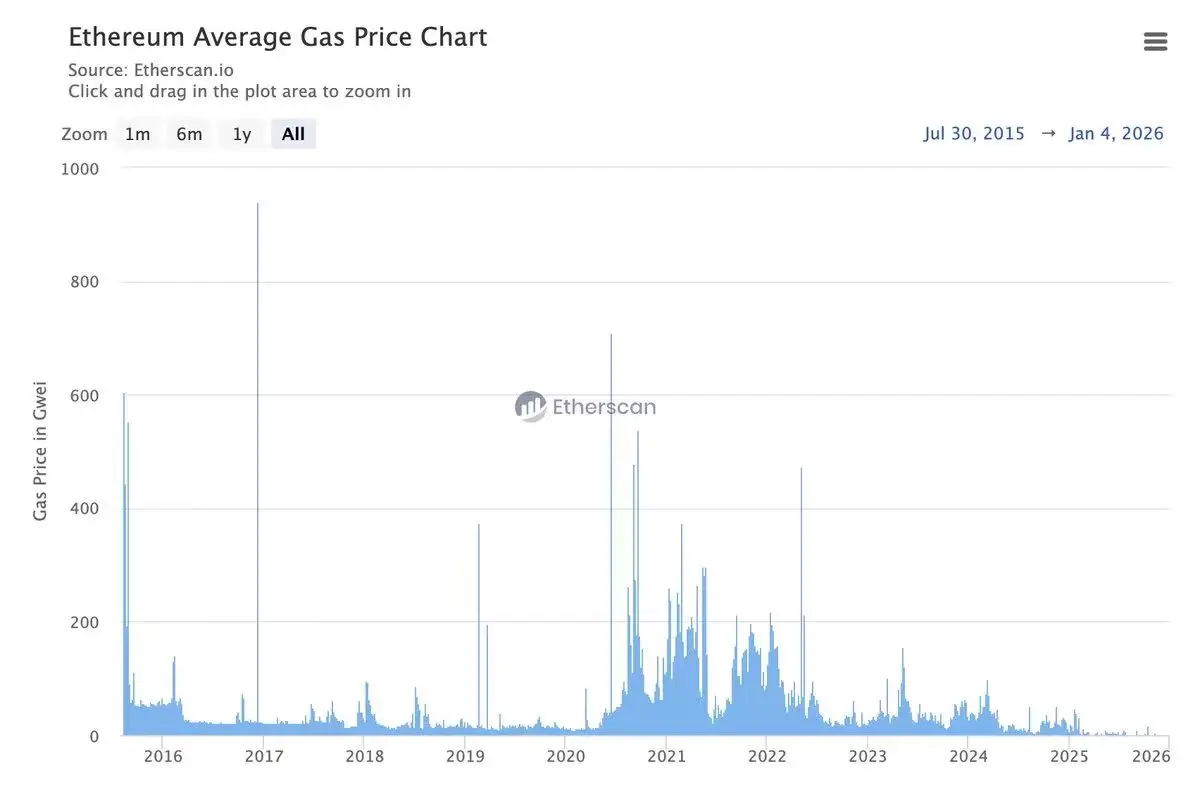
At the same time, Ethereum Gas fees have hit the lowest records since the mainnet launch and are continuously breaking records. In some periods, Gas fees were even below 0.03 Gwei. Considering that Ethereum will continue to推进 block扩容 this year, this trend has room to continue in the medium term. Lower transaction costs directly reduce the barrier to on-chain activity and provide a practical foundation for the continued expansion of the application layer.
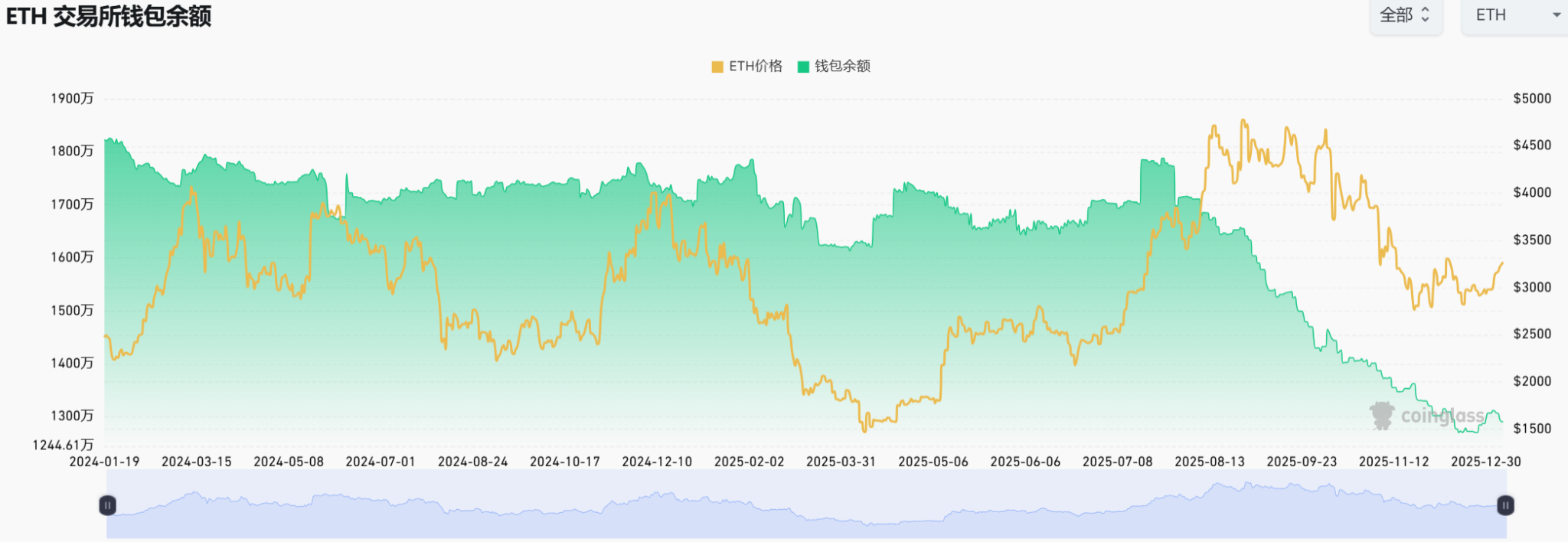
Looking at the exchange balance metric, Ethereum's potential selling pressure is also at a low level. In mid-December, Ethereum's exchange supply dropped to 12.7 million, the lowest level since 2016. Especially since August 2025, this metric has shown a significant decline of over 25%. Although exchange balances have slightly increased recently, the increment is only about 200,000 ETH, and the overall level remains in a historically low range, indicating weak selling意愿 among traders.
Additionally, crypto KOL rip.eth recently posted on X platform, pointing out that judging from the gap between Total Value Locked (TVL) and market capitalization, Ethereum might be the most undervalued blockchain network currently. Data shows that Ethereum carries 59% of the crypto market's TVL, but its token ETH's market share is only about 14%. In comparison, Solana's token market cap / TVL ratio is 3% / 7%, Tron's is 1% / 3.7%, and BNB Chain's is 4.5% / 5.5%. This, to some extent, reflects that there is still a significant misalignment between ETH's valuation and the scale of economic activity it supports.
Conclusion

Overall, changes in the staking queue may not be the "single variable" determining price trends. But when it improves simultaneously with metrics like developer activity, stablecoin usage volume, transaction costs, and exchange balances, it no longer presents an isolated signal but a more comprehensive fundamental picture.

For Ethereum, this might not be a sentiment-driven rapid reversal, but rather a process where the system is gradually restoring structural stability after undergoing a deep adjustment.


Related Questions

QWhat significant change occurred in Ethereum's staking queues on January 7th, and what does it indicate?

AOn January 7th, the exit queue for Ethereum staking was fully cleared, indicating that the prolonged period of exit pressure has been completely digested. Simultaneously, the entry queue saw a significant increase, with approximately 1.3044 million ETH waiting to enter staking, a reversal from the high exit and low entry trend observed in mid-September.

QHow does the change in staking queues relate to market sentiment, and is it a direct price signal?

AChanges in validator queues are seen as an important indicator of market sentiment. The clearing of the exit queue and the rise in the entry queue suggest a reduction in structural selling pressure and a shift in preference towards long-term yields and network security. However, it is not a direct price signal, as the increase in staking entries often represents earlier accumulated ETH being reallocated rather than new capital immediately buying ETH.

QWhat major institution drove the recent surge in Ethereum staking, and what was the scale of their activity?

AThe recent surge in Ethereum staking was primarily driven by BitMine, the largest DeFi Asset Token (DAT) treasury company. CryptoQuant data shows that BitMine staked approximately 771,000 ETH over the past two weeks, accounting for about 18.6% of its total holdings of 4.14 million ETH.

QWhat are some key Ethereum on-chain metrics showing marginal improvement alongside the staking changes?

AKey on-chain metrics showing improvement include: a record high in smart contract deployments with 8.7 million deployed in Q4 2025, Ethereum stablecoin transfer volume exceeding $8 trillion in Q4, record-low Gas fees (sometimes below 0.03 Gwei), and exchange balances hitting their lowest level since 2016, indicating reduced selling pressure.

QAccording to the article, how does Ethereum's valuation compare to its economic activity, and what does this suggest?

AAccording to analysis by rip.eth, Ethereum carries 59% of the total value locked (TVL) in the crypto market, but its token ETH only accounts for about 14% of the market capitalization. This significant disparity suggests that ETH may be undervalued relative to the scale of economic activity it supports, especially when compared to other chains like Solana, Tron, and BNB Chain.

Related Reads

Polymarket's "2028 Presidential Election" Volume King Is... LeBron James???

An article from Odaily Planet Daily, authored by Azuma, discusses a peculiar phenomenon observed on the prediction market platform Polymarket regarding the "2028 US Presidential Election" event. Despite having a real-time probability of less than 1%, unlikely candidates such as NBA star LeBron James (with $48.41 million in trading volume), celebrity Kim Kardashian ($33.84 million), and even ineligible figures like Elon Musk ($23.14 million) and New York City Mayor Zohran Mamdani ($18.39 million) account for approximately 70% of the total trading volume. In contrast, high-probability candidates like Vice President JD Vance ($10.58 million), California Governor Gavin Newsom ($15.71 million), and Secretary of State Marco Rubio ($9.32 million) have significantly lower trading activity. The article explains that this counterintuitive trend is not driven by irrational speculation but by rational strategies. Polymarket offers a 4% annualized holding reward for certain markets, including the 2028 election, to maintain long-term pricing accuracy. This yield exceeds the current 5-year US Treasury rate (3.98%), attracting large investors ("whales") to hold "NO" shares on low-probability candidates for risk-free returns. Additionally, some users utilize a platform feature that allows converting a set of "NO" shares into corresponding "YES" shares for better liquidity or pricing efficiency, rather than directly buying "YES" shares for their preferred candidates. Thus, the seemingly absurd trading activity is strategically motivated.

marsbit1h ago

Polymarket's "2028 Presidential Election" Volume King Is... LeBron James???

marsbit1h ago

Dialogue with ViaBTC CEO Yang Haipo: Is the Essence of Blockchain a Libertarian Experiment?

"ViaBTC CEO Yang Haipo: Blockchain as a Hardcore Libertarian Experiment" In a deep-dive interview, ViaBTC CEO Yang Haipo reframes the essence of blockchain, arguing it is not merely a new technology or infrastructure but a hardcore libertarian experiment. This experiment, born from the 2008 financial crisis and decades of cypherpunk ideology, tests a fundamental question: to what extent can freedom and self-organization exist without centralized trust? The discussion highlights the experiment's verified outcomes. On one hand, it has proven its core value of censorship resistance, providing critical financial lifelines for entities like WikiLeaks and individuals in hyperinflationary or sanctioned countries via tools like stablecoins. However, Yang points out a key paradox: the most successful product, USDT, is itself a centralized compromise, showing users prioritize a less-controlled pipeline over pure decentralization. On the other hand, the experiment has exposed the severe costs of this freedom—a "dark forest" without safeguards. Events like the collapses of LUNA, Celsius, and FTX, resulting in massive wealth destruction and prison sentences for founders, underscore the system's fragility and the inherent risks of an unregulated environment. Yang observes that despite decentralized protocols, human nature inevitably recreates centralized power structures, speculative frenzies, and narrative-driven cycles (from ICOs to Meme coins), where emotion and belonging often trump technological substance. Looking forward, he believes blockchain's future is significant but niche. Its real value lies in serving specific, real-world needs for financial sovereignty and bypassing traditional controls, not as a universal infrastructure replacing all centralized systems. For the average participant, Yang's crucial advice is to cultivate independent judgment. True freedom is not holding a crypto wallet, but possessing a mind resilient to groupthink and narrative hype in a high-risk, often irrational market.

marsbit1h ago

Dialogue with ViaBTC CEO Yang Haipo: Is the Essence of Blockchain a Libertarian Experiment?

marsbit1h ago

Trading

Spot
Futures

Hot Articles

Discussions

Welcome to the HTX Community. Here, you can stay informed about the latest platform developments and gain access to professional market insights. Users' opinions on the price of ETH (ETH) are presented below.

活动图片