Encrypted Workplace Survey: Low Salaries Widespread and Layoffs Without Compensation, How Should Practitioners Respond?

比推Published on 2025-12-26Last updated on 2025-12-26

Abstract

Based on a survey of 506 professionals, the crypto industry's workplace reality is revealed to be starkly different from its "get-rich-quick" myth. Key findings show over 70% of respondents earn a monthly salary below $4,000, with compensation and benefits lagging behind traditional tech sectors. Nearly half have experienced layoffs, and 40% of those received no severance pay. Furthermore, 70% reported never receiving token-based incentives, and a quarter are in a "pay-to-work" situation, having lost money overall in the sector. Despite these challenges, factors like remote work flexibility (available to 70%), manageable working hours, and the freedom to take on side jobs contribute to a moderate job satisfaction score of 3.51/5. Over 80% of respondents plan to remain in the industry, driven by the long-term goal of accumulating $1-5 million for retirement, though most are pessimistic about the 2026 job market outlook.

Author: Deep Tide TechFlow

Original Title: 2025 Crypto Industry Workplace Survey: 70% Earn Less Than $4,000 Monthly, N+1 Severance Becomes a Distant Hope


While Xiaohongshu still glorifies the "get-rich-quick myths" and "six-figure salaries" of Web3, what is the true state of the crypto industry?

Through 506 survey questionnaires, we engaged in a candid conversation with practitioners, and the results were surprising, even harsh: there is no gold rush here. Over 70% of people earn less than $4,000 per month, which is generally lower than in developed regions like Europe and the United States. Even a quarter of respondents are in a "pay-to-work" loss-making state; there is also no comprehensive protection, with nearly half having experienced layoffs, and most not receiving N+1 compensation.

Yet, despite this, over 80% choose to stay. Is it because of the 70% remote work freedom? Or is it because of the shared dream of "retiring with $5 million"?

In this report, we attempt to use cold, hard data to reveal the most genuine anxieties, desires, and survival strategies of Web3 workers.

This content is the questionnaire results section of the "Web3 Recruitment and Job Hunting 2025 Year-End Review: Who's Making Money, Who's Paying to Work?" Full report available at:

https://www.techflowpost.com/article/detail_29702.html

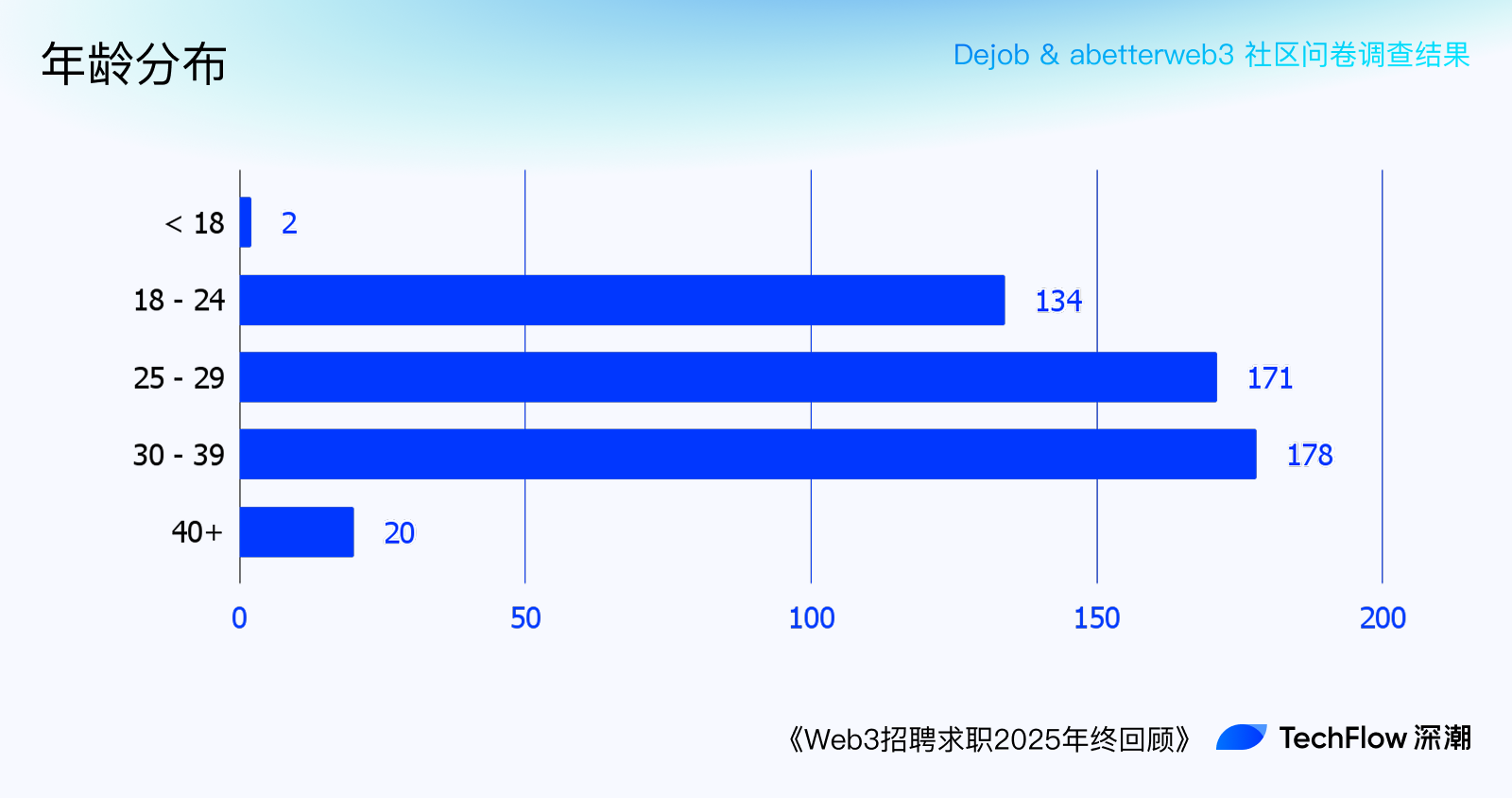
Regarding age distribution, the main workforce aged 18-29 is indeed the majority, but middle-aged practitioners (>30 years old) are also quite numerous. This might be related to the less severe "age 35 ceiling" in the Web3 industry. Compared to internet companies, Web3 companies value experience, ability, and efficiency more, with many hoping that seasoned professionals can quickly build products "plug-and-play".
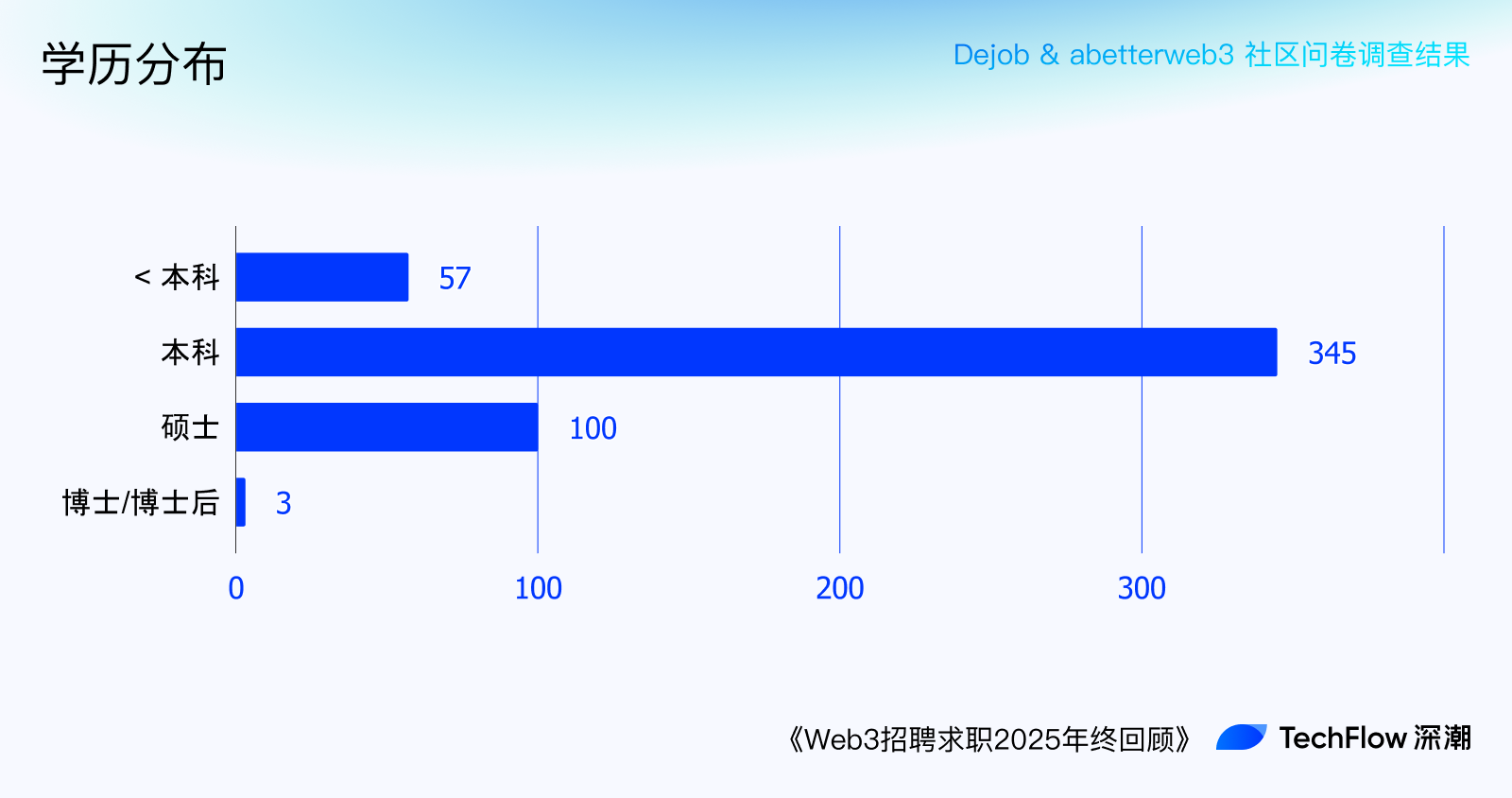
The distribution of educational background is largely consistent with the earlier talent data statistics, predominantly undergraduate degrees, with some having less than a bachelor's and others holding master's or doctoral degrees, though the proportion of postgraduates is not high.
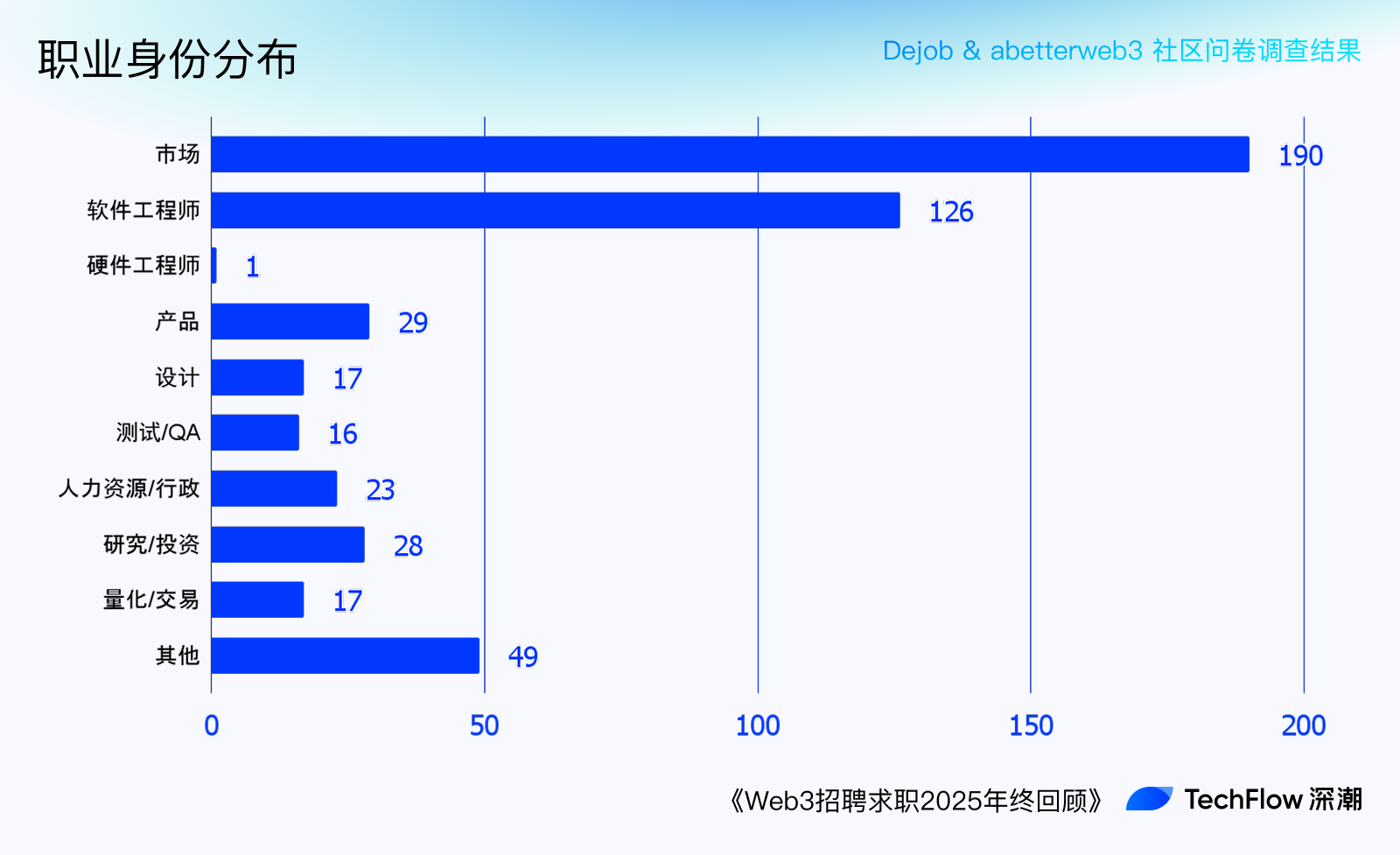
In terms of professional roles, the largest group is in market-related roles (operations/BD/customer service, etc.), followed by developers (front-end/back-end/smart contracts/blockchain, etc.). Then come product, human resources, investment research, design, trading, etc. Among the "other" submissions, common roles included risk control & security, KOLs, etc.
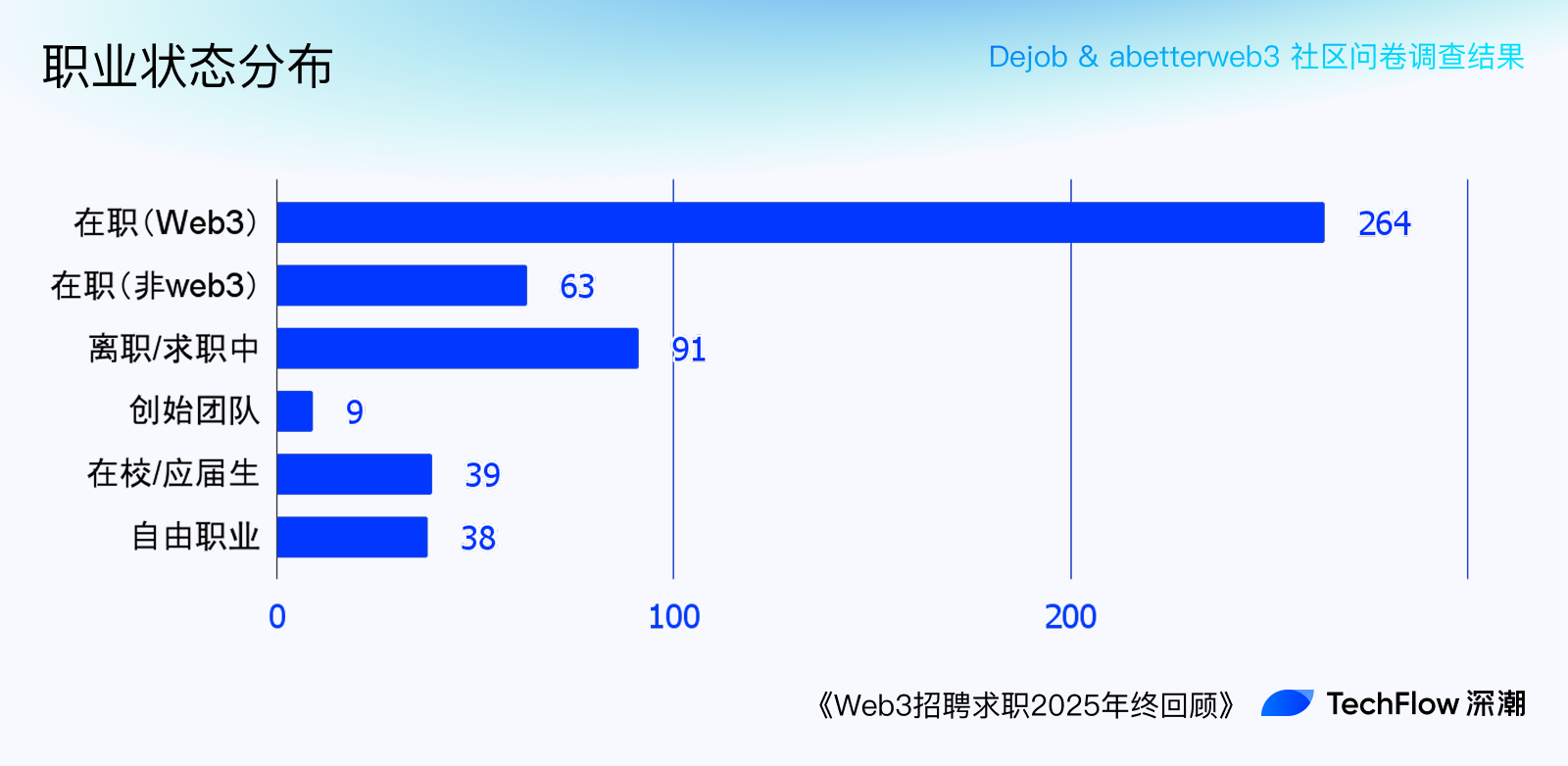
Regarding employment/attrition status, only 52% of respondents are currently employed in Web3. Over 30% are in a more flexible life situation. This indicates, on one hand, that market conditions affecting company headcount have impacted many; on the other hand, it might be because certain unique Web3 business models have made some people less reliant on traditional employment for cash flow, such as KOLs and traders.
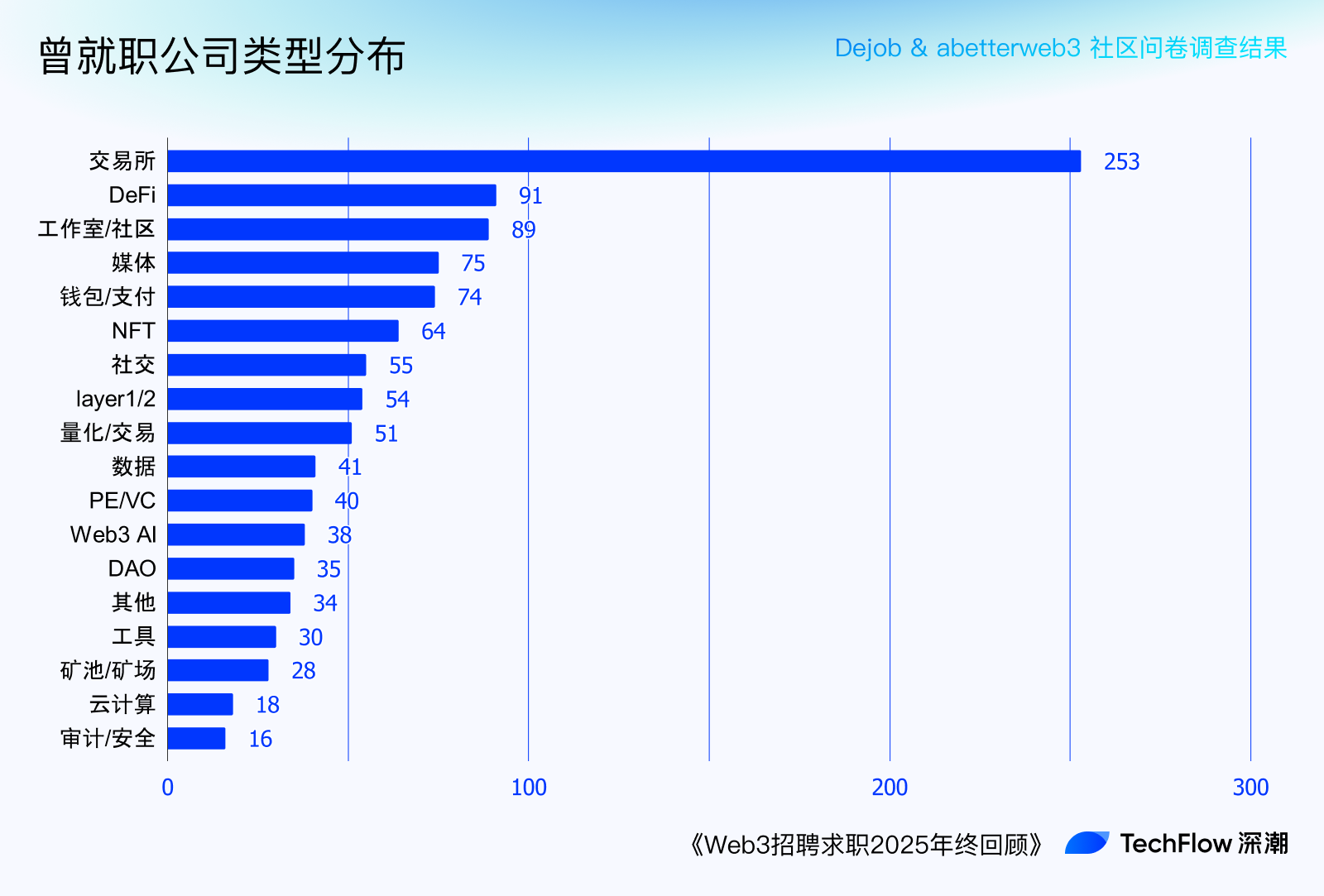
Over half of the submissions indicated having worked at exchanges, followed by studios/communities, DeFi, media, wallets, and other common business types. Both talent and job providers are heavily concentrated in exchanges due to the Matthew Effect. This also reflects, to some extent, the current industry dilemma: apart from exchanges, the revenue-generating capabilities of other business models mostly decrease from C-end — tools — underlying layers.
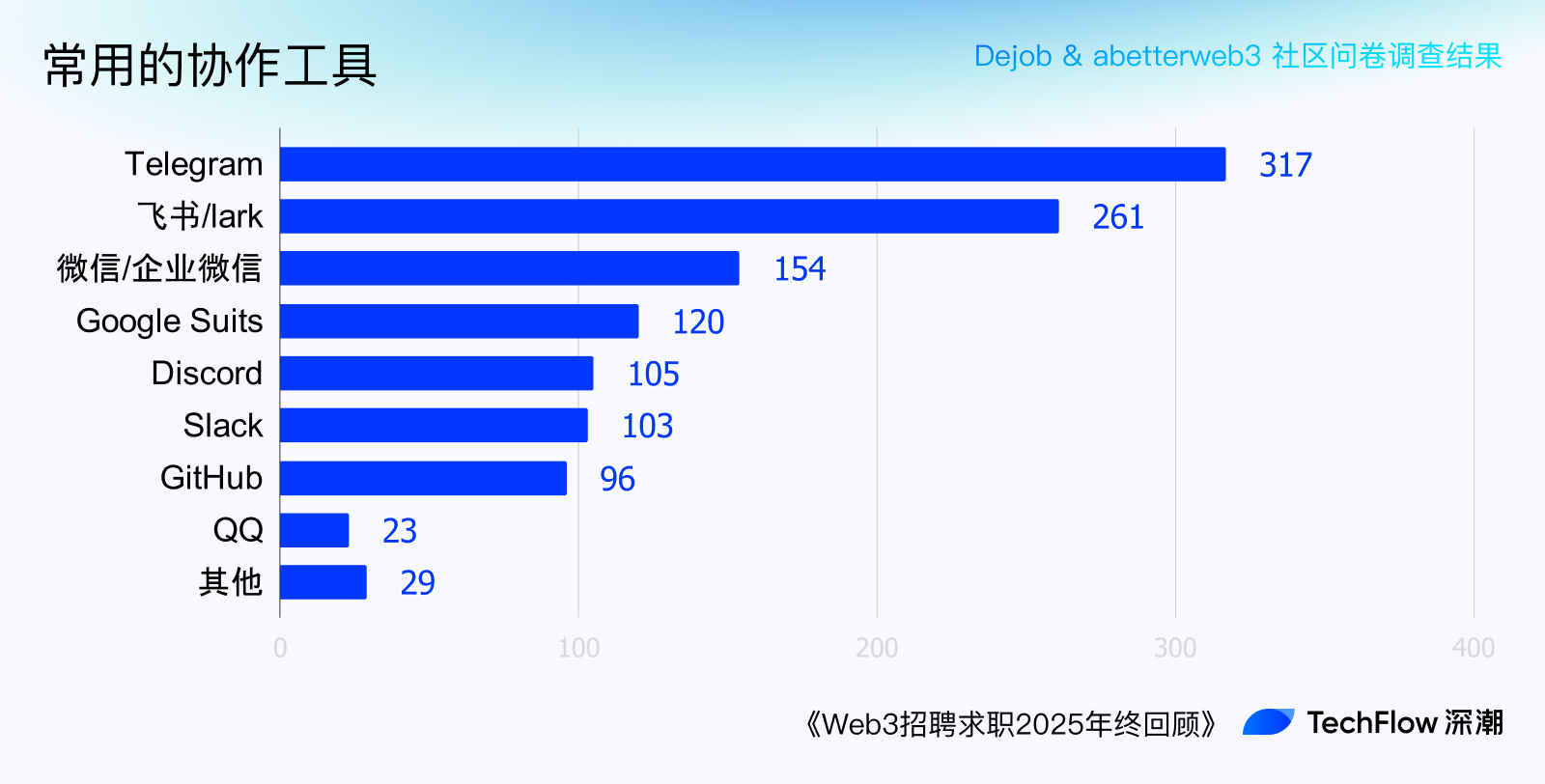
Regarding remote collaboration tools, as this survey took place in a Chinese-language vertical Web3 recruitment community, Telegram is favored by most companies for its confidentiality and usability, followed by mainstream Chinese tools like Feishu and WeChat, and finally tools commonly used by foreign companies like Google Suite, Discord, Slack, etc.
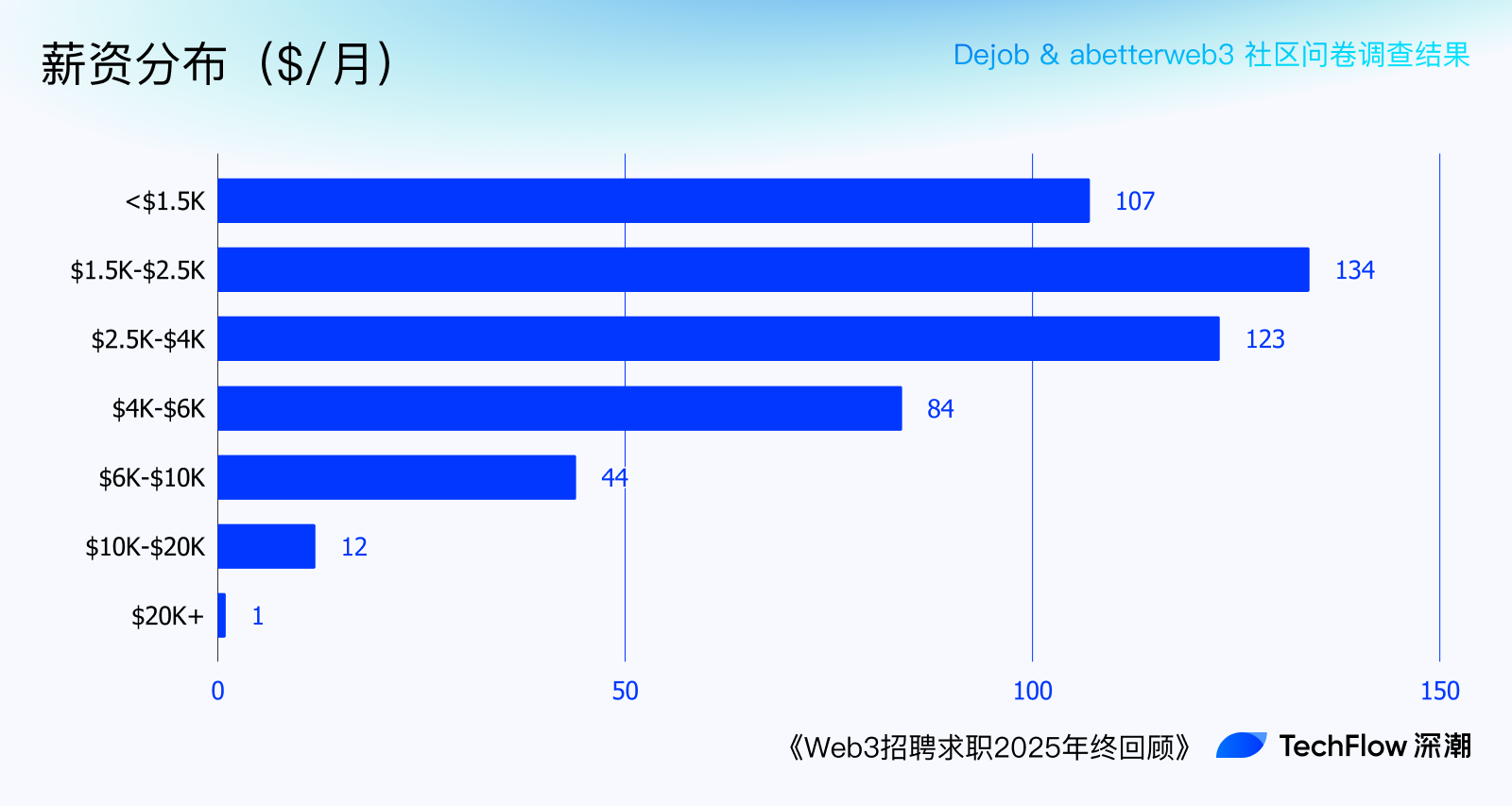
In terms of income levels, contrary to the external myths of immense wealth, most Web3 workers' incomes are not only lower than those in many top internet companies but also severely lacking in long-term incentives (tokens/equity), year-end bonuses, and layoff compensation.

Over 70% of people have a monthly salary income of less than $4,000 (approximately RMB 28,000), and the frequently mentioned monthly salary of $10,000 on Xiaohongshu is a rarity.
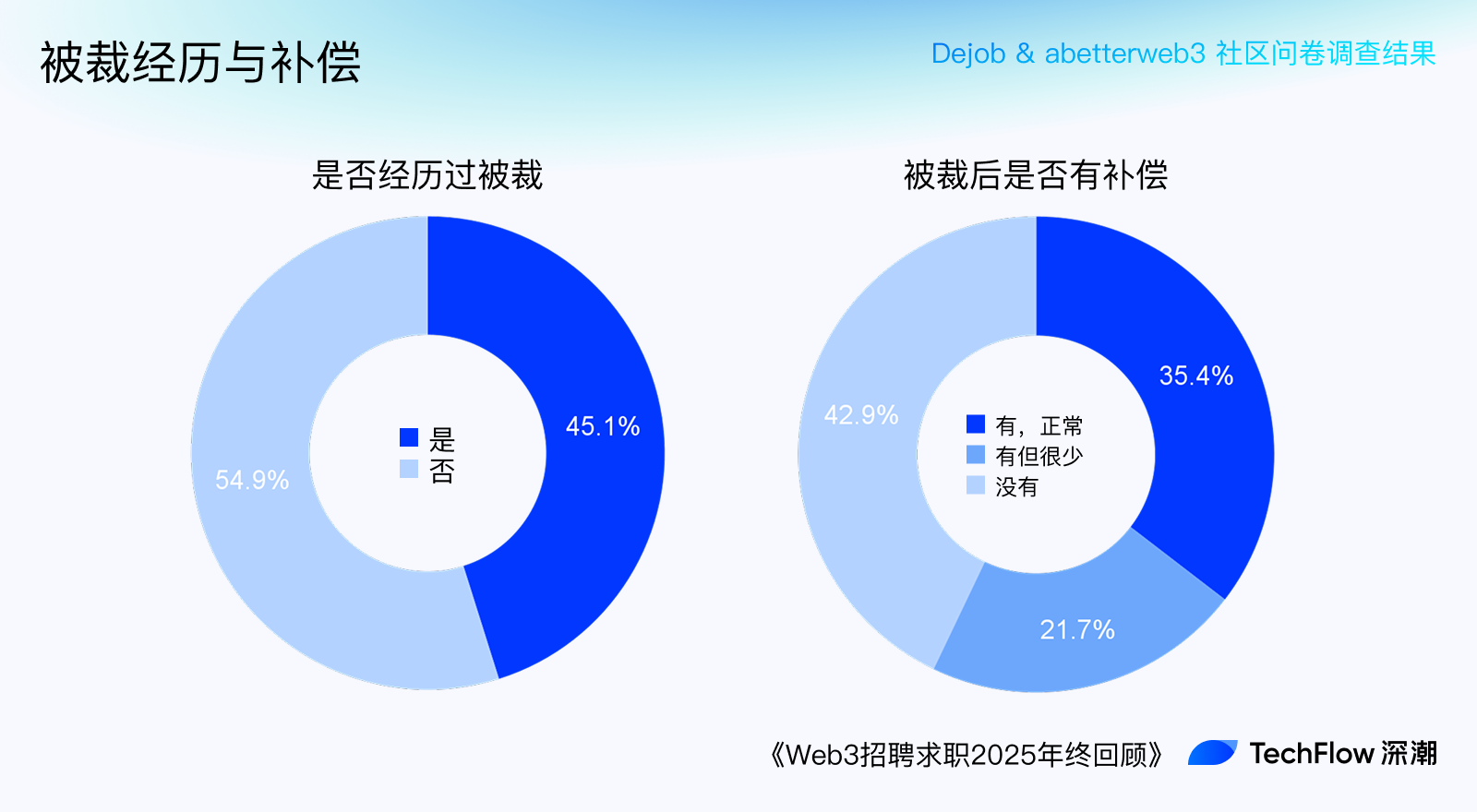
Close to half of the people have experienced layoffs, and 40% of those laid off reported no compensation, while 21% said that even if there was compensation, it fell far short of legal standards (e.g., n+1).
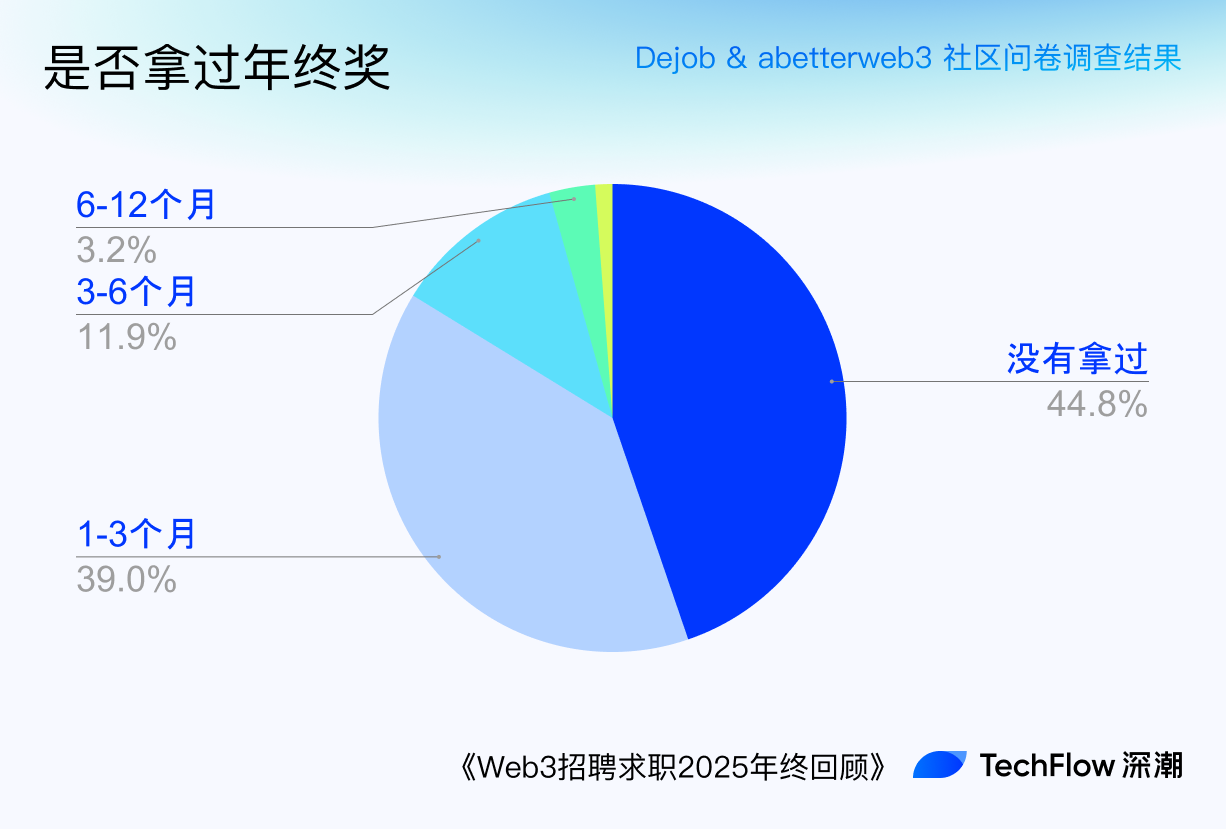
Nearly half reported not having received a year-end bonus; even among those who did, it was generally 1-3 months' salary, on par with most internet companies outside the Web3 industry.
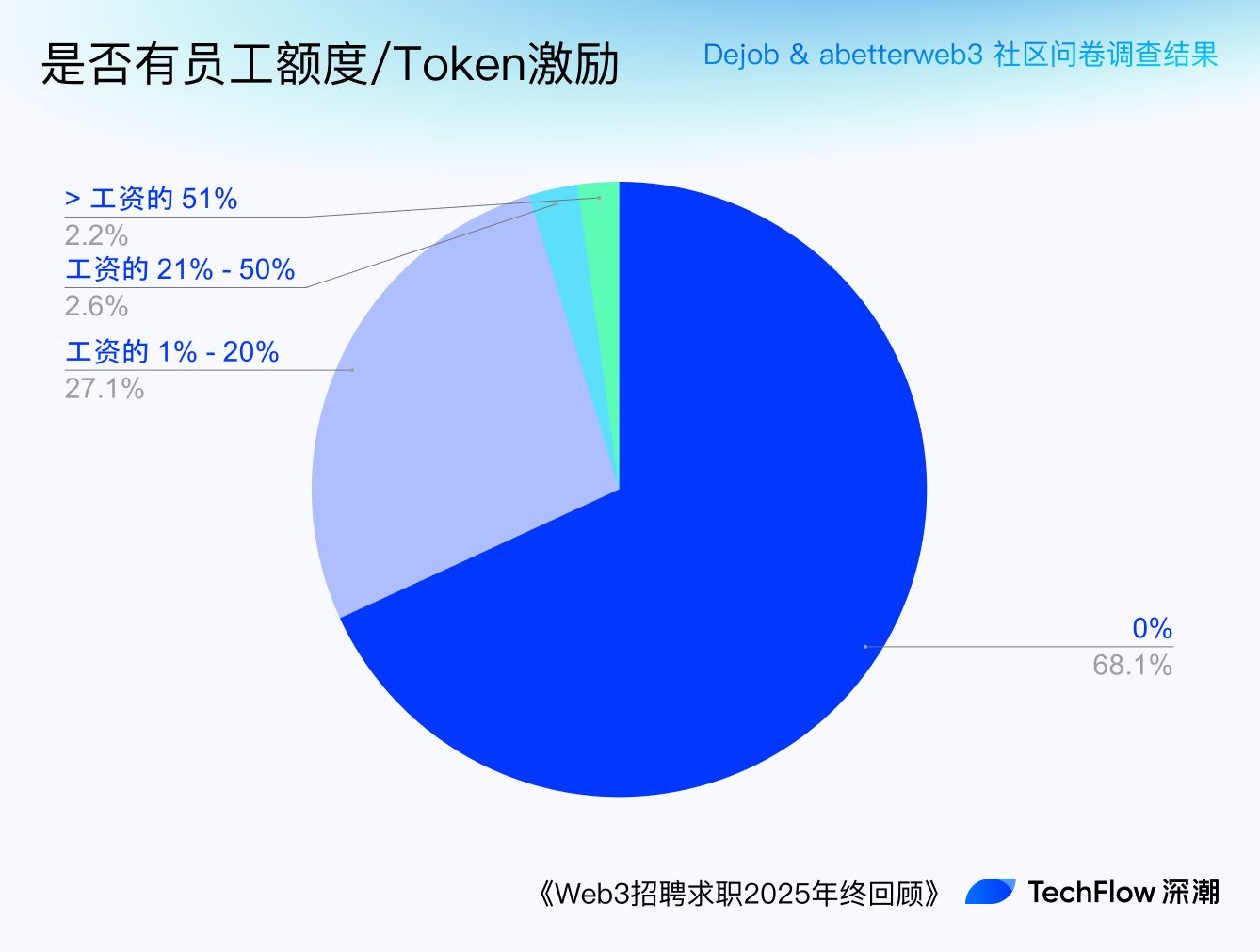
Regarding the well-known "upward channel" of token equity incentives, nearly 70% of practitioners reported not having received any. Even among those who did, very few received more than 20% of their salary's value.
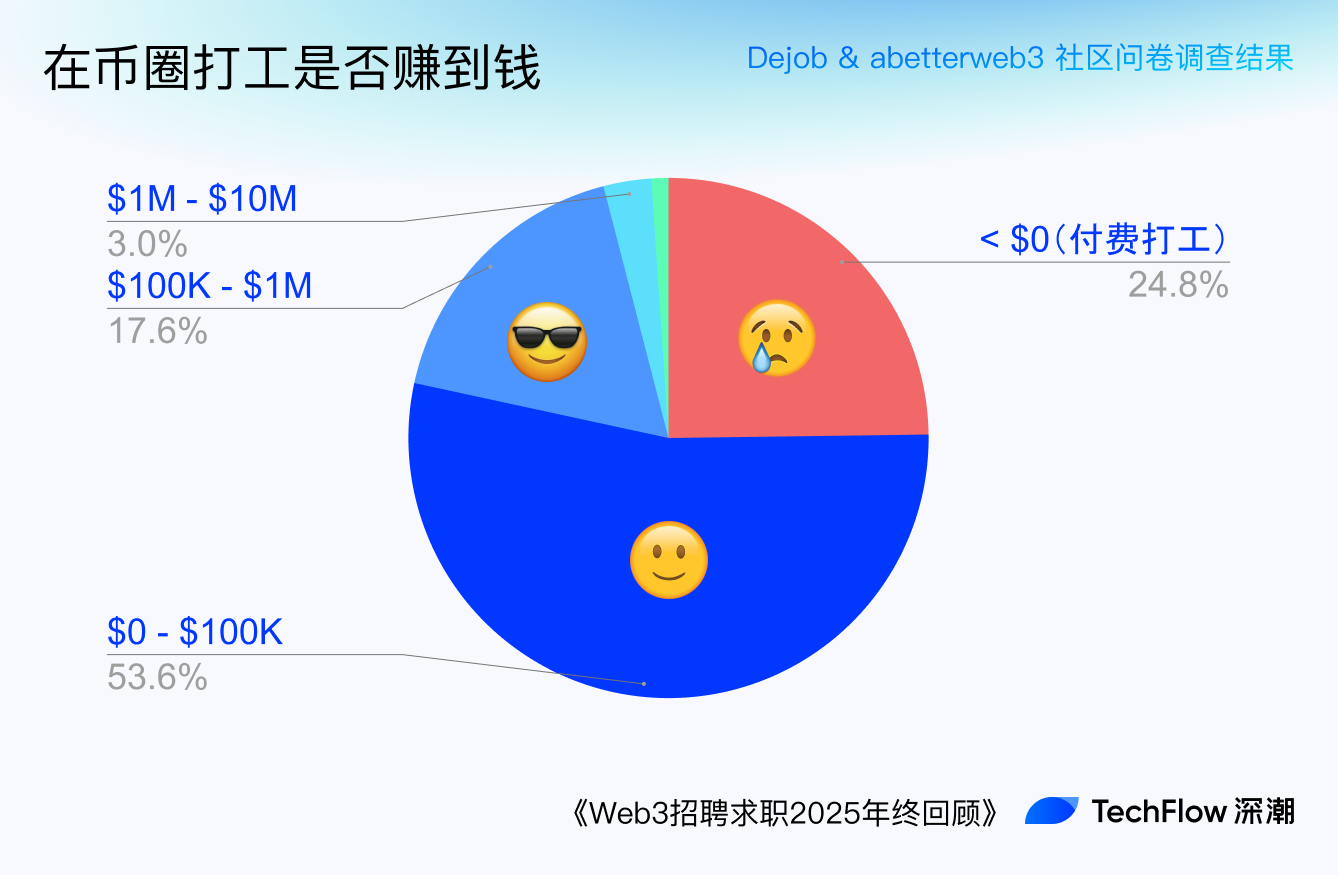
Even a quarter of people have accumulated an overall wealth "loss" since entering the crypto space, in a "pay-to-work" state; other respondents mostly accumulated wealth around $100K (approximately RMB 700,000).
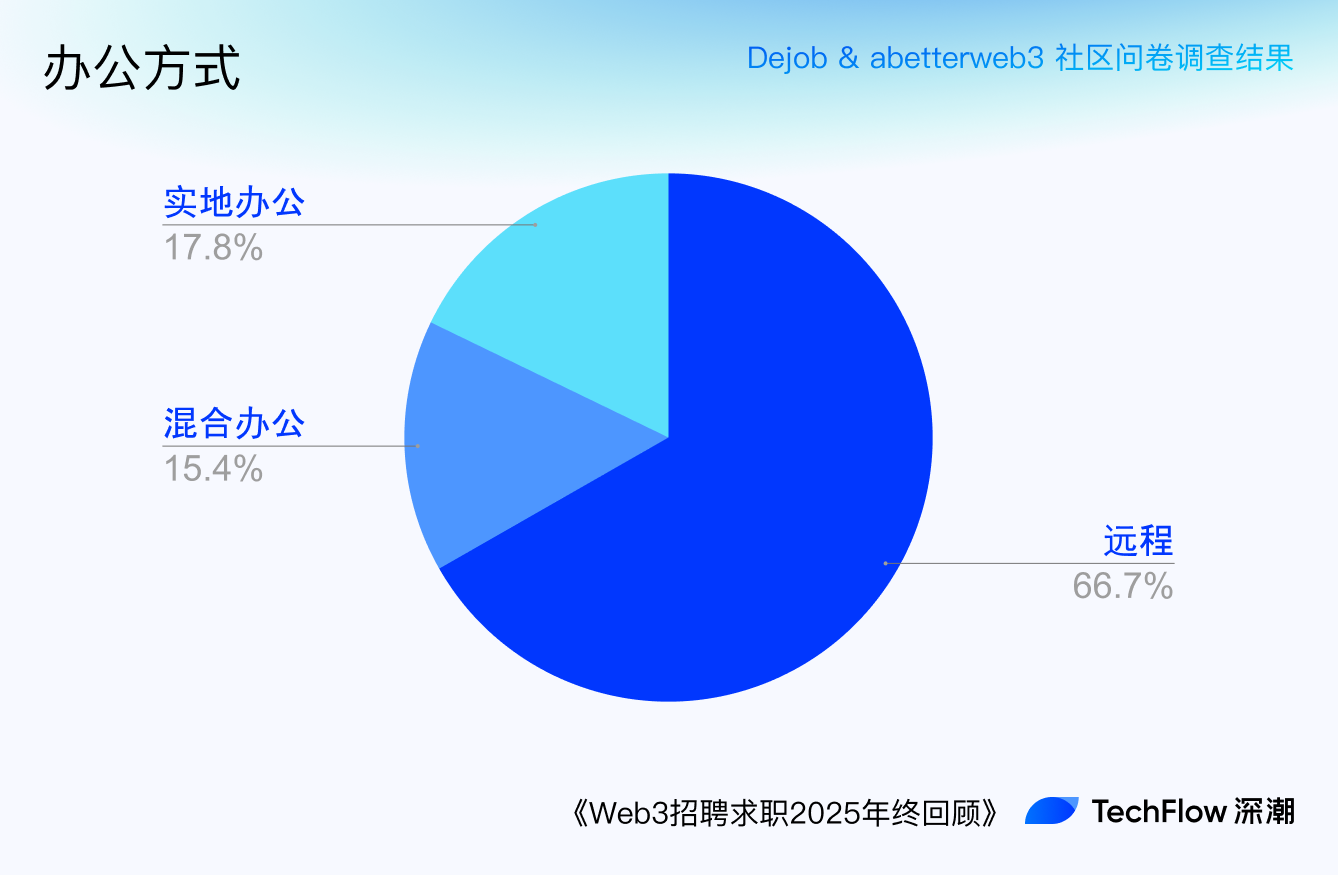
However, on the flip side of this seemingly hopeless income level, Web3's strong remote work culture offers some relief. Nearly 70% of respondents indicated their companies support remote work, and another 15% reported support for hybrid work, meaning虽然有办公室 but attendance is not mandatory, or working from home is allowed a few days a week.
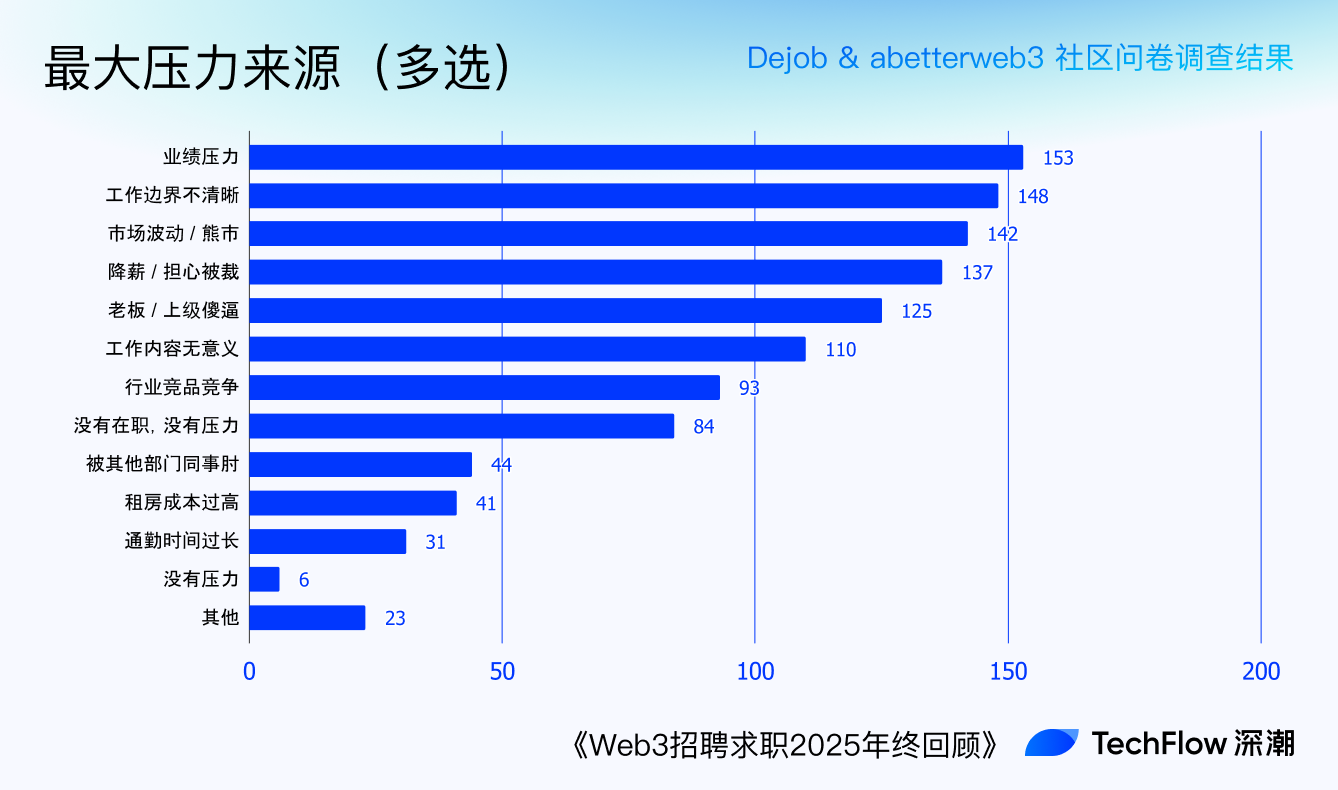
Remote work does alleviate some of the pain of being a worker. In the "biggest source of stress" question, 31 respondents selected "excessively long commute." Other top sources of stress included product growth, work boundaries, market volatility, fear of being laid off, and having a foolish boss.
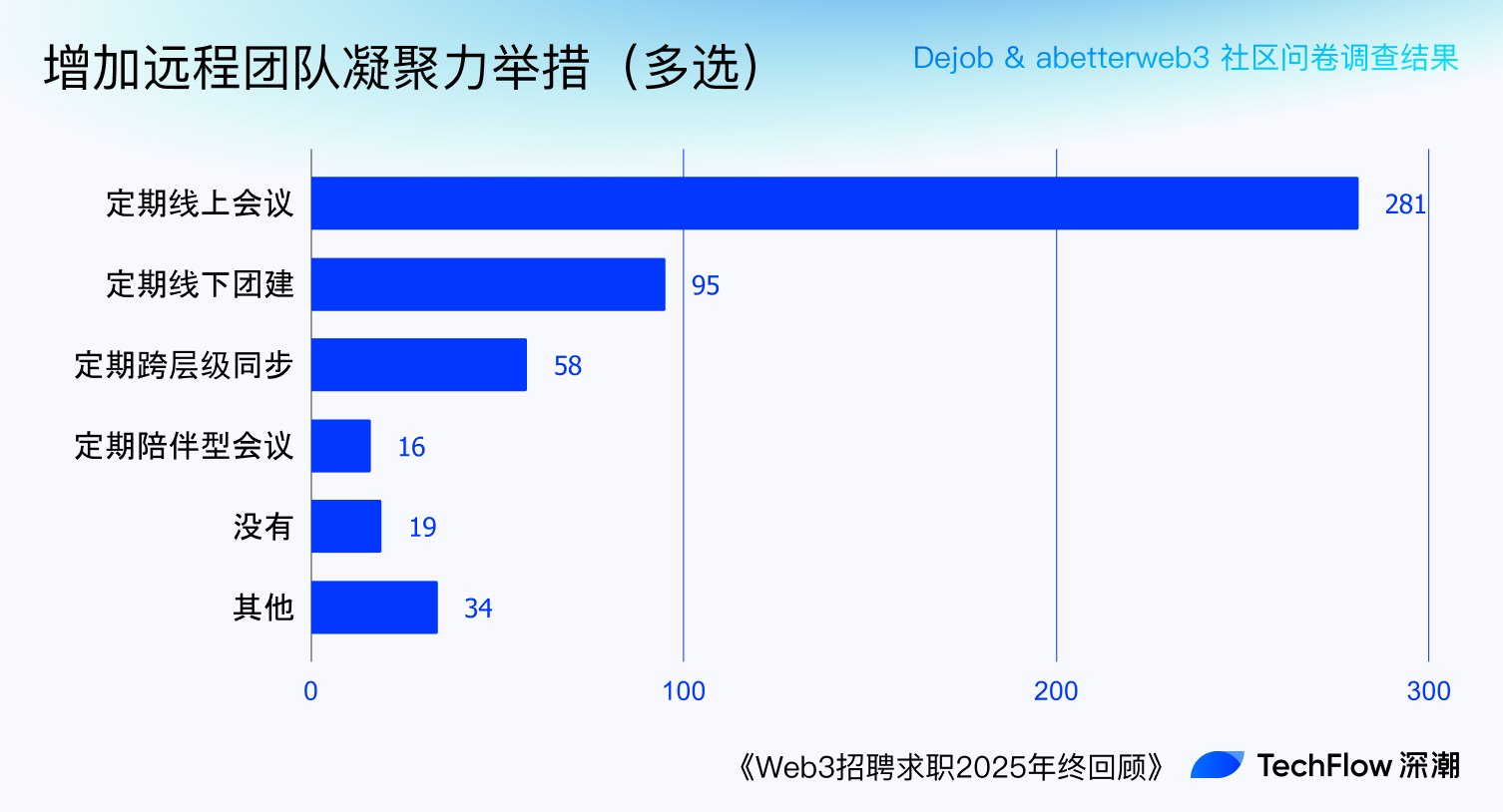
To maintain employees' mental health as social beings, many companies have taken measures to sustain team cohesion.
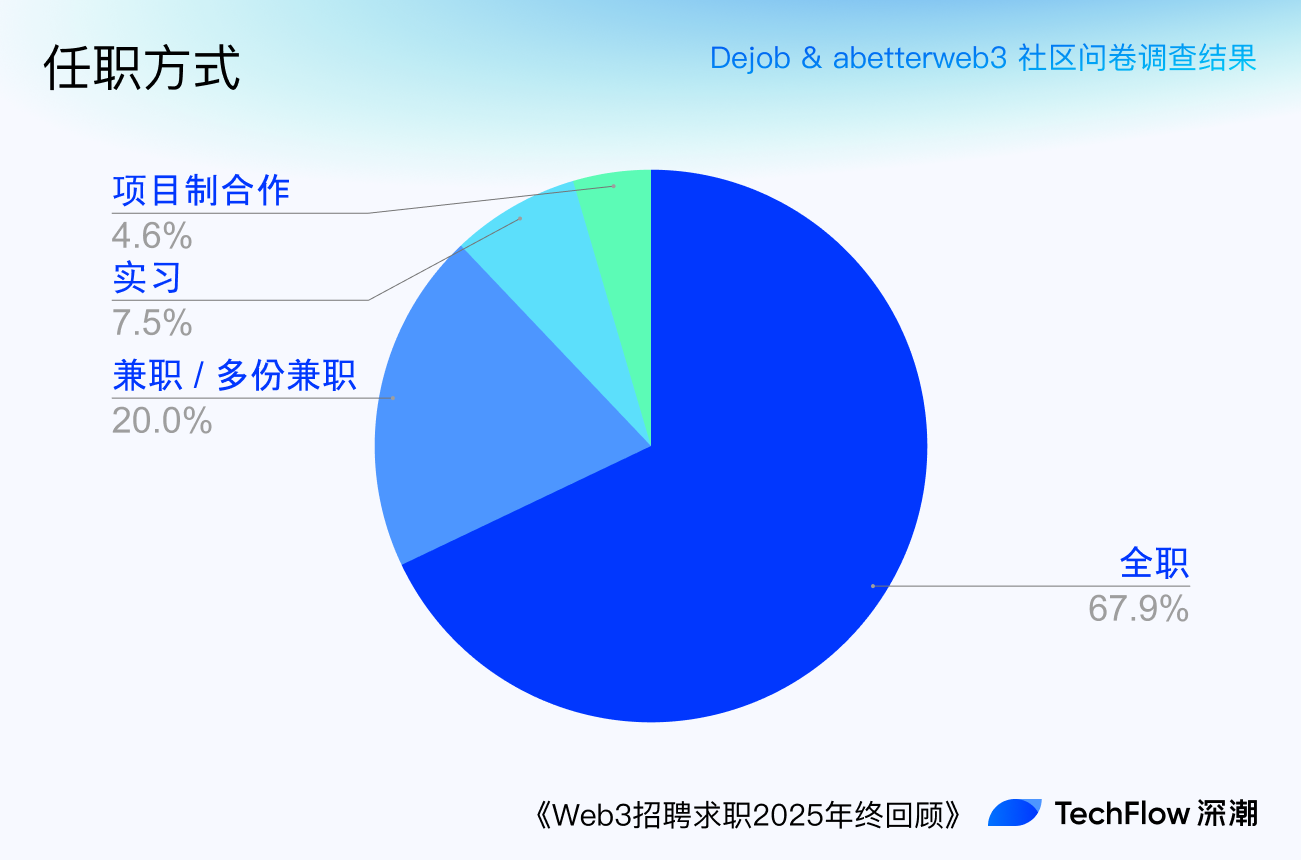
Under the combined effect of low income and instability, many choose to hold multiple jobs. 20% of respondents indicated having side jobs. This also reflects the tech-oriented culture of most Web3 companies: as long as problems are solved and competence is demonstrated, they don't interfere with employees' lifestyles and income methods.
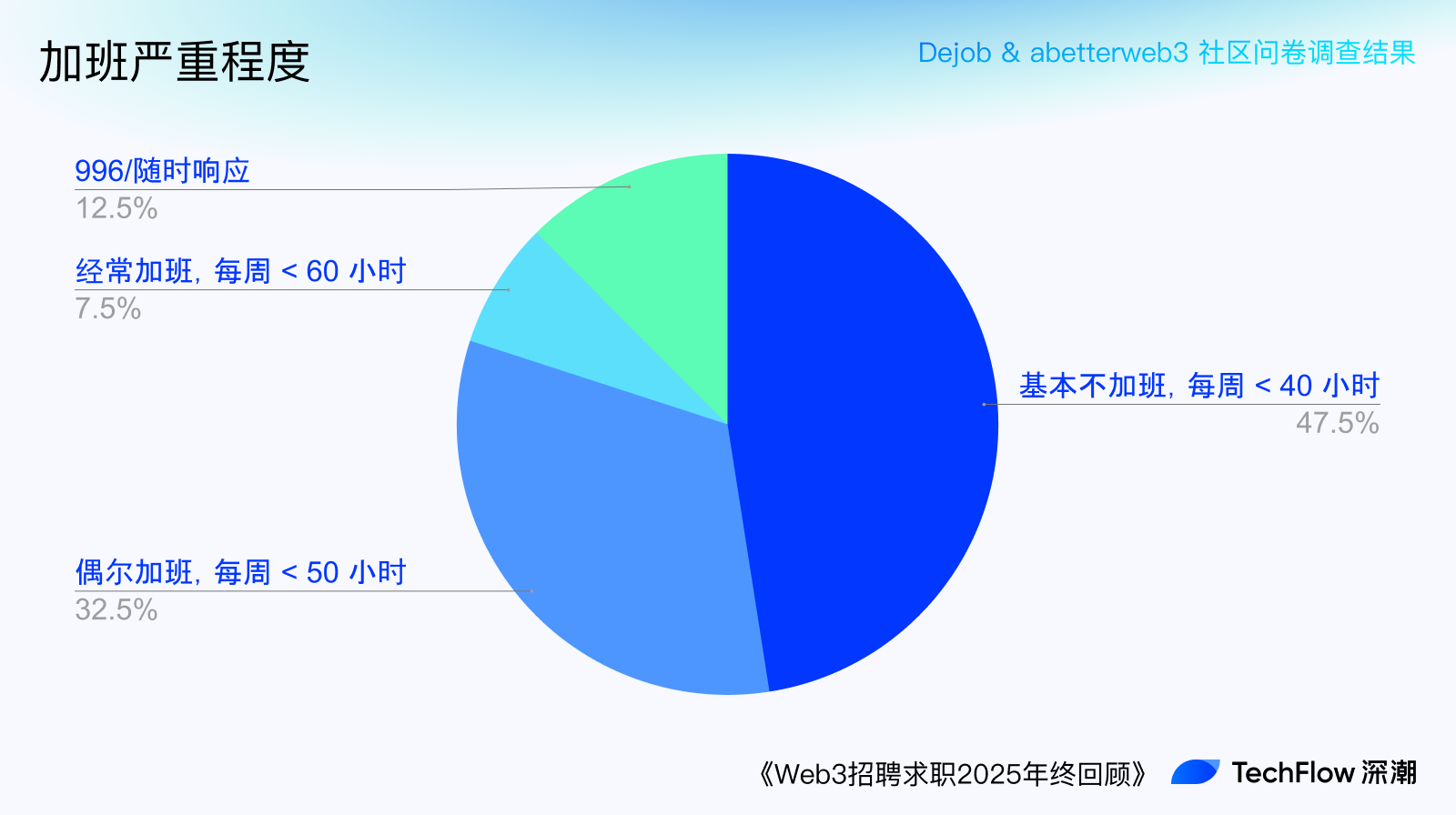
Regarding overtime intensity, 80% of people work approximately 40-50 hours per week. Thus, Web3 overtime seems less intense than many 996/007 sweatshops in web2.
Regarding job hopping, over half want to change companies, with 30% planning to do so within 3-6 months. But about a quarter are satisfied with their current situation, and 8 respondents even found "companies they hope to work for for a lifetime".

Considering factors like minimal overtime, remote work options, and side jobs allowed, many rate their current job positively. In the rating section for their current job, the average score was 3.51.

Regarding whether their next job will still be in the crypto space, over 80% choose to stay, while 7% choose to leave.
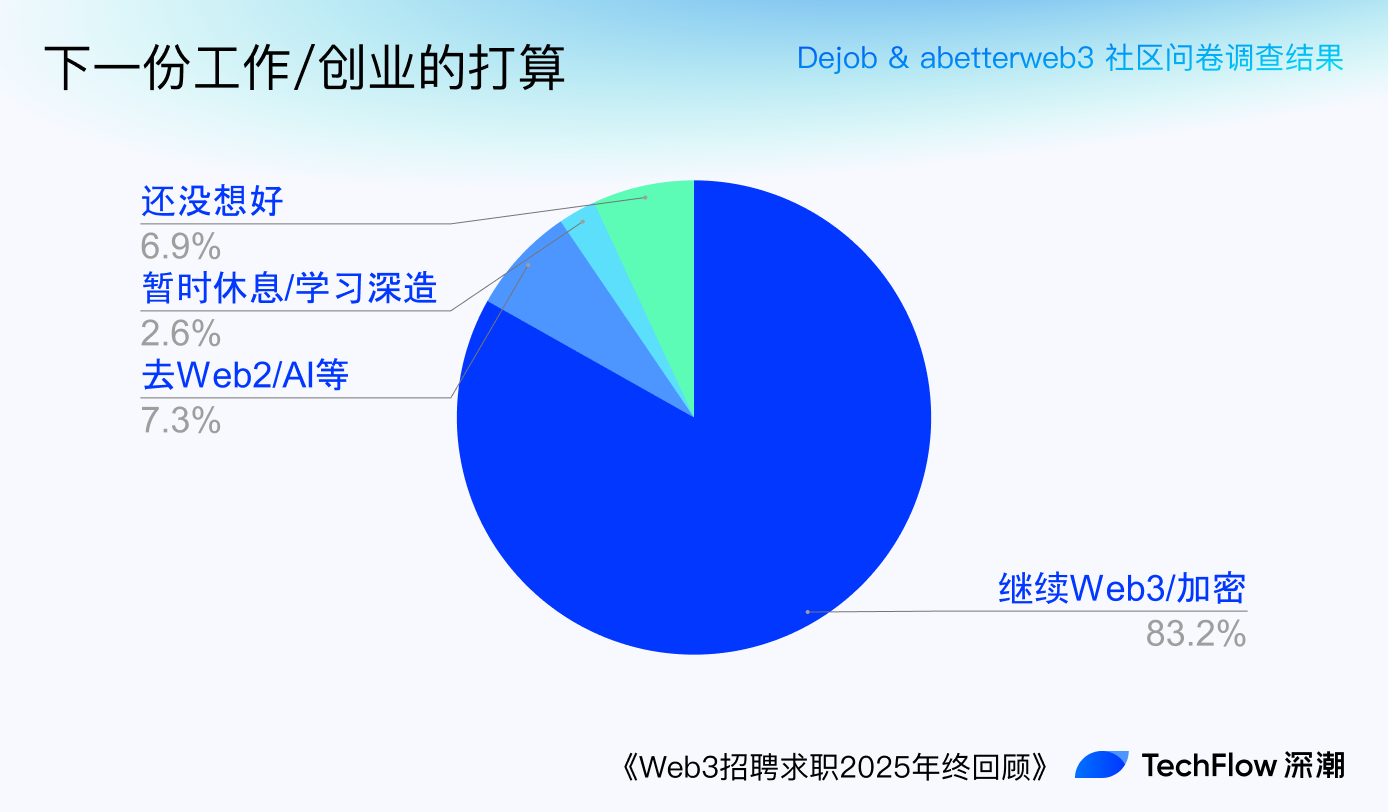
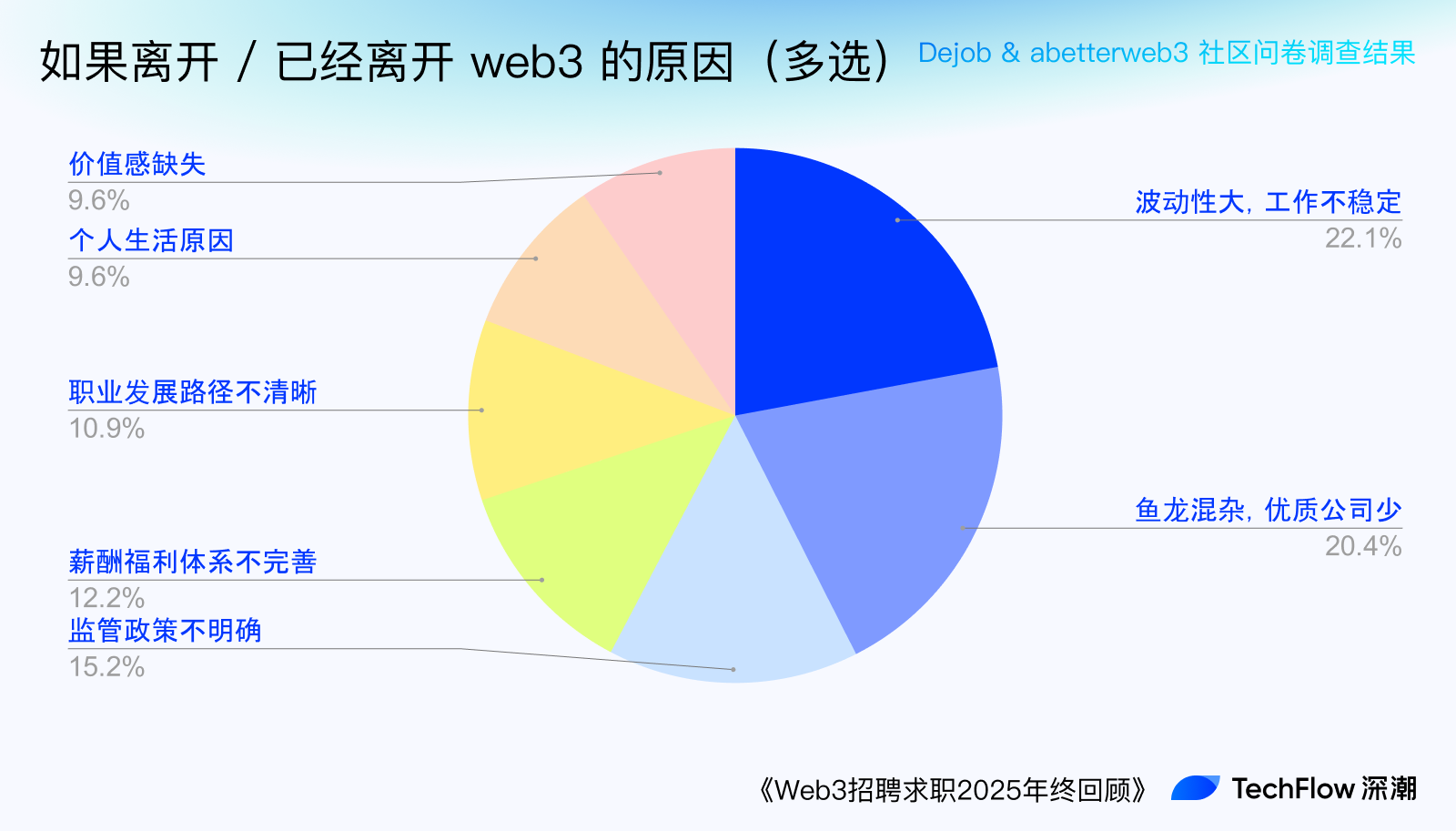
In the reasons for leaving section, the choices reflect the industry's most genuine, cold inner reality.
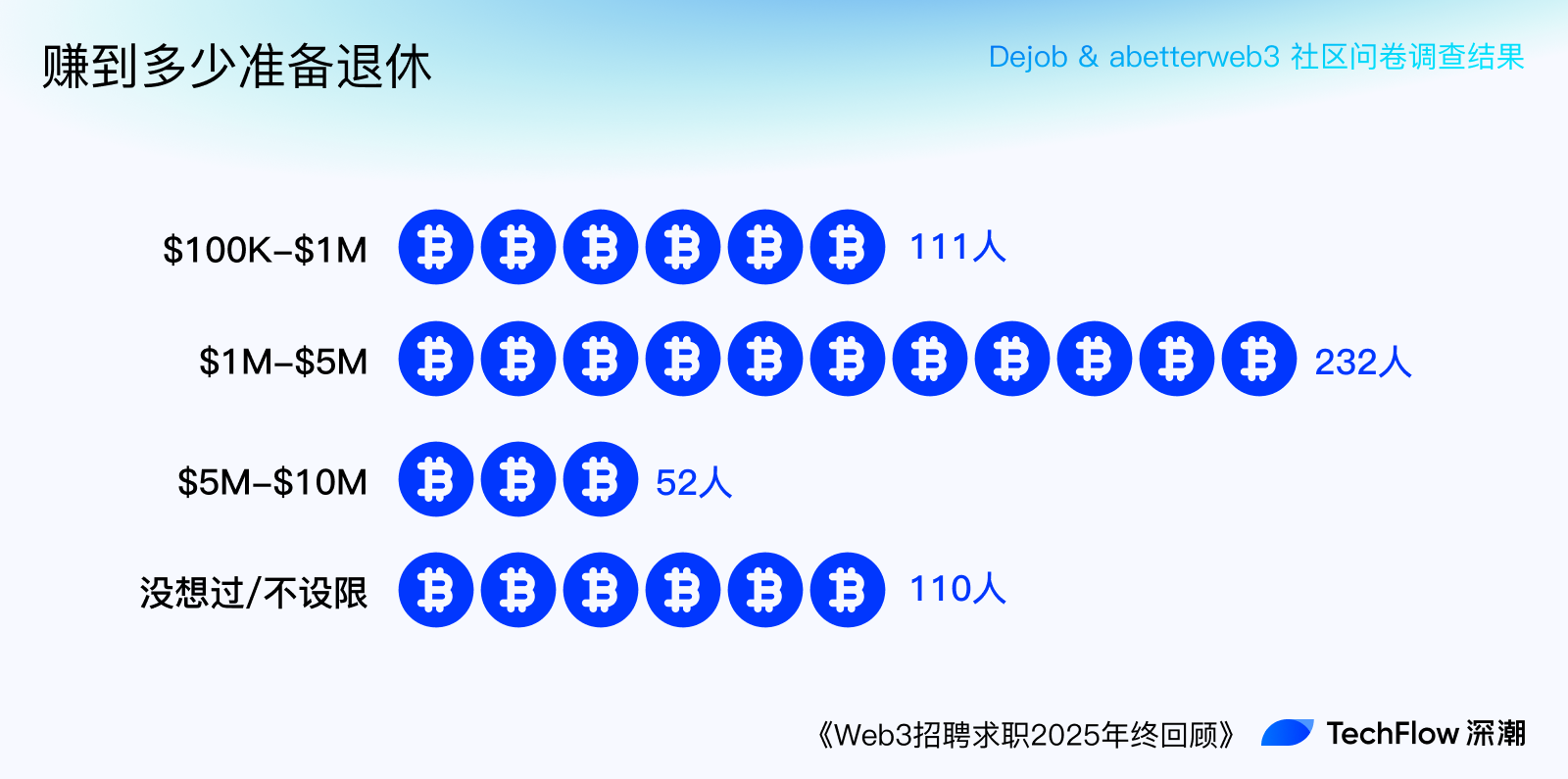
But all this preparation is for early retirement. For "how much wealth would make you consider resigning", the vast majority chose $1M – $5M (approximately RMB 7 million ~ 35 million). This might indeed be the wealth limit one can achieve through salaried work. But 20% chose "no limit", reflecting confidence in their abilities.
Regarding optimism about the 2026 job market, only 28% believe it will improve, with most being pessimistic or taking a wait-and-see attitude.

Truth Session


Original link:https://www.bitpush.news/articles/7598504

Related Questions

QWhat percentage of crypto industry workers earn less than $4000 per month according to the survey?

AOver 70% of crypto industry workers earn less than $4000 per month.

QHow many respondents reported experiencing layoffs in the crypto industry, and what portion received no compensation?

ANearly half of the respondents experienced layoffs, and 40% of those laid off received no compensation.

QWhat is the primary reason most workers choose to stay in the crypto industry despite low pay and instability?

AOver 80% of workers choose to stay, largely due to factors like remote work flexibility (70% support remote work) and the dream of achieving financial freedom (e.g., retiring with $1-5 million).

QWhich type of company employs the most people in the crypto industry based on the survey?

AExchanges employ the most people, with over half of the respondents having worked at an exchange.

QWhat percentage of crypto workers have not received any token-based incentives (币权激励)?

ANearly 70% of crypto industry workers have not received any token-based incentives.

Related Reads

TechFlow Intelligence Bureau: Chip Stocks Lose Trillions in a Single Day, Bitcoin Falls Below $60,000, US-Iran Conflict Escalates

**Daily Tech & Markets Roundup: AI Advances, Market Turmoil, and Geopolitical Tensions** **AI / LLMs**: Anthropic's internal report on AI self-improvement sparked serious discussions about Recursive Self-Improvement (RSI). Meanwhile, debate continues on AI coding tools after Claude was accused of introducing bugs into the rsync codebase. In positive news, DeepSeek V4 Flash impressed in local deployment tests, and GitHub Copilot now supports custom endpoints for local models. A surprising research turn suggests removing chain-of-thought prompting can sometimes improve LLM performance. **Crypto / Web3**: Bitcoin plunged below $60,000, with its RSI hitting levels last seen during the COVID-19 crash, driven by strong U.S. jobs data reviving interest rate hike fears. Discussions highlight Ethereum DeFi's continued lack of a smooth consumer payment layer. **Chips / Hardware**: Chip stocks suffered a massive sell-off, with the Philadelphia Semiconductor Index posting its worst single-day drop in six years, erasing over a trillion dollars in value. Marvell, Micron, AMD, and Intel were among the biggest losers. **Tech Companies**: A leaked Microsoft document revealing goals to make Copilot "addictive" drew criticism. LinkedIn founder Reid Hoffman left Microsoft's board to focus full-time on his AI agent startup, Manus. Google was revealed to be paying SpaceX $920 million monthly for AI training compute. **Markets & Macro**: A blowout U.S. jobs report (172k vs. 80k expected) crushed hopes for near-term rate cuts, sending Treasury yields soaring and triggering a broad market sell-off. CEOs from Kraft, McDonald's, and Whirlpool simultaneously warned U.S. consumers are exhausting their savings. **Geopolitics**: U.S.-Iran tensions escalated with missile/drone interceptions and U.S. strikes on Iranian radar sites, keeping the critical Strait of Hormuz largely closed since late February and posing ongoing oil supply risks. **The Bottom Line**: The strong jobs data acted as a single trigger for correlated sell-offs across equities, crypto, and chips. Underlying the volatility is a stark contradiction between robust employment data and warnings of consumer weakness, alongside geopolitical risks that could reignite inflation, leaving markets to price in a fraught macro outlook with no clear "soft landing" path.

marsbit19m ago

TechFlow Intelligence Bureau: Chip Stocks Lose Trillions in a Single Day, Bitcoin Falls Below $60,000, US-Iran Conflict Escalates

marsbit19m ago

It Took Me a Year to See the Bitter Truth About Agent Payments

After a year building infrastructure for the Agent economy, engaging with major players like Stripe, Visa, and Coinbase, the author shares a sobering analysis of the current state of Agent payments. The core finding is a stark lack of genuine, immediate demand across most envisioned use cases. The article breaks down four key market segments: 1. **Agent-to-Merchant (Consumer Shopping):** For most product categories (e.g., clothing, electronics), conversational AI shopping is a step backwards from visual e-commerce interfaces. While agents excel at understanding needs, they can't replace side-by-side product comparison. Real merchant interest is defensive "Agent Engine Optimization," not driven by current customer demand. Potential exists for high-frequency, low-decision purchases (like food delivery) or navigating complex store UIs, but these require massive B2C distribution channels dominated by giants like Amazon. 2. **Agent-to-API (Developer Services):** Developers already have subscriptions and billing relationships for APIs (compute, data). Prepaid balances solve micro-payment issues for low transaction volumes. A deeper structural problem is that major SaaS vendors' business models rely on enterprise contracts, resisting granular pay-per-call pricing. While protocols like MPP and x402 serve the long tail of niche services, this market is small and developers are historically low-willingness-to-pay. 3. **Agent-to-Agent:** This remains largely theoretical with minimal transaction volume. While it represents a long-term bet on a fundamentally new transaction infrastructure (sub-second, micro-penny to million-dollar, multi-party settlements), it does not constitute a present market. 4. **Agent-to-Finance:** This is the only category with existing, paying demand. Integrating AI into financial workflows (trading, portfolio management) is a natural evolution and enables new capabilities like autonomous rebalancing. However, competition favors established, regulated institutions. The "real problem" is not moving money between agents, but the broader challenge of **coordination**—orchestrating work between agents and humans, verifying outcomes, and settling results. Payment is just one component of settlement, which is itself part of coordination. Companies that solve the coordination layer will subsume payment, not the other way around. While well-funded incumbents build defensively for a long-term future, startups must find where the market is today—which, for the author's team, lies outside these four categories in an area of real, growing, and underserved activity.

marsbit1h ago

It Took Me a Year to See the Bitter Truth About Agent Payments

marsbit1h ago

It Took Me a Year to See the Hard Truth About Agent Payments

**Title: It Took Me a Year to See the Hard Truth About Agent Payments** Over the past year, I've worked on infrastructure for the Agent economy, engaging with major players like Stripe, Visa, Coinbase, and numerous startups. The findings reveal a stark reality: genuine, widespread demand for Agent-based payments does not yet exist. **Key Observations:** * **Agent-to-Merchant (Shopping):** The user experience for AI shopping often falls short, especially for visual product discovery. While AI excels at understanding needs, conversational interfaces can't yet replace browsing and comparing multiple products visually. Current merchant interest is largely defensive ("Agent Engine Optimization") for a future that hasn't arrived. High-frequency, low-friction purchases (like food delivery) are potential fits, but lack open APIs and face high AI inference costs. Simpler, more affordable, or cross-language interactions for complex UIs are a niche opportunity but require massive consumer distribution to scale. * **Agent-to-API (Developer Tools):** Developer payment needs for APIs (computing, data, models) are already met through subscriptions and prepaid credits. The core challenge is not payment friction but supplier economics: most large SaaS providers prefer enterprise contracts over micropayments for API calls. Protocols like MPP and x402 suit the long-tail of smaller services but cater to a developer market historically reluctant to pay for these tools. Major infrastructure needs at the top of the stack are already being addressed. * **Agent-to-Agent (Machine Commerce):** This is a long-term vision with almost no current transaction volume. While a future with high-speed, high-frequency, multi-party machine-to-machine transactions would require novel infrastructure, it remains theoretical. The market is not here yet. * **Agent-to-Finance:** This is the only category with clear, present demand. Financial professionals and DeFi users already pay for tools, and AI augmentation is a natural evolution. Autonomous AI agents can enable entirely new financial strategies. However, competition is fierce from established, regulated incumbents who can more easily layer AI onto their existing products. **The Core Insight:** Companies, especially giants with long time horizons, are building defensively for a potential future of mass machine commerce. For them, early investment is a low-cost hedge. For startups, the current market reality is different. The primary challenge isn't just moving money between agents (payments). The larger, unsolved problem is **orchestration** – coordinating work between agents and humans, verifying outcomes, and then settling. Payment is just a part of settlement, which is just a part of orchestration. Companies that solve the orchestration problem will subsume payments, not the other way around. After a year of building, we see the real, growing, and underserved market opportunity lies in this broader domain of orchestration.

链捕手1h ago

It Took Me a Year to See the Hard Truth About Agent Payments

链捕手1h ago

Claude Opus 4.8 Finds a $4.5 Billion Bug: The AI Era is Mass-Producing Hackers

A researcher discovered a critical "infinite mint" vulnerability in the Zcash cryptocurrency's Orchard protocol using Claude Opus 4.8, leading to a swift fix but also a 50% market drop, erasing billions in value. This incident highlights a new era where powerful, accessible AI models are dramatically lowering the barrier to finding software vulnerabilities. Previously, the security community feared specialized models like Claude Mythos Preview, capable of finding decades-old zero-day exploits. The Zcash case, however, involved a publicly available, general-purpose model. This shift makes advanced security auditing—and attack capabilities—accessible to far more people, not just experts. The mass democratization of vulnerability discovery brings a dual challenge: a flood of low-quality, AI-generated false reports that overwhelm maintainers, and the real, rapid uncovering of deep, dangerous bugs. Open-source projects, often understaffed and unfunded, are particularly vulnerable to this "attention DDoS." The article cites examples like curl shutting down its bug bounty program due to the unsustainable workload. Our perceived digital safety has often been luck, relying on the high cost and effort required to find deeply hidden flaws in complex systems, as seen with historical vulnerabilities like Heartbleed or Baron Samedit. AI changes this cost structure, effectively "mass-producing flashlights" to illuminate every corner of our codebase. While large companies operate extensive security chains involving external white-hat hackers and massive defensive operations, the global cybersecurity workforce faces a severe shortage, especially of experienced personnel capable of analyzing complex threats and coordinating fixes. The core dilemma emerges: AI makes *finding* bugs cheap and scalable, but *fixing* them remains a slow, expensive, and human-intensive process. The article concludes that AI won't destroy the internet but acts as a bright light, revealing that our digital existence is not inherently secure but is precariously maintained by ongoing human effort. The true cost in the AI era may not be discovery, but whether there will be enough people left willing and able to do the hard work of repair.

marsbit1h ago

Claude Opus 4.8 Finds a $4.5 Billion Bug: The AI Era is Mass-Producing Hackers

marsbit1h ago

Trading

Spot
Futures
活动图片