Dogecoin at a crossroads: Will DOGE breakout to $0.1 or see another pullback?

ambcryptoPublished on 2026-03-31Last updated on 2026-03-31

Abstract

Amid a broader memecoin recovery, Dogecoin (DOGE) successfully defended the $0.09 support level, rising 1.86% to trade at $0.092, backed by over $1 billion in trading volume. Spot market activity showed strength, as outflows exceeded inflows, reducing available supply and potentially supporting further gains. However, the futures market remained bearish, with significant long liquidations and reduced open interest, reflecting trader caution. Technical indicators like the Stochastic RSI show a bullish crossover but remain in oversold territory, indicating lingering selling pressure. DOGE faces a critical juncture: if spot demand prevails, it could target $0.106; otherwise, it may retest $0.086 or even $0.080.

Amid extended market weakness, memecoin signaled market recovery, making slight gains across the board. With memecoins showing slight upside momentum, Dogecoin [DOGE] successfully defended $0.09 and then jumped to $0.093 before retracing slightly.

At press time, DOGE traded at $0.092, after slightly rising by 1.86% on the daily charts. This price uptick was backed by a 7% increase in trading volume, which exceeded $1 billion, reflecting market momentum.

Dogecoin: Spot buyers defend key levels

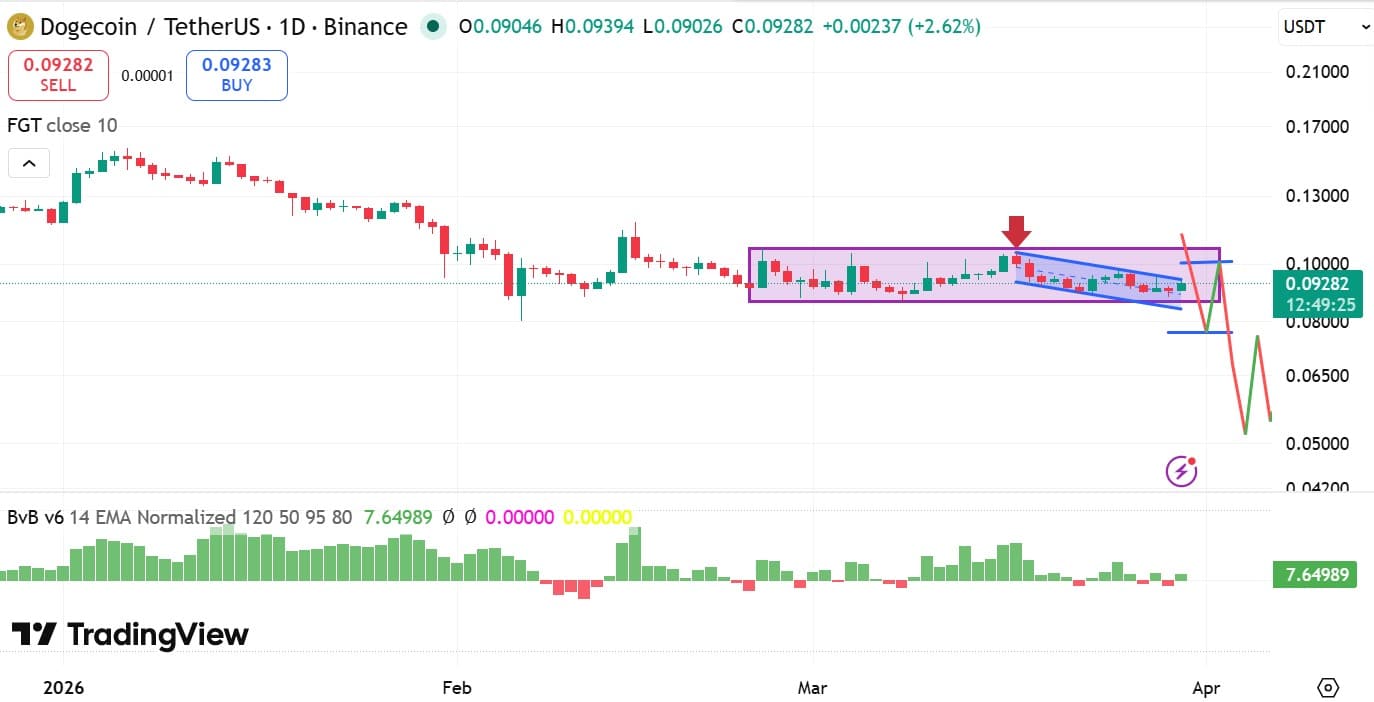
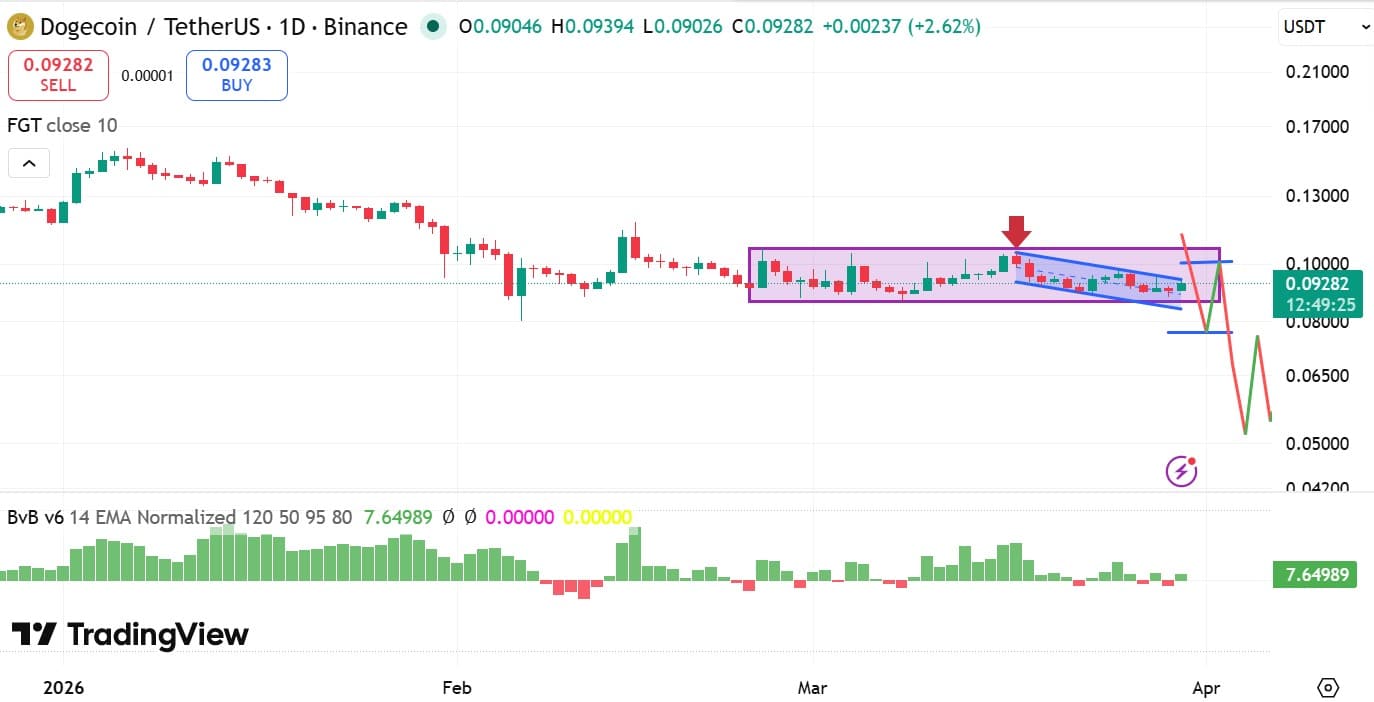
Dogecoin bulls have attempted to defend and flip $0.09 support over the past few days, with no success. As the market signaled a recovery, bulls jumped in with strength and successfully achieved their goal.
Source: TradingView

In fact, the Bulls vs. Bears indicator turned positive again, rising to 6.8 after falling into the negative zone. A rebound here suggested that buyers stepped in and displaced bears.

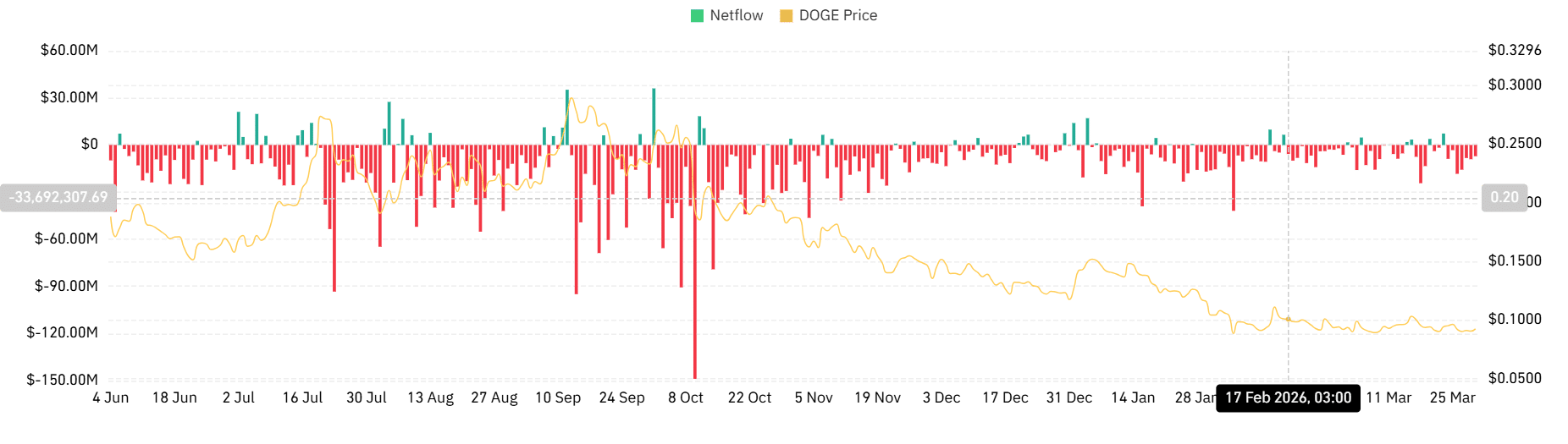
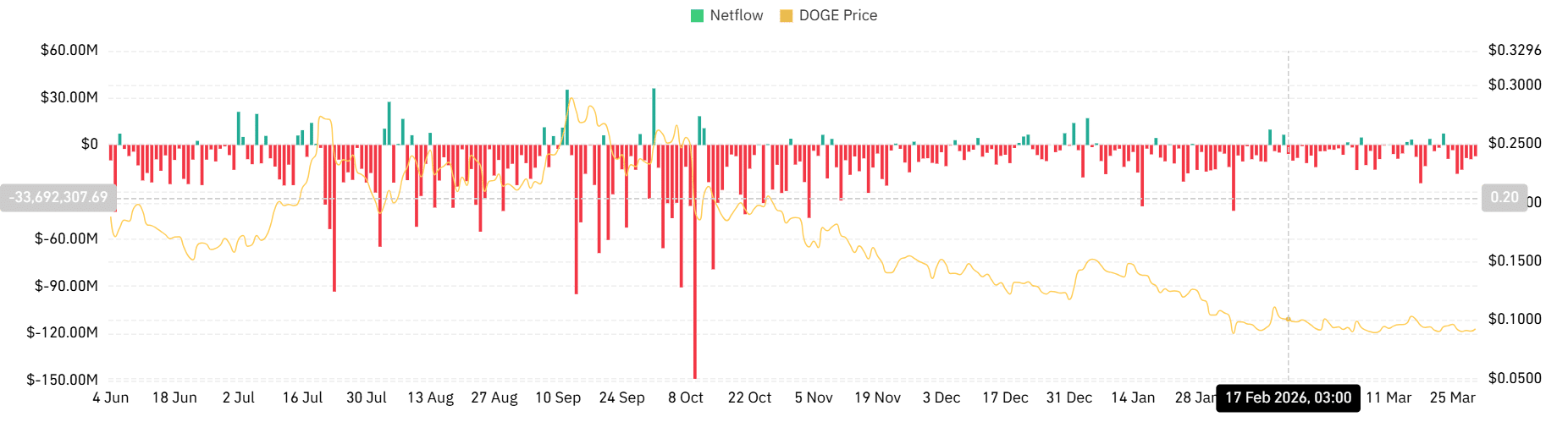
According to CoinGlass data, DOGE recorded $82.79 million in Spot outflows compared to $68.64 million in inflows. As a result, the memecoin’s Spot Netflow dropped 148% to -$14.25 million.
Source: CoinGlass

Notably, when outflows outpace inflows, it suggests that exchanges recorded more withdrawal orders than deposit orders.

Such a setup on exchanges reduces the supply available for immediate sale, effectively increasing scarcity and creating perfect conditions to accelerate upside momentum.

Futures remain overly bearish

Although significant capital has flowed into the Spot market, derivatives market participants have continued to reduce their exposure.

While DOGE showed slight upside momentum, traders have avoided piling in, especially on the long side. This is due to increased long-position liquidations.

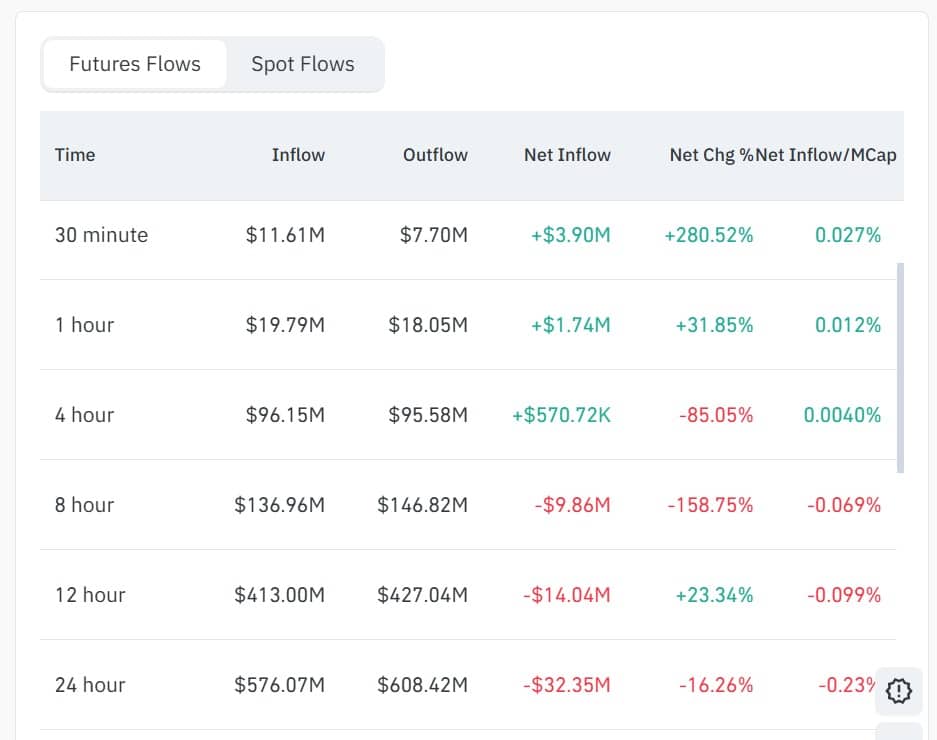
According to CoinGlass data, over $2.8 million in longs were liquidated. This liquidation rate amplified investors’ fear of taking more long positions.
Source: CoinGlass

As such, massive capital flowed into the Futures market, with over $608.4 million in outflows. This suggests that most participants closed their positions, indicating reduced risk appetite.

Such market conditions have left the Dogecoin market weakened and exposed to potentially more losses on its price charts.

What’s next for DOGE?

Dogecoin is currently at a crossroads, with the Spot market showing greater determination to pull the market out of a slump, while Futures remain bearish. These two conflicting forces expose DOGE to the fate of whichever side manages to overwhelm the other.

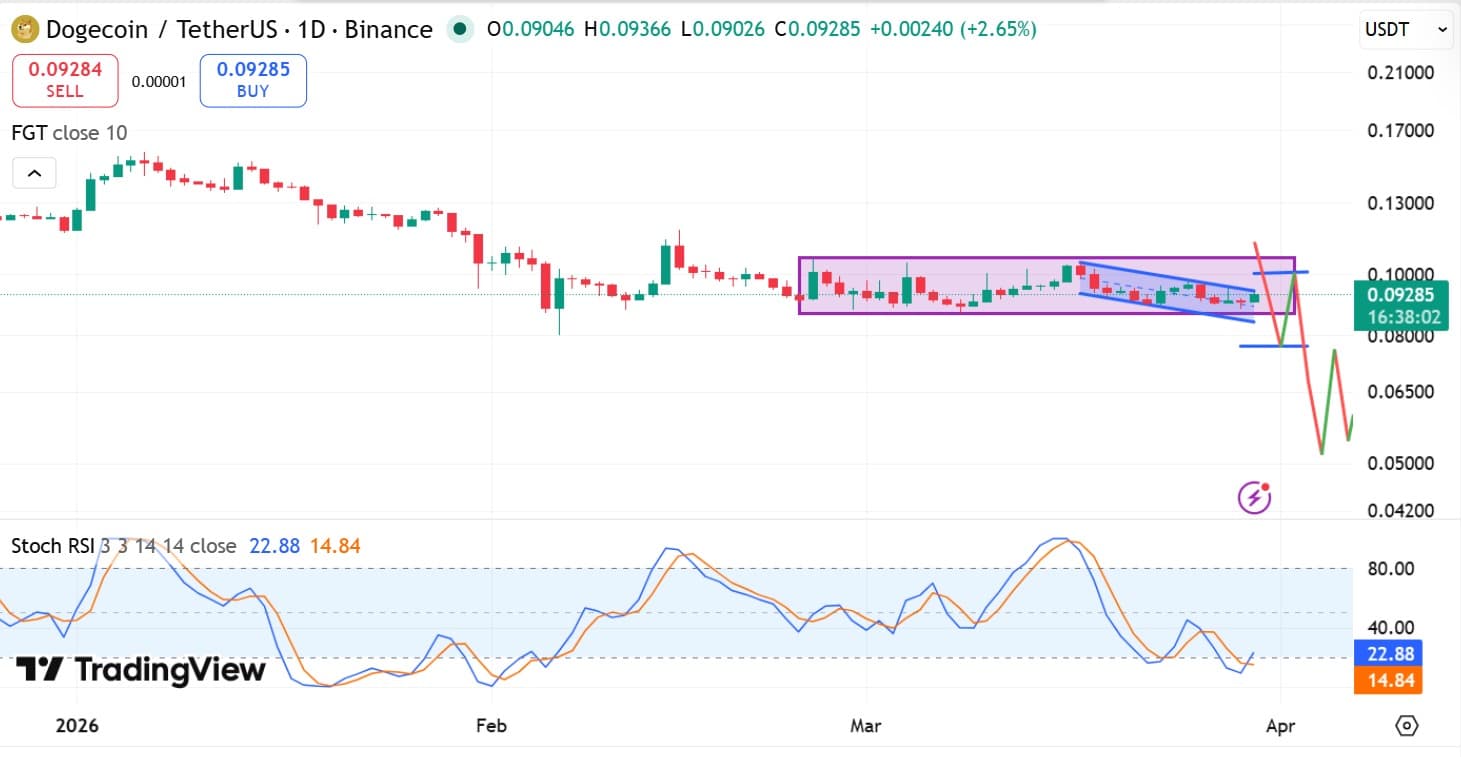
Looking at the Stochastic RSI, the momentum made a bullish crossover, rising from 7 to 23, reflecting increased buying pressure. Despite this crossover, the momentum index remains firmly stuck in oversold territory, signaling the presence of sellers.
Source: TradingView

Even more worrying for memecoin prospects, the future Grand Trend suggested another slip. Based on the future model, DOGE could drop below $0.09 again, falling to $0.086, with $0.080 as critical support.

However, if Spot demand outweighs Futures selling, Dogecoin could hold above $0.09 and target $0.106 resistance.


Final Summary

  • DOGE rose slightly, flipping $0.09, touching a high of $0.093, before retracing to $0.092.
  • Dogecoin saw fresh capital inflows into the Spot market, but Futures remained bearish, posing a risk of pullback.


Related Questions

QWhat was Dogecoin's price and daily percentage change at the time the article was written?

AAt press time, DOGE traded at $0.092, after slightly rising by 1.86% on the daily charts.

QWhat key support level did Dogecoin bulls successfully defend and flip?

ADogecoin bulls successfully defended and flipped the $0.09 support level.

QAccording to the article, what does it suggest when exchange outflows outpace inflows for an asset like DOGE?

AWhen outflows outpace inflows, it suggests that exchanges recorded more withdrawal orders than deposit orders. This reduces the supply available for immediate sale, increasing scarcity and creating conditions for upside momentum.

QWhy are traders in the derivatives market hesitant to take long positions on DOGE?

ATraders have avoided piling into long positions due to increased long-position liquidations, with over $2.8 million in longs being liquidated, which amplified investors' fear.

QWhat are the two potential price targets for DOGE mentioned in the article, based on conflicting market forces?

AIf Futures selling pressure outweighs spot demand, DOGE could drop to $0.086, with $0.080 as critical support. However, if Spot demand outweighs Futures selling, Dogecoin could hold above $0.09 and target the $0.106 resistance level.

Related Reads

BIT Research: Liquidity is Disappearing, Will Bitcoin Replay the Bottoming Pattern of 2022?

The crypto market is currently in an adjustment phase driven by policy expectations and liquidity shifts. Despite a brief rebound fueled by geopolitical easing and SpaceX's strong IPO performance, unexpectedly hawkish signals from new Fed Chair Kevin Warsh have removed anticipated easing support. Concurrently, stablecoin liquidity is shrinking, with insufficient new capital inflows, pushing the market into a typically quiet summer period. Pricing lacks catalysts for a sustained rally. Daily trading volume has significantly contracted, stablecoin growth has slowed markedly, and the supportive effect of Strategy's (formerly MicroStrategy) STRC preferred stock-financed Bitcoin purchases is fading. Amid policy uncertainty, seasonal weakness, and liquidity contraction, Bitcoin faces near-term downward pressure. Warsh's hawkish pivot and refusal to provide a clear policy outlook have increased risk premiums, historically unfavorable for Bitcoin. Technically, the trend remains bearish below $73,700, with $62,446 as critical support. A break below could accelerate declines, though a prolonged consolidation phase, similar to 2022's bottoming process, is possible. Liquidity is a core constraint. Current daily volume is around $500 billion, roughly 25% of the peak during the July-Oct 2025 rally. The 12-month growth rates for USDT and USDC have fallen to ~20%, with 6-month growth near zero, indicating weak new inflows. Bitcoin ETF and Strategy-driven inflows have also weakened, with a 30-day rolling net outflow. With inflation at 4.2% above the Fed's target, combined hawkish policy, seasonal factors, and liquidity shortages challenge Bitcoin's ability to hold above $60,000. However, this adjustment phase may be forming a cyclical low this summer, potentially setting the stage for the next bull cycle.

marsbit26m ago

BIT Research: Liquidity is Disappearing, Will Bitcoin Replay the Bottoming Pattern of 2022?

marsbit26m ago

Who Makes the Best Use of Claude Code? The Answer Might Not Be Programmers

Claude Code Usage Report Summary (Based on ~400k sessions) Core Finding: In agentic programming with Claude Code, a clear division of labor has emerged: humans primarily decide *what* to build (planning decisions), while Claude decides *how* to build it (execution decisions). Key Insights: 1. **Effectiveness is not limited to programmers.** In code-generation tasks, success rates for users in non-technical fields (law, finance, management, research) are nearing those of software engineers. What matters most is the user's domain expertise and understanding of the problem to be solved. 2. **Domain expertise drives success and efficiency.** Sessions where users exhibited "expert" proficiency in the task's domain saw verified success rates double compared to "novice" sessions. Experts also delegated more work per instruction, with Claude executing more actions and producing more output. 3. **AI is amplifying, not replacing, domain knowledge.** Claude Code lowers the *implementation* barrier, not the *judgment* barrier. The value of knowing the "what" and "why" is increasing relative to just knowing the "how" to code. 4. **Usage is evolving.** Over a 7-month period (Oct '25 - Apr '26), the share of sessions for debugging halved, while use for software operations, data analysis, and non-code writing roughly doubled. The estimated economic value of typical tasks increased by ~25%. Conclusion: The data suggests coding agents are making programming background less critical for completing technical tasks. However, they reward and amplify deep domain understanding. The ability to successfully direct an AI agent stems more from mastery of a specific field than from coding skill itself. The primary gains come from being competent in a domain; deep specialization adds only marginal additional advantage. This may signal a shift where software creation becomes integrated into various professions.

marsbit1h ago

Who Makes the Best Use of Claude Code? The Answer Might Not Be Programmers

marsbit1h ago

Trading

Spot
Futures
活动图片