Decoding 2026 altcoin cycle: Is capital rotating away from high-caps?

ambcryptoPublished on 2026-07-08Last updated on 2026-07-08

Abstract

Capital rotation shows no clear signs of leading into a broad altcoin cycle, with altcoins experiencing their worst underperformance against Bitcoin on record. While the total altcoin market cap is up 4% in Q3, 40% of altcoins still trade below all-time highs, indicating liquidity is concentrated in a few high-conviction sectors rather than spreading market-wide. Ethereum has shown relative strength against Bitcoin, with its dominance rising over 4% in Q3, which historically can signal an altcoin cycle. However, major high-cap assets like Ethereum and Solana remain significantly down from their peaks, and on-chain data suggests ETH's move may be more technical than fundamental. Analysts warn investors to be selective, as capital inflows are favoring specific narratives—evidenced by Robinhood Chain's TVL surging over 150% to a record $108 million—while TVL in many major high-cap ecosystems stays low. The cycle appears different, with liquidity flowing selectively and potentially leaving high-cap altcoins under continued pressure.

Capital rotation shows no clear signs of leading into a broader altcoin cycle.

However, this cycle looks different. On-chain data shows that altcoins are seeing their worst underperformance against Bitcoin [BTC] on record. This suggests that liquidity is not spreading across the altcoin market but instead rotating into a few high-conviction sectors while most assets continue to lag BTC.

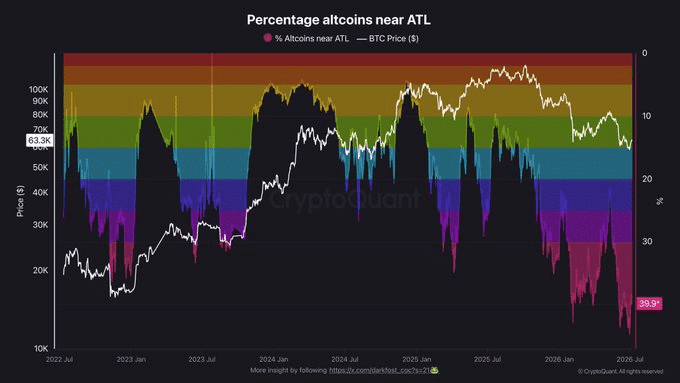
To put this into perspective, the total altcoin market cap currently sits around $870 billion, up 4% so far in Q3. However, a recent CryptoQuant report shows that 40% of altcoins are still trading below their all-time highs, showing that many assets have failed to recover even as some parts of the market continue to rally.
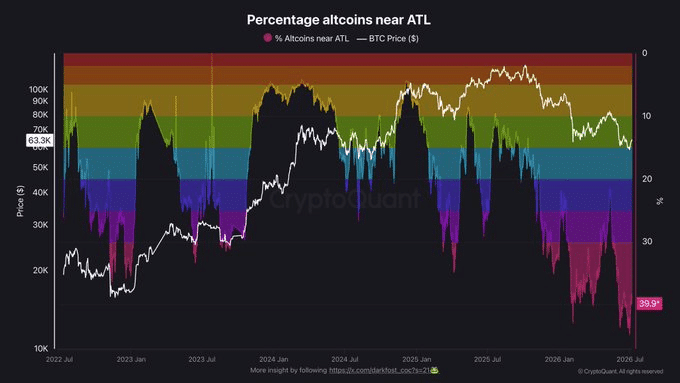
Source: CryptoQuant

Looking at it from a different angle, 60% of altcoins are still holding above their previous highs, suggesting that strength remains in specific sectors and assets rather than across the broader altcoin market.

From a technical perspective, Ethereum [ETH] dominance has started Q3 on a strong note, rising over 4%, while Bitcoin dominance has increased by only 0.7%. As the largest altcoin, ETH’s stronger capital inflows compared to BTC suggest that investors are beginning to rotate into altcoins.

Historically, a rising ETH/BTC ratio during a volatile market is often viewed as an early signal of an altcoin cycle starting to take shape. However, altcoins are still seeing their biggest underperformance against Bitcoin on record, raising the question: Is this cycle different, with liquidity flowing into only a few major assets and ETH struggling to trigger a broader altcoin cycle?

Why sector-based altcoin rallies could leave high-caps behind

Analysts are flagging warning signs across the market.

This follows the recent CryptoQuant report, where analysts urged investors to be more “selective” as altcoins face their strongest underperformance against Bitcoin on record. Going forward, the key question is whether investors regain the risk appetite to move back into altcoins, especially high-cap assets.

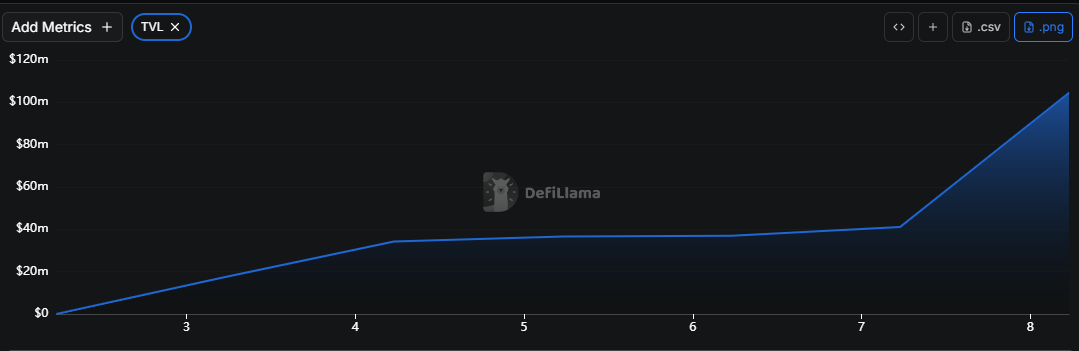
From a technical perspective, major high-cap assets are still trading well below their all-time highs. Ethereum, for example, remains down over 60%, while Solana is down more than 70%, showing that even leading altcoins have yet to fully recover. Meanwhile, TVL on Robinhood Chain has jumped over 150% in the past 24 hours to a record $108 million.
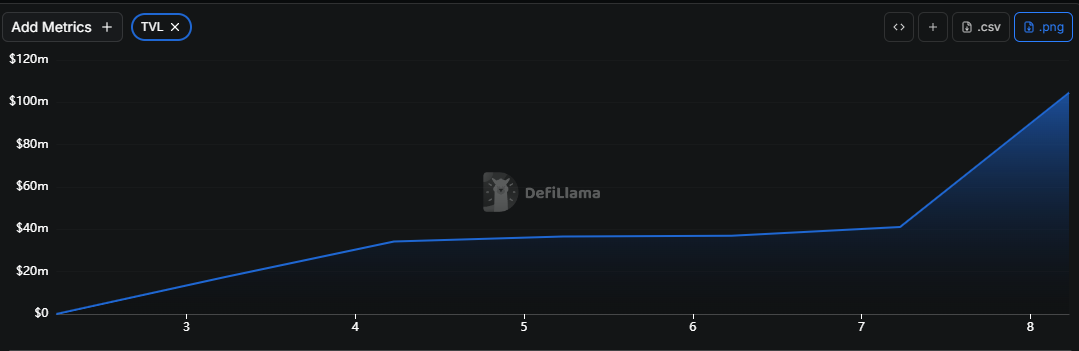
Source: DeFiLlama

By comparison, TVL across many major high-cap ecosystems remains near multi-month lows, showing where liquidity is actually flowing. More importantly, these inflows have come alongside ROBIN’s 30%+ rally so far in Q3, reinforcing the view that investors are rotating into high-conviction narratives.

That naturally puts Ethereum’s recent strength in focus.

While ETH has shown relative strength against Bitcoin, its on-chain fundamentals remain soft, suggesting the move may be more technical than structural. If capital continues flowing into selective altcoin narratives, pressure on major high-cap altcoins could keep building through the rest of H2.


Final Summary

  • Capital is flowing selectively, while many high-cap altcoins continue to lag behind.
  • Ethereum is showing technical strength, but high-caps could still face pressure if liquidity remains selective.


Related Questions

QWhat is the main observation regarding capital rotation in the current altcoin market according to the article?

AThe article states that capital rotation shows no clear signs of leading into a broader altcoin cycle. Instead, on-chain data indicates liquidity is not spreading across the altcoin market but rotating into a few high-conviction sectors, with most altcoins underperforming Bitcoin at record levels.

QWhat percentage of altcoins are still trading below their all-time highs, and what does this suggest?

AA recent CryptoQuant report shows that 40% of altcoins are still trading below their all-time highs. This suggests that many assets have failed to recover from previous downturns even as some parts of the market rally.

QWhat is the significance of the recent movement in the Ethereum/Bitcoin (ETH/BTC) ratio mentioned in the article?

AThe article notes that Ethereum dominance has risen more than Bitcoin's in Q3. Historically, a rising ETH/BTC ratio during volatile markets is seen as an early signal of a potential altcoin cycle. However, the current context is different as altcoins are still severely underperforming Bitcoin.

QWhat example does the article provide to show where investor liquidity is actually flowing, as opposed to major high-cap ecosystems?

AThe article highlights Robinhood Chain (ROBIN), where Total Value Locked (TVL) jumped over 150% in 24 hours to a record $108 million, alongside ROBIN's price rally. In contrast, TVL across many major high-cap ecosystems remains near multi-month lows, indicating selective capital flows into specific narratives.

QWhat is the article's final conclusion regarding the pressure on major high-capitalization altcoins like Ethereum?

AThe article concludes that while Ethereum is showing technical strength, its on-chain fundamentals remain soft. If capital continues to flow selectively into specific altcoin narratives rather than broadly, major high-cap altcoins could face increasing pressure for the rest of the second half of the year.

Related Reads

The Danger of Old Bookmarks: How an Expired Tornado Cash Domain Cost a User 1,000 ETH

A user lost over 1,010 ETH (worth millions) due to a phishing attack via an expired official domain of the Tornado Cash protocol. As reported on August 20, 2026, the domain `tornado.cash` was not renewed by the original developers amid U.S. OFAC sanctions and was subsequently registered by malicious actors. They deployed a fake frontend mimicking the legitimate Tornado Cash interface. Through this site, the attackers gained access to the user's deposit notes—the data required to withdraw funds from the protocol's pools—and drained the ETH within 12 hours. On-chain data shows the stolen funds (e.g., wallet 0xd8B356...) were withdrawn from Tornado Cash pools. However, on-chain analyst Specter cast doubt on the victim's story. He suggested the individual might be involved in illicit activity, noting that a large sum of BTC was received from a coin-mixing service (Whirlpool) and converted to ETH before being sent to the fake Tornado Cash site. The victim's explanation of urgently moving funds due to a compromised hardware wallet was questioned, as the fund trail indicated deliberate obfuscation. Specter speculated this might be a conflict between malicious actors rather than a simple phishing case. The incident highlights the danger of expired domains for major protocols, where old bookmarks can lead to compromised sites. WHOIS records show the domain was registered in March 2025. Broader analysis notes that in 2025, over $1.8 billion was lost to scams and exploits, largely through social engineering like phishing via familiar but hijacked links. This case underscores the persistent risk when a domain's legal status changes but user trust and search engine reputation remain.

cryptonews.ru40m ago

The Danger of Old Bookmarks: How an Expired Tornado Cash Domain Cost a User 1,000 ETH

cryptonews.ru40m ago

You'll Be Surprised How Much WeChat's Architecture Differs from Telegram's

An article compares the core architectural philosophies of WeChat and Telegram, highlighting fundamental differences in data storage, monetization, and developer ecosystems. **Data Storage:** Telegram offers unlimited, synchronized cloud storage for seamless access across all devices. In contrast, WeChat stores chat history locally on each device, requiring a manual migration process for transfer and tethering desktop sessions to an active smartphone. **Features & Ecosystem:** Telegram's open Bot API allows for easy, free bot creation, while WeChat's massive ecosystem of over 4.8 million "mini-programs" operates within a closed, curated, and more regulated platform. Commenting also differs: Telegram uses integrated discussion threads for channels, whereas WeChat relies on pre-moderated comments for official accounts and separate chats for interaction. **File Sharing & Payments:** Telegram supports large file transfers (up to 4GB for Premium), while WeChat limits most files to 200MB. A key divergence is in payments: WeChat Pay is deeply integrated into daily life and commerce in China, whereas Telegram lacks a comparable built-in fiat payment system, focusing instead on third-party bots and crypto. **Analysis:** The comparison reveals two distinct models: WeChat is a tightly integrated, closed ecosystem deeply embedded in the real economy, while Telegram prioritizes open protocols, flexible data handling, and low barriers for developers. An added perspective notes that WeChat's fusion of messaging and payments in a single interface without end-to-end encryption for chats potentially broadens the attack surface, raising security questions as more functions converge.

cryptonews.ru6h ago

You'll Be Surprised How Much WeChat's Architecture Differs from Telegram's

cryptonews.ru6h ago

Trading

Spot
活动图片