Data Inflation, Is ETH's Fundamental Still There?

比推Published on 2026-03-06Last updated on 2026-03-06

Abstract

The report by Culper Research argues that Ethereum's fundamentals have been severely damaged following the December 2025 Fusaka upgrade. The upgrade increased the gas limit, causing a 90% drop in gas fees—far more than the 10-30% predicted—and led to a surplus of cheap block space. This has enabled a surge in "address poisoning" or "dusting" attacks, which now account for 95% of new wallet creation and over 22.5% of all ETH transactions. The authors claim these attacks artificially inflate on-chain activity metrics, such as active addresses and transaction volume, which are mistakenly cited by bulls like Tom Lee as evidence of organic growth. Additionally, the report states that lower transaction fees have reduced validator earnings, weakening staking incentives and undermining Ethereum’s token economics. It highlights that Vitalik Buterin has been selling significant amounts of ETH, suggesting insider awareness of these issues. The authors also note competitive threats from Solana, which is gaining developer momentum and institutional adoption. Culper Research concludes that Ethereum’s economic model is broken and maintains a bearish outlook on ETH.

Author: Culper Research(@CulperResearch)

Compiled by: Deep Tide TechFlow

Original title: Culper Research: Why We Are Firmly Shorting ETH


Deep Tide Introduction: Culper Research is a well-known short-selling institution on Wall Street that has accurately targeted several high-profile companies. This report directly addresses the core issue: the Fusaka upgrade in December 2025 brought a large amount of cheap block space, but real organic demand has not kept up—the "prosperous" on-chain data is actually fabricated by address poisoning attacks. Vitalik himself is selling a large amount of ETH, while Tom Lee, Ethereum's most staunch bull advocate, is still defending it with incorrect data. This article is not a prediction; it is a short-selling thesis with data and verification, worth reading carefully for every ETH holder.

We are shorting Ethereum and ETH-linked securities, including BMNR.

We believe that the Fusaka upgrade in December 2025 has severely damaged Ethereum's token economic model. Vitalik himself knows this and is continuously selling; while Tom Lee, ETH's most steadfast bull, is pouring good money into a bad bet.

$ETH will continue to fall.

Tom Lee's Defense: Active Addresses and Transaction Volume Are Rising

Tom Lee's $BMNR defends ETH, claiming that "ETH is not entering a death spiral because utility is rising." He cites the surge in ETH active addresses and transaction volume after Fusaka as evidence of "strengthening fundamentals" and institutional adoption.

Lee's logic is wrong.
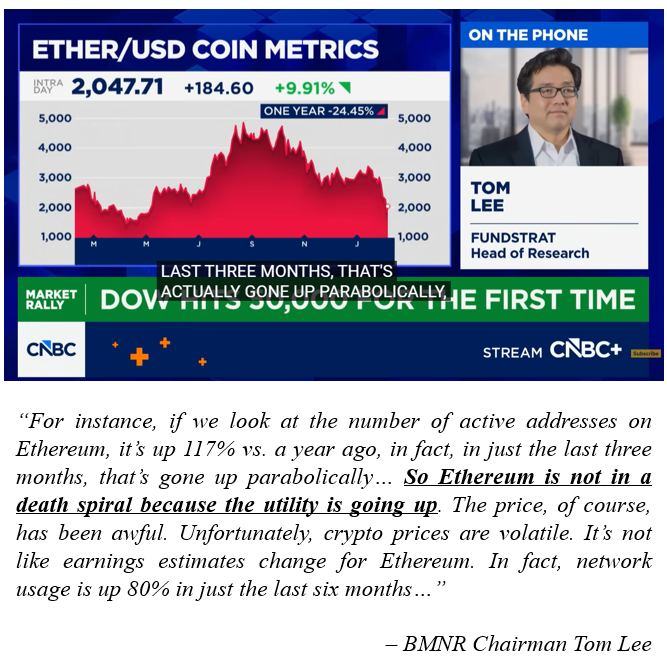
By his own logic, if ETH's on-chain activity does not reflect real utility value growth, then ETH is heading toward a death spiral.

Our research shows that this is exactly what is happening.

The full report and disclosure information are now available at culperresearch.com.

The Truth About On-Chain Data: 95% of New Wallets Are Poisoning Attacks

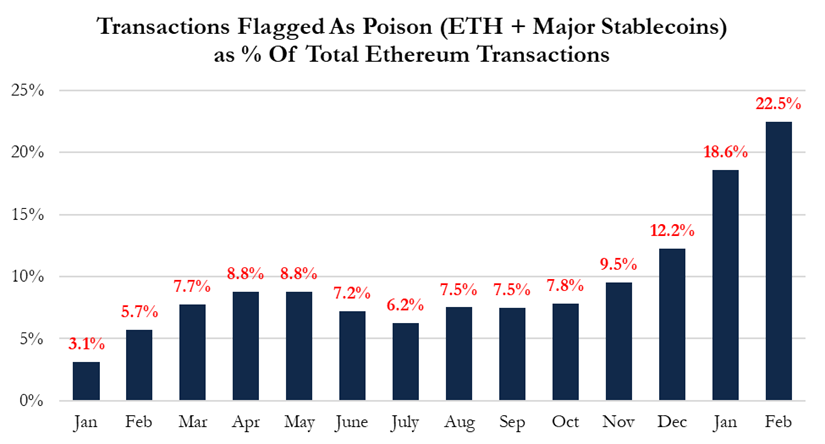
Our comprehensive analysis of on-chain data from January 2025 to February 2026 shows: The "institutional adoption" data cited by Tom Lee is actually explained by large-scale low-value address poisoning/wallet dusting attacks triggered by the block space surplus brought by Fusaka.
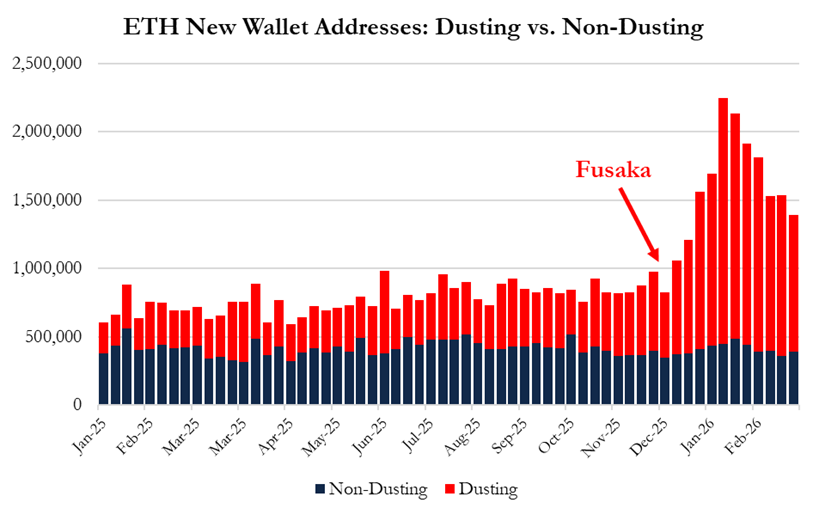
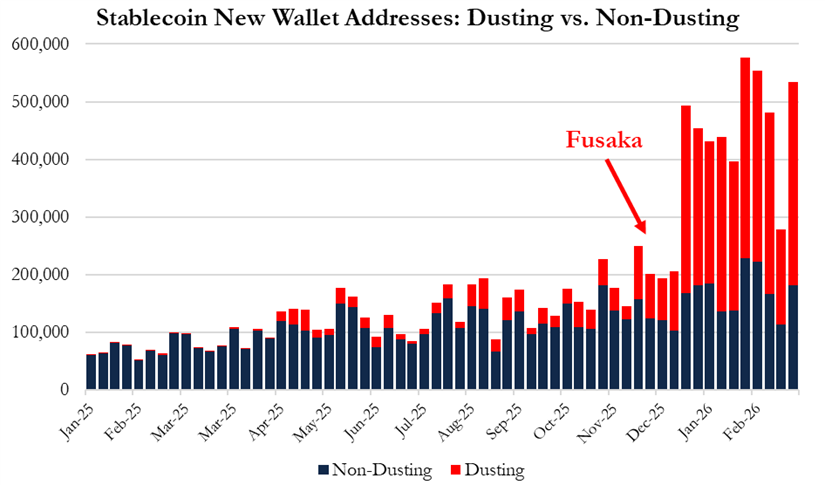
Specific data after Fusaka:

  • 95% of new wallet growth is explained by newly created "poisoned" wallets

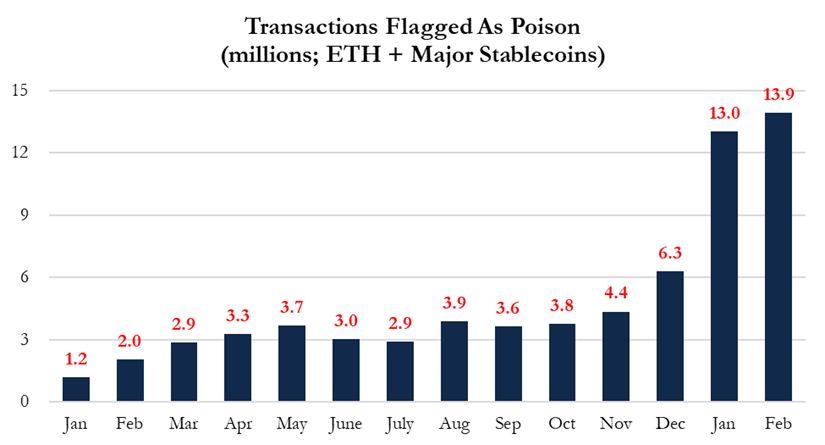
  • Address poisoning attacks have increased by more than 3 times

  • Poisoning attacks explain more than 50% of ETH transaction volume growth

  • Poisoning attacks now account for 22.5% of all ETH transactions
Fusaka Upgrade: Gas Fees Collapsed by 90%, 3-9 Times Worse Than Expected

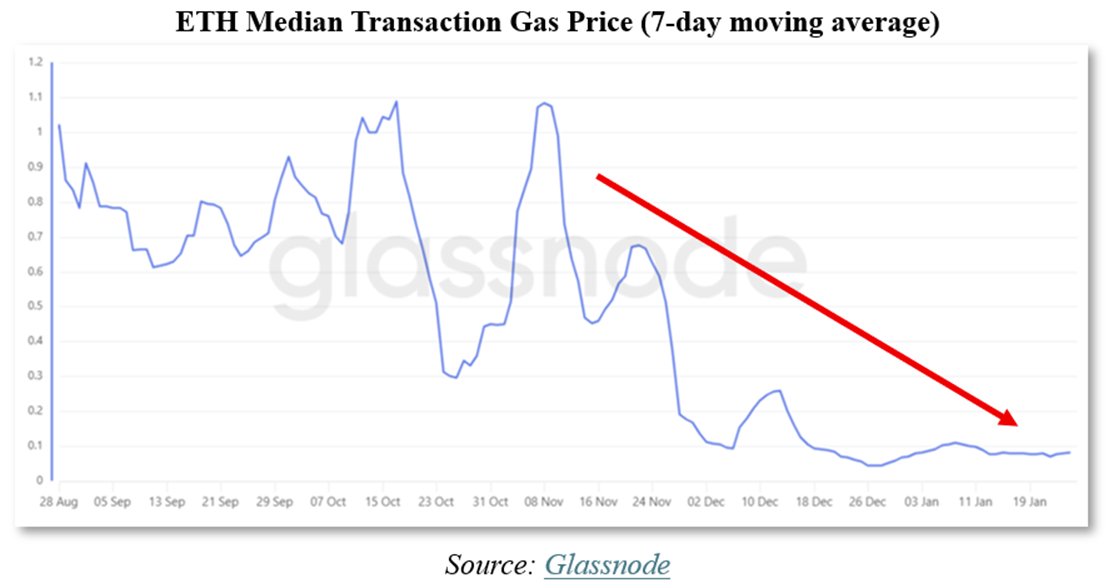
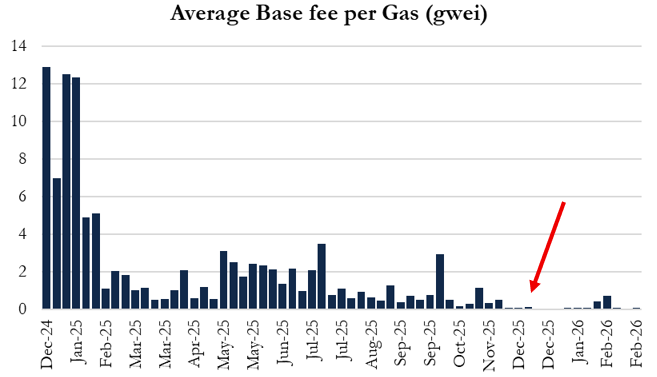
Fusaka increased the gas limit from 45 million to 60 million, aiming to scale Ethereum L1. Vitalik and PTG estimated that gas fees would drop by 10-30%.

Reality: Gas fees dropped by about 90%.

Vitalik and the validators severely underestimated L1 demand elasticity, with an error of 3-9 times—using outdated mathematical models from before EIP-1559 and before L2s emerged.

Vitalik Is Selling Like Crazy

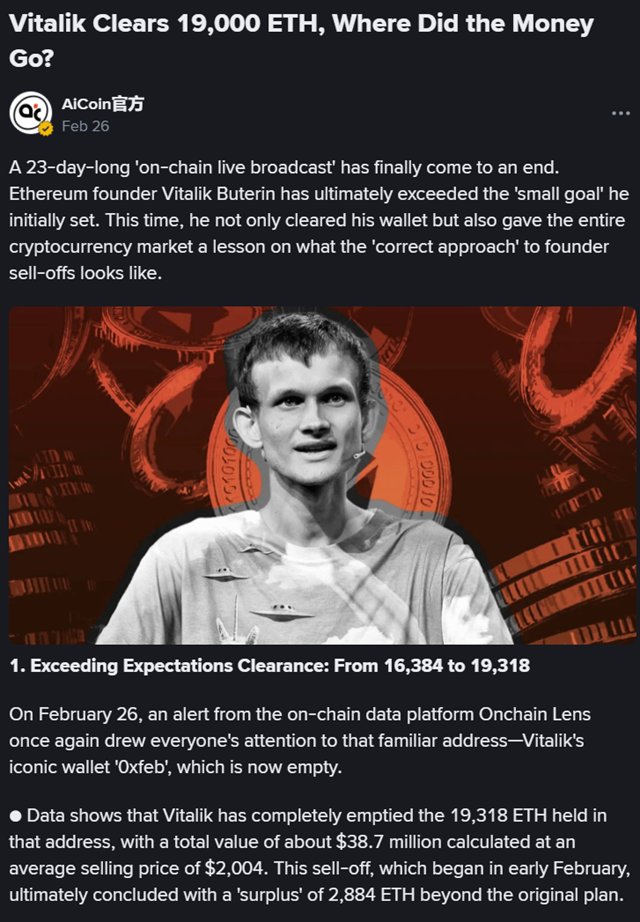
This is why we believe Vitalik is selling ETH heavily. On January 30, he announced he would sell 16,384 ETH to fund the Ethereum Foundation's "austerity period." Since then, he has sold over 19,300 ETH and is still continuing.

He knows what Tom Lee does not: ETH's token economic model has collapsed.
We Personally Verified the Address Poisoning Attack

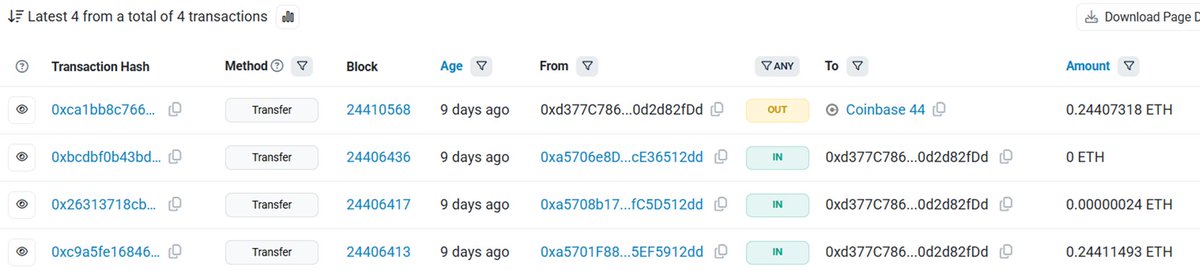
We documented the ETH address poisoning process firsthand: We created two new wallets, initiated a transfer between them, and were targeted by a poisoning attack within 5 minutes.

We encourage readers to verify this themselves.

Losses from poisoning attacks have grown at a rate more than 8 times faster than before Fusaka.
The Validator Flywheel Is Reversing

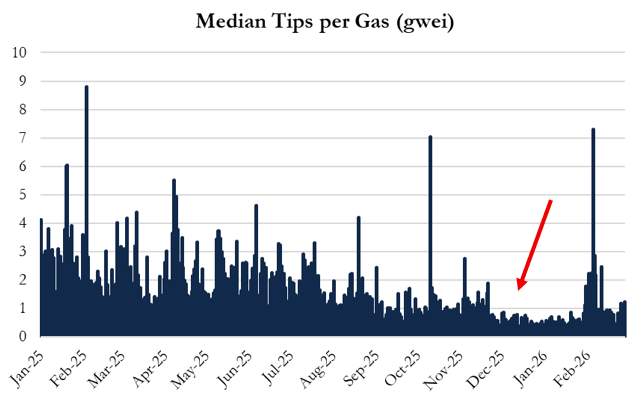
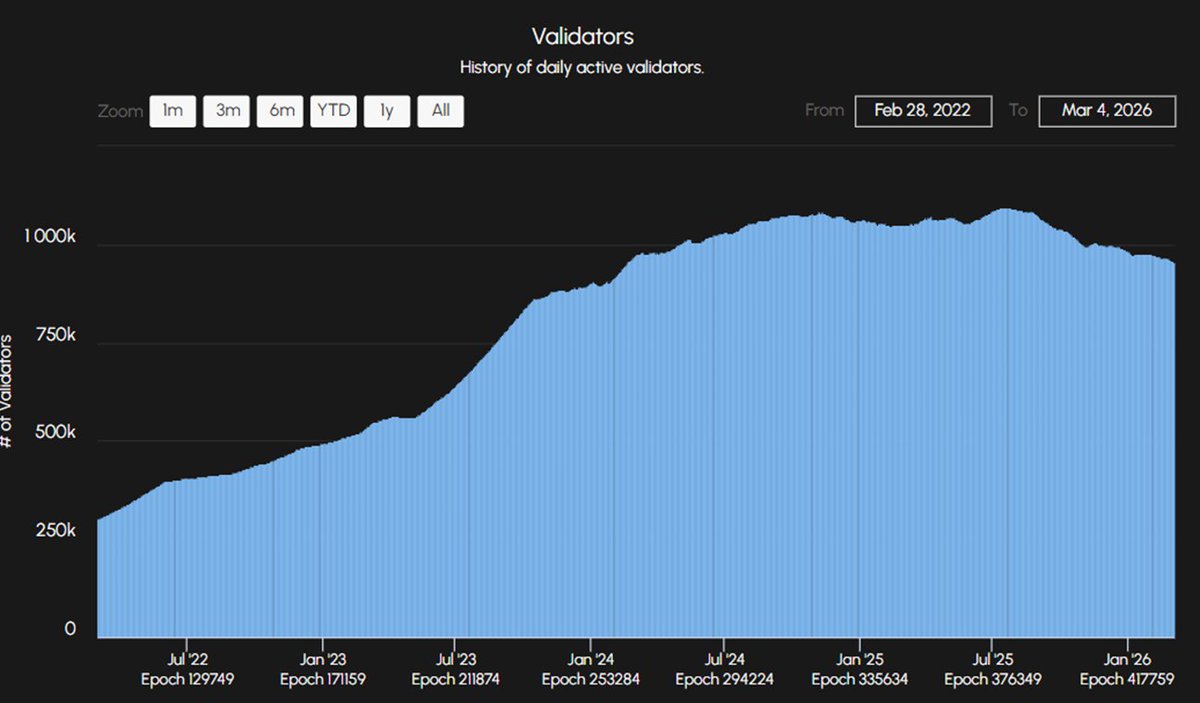
Additionally, the gas limit increase has severely hit ETH validators, who now see a 40-50% drop in tips per unit of gas. Lower returns reduce staking demand and high-value activity, thereby weakening the foundation for institutional adoption.

The flywheel is now spinning in reverse.
Ethereum Is Losing to Solana and Its Own L2s

Meanwhile, ETH continues to cede share:

  • Solana developers grew by 29% in 2025, while Ethereum only 6%; talent is draining away

  • Visa and Citigroup chose Solana to build DeFi applications

  • Solana DEX trading volume is now more than double that of Ethereum

Conclusion: The Next Nokia

During the internet bubble era, Netscape and Nokia dominated the market for over a decade, but ultimately, Google and Apple reaped the rewards.

We view ETH in the same light.

We believe the token economic model has collapsed, Tom Lee is in over his head, and $ETH will continue to decline.


Twitter:https://twitter.com/BitpushNewsCN

Bitpush TG Discussion Group:https://t.me/BitPushCommunity

Bitpush TG Subscription: https://t.me/bitpush

Original link:https://www.bitpush.news/articles/7617441

Related Questions

QWhat is the main argument of Culper Research's report on Ethereum?

ACulper Research argues that Ethereum's tokenomics have been severely damaged by the Fusaka upgrade, which the increased block space led to a 90% drop in gas fees, but real organic demand did not keep up. They claim that the apparent surge in active addresses and transactions is largely due to address poisoning attacks, not genuine adoption, and that this has broken Ethereum's economic model.

QHow does Culper Research explain the increase in Ethereum's active addresses and transaction volume post-Fusaka?

ACulper Research attributes the increase in active addresses and transaction volume to address poisoning (wallet dusting) attacks, which account for 95% of new wallet growth and over 50% of the transaction volume increase. They argue that these attacks exploit the cheap block space created by Fusaka, creating artificial activity rather than reflecting real utility or adoption.

QWhat evidence does Culper Research provide to support their claim that Vitalik Buterin is selling ETH?

ACulper Research states that Vitalik Buterin announced on January 30 that he would sell 16,384 ETH to fund the Ethereum Foundation during a 'tightening period,' and has since sold over 19,300 ETH. They interpret this as evidence that he is aware of the broken tokenomics and is divesting accordingly.

QHow did the Fusaka upgrade affect gas fees and validator incentives according to the report?

AThe Fusaka upgrade increased the gas limit from 45 million to 60 million, intended to scale Ethereum L1. However, gas fees dropped by approximately 90%, far more than the estimated 10-30% decline. This reduction in fees decreased validator tips by 40-50%, undermining validator rewards and potentially reducing staking demand and high-value activity.

QWhat competitive threats to Ethereum does Culper Research highlight in their report?

ACulper Research highlights that Ethereum is losing market share to Solana and its own L2 solutions. They note that Solana developer growth was 29% in 2025 compared to Ethereum's 6%, that Visa and Citigroup are building DeFi applications on Solana, and that Solana DEX trading volume is now more than double that of Ethereum.

Related Reads

20 Billion Valuation, Alibaba and Tencent Competing to Invest, Whose Money Will Liang Wenfeng Take?

DeepSeek, an AI startup founded by Liang Wenfeng, is reportedly in talks with Alibaba and Tencent for an external funding round that could value the company at over $20 billion. This marks a significant shift, as DeepSeek had previously relied solely on funding from its parent company,幻方量化 (Huanfang Quantitative), and had resisted external investment. The potential valuation would place DeepSeek among the top-tier AI model companies in China, comparable to competitors like MoonDark (valued at ~$18 billion) and ahead of recently listed firms like MiniMax and Zhipu. The funding—which could range from $600 million (for a 3% stake) to $2 billion (for 10%)—is seen as a move to secure resources for model development, retain talent, and support infrastructure needs, particularly as competition in inference models and AI agents intensifies. Both Alibaba and Tencent are eager to invest, not only for financial returns but also to integrate DeepSeek into their broader AI ecosystems. However, DeepSeek’s leadership is cautious about maintaining independence and may prefer financial investors over strategic ones to avoid being locked into a specific tech ecosystem. Alternative options, such as state-backed funds, offer longer-term capital and policy support but may come with slower decision-making and potential constraints on global expansion. With competing AI firms accelerating their IPO plans, DeepSeek’s window for securing optimal terms may be narrowing. The final decision will reflect a trade-off between capital, resources, and strategic independence.

marsbit40m ago

20 Billion Valuation, Alibaba and Tencent Competing to Invest, Whose Money Will Liang Wenfeng Take?

marsbit40m ago

After Losing 97% of Its Market Value, iQiyi Attempts to Use AI to Forcefully Extend Its Lifespan

After losing 97% of its market value since its 2018 peak, iQiyi is aggressively pivoting to AI in a desperate attempt to survive. At its 2026 World Conference, CEO Gong Yu announced an "AI Artist Library" with over 100 virtual performers and a new AIGC platform, "NaDou Pro," promising faster production and lower costs. This shift comes as the company faces severe financial distress: its market cap sits near delisting thresholds at $1.36 billion, with significant losses, declining membership revenue, and depleted cash flow. The AI strategy has sparked controversy. Top actors have issued legal threats against unauthorized digital replicas, while in Hengdian, over 134,000 background actors are seeing their already scarce job opportunities vanish as AI replaces them for background roles. iQiyi's move represents a fundamental shift from being a high-cost content buyer to a landlord" to becoming a "platform capitalist" that transfers production risk to creators. This contrasts with competitors like Douyin (TikTok's Chinese counterpart), which is investing heavily in *real* actor-led short dramas, betting that authentic human connection retains users better than AI-generated content. The article draws a parallel to the 1920s transition to "talkies," which made cinema musicians obsolete but ultimately enriched the art form. In contrast, iQiyi's AI drive is framed not as an artistic evolution but as a cost-cutting measure that could degrade storytelling, replacing genuine human emotion with algorithmically calculated stimulation and potentially numbing audiences' capacity for empathy. The core question remains: can a company focused solely on financial survival preserve the art of storytelling?

marsbit43m ago

After Losing 97% of Its Market Value, iQiyi Attempts to Use AI to Forcefully Extend Its Lifespan

marsbit43m ago

Only a 50% Chance of Passing This Year, Can the CLARITY Bill Succeed Before the Midterm Elections?

The CLARITY Act, which passed the House in July 2025 with strong bipartisan support (294-134), faces a critical juncture in the Senate. The Senate Banking Committee is expected to hold a markup soon, but key issues remain unresolved, including stablecoin yield provisions, DeFi regulations, and securing full Republican committee support. Other contentious points involve the Blockchain Regulatory Certainty Act (BRCA), ethics amendments for government officials, and SEC-related matters. The legislative calendar is tight, with limited time before the midterm elections. If the committee markup is delayed beyond mid-May, the chances of passage in 2026 drop significantly. Senator Cynthia Lummis has warned that failure this year could delay comprehensive crypto market structure legislation until 2030 or later. Galaxy estimates the probability of the CLARITY Act becoming law in 2026 is only about 50%. The bill provides crucial regulatory clarity by defining jurisdictional boundaries between the SEC and CFTC, establishing a path for decentralization, and bringing digital commodity intermediaries under federal regulation. Its passage is seen as vital before potential power shifts in the next Congress, which could bring less favorable leadership to key committees. The timeline is compressed, and the bill must compete for floor time with other priorities like Iran authorization and DHS appropriations. Key hurdles include finalizing the stablecoin yield compromise text, addressing law enforcement concerns about BRCA, and navigating political dynamics around SEC nominations. The outcome of the Banking Committee markup and the level of bipartisan support will be critical indicators of its future success.

marsbit1h ago

Only a 50% Chance of Passing This Year, Can the CLARITY Bill Succeed Before the Midterm Elections?

marsbit1h ago

Trading

Spot
Futures
活动图片