Culper Research: Why We Are Firmly Shorting ETH?

marsbitPublished on 2026-03-09Last updated on 2026-03-09

Abstract

Culper Research, a Wall Street short-selling firm, presents a case for shorting Ethereum (ETH) and related securities. Their report argues that the Fusaka upgrade in December 2025 severely damaged Ethereum's tokenomics by increasing the gas limit, which caused a 90% collapse in transaction fees—far worse than the 10-30% drop predicted. This created a surplus of cheap block space, enabling a massive increase in "address poisoning" or "wallet dusting" attacks. The analysis claims that 95% of new wallet growth and over 50% of the increased transaction volume are inorganic, stemming from these spam attacks rather than genuine adoption. The report further states that Vitalik Buterin is aware of these issues and has been selling significant amounts of ETH. It also criticizes prominent bull Tom Lee for using flawed on-chain activity data as evidence of strength. Additionally, lower validator earnings are reducing staking incentives, and Ethereum is losing developer mindshare and market share to competitors like Solana, which is attracting major institutional partnerships. Culper concludes that Ethereum's economic model is broken and its value will continue to decline.

Author: Culper Research(@CulperResearch)

Compiled by: Deep Tide TechFlow

Deep Tide Introduction: Culper Research is a well-known short-selling institution on Wall Street, having accurately targeted several prominent companies. This report directly addresses the core issues of Ethereum: the Fusaka upgrade in December 2025 brought a large amount of cheap block space, but real organic demand has not kept up—the "prosperous" on-chain data is actually fabricated by address poisoning attacks. Vitalik himself has been selling a significant amount of ETH, while Tom Lee, Ethereum's most staunch bull advocate, continues to defend it with incorrect data. This article is not a prediction; it is a well-researched short thesis with data and verification, worth reading carefully for every ETH holder.

We are shorting Ethereum and ETH-linked securities, including BMNR.

We believe that the Fusaka upgrade in December 2025 has severely damaged Ethereum's token economic model. Vitalik himself knows this and is continuously selling; meanwhile, Tom Lee, ETH's most steadfast bull, is pouring good money into a bad bet.

$ETH will continue to decline.

Tom Lee's Defense: Active Addresses and Transaction Volume Are Rising

Tom Lee's $BMNR defends ETH, claiming that "ETH is not entering a death spiral because utility is increasing." He cites the surge in ETH active addresses and transaction volume after Fusaka as evidence of "strengthening fundamentals" and institutional adoption.

Lee's logic is wrong.
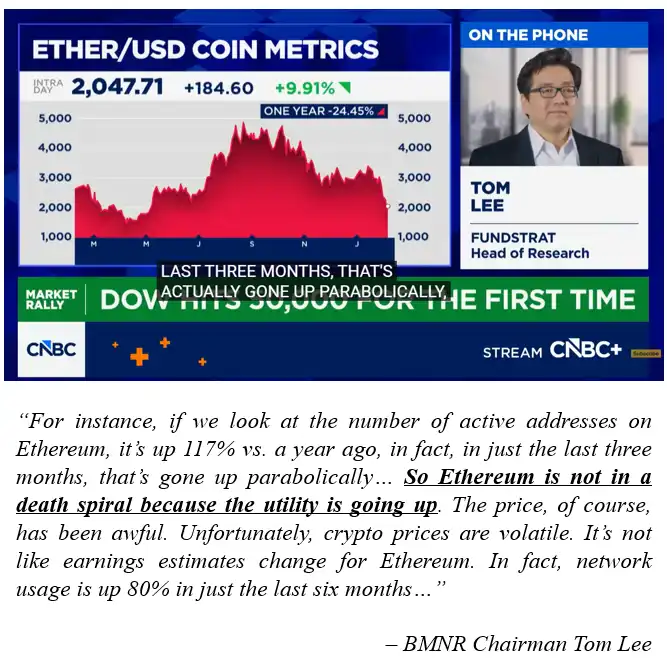
By his own logic, if ETH's on-chain activity does not reflect real utility growth, then ETH is heading toward a death spiral.

Our research shows that this is exactly what is happening.

The full report and disclosure information are now available at culperresearch.com.

The Truth About On-Chain Data: 95% of New Wallets Are Poisoning Attacks

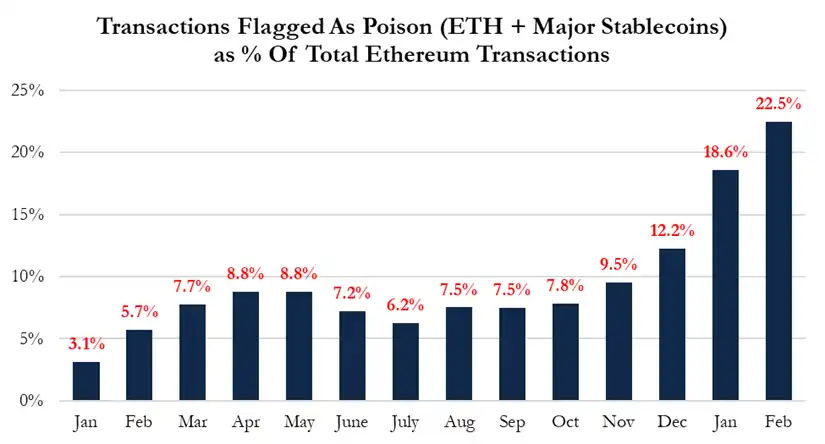
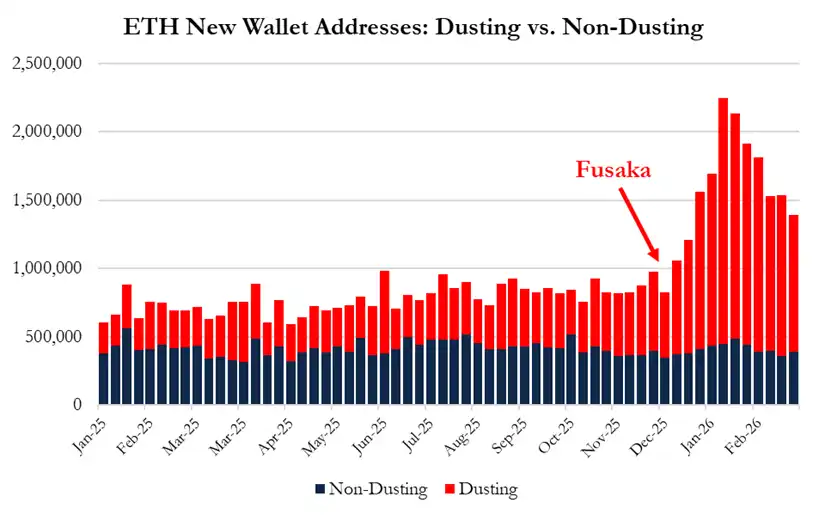
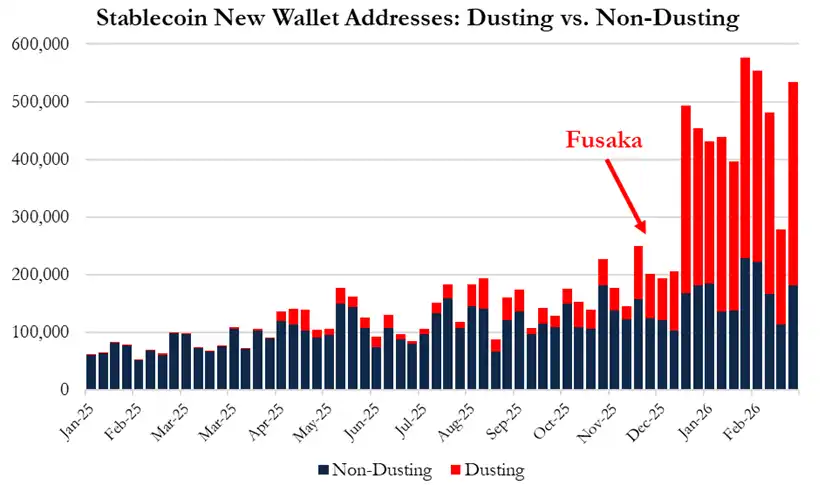
Our comprehensive analysis of on-chain data from January 2025 to February 2026 shows: the "institutional adoption" data cited by Tom Lee is actually explained by large-scale low-value address poisoning/wallet dusting attacks triggered by the block space surplus brought by Fusaka.
Specific data after Fusaka:

  • 95% of new wallet growth is explained by newly created "poisoned" wallets
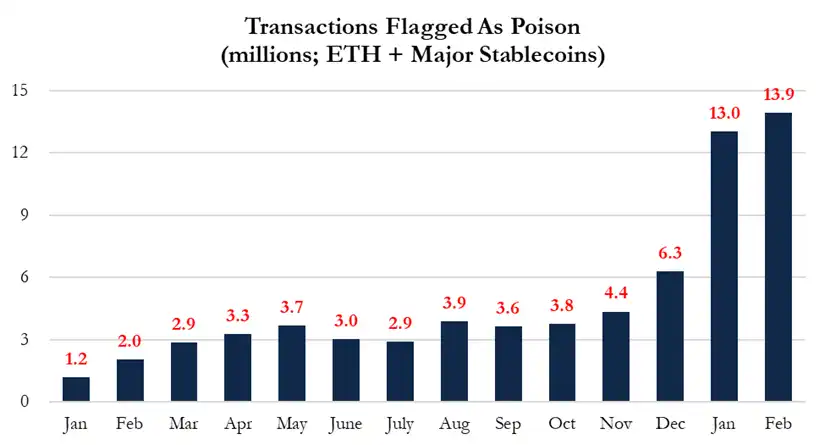
  • Address poisoning attacks have increased more than 3 times
  • Poisoning attacks explain over 50% of ETH transaction volume growth
  • Poisoning attacks now account for 22.5% of all ETH transactions
Fusaka Upgrade: Gas Fees Collapsed by 90%, 3-9 Times Worse Than Expected

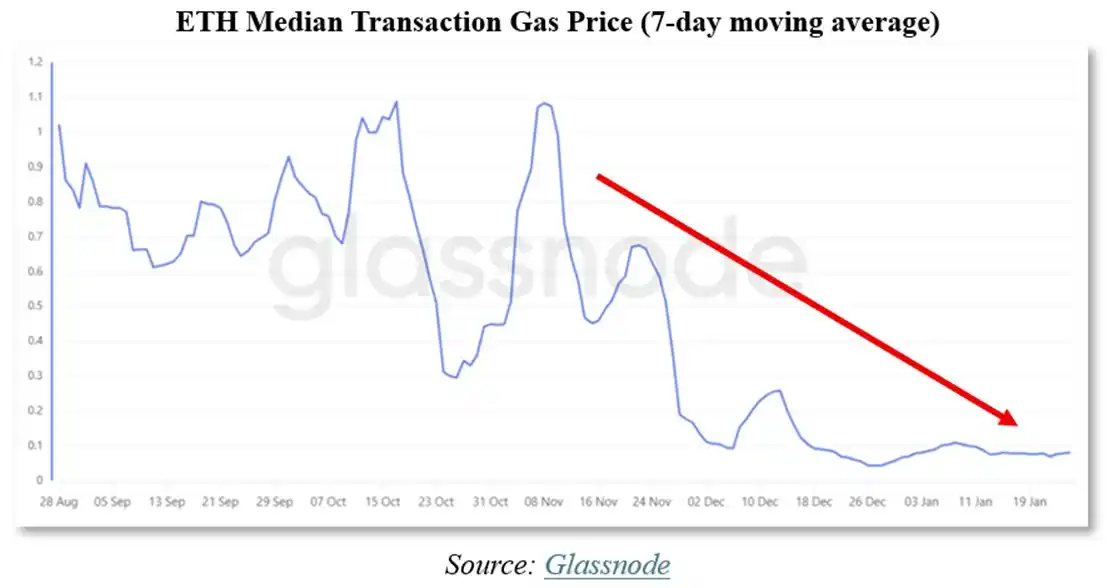
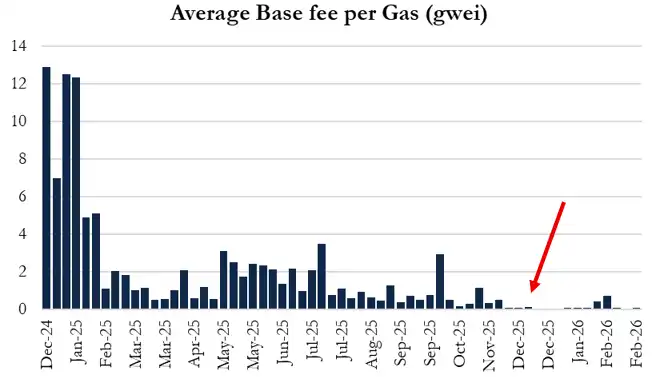
Fusaka increased the gas limit from 45 million to 60 million, aiming to scale Ethereum L1. Vitalik and PTG estimated that gas fees would drop by 10-30%.

The reality is: gas fees dropped by approximately 90%.

Vitalik and the validators severely underestimated L1 demand elasticity, with an error of 3-9 times—using outdated mathematical models from before EIP-1559 and before L2s emerged.

Vitalik Is Selling Like Crazy

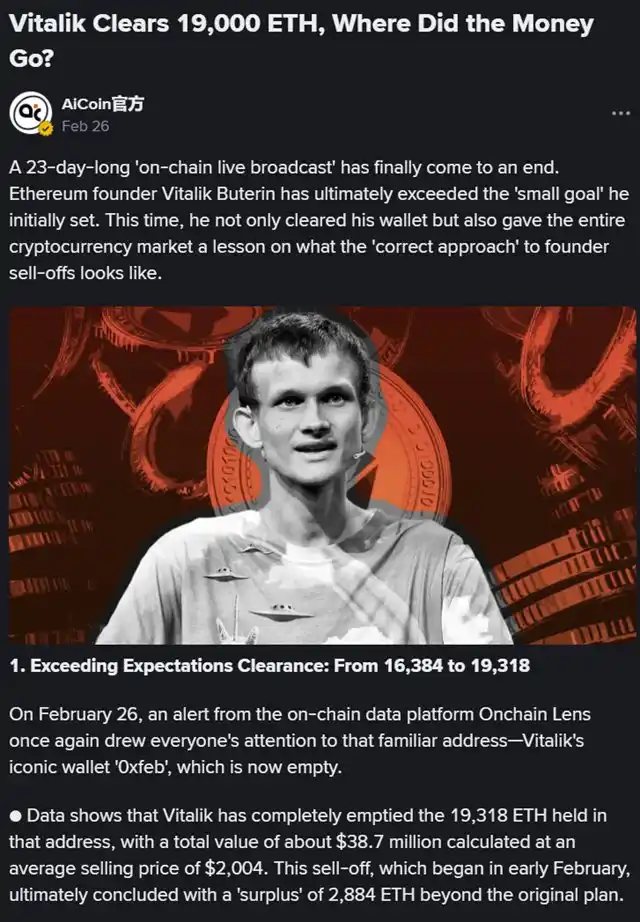
This is why we believe Vitalik is selling ETH heavily. On January 30, he announced he would sell 16,384 ETH to fund the Ethereum Foundation's "austerity period." Since then, he has sold over 19,300 ETH and is still continuing.

He knows what Tom Lee does not: ETH's token economic model has broken.
We Personally Verified the Address Poisoning Attack

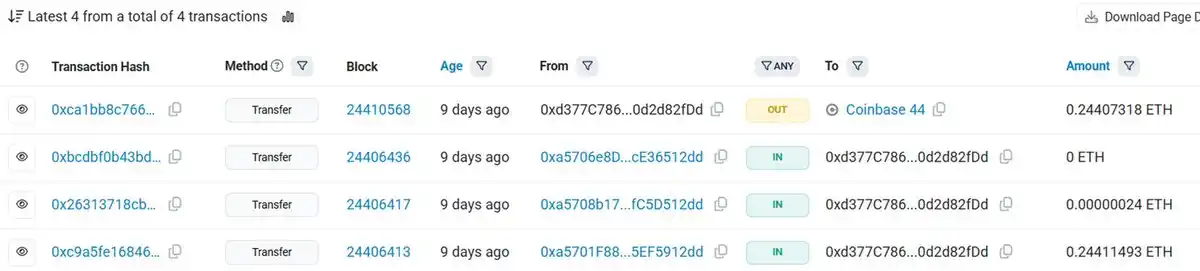
We documented the ETH address poisoning process firsthand: we created two new wallets, initiated a transfer between them, and were targeted by a poisoning attack within 5 minutes.

We encourage readers to verify this themselves.

Losses from poisoning attacks have grown at a rate more than 8 times faster than before Fusaka.
The Validator Flywheel Is Reversing

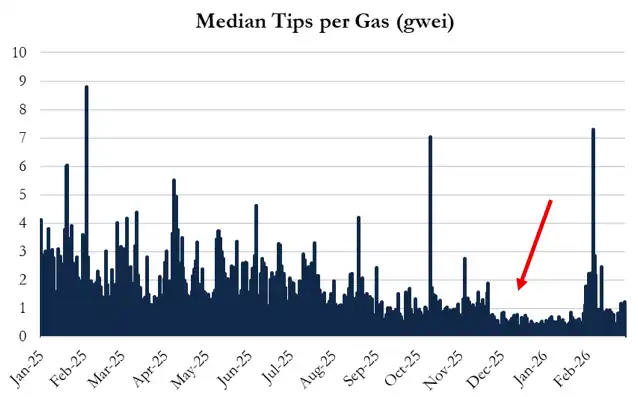
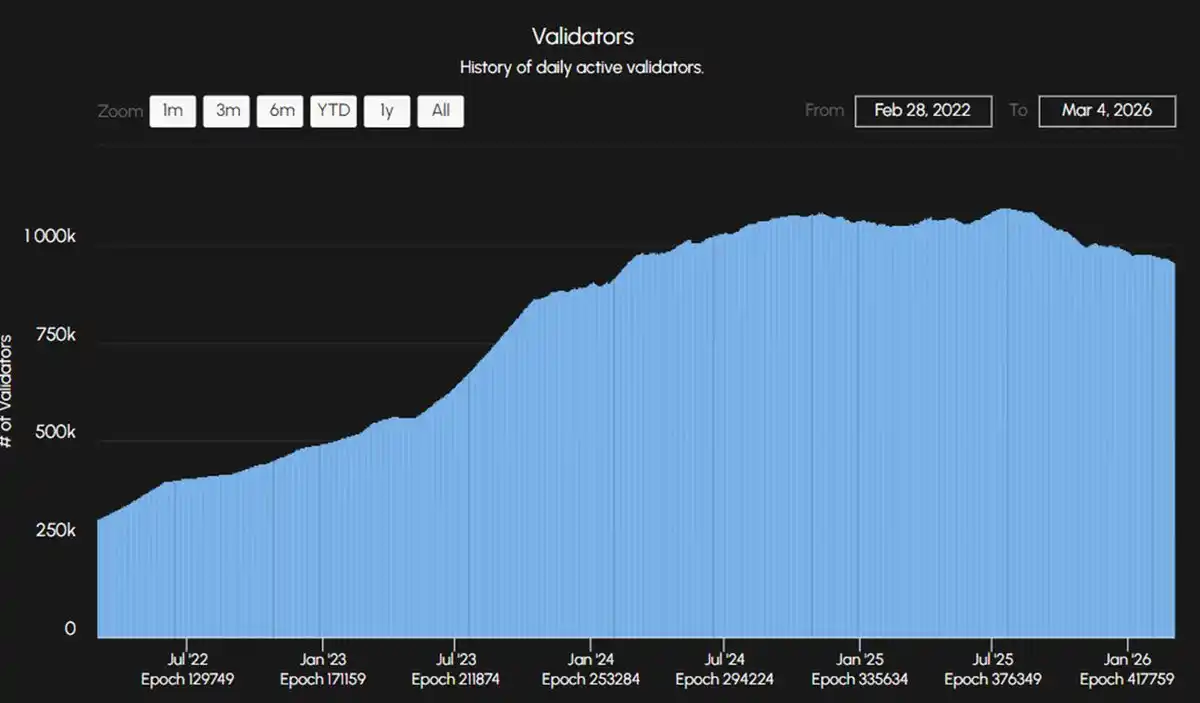
Additionally, the gas limit increase has severely impacted ETH validators, who now see a 40-50% drop in tips per unit of gas. Lower returns reduce staking demand and high-value activity, thereby weakening the foundation for institutional adoption.

The flywheel is now reversing.
Ethereum Is Losing to Solana and Its Own L2s

Meanwhile, ETH continues to lose market share:

  • Solana developers grew by 29% in 2025, while Ethereum only grew by 6%; talent is draining away
  • Visa and Citigroup chose Solana to build DeFi applications
  • Solana DEX trading volume is now more than double that of Ethereum

Conclusion: The Next Nokia

During the internet bubble era, Netscape and Nokia dominated the market for over a decade, but ultimately, Google and Apple reaped the rewards.

We view ETH in the same light.

We believe the token economic model has broken, Tom Lee is in over his head, and $ETH will continue to decline.


Related Questions

QWhat is the main argument presented by Culper Research for shorting ETH?

ACulper Research argues that the Fusaka upgrade in December 2025 severely damaged Ethereum's tokenomics by creating an oversupply of cheap block space, which led to a surge in artificial 'address poisoning' attacks rather than genuine organic demand. They claim this has caused a breakdown in ETH's economic model, leading to a downward price spiral.

QAccording to the report, what percentage of new wallet growth is attributed to 'poisoned' wallets post-Fusaka?

AAccording to the report, 95% of new wallet growth is explained by newly created 'poisoned' wallets following the Fusaka upgrade.

QHow did the actual gas fee reduction after Fusaka compare to the initial estimates by Vitalik and the Ethereum team?

AVitalik and the Ethereum team initially estimated that gas fees would decrease by 10-30% after the Fusaka upgrade. However, the actual reduction was about 90%, which was 3 to 9 times more severe than their projections.

QWhat evidence does the report provide to suggest that Vitalik Buterin is selling his ETH holdings?

AThe report states that on January 30th, Vitalik announced he would sell 16,384 ETH to fund the Ethereum Foundation during a 'period of austerity.' Since then, he has sold over 19,300 ETH and continues to sell, indicating his awareness of the broken tokenomics.

QWhat is 'address poisoning' or 'wallet dusting' as described in the article, and what impact does it have on Ethereum's metrics?

AAddress poisoning or wallet dusting is a type of attack where spammers send tiny, worthless amounts of ETH to a large number of wallets to create artificial on-chain activity. According to the report, this attack accounts for 95% of new wallet growth, over 50% of transaction volume growth, and 22.5% of all ETH transactions post-Fusaka, artificially inflating metrics like active addresses and transaction counts.

Related Reads

The AI Agent Era Accelerates Its Arrival: Questflow Defines a New Paradigm of Financial Intelligence with On-Chain AI Brokerage

The AI Agent era is accelerating, with the CB Insights AI 100 list highlighting global investment confidence. The focus has shifted from whether AI works to its speed of deployment and ability to manage complex workflows, with autonomous AI Agents driving this transformation. At the forefront is Questflow, a Singapore-based startup redefining financial intelligence through its on-chain AI brokerage. Unlike tools that merely provide data dashboards, Questflow deploys AI Agents that proactively scan markets, form judgments, and execute trades via a conversational interface—operating 24/7 without requiring manual confirmation for each decision. This embodies the new AI paradigm of agents capable of executing multi-step workflows autonomously. Questflow's mission is to democratize institutional-grade trading intelligence. Historically reserved for the ultra-wealthy, this capability is now accessible starting from just $1 through Questflow's "AI Clone + Copy Trade" model. The platform charges only a 1% execution fee, aligning its incentives directly with users and eliminating traditional management or performance fees. The timing is opportune, aligning with key trends identified by CB Insights: the scalable deployment of AI Agents, accelerated AI adoption in financial services, and the maturation of on-chain infrastructure. With robust liquidity on platforms like Hyperliquid and Polymarket, alongside advancements in AI reasoning and non-custodial wallet security, Questflow is positioned to merge the roles of broker, fund, and exchange into a single, accessible platform for millions.

链捕手31m ago

The AI Agent Era Accelerates Its Arrival: Questflow Defines a New Paradigm of Financial Intelligence with On-Chain AI Brokerage

链捕手31m ago

Why Pricing Social Interactions is Doomed to Fail?

Titled "Why Putting a Price on Social Interaction Is Doomed to Fail," this article critiques attempts to monetize social networks directly through SocialFi models, arguing their inevitable failure stems from a fundamental misunderstanding of media dynamics. Using Marshall McLuhan's theory of "hot" and "cold" media, the author posits that social networks are inherently "cold" media. Their value isn't contained in individual posts but is co-created through user participation, interpretation, and fragmented, ongoing interaction (e.g., replies, shares). This ambiguity and need for user involvement are core to their function. The article asserts that SocialFi projects like Friend.tech failed because introducing real-time, tradable financial pricing (a definitive "hot" signal) into this "cold" environment doesn't add a layer—it replaces the medium's essence. The unambiguous price signal overshadows and nullifies the nuanced, participatory social signal. Users become traders, not participants, and when speculative profits vanish, the underlying social ecosystem—never genuinely cultivated—collapses entirely. This principle extends beyond crypto. The author argues platforms like Twitter have gradually "heated up" through metrics (likes, retweets counts, algorithmically defined value), shifting users from participants to performers and eroding organic engagement. The solution isn't to abandon capital but to manage its entry point. Successful models like Substack, Patreon, or Bandcamp allow capital to "condense" at specific, isolated nodes (e.g., subscriptions, one-time payments) without permeating and "heating" every social interaction. They preserve the core "cold," participatory medium while enabling monetization at designated boundaries. The NFT boom and bust serves as a stark parallel: the ancient "cold" medium of collecting (valued for story, community, gradual accumulation) was rapidly destroyed by platforms that introduced real-time floor prices, rarity scores, and trading dashboards, transforming collectors into speculators and vaporizing cultural value when prices fell. The core lesson: "Liquidity equals heat." Injecting high liquidity and definitive pricing into a "cold" participatory medium doesn't optimize it; it fundamentally alters and destroys its value-creating mechanism. The future lies not in pricing every social gesture but in finding precise, non-invasive points for capital to condense without overheating the entire ecosystem.

marsbit39m ago

Why Pricing Social Interactions is Doomed to Fail?

marsbit39m ago

Trading

Spot
Futures

Hot Articles

Discussions

Welcome to the HTX Community. Here, you can stay informed about the latest platform developments and gain access to professional market insights. Users' opinions on the price of ETH (ETH) are presented below.

活动图片