Cryptocurrency Company Doppler Finance Launches New Altcoin, 1% of Which Will Be Distributed in an Airdrop! Details Here

cryptonews.ruPublished on 2026-08-27Last updated on 2026-08-27

Abstract

Cryptocurrency company Doppler Finance is announcing the launch of its new altcoin, XDP. Designed as a utility and governance token for protocol coordination, XDP aims to boost user participation, support decentralized governance, and contribute to ecosystem growth. The total supply of XDP is capped at 10 billion tokens. Over half of this supply is allocated to ecosystem development, treasury, partnerships, and community growth. Shares for investors will be subject to lock-up and vesting conditions to prevent market flooding and encourage long-term commitment. During the Token Generation Event (TGE), 1% of the total supply will be unlocked and distributed via a Genesis Airdrop to early users, contributors, and ecosystem supporters. An additional 43% of the supply is dedicated to ecosystem incentives, funding future Doppler Points seasons, XDP staking activities, and local community programs. The tokenomics are structured to reward user participation and ensure the protocol's long-term development, with a significant emphasis on ecosystem funding. The Genesis Airdrop allows early adopters to benefit directly from the token launch. With XDP, Doppler Finance plans to build its governance mechanism and user reward system around its native token. Further details regarding the launch date and specific distribution mechanics are to be announced later. *This is not investment advice.

Doppler Finance is preparing to launch its own XDP token. According to the company's statement, XDP is designed as a utility and governance token intended for use at the protocol coordination level.

Doppler Finance stated that XDP aims to increase user participation in the protocol, support decentralized governance, and contribute to ecosystem development. The total supply of XDP will be capped at 10 billion tokens. More than half of the supply will be allocated to areas such as ecosystem development, treasury, partnerships, and community growth.

It was announced that the shares allocated to investors as part of the token distribution will be subject to certain lock-up and vesting conditions. This is aimed at preventing all investor tokens from being released onto the market simultaneously and encouraging long-term participation.

During the XDP Token Generation Event (TGE), 1% of the total supply will be distributed in an unlocked form. This distribution, to be carried out through the Genesis Airdrop, will cover early users, participants, and those who support the Doppler Finance ecosystem.

Furthermore, 43% of the total supply will be allocated for ecosystem incentives. This portion will be used to support future Doppler Points seasons, XDP staking activities, and local community programs.

The tokenomics of Doppler Finance are structured to encourage user participation and the long-term development of the protocol, with a notably high allocation for the ecosystem. The Genesis Airdrop will allow early users to directly benefit from the token launch.

With the launch of XDP, Doppler Finance plans to build its governance mechanism and user incentive system around its native token. More detailed information regarding the launch date and technical specifics of the distribution is expected to be provided later.

*This is not investment advice.

end-content
Related Questions

QWhat is the primary purpose of the XDP token launched by Doppler Finance?

AThe XDP token is designed to serve as a utility and governance token for protocol-level coordination within the Doppler Finance ecosystem.

QWhat percentage of the total XDP token supply will be initially unlocked for the Genesis airdrop?

A1% of the total XDP token supply will be distributed in an unlocked form during the Genesis airdrop.

QWhat is the total supply cap for the XDP token?

AThe total supply of XDP tokens will be capped at 10 billion.

QWhat is the main goal of locking and vesting the tokens allocated to investors?

AThe lock-up and vesting conditions aim to prevent a sudden market dump of all investor tokens and to incentivize long-term participation.

QWhich allocation category receives the largest share of the total XDP supply according to the tokenomics?

AThe ecosystem incentives category receives the largest share, at 43% of the total XDP supply.

Related Reads

Stripe Helps Revolut Issue a Euro Stablecoin

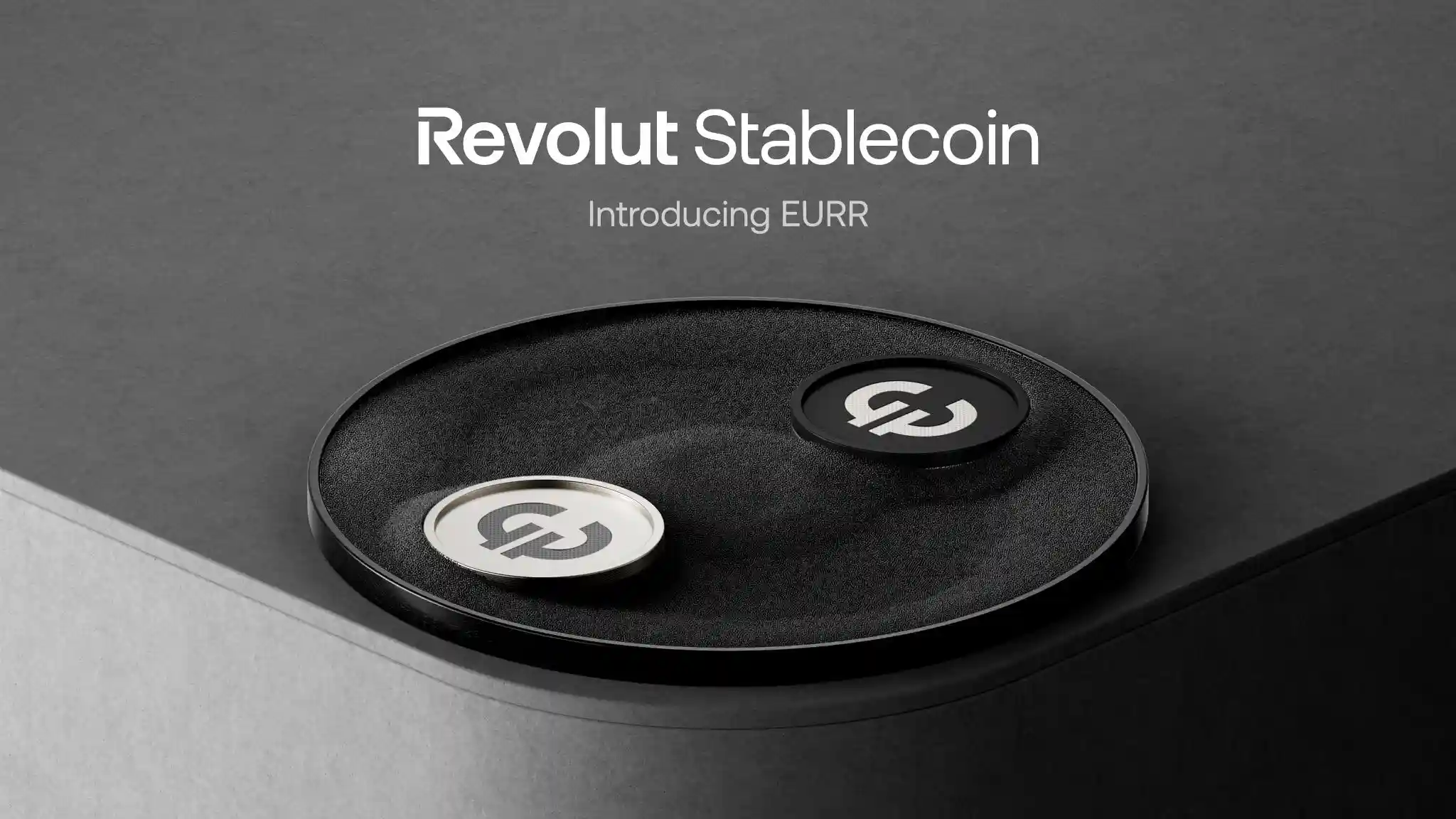
On August 26th, Revolut announced the rollout of EURR, a new euro-pegged stablecoin, to select users in Denmark, Poland, and Portugal, with plans to expand across the European Economic Area. The stablecoin, issued 1:1 against the euro on Ethereum and Polygon, is not issued by Revolut itself. Instead, it is issued by Bridge Building S.A., a Stripe-owned, Luxembourg-based electronic money institution licensed under the MiCA framework. This structure positions Revolut as the distribution channel for its over 80 million users, while Stripe/Bridge provides the compliant issuance infrastructure and reserve management. EURR's launch is essentially a cold start, with a circulating supply of only 374 tokens. It enters a euro stablecoin market dominated by Circle's EURC and Société Générale's EURCV, which itself is a tiny fraction of the massive dollar stablecoin market led by USDT and USDC. EURR's primary advantage is Revolut's vast user base, aiming to onboard retail banking customers to on-chain finance. However, its utility for the average Revolut user, who already enjoys fast euro transfers, remains tied to specific crypto-native use cases like DeFi. The launch coincides with Revolut's MiCA-driven phasing out of USDT for European users, positioning EURR as a compliant replacement. More broadly, the partnership highlights Stripe's strategy through its Bridge acquisition: building a "stablecoin-as-a-service" or "issuance-as-a-service" platform. Stripe aims to provide the compliant backend infrastructure—issuance, reserves, redemption—allowing other companies like Revolut to launch branded stablecoins easily, potentially reshaping the industry's competitive landscape from direct token competition to infrastructure services.

marsbit5m ago

Stripe Helps Revolut Issue a Euro Stablecoin

marsbit5m ago

U.S. Financial Risks Benefit Gold and Bitcoin! Record Capital Inflow Over the Last Five Trading Days! Here's All the Data

Concerns over U.S. fiscal prospects and growing government debt are driving investors towards both gold and Bitcoin. Over the last five trading days, a record $7 billion flowed into gold and Bitcoin ETFs. Approximately $3.4 billion entered the SPDR Gold Shares (GLD) fund, while BlackRock's spot Bitcoin ETF (IBIT) saw around $1.5 billion in inflows, placing both among the top ten U.S. ETFs by weekly capital inflow. Bloomberg notes the simultaneous strong inflows into both assets as particularly remarkable, a shift from past behavior where investors typically favored gold as a safe haven during market stress. Recent investor behavior has changed due to expectations of increased U.S. government borrowing, concerns about the dollar, and policies aimed at lowering long-term interest rates, boosting demand for assets with limited supply. The concurrent rise in the value of gold and Bitcoin indicates investors are turning to alternative assets to hedge against risks within the traditional financial system, especially amid heightened debates on U.S. debt sustainability. Experts suggest this strong ETF inflow may signal that institutional investors are increasingly viewing Bitcoin as a portfolio diversification tool similar to gold, though Bitcoin's high price volatility means the risk profiles of the two assets remain significantly different.

cryptonews.ru6m ago

U.S. Financial Risks Benefit Gold and Bitcoin! Record Capital Inflow Over the Last Five Trading Days! Here's All the Data

cryptonews.ru6m ago

Tokenized Deposits Could Raise US Lending Costs: Dallas Fed Economists

Tokenized deposits could increase U.S. lending costs and make bank funding less stable, according to an analysis by Dallas Fed economists. Rosy Leigh and Sreeni Ramaswamy note that instant settlement capabilities, programmable deposit tokens, and AI could allow depositors chasing higher yields to move funds faster between banks, reducing deposit tenures and increasing their sensitivity to interest rates. The economists estimate that a 10% increase in deposit rate sensitivity could reduce banks' capacity to hold long-term loans by around $700 billion over a ten‑year equivalent. A 10% reduction in deposit tenures could lower capacity by about $580 billion. These scenarios do not imply a direct, proportional cut in lending but highlight potential pressures. U.S. banks are developing blockchain networks for moving tokenized deposits around‑the‑clock while keeping funds within the regulated banking system. Thirty‑nine state banking associations recently formed the BankChain alliance to build a nationwide network, while The Clearing House is developing a separate network with major banks. Institutions like Standard Chartered and HSBC have also tested cross‑border tokenized deposit transactions via blockchain. Banks may respond to more volatile deposits by holding more liquid assets (like reserves and Treasuries) or relying more on wholesale debt—which would likely raise borrowing costs for consumers and businesses. The authors cite Brazil's Pix instant payment system as a comparative example, where increased use raised bank liquidity holdings and reduced credit intermediation.

cryptonews.ru8m ago

Tokenized Deposits Could Raise US Lending Costs: Dallas Fed Economists

cryptonews.ru8m ago

Trading

Spot
活动图片