Crypto Systems Could Be Outpaced By Quantum Tech By 2033, Says Hoskinson

bitcoinistPublished on 2026-05-18Last updated on 2026-05-18

Abstract

Cardano founder Charles Hoskinson warns that quantum computers could break current blockchain cryptography by 2033, with a probability exceeding 50%. He highlighted Bitcoin Improvement Proposal (BIP) 361 as a potential path for Bitcoin to migrate to quantum-resistant addresses. Most blockchains, including Bitcoin, rely on encryption vulnerable to quantum attacks. Cardano is proactively researching lattice-based cryptography and plans to adopt federal quantum-resistant standards (FIPS 203-206), leveraging its scheduled annual hard forks for seamless upgrades. Hoskinson noted that while Cardano's transition could be straightforward, Bitcoin's path is less clear due to its slower, more contested upgrade process. The broader crypto industry faces an urgent deadline to overhaul its security systems.

Crypto may need a major overhaul sooner than most people think. Cardano founder Charles Hoskinson pointed to a specific proposal — Bitcoin Improvement Proposal BIP-361 — as a potential path forward for gradually moving Bitcoin users away from older wallet addresses toward ones built to resist quantum attacks.

Speaking at Consensus Miami, Hoskinson said the window to prepare may be closing faster than the industry has assumed.

A Deadline The Industry Cannot Ignore

Hoskinson put the odds of a capable quantum computer arriving before 2033 at above 50%. That kind of machine, he said, would be powerful enough to crack the cryptographic systems that currently protect digital wallets, private keys, and transaction signatures across most major blockchain networks.

If that happens, bad actors could potentially access wallets without authorization, forge transaction signatures, or disrupt how blockchains reach agreement. He was direct: this is no longer a problem for the next generation to solve.

Most blockchains today — Bitcoin included — rely on traditional encryption methods that were never designed with quantum computing in mind.

Those systems work by making certain math problems extremely difficult for classical computers to solve. A sufficiently advanced quantum machine could blow through those same problems in a fraction of the time.

Cardano’s Quantum Defense Plan

Cardano is not waiting around. According to Hoskinson, the network already has a research program focused on quantum security, with partners involved and specific technical goals in place.

The main focus is lattice-based cryptography, a form of encryption that quantum systems would find far harder to break than older models.

Bitcoin is currently trading at $78,371. Chart: TradingView

Cardano also plans to adopt federal quantum-resistant standards — known as FIPS 203 through 206 — which were developed to protect digital systems against future quantum-powered attacks.

Hoskinson noted that rolling out these changes on Cardano would be relatively straightforward. The network runs scheduled hard fork upgrades annually, which gives it a built-in mechanism for adopting new security standards without major disruption.
Source: Getty Images

Crypto Faces A Longer Road

For Bitcoin, the path is less clear. BIP-361 has been proposed as a way to phase in quantum-resistant wallet addresses over several years, but Bitcoin’s upgrade process is slower and more contested than Cardano’s.

Hoskinson acknowledged the difficulty but said a migration of that kind is achievable. He suggested Cardano could carry out a similar transition with relative ease given its existing upgrade structure.

Whether Bitcoin moves fast enough remains an open question — one the broader crypto industry may not be able to put off much longer.

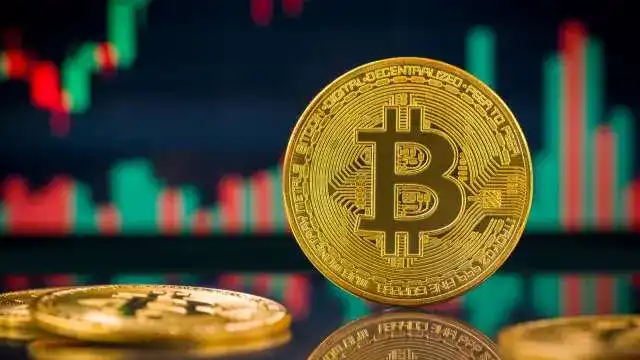
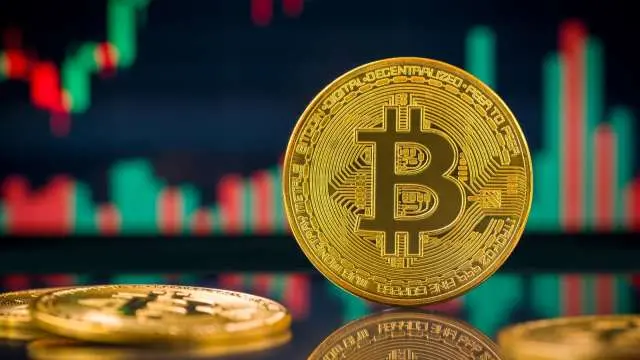
Featured image from Unsplash, chart from TradingView

Related Questions

QAccording to Charles Hoskinson, by what year is there more than a 50% chance that quantum computers could threaten current cryptographic systems?

ABy 2033.

QWhat is the specific Bitcoin Improvement Proposal (BIP) mentioned as a potential path for moving towards quantum-resistant wallets?

ABIP-361.

QWhat type of cryptography is Cardano focusing on for its quantum security research program?

ALattice-based cryptography.

QWhy does Hoskinson suggest Cardano could transition to quantum-resistant standards more easily than Bitcoin?

ABecause Cardano has a scheduled annual hard fork upgrade mechanism, making adoption more straightforward.

QWhat are the potential risks if quantum computers break current blockchain cryptography, as stated in the article?

ABad actors could access wallets without authorization, forge transaction signatures, or disrupt how blockchains reach consensus.

Related Reads

The Midlife Crisis of Crypto GPs: No PMF, No Next Check from LPs

The article "The Midlife Crisis of Crypto GPs: No PMF, No Next LP Check" analyzes the shifting crypto fundraising landscape. It argues the era of selling grand visions to LPs is over; GPs must now offer products with clear Product-Market Fit (PMF). The author categorizes crypto fundraising products into three types: Primary (VC funds), Liquid (trading strategies), and CeFi/DeFi Native Yield. This summary focuses on the Primary market. Key points include: * **Market Shift:** LPs are impatient, demand immediate returns, and are skeptical of future promises. The "easy money" narrative has faded. * **GP Value Erosion:** LP learning curves have shortened (aided by AI), reducing the value of a GP's basic "crypto knowledge." Superior judgment is now rare. * **Weakened LP Motivations:** Traditional reasons for LPs to invest in crypto VC funds (capturing industry beta, gaining access, leveraging GP judgment) have weakened due to new products like ETFs and increased LP sophistication. * **Surviving in Primary:** The primary market will likely persist for: 1) large funds in endowment mandates treating it as a lottery ticket, 2) family offices/HNWIs using proprietary capital, 3) a few funds with proven recent outperformance, and 4) funds with strong ecosystem "deal-making" capabilities. * **Conclusion:** For most GPs, rebuilding trust requires starting over in a niche, demonstrating alpha-generating ability, or providing concrete value/services to LPs.

marsbit1h ago

The Midlife Crisis of Crypto GPs: No PMF, No Next Check from LPs

marsbit1h ago

Crypto GPs' Midlife Crisis: No PMF, No LP's Next Check

The article "The Midlife Crisis of Crypto GPs: No PMF, No LP's Next Check" analyzes the shifting crypto fundraising landscape. It argues that the era of LPs funding vague "vision" is over; GPs must now offer products with clear Product-Market Fit (PMF) to secure capital. The market has matured. LPs, disillusioned by the last cycle's failures and wary of long lock-up periods, now demand tangible, near-term returns rather than speculative narratives. The proliferation of accessible crypto ETFs and other liquid products has reduced the need for VC blind pools as an entry point. The author categorizes crypto fundraising products into three types: Primary (VC funds, with blind pools or clear pipelines), Liquid (alpha/beta, directional/market-neutral strategies), and CeFi/DeFi Native Yield (crypto-specific mechanisms like staking, farming). Focusing on the Primary market, the piece details why traditional LP rationales for investing in crypto VCs have weakened: easier beta access via ETFs, diminished "access" and "judgement" premiums as LPs build internal teams, and a widespread lack of proven superior returns from GPs. Ultimately, only specific players are likely to remain at the primary VC table: large funds with access to patient endowment capital, family offices/HNWIs investing proprietary capital, the few funds with demonstrable excess returns from the last cycle, and those with clear "deal-making" or ecosystem resource advantages. For others, the path forward is to rebuild trust by proving alpha-generation capability in a niche or providing concrete, valuable services.

链捕手1h ago

Crypto GPs' Midlife Crisis: No PMF, No LP's Next Check

链捕手1h ago

The Age of Decoupling Has Arrived: Bitcoin is No Longer the Sole Compass of Crypto

The era of the cryptocurrency market moving in lockstep with Bitcoin is ending, as the industry splits into two distinct asset categories: endogenous and exogenous. Endogenous assets, like Bitcoin, derive value purely from the crypto market's cycles. Their narratives swing between being "interstellar money" in bull markets and "digital collectibles" in bear markets. Exogenous assets, however, are nominally crypto but operate with independent value drivers. Examples include: * **Venice:** An AI inference service using tokens for payments; its consumer-AI business model is decoupled from crypto price swings. * **Figure:** A fintech lender using blockchain to speed up loan approvals; its core value is in credit, not crypto. * **Stablecoin firms like BVNK:** Acquired by traditional finance giants (Mastercard, Stripe), their growth is tied to payment infrastructure, not market cycles. Hybrid projects like **Hyperliquid** (a decentralized exchange) show a shift, with a growing share of non-crypto trading (e.g., prediction markets). This divergence is fundamental. Endogenous assets remain highly correlated to Bitcoin, similar to gold miners to gold. Exogenous assets are evolving to have their own fundamentals, like the weak correlation between gold and the S&P 500. This changes investment analysis. Evaluating exogenous assets requires traditional fundamental research—assessing user bases, unit economics, and moats—more akin to fintech investing than charting Bitcoin. Promising exogenous sectors include: on-chain exchanges/brokers, AI-crypto fusion, privacy-focused digital banks, lending (institutional/private credit), stablecoins/real-world asset tokenization, payment rails, and non-financial crypto-consumer products. Currently, investing via equity is often safer than via tokens, as token value accrual mechanisms need further regulatory and industry development (e.g., the CLARITY Act). Nonetheless, the core trend is clear: crypto market drivers are diversifying from a single factor (Bitcoin) to multiple fundamentals, ending the era of uniform market moves.

marsbit2h ago

The Age of Decoupling Has Arrived: Bitcoin is No Longer the Sole Compass of Crypto

marsbit2h ago

Trading

Spot
Futures

Hot Articles

Discussions

Welcome to the HTX Community. Here, you can stay informed about the latest platform developments and gain access to professional market insights. Users' opinions on the price of ADA (ADA) are presented below.

活动图片