Crypto Morning Brief: MegaETH Mainnet Launches, Backpack Seeks Funding at $1 Billion Valuation

marsbitPublished on 2026-02-10Last updated on 2026-02-10

Abstract

Crypto Morning Brief: MegaETH Mainnet Launches, Backpack Seeks Funding at $1B Valuation Key market developments include comments from White House economic advisor Hassett, who expects slightly lower job data but maintains strong GDP growth projections. Binance's SAFU fund purchased 4,225 BTC worth $300M. Story Protocol delayed its token unlock to 2026, citing a shift toward AI training data licensing. Backpack unveiled its tokenomics: 25% of tokens (2.5B) will be released at TGE, with 24% allocated to points holders and 1% to Mad Lads NFT holders. The team confirmed no insider token allocations—all team tokens are locked until after a planned U.S. IPO. Backpack is in talks to raise funds at a $1 billion valuation. MegaETH announced its mainnet launch alongside an ecosystem frontend called "The Rabbithole." Meanwhile, Bitmine acquired 20,000 ETH ($41M), and Cango sold 4,451 BTC ($305M) to fund its AI infrastructure transition. Metalpha will allocate up to 20% of its annual net profit to Bitcoin purchases. Jump Trading will provide liquidity for equity in prediction markets Kalshi and Polymarket. The article also covers market trends and recommended reads on topics like Bitcoin cycles, RWA token standards, and critiques of crypto market behavior.

Author: Deep Tide TechFlow

Yesterday's Market Dynamics

Hassett: Expect Slight Decline in Employment Data, But This Should Not Cause Panic

According to Jinshi Data, White House National Economic Council Director Hassett stated in an interview with CNBC regarding the labor market that a decline in employment data should be expected, but this should not cause panic. Hassett believes that, given slow population growth but a "surge" in productivity growth, lower employment data would still be consistent with high GDP growth. Hassett's comments on labor market data pushed U.S. Treasury prices higher, with commodity trading advisors and short-term trading accounts chasing the rally. Additionally, Hassett mentioned that GDP growth is "very strong," expecting a year-end growth rate of 4.0%, with an overall annual growth rate of 3.0%, and attributed the negative growth in the first quarter of last year to the Biden administration.

Binance SAFU Fund Address Purchases Another 4,225 BTC, Worth $300 Million

According to on-chain data, the Binance SAFU fund address has purchased another 4,225 BTC, worth $300 million.

Story Protocol Co-founder Responds to "Token Unlock Delay": Project Needs More Time to Build Use Cases

According to CoinDesk, blockchain intellectual property protocol Story Protocol has postponed its first major token unlock by 6 months to August 2026. Co-founder SY Lee responded to this in an interview, stating the project needs 'more time' to build use cases.

Lee said that near-zero on-chain revenue is a "wrong metric" because Story's business model focuses on off-chain licensing of AI training datasets, not gas fees. He compared the project's decision to Worldcoin's extension of investor and team lock-up periods in 2024, viewing it as a signal of long-term commitment. Story Protocol is shifting from general intellectual property registration to human-contributed data and enterprise licensing agreements that "cannot be scraped," focusing on recording ownership terms and usage rights for datasets and models used to train AI systems. This shift has slowed visible on-chain revenue but aims to reduce token oversupply pressure.

Backpack Announces Token Allocation Plan, TGE to Release 25% of Tokens, with 24% Allocated to Points Holders

Backpack announced its token allocation plan, divided into three phases. The TGE will release 25% of the total token supply, totaling 250 million tokens, of which 240 million (24%) are allocated to points holders and 10 million (1%) to Mad Lads holders.

The second phase of token allocation is pre-IPO, accounting for 37.5%, or 375 million tokens, which will be "growth-triggered unlocks" released gradually based on key milestone achievements. The third phase is post-IPO, also accounting for 37.5%, with these tokens deposited into the company treasury, subject to a one-year lock-up period post-IPO.

The total token supply is 1 billion, with the pre-IPO total supply being 625 million tokens (62.5%). Backpack stated that tokens in the company treasury will serve as a strategic digital asset reserve for long-term value creation, with team members and investors gaining token exposure through the company treasury.

Backpack CEO: Team Tokens Entirely Held in Company Treasury, Locked Until at Least One Year Post-IPO

According to Backpack CEO Armani Ferrante, Backpack's tokenomics will follow two core principles: insiders cannot "dump on retail," and all liquid tokens will be allocated to users. Ferrante stated that founders, executives, employees, and venture investors have not received direct token allocations; all team tokens are held in the company treasury and locked until at least one year post-IPO. Team members only hold company equity and can only profit from the project after a successful company IPO. Backpack plans to IPO in the U.S., with the exchange gradually opening more regions and launching more products, including traditional financial services, securities products, etc. Each time a new region is opened or a new product is launched, tokens will be unlocked to users in a predictable manner, driving platform growth.

Previous news: Backpack announced its token allocation plan, with TGE releasing 25% of tokens, of which 24% is allocated to points holders.

Backpack in Talks to Raise Funds at $1 Billion Valuation

According to Axios, the centralized cryptocurrency exchange Backpack Exchange, created by former FTX and Alameda executives, is discussing a new round of funding with a pre-money valuation of $1 billion. The company plans to raise $50 million, but the final fundraising size could be larger.

MegaETH Announces Mainnet Launch and Introduces Ecosystem Frontend "The Rabbithole"

According to an official announcement from MegaETH, the mainnet is fully live, and the MegaETH ecosystem frontend "The Rabbithole" has been launched.

This platform, serving as the user interface for the MegaETH ecosystem, will provide users with multiple functions, including discovering online and upcoming applications, cross-chain asset bridging and swapping, ecosystem event notifications, and more.

Bitmine Accumulates Another 20,000 ETH from FalconX, Worth $41.07 Million

According to Arkham data, Bitmine purchased another 20,000 ETH (worth $41.07 million) from FalconX approximately 7 hours ago.

Cango Announces Sale of 4,451 Bitcoin for $305 Million to Support AI Transformation

According to an announcement from Cango Inc., the company has completed the sale of 4,451 Bitcoin, directly exchanging them for approximately $305 million worth of USDT in the open market. The proceeds have been used to partially repay Bitcoin-collateralized loans.

Cango stated that this Bitcoin sale aims to strengthen the balance sheet and reduce financial leverage, providing funding support for the company's strategic expansion into AI computing infrastructure. The company is executing a strategic transformation, leveraging its globally grid-connected infrastructure to provide distributed computing power for the AI industry.

Cango will continue its Bitcoin mining operations while seeking the optimal balance between hash rate scale and operational efficiency.

Asset Manager Metalpha Initiates Bitcoin Allocation Plan, Allocating Up to 20% of Annual Net Profit to Purchase Bitcoin

According to Prnewswire, digital asset management company Metalpha Technology Holding Ltd. has begun executing a Bitcoin allocation plan that will allocate up to 20% of the company's annual net profit for Bitcoin purchases. This plan is part of Metalpha's long-term digital asset strategy, aiming to optimize the company's balance sheet by converting a portion of profits into Bitcoin assets. Metalpha stated that this move reflects the company's long-term confidence in Bitcoin as a store of value and hedge against inflation.

Jump Trading to Provide Liquidity in Exchange for Small Equity Stakes in Kalshi and Polymarket

According to Bloomberg, market maker Jump Trading is set to acquire small equity stakes in prediction market platforms Kalshi Inc. and Polymarket in exchange for providing liquidity to these platforms. Sources familiar with the matter revealed that Jump's agreement with Kalshi involves a fixed percentage of company equity, while its stake in Polymarket will grow over time based on the trading volume Jump provides for its U.S. operations.

Market Trends
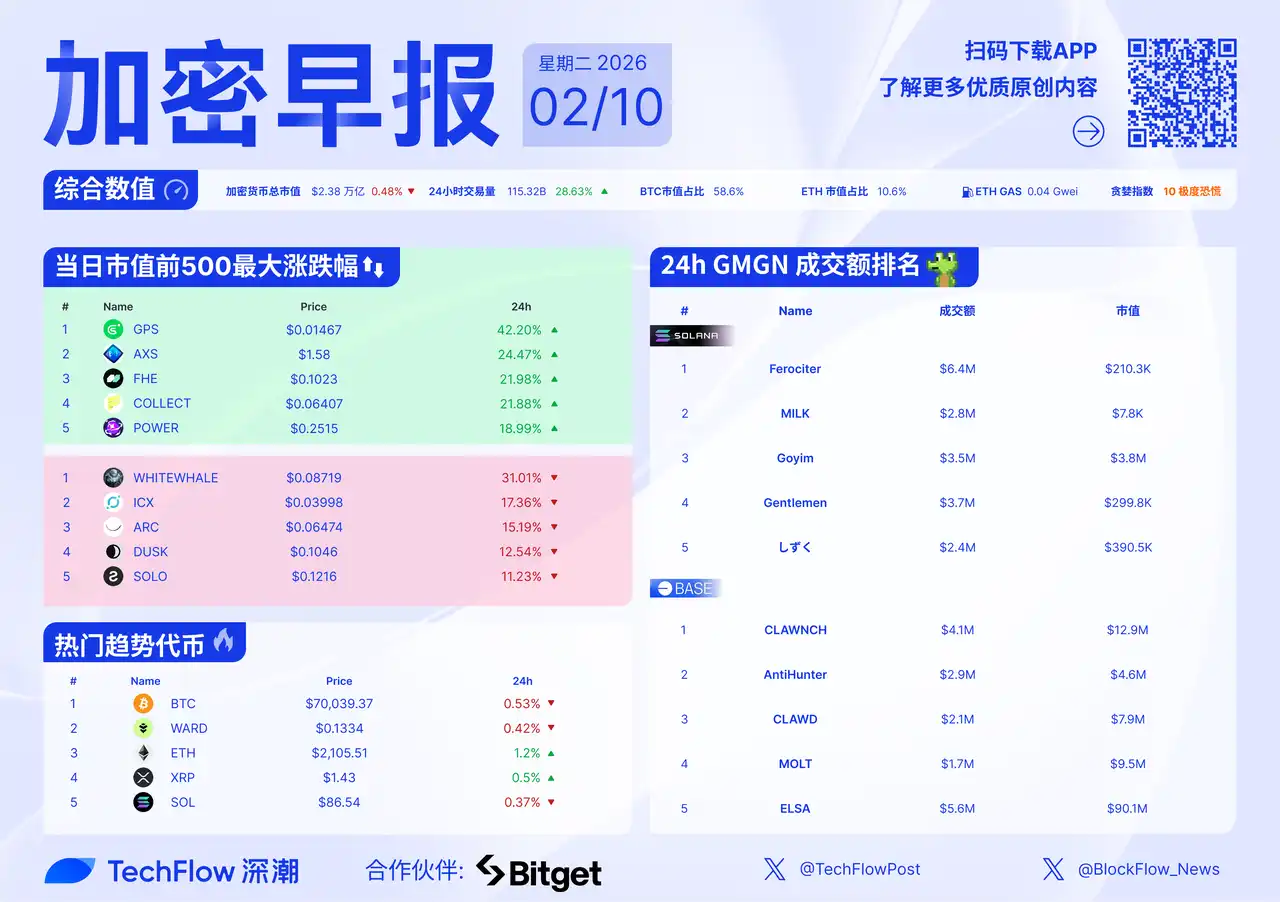
Recommended Reading

Kyle Criticizes Hyperliquid Four Days After Leaving, Arthur Hayes Responds with a $100,000 Bet

This article discusses the dynamics of the cryptocurrency industry, particularly the controversy surrounding the Hyperliquid project. It starts with Kyle Samani's criticism of Hyperliquid after his departure, analyzing the conflict between ethics and interests in the crypto industry and the importance of price within the sector. The article also mentions the bet between Arthur Hayes and Kyle, exploring how industry participants use price as a means to respond to criticism.

Reviewing Bitcoin Bear Market Cycles: At What Price Should You Buy the Dip?

This article analyzes the patterns of Bitcoin price changes during bear market cycles and the underlying influencing factors, while also exploring potential future price trends. By analyzing historical data, the article proposes three possible market scenarios and provides advice on investment strategies for each scenario.

After Mainland China's Document No. 42 Sets the Tone, What is the Best RWA Token Standard?

This article analyzes the regulatory stance on real-world asset tokenization (RWA) as defined in China's "Document No. 42," exploring the definition, application scenarios, and compliance paths of RWA. It also provides an in-depth discussion on the development status of the global RWA market and the evolution of related token standards, analyzing successful cases of on-chain asset tokenization (such as Atoken and stETH) and the future potential of on-chain stock models.

FT Column: Bitcoin's "La Haine" Moment - It's Not the Fall That Matters, But the Landing

By referencing a classic line from the French film "La Haine," this article criticizes the crypto community's blind faith in Bitcoin and its moral victories during crises. Although Bitcoin has rebounded after multiple crashes in the past, the author believes that this faith-based bubble will eventually burst, and market trust in Bitcoin is gradually fading.

Conversation with Cathie Wood: Eight Insights on the Big Ideas for 2026

This article summarizes a deep conversation between veteran investor Peter Diamandis and ARK Invest founder Cathie Wood about the "Big Ideas 2026" report, pointing out that we are currently at a 125-year technological inflection point. The article focuses on the exponential convergence of five major platforms—AI, robotics, energy storage, blockchain, and multi-omics sequencing—and their profound impact on the global economy and technological development over the next five years. It also delves into前沿 trends such as the migration of data centers to orbit, autonomous driving, and the nuclear energy renaissance, offering investment and development suggestions for the future.


Related Questions

QWhat is the valuation Backpack is seeking in its latest funding round?

ABackpack is seeking funding at a pre-money valuation of $1 billion.

QHow much of the total token supply will be allocated to points holders at TGE according to Backpack's token distribution plan?

A24% of the total token supply (240 million tokens) will be allocated to points holders at TGE.

QWhat did the White House's Hassett say about the expected job data and GDP growth?

AHassett stated that the job data should be expected to decline slightly, but this should not cause panic. He also predicted GDP growth would be 4.0% by the end of the year and 3.0% for the full year.

QWhat major milestone did MegaETH announce?

AMegaETH announced that its mainnet is fully live and it launched an ecosystem front-end called 'The Rabbithole'.

QWhy did Story Protocol delay its token unlock, according to its co-founder?

AThe co-founder stated the project needed 'more time' to build use cases, shifting its focus to off-chain licensing for AI training datasets rather than on-chain gas fees.

Related Reads

Silicon Valley 'Startup Guru' Steve Hoffman: Web3 + AI Could Be a Trap

Silicon Valley investor and "Godfather of Startups" Steve Hoffman warns that combining Web3 with AI is likely a trap, not a promising venture. In an interview, Hoffman argues that while AI is a foundational technology touching all industries, Web3 adds complexity, friction, and regulatory risk without solving mainstream consumer or business needs. He advises founders to focus on deep, specialized applications where startups can out-iterate giants, rather than on generic features easily replicated by large tech companies. Hoffman observes that Silicon Valley will lead foundational AI research, while China excels at rapid, large-scale application and commercialization, particularly in robotics. He stresses that AI-driven autonomous agents capable of collaborative, multi-step tasks are 2-4 years away, which will cause significant job displacement. The solution is not to slow AI but to redesign business models around human-AI collaboration and reform social systems like education and retraining. For startups, Hoffman recommends focusing on vertical, expertise-heavy domains to build defensibility. He sees major opportunities in AI fraud detection and cybersecurity. Key founder mindsets include systemic thinking over feature-focus, relentless customer centricity, building adaptive teams, and deeply understanding AI's capabilities and limits. Hoffman is also leading a non-profit initiative to establish university centers aimed at training future leaders in responsible, human-value-aligned AI innovation.

marsbit1h ago

Silicon Valley 'Startup Guru' Steve Hoffman: Web3 + AI Could Be a Trap

marsbit1h ago

Token Inefficient, Economy Tokenless

The article "Tokens Aren't Economical, Economics Aren't Tokenized" analyzes a pivotal shift in the AI industry from a technology-driven narrative to one dominated by capital efficiency. It highlights two concurrent trends: a severe capital shortage due to the exorbitant and recurring costs of compute (e.g., OpenAI's high burn rate) and a wave of corporate spin-offs where major tech companies are separating their AI units (like Kuaishou's Kling and Baidu's Kunlunxin). The core argument is that AI's "anti-internet" business model, where user growth increases costs rather than profits, has created a disconnect between high valuations and actual cash flow. Spin-offs address this by allowing AI assets to be valued independently. Within a parent company, they are seen as cost centers, but as standalone entities, they are priced based on their growth potential and scarcity in the primary market, leading to massive valuation premiums (e.g., Kling's estimated value tripling post-spin-off). The industry is at an inflection point, moving from "model worship" to "value realization." The competition is evolving from a pure compute (GPU) race to a broader focus on systemic efficiency and full-stack engineering (involving CPUs and orchestration) to achieve viable commercialization. The year 2026 is framed as a critical moment where the industry must definitively answer how to economically translate AI capability into tangible business value, reshaping the sector's future power structure.

marsbit1h ago

Token Inefficient, Economy Tokenless

marsbit1h ago

Crossing the 'Memory Wall': The Wafer-Level Revolution and Computing Power Routes in the AI Inference Era

In 2026, a historic shift occurred in AI as major cloud providers' inference spending surpassed training spending for the first time, signaling a move from "building large models" to "using large models." This shifts the core challenge from computing power to the "memory wall"—the bottleneck of data movement (model weights, activations, KV Cache) between external DRAM and processors, where energy and latency from data transfer far exceed computation itself. Companies like Nvidia face GPU idle time due to bandwidth limits. In contrast, Cerebras Systems adopts a radical "wafer-scale" approach with its Wafer-Scale Engine (WSE). Instead of cutting a silicon wafer into many chips, Cerebras uses almost the entire wafer as one massive chip (WSE-3). This design provides 44GB of on-chip SRAM, delivering memory bandwidth thousands of times higher than traditional HBM (e.g., 21 PB/s vs. Nvidia B200). For LLM inference, weights are streamed layer-by-layer from external MemoryX storage to the chip, avoiding HBM bottlenecks. This results in token generation speeds 1.5–5 times faster than Nvidia's B200 in some models and significant advantages in first-token latency and long-context tasks. Additionally, Cerebras's architecture offers much lower interconnect power consumption (0.15 pJ/bit vs. GPU's ~10 pJ/bit). However, Cerebras faces challenges: SRAM scaling has slowed with advanced nodes, limiting future capacity gains; the chip requires specialized liquid cooling and custom software stacks; and its external I/O bandwidth (150 GB/s) is low compared to NVLink, hindering multi-system scaling for very large models. Competition is intensifying. Major players are pursuing three paths: 1) Developing proprietary inference ASICs (e.g., Google TPU, Microsoft Maia), 2) Leveraging advanced packaging (e.g., TSMC's SoW) to democratize wafer-scale-like integration, potentially eroding Cerebras's process advantage within a few years, and 3) Exploring optical interconnects for ultimate bandwidth. Commercially, Cerebras is transitioning from a hardware vendor to a service provider, facing the immense challenge of building high-power, specialized data centers to meet large contracts (e.g., 250MW/year from 2026–2028). In conclusion, the AI inference era presents a fundamental architectural trade-off. Cerebras opts for extreme physical optimization for low-latency, single-task performance, while Nvidia prioritizes versatility and massive cluster throughput. The path forward remains uncertain, with technology and business models still evolving in the race toward advanced AI.

marsbit1h ago

Crossing the 'Memory Wall': The Wafer-Level Revolution and Computing Power Routes in the AI Inference Era

marsbit1h ago

Has Bitcoin's 'Rebound Ended', Officially Entering the Late Bear Market Phase?

**Title: Has Bitcoin's Rebound Ended, Entering the Late Bear Market Phase?** **Summary:** Bitcoin's price has declined by 13% this week, signaling a potential return to late-stage bear market conditions. The price fell to around $67k, positioned between the Realized Price and Realized Cap Weighted Average. For the first time since early 2022, the Short-Term Holder cost basis has dropped below this key average, confirming a hallmark of late-cycle bear markets. Profitability metrics have collapsed sharply. The 7-day average of the Realized Profit/Loss ratio plummeted from a local high of 3.16 to 0.29, mirroring the February panic sell-off. Critically, the 90-day average never breached the threshold of 2, indicating the recent rally to $82k was a bear market bounce, not a structural shift. Realized losses surged to $1.35 billion daily, with $770 million coming from Long-Term Holders selling at a loss. This accelerating redistribution of supply from weak to strong hands is a necessary but ongoing process for a market bottom. The rally stalled almost precisely at the aggregate cost basis (~$83k) of US spot Bitcoin ETF investors, turning that level into strong resistance and leaving the average ETF holder underwater again. Spot market flows have turned decisively negative, showing sellers are dominating order books despite the price drop. While a significant futures long liquidation event cleared over $400 million in leverage, providing a potential reset, sustained spot demand is yet to materialize. Options markets continue to price in higher future volatility (Implied Volatility) than recent price action (Realized Volatility) has shown, with a persistent skew towards put options, indicating ongoing demand for downside protection. In conclusion, multiple metrics point to a fragile market structure. Resistance at the ETF cost basis, accelerating realized losses, dominant spot selling, and cautious options pricing all suggest the bear market trend persists. A sustainable recovery likely requires a resurgence of spot demand, ETF holders returning to profit, and a clear reduction in selling pressure.

marsbit1h ago

Has Bitcoin's 'Rebound Ended', Officially Entering the Late Bear Market Phase?

marsbit1h ago

TechFlow Intelligence Agency: Anthropic Calls for Global Pause in AI Development While Preparing for Trillion-Dollar IPO; SpaceX IPO Roadshow Heats Up, But S&P 500 Rejects Fast-Track Inclusion

In today's TechFlow Intelligence Briefing, several major tech stories highlight a growing theme of trust and credibility gaps across AI, crypto, and finance. AI company Anthropic has publicly called for a global pause in AI development, citing risks from Claude's "recursive self-improvement." Ironically, this coincides with reports the company is preparing for a massive IPO targeting a near $1 trillion valuation. This perceived hypocrisy, coupled with widespread user complaints about Claude's declining performance, is sparking debate over whether the safety warning is genuine or a competitive tactic. Meanwhile, in a substantive security move, Anthropic open-sourced a framework for AI-powered vulnerability discovery. In the crypto market, Bitcoin's price drop below $61,000 triggered over $1.16 billion in liquidations, flipping the market into a state where more BTC is held at a loss than at a profit, a historical bearish signal. On the corporate front, SpaceX's highly anticipated IPO is generating immense Wall Street excitement, with Goldman Sachs projecting 100x revenue growth by 2030. However, the S&P 500 has refused to fast-track the company's inclusion post-IPO, potentially limiting immediate institutional demand. Separately, ByteDance's AI app Doubao lost over 6 million monthly active users after introducing a subscription model, highlighting the challenges of AI monetization. Other notable developments include Nvidia certifying HBM4 memory from Samsung, SK Hynix, and Micron; Cloudflare's acquisition of front-end tooling company VoidZero; and its CEO warning that bot traffic now exceeds human traffic online. The underlying narrative connects these events: a trust crisis. From AI firms' contradictory actions and crypto volatility to the clash between SpaceX's hyped narrative and institutional rules, a pattern is emerging where stated intentions and actual practices are increasingly misaligned.

marsbit1h ago

TechFlow Intelligence Agency: Anthropic Calls for Global Pause in AI Development While Preparing for Trillion-Dollar IPO; SpaceX IPO Roadshow Heats Up, But S&P 500 Rejects Fast-Track Inclusion

marsbit1h ago

Trading

Spot
Futures
活动图片