Crypto Isn’t A Cult: Why Vanity Fair’s ‘True Believers’ Piece Misses The Point

bitcoinistPublished on 2026-03-18Last updated on 2026-03-18

Abstract

A recent Vanity Fair article portrays the crypto community as a cult of "true believers," depicting participants as naive, decadent, and out-of-touch zealots clinging to a failed dream. The piece uses dramatic photography and mocking captions—such as "the most expensive religion in the world"—to caricature industry figures as extravagant and unserious. The crypto community has pushed back strongly, arguing the article focuses on stereotypical "degenerate" personalities rather than the developers and contributors building real technological infrastructure and value. Critics note that legacy media often ignores the serious, technical side of crypto in favor of sensationalist narratives. Despite the article’s claim that crypto is dead, Bitcoin continues to trade at high values, underscoring the resilience and ongoing activity within the ecosystem. The response highlights a demand for more serious and nuanced coverage of the space.

A recent Vanity Fair piece painted a cartoonish profile of what they called “crypto’s true believers”, framing long‐time participants as cultish die‐hards who won’t admit the dream is over.
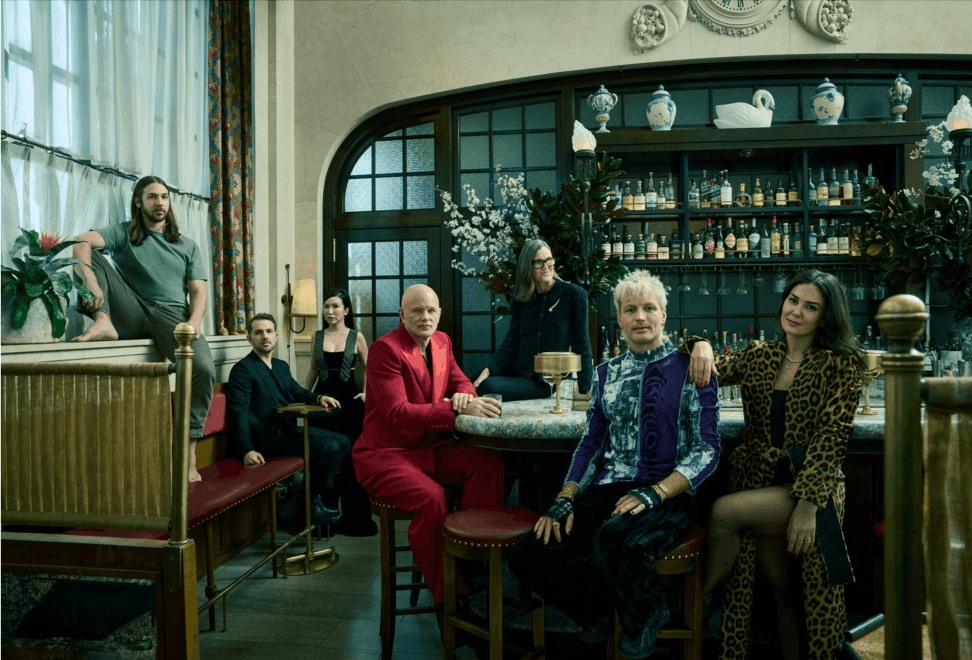
The original caption on the cover picture o the article reads “the most expensive religion on the world”. Source. Vanity Fair.

Crypto: “The Most Expensive Religion In The World”

Dim lights, deep contrast shadows, rich jewel tones, animal print, bright colored suits and a decadentism-old money aesthetic. That’s the depiction of Vanity Fair’s “Crypto’s True Believers”: a group of overdue-old Hollywood ingenuos people that refuse to accept that they have fallen out of grace. A festival of banality and naivety led by capricious people throwing a “tantrum” after living a maximalist-multimillionaire lifestyle that would make Jay Gatsby and Daisy Buchanan blush.

Related Reading: Crypto Donations Branded ‘Dangerous’? UK Security Panel Urges Immediate Ban

Even worse: the “zealots who are holding the line”, as the hit piece calls them, are condescendingly framed as cult members in a way that would make Vitalik Buterin, Ethereum’s co-founder, raise his arms in desperation: this portrayal, the entire piece, is everything that he has been tirelessly warning against — a fact that the article itself, without any sense of self-awareness, is gracious enough to acknowledge.
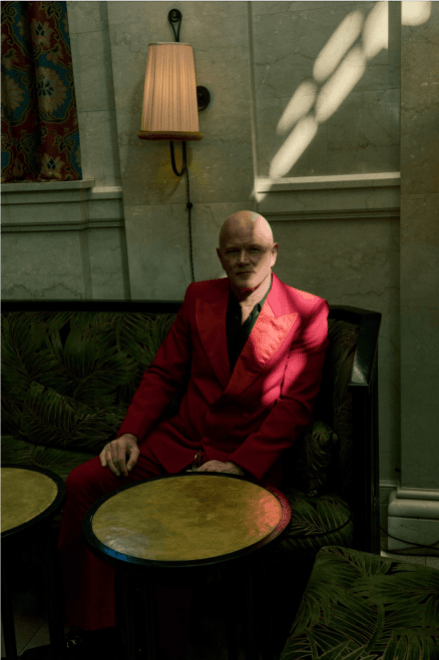
Michael Novogratz, CEO of Galaxy Digital, is made to look like some sort of Wilson Fisk, Daredevil’s Kingpin. Source. Vanity Fair.

As if the pictures weren’t enough, the captions take matters to the next level: from “the bitcoin playboy” and “the couture evangelist” to “the build-a-bear and the product mommy”: the followers of the “sixth asset class” are the successors of Satoshi Nakamoto’s original “hyper online” followers.

Despite acknowledging that the implosion of Lehman Brothers took with it “the myth of institutional security” for the entire world, Vanity Fair depicts the “early believers” of Bitcoin’s White Paper as “cypherpunks on message boards, creating their own echo chamber and convinced that cryptography could do what regulators never would: redistribute power”. A cyberpunk caricature of a rightfully disillusioned generation looking for a different way to rebuild a world that had just collapsed on top of them, crushing their dreams and ambitions with it.

The article positions itself as the “serious” view of crypto from the traditional media bubble, implicitly antagonizing and directly mocking the plead of the subjects they depict to be taken seriously: what could be serious about them, the degen-extravaganza champions? Why would anyone still care about the crashes, frauds, and regulatory crackdowns of this out of touch group of crypto aristocracy?

The Community Takes A Rightful Stand

For obvious reasons, the piece triggered immediate backlash on social media X from builders, founders and on‐chain governance people. One of them is Dennison Bertram, Tally’s founder, who argues that the problem is way bigger than “just another hit piece in a long line of forgettable nonsense”: it’s the angle, the choice to depict all crypto people like “degen” stereotypes.

Legacy outlets keep interviewing the same people, some users on X claimed, instead of people who actually shipped protocols, standards, and tooling for billions in on‐chain value: media loves “degen” archetypes because they’re clickable, but that lens erases the serious, boring, resilient parts of the ecosystem that are actually making a real impact in the world.

On his X’s thread, Bertram analyzes each picture through the lenses of someone who worked as a fashion photographer for over a decade before crypto. With this authority, Bertram argues that not only is the article mean spirited, but photographer Jeremy Liebman’s work “is a deliberate work of mockery”.

The takeaway of all of this seems to be that if you’re going to write that crypto is dead, at least talk to the people still shipping code, running DAOs, maintaining testnets and governance forums every day.
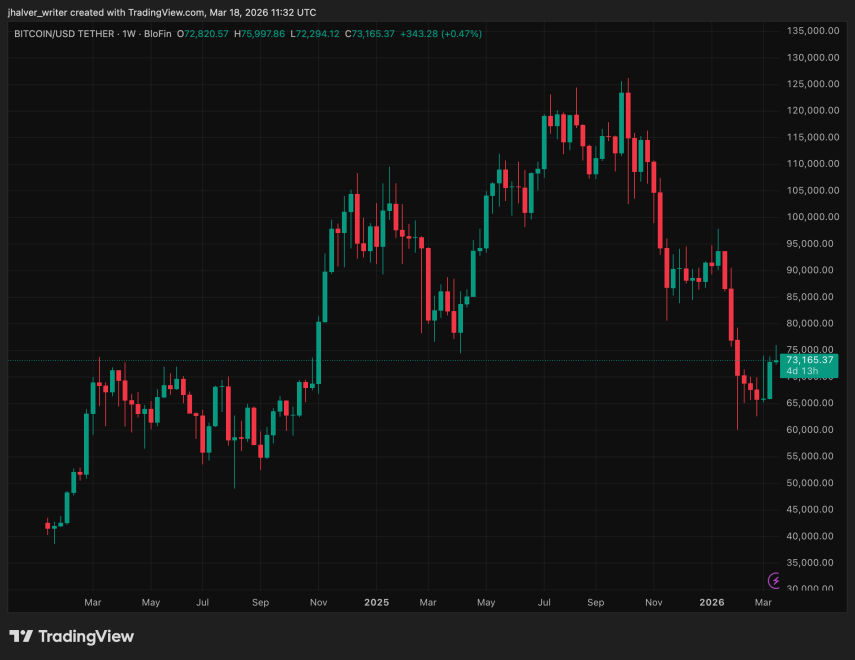
At the time of writing, BTC trades for $73k on the daily chart. Source: BTCUSD on Tradingview

Cover image from Perplexity, BTCUSD chart from Tradingview

Related Questions

QWhat is the main criticism of the Vanity Fair article 'Crypto's True Believers' according to the author?

AThe author criticizes the Vanity Fair article for painting a cartoonish and cultish profile of long-time crypto participants, framing them as naive, decadent, and out-of-touch zealots who refuse to accept that the crypto dream is over, rather than acknowledging the serious work being done in the ecosystem.

QHow does the Vanity Fair article depict the early believers of Bitcoin's White Paper?

AThe article depicts early Bitcoin believers as 'cypherpunks on message boards, creating their own echo chamber and convinced that cryptography could do what regulators never would: redistribute power', portraying them as a cyberpunk caricature of a disillusioned generation.

QWhat does Dennison Bertram, Tally's founder, claim about the Vanity Fair article's photography?

ADennison Bertram, who has a background as a fashion photographer, argues that the photography in the Vanity Fair article is 'a deliberate work of mockery' and a setup to ridicule crypto and those depicted, rather than a serious portrayal.

QAccording to the article, what does the crypto community argue legacy media outlets keep doing wrong?

AThe crypto community argues that legacy media outlets keep interviewing the same stereotypical 'degen' personalities instead of people who actually build protocols, standards, and tooling that create real on-chain value, thus erasing the serious and resilient parts of the ecosystem.

QWhat is the implied message of the article's original cover picture caption, as mentioned in the text?

AThe original caption on the cover picture of the Vanity Fair article reads 'the most expensive religion in the world', implying that crypto is portrayed as a cult-like belief system that demands extreme financial devotion from its followers.

Related Reads

Must-Watch Events Next Week|CLARITY Act Could Face Senate Vote; SpaceX, Circle to Report Earnings (8.3-8.9)

**Summary: Key Events and Developments to Watch (August 3-9)** The upcoming week is marked by significant financial disclosures, key legislative deadlines, and notable product updates. **Major Financial Events:** Several companies are scheduled to release their Q2 2026 earnings. American Bitcoin (ABTC) will report on August 3, followed by SpaceX and Hut 8 Mining Corp. on August 4, and Circle on August 5. Notably, a significant portion of SpaceX shares (up to 12% of total shares) will be unlocked on August 6 following their earnings release. **Key Legislative Deadline:** The U.S. Senate faces an August 7 deadline to secure 60 votes for the CLARITY Act, a bipartisan bill aiming to establish a federal regulatory framework for cryptocurrencies. The Senate may hold a full vote on the bill during the week. **Economic Data:** The U.S. July Non-Farm Payrolls report will be released on August 7, providing crucial labor market data. **Technology & Product Updates:** * **Shutdowns:** DeFi portfolio tracker Zapper and wallet app Ctrl Wallet will cease operations on August 3. * **Upgrades:** LayerZero will deprecate its v1 relayers on August 3. XRP Ledger's new version 3.3.0, featuring five new functions, is expected next week. * **AI:** Elon Musk announced that the advanced Grok 4.6 AI model is set for release around August 7. * **Bitcoin:** The BIP-110 forced signaling for a potential Bitcoin network change is scheduled to begin around August 8. **Other Notable Events:** Chinese robotics firm Unitree Tech has set its preliminary price inquiry for its IPO for August 5. South Korean exchange Upbit will delist AQT and AERGO tokens on August 3.

marsbit1h ago

Must-Watch Events Next Week|CLARITY Act Could Face Senate Vote; SpaceX, Circle to Report Earnings (8.3-8.9)

marsbit1h ago

Stocks Are Plummeting More Sharply Than Cryptocurrencies. Where Has the Money Gone?

Stock Markets Plunge Deeper Than Cryptocurrencies: Where Did the Money Go? In late July, Seoul's Kospi index triggered circuit breakers for two consecutive days, plummeting over 40% from its June high. The collapse was led by heavyweight stocks like SK Hynix, whose record profits still disappointed investors, and devastating leveraged ETFs, with one major product losing over 83% of its value. This signaled a global, forced deleveraging targeting the most crowded trades. Interestingly, while stocks exhibited extreme volatility akin to crypto markets, Bitcoin rose nearly 15% in July after a prior steep drop. Analysis shows the money fleeing equities did not flow into Bitcoin. Instead, Bitcoin had already absorbed its sell-off in May-June, when U.S. spot Bitcoin ETFs saw historic outflows. The true safe-haven beneficiary was gold, whose price rose over 20% year-on-year, highlighting a decoupling between Bitcoin and gold as "digital gold." The sell-off was a targeted unwinding of leveraged positions in tech and semiconductors, accelerated by broker-dealer risk management and shifts in the AI narrative, including new competition from Chinese memory chipmakers. The retreat path was clear: from high-valuation tech stocks to cash and U.S. Treasuries, then to gold. For Bitcoin to attract sustained institutional inflows, conditions like eased global liquidity pressure, a "soft-landing" Fed rate cut, and U.S. regulatory clarity via legislation like the stalled CLARITY Act are needed. Currently, Bitcoin is not a safe haven but an already-cleared asset. Its low correlation with tech stocks, however, makes it a potential diversification play for institutional portfolios once the storm passes. The money isn't here yet, but the positioning is underway.

marsbit1h ago

Stocks Are Plummeting More Sharply Than Cryptocurrencies. Where Has the Money Gone?

marsbit1h ago

In Conversation with Ray Dalio: We Are Currently in an AI Bubble, with 1% of My Portfolio in Bitcoin

Ray Dalio, founder of Bridgewater Associates, warns in an interview that the current AI boom shows classic bubble characteristics, which could lead to significant economic downturns as seen in past cycles like 1929 or 2000. He explains that speculative enthusiasm, fueled by debt and overvaluation, often precedes a crash when rising rates or taxation force asset sales, causing widespread losses and recession. Dalio also outlines his "Big Cycle" theory, describing an approximate 80-year pattern where widening wealth gaps, massive government deficits, and shifting geopolitical power (like China's rise) create internal conflict and global instability. He emphasizes that we are in a late-cycle, transitional phase where traditional powers like the US and UK face decline. For personal wealth protection, Dalio advises diversification beyond cash into assets like stocks, bonds, real estate, and particularly gold, which he prefers over Bitcoin. While he holds about 1% of his portfolio in Bitcoin as a non-printable hard asset, he views gold as more secure from technological or governmental threats. Regarding AI's impact, Dalio believes it will disproportionately benefit capital owners, worsening inequality by replacing both physical and cognitive labor. He suggests that human intuition and emotional intelligence, combined with AI, will be key for future workers. On taxation, Dalio argues that wealth taxes are impractical and risk triggering asset sell-offs, reducing productive investment. He points to the UK as a cautionary example of debt, low productivity, and political strife. Geopolitically, Dalio foresees a more regionalized world, with the US showing weakness in prolonged conflicts like with Iran, akin to past imperial declines. The ideal outcome, he suggests, is coexisting powerful blocs (e.g., Americas, China-Asia Pacific) without major war.

marsbit5h ago

In Conversation with Ray Dalio: We Are Currently in an AI Bubble, with 1% of My Portfolio in Bitcoin

marsbit5h ago

Trading

Spot
活动图片





