Crypto Exchange Bithumb Pushes IPO Past 2028 As Cleanup Effort Continues

bitcoinistPublished on 2026-04-02Last updated on 2026-04-02

Abstract

Bithumb, a major South Korean cryptocurrency exchange, has delayed its initial public offering (IPO) plans to after 2028, a significant postponement from its original 2025 target. The decision follows a year of challenges, including compliance issues, board changes, and a major internal error in February that temporarily displayed over $40 billion in fake user balances. The exchange mistakenly credited users with 2,000 Bitcoin instead of 2,000 won, raising serious concerns about its internal controls. Additionally, Bithumb faced regulatory pressure, including a six-month suspension and a $24 million fine for alleged anti-money laundering breaches. Under renewed CEO Lee Jae-won, the company is now prioritizing the strengthening of its accounting systems and internal governance with advisory firm Samjong KPMG before proceeding with an IPO. This slower timeline contrasts with competitor Upbit, which is reportedly preparing for its own public listing.

Bithumb is now looking at an initial public offering sometime after 2028, a further slip from its earlier 2025 target, after a year of compliance trouble, board changes, and a costly internal blunder that briefly showed more than $40 billion in fake balances on its books.

According to reports tied to the company’s shareholder meeting, the South Korea-based exchange says it wants to spend the next stretch fixing its accounting and control systems before it tries to list.

Internal Error Raised Fresh Questions

The exchange’s most damaging recent episode came in February, when it mistakenly credited users with about 2,000 Bitcoin instead of 2,000 won. The mix-up was quickly reversed, and most of the money never left Bithumb’s internal ledger, but the scale of the error was hard to ignore.

It turned a routine systems failure into a public test of trust, and it arrived at a bad time for a company trying to convince regulators and investors that it is ready for the scrutiny that comes with a stock listing.

BTCUSD trading at $66,362 on the 24-hour chart: TradingView

That mistake followed earlier pressure from South Korean authorities. Under CEO Lee Jae-won, Bithumb faced a six-month suspension and a $24 million fine tied to alleged anti-money-laundering breaches.

Shareholders have now backed Lee for another two-year term, even as the company keeps moving the IPO goal farther down the road. The exchange had once expected to list in 2025, but the new plan is to focus on preparation through 2027 before any filing process advances.
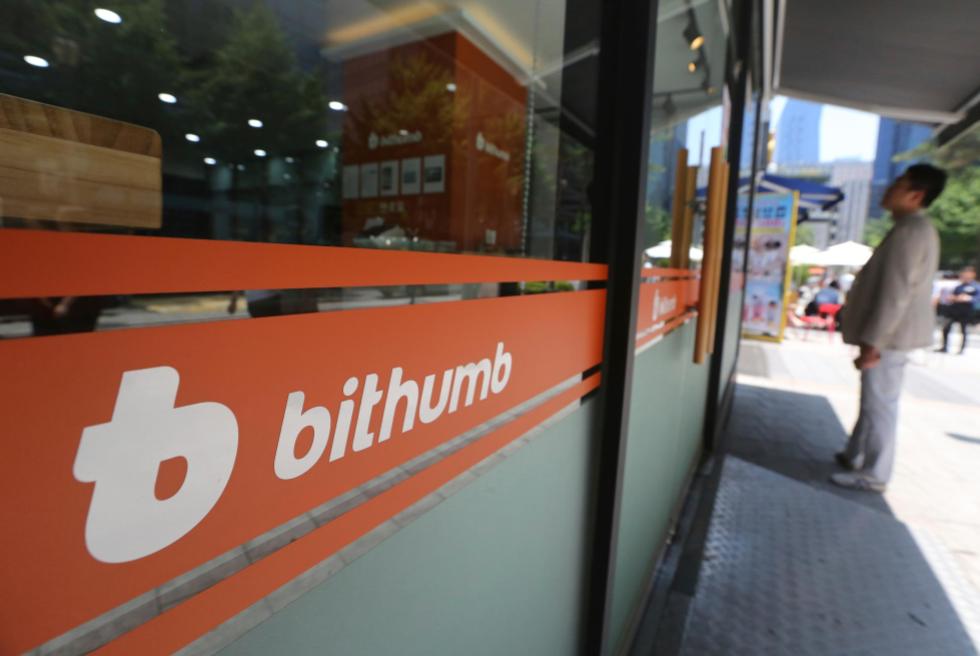
Image: AP

A Slower Road To The Market

Bithumb’s latest timeline fits a broader pattern of delay. CFO Jeong Sang-gyun told shareholders that the company is strengthening its accounting policies and internal controls after bringing in Samjong KPMG as an IPO adviser.

That language points to work that usually happens before a listing window opens, not after a target year has already passed. The change in pace also shows how much the exchange’s public debut now depends on proving basic governance, not just market demand.

The exchange is not the only one moving through the South Korean market with listing plans in view. Dunamu, the operator of Upbit, is also said to be preparing for an IPO after a share swap with Naver Financial, with September mentioned as a possible timing point.

Featured image from Moneyseth, chart from TradingView

Related Questions

QWhat is the new target year for Bithumb's IPO, and why was it delayed from the original 2025 target?

ABithumb is now targeting an IPO sometime after 2028, a delay from its original 2025 goal. The postponement is due to a year of compliance issues, board changes, and a major internal error that falsely displayed over $40 billion in balances. The company now plans to focus on fixing its accounting and control systems before attempting to list.

QWhat was the significant internal error that occurred at Bithumb in February, and what was its impact?

AIn February, Bithumb mistakenly credited users with approximately 2,000 Bitcoin instead of 2,000 won due to a systems failure. Although the error was quickly reversed and most funds never left the exchange's internal ledger, the massive scale of the mistake severely damaged trust and raised questions about the company's readiness for the scrutiny of a public listing.

QWhat regulatory action did South Korean authorities take against Bithumb under CEO Lee Jae-won?

AUnder CEO Lee Jae-won, Bithumb faced regulatory pressure from South Korean authorities, resulting in a six-month suspension and a $24 million fine for alleged anti-money laundering breaches.

QWho did Bithumb bring on as an IPO adviser, and what is the company's current focus according to its CFO?

ABithumb brought in Samjong KPMG as an IPO adviser. According to CFO Jeong Sang-gyun, the company is now focusing on strengthening its accounting policies and internal controls as part of its preparation for a future listing.

QWhich other major South Korean crypto exchange is also preparing for an IPO, and what was a key step in its preparation?

ADunamu, the operator of the Upbit exchange, is also preparing for an IPO. A key step in its preparation was a share swap with Naver Financial, with September mentioned as a potential timing for its public debut.

Related Reads

Wall Street Morning News: V-shaped Rebound at Month-end, but Nasdaq Suffers Worst July in 12 Years; Funds Accelerate Concentration Towards Cloud Giants

Despite a V-shaped rebound at the end of July, the Nasdaq posted its worst July since 2004, while the S&P 500 had its worst July since 2014. Markets were jolted by geopolitical shifts, as President Trump canceled a planned strike on Iran, leading WTI crude to plunge over 8%. This, alongside OPEC+ announcing a supply increase, reversed crude's sharp July gains. Treasury yields surged, with the 10-year yield rising over 30 basis points in July—its largest July increase since 2005. In a rare move, the US and Japan jointly intervened to weaken the USD/JPY, aiming to prevent potential Japanese sales of US Treasuries. While the tech sector faced deleveraging pressure throughout July, cloud giants staged a massive rally on strong earnings. Microsoft, Amazon, and Google collectively added nearly $1.5 trillion in market value last week. Amazon soared over 15% on accelerating AWS growth, Microsoft extended historic gains, Google fully recovered post-earnings losses, and Meta ended an 11-day losing streak. In contrast, Apple tumbled over 7% on supply chain and guidance concerns, ceding its "world's most valuable company" title to Nvidia. The memory and storage sector corrected sharply. Gold edged up 0.91% in July, with analysts viewing the ~30% pullback from January highs as a potential basing period, supported by long-term central bank demand. Key events to watch this week include earnings from Palantir, AMD, SpaceX (its first post-IPO report), and memory giants like Western Digital. The US July non-farm payrolls report on Friday will be critical for gauging the Fed's policy path. SpaceX also faces a significant lock-up expiration, testing market liquidity.

marsbit49m ago

Wall Street Morning News: V-shaped Rebound at Month-end, but Nasdaq Suffers Worst July in 12 Years; Funds Accelerate Concentration Towards Cloud Giants

marsbit49m ago

Rubin Ultra Makes Major Cuts, Even Nvidia Can't Handle Memory Price Hikes?

NVIDIA's Rubin Ultra, the top-tier variant of the newly announced Rubin AI accelerators, has reportedly seen significant specification downgrades, according to an industry report from SemiAnalysis. Initially designed with four compute dies (4-die), the Rubin Ultra is now said to be reduced to a 2-die design. Key changes highlighted in the report include: * **No increase in peak theoretical compute performance**, remaining at 35 PFLOPs like the standard Rubin. * **Severe reduction in memory capacity** to 192GB using 8-Hi HBM stacks, which is less than the standard Rubin's 288GB using 12-Hi stacks. * **Negligible memory bandwidth improvement** of only 1 TB/s. * **Slightly higher chip-level power consumption**. * The **primary upgrade is a massive increase in scale-up interconnect capacity**, supporting connections for up to 576 GPUs via NVLink, compared to 72 for the standard Rubin. The report suggests the redesign is primarily a cost-optimization move driven by the sharp rise in HBM (High-Bandwidth Memory) prices. By reducing the expensive HBM content and shifting investment towards enhanced system-scale networking, NVIDIA aims to maintain the platform's value for large-scale AI training clusters while managing soaring material costs. The news reportedly triggered a sell-off in South Korean memory stocks, with SK Hynix and Samsung shares falling around 8%, as markets grew concerned that NVIDIA—a major HBM buyer—might be reducing its reliance on high-capacity memory, potentially capping future pricing power for memory makers.

Odaily星球日报1h ago

Rubin Ultra Makes Major Cuts, Even Nvidia Can't Handle Memory Price Hikes?

Odaily星球日报1h ago

Trading

Spot
活动图片