Copper Price Stays Above $14,000 for Nine Consecutive Days! LME Squeeze Signal Reappears, Shorts Are Being Cornered

Published on 2026-08-19Last updated on 2026-08-19

Abstract

Copper prices on the London Metal Exchange remain under sustained pressure, with spot premiums soaring to their highest level since 2021. Multiple supply disruptions, combined with rising speculative long positions, are driving copper prices close to historical records.

Copper prices on the London Metal Exchange continue to face upward pressure, with the spot premium soaring to its highest level since 2021. Multiple supply disruptions, coupled with a rise in speculative long positions, are pushing copper prices close to a record high.

On Monday, LME three-month copper rose as much as 1.7% intraday to $14,396 per ton, just a step away from the all-time high of $14,527.50 set in January of this year.
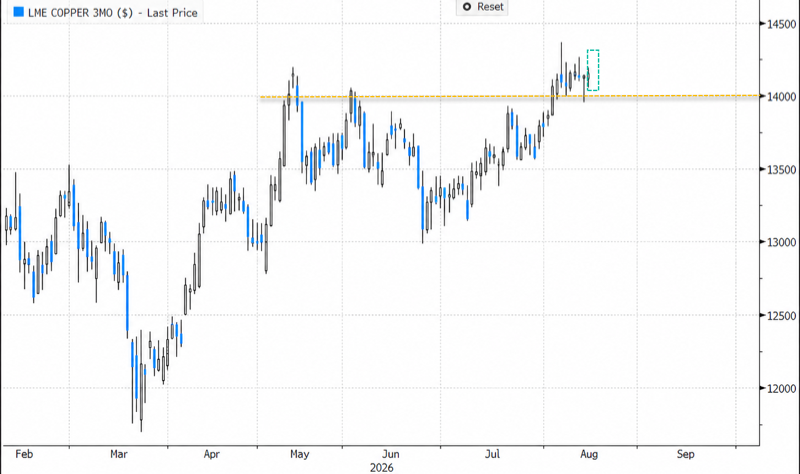
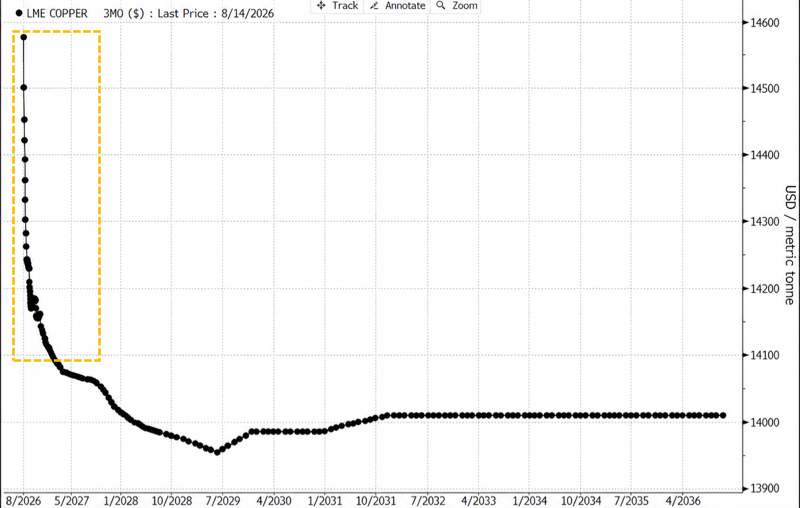
The premium of the spot price over the three-month futures contract widened to as much as $543.50 per ton, the highest since the market squeeze in 2021. Copper has now held above $14,000 per ton for nine consecutive trading days.
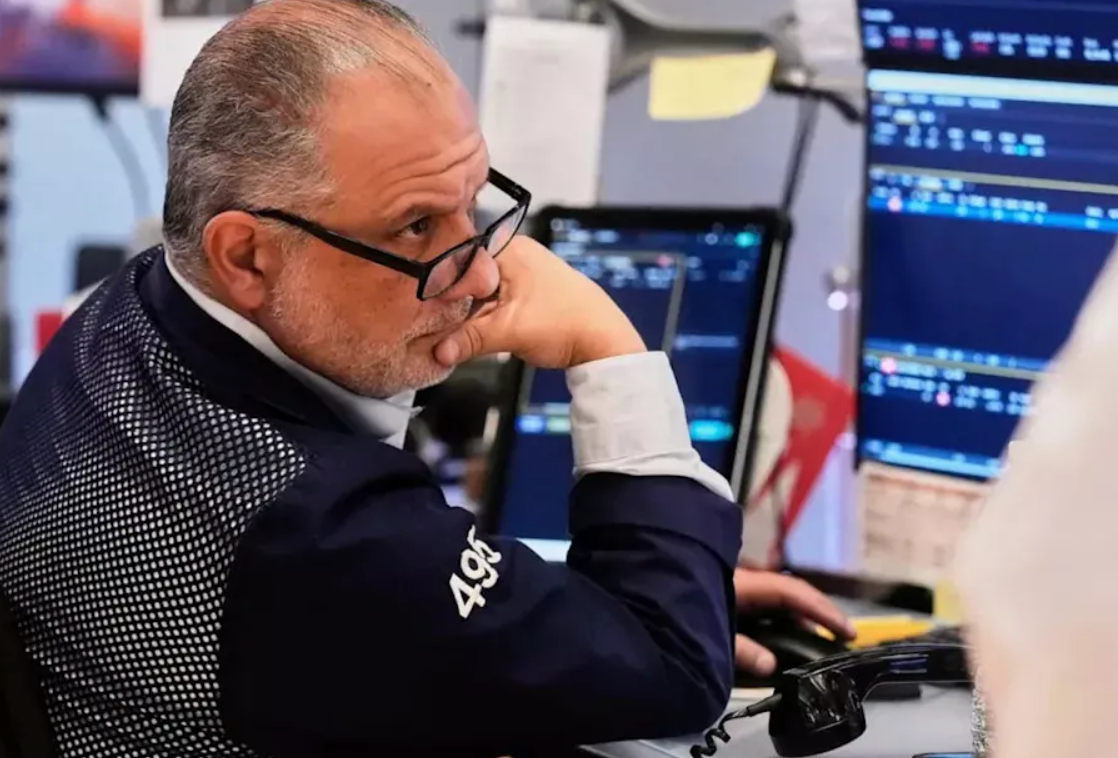
In a research note on Monday, Barclays analyst Richard Garchitorena pointed out that the trend of tightening copper supply is set to continue, and mining stocks have further room to rise.

David Wilson, head of metals strategy at BNP Paribas, also stated that momentum for copper to break its historical high "is building," even though the market has entered overbought territory.

Multiple Supply-Side Disruptions Push Up Spot Premium

The core driver of the current copper price rally comes from the persistent tightening of supply.

According to Garchitorena's report, Chile's copper production fell 6.7% year-on-year as of June, prompting the country's Copper Commission (Cochilco) to lower its 2026 production forecast by 2.6% to 5.27 million tons.

Mining giant Antofagasta has cut its full-year production guidance by about 5% due to severe weather disruptions at its Los Pelambres mine.

Meanwhile, a shutdown occurred at the Gresik smelter in Indonesia, causing delays in shipments, with the restart timetable yet to be determined.

Inventory data also confirms the tight supply situation. LME copper stocks have plunged 32% compared to a month ago, to 205,000 tons. Garchitorena noted that speculative net-long positions increased to 77,123 lots, up 20% from July, indicating sustained bullish sentiment in the market.

This dynamic is directly linked to expectations of potential US tariffs on refined copper. According to Garchitorena, Comex copper inventories rose 8% over the same period to 735,000 tons. Traders are awaiting the final decision on US tariffs on refined copper, leading to a continuous flow of material into the US market, which further exacerbates the spot tightness on the LME.

Monthly Settlement Day Approaches, Pressure on Shorts May Intensify

According to Bloomberg, this squeeze is happening just as the LME contract approaches its monthly major liquidity node.

The upcoming settlement date on the third Wednesday of the month could create additional pressure for traders holding short positions in the preceding time window.

BNP Paribas's Wilson acknowledged that copper has entered overbought territory but added:

Given how tight the market is at the moment, I'm not sure that means anything.

Against the backdrop of copper prices nearing record highs, Barclays' Garchitorena believes mining stocks have further upside potential.
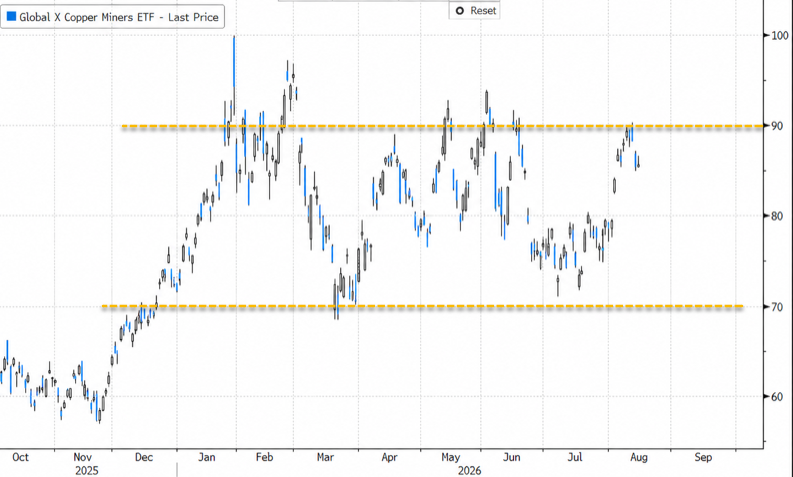
(Global X Copper Miners ETF performance)


Related Reads

"AI Burning Books" Is Actually a Misunderstanding

"AI Book-Burning" Is Actually a Misunderstanding Recent reports about AI companies purchasing used books, scanning them, and then destroying the physical copies have sparked widespread outrage. Terms like "AI is devouring human knowledge" have become common, fueled by dramatic visuals of books being cut and shredded. However, the actual facts reveal a more nuanced story. While companies like Anthropic have indeed spent millions to buy and "destructively scan" several million books for AI training, this volume is a small fraction of the global second-hand book market. The core act—digitizing content and then discarding the physical object—is the opposite of historical book-burning, which aimed to erase knowledge. A key point of contention is the purchase of rare or out-of-print books. Yet, if these books were legally for sale on the open market, the buyer (whether an AI firm or an individual) has the right to do with them as they wish. The real question is whether society has adequate systems to protect books of genuine cultural heritage *before* they are sold. Expecting profit-driven companies to self-regulate on this is unreliable; the solution lies in establishing public rules, such as protected lists for rare editions or granting libraries priority purchase rights. Much of the intense public reaction stems not from the scale of actual harm, but from the powerful symbolism. The image of books being fed into machines taps into deeper anxieties about AI: fears of job displacement, mistrust of tech giants, and the unsettling feeling that humanity is feeding its own cultural past to the systems that might replace it. The outrage over "AI book-burning" is thus less about the physical books and more a proxy for broader societal tensions surrounding artificial intelligence.

marsbit5m ago

"AI Burning Books" Is Actually a Misunderstanding

marsbit5m ago

Robinhood CEO named three benefits of tokenized stocks for American investors

Robinhood CEO Vlad Tenev advocates for the U.S. to allow trading of tokenized stocks domestically. He argues this model could modernize the financial system through three key benefits: **faster, near real-time settlements** reducing counterparty risk and broker capital requirements; **24/7 trading** enabling reaction to market events anytime; and **greater asset portability**, allowing tokens to be moved between platforms and held in self-custody wallets, increasing competition among services. Tenev emphasized tokenization is about rebuilding asset ownership infrastructure for freer movement, similar to information online. He highlighted potential integration with DeFi, where tokenized stocks could be used for lending or as collateral. Currently, Robinhood's stock tokens are not direct ownership of the underlying securities but are backed by them and provide access to economic value like dividends; their structure may evolve with future regulations. Tenev identified outdated securities laws and market infrastructure, developed over a century, as the main U.S. obstacle, urging regulators to adapt rules for blockchain while preserving investor protections. He warned it would be strange if the rest of the world could build the future of ownership around U.S. assets while Americans are left behind, suggesting tokenization could later expand to private company shares and other illiquid assets.

cryptonews.ru26m ago

Robinhood CEO named three benefits of tokenized stocks for American investors

cryptonews.ru26m ago

Trading

Spot
活动图片