Consensus Live | Avenir Group, Tiger, AMINA, and CoinRoutes Discuss Institutional Capital Efficiency and Financial Infrastructure Evolution

marsbitPublished on 2026-02-11Last updated on 2026-02-11

Abstract

At Consensus Hong Kong 2026, the institutional investment narrative is structurally shifting toward multi-asset allocation, yet cross-system frictions are diluting capital efficiency. Avenir Group, in partnership with Tiger Brokers, AMINA Bank, and CoinRoutes, led a roundtable on next-generation institutional trading infrastructure. Key consensus emerged: the industry must transition from an asset-centric to a capital-centric framework to optimize efficiency in a multi-asset environment. Panelists highlighted challenges including fragmented capital utilization due to segregated systems, misaligned clearing cycles causing idle capital, and the need for natively compliant, scalable infrastructure. Avenir Group and partners signed an MOU to explore collaborative solutions, emphasizing that future competitiveness hinges on unified capital management and cross-asset operational capabilities within regulatory frameworks.

At Consensus Hong Kong 2026, the narrative focus of institutional investors is undergoing a structural shift. As regulatory frameworks mature, crypto assets are accelerating their integration into institutional portfolios, moving beyond exploratory allocations. However, this transition towards multi-asset allocation has highlighted a new theme: although portfolios are expanding across asset classes, cross-system friction is diluting capital efficiency.

Avenir Group, an investment group dedicated to promoting the integration of traditional finance and digital assets, has observed that as the scale of institutional participation grows, the completeness of infrastructure is increasingly impacting institutional capital efficiency. As an official partner of Consensus Hong Kong 2026, Avenir Group initiated a roundtable discussion titled "Next-Generation Institutional Trading Infrastructure." Industry leaders from global leading tech brokerage Tiger Brokers, Swiss FINMA-regulated crypto bank AMINA Bank AG (“AMINA Bank”), and leading multi-asset institutional trading platform CoinRoutes systematically deconstructed the reasons behind constrained capital efficiency in a multi-asset environment and jointly explored potential evolutionary directions.
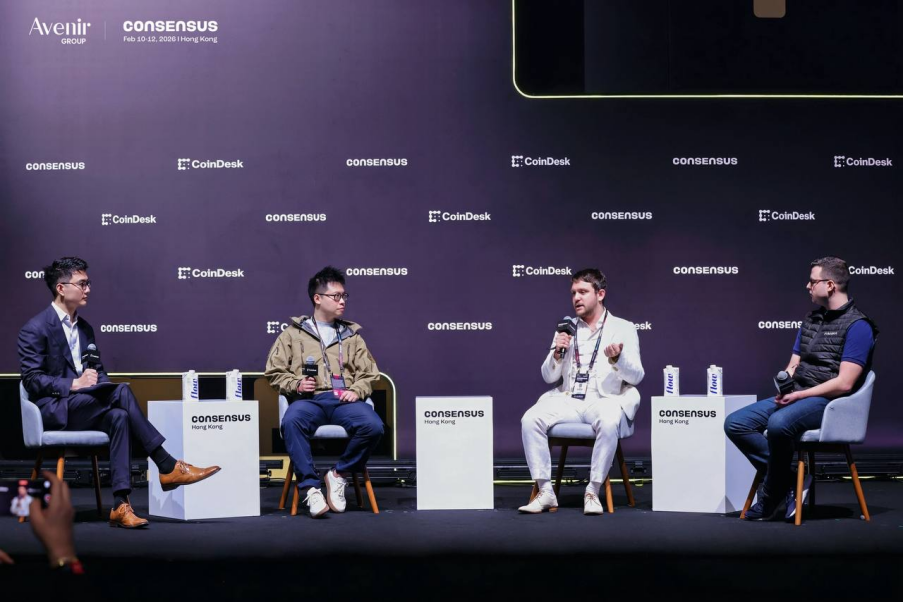
Industry Consensus: A Foundational Restructuring from "Asset-Oriented" to "Capital-Oriented"

During the discussion, a core consensus was reached: the industry must shift from an "Asset-Centric" infrastructure framework to a "Capital-Centric" framework.

In the past, an asset-centric model, optimized for single asset classes, could meet demands. However, in the complex era of multi-asset markets, this model may lead to a certain degree of capital efficiency drain. When institutions manage traditional and digital assets in parallel, the inherent differences between these assets—from price volatility to clearing and settlement cycles—result in hidden capital occupation and execution friction. These are no longer mere operational inconveniences but can become significant structural constraints affecting overall capital efficiency.

Roundtable guests shared deep insights from different parts of the value chain:

· Holistic Capital Efficiency Utilization: Felix Huang Shuojun, Global Partner at Tiger Brokers International, pointed out that traditional markets improve capital utilization through margin interoperability; however, the inclusion of digital assets disrupts this synergy. Existing systems are often designed around "asset isolation" rather than "overall capital efficiency," making it difficult for institutions to achieve cross-asset capital allocation within a unified framework.

· Efficient Execution and Liquidity Linkage: Ian Weisberger, CEO and Co-Founder of CoinRoutes, added that misaligned clearing rhythms leave substantial funds idle during trading gaps. What institutions urgently need is unified execution capability across markets and for multi-leg strategies, as well as flexible rotation of positions and risk across different asset classes.

· Compliance-First Infrastructure: Myles Harrison, Chief Product Officer at AMINA Bank, emphasized that compliance is not the opposite of efficiency but a prerequisite for the safe operation of the system. The pain point lies in the industry's lack of a natively multi-asset supportive infrastructure that also possesses high transparency and scalability, thereby unlocking capital potential within a global compliance framework.

Jacob Zhong, Managing Partner of Strategic Investment and Cooperation at Avenir Group, stated: "Synthesizing industry insights, the direction of infrastructure evolution has become relatively clear. As institutional participation in multi-asset environments deepens, the market increasingly requires an infrastructure capable of unified cross-asset capital allocation, synchronized trading execution and clearing rhythms, and embedding compliance capabilities natively into the system (rather than as an afterthought patch). In this direction, more integrated and regulation-adaptive infrastructure is gradually becoming a crucial support for enhancing capital efficiency and enabling cross-asset operations at scale."

Building the Ecosystem Together: Advancing Financial Infrastructure Evolution Through Collaborative Action

At the conclusion of the thematic discussion, Avenir Group, Tiger Brokers, AMINA Bank, and CoinRoutes formally signed a Memorandum of Understanding (MOU) to explore potential future cooperation.

The integration of traditional finance and digital assets is not merely a technical or product-level consolidation but a progressive, systematic compliance engineering project. As multi-asset allocation becomes the norm, the competitive focus among institutions is shifting—it no longer depends solely on market access capabilities but on the systemic ability to manage and flexibly allocate capital under a compliance framework.

Avenir Group looks forward to collaborating with a broader range of financial institutions and technology partners. By fostering dialogue and cooperation across the entire ecosystem, Avenir Group aims to join hands with industry partners to jointly promote a more synergistic and scalable infrastructure path, gradually turning the enhancement of capital efficiency from an industry consensus into verifiable practice.

About Avenir Group

Avenir Group is a pioneering investment group focused on driving the integration of traditional finance and digital assets, building the financial infrastructure of the future. The group adopts an integrated "Investment—Incubation—Operation" strategy, with a core investment portfolio focusing on digital asset management, trading and financial services platforms, payment finance (PayFi) infrastructure, and real-world asset (RWA) tokenization, providing the industry with institutional-grade products and services, and continuously promoting financial innovation and the development of emerging technologies. As the largest institutional holder of Bitcoin ETFs in Asia, Avenir Group expands its business globally, covering Hong Kong, Singapore, Tokyo, London, San Francisco, and more. Leveraging robust capital strength and professional operational capabilities, the group is committed to becoming a strategic hub connecting Eastern and Western capital, driving efficient global capital flow and collaboration. Learn more: https://avenirx.com


Related Questions

QWhat is the main shift in the narrative focus for institutional investors at Consensus Hong Kong 2026, as discussed by Avenir Group and partners?

AThe narrative focus is shifting structurally from exploratory allocation of crypto assets to their accelerated integration into institutional portfolios, highlighting the theme that cross-system friction is diluting capital efficiency despite multi-asset expansion.

QAccording to the roundtable, what fundamental change is needed in infrastructure frameworks to improve capital efficiency in multi-asset environments?

AThe industry must transition from an 'Asset-Centric' infrastructure framework to a 'Capital-Centric' one to enable unified capital scheduling across assets, synchronized execution and settlement rhythms, and natively embedded compliance capabilities.

QWhat specific capital efficiency challenge did Felix Huang Shuojun from Tiger International highlight regarding digital assets?

AHe pointed out that while traditional markets improve capital utilization through margin interoperability, the inclusion of digital assets disrupts this synergy. Existing systems designed for 'asset isolation' rather than 'overall capital efficiency' hinder unified cross-asset capital scheduling.

QHow did Ian Weisberger of CoinRoutes and Myles Harrison of AMINA Bank contribute to the discussion on infrastructure needs?

AIan Weisberger emphasized the need for unified execution capabilities across markets and flexible rotation of positions and risk between asset classes, citing idle funds due to misaligned settlement cycles. Myles Harrison stressed the necessity for native multi-asset infrastructure with high transparency and scalability that operates within global compliance frameworks to unlock capital potential.

QWhat action did Avenir Group and its partners take following the roundtable discussion, and what is their broader goal?

AThey signed a strategic Memorandum of Understanding (MOU) to explore future collaboration. Avenir Group aims to work with financial institutions and tech partners to promote dialogue and cooperation, advancing more synergistic and scalable infrastructure paths to turn capital efficiency consensus into verifiable practice.

Related Reads

Gensyn AI: Don't Let AI Repeat the Mistakes of the Internet

In recent months, the rapid growth of the AI industry has attracted significant talent from the crypto sector. A persistent question among researchers intersecting both fields is whether blockchain can become a foundational part of AI infrastructure. While many previous AI and Crypto projects focused on application layers (like AI Agents, on-chain reasoning, data markets, and compute rentals), few achieved viable commercial models. Gensyn differentiates itself by targeting the most critical and expensive layer of AI: model training. Gensyn aims to organize globally distributed GPU resources into an open AI training network. Developers can submit training tasks, nodes provide computational power, and the network verifies results while distributing incentives. The core issue addressed is not decentralization for its own sake, but the increasing centralization of compute power among tech giants. In the era of large models, access to GPUs (like the H100) has become a decisive bottleneck, dictating the pace of AI development. Major AI companies are heavily dependent on large cloud providers for compute resources. Gensyn's approach is significant for several reasons: 1) It operates at the core infrastructure layer (model training), the most resource-intensive and technically demanding part of the AI value chain. 2) It proposes a more open, collaborative model for compute, potentially increasing resource utilization by dynamically pooling idle GPUs, similar to early cloud computing logic. 3) Its technical moat lies in solving complex challenges like verifying training results, ensuring node honesty, and maintaining reliability in a distributed environment—making it more of a deep-tech infrastructure company. 4) It targets a validated, high-growth market with genuine demand, rather than pursuing blockchain integration without purpose. Ultimately, the boundaries between Crypto and AI are blurring. AI requires global resource coordination, incentive mechanisms, and collaborative systems—areas where crypto-native solutions excel. Gensyn represents a step toward making advanced training capabilities more accessible and collaborative, moving beyond a niche controlled by a few giants. If successful, it could evolve into a fundamental piece of AI infrastructure, where the most enduring value in the AI era is often created.

marsbit11h ago

Gensyn AI: Don't Let AI Repeat the Mistakes of the Internet

marsbit11h ago

Why is China's AI Developing So Fast? The Answer Lies Inside the Labs

A US researcher's visit to China's top AI labs reveals distinct cultural and organizational factors driving China's rapid AI development. While talent, data, and compute are similar to the West, Chinese labs excel through a pragmatic, execution-focused culture: less emphasis on individual stardom and conceptual debate, and more on teamwork, engineering optimization, and mastering the full tech stack. A key advantage is the integration of young students and researchers who approach model-building with fresh perspectives and low ego, prioritizing collective progress over personal credit. This contrasts with the US culture of self-promotion and "star scientist" narratives. Chinese labs also exhibit a strong "build, don't buy" mentality, preferring to develop core capabilities—like data pipelines and environments—in-house rather than relying on external services. The ecosystem feels more collaborative than tribal, with mutual respect among labs. While government support exists, its scale is unclear, and technical decisions appear driven by labs, not state mandates. Chinese companies across sectors, from platforms to consumer tech, are building their own foundational models to control their tech destiny, reflecting a broader cultural drive for technological sovereignty. Demand for AI is emerging, with spending patterns potentially mirroring cloud infrastructure more than traditional SaaS. Despite challenges like a less mature data industry and GPU shortages, Chinese labs are propelled by vast talent, rapid iteration, and deep integration with the open-source community. The competition is evolving beyond a pure model race into a contest of organizational execution, developer ecosystems, and industrial pragmatism.

marsbit13h ago

Why is China's AI Developing So Fast? The Answer Lies Inside the Labs

marsbit13h ago

3 Years, 5 Times: The Rebirth of a Century-Old Glass Factory

Corning, a 175-year-old glass company, is experiencing a dramatic revival as a key player in AI infrastructure, driven by surging demand for high-performance optical fiber in data centers. AI data centers require vastly more fiber than traditional ones—5 to 10 times as much per rack—to handle high-speed data transmission between GPUs. This structural demand shift, coupled with supply constraints from the lengthy expansion cycle for fiber preforms, has created a significant supply-demand gap. Nvidia has invested in Corning, along with Lumentum and Coherent, in a $4.5 billion total commitment to secure the optical supply chain for AI. Corning's competitive edge lies in its expertise in producing ultra-low-loss, high-density, and bend-resistant specialty fiber, which is critical for 800G+ and future 1.6T data rates. Its deep involvement in co-packaged optics (CPO) with partners like Nvidia further solidifies its position. While not the largest fiber manufacturer globally, Corning's revenue from enterprise/data center clients now exceeds 40% of its optical communications sales, and it has secured multi-year supply agreements with major hyperscalers including Meta and Nvidia. Financially, Corning's optical communications revenue has surged, doubling from $1.3 billion in 2023 to over $3 billion in 2025. Its stock price has risen nearly 6-fold since late 2023. Key future catalysts include the rollout of Nvidia's CPO products and the scale of undisclosed customer agreements. However, risks include high current valuations and potential disruption from next-generation technologies like hollow-core fiber. The company's long-term bet on light over electricity, maintained even through the telecom bubble crash, is now being validated by the AI boom.

marsbit13h ago

3 Years, 5 Times: The Rebirth of a Century-Old Glass Factory

marsbit13h ago

Trading

Spot
Futures
活动图片




