Community is Dead, Long Live Community

链捕手Published on 2026-05-15Last updated on 2026-05-15

Abstract

The author reflects on the transformative and often painful evolution of crypto communities. They nostalgically recall the early days of Web3, where genuine bonds formed around shared beliefs in projects like DeFi and NFTs, leading to deep friendships and passionate collaboration. However, the essay argues this authentic "community" is now largely dead. It has been corrupted by a culture of extraction, where most participants in modern Discord servers are motivated solely by financial gain—grinding for points, chasing airdrops, and immediately selling tokens. This dynamic creates a facade of engagement that vanishes after a token launch, often replaced by hostility. The author uses their project, Across Protocol, as a case study, announcing the shutdown of its Discord server because it no longer represents a true community but a toxic space dominated by mercenary actors. The piece concludes with a bittersweet farewell to the old era and a determined call to continue building with the few remaining genuine believers. The title's paradox, "Community is dead. Long live community," mourns the loss of the original ideal while expressing hope for its future revival.

Author: jamesrichardfry, Head of Marketing, Across Protocol

Compiled by: Jiahuan, ChainCatcher

I've been struggling with how to write this. Part of me wants to sugarcoat it. Dress it up in marketing speak. Frame it as something beautiful and move on.

But that wouldn't be entirely honest. If you know me, you know I wear my heart on my sleeve and I'm incapable of lying. So here it is, bluntly.

Community is dead. Of course, it wasn't always this way. That goes without saying, but I'm saying it out loud anyway.

I still miss the good old days on Clubhouse and Discord chatrooms. The times we spent hours "vibing" with people from across the internet about magic internet money, the latest NFT drop, the best staking opportunities, complaining about the money we lost, dreaming about the next great project, and actually *building*.
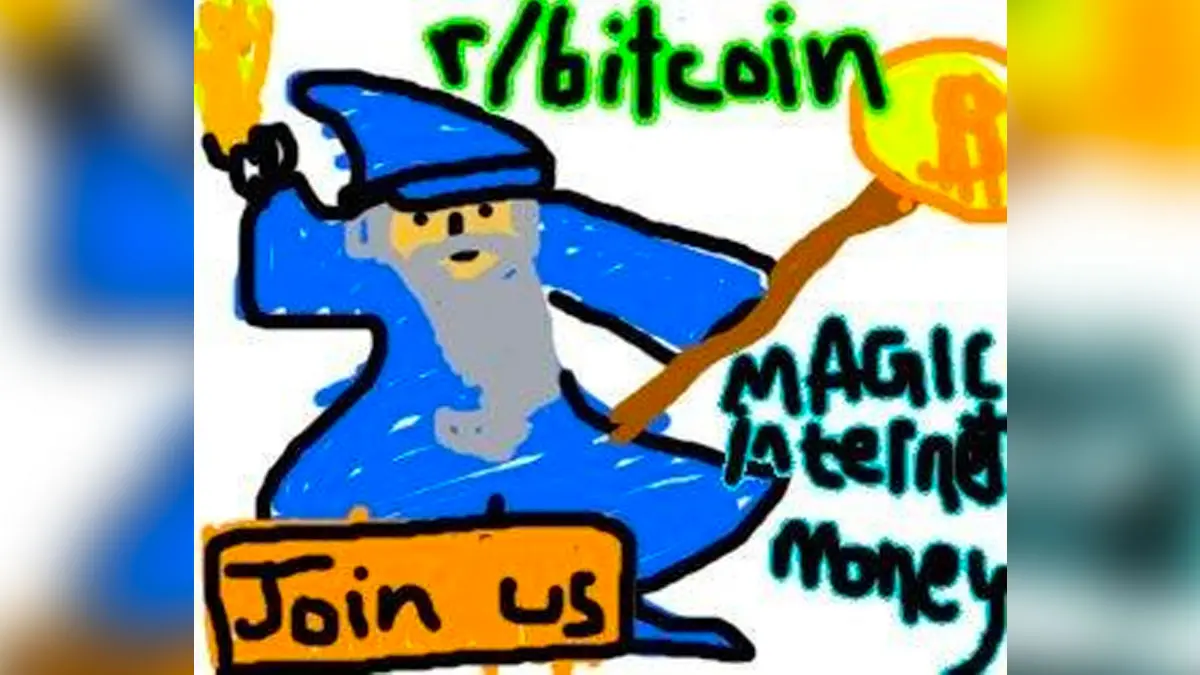
To this day, I'm still good friends with many of those people. Some have even become friends in real life. When community is good, it's good. I miss those days.

Zooming out a bit, what is community? I talked about this for way too long during a recent all-hands meeting, and I could almost hear the eyes rolling from my colleagues.

To share a bit of that epiphany with you, here's my take on community:

A community is a group of people gathered around a shared interest. In many aspects of our daily lives, we have community.

From the school you go to, the sport you play, the religion you practice, the gym you frequent, even the grocery store you shop at.

Some communities are shallow. The group of old men I see at the gym Monday through Friday is a community, but it's clearly very different from the friend circle community we intentionally spend time with.

Web3 or crypto community is no different.

We all gathered around our shared interests. DeFi summer. NFT mania. NFT winter. Cross-chain interoperability whatever. Zero-knowledge proofs whatever.

Whatever you're into, there's a group of people diving down the rabbit hole with you.

Some were there for the financial speculation. Others, from a deep belief and commitment to the early cypherpunk movement. Some crypto communities were surface-level or perfunctory.

Others were deeply profound. I mean, deeply, deeply profound. Like a religious congregation, fanatic following, belief-in-your-gut, put-your-money-where-your-mouth-is profound.

We wore the same "clothes" (PFP), spoke our own language (WAGMI), looked crazy to outsiders, and we didn't care one bit because we believed in what we were all gathering to pursue.

Early crypto community was inseparable from belief.

Not just belief, but a deep, gut-wrenching conviction that gave you the courage to get on stage and talk for hours in front of hundreds about why you believed in the founder, the project, the roadmap, and why you were the project's diamond-handed hodler.

Conviction. That's what drove the parabolic growth in the early days. Without community, crypto would be nothing.

Across, by the way, was no exception. The early days of the Across community were the golden days. The vibes were high. There was deep conviction (yes, I'm repeating that word). Excitement, energy, people genuinely caring about the project for the innovation, not for the token price.

We hired people from that community who are still with us today. And some of the early people who stuck around are still die-hard community members, riding the waves with us.

When community is good, it's good.

And then, everything changed.

Fast forward to today. I'm going to make some sweeping generalizations here. Please know that I'm not referring to "all" community members, "every" community group, and not painting with a broad brush. But if I continue to be blunt, I'm referring to most. Vast majority.

The word "community" has been bastardized by the crypto "extractors." In many ways, if you want to know why "the love of money is the root of all evil," look no further than the countless Discord "communities."

Thousands of unread messages a day. Impressive daily active users. Constant social support, until the Token Generation Event (TGE) hits. We all know the playbook.

The vibe before TGE mimics the early crypto community sentiment. Deep conviction. Gut-wrenching fire. Courage to get on stage. PFP and project tags in bios. Ride or die, diamond hands, bullish hodler.

Then, everyone changes.

You go to sleep one night, barely able to keep up with the Discord notifications.

You wake up the next morning, and it's a ghost town.

Or worse.

You find your loyal "community" coming at you with pitchforks and torches.

Over the airdrop.

You see, "community" is no longer community.

It's devolved into endless, AI-generated spam to farm points, for the hope of an airdrop, to immediately dump, then complain about the token price, and call the project a scam or rug (which, to be fair, is often true).

You know where I'm going with this long-winded rant, right?

"Community" is no longer community. You know it. You feel it. The timeline feels off. Discord servers feel off. Podcasts feel off. Twitter Spaces feel off.

Everything feels wrong, like "Con" will never be "Confucius." Everyone reading this today knows it deep down, even if you've never articulated it this clearly before.

Today's "community" is a cheap imitation of the early community that built crypto into what it is. The shared interest of these "community" members boils down to one thing. Extraction. Quick. Decisive. Extraction. It's the poison that kills what crypto could have been, and should have been.

Most of today's (again, not all) Discord "communities" consist of the dregs of the remnants.

Some are genuine loyalists and believers. (To those who have stuck with Across, we wouldn't be here without you. Thank you. You know where to find us, we'll always have a place for you.)

Some, often the majority, are there to extract from the project. I won't dwell on that here.

And finally, those who only appear to complain. Because in every bear market, these specific types of "community" members will kick you when you're down, as if the bear market hasn't affected every team member, and as if we caused the bear market to happen.

Unfortunately, the Across Discord has recently fallen into this "majority" category as well. Our "community" has become something else.

The people who recognize the incredible achievements we've made, the progress Across has pioneered for the entire industry, and who still support us, are tired of being part of this extractive "community" and have left the Discord.

The few who remain will happily move with us to Twitter and other channels. The rest are what I defined above as "community." Yes, I'm saying this with gut-wrenching fire and deep conviction.

Therefore, today, the Across Discord is moving to read-only mode.

This is the first step in our planned, full shutdown of the server.

To the community of believers still standing with us, let's keep building. We have a lot of work to do.

To Discord, thank you for hosting some of the good old days of crypto. I will cherish them forever.

Community is dead.

Long live community.

Related Questions

QAccording to the author, what is the core difference between early crypto communities and today's so-called 'communities'?

AThe author argues that the core difference lies in the underlying motive. Early crypto communities were driven by a deep, shared belief and passion for the technology and vision. Today's 'communities' are primarily driven by extraction - the desire to farm points, earn airdrops, sell tokens immediately for profit, and then often turn hostile towards the project. They are characterized as cheap knock-offs of the genuine early communities.

QWhat specific action is the author announcing for the Across Protocol Discord server, and why?

AThe author announces that the Across Protocol Discord server will be set to read-only mode, which is the first step in a planned full shutdown. The reason is that their Discord has been overrun by the 'extractive' majority, driving away the genuine, loyal community members. The noise and negativity no longer serve the project's builders and true believers.

QHow does the author define a 'community' in the broader sense, beyond just web3?

AThe author defines a community as a group of people gathered around a shared interest. They provide examples from everyday life such as school, sports, religion, the gym, or even a local grocery store. The author notes that communities can be shallow (like nodding acquaintances at the gym) or deep and meaningful (like close friend groups).

QWhat positive aspects of the early 'golden era' of crypto communities does the author miss?

AThe author misses the authentic 'vibing' on platforms like Clubhouse and Discord, where people discussed crypto topics out of genuine interest, shared experiences, dreamed up new projects, and collaboratively 'built' things. These interactions were based on excitement, innovation, and a shared belief in the project's potential, not just token price. Many real friendships were formed during this time.

QWhat is the primary 'poison' that the author believes has killed the potential of what crypto communities could have been?

AThe author identifies 'extraction' as the primary poison. The current environment is dominated by individuals whose sole common interest is to quickly and decisively extract value from projects through activities like airdrop farming, followed by selling tokens and complaining. This self-serving behavior has corrupted the genuine communal spirit.

Related Reads

Bloomberg Uncovered: How Do China's Wealthy Circumvent the Annual $50,000 Limit to Transfer Assets?

**Summary: How Wealthy Chinese Circumvent $50,000 Annual Foreign Exchange Limits** Despite China's strict capital controls, including an annual $50,000 per person foreign exchange quota, an estimated $150 billion in funds still leaves the country annually via various gray and underground channels. This report outlines the evolution of China's "capital wall" and the methods used to bypass it. **The Evolving Capital Controls:** * **Foundation (1994):** The system of "current account convertibility with strict capital account controls" was established. * **Quota Set (2007):** The $50,000 individual annual forex purchase limit was formalized. * **Crackdown Begins (2015-2017):** Following market volatility, enforcement tightened. Banks were required to scrutinize transactions, and channels like using UnionPay cards for Hong Kong insurance premiums or buying overseas property were blocked. * **Digital & Legal Upgrades (2024-2026):** Enhanced algorithms now flag suspicious patterns (e.g., "smurfing"). The Common Reporting Standard (CRS) provides Chinese tax authorities with data on citizens' offshore accounts. Unlicensed cross-border brokers have been targeted. **Five Primary Methods for Moving Capital:** 1. **Underground Banking / "Hawala" (Duiqiao):** The largest-scale method. No money crosses borders. Clients pay RMB to a domestic account; an overseas associate deposits equivalent foreign currency into the client's offshore account. Risks include high fees, account freezes, and legal penalties. 2. **"Smurfing" or "Ant Moving":** Using multiple individuals' $50,000 quotas to pool funds for one offshore recipient. Increasingly detected by anti-money laundering algorithms. 3. **Trade Invoice Manipulation:** Businesses over-invoice imports or under-invoice exports via offshore shell companies, creating a pretext to transfer excess funds abroad under the guise of trade. 4. **Channel Migration:** After a crackdown on internet brokers, funds flow toward more compliant but costly channels like major banks' cross-border wealth management services or Qualified Domestic Institutional Investor (QDII) quotas. 5. **Structural Arrangements:** High-net-worth individuals use complex, high-cost legal structures involving offshore trusts, insurance, and investment migration programs to transfer asset ownership. **Regulatory Response: Focusing on People, Not Just Money** The current strategy extends oversight from enterprises to **individual residents**. Tools like CRS allow retroactive visibility into offshore assets. Cryptocurrencies, once seen as a potential loophole, are now actively monitored and prosecuted as an illegal channel. The underlying driver remains: with significant wealth concentrated among millions of affluent households seeking diversification amid domestic economic shifts, the incentive to move assets offshore persists despite regulatory barriers.

marsbit5m ago

Bloomberg Uncovered: How Do China's Wealthy Circumvent the Annual $50,000 Limit to Transfer Assets?

marsbit5m ago

Ethereum's Ballmer Moment: As Everyone Is Bearish, the Circulating Supply Is Disappearing

"Ethereum's Ballmer Moment: Circulation Shrinks Amid Bearish Sentiment" Amid widespread bearish sentiment, with prominent figures like Bankless founder David Hoffman selling ETH and young developers flocking to Solana, some argue Ethereum is entering its "Ballmer era"—akin to Microsoft's perceived stagnation under Steve Ballmer. While surface-level criticisms about slow protocol development, cautious leadership, and competitive pressure are valid, underlying fundamentals tell a different story. Approximately 30% of ETH is staked, major holders like BitMine are accumulating, and spot ETFs continue to absorb supply. Regulatory clarity, including the SEC/CFTC's March ruling on staking rewards and the potential passage of the CLARITY Act, is transforming crypto from a regulatory threat into a legitimized framework. This institutionalization, alongside a shrinking circulating supply (with net issuance around 0.23% annually), creates significant buy-side pressure independent of fee-based value capture. The broader crypto total addressable market is expanding through regulated stablecoins, tokenized assets, and institutional adoption. While public chains face competition from permissioned alternatives, the winning model appears to be permissioned assets settling on public chains like Ethereum and Solana. The author advocates a non-maximalist, barbell strategy: holding ETH for its institutional role and supply squeeze, SOL for consumer/throughput trends, BTC as a macro hedge, and a basket of next-gen L1s. Key bullish drivers for ETH include rapid circulation shrinkage, potential Q2 staked ETF approvals, regulatory tailwinds solidifying its role as a default settlement layer, and the optionality of an eventual "Satya moment" leadership shift. Despite bearish consensus, the current setup—where crypto is "not hot" and regulatory groundwork is being laid—presents a compelling investment opportunity. The crypto cycle's focus may have shifted to AI, but blockchain infrastructure is gaining a legal and institutional foothold precisely while attention is elsewhere.

marsbit5m ago

Ethereum's Ballmer Moment: As Everyone Is Bearish, the Circulating Supply Is Disappearing

marsbit5m ago

Claude Code Introduces Dynamic Workflows: Enabling AI to Form Teams and Collaborate

Claude Code introduces dynamic workflows, enabling AI to coordinate teams of specialized agents for complex tasks. This transforms Claude from a code assistant into a programmable workbench. Workflows address key limitations of single-agent systems: agentic laziness (premature task completion), self-preferential bias (favoring own outputs), and goal drift (losing sight of original objectives). The system allows Claude to dynamically create execution frameworks using JavaScript. It can split tasks, dispatch parallel agents for isolated work (e.g., in separate worktrees), implement adversarial validation, run tournaments, and synthesize results. This multi-agent approach is valuable for tasks requiring deep research, factual verification, code migration, root cause analysis, large-scale triage, and qualitative sorting. Key patterns include: classify-and-route, fan-out-and-synthesize, adversarial verification, generate-and-filter, tournaments, and loop-until-done. While token usage is higher, workflows excel where tasks resemble programming—needing problem decomposition, isolated context, hypothesis testing, and handling many details. They extend Claude Code's utility beyond technical work to areas like business plan review, resume screening, and naming brainstorm. The feature is not a universal solution but points to a future where AI tool competitiveness depends on organizing reliable, reusable, and auditable execution flows for complex goals.

marsbit46m ago

Claude Code Introduces Dynamic Workflows: Enabling AI to Form Teams and Collaborate

marsbit46m ago

Hyperliquid, Wall Street's 24/7 Trading Convenience Store

Hyperliquid: The 24/7 Trading "Convenience Store" for Wall Street Hyperliquid, a decentralized cryptocurrency exchange, has become a go-to platform for Wall Street traders seeking to trade around the clock, especially during traditional market closures. Founded by Jeff Yan, a former quantitative trader, after the FTX collapse, the platform emphasizes user self-custody of assets. It offers a wide range of perpetual contracts—leveraged derivatives with no expiry—on assets from Bitcoin and crude oil to the S&P 500 and even pre-IPO companies like SpaceX. A notable example involves a hedge fund trader who capitalized on geopolitical news over a weekend, securing a 243% return on oil derivatives before markets reopened. The platform, run by just 11 employees, generated approximately $800 million in revenue last year, and its native token HYPE has seen significant growth. Its rise highlights the merging of traditional finance and crypto. While U.S. users are currently restricted, recent CFTC rule changes could open access. The platform is known for its transparency, having processed $10 billion in liquidations during a market crash while competitors faltered. Regulators warn of the high risks and complexity of perpetual contracts for retail investors. Key to its appeal is a strong community culture, direct engagement with founders, and a simple interface. Despite rules against VPN use, it attracts global users with its permissionless approach. Hyperliquid plans to expand into prediction markets and options, aiming to eventually host all financial activity.

marsbit46m ago

Hyperliquid, Wall Street's 24/7 Trading Convenience Store

marsbit46m ago

Trading

Spot
Futures
活动图片