Coinbase, Microsoft disrupt Tycoon 2FA phishing network linked to credential theft

ambcryptoPublished on 2026-03-04Last updated on 2026-03-04

Abstract

Coinbase, in collaboration with Microsoft, Europol, and other partners, has successfully disrupted the Tycoon 2FA phishing-as-a-service platform. This criminal toolkit enabled attackers to steal login credentials and bypass multi-factor authentication (MFA) by using cloned login pages that mimicked trusted services like Microsoft 365. The operation involved seizing key domains through legal action and dismantling the infrastructure powering the service. Coinbase's investigation traced cryptocurrency payments funding the platform, which operated on a subscription model, and attributed its administration to an individual based in Pakistan. The takedown highlights the significant threat phishing poses to the crypto sector, where social engineering remains a major cause of financial losses. This coordinated effort targeted both the operational infrastructure and the financial networks supporting such cybercrime.

Coinbase said it worked with Microsoft, Europol, and other industry partners to disrupt Tycoon 2FA, a phishing-as-a-service platform used by cybercriminals to steal login credentials and bypass multi-factor authentication [MFA].

The coordinated action targeted infrastructure powering Tycoon’s operations, including domains hosting the platform’s control panels and phishing pages.

According to Coinbase, Microsoft filed a civil action that led to a court-authorized seizure of key domains, effectively taking the service offline.

The effort combined legal action, infrastructure takedowns, and blockchain analysis to trace the financial flows that funded the phishing network.

Phishing platform designed to bypass MFA

Tycoon operated as a subscription-based phishing toolkit, enabling attackers to launch credential-harvesting campaigns using cloned login pages that mimic trusted services such as Microsoft 365 and other widely used platforms.

The platform enabled attackers to capture usernames, passwords, and authentication codes in real time. More critically, it allowed criminals to steal session cookies used to access accounts without triggering MFA prompts.

Security experts say that capability makes phishing campaigns significantly more effective. It turns credential theft into a gateway for broader attacks such as account takeovers, business email compromise, and invoice fraud.

Coinbase traced crypto payments funding the service

Coinbase’s Global Intelligence team said it traced cryptocurrency payments used to fund Tycoon’s operations. Phishing-as-a-service platforms often operate like illicit software businesses, with subscription models, resellers, and recurring revenue streams.

Blockchain analysis helped investigators identify financial connections between the platform’s operators and related infrastructure, according to the company.

The investigation also helped attribute Tycoon’s administration to Saad Fridi, who, Coinbase said, is believed to be based in Pakistan.

Phishing attacks remain a major crypto threat

The disruption comes amid persistent security challenges across the crypto sector.

A recent report showed that crypto-related hacks resulted in $112.53 million in losses across January and February 2026. Incidents were concentrated in a small number of major exploits.

Beyond protocol vulnerabilities, social engineering remains a major driver of losses. This highlights the scale of credential-theft campaigns targeting crypto users and financial platforms.

Platforms like Tycoon have contributed to that trend by industrializing phishing operations, allowing criminals to run campaigns through ready-made toolkits and subscription services.

Pressure on the phishing economy

Coinbase said dismantling services like Tycoon requires targeting both the infrastructure that powers phishing campaigns and the financial networks that support them.

The company said it will continue working with technology companies and law enforcement to prevent cryptocurrency from being used to fund cybercrime.


Final Summary

  • Coinbase and Microsoft helped dismantle Tycoon 2FA, a phishing-as-a-service platform used to steal credentials and bypass MFA protections.
  • The disruption comes as phishing attacks remain a major driver of crypto losses, with security data showing hundreds of millions stolen through social-engineering campaigns.


Related Questions

QWhat is Tycoon 2FA and what was its primary function?

ATycoon 2FA was a phishing-as-a-service platform used by cybercriminals to steal login credentials and bypass multi-factor authentication (MFA) protections.

QWhich companies and organizations collaborated to disrupt the Tycoon 2FA network?

ACoinbase worked with Microsoft, Europol, and other industry partners to disrupt the Tycoon 2FA network.

QHow did the Tycoon 2FA platform manage to bypass multi-factor authentication?

AThe platform allowed attackers to capture usernames, passwords, and authentication codes in real time, and more critically, to steal session cookies which could be used to access accounts without triggering MFA prompts.

QWhat role did Coinbase's Global Intelligence team play in the investigation?

ACoinbase's Global Intelligence team traced the cryptocurrency payments used to fund Tycoon's operations, using blockchain analysis to identify financial connections and help attribute the platform's administration to an individual based in Pakistan.

QAccording to the article, how much was lost to crypto-related hacks in January and February 2026?

AAccording to a recent report cited in the article, crypto-related hacks resulted in $112.53 million in losses across January and February 2026.

Related Reads

Morgan Stanley Digital Asset Head: Bitcoin Reaching $1M Would Not Be Surprising, But a Real Catalyst Might Require a Crisis That Shatters the Old System

Summary: In a podcast interview, Morgan Stanley's Head of Digital Asset Strategy, Amy Oldenburg, discusses Bitcoin's potential and institutional adoption. She argues Bitcoin's next major surge might require a catalyst—a crisis that shatters the traditional financial system, after which Bitcoin could emerge as the only intact asset. While she sees a $1 million price as possible within five years, she expects slower, more stable growth. Oldenburg traces Bitcoin's logic to her experience in emerging markets, where decentralized mobile money (like M-Pesa) provided critical financial security where traditional banks failed. She notes that early Bitcoin adopters often came from international finance, seeking alternatives to centralized systems. Regarding institutions, she explains that Morgan Stanley, as a bank holding company, faces stricter regulatory hurdles than pure asset managers like BlackRock. While client demand drove their Bitcoin ETP launch (MSBT), which set a firm record, most financial advisors remain hesitant due to Bitcoin's recent price stagnation and volatility. She identifies an education gap as a major barrier, with many advisors and clients not understanding the differences between various crypto assets or between holding spot Bitcoin versus an ETP. Oldenburg also discusses the tension between Bitcoin's cypherpunk, self-custody ethos and the convenience of centralized financial products, acknowledging the value of both approaches. She concludes that the digital asset space is still in its early stages, with a long journey ahead involving more complex products and technologies.

marsbit1m ago

Morgan Stanley Digital Asset Head: Bitcoin Reaching $1M Would Not Be Surprising, But a Real Catalyst Might Require a Crisis That Shatters the Old System

marsbit1m ago

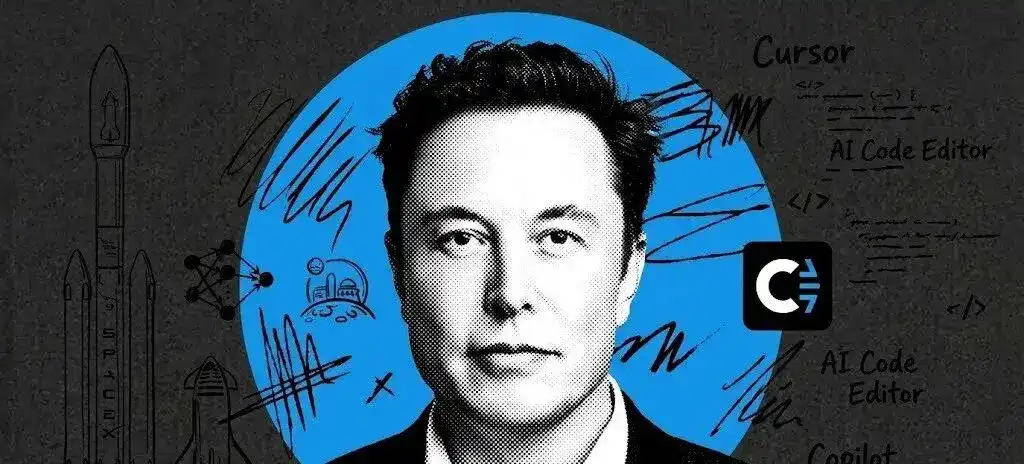
Cursor: Why Did It Board Elon Musk's Rocket?

SpaceX announced its first major acquisition after its historic IPO: a $60 billion all-stock deal to acquire AI programming startup Cursor (parent company Anysphere). Cursor is a popular AI coding assistant that allows developers to switch between models from OpenAI, Anthropic, Google, and others. Founded in 2022 by MIT graduates including CEO Michael Truell, Cursor saw explosive revenue growth, reaching a $4 billion annualized run rate by early 2026. However, its market share had declined as key supplier Anthropic launched its own competing product, Claude Code. Facing dependency risks, Cursor decided to build its own AI model, Composer, but lacked the necessary computing power. In April 2026, Cursor and SpaceX revealed a partnership and an option agreement: SpaceX could acquire Cursor for $60 billion post-IPO, or pay a breakup fee and provide substantial computing resources. After SpaceX's successful IPO, it exercised the option. The deal gives Cursor access to SpaceX's massive "Colossus" supercomputer, while SpaceX gains Cursor's strong foothold among elite software engineers to boost its AI capabilities, as Musk's xAI model Grok lags in programming. The acquisition aligns with SpaceX's broader AI and orbital data center ambitions, as Musk targets $1 trillion in revenue by 2030. For Truell, who once aimed to build an enduring independent company, joining SpaceX represents a monumental bet on an unprecedented scale.

marsbit1m ago

Cursor: Why Did It Board Elon Musk's Rocket?

marsbit1m ago

Wintermute Market Weekly: Iran War Ends, Inflation Meets Expectations, BTC Rebounds to Lower 60ks But Don’t Rush to Buy the Dip

**Wintermute Market Weekly: BTC Rebounds to $60K Lows, But Caution Advised** This week saw a broad market rebound, primarily driven by two converging factors: a US CPI inflation reading that met expectations (4.2% YoY) and former President Trump's announcement of a deal to end the Iran conflict. The latter triggered a sharp drop in oil prices, reducing geopolitical risk premiums and easing inflation fears. Consequently, risk assets like equities and cryptocurrencies rallied, with Bitcoin recovering from lows around $60,000 to close the week up 1.9%, while altcoins gained 3.1%. Despite the price bounce, the underlying liquidity picture for crypto remains weak. Key funding channels—stablecoin flows, ETF inflows, and Digital Asset Treasury (DAT) activity—show no signs of structural improvement. ETF outflows recently hit a record streak, and DAT assets have declined significantly. The rally from $60K to $83K earlier is now viewed as a bear-market rally that has failed. The current environment is characterized by low directional conviction and choppy, range-bound trading, likely persisting into summer. The report advises caution against aggressively buying the dip. While the $60K area offers attractive long-term risk/reward, a sustained bull run requires a visible turnaround in capital inflows, which hasn't materialized. The upcoming FOMC meeting and Powell's commentary, alongside the formal Iran deal signing, are noted as near-term catalysts. The core takeaway is to watch fund flows rather than price action and avoid being whipsawed by volatility before clear signs of institutional or retail capital returning emerge.

marsbit16m ago

Wintermute Market Weekly: Iran War Ends, Inflation Meets Expectations, BTC Rebounds to Lower 60ks But Don’t Rush to Buy the Dip

marsbit16m ago

Trading

Spot
Futures
活动图片