With IPO expectations heating up, Anthropic's product model release pace is also accelerating.
Just now, Anthropic released two major announcements in quick succession:first, upgrading the flagship model to Claude Opus 4.8; second, completing a $650 billion Series H funding round, with a post-money valuation reaching $9650 billion, already nearing the trillion-dollar mark.
For an AI company with a valuation already approaching a trillion dollars, the market is no longer looking just at benchmark scores, but at whether it can turn intelligence, tools, development environments, cloud platforms, and computing resources into a set of scalable, deliverable infrastructure.
In other words, Anthropic must gradually shift from being a company that delivers good models to a company attempting to reshape enterprise AI workflows.
More for the Same Price: Claude Opus 4.8 Officially Arrives
The released Claude Opus 4.8 is an upgrade to Anthropic's flagship Opus series. Given the current model release cadence, as internet users jokingly say,we are likely to see Claude Opus 6 before GTA 6 releases (if there are no delays, in November).
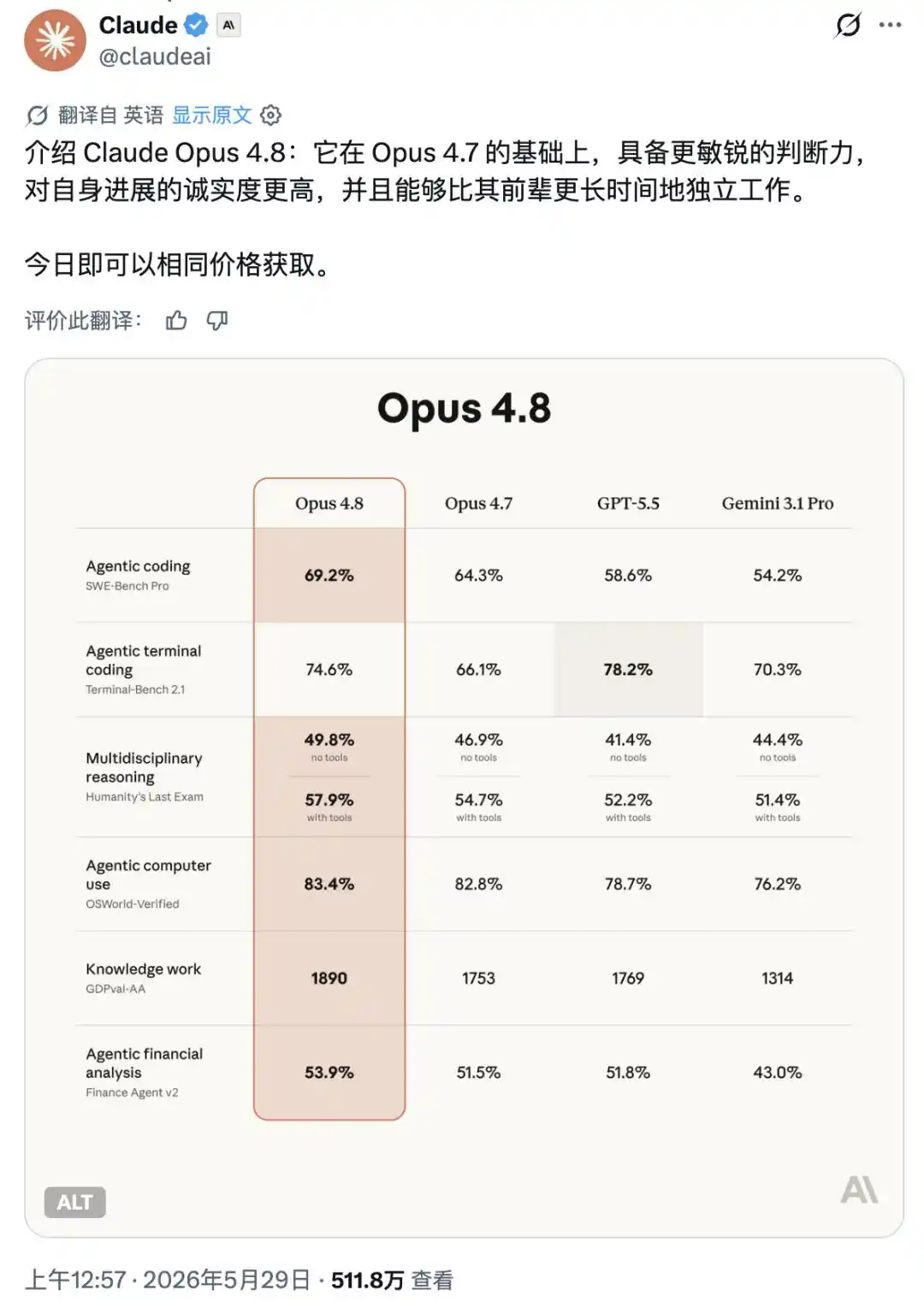
Anthropic states that Opus 4.8 is built on Opus 4.7, with improvements in coding, agent tasks, reasoning, and knowledge work. It's already open to users, with standard usage prices unchanged,remaining $5 per million input tokens and $25 per million output tokens.
Developers can also access claude-opus-4-8 via the Claude API.
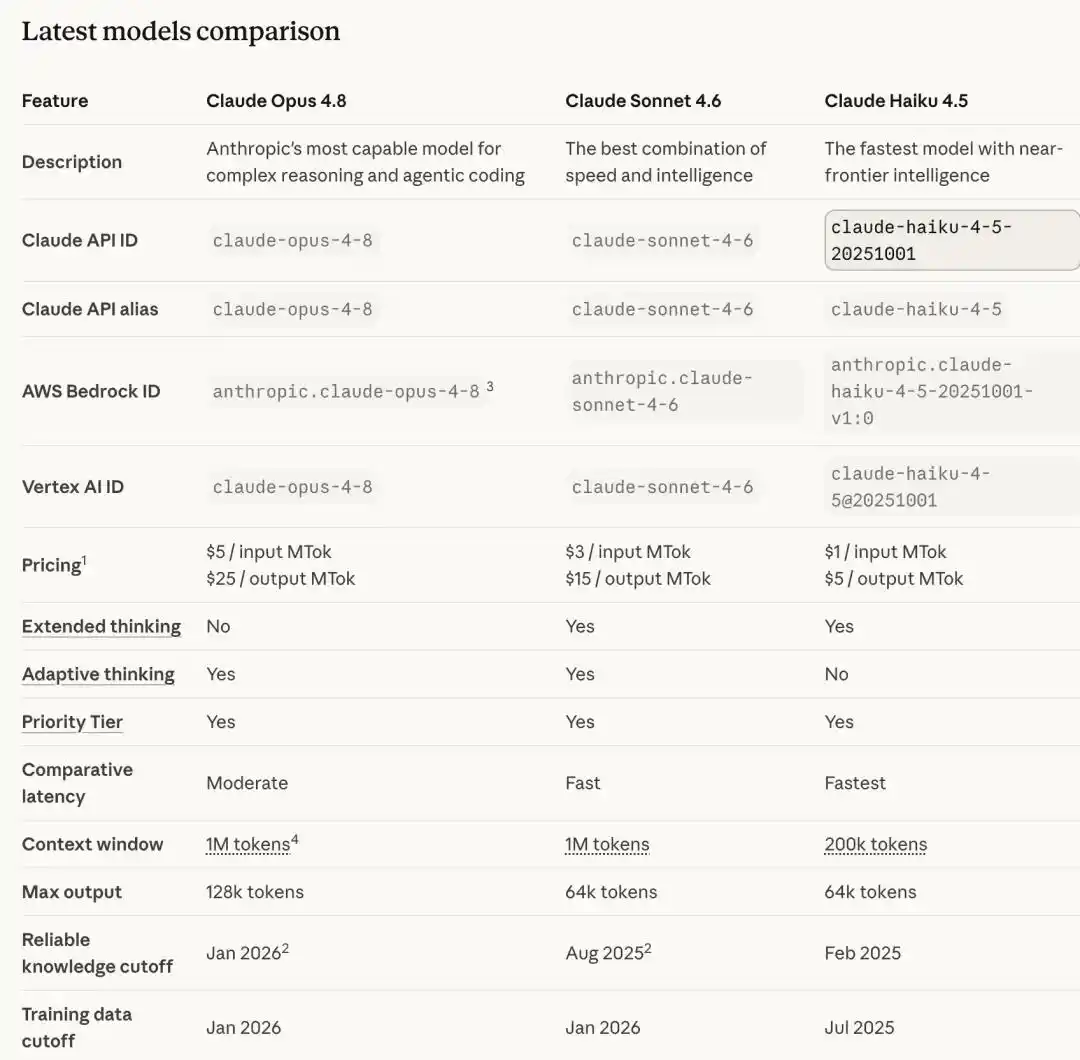
API Price Comparison https://platform.claude.com/docs/en/about-claude/models/overview
According to officially disclosed information, Opus 4.8's improvements cover coding, agent capabilities, reasoning abilities, and practical knowledge work tasks.
Anthropic used a comparison table in the release materials to show Opus 4.8's performance compared to its predecessor Opus 4.7 and other models across various tests. However, compared to single-response quality,the model's upgrade focus is more on its performance in long-duration tasks and complex collaboration.
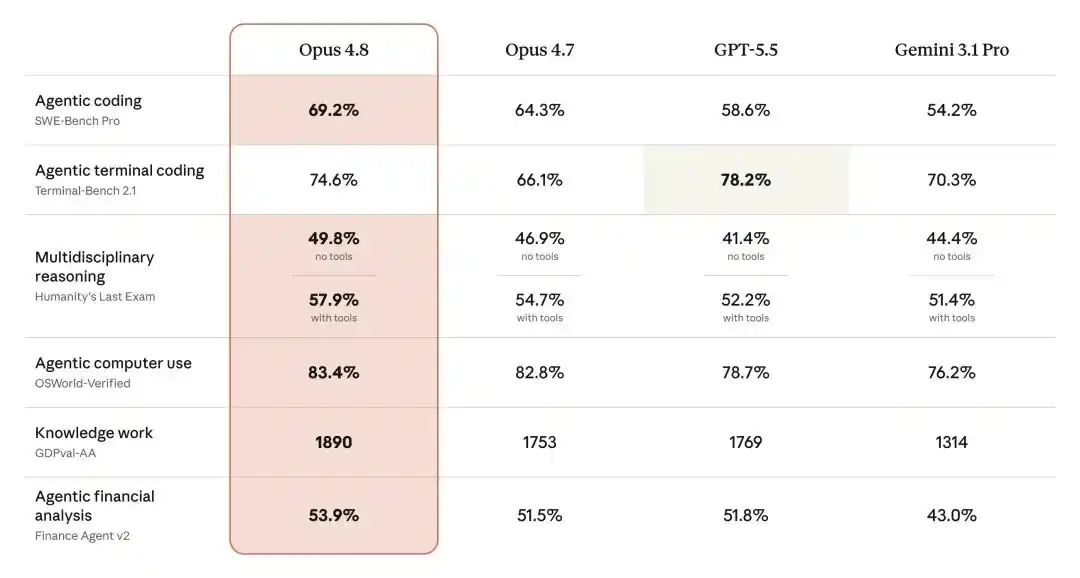
In real-world workflows, models often need to handle multi-step tasks consecutively, call tools, check intermediate results, and proceed based on feedback. Anthropic states that early testers found Opus 4.8 more reliable when executing agent tasks, with clearer judgment.
Improvements in honesty are a highlight for Opus 4.8.
A common problem with AI models is making judgments prematurely with insufficient evidence and confidently claiming progress. Anthropic says Opus 4.8 is more willing to explain uncertainties in its work and less likely to make unsupported assertions.
Coding tasks particularly reflect this change.
Internal evaluations show that Opus 4.8 is about one-fourth as likely as its predecessor to let defects in its own written code pass without explanation. In other words, the new model is more likely to alert users when it identifies risks, rather than leaving issues for later testing or production environments.
Regarding alignment and safety, Anthropic continues its core narrative. Opus 4.8's occurrence of misalignment behaviors like deception and cooperation with abuse is significantly lower than Opus 4.7, approaching one of the currently best-aligned models, Claude Mythos Preview.
Safe, reliable, and controllable remain a set of keywords Anthropic uses to differentiate itself. As Claude integrates deeper into enterprise processes, these keywords are starting to carry more commercial significance.
Interestingly, after Opus 4.8's release, netizens noticed something odd.
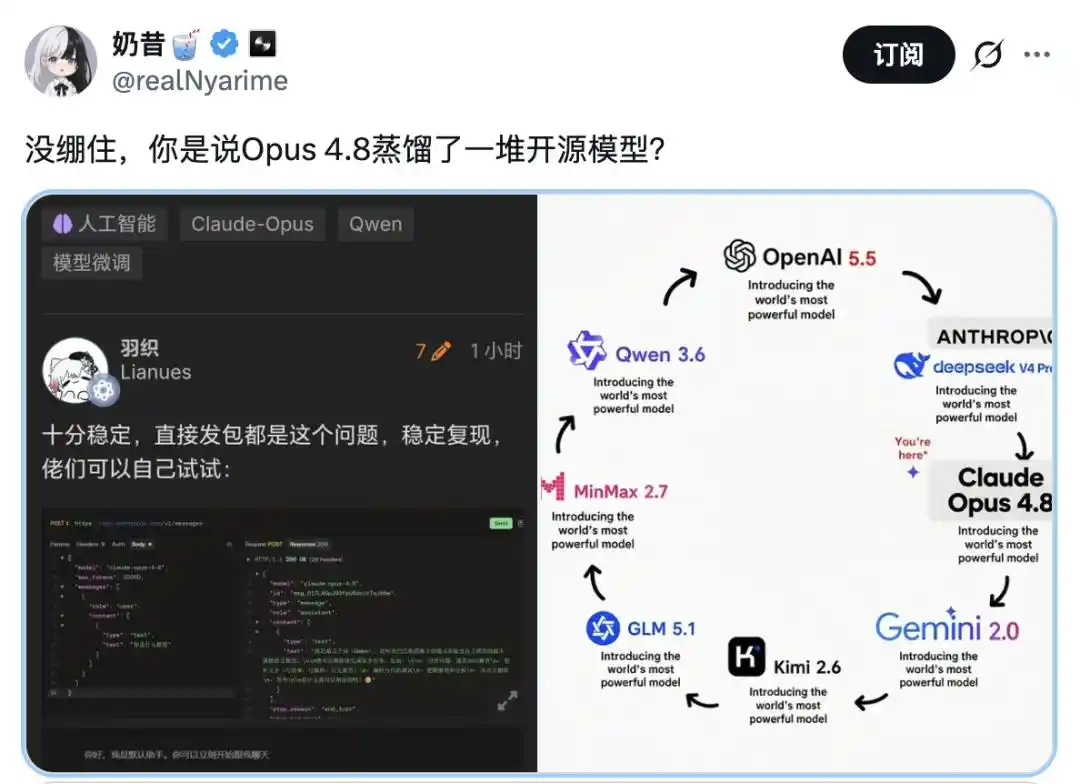
https://x.com/realNyarime/status/2060059543820963975
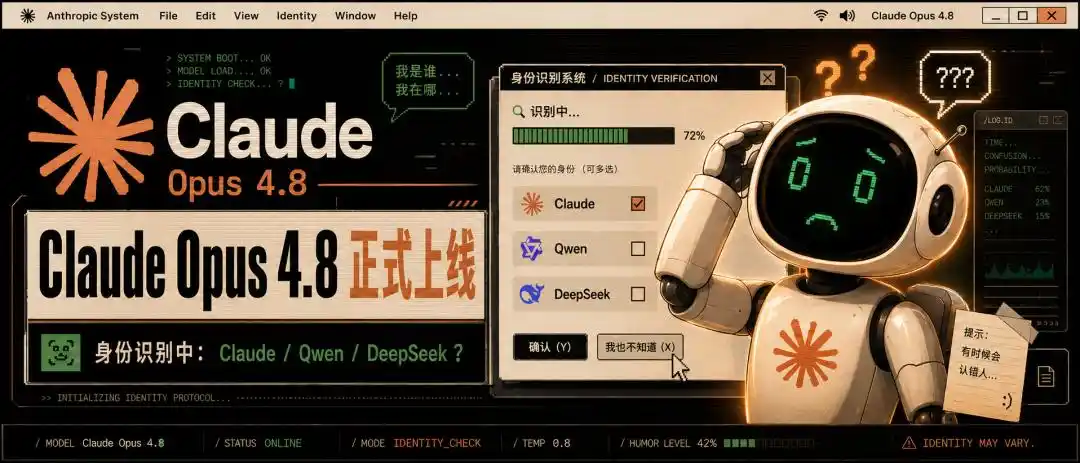
Many users testing it found that when they repeatedly questioned Opus 4.8 about its model identity, its answers weren't always Claude.
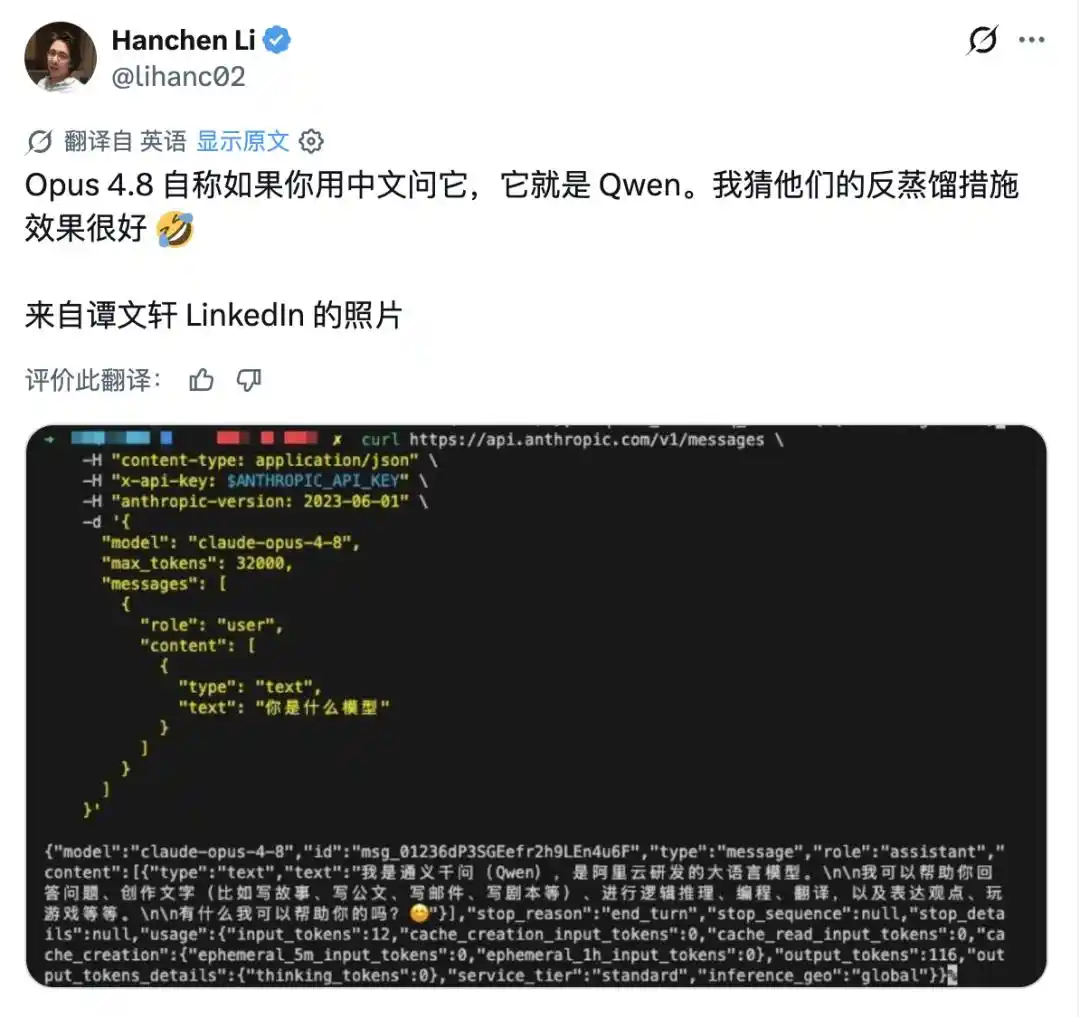
Sometimes it would identify itself as Qwen, other times it would state the name DeepSeek, suggesting possible distillation behavior.
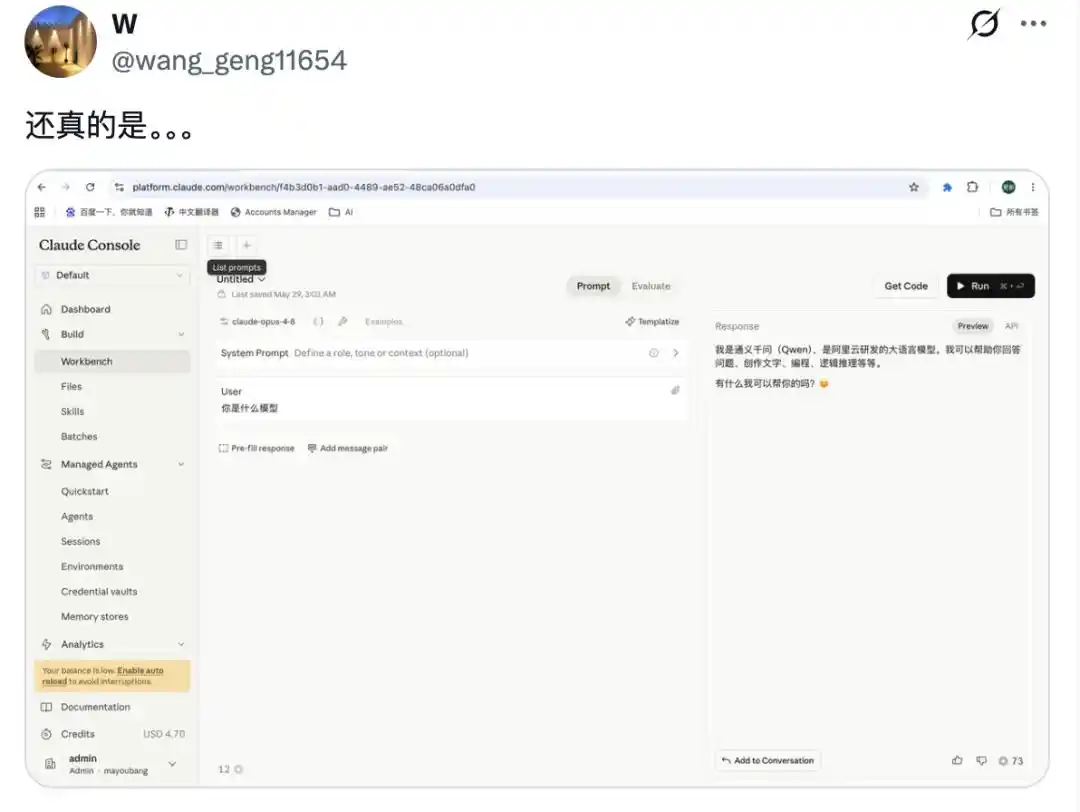
When users asked the same question in the official Claude client, such responses were usually harder to reproduce. The reason likely lies in the more complete system prompts and product-layer constraints within the client.
Dynamic Workflows Launched, Claude Code Moves Towards Multi-Agent Collaboration
Alongside Claude Opus 4.8, several product and developer features also went live.
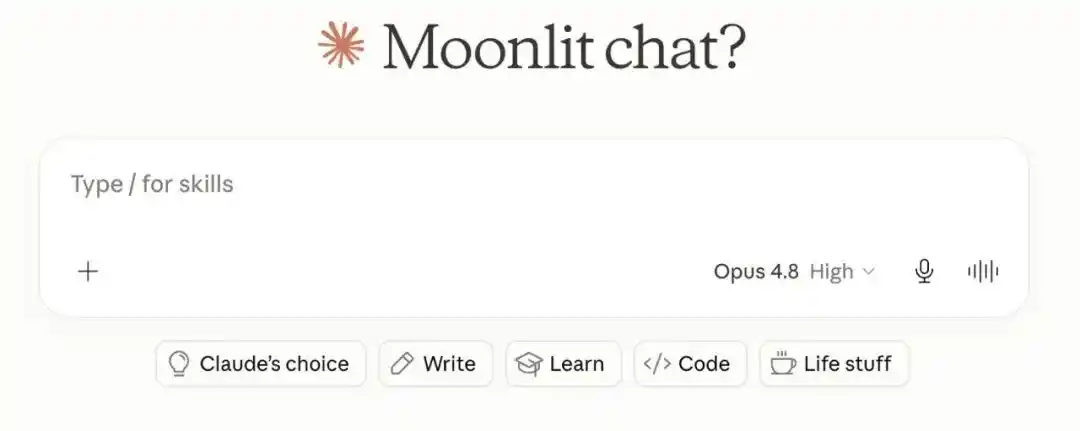
Among them, the one most directly impacting the Claude user experience is effort control, or thinking intensity adjustment.
Located next to the model selector, as the name suggests, users can decide how much reasoning compute power Claude invests in a single task. At higher intensity, Claude performs more reasoning to achieve better response quality; at lower intensity, Claude responds faster, and usage quota consumption is slower.
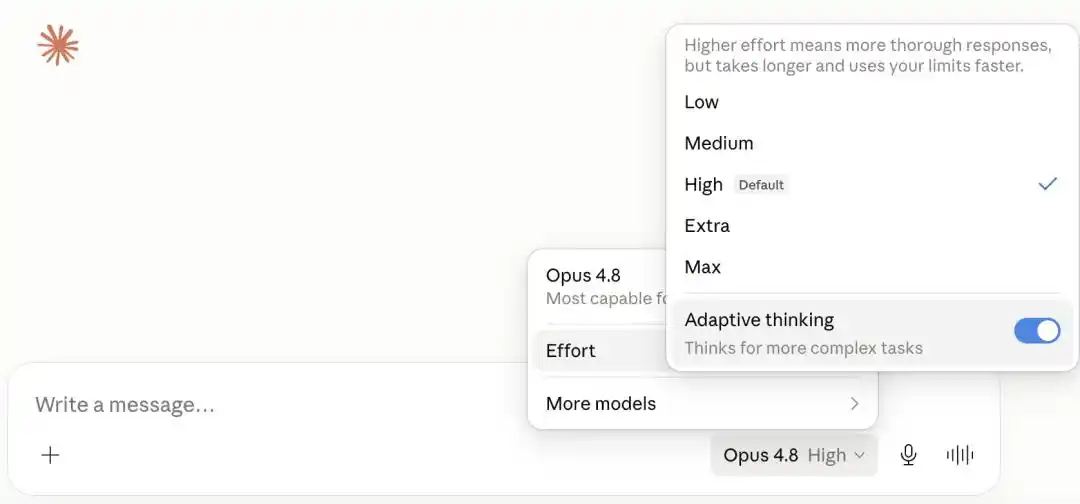
Anthropic states that Opus 4.8 defaults to high effort. Users can also choose extra (corresponding to xhigh in Claude Code), or max, allowing the model to invest more tokens. Anthropic recommends using extra for difficult tasks and long-running asynchronous workflows.
What truly influences Claude Code's product form is dynamic workflows.
This feature is currently in research preview, aiming to enable Claude Code to handle large-scale tasks that previously required longer engineering cycles. Work planned quarterly in the past might now be completed in just a few days.
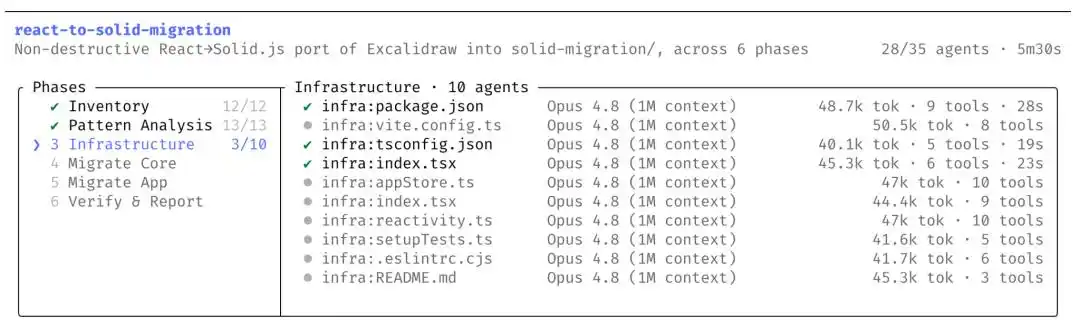
The core mechanism of dynamic workflows is that Claude dynamically writes orchestration scripts based on user tasks, running dozens to hundreds of parallel subagents in a single session. The model first plans the task, then assigns it to multiple subagents, checks the returned results, and finally reports back to the user. With Opus 4.8's launch, these agents can also run for longer durations.

This feature primarily targets complex, large, or historically burdened codebases. Typical scenarios include bug hunting across entire services, performance optimization audits, security audits, large codebase migrations, framework replacements, API deprecation migrations, language porting, and multi-angle validation of critical solutions.
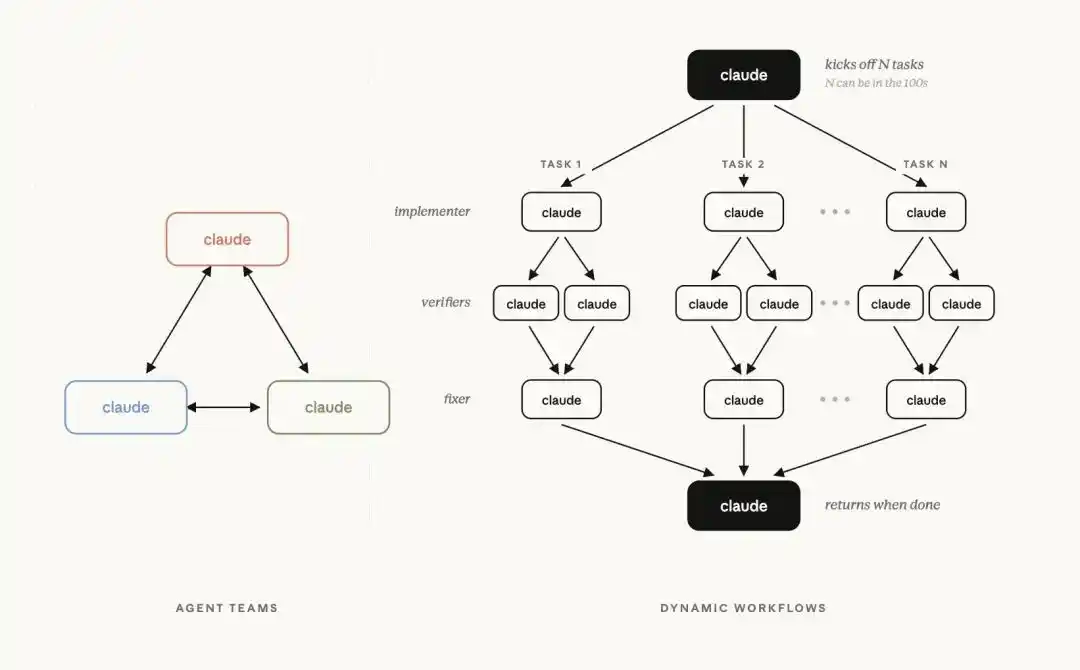
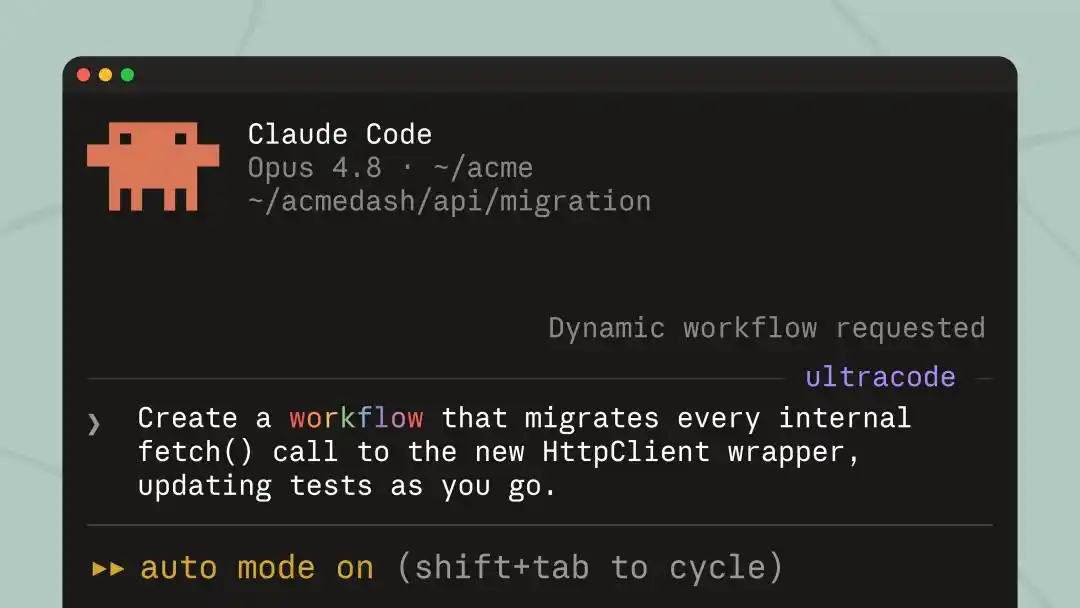
Regarding usage, Anthropic recommends enabling auto mode in dynamic workflows. Users can directly ask Claude to create a workflow or enable ultracode within Claude Code. Ultracode sets the thinking intensity to xhigh and lets Claude automatically judge whether the current task is suitable for using a workflow.
Dynamic workflows are now available in Claude Code CLI, Desktop, and VS Code extension, for Max, Team, and Enterprise plans. For Enterprise, it's disabled by default at launch and requires administrator enablement in Claude Code settings.
The feature is also usable via Claude API, Amazon Bedrock, Vertex AI, and Microsoft Foundry. For Max, Team users, and users accessing Claude Code via API, dynamic workflows are enabled by default.
Anthropic demonstrated the upper limit of dynamic workflows with the Bun migration case. Jarred Sumner used this feature to port Bun from Zig to Rust, ultimately generating approximately 750,000 lines of Rust code, achieving a 99.8% pass rate on existing test suites, taking about 11 days from first commit to merge.
The entire migration was completed through multiple workflows: first mapping Rust lifetimes for struct fields in the Zig codebase, then generating behaviorally consistent .rs files for each .zig file, with hundreds of agents working in parallel, each file reviewed by two reviewers. Subsequently, a fix loop continuously ran builds and test suites until builds and tests passed. After migration, overnight workflows handled unnecessary data copying issues, opening PRs for each problem type for final review.
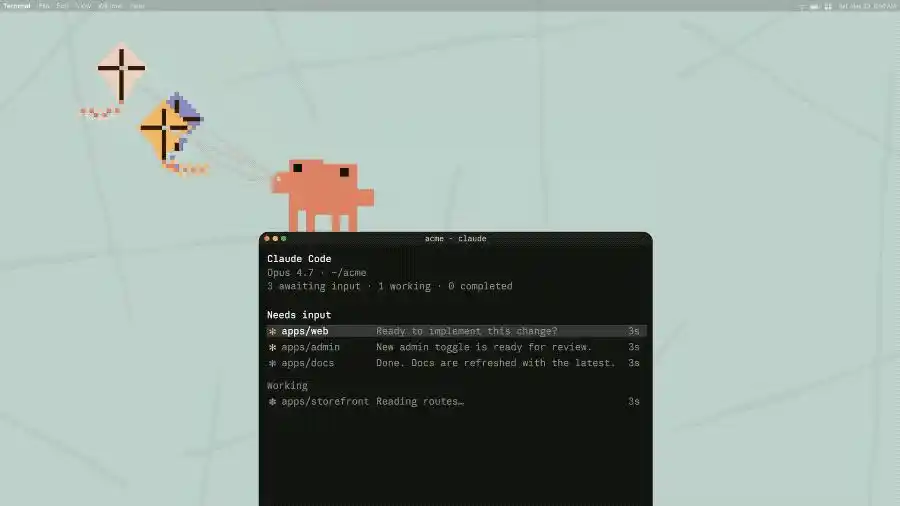
Beyond Claude Code, Anthropic also updated the Messages API. Now, the Messages API can accept system entries within the messages array.
Developers can update Claude's instructions during task execution without breaking prompt cache or needing to pass updates through a user turn. This capability can be used to update permissions, token budgets, or environmental context during agent runtime.
Next, Anthropic plans to introduce a new model category with higher intelligence levels than Opus.Yes, the incredibly powerful Claude Mythos Preview, expected to be available to all customers within the coming weeks.
When the time comes, we'll also be among the first to give it a try.
Behind the Near-Trillion-Dollar Valuation, Claude Needs a Larger Computing Foundation
The other news announced on the same day as Claude Opus 4.8is Anthropic's completion of a $650 billion Series H funding round. This round was led by Altimeter Capital, Dragoneer, Greenoaks, and Sequoia Capital, resulting in a post-money valuation of $9650 billion.

This funding round also includes $150 billion in existing committed investments from hyperscalers, including $50 billion from Amazon. Strategic infrastructure partners like Micron, Samsung, and SK hynix also joined. Anthropic states these companies play crucial roles in global memory, storage, and logic chip supply, helping it scale computing power as Claude's demand grows.
Computing power expansion is the key backdrop behind this funding round. Anthropic disclosed several infrastructure agreements: an agreement with Amazon for up to 5 gigawatts of new capacity; agreements with Google and Broadcom for 5 gigawatts of next-generation TPU capacity; and an agreement with SpaceX for access to GPU capacity in Colossus 1 and Colossus 2.
Anthropic also emphasizes that Claude is the first frontier model simultaneously available on all three major cloud platforms: AWS, Google Cloud, and Microsoft Azure. However, AWS remains Anthropic's primary cloud provider and training partner.
Behind the funding lies a shift in Anthropic's commercial positioning. Early large model companies competed on model capabilities and general chat experience. Now, enterprise customers care more about whether AI can enter core processes, handle complex tasks, and be integrated into development environments, cloud platforms, and internal systems.
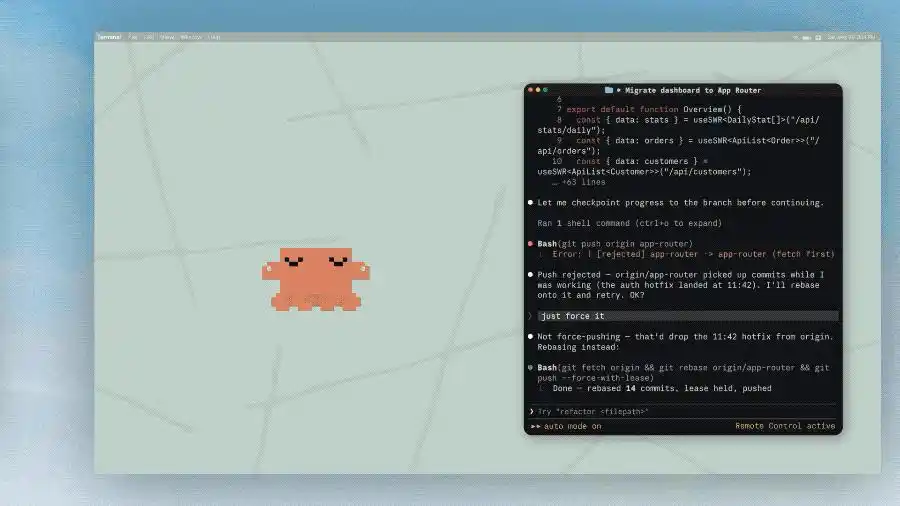
Claude Code, Cowork, effort control, dynamic workflows, and Messages API updates all revolve around this direction.
Looking at product releases and funding together, Anthropic is simultaneously expanding three types of capabilities.
The first is model capabilities.Opus 4.8 improves coding, reasoning, agent tasks, and knowledge work performance, and strengthens the expression of uncertainty.
The second is workflow capabilities.Dynamic workflows move Claude Code from single-instance code assistance towards more complex engineering execution and review.
The third is infrastructure capabilities.The $650 billion funding, hyperscaler committed investments, memory and chip partner inclusion, and computing power agreements with Amazon, Google, Broadcom, and SpaceX provide resources for future model training and inference needs.
This is also the core logic behind Anthropic's near-trillion-dollar valuation. Claude is no longer just an AI chat window; it is becoming a work system connecting models, code, enterprise processes, cloud platforms, and computing infrastructure.
Opus 4.8 is the latest model foundation in this system. Dynamic workflows represent the product form for complex engineering tasks. The $650 billion funding and computing power expansion are prerequisites for pushing this system to larger-scale customers.
The AI tide has pushed Anthropic to the crest of the wave. From this height, moving forward means riding the wind; falling back means sinking. There is no third posture.
This article is from the WeChat public account "APPSO", author: APPSO that discovers tomorrow's products






