Chen Maobo and Others Revealed as First Batch of Guests for the 2026 Hong Kong Web3 Carnival!

比推Published on 2025-12-19Last updated on 2025-12-19

Abstract

The 2026 Hong Kong Web3 Carnival, co-organized by Wanxiang Blockchain Lab and HashKey Group, will take place from April 20 to 23, 2026, at the Hong Kong Convention and Exhibition Centre. This annual event aims to bridge traditional and innovative sectors while connecting Eastern and Western global perspectives. Confirmed speakers include prominent figures such as Paul Chan Mo-po, Financial Secretary of the Hong Kong SAR; Xiao Feng, Chairman of Wanxiang Blockchain and HashKey Group; and other industry leaders from Solana Foundation, MatrixPort, and Animoca Brands, among others. The event is supported by strategic partners like the Hong Kong Trade Development Council and sponsors including OKX Web3 and Qtum. The carnival has attracted significant cross-industry interest, with over 500 executives from traditional finance and实体 industries registered by December 2025, highlighting its role in fostering dialogue between Web3 innovation and established sectors. Since its inception in 2023, the Hong Kong Web3 Carnival has grown into one of the world's most influential crypto summits, with past editions drawing over 100,000 attendees, 350 projects, and 1,200 speakers. The 2026 edition will continue to leverage Hong Kong’s unique position to deepen global integration of technology, business models, and regulatory practices, while providing a platform for local developers and projects to gain international exposure.

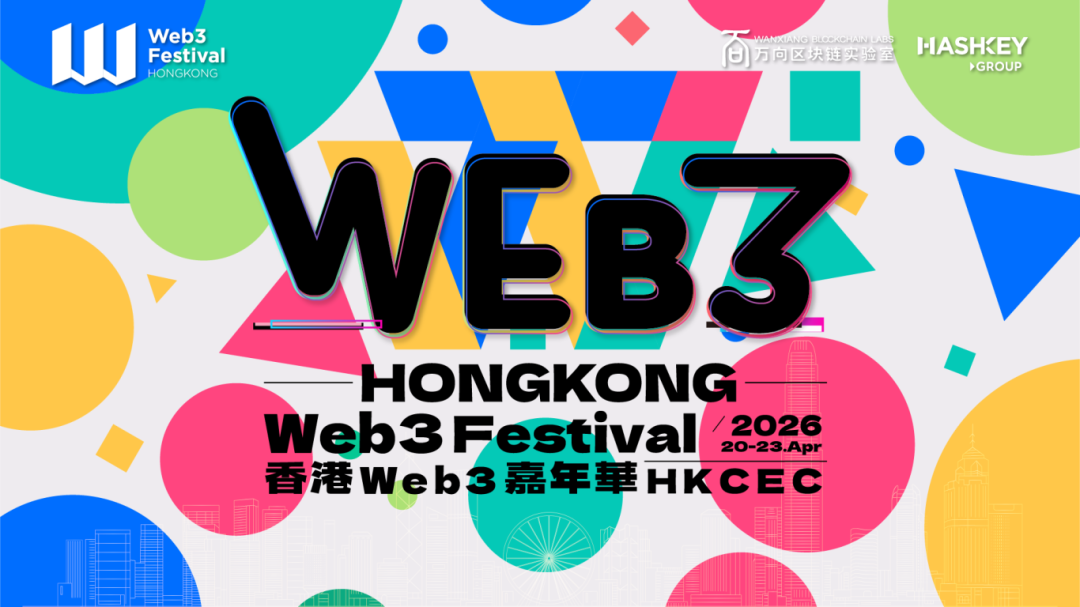
From April 20 to 23, 2026, the 2026 Hong Kong Web3 Carnival, jointly organized by Wanxiang Blockchain Lab and HashKey Group, will once again take place at the Hong Kong Convention and Exhibition Centre.

As an annual industry event held in Hong Kong for four consecutive years, this year's Carnival will continue to unleash its "home advantage," bridging tradition and innovation, connecting the East and the West, and fostering the convergence of global wisdom.


Gathering of Authorities: The 2026 Grand Event Begins Anew

Esteemed speakers and global ecosystem partners have gathered to form a solid foundation and diverse landscape for this year's event.

Currently, Paul Chan Mo-po, Financial Secretary of the Hong Kong Special Administrative Region; Xiao Feng, Chairman of Wanxiang Blockchain and CEO of Hashkey Group; Duncan Chiu, Legislative Council Member (Technology and Innovation) of the Hong Kong Special Administrative Region; Lily Liu, President of Solana Foundation; Cynthia Wu, Co-founder and Chief Business Officer of MatrixPort; Yat Siu, Co-founder and Chairman of Animoca Brands; and Professor Lee Kwok On, Dean of the Global FinTech Institute and Professor at Singapore University of Social Sciences (listed in no particular order), among other global thought leaders, have confirmed their attendance to share cutting-edge insights and perspectives. More distinguished guests will be announced soon. Stay tuned.

Simultaneously, this year's Carnival is honored to collaborate with strategic partner the Hong Kong Trade Development Council and has received strong support from title sponsor OKX Web3, platinum sponsor Qtum, exclusive dinner sponsor Sui Foundation, first-tier booth sponsors bitbaby, HappyMeta, and SlowMist, second-tier booth sponsors Ellipal, Fufuture, and Passey, and third-tier booth sponsor RWA.LTD (sponsors of the same tier listed in alphabetical order), among other global ecosystem partners. Together, they will co-create a global industry event deeply integrating ideas, resources, and opportunities.


Breaking Boundaries: Bridging Tradition and Innovation

The appeal of this year's Carnival extends beyond the native Web3 domain, with a stronger "boundary-breaking" momentum already evident.

Leveraging the extensive resource channels and brand-building efforts of Wanxiang Blockchain Lab and HashKey over the years, as of December 2025, the 2026 Hong Kong Web3 Carnival has attracted over 500 executives from traditional finance and实体产业 (实体产业) who have registered to participate. These attendees are high-net-worth individuals and core decision-makers from enterprises with a strong interest in the Web3领域 (Web3领域).

Genuine collaboration begins with high-quality encounters. This is one of the core values of this year's Carnival: to build a dialogue bridge between cutting-edge digital innovation and vast traditional industry resources, making subsequent integration truly possible.


Connecting East and West: Building a Global Ecosystem

Since its inaugural event in 2023, the Hong Kong Web3 Carnival has rapidly grown into one of the world's most influential crypto summits, providing a high-standard, high-quality, and in-depth platform for global East-West exchange.

Over the past three events, the Carnival has attracted over 100,000 on-site participants, featured more than 350 cutting-edge projects, invited over 1,200 speakers to share their insights, and spawned over 400 side events, successfully creating a vibrant ecosystem centered around the main event and radiating throughout the city.

As partners have noted, this platform is both "the most locally distinctive industry summit, uniquely capable of reaching millions of local high-level developers, entrepreneurs, and newcomers," and始终致力于 (始终致力于) "connecting the world's most forward-looking technological forces," continuously "promoting the industry to find a balance between security, compliance, and innovation."

As a hub connecting Eastern and Western Web3 ecosystems, the 2026 Hong Kong Web3 Carnival will continue to leverage Hong Kong's unique advantage of "背靠内地、面向全球" (backed by the mainland and facing the globe), building an efficient channel between the Asian market and global resources. This year's event will be dedicated to promoting the deep integration of global cutting-edge technologies, business models, and compliance practices with the Asian market. Simultaneously, it will help local outstanding developers, entrepreneurial teams, and innovative projects step onto the international stage, achieving comprehensive connectivity and value linkage from technology and resources to markets.

In April 2026, let us gather once again in Hong Kong—not only to witness the future but to participate in it and define it!

Click "Read More" at the end of the article to purchase tickets and attend!

Original link:https://www.bitpush.news/articles/7596949

Related Questions

QWhen and where will the 2026 Hong Kong Web3 Festival take place?

AThe 2026 Hong Kong Web3 Festival will take place from April 20 to 23, 2026, at the Hong Kong Convention and Exhibition Centre.

QWho are some of the key confirmed speakers for the 2026 Hong Kong Web3 Festival?

AConfirmed speakers include Paul Chan Mo-po, Financial Secretary of the HKSAR; Xiao Feng, Chairman of Wanxiang Blockchain and HashKey Group; Duncan Chiu, Legislative Council Member (Technology & Innovation); Lily Liu, President of Solana Foundation; Cynthia Wu, Co-founder & CCO of MatrixPort; Yat Siu, Co-founder & Executive Chairman of Animoca Brands; and Professor David Lee of the Global FinTech Institute and Singapore University of Social Sciences.

QWhat is a key 'crossover' appeal of the 2026 Hong Kong Web3 Festival mentioned in the article?

AA key 'crossover' appeal is its strong attraction beyond the native Web3 field, having drawn over 500 executives from traditional finance and实体产业 (physical industries) by December 2025, who are high-net-worth individuals and core corporate decision-makers interested in Web3.

QWhat role does the article state the Hong Kong Web3 Festival plays in the global ecosystem?

AThe article states the festival acts as a hub connecting Eastern and Western Web3 ecosystems, providing a high-level platform for global exchange and leveraging Hong Kong's unique advantage of 'backing the mainland and facing the world' to build an efficient channel between Asian markets and global resources.

QWhich organizations are mentioned as the strategic partner and the title sponsor for the 2026 event?

AThe Hong Kong Trade Development Council is the strategic partner, and OKX Web3 is the title sponsor for the 2026 Hong Kong Web3 Festival.

Related Reads

Agent Race Ends, Super Workbench Takes Over

The era of fragmented AI agents is ending. Over the past month, China's tech giants—Tencent, Alibaba, and ByteDance—have simultaneously shifted strategy: instead of launching new, standalone AI agents, they are consolidating their various agent projects into unified "super workbenches." Tencent integrated its QClaw teams into WorkBuddy, a strategic product hailed as a potential third flagship after QQ and WeChat. Alibaba is merging its QoderWork, Wukong, and MuleRun agents into a new "Qianwen Office" platform under DingTalk's leadership. ByteDance rebranded its TRAE SOLO coding agent to TRAE Work, signaling a broader focus on workflow collaboration. This convergence marks a pivotal industry consensus. The initial exploration phase, where companies rapidly built numerous overlapping agents for different scenarios, proved costly and inefficient. With open-source tools eroding technical barriers, competition has shifted from agent creation to resource consolidation and cost control. Historically, platform wars are won not by creating more products, but by simplifying them—as seen with browsers unifying web access and super-apps consolidating services. Now, the "super workbench" aims to become the unified AI entry point for work. This reflects a deeper market realization: the primary audience for AI is no longer just programmers (a market in the tens of millions) but all knowledge workers (a market of billions). The real opportunity lies in augmenting everyday tasks—managing emails, documents, data, and meetings—across the entire workday. The core battleground is becoming control over the primary AI entry point that employees use daily. Tencent's WorkBuddy leverages WeChat and Tencent Docs; Alibaba's Qianwen Office taps into DingTalk's organizational data; ByteDance's TRAE Work integrates with Feishu's workflows. Whoever owns this "super workbench" gains strategic control over orchestrating enterprise data and APIs. This shift is redefining enterprise software. Traditional SaaS applications, valued for their user interfaces, will recede into the background. Their core functionalities will be exposed as standardized "Skills" or APIs for the super workbench's agents to invoke. Software value will shift from selling user seats to charging based on API calls and outcomes delivered. The evolution of agents is moving through clear stages: first as novel standalone products, then as consolidated primary work entry points, and finally as pervasive, invisible capabilities embedded into the digital fabric. The recent moves by major tech firms signal the transition from the first stage into the second, accelerating toward the third. In the end, the most successful agent technology may become invisible—like electricity or the HTTP protocol—a fundamental, unnamed infrastructure powering work itself.

marsbit8m ago

Agent Race Ends, Super Workbench Takes Over

marsbit8m ago

Michael Saylor: 110 Reasons to Oppose BIP-110

Michael Saylor presents 110 arguments against Bitcoin Improvement Proposal (BIP) 110, a soft fork aimed at restricting certain non-monetary data storage uses (like inscriptions) on the Bitcoin blockchain. He acknowledges the proponents' valid concerns—such as node costs, fee pressure, and preserving Bitcoin's monetary focus—but fundamentally disagrees with the proposed solution. Saylor argues that BIP 110 represents a dangerous precedent of using consensus rules to enforce value judgments on transaction validity, moving away from Bitcoin's core principles of neutrality and permissionless innovation. His key objections are organized into eleven categories: 1) It violates neutrality and hard consensus by banning currently valid transactions. 2) It fails to meet the high burden of proof required for a consensus change, lacking concrete data on the alleged crisis. 3) Its seven bundled technical restrictions are overly broad, targeting generic script functionalities and blocking future upgrade paths. 4) It sacrifices compatibility and future optionality by closing off designed upgrade hooks. 5) Its temporary rules add significant complexity (grandfathering, expiry states) without sufficient justification. 6) The economic and security impacts, particularly on miner revenue and fee markets, are uncertain and unmodeled. 7) Superior, market-based tools (fee markets, relay/mining policies) already exist to manage blockchain load. 8) It stifles innovation by creating a chilling effect for developers. 9) Its modified activation mechanism (55% threshold, forced signaling) is aggressive and risks network splits. 10) The precedent it sets—using consensus to suppress disliked but legal uses—is more dangerous than the problem it aims to solve. 11) A better path exists: improving measurements, refining resource-based policies, and allowing market forces to work. Saylor concludes that Bitcoin's strength lies in its neutral rules, open markets, and hard consensus. Changing these foundational elements to target specific use cases is an unnecessary and risky "iatrogenic" intervention. He advocates for guarding Bitcoin's neutrality rather than acting as its redeemer.

marsbit24m ago

Michael Saylor: 110 Reasons to Oppose BIP-110

marsbit24m ago

Trading

Spot
活动图片


