Indepth Research

Provide in-depth research reports and independent analysis, leveraging data, technology, and economic insights to deliver a comprehensive examination of the blockchain ecosystem, project potential, and market trends.

Franklin Templeton's Latest Research: How to Understand RWA Tokenization

Franklin Templeton's research explores the rapid growth and structural evolution of real-world asset (RWA) tokenization, which has expanded from $5 billion in 2023 to over $25 billion by early 2026. This surge is driven by clearer regulations and greater trust in blockchain technology. RWA tokenization covers assets like stocks, bonds, commodities, and real estate, distinguishing them from native cryptocurrencies. The market saw a turning point as tokenization expanded from government bonds to equities, with early movers like Robinhood, Kraken, and Ondo launching tokenized stock offerings. Traditional institutions, including DTCC, NYSE, and Nasdaq, have since announced significant tokenization initiatives, signaling a major shift in securities processing. The article identifies three tokenization models: 1. **Digital Native Tokens**: Direct ownership of the underlying asset with on-chain settlement (e.g., Franklin Templeton’s money market fund). 2. **Synthetic Asset Tokens**: Indirect economic exposure via special purpose vehicles, allowing broader DeFi utility but limited investor rights. 3. **Digital Mirror Tokens**: Tokenized receipts of off-chain assets, with legacy settlement systems and restricted transferability. Synthetic tokens are permissionless, requiring only KYT checks, while digital native and mirror tokens require full KYC/AML compliance. Each model offers distinct advantages in transparency, utility, and efficiency compared to traditional systems. Tokenization is driving convergence between crypto and traditional finance, with wallets emerging as a universal financial interface.

marsbit4h ago

Franklin Templeton's Latest Research: How to Understand RWA Tokenization

marsbit4h ago

A Four-Page Internal Letter: What Card Is OpenAI Playing?

OpenAI's internal memo, revealed by The Information, outlines a strategic narrative against Anthropic across three key areas: revenue accounting, enterprise competition, and compute capacity. First, OpenAI CRO Denise Dresser challenged Anthropic’s reported $30B annualized revenue, claiming the actual net figure—using OpenAI’s accounting method—is $22B. The discrepancy stems from differing GAAP interpretations: Anthropic books gross revenue (including cloud partner shares), while OpenAI records net revenue after partner deductions. Second, enterprise adoption data from Ramp shows Anthropic rapidly closing the gap with OpenAI, narrowing from an 11% to a 4.6% difference within months. Anthropic already leads in high-value sectors like tech, finance, and professional services. Dresser acknowledged Anthropic’s edge in coding capabilities but warned against being a "single-product company" in a platform war. Third, while current compute capacity is comparable (OpenAI ~1.9 GW vs. Anthropic ~1.4 GW), OpenAI’s long-term plans aim for 30 GW by 2030—four times Anthropic’s projected 7-8 GW by 2027. Anthropic’s growth depends on sustaining enterprise revenue to cover rising cloud costs, estimated to reach $6.4B by 2027. The memo also highlighted OpenAI’s strategic shift: reducing reliance on Microsoft (which “limited customer reach”) and partnering with Amazon, which invests in both OpenAI and Anthropic. This places Amazon’s Bedrock platform as a battleground where both models compete for the same enterprise clients.

marsbit6h ago

A Four-Page Internal Letter: What Card Is OpenAI Playing?

marsbit6h ago

Robinhood's Wealth Management Business Transformation Journey

Robinhood's 2025 Wealth Management Transformation: A Summary In 2025, Robinhood successfully pivoted its business model by aggressively expanding its wealth management services. This strategic shift, marked by the launch of disruptive products like a high-match-rate IRA, high-yield cash accounts, and comprehensive banking services, effectively guided its young user base from speculative trading toward long-term saving and investing. Key to this success was a highly internet-native customer acquisition strategy. Robinhood used aggressive cash match incentives (up to 3% for Gold members) to drastically lower the barrier for users to transfer retirement assets (e.g., 401(k) rollovers), effectively "buying" AUM with a high lifetime value. This was paired with a seamless, tech-driven transfer process. The company's revenue model evolved from a heavy reliance on volatile payment for order flow (PFOF) to more stable, recurring income streams. This included substantial net interest income from its massive cash sweep balances and a growing, high-margin subscription business from its Robinhood Gold program, which saw 4.2 million subscribers by Q4 2025. Robinhood built a powerful ecosystem, creating a super-app that seamlessly connects high-frequency trading (stocks, crypto) with low-frequency, sticky products (IRA, automated investing) and daily spending (credit card, banking). This allows for efficient cross-selling and user retention. To build trust for managing long-term savings, Robinhood leveraged traditional finance's safety nets, emphasizing SIPC protection for securities and partnering with banks to offer FDIC insurance on cash deposits far exceeding standard limits. This transformation was underpinned by an extremely efficient, tech-driven cost structure. With a self-clearing platform and automated services, Robinhood achieved a high revenue-per-employee ratio, allowing it to offer competitive pricing like a $250 annual cap on robo-advisory fees. The strategy is powered by a profound shift in its young user base (median age ~32-35). Data shows Gen Z users are increasingly adopting long-term, tax-optimized retirement investing. By capturing this demographic early, Robinhood is strategically positioned to benefit from the largest intergenerational wealth transfer in history, as these users inherit assets and keep them within the familiar Robinhood ecosystem.

marsbit8h ago

Robinhood's Wealth Management Business Transformation Journey

marsbit8h ago

A Brief History of Web3 Airdrops: A Review of Twelve Iconic 'Rug Pull' Projects

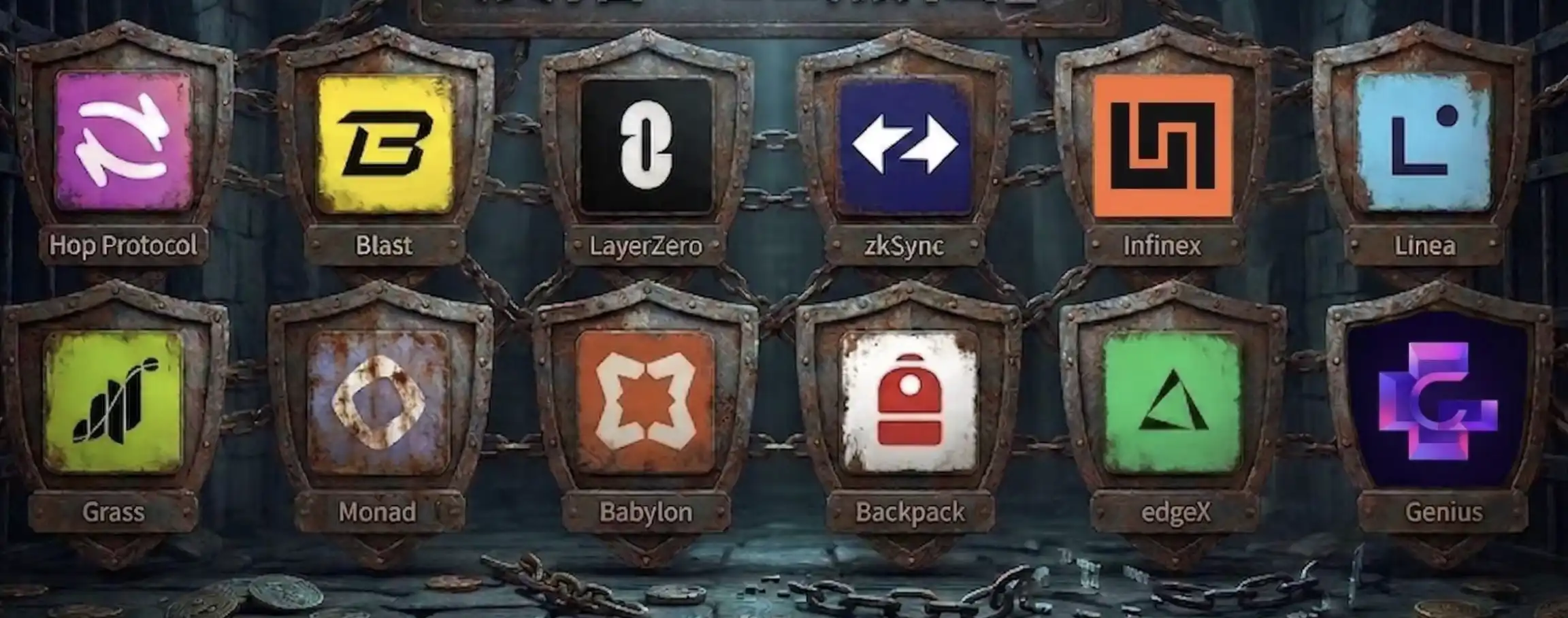
**Summary: A History of Web3 Airdrop "Rug Pulls" – 12 Iconic Cases** The era of Web3 airdrops has shifted from a golden age of mutual benefit between early users and projects to a landscape dominated by systematic exploitation. This article reviews 12 infamous "anti-airdrop" projects that eroded user trust: 1. **Hop Protocol (HOP):** Pioneered a "community witch-hunt" model, encouraging users to report Sybil addresses to claim their rewards, fostering a toxic environment of mutual harm. 2. **Blast:** Introduced the exploitative "points system," locking user funds for meager returns that often underperformed risk-free yields, turning airdrop hunting into a rigged casino. 3. **LayerZero (ZRO):** After 18 months of user-funded gas fees, it implemented a harsh "guilty until proven innocent" Sybil filter, forcing users to "self-confess" or face zero rewards, destroying multi-chain interaction narratives. 4. **zkSync (ZK):** Prioritized "funds held at a specific time" over long-term activity, betraying early contributors who spent significant gas and rewarding insiders, crushing L2 airdrop expectations. 5. **Infinex:** Lured users with NFT and point systems, only to announce a high FDV, a mandatory 1-year lockup, and chaotic rules at its public sale, betraying its community. 6. **Linea:** Perfected user exploitation with endless, grueling Galxe Odyssey tasks and KYC requirements, reducing airdrop hunting to a low-wage, full-time job. 7. **Grass:** Exploited users' physical resources (bandwidth/IP) for DePIN data, rewarding them with tokens worth less than the electricity and proxy costs incurred. 8. **Monad:** Allocated a mere ~3.3% of its airdrop to the community after extensive testnet participation, favoring KOLs and insiders and dampening enthusiasm for new L1s. 9. **Babylon:** Forced Ethereum-style staking onto Bitcoin, causing users massive losses from failed transactions due to high fees and network congestion, damaging trust in L2s. 10. **Backpack:** Encouraged massive trading volume for points, then applied strict KYC and Sybil rules last minute, resulting in massive losses for users and cementing a negative stereotype for projects with Chinese founders. 11. **EdgeX:** Perpetual DEX users lost significant fees for minimal rewards, while "insider" addresses received enormous allocations, exposing blatant corruption and killing the Perp DEX airdrop narrative. 12. **Genius:** The final straw: users were forced to choose between immediately claiming only 30% of their airdrop, locking tokens for a year for 100%, or a 100% burn for a gas fee refund, shattering trust in "elite-backed" narratives. **Conclusion** marks the painful end of the airdrop era. This collective "rug pull" was a co-created disaster of speculation and greed. The collapse, while brutal, forces a return to fundamentals: sustainable products with real product-market fit are paramount. This is not just the end of airdrops but a potential rebirth for Web3, weeding out exploitative projects and rewarding those that build genuine community value.

marsbit12h ago

A Brief History of Web3 Airdrops: A Review of Twelve Iconic 'Rug Pull' Projects

marsbit12h ago

In-Depth Reconstruction of the $285 Million Drift Hack: How Should DeFi Governance Move Beyond "Amateur Hour"?

On April 1, 2026, Drift Protocol, the largest perpetual futures DEX on Solana, suffered a catastrophic hack resulting in a loss of $285 million. The attack, attributed to a sophisticated social engineering campaign rather than a technical exploit, unfolded over several months. Hackers first infiltrated Drift’s internal circles by posing as a legitimate market maker, building trust over time. They then exploited Solana’s "Durable Nonce" feature to trick core team members into blindly signing transactions that granted administrative control. A critical vulnerability was introduced when Drift migrated to a 2/5 multisig structure without a timelock, allowing instant execution of privileged transactions with just two signatures. The attackers finally triggered the attack by adding a fake token (CVT) to the whitelist, manipulating its oracle price, and using it as collateral to drain the protocol’s treasury. The incident highlights fundamental flaws in DeFi governance, including overreliance on multisig mechanisms that lack intent verification and are vulnerable to social engineering. It underscores the misalignment between retail-grade security tools and institutional-scale treasury management. The hack signals the need for a security paradigm shift in DeFi, including adoption of Hardware Security Modules (HSMs) for key management, intent-based policy engines for transaction validation, and professional third-party custody solutions to ensure institutional-grade safety.

marsbitYesterday 12:00

In-Depth Reconstruction of the $285 Million Drift Hack: How Should DeFi Governance Move Beyond "Amateur Hour"?

marsbitYesterday 12:00

Iran's Impact on the Dollar: The Perfect Storm of Petrodollars

The report analyzes the profound impact of the Iran conflict on the petrodollar system, the cornerstone of dollar hegemony since 1974. It argues that the system, where global oil purchases in dollars lead to surplus recycling into U.S. Treasuries, is under unprecedented strain from three layers of pressure: pre-existing structural cracks, new shocks from the conflict, and the long-term threat of energy transition. Key structural cracks include the U.S. no longer being the primary buyer of Middle Eastern oil due to its shale revolution, Saudi Arabia's push for defense autonomy, the development of alternative payment infrastructure like Project mBridge, and sanctions driving de-dollarization. The conflict itself is damaging U.S. security credibility, shifting control of the Strait of Hormuz, and potentially forcing a shift to yuan-for-oil arrangements. The analysis details five complex mechanisms linking oil prices and U.S. Treasury yields, which can push in opposite directions. Crucially, the old logic is failing: oil producers, damaged by conflict, may become net sellers of U.S. debt to fund reconstruction, just as U.S. fiscal deficits and debt supply surge. While short-term buffers exist, like U.S. energy independence, the long-term trend points towards a world with less dollar dominance. The core conclusion is that a world focused on defense and energy self-sufficiency will inherently hold fewer dollar reserves, signaling a slow but structural decline in the petrodollar system.

marsbitYesterday 10:01

Iran's Impact on the Dollar: The Perfect Storm of Petrodollars

marsbitYesterday 10:01

活动图片