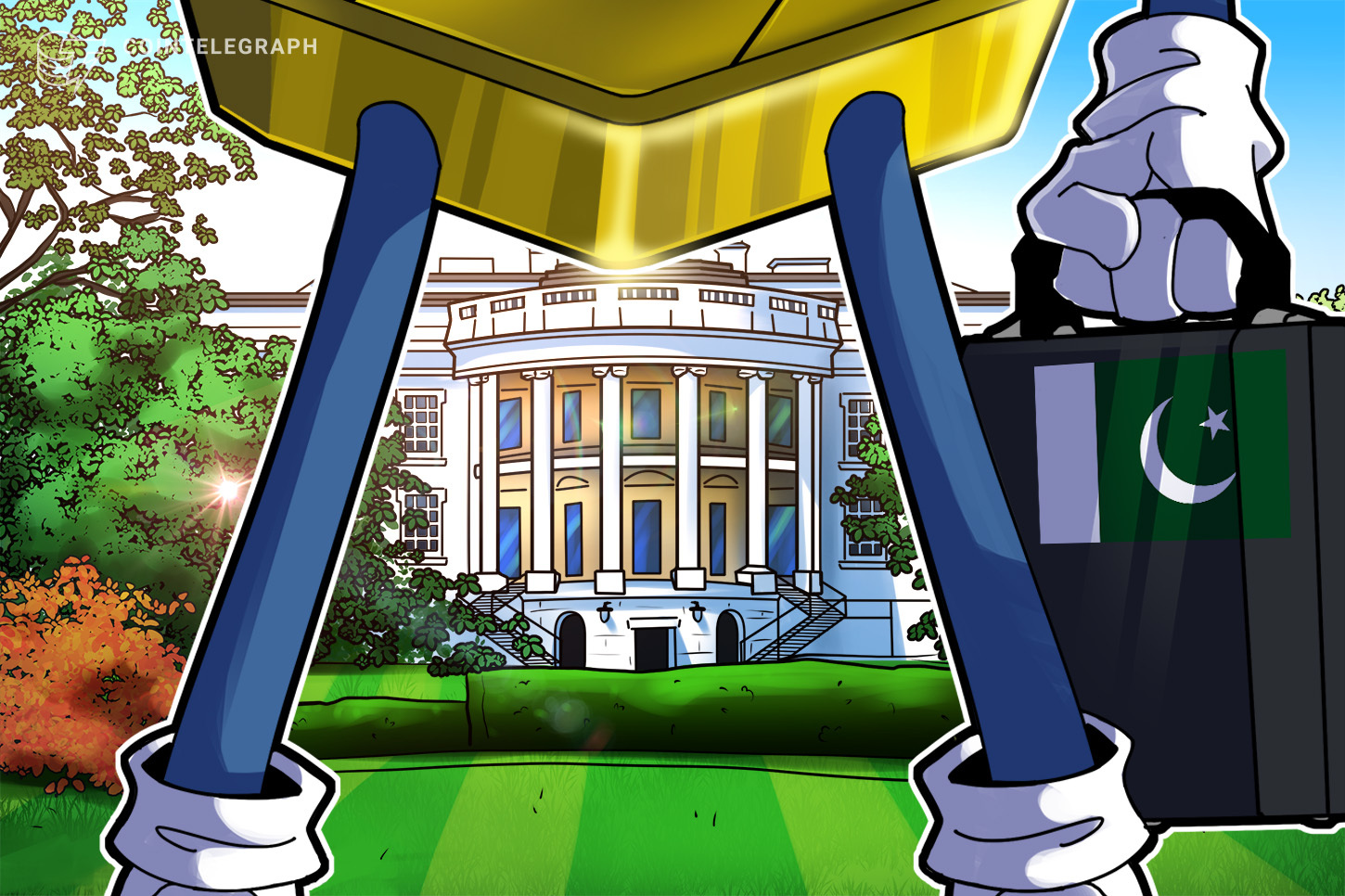
Gold is rising again.
On August 7th, the employment data released by the U.S. was significantly weaker than market expectations. U.S. non-farm payrolls fell by 23,000 in July, while the market had expected an increase of 80,000. The U.S. dollar index immediately dropped by 0.44%, and spot gold rose by 2.55%, reaching around $4,347 per ounce.
The familiar explanations have resurfaced.
The U.S. economy is weakening. Rate hike expectations are declining. Doubts about the credibility of the U.S. dollar are growing. Gold, as a safe-haven asset, is regaining favor.
These explanations are not wrong.
But such explanations were also applicable a year ago. Whether gold rises or falls, the explanation seems to fit.
In reality, central banks around the world have been increasing their gold reserves regardless of price fluctuations. Investors have also consistently worried about the U.S. fiscal deficit, government debt, and the purchasing power of the dollar. Meanwhile, global capital has continuously been buying U.S. stocks, especially core technology assets in AI, chips, cloud computing, and software platforms.
Buying gold while buying U.S. stocks.
The former seems to be avoiding the dollar. The latter is buying dollar-denominated assets.
Are the central banks wrong? Or are the investors wrong?
The answer might be that neither is wrong.
Central banks are worried about the U.S. government. Investors believe in U.S. corporations.
Global capital is reducing its reliance on dollar credit, but not its reliance on U.S. assets.
The Dollar Has Two Balance Sheets
The market often views the dollar as an asset. In fact, the dollar is backed by two different balance sheets.
The first is the U.S. government's balance sheet.
This sheet includes the fiscal deficit, government debt, interest expenses, inflation, and political credibility. Whether the U.S. government can control spending, stabilize currency purchasing power, and continue to provide the world's most reliable reserve asset is reflected on this sheet.
Gold primarily prices this sheet.
The larger the U.S. fiscal deficit, the faster the debt grows, the higher the uncertainty of holding dollars and long-term U.S. Treasuries becomes. Central banks increasing gold holdings are not necessarily preparing to abandon the dollar, but they are certainly reducing their singular dependence on U.S. government credit.
The second is the profit and loss statement of core U.S. corporations.
This sheet includes AI, chips, cloud computing, software, advertising, enterprise services, and global consumer platforms.
The U.S. government's fiscal situation may deteriorate, but the competitiveness of U.S. corporations does not necessarily decline in sync.
The U.S. still possesses the world's largest-scale tech companies, the most liquid capital markets, and the strongest capacity for innovation financing. Global investors find it difficult to locate the same quantity, scale, and global competitiveness in tech assets in other markets.
Therefore, investors can perfectly reduce their holdings of long-term U.S. Treasuries while increasing their holdings of gold, U.S. dollar cash, and U.S. tech stocks.
Not trusting the U.S. fiscal situation is not the same as not trusting U.S. corporations. The U.S. government's balance sheet is worsening, but the profit and loss statements of core U.S. corporations remain strong.
Rising Gold is a Stress Test for the Dollar System
The rise in gold prices is often simplistically interpreted as a decline in dollar credibility.
This statement has some merit but is not entirely accurate.
Gold is not an inverse indicator of the dollar index, nor is it a direct substitute for the dollar system. Gold is more like insurance for the dollar system.
Gold has no sovereign risk. It does not rely on any single country's promise to repay principal and interest, nor does it rely on any single central bank to maintain its credibility. For central banks, the value of gold lies not only in price appreciation but also in the fact that it is not a liability of any country.
In recent years, central banks' persistent purchases of gold reflect not that the dollar is about to lose its reserve currency status, but that the insurance premium for the dollar reserve system is rising.
The U.S. fiscal deficit has not contracted significantly. Government interest expenses continue to increase. Tariffs, energy prices, and geopolitical conflicts make future inflation even harder to judge.
The upcoming U.S. midterm elections will also increase this uncertainty.
What the market truly cares about is not just which party wins more seats, but whether, after the elections, the U.S. still has the capability to control its fiscal deficit.
Tax cuts affect fiscal revenue. Subsidies expand government spending. Tariffs may increase inflation. If Congress becomes more divided, fiscal reform will also become more difficult.
Gold is pricing not who wins the election, but whether anyone will be willing to control the deficit after the election.
Therefore, the long-term price anchor for gold still has support.
But the existence of a long-term logic does not mean this rapid rebound can continue in a straight line.
If Rate Hike Expectations Decline, Gold May Correct
Contrary to some market expectations, I personally believe U.S. inflation expectations will decline over the next two months.
If the situation in the Middle East gradually eases, energy prices retreat from highs, and the one-time price shock from the World Cup dissipates, U.S. sequential inflation and market inflation expectations may decline. Weaker U.S. employment data will also reduce market expectations for the Federal Reserve to continue raising rates.
On the surface, these changes are favorable for gold. However, declining rate hike expectations do not necessarily mean real interest rates will fall.
Real interest rates roughly equal nominal interest rates minus inflation expectations. If inflation expectations fall faster than U.S. Treasury yields, real interest rates could actually rise.
Gold itself does not generate interest. A rise in real interest rates means the opportunity cost of holding gold increases. Investors can obtain higher real returns from U.S. Treasuries, and the relative attractiveness of gold would then decline.
Typically, when real interest rates rise, gold prices fall.
Furthermore, short-term price fluctuations are influenced significantly by trading structures.
This round of gold price rebound has been very rapid. Factors such as weaker U.S. employment, a falling dollar, geopolitical risks, and central bank purchases have been traded intensively by the market. Short-term capital has flowed in quickly, increasing profit-taking pressure. Judging from trading data and technical patterns, after a rapid surge, gold needs to digest its gains through a price correction or sideways consolidation.
My judgment is that the long-term logic for gold has not disappeared, but this rapid rebound may enter a correction phase at any time.