Brother Sun "Rights Protection" Stands Up Against the Trump Family, WLFI Is the Real Scythe in the Crypto Circle

Odaily星球日报Published on 2026-04-13Last updated on 2026-04-13

Abstract

The article details the controversy surrounding World Liberty Financial (WLFI), a cryptocurrency project linked to the Trump family. It reports that WLFI allegedly used the DeFi lending protocol Dolomite, whose co-founder is also a WLFI advisor, as a disguised channel to sell tokens by collateralizing around 5 billion WLFI tokens to borrow approximately $75 million in stablecoins. Despite WLFI's claims that the loans were for ecosystem development and posed no liquidation risk, critics argue it was a way for insiders to cash out, shifting risk to retail investors. The piece highlights WLFI's significant price decline—over 66% since its September 2025 launch—and suggests the Trump family and insiders are the main source of selling pressure, as they control nearly 74% of the token supply. It also revisits WLFI’s prior move to blacklist 272 addresses, including those of investor Justin Sun, under the pretext of preventing large-scale sell-offs, which now appears to be an effort to reduce competition for their own sales. Sun publicly accused WLFI of exploiting users, freezing assets, and treating the crypto community as a "personal ATM." WLFI countered by threatening legal action. The author notes that while Sun’s criticism may gain sympathy, a legal battle in the U.S. against the well-connected Trump family would be risky for him. Finally, the article concludes that WLFI exemplifies how powerful elites can exploit crypto’s regulatory gray areas for profit, and urges the commu...

Original | Odaily Planet Daily (@OdailyChina)

Author | Golem (@web3_golem)
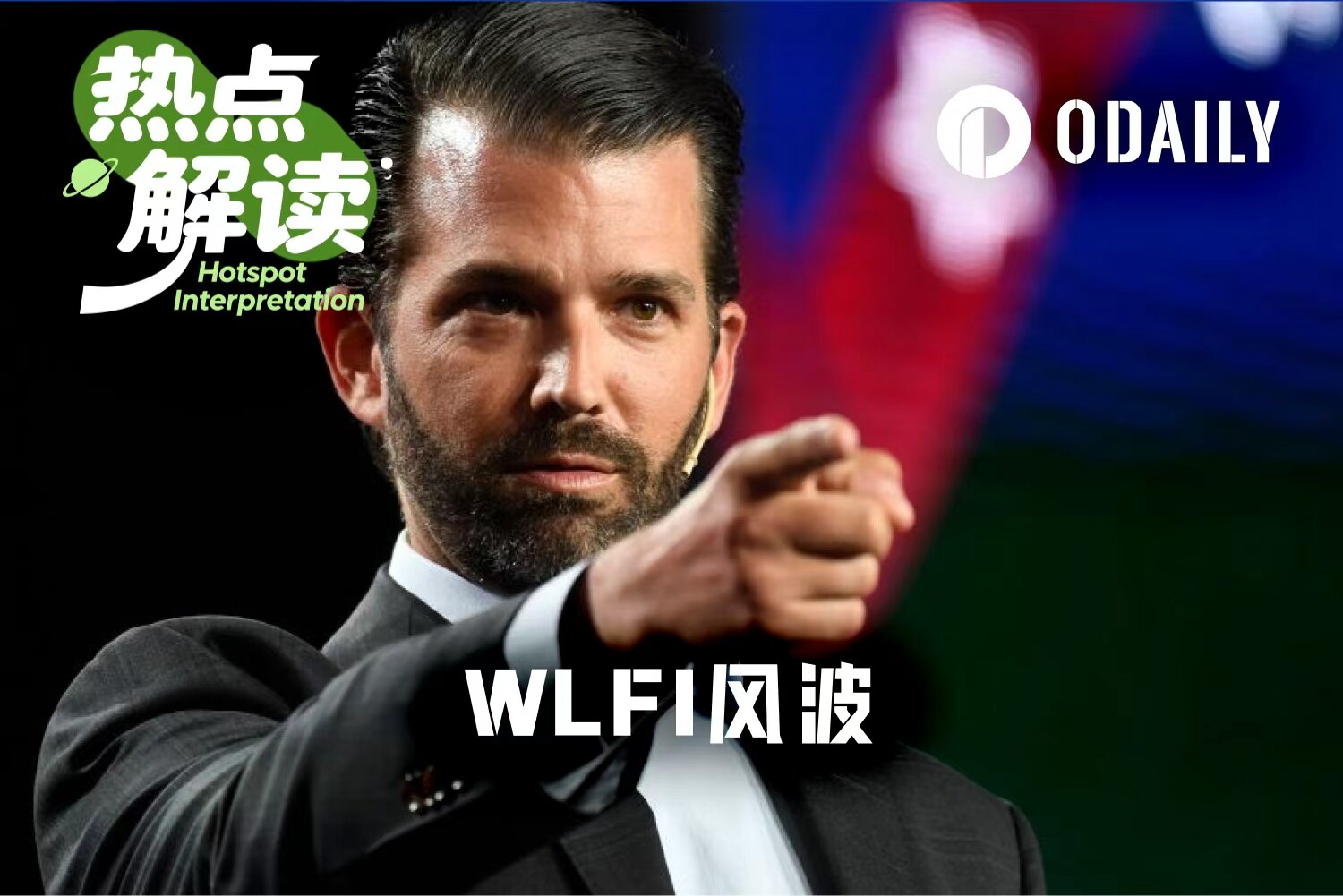
The true face of WLFI has finally been seen clearly by the crypto circle.

On April 9th, foreign media reported that the Trump family's crypto project, World Liberty Financial (WLFI), had conducted multiple collateralized loans through the DeFi lending protocol Dolomite, sparking market concerns about insider trading and USD1 liquidity risks. According to statistics, WLFI used approximately 5 billion WLFI tokens as collateral and mobilized about 75 million USD in stablecoins cumulatively through Dolomite and Coinbase Prime.

Coincidentally, Dolomite co-founder Corey Caplan is also an advisor to WLFI. Although WLFI responded that borrowing stablecoins was to create value for the ecosystem and there was no liquidation risk, and WLFI even repaid 25 million USD1 loans on April 11th, tracking the on-chain path of the borrowed stablecoins makes it clear to anyone that Dolomite is essentially a disguised token selling channel for the WLFI team.

Well-known trader Pickle Cat also believes that WLFI is performing a confidence trick by buying back at high prices with the left hand while borrowing real money with low-value collateral with the right hand. In the end, only the retail investors locked in the Dolomite pool are bearing the risk, so she decisively chose to liquidate all her WLFI spot holdings.

WLFI's price performance since its listing has already said it all. WLFI officially launched on September 1, 2025, and began executing token buybacks in late September of the same year. However, the token has since fallen by over 66%, down about 70% from its peak. So, where is the selling pressure in the market coming from? Most likely from the Trump family and their related interests. Firstly, because it's unlikely they only have Dolomite as one disguised selling channel. Secondly, only they hold large amounts of WLFI tokens and can "sell without restrictions."

Even before WLFI officially launched, Odaily Planet Daily had analyzed WLFI's token holding structure and selling pressure, concluding that the Trump family was the largest source of selling pressure. Out of a total supply of 100 billion tokens, the pre-sale accounted for only 26.05%, while the remaining 73.95% was entirely controlled by the team. (Related reading:WLFI Unlock Countdown: Trump's 15.75% Whale Holdings, Can the Market Withstand the "Presidential Selling Pressure"?)

Furthermore, after the WLFI token officially launched, the team blacklisted 272 addresses, including addresses belonging to Sun Yuchen, under the pretext of protecting user funds and preventing large-scale selling by whales. This move was applauded by the community at the time. But only now, faced with the continuous decline of WLFI, have we come to our senses: the real purpose of freezing the whale addresses was to facilitate their own selling.

The story doesn't end here. After the WLFI team's actions were exposed, Sun Yuchen couldn't sit still anymore. The renowned "Sun Cut" (Sun Ge) doesn't take losses like this—only you can sell, but I can't? So he confronted WLFI once more.

Sun Yuchen Confronts WLFI Again

On April 12th, Sun Yuchen posted on platform X, condemning the WLFI team for extracting fees from users, secretly implanting backdoors to control user assets, freezing investor funds, and using the crypto community as a personal ATM, among other actions. The WLFI team didn't just let Sun's accusations slide; they responded by saying Sun Yuchen is best at playing the victim, fabricating baseless accusations to cover up his own misconduct, and stated they would see him in court.

To understand this drama, we need to review the relationship between Sun Yuchen and WLFI.

WLFI and Sun Yuchen had a honeymoon period. In November 2024, Sun Yuchen announced an investment of 30 million USD into WLFI through the entity TRON DAO, becoming WLFI's largest investor and project advisor at the time. This deal was interpreted then as a political donation from Sun Yuchen to Trump, especially since Trump's election as president was already a foregone conclusion, and crypto figures wanted to build good relations. So it was a win-win: WLFI got the money, and Sun Yuchen opened a channel to connect with the US President.

But when the WLFI token actually launched, the WLFI team kicked Sun Yuchen to the curb. On September 5, 2025, World Liberty Financial (WLFI) blacklisted addresses related to Sun Yuchen, involving approximately 540 million unlocked tokens and 2.4 billion locked tokens. The WLFI team's reason was straightforward: they suspected someone was selling off to suppress the token price. WLFI blacklisted 272 addresses in one go.

Although Nansen CEO Alex Svanevik later stated that Sun Yuchen had not engaged in dumping, and his transfers occurred after the WLFI token had already plummeted, the truth behind WLFI's drop might have been mass profit-taking by retail investors and further panic-driven price crashes. But because WLFI used the community as a shield, Sun Yuchen didn't step out to confront them head-on.

However, some still spoke up for Sun Yuchen. CryptoQuant CEO Ki Young Ju believed that even if Sun Yuchen sold his unlocked tokens, it was his right, as he had autonomy over his assets, and WLFI had no right to freeze user addresses. It's ironic—the Trump family has repeatedly stated in public that "de-banking" was a major reason they chose to join the crypto space, as their family assets had been frozen by the banking system multiple times. But how is their action of blacklisting user addresses any different from the banks that rejected them? This kind of "pseudo-decentralized" behavior deserves condemnation.

That said, although Sun Yuchen's situation is worthy of sympathy, if he chooses to go head-to-head with WLFI, he might not come out ahead. Because behind WLFI stands the Trump family and a group of top-tier elites with deep roots in both American politics and business. Which one can Sun Yuchen afford to offend?

Moreover, given Sun Yuchen's own regulatory history, political situation, and past controversies, if he really ends up in a US court against WLFI, winning the lawsuit might be out of the question; escaping unscathed might be something to be庆幸 (grateful) for.

So, for Sun Yuchen's "rights protection" campaign, he can make noise in the court of public opinion and posture alongside retail investors. But actually taking it all the way to a US courtroom? Better forget it.

The Second Lesson the Trump Family Taught the Crypto Circle

We have to admit that WLFI is the second lesson the Trump family taught the crypto circle (the first lesson was, of course, TRUMP). Its real purpose was never to break traditional banking restrictions or make DeFi better, but to疯狂敛财 (frantically amass wealth) in the grey areas of financial regulation.

Many people were unwilling to admit or ignored this before because the name Trump was still very valuable. In the bull market sentiment, power and influence were automatically translated into a sense of security and a moat. Coupled with Trump's extremely friendly attitude towards crypto during the campaign and early in his term, crypto users did not launch large-scale protests or FUD. The Trump family ate the meat in the crypto market, and we could跟着喝口汤 (follow along and have some soup).

But things are different now. In the broader context, with "Crypto Czar" David Sacks shifting his focus to AI, and Trump being deeply involved in the US-Iran conflict with no time to spare for the crypto industry, the光环 (halo) of the Trump name isn't worth as much anymore. When Trump is no longer our crypto president, what光环 (halo) does his family have left? (Related reading:"Crypto Czar" Steps Down: 130-Day Political Performance Ends, How Much of Trump's Crypto Promises Remain?)

At the same time, specifically regarding the WLFI project, influenced by the token's performance, governance controversies, freezing incidents, and other factors, this滤镜 (filter) has long been torn to shreds in the minds of users. The crypto circle is certainly not innocent; being willing to pay a premium for power and influence, to pay for political backgrounds, is itself a form of speculative collusion. But from now on, when facing "shoddy projects" like WLFI, crafted by American elites in the crypto field, we should have the courage to say no.


Related Questions

QWhat is the main controversy surrounding the World Liberty Financial (WLFI) project as described in the article?

AThe main controversy involves WLFI, a Trump family-affiliated crypto project, being accused of using the DeFi lending protocol Dolomite as a disguised channel for the team to sell tokens. WLFI allegedly collateralized around 5 billion WLFI tokens to borrow approximately $75 million in stablecoins, raising concerns about insider trading and liquidity risks for USD1.

QWhy did WLFI freeze addresses, including Justin Sun's, and what was the alleged real reason behind this action?

AWLFI officially froze 272 addresses, including Justin Sun's, claiming it was to protect user funds and prevent large holders from massive selling. However, the article suggests the real reason was to restrict selling by major holders, making it easier for the WLFI team themselves to sell their own tokens without competition.

QWhat was the nature of the initial relationship between Justin Sun and the WLFI project?

AInitially, Justin Sun, through TRON DAO, invested $30 million in WLFI, becoming its largest investor and a project advisor. This was widely seen as a political donation to gain favor with then-President-elect Donald Trump, creating a mutually beneficial relationship for both parties.

QWhat does the article suggest is the 'second lesson' the Trump family taught the crypto circle with WLFI?

AThe article suggests the 'second lesson' is that WLFI's true purpose was not to break traditional banking limitations or improve DeFi, but to amass wealth疯狂敛财 in the gray areas of financial regulation, exploiting the initial value of the 'Trump' name during the bull market.

QAccording to the article, what are the key reasons cited for the declining value and光环 (halo) of the Trump name in the crypto space?

AThe declining value is attributed to a shift in the macro environment: 'Crypto Czar' David Sacks focusing on AI, President Trump being preoccupied with the U.S.-Iran conflict and having less time for crypto, and the project's own issues like token performance, governance controversies, and the address freezing scandal, which collectively damaged its reputation.

Related Reads

$30 Billion DeFi Capital Exodus: LayerZero Stumbles, Chainlink Feasts

Following the major DeFi security incident involving Kelp DAO, a significant migration of funds is underway from the cross-chain protocol LayerZero to Chainlink's CCIP (Cross-Chain Interoperability Protocol). Over $30 billion in Total Value Locked (TVL) from protocols like Kelp DAO, Solv Protocol, Re, and Tydro has moved to Chainlink in the past week, driven by security concerns. LayerZero is facing a severe trust crisis after the attack. Initially denying responsibility, LayerZero Labs has now issued a public apology, acknowledging management oversights. These include a vulnerable "1/1" single-node configuration for its Decentralized Verification Network (DVN) and past misuse of a multi-signature wallet by a team member. The protocol's weekly bridge volume has slumped to near-historic lows of around $470 million. In contrast, Chainlink is experiencing a surge in adoption and activity. Its independent active addresses recently hit multi-month highs, and whales have been accumulating LINK tokens. Beyond DeFi, Chainlink is securing partnerships with traditional finance giants like DTCC, European stock exchange operator SIX Group, and asset manager Amundi. While LayerZero has announced security upgrades—such as migrating to stronger multi-signature configurations and developing a second DVN client—and contributed to a rescue fund, the event underscores that security is becoming a decisive competitive factor as DeFi matures.

marsbit4m ago

$30 Billion DeFi Capital Exodus: LayerZero Stumbles, Chainlink Feasts

marsbit4m ago

The $13 Trillion Repo Market Is Quietly Being Rewritten by Blockchain

The $13 trillion repurchase agreement (repo) market, a crucial artery for global short-term funding, is experiencing a significant transformation through blockchain technology. After years of limited impact in finance, blockchain is finding substantial adoption in repo transactions. Major institutions like JPMorgan Chase, HSBC, and Broadridge are deploying tokenized repo platforms, with daily volumes already reaching tens of billions of dollars. Traditional repo markets operate with fixed hours, rely on intermediaries, and involve manual, time-consuming processes. Tokenized repos, by contrast, use blockchain to create digital tokens representing cash and securities collateral. This enables near-instantaneous settlement, 24/7 trading, automated execution, and enhanced auditability. The key drivers for adoption include maturing technology, more receptive regulators, and growing client recognition of tangible benefits like reduced operational friction and capital efficiency. Analyses, such as one from Broadridge, indicate that moving a portion of repo activity onto blockchain can significantly reduce a bank's required liquidity buffers, potentially freeing up billions in capital. The infrastructure is also seen as foundational for a future of round-the-clock trading for traditional assets. Challenges remain, including the existence of fragmented blockchain networks, the need for stress testing under extreme market conditions, and the loss of operational flexibility compared to manual processes. However, the industry consensus is that these are implementation hurdles. Tokenized repo has moved beyond pilot stages to become one of blockchain's most concrete and impactful applications in traditional finance, marking a pivotal shift in how a core market functions.

marsbit5m ago

The $13 Trillion Repo Market Is Quietly Being Rewritten by Blockchain

marsbit5m ago

From Gas Limit to 'Keyed Nonces', How to Understand the Next Step in Ethereum Scalability?

Ethereum’s scalability efforts are shifting toward a user-centric approach—focusing not only on higher TPS, but on translating technical upgrades into lower costs, smoother operations, and better wallet experiences. Two recent developments highlight this direction: - **Raising the Gas Limit to 200 million**: Following the Fusaka upgrade that increased it to 60 million, a consensus has formed around a potential future increase to 200 million. This would boost Ethereum’s execution capacity, but it is planned alongside other upgrades—such as ePBS, Block-Level Access Lists (BAL), and EIP-8037—to manage state growth and keep node operation viable for average participants. - **Keyed Nonces (EIP-8250)**: This proposal aims to improve how transactions are queued. Instead of a single linear nonce per account, it introduces multiple independent nonce domains. This prevents different types of transactions—such as private payments, session keys, or batch operations—from blocking each other. Vitalik Buterin views this as a foundational step toward better privacy support and more flexible state scalability. Together, these upgrades are part of a broader move to push complexity from wallets, DApps, and relays back into the protocol layer. For everyday users, this means future Ethereum interactions could become less congested, more intuitive, and safer—especially as core improvements in account abstraction, cross-L2 interoperability, and node decentralization continue to progress. Ultimately, Ethereum is evolving to handle not just more transactions, but more varied and complex on-chain use cases while preserving its decentralized foundation.

marsbit27m ago

From Gas Limit to 'Keyed Nonces', How to Understand the Next Step in Ethereum Scalability?

marsbit27m ago

Leaving OpenAI, How Much Has Their Net Worth Increased?

Former OpenAI employees have collectively accrued near-trillion dollar valuations through ventures and investments, charting AI's future. The article highlights two main paths: founding high-value companies like Anthropic and Perplexity, or applying insider insights as investors. Leopold Aschenbrenner exemplifies the investor path. After being fired from OpenAI, he leveraged firsthand knowledge of AI's massive energy demands to make hugely successful public market bets on nuclear and fuel cell companies, practicing "cross-industry cognitive arbitrage." Other alumni, like the Zero Shot VC fund founders, use their technical foresight for early-stage investing. Their key advantage lies not just in picking winners, but in knowing which technical approaches are likely dead ends—a "veto list" derived from internal OpenAI experience. Angel investing within the network, as seen with Mira Murati and Sam Altman, operates on deep, pre-existing understanding of a founder's capabilities, reducing due diligence to near zero. This creates an ecosystem bound by a shared belief in AGI's imminent arrival, differing from networks like the "PayPal Mafia" which were built on shared past struggles. The shift of these builders to investors signals a profound conviction: their situational awareness of the AI landscape is now so clear that deploying capital based on that judgment is more efficient than building themselves. They are allocating bets on the future they helped shape from the inside.

marsbit38m ago

Leaving OpenAI, How Much Has Their Net Worth Increased?

marsbit38m ago

Trading

Spot
Futures

Hot Articles

How to Buy SUN

Welcome to HTX.com! We've made purchasing SUN (SUN) simple and convenient. Follow our step-by-step guide to embark on your crypto journey.Step 1: Create Your HTX AccountUse your email or phone number to sign up for a free account on HTX. Experience a hassle-free registration journey and unlock all features.Get My AccountStep 2: Go to Buy Crypto and Choose Your Payment MethodCredit/Debit Card: Use your Visa or Mastercard to buy SUN (SUN) instantly.Balance: Use funds from your HTX account balance to trade seamlessly.Third Parties: We've added popular payment methods such as Google Pay and Apple Pay to enhance convenience.P2P: Trade directly with other users on HTX.Over-the-Counter (OTC): We offer tailor-made services and competitive exchange rates for traders.Step 3: Store Your SUN (SUN)After purchasing your SUN (SUN), store it in your HTX account. Alternatively, you can send it elsewhere via blockchain transfer or use it to trade other cryptocurrencies.Step 4: Trade SUN (SUN)Easily trade SUN (SUN) on HTX's spot market. Simply access your account, select your trading pair, execute your trades, and monitor in real-time. We offer a user-friendly experience for both beginners and seasoned traders.

6.5k Total ViewsPublished 2024.03.29Updated 2025.04.02

How to Buy SUN

Discussions

Welcome to the HTX Community. Here, you can stay informed about the latest platform developments and gain access to professional market insights. Users' opinions on the price of SUN (SUN) are presented below.

活动图片












