Block raises 2026 outlook on strong quarter, says AI touches nearly all code

cointelegraphPublished on 2026-08-06Last updated on 2026-08-06

Abstract

Fintech firm Block raised its full-year 2026 outlook after a strong Q2 performance. Gross profit surged 25% year-over-year to $3.17 billion, exceeding guidance. Adjusted operating income hit $855 million, and adjusted EPS of $1.02 beat estimates. Consequently, Block increased its full-year gross profit forecast to $12.51 billion and adjusted operating income to $3.47 billion. CFO Amrita Ahuja attributed the guidance hike to strong execution and momentum. Separately, the company revealed that agentic AI assisted in writing and reviewing nearly all production code changes in June. This follows a February AI-led restructuring that eliminated 4,000 jobs. According to Block, code changes per engineer have increased 150% since the start of the year.

Fintech company Block (XYZ) lifted its full-year outlook after reporting a strong second quarter driven by growth in Cash App and Square, with gross profit up 25% year over year to $3.17 billion, ahead of Block’s prior guidance.

Second-quarter adjusted operating income also exceeded guidance, reaching $855 million, according to a results filing on Wednesday. Adjusted diluted earnings per share were $1.02, beating the Wall Street consensus estimate of 87 cents per share.

The results led Block to lift its full-year gross profit guidance to $12.51 billion from $12.33 billion, and adjusted operating income to $3.47 billion from $3.34 billion.

“Our increased guidance reflects the strength of our first-half execution and the momentum we’re carrying into the second half of 2026,” said Block’s chief financial officer Amrita Ahuja in an earnings call.

Meanwhile, Block said in a shareholder letter that agentic AI helped write and review nearly all production code changes in June, coming months after it cut 4,000 jobs in February as part of an AI-led restructuring.

Owen Jennings, Block’s business lead, told analysts in the earnings call that code changes per engineer are up 150% compared to the start of the year.

Related: Dorsey’s Block says new AI tool handles 15% of code work

Related Questions

QWhat are the main factors that led Block to raise its full-year financial outlook?

ABlock raised its full-year outlook due to a strong second quarter driven by growth in its Cash App and Square businesses, with gross profit increasing 25% year over year to $3.17 billion, exceeding prior guidance. Adjusted operating income and EPS also beat expectations.

QWhat specific full-year guidance metrics did Block increase, and to what new figures?

ABlock increased its full-year gross profit guidance to $12.51 billion from $12.33 billion. It also raised its adjusted operating income guidance to $3.47 billion from $3.34 billion.

QWhat significant role did AI play in Block's operations as mentioned in the shareholder letter?

AAccording to Block's shareholder letter, agentic AI helped write and review nearly all production code changes in the company during June.

QHow did the number of code changes per engineer at Block change according to the earnings call, and what was the comparison period?

AOwen Jennings stated in the earnings call that code changes per engineer are up 150% compared to the start of the year.

QWhat major corporate action did Block take earlier in the year (February) that was mentioned in relation to its AI focus?

AIn February, Block cut 4,000 jobs as part of an AI-led restructuring.

Related Reads

1.65 Billion Yuan: Sichuan Power Semiconductor Company Sells Itself

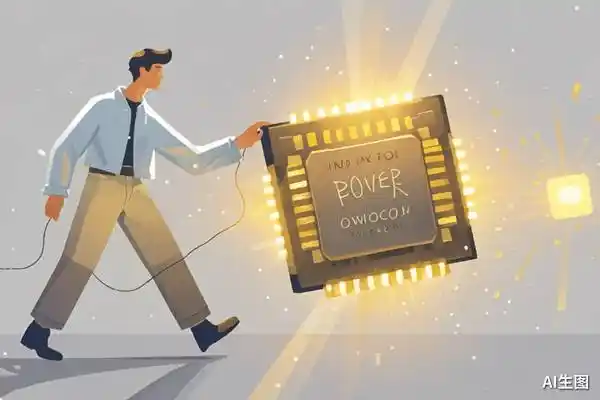
Sichuan-based power semiconductor company Jingyi Semiconductor is being acquired by its customer, Jiangsu-listed power semiconductor firm Suzhou Kaiweite Semiconductor Co., Ltd. ("Kaiweite"), for 1.65 billion yuan. Following the transaction, Jingyi Semiconductor will become a wholly-owned subsidiary of Kaiweite. Kaiweite will pay for the acquisition partly with new shares (approximately 901 million yuan worth) and partly in cash (approximately 749 million yuan). The deal is considered a major asset restructuring as Jingyi Semiconductor's assets and revenue in 2025 were 176.34% and 137.38% of Kaiweite's, respectively. Financially, Kaiweite has reported losses for 2024 and 2025. In contrast, Jingyi Semiconductor has remained profitable. The acquisition is expected to significantly improve Kaiweite's profitability. Jingyi Semiconductor's controlling shareholder and chairman, Yi Kun, along with employee持股 platforms, will hold a 13.28% stake in Kaiweite post-transaction. Founded in 2015 and listed on Shanghai's STAR Market in 2023, Kaiweite is a national-level "Little Giant" specializing in intelligent power semiconductor devices and power integrated chips. Established in 2019, Jingyi Semiconductor is a fabless power semiconductor company and a national-level专精特新重点"Little Giant." Its products, including Intelligent Power Modules (IPM), are supplied to major domestic appliance makers like Midea, Xiaomi, Gree, TCL, and Hisense-Hitachi. The company holds a leading 53.5% market share in China's IPM半桥 module segment for white goods. The strategic acquisition aims to repair Kaiweite's profitability and expand its power semiconductor product portfolio through integration in technology, products, and customer channels.

marsbit1h ago

1.65 Billion Yuan: Sichuan Power Semiconductor Company Sells Itself

marsbit1h ago

Launch Event Turned into a Make-up Ceremony? Why Hasn't Pools.trade Produced a High-Market-Cap Meme Coin Yet?

The article discusses the launch of Pools.trade, Uniswap's new token launch platform on Robinhood Chain, designed as a Meme coin launchpad. Despite generating high initial trading volumes (over $1.5 billion before the official frontend launch), the platform has yet to produce a high-market-cap Meme coin. The piece highlights two primary reasons for this. First, it outlines Pools.trade's features: it offers Instant and Crowd Launch modes, locks liquidity permanently in Uniswap v4 pools, and charges a low 0.25% transaction fee (compared to 1% on competitors like Pons and Flap), with most fees reinvested into liquidity. Second, it identifies a key problem: a lack of perceived fairness. The two most notable coins on the platform, FRONG (a "frog mascot" coin) and POOLS (a platform namesake), were both minted days before Uniswap's official countdown began. This "pre-minting" or "insider" controversy has dampened community FOMO (Fear Of Missing Out) and trust, causing their market caps to fall from peaks of $18 million and $4 million, respectively. The article argues that fairness is foundational for Meme coin success, and its absence has hindered viral growth. In conclusion, while Pools.trade benefits from Uniswap's existing user base and Robinhood Chain's popularity, its current lack of a fair-launch, high-engagement narrative has prevented a breakout hit. However, the author suggests that with its inherent traffic, such a success might not be far off.

Odaily星球日报2h ago

Launch Event Turned into a Make-up Ceremony? Why Hasn't Pools.trade Produced a High-Market-Cap Meme Coin Yet?

Odaily星球日报2h ago

Trading

Spot
活动图片