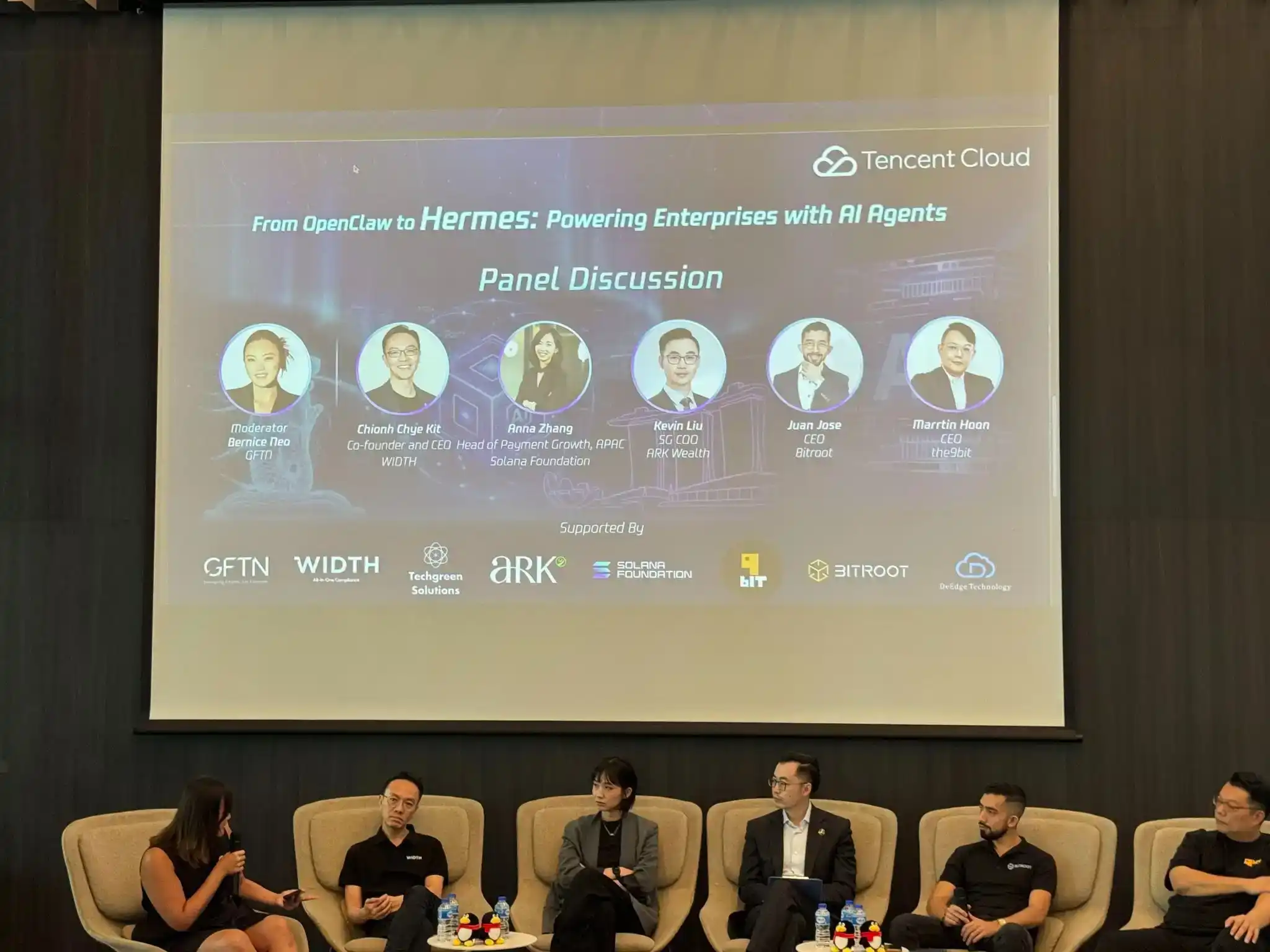
On May 19th, an AI-themed event hosted by Tencent Cloud was held in Singapore. The event focused on topics such as AI infrastructure, enterprise-level AI implementation, AI Agents, Web3 verifiable computing, and fintech, bringing together industry representatives from cloud services, public chain ecosystems, payment networks, financial technology, and investment institutions.
As a significant financial and technological hub in Asia, Singapore has increasingly become a crucial node for AI, Web3, and digital finance companies looking to expand into the Southeast Asian market. Tencent Cloud's choice to host its AI event in Singapore also reflects how major cloud service providers are paying more attention to the integration of AI application implementation, computing power services, enterprise-level solutions, and new digital infrastructure.
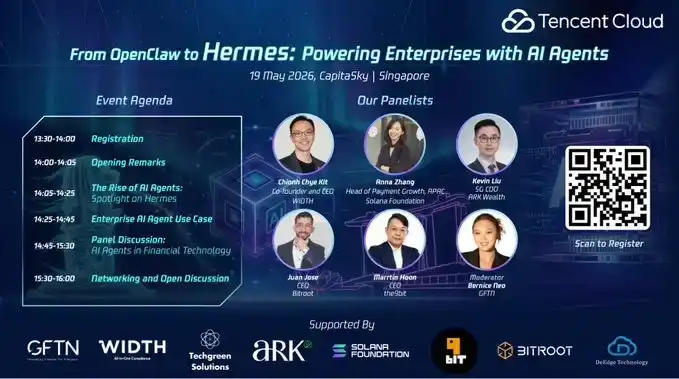
According to event information, attendees included Kevin Zhou, Director of Tencent Cloud Computing; Anna Zhang, Head of Payments Growth, APAC at Solana Foundation; Juan Jose, CEO of Bitroot; Chionh Chye Kit, Co-founder and CEO of WIDTH; Martin Hoon, CEO of the9bit; and Kevin Liu, COO of ARK Wealth Singapore, among others.
Judging by the lineup, this event was not merely a single AI product showcase but a cross-domain discussion centered on "how AI integrates with cloud services, payment networks, on-chain infrastructure, and financial technology." Tencent Cloud represents Web2 cloud computing and enterprise-level service capabilities, Solana represents a mature public chain ecosystem and on-chain payment exploration, while fintech and wealth management institutions represent the application demands of AI in real business scenarios. Against this backdrop, Bitroot, as an emerging public chain project focusing on high-performance Layer 1 and AI-native architecture, was invited to participate, making it one of the noteworthy Web3 infrastructure representatives at this event.
Behind the High-Profile AI Event, Web3 Infrastructure Re-enters the Discussion
Over the past year, the focus in the AI industry has gradually shifted from model capability competition to enterprise implementation, data governance, Agent workflows, and automated decision-making. For cloud service providers and fintech institutions, the commercialization of AI depends not only on the model itself but also on a complete set of infrastructure capabilities including computing power, data, permissions, security, and auditing mechanisms.
This explains why Web3 infrastructure is beginning to be included in AI discussions. As AI Agents evolve from "conversational tools" to "execution entities," they may need to call APIs, initiate payments, manage assets, complete settlements, and even participate in multi-party collaborative workflows in the future. In these scenarios, traditional centralized systems and on-chain verifiable infrastructure may complement each other.
The programmable assets, automated settlement, state verifiability, and on-chain auditing capabilities provided by blockchain precisely address the trust issues faced by AI Agents in financial, payment, and enterprise collaboration scenarios. Therefore, Tencent Cloud's Singapore AI event, by placing public chain ecosystems, cloud services, payment growth, and fintech representatives in the same discussion space, itself sends a signal: the next phase of AI competition is shifting from single-point technological capabilities to composite infrastructure competition.
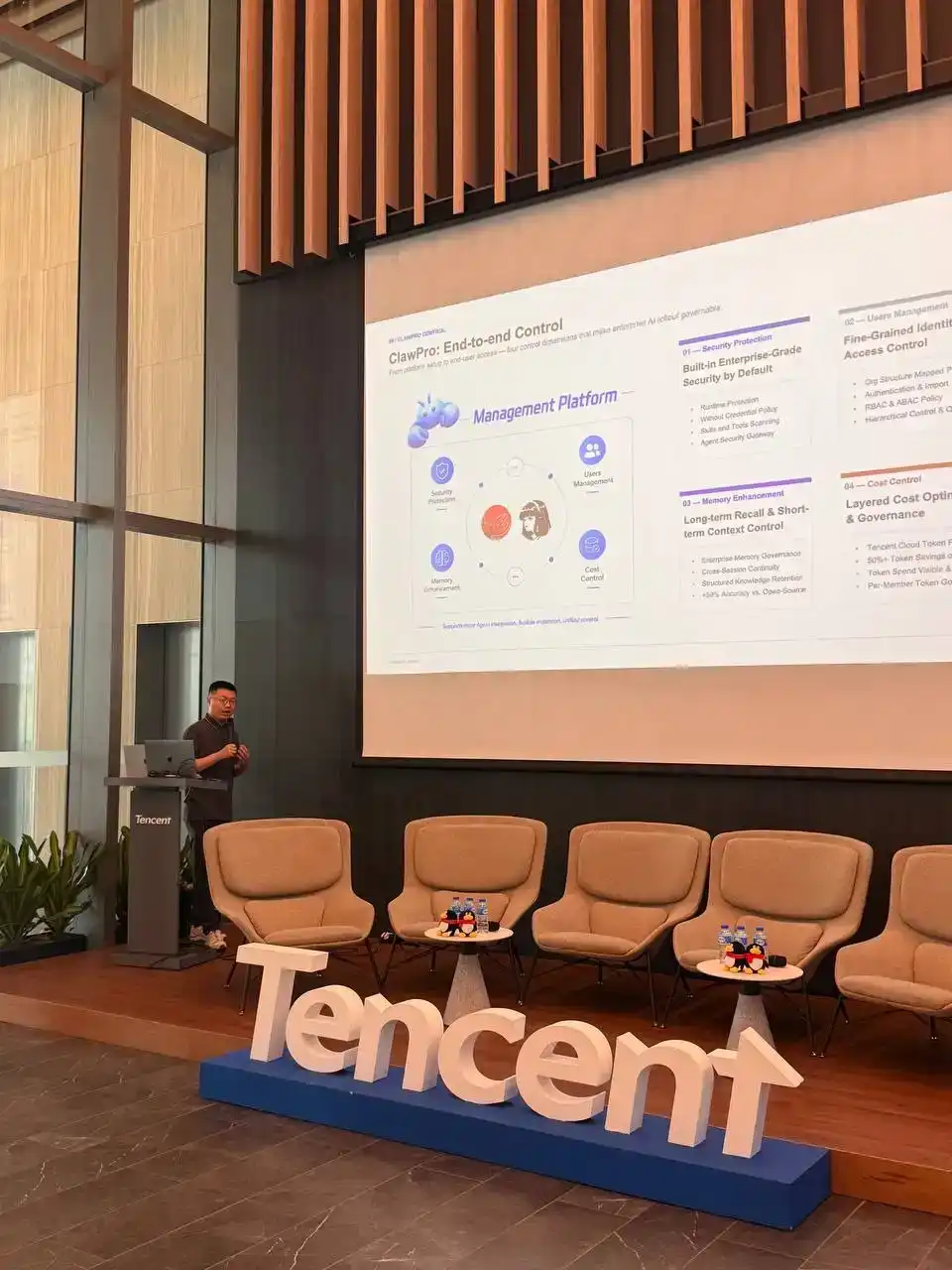
Why Was Bitroot, Yet to Launch, Invited?
For Bitroot, being invited to this event holds certain representativeness. Unlike public chains like Solana, which already have a mature mainnet and a large ecosystem, Bitroot is currently still in the testnet and ecosystem expansion phase before its mainnet launch. The fact that an emerging Web3 project, yet to launch its mainnet, could make it onto the participant list of Tencent Cloud's Singapore AI event indicates that its technical direction and narrative approach have at least attracted the attention of some industry players.
From an industry logic perspective, the reason for Bitroot's invitation may not lie in its current ecosystem scale, but rather in the alignment of the infrastructure direction it is betting on with the demands of the AI era.
First, AI Agents and on-chain automated execution require higher-performance underlying networks. Traditional public chains still have certain limitations in throughput, latency, and cost, while AI Agents may bring about more frequent, continuous, and automated interaction demands in the future. This means the underlying chain needs to have stronger concurrent processing capabilities and lower execution costs.
Second, developer compatibility remains key to whether a new public chain can establish an ecosystem. Bitroot's choice of an EVM-compatible route means it does not attempt to completely migrate developers to an unfamiliar environment. Instead, it aims to provide a higher-performance execution environment while retaining the Ethereum developer toolchain. For a new public chain still in its early stages, this approach helps reduce the difficulty of ecosystem cold-start.
Third, AI-native architecture is becoming an important differentiating direction for next-generation infrastructure projects. Compared to simply emphasizing TPS or transaction fees, Bitroot emphasizes AI Agent, on-chain automated application, and verifiable execution scenarios. This positioning makes it easier to enter discussions about the convergence of AI and Web3, rather than being seen as just another high-performance public chain.
Therefore, from an industry observation perspective, it at least indicates that some participants in cloud services, fintech, and the Web3 ecosystem are paying attention to new infrastructure projects yet to launch their mainnets, especially those Layer 1 networks designed around AI-native features, high-performance execution, and developer compatibility.
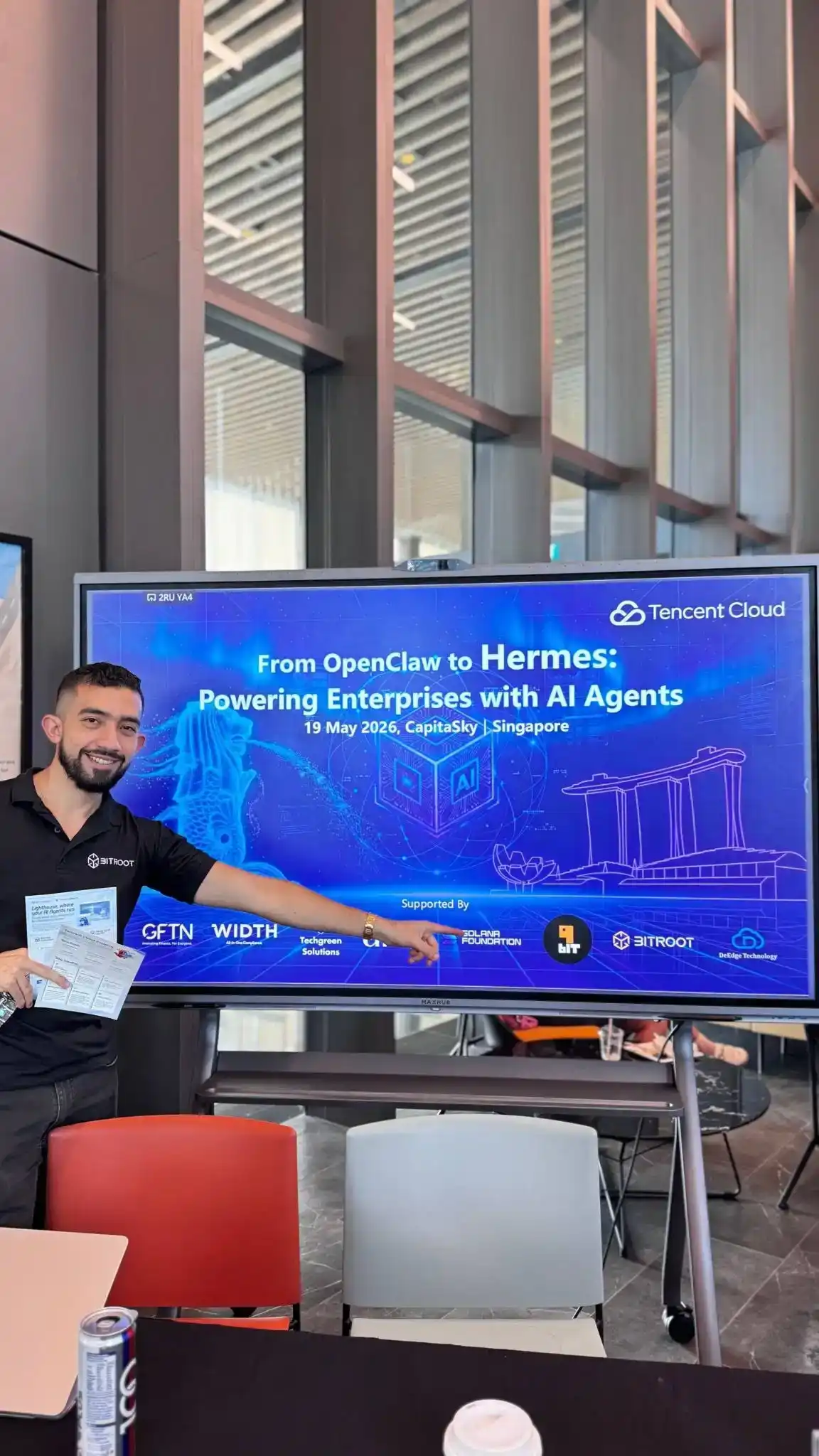
Sharing the Stage with Solana, Enhancing the Observational Value of Emerging Layer 1s
At this event, the participation of Anna Zhang, Head of Payments Growth, APAC at Solana Foundation, added perspectives from a mature public chain ecosystem and on-chain payments. Solana has been continuously advancing in the direction of high-performance public chains, payments, and consumer-grade applications in recent years, establishing itself as a key example in the Web3 infrastructure domain.
The fact that Bitroot shared the stage with representatives of mature ecosystems like Solana for discussions is itself noteworthy. It reflects that in the broader context of AI-Web3 convergence, the industry is not only focused on public chains that have already achieved scale but is also paying attention to new variables that may emerge in the next generation of infrastructure.
For an emerging Layer 1 like Bitroot, the fact that its mainnet is not yet launched means its technical roadmap is still malleable. If its parallel execution, EVM compatibility, and AI-native design can be validated in subsequent testnets and the mainnet, then it has the opportunity to carve out a differentiated position in scenarios like AI Agents, on-chain automated execution, and high-frequency applications.
Especially as AI gradually becomes a central industry theme, market requirements for public chains may change. Past public chain competition largely revolved around DeFi, NFTs, GameFi, and asset issuance. Future competition may increasingly focus on Agent execution, on-chain settlement, automated finance, data invocation, and verifiable computing. Bitroot entering industry discussions at this juncture is precisely why it deserves attention.
Juan Jose: AI Competition Will Shift from Models to Data, Scenarios, and Trust
During the panel discussion, Juan Jose, CEO of Bitroot, stated that the future gap between AI companies may no longer be just about model performance or parameter scale, but rather a comprehensive competition of data, scenarios, and trust mechanisms.
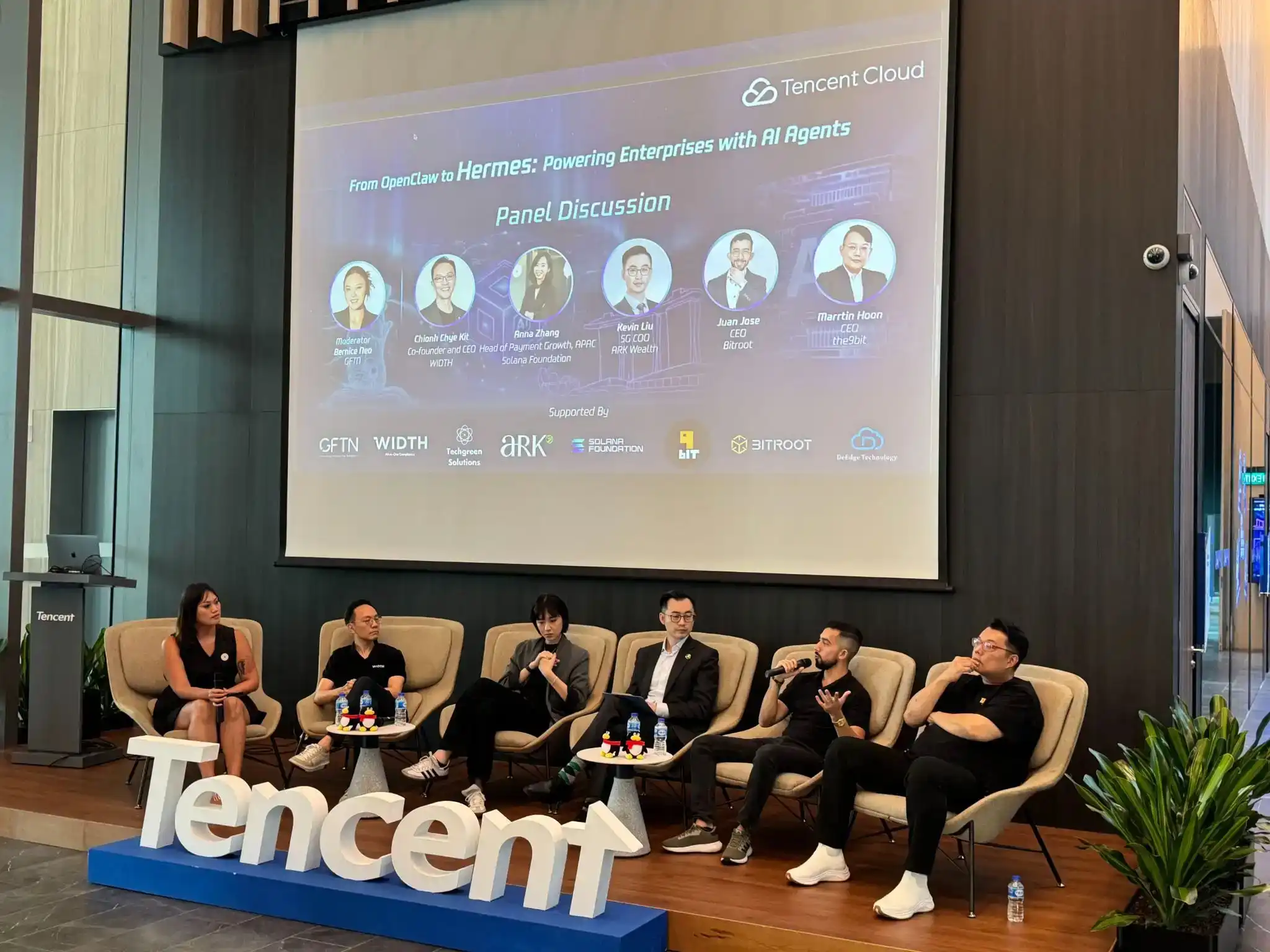
He believes that as both open-source and closed-source models continue to iterate, model capabilities themselves are accelerating in commoditization. The truly long-term, effective moat for enterprises comes from whether they possess high-quality industry data, whether they can deeply integrate into specific business processes, and whether they can establish long-term trust at both user and institutional levels.
This assessment aligns with current AI industry trends. More and more companies are realizing that the value of AI lies not only in generating content or completing simple Q&A, but in whether it can enter real business processes and consistently produce results in a controllable, auditable, and evaluable environment.
Juan Jose further pointed out that enterprise-level AI implementation still faces challenges in reliability, data infrastructure, and organizational change. Especially in high-risk scenarios like finance, payments, and auditing, AI systems must not only pursue capability ceilings but also meet stability, permission control, and auditing requirements.
AI Agents Require High-Performance and Verifiable Execution Environments
AI Agents were another important direction discussed at this event. Juan Jose stated that the industry is still in the "assistive Agent" stage, and there is still time before truly enterprise-level autonomy is achieved. The reason is that once Agents enter enterprise systems, they will face issues like multi-step task error accumulation, security permissions, legal liability, and explainability.
However, in the long term, the direction for AI Agents is relatively clear. Future Agents will not just provide suggestions; they may call services, manage accounts, initiate transactions, execute strategies, and complete settlements. This means the underlying infrastructure must support higher-frequency interactions and more trustworthy execution.
In this regard, Bitroot's technical narrative strongly correlates with industry needs. According to project information, Bitroot adopts an EVM-compatible route and enhances on-chain execution efficiency through designs like optimistic parallel EVM and the Pipeline BFT consensus mechanism, aiming to provide a high-performance, low-cost on-chain execution environment for AI Agents, DeFi, and Web3 applications.
For AI + Web3 scenarios, performance is not merely a technical metric but a prerequisite for whether applications can be viable. If an Agent requires high fees and long confirmation times for every operation, many automation scenarios will struggle to scale. Conversely, an on-chain environment with low latency, low cost, and high throughput could become an important foundation for AI Agents moving towards real-world applications.
The Testnet Phase Will Be a Crucial Validation Window for Bitroot
Bitroot is also advancing its testnet and ecosystem infrastructure development. According to project information, its testnet has entered version 5.0, with related upgrades covering network performance, cross-chain components, ecosystem application deployment, and node optimization.
Judging from testnet data, Bitroot has demonstrated technical implementation capability: the test network address count exceeds 1 million+, daily on-chain transaction volume exceeds 50,000+, peak TPS reaches 50,000+, and average block time is approximately <0.3 seconds.
For an emerging public chain yet to launch its mainnet, the testnet phase holds dual significance. On one hand, it is a validation window for the technical roadmap, where developers can observe network performance, contract compatibility, toolchain maturity, and node stability. On the other hand, it is also an important phase for ecosystem cold-start, allowing community users and developers to participate in network building through early interaction.
Industry Observation: The Competitive Landscape of High-Performance AI-Native Public Chains
From the discussions at this summit, it is evident that the convergence of AI and Web3 is shifting from conceptual narratives to specific infrastructure-level issues. In this track, different projects have chosen different technical paths:
Solana is known for its high-speed execution and mature ecosystem, having established a large developer community and DeFi ecosystem; Monad focuses on performance optimization of parallel EVM; Aptos achieves optimistic parallel execution through Block-STM. The differentiation of Bitroot lies in that it not only pursues extreme breakthroughs in public chain performance but also natively integrates AI computing capabilities into the underlying architecture of the chain—from the useful Proof-of-Work at the consensus layer, to the parallelized EVM at the execution layer, and to the distributed training and inference network at the application layer, constructing a complete decentralized AI Stack.
For next-generation infrastructure projects, how to support more complex AI application invocations while maintaining security and decentralization characteristics will become a core competitive proposition in the future.
Conclusion
Judging from the signals released at the Singapore AI-themed summit, AI is becoming the main theme for the next phase of the technology industry's evolution. The new demands arising around AI Agents, automated finance, on-chain data, and verifiable execution are placing higher requirements on the underlying infrastructure.
High-performance infrastructure is not merely a narrative choice for a single project but an inevitable direction in the process of scaling AI and Web3 applications. Bitroot's entry into this track with its full-stack architecture of "parallelized EVM + AI-native computing network," sharing the stage with mature ecosystems like Solana at the Tencent Cloud summit, demonstrates the technical depth and industry ambition of a new generation of AI public chains.
In the future, underlying networks that can simultaneously balance performance, compatibility, security, and verifiability will have a greater opportunity to host next-generation application scenarios and occupy key positions in the long-term trend of AI and blockchain convergence. Bitroot's performance is worth continued attention.
About Bitroot
Bitroot is a Layer 1 public chain project focused on parallel execution and AI-native architecture. Bitroot adopts an EVM-compatible technical route and explores providing a high-performance, low-cost on-chain execution environment for AI Agents, DeFi, and Web3 applications through parallel execution mechanisms, consensus optimization, and AI-related interface design.