BitMEX Report Highlights Crypto Perpetual Swaps in 2025: The Year the Engine Broke and Rebuilt

TheNewsCryptoPublished on 2026-01-09Last updated on 2026-01-09

Abstract

The 2025 crypto derivatives market experienced a transformative crisis that exposed critical flaws in perpetual swaps, long considered the market's backbone. A pivotal October liquidation cascade erased $20 billion in positions as Auto-Deleveraging mechanisms failed, forcing market makers' hedged positions to close and triggering a systemic liquidity withdrawal. This event shattered trust in centralized exchanges, particularly those operating opaque B-Book models against users. Simultaneously, easy yield from funding rate arbitrage vanished due to overcrowded institutional strategies, pushing rates below traditional risk-free returns. Decentralized perpetual exchanges gained popularity but introduced new vulnerabilities, including oracle manipulation and governance gaps. Innovation emerged through equity perpetuals for 24/7 stock trading and tradable funding rate instruments. The market concluded the year leaner and more mature, prioritizing platform resilience, transparency, and fairness over leverage and speculative yield.

Few years have tested the crypto derivatives market like 2025. What once felt like a stable, yield-rich playground for professional traders turned into a proving ground where flawed infrastructure, fragile incentives, and misplaced trust were brutally exposed. Perpetual swaps, long regarded as the backbone of crypto derivatives, entered the year with confidence and exited it transformed as mentioned in a recent report by BitMEX.

For much of the previous cycle, perpetuals delivered predictable returns. Funding rate arbitrage was reliable, liquidation engines were assumed to be robust, and exchanges marketed themselves as neutral market operators. That illusion shattered in October. The 10–11 October crash was not simply another volatility spike; it was a structural failure that revealed how vulnerable the market had become beneath the surface.

Yet markets are adaptive systems. As weak models collapsed, space opened for more resilient platforms and genuinely new ideas. 2025 did not end the perpetual swap market. It forced it to evolve.

The ADL Meltdown: When Protection Became the Weapon

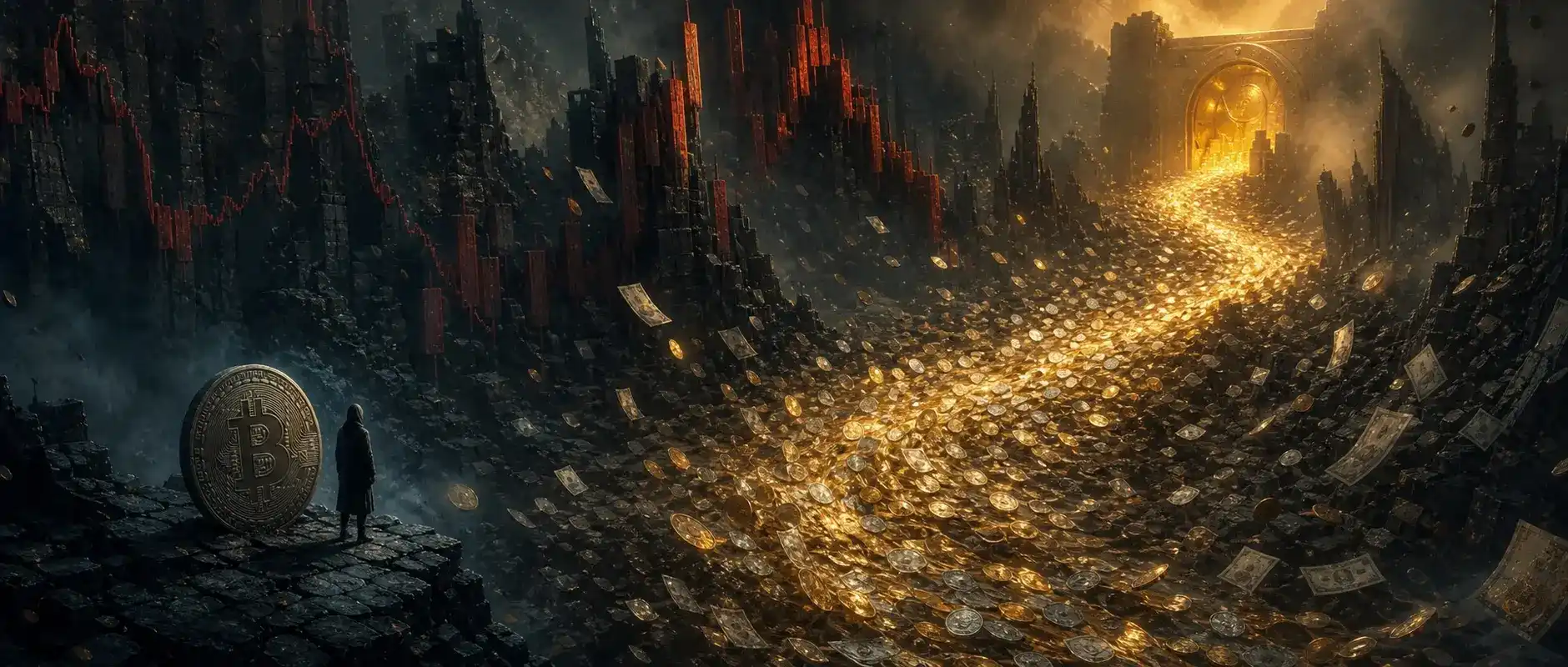
The most defining event of the year was the October liquidation cascade, which erased nearly $20 billion in positions within hours. While price movements captured headlines, the deeper damage occurred in the plumbing of the system itself.

Auto-Deleveraging, designed as a safety mechanism, turned destructive. Professional market makers running delta-neutral strategies found their short perpetual hedges forcibly closed to cover bankrupt long positions elsewhere. These positions were never supposed to be touched. When they were, “neutral” strategies instantly became directional bets in a collapsing market.

What followed was systemic. Market makers, suddenly exposed and burned by exchange engines, withdrew liquidity en masse. Order books thinned to levels not seen since the depths of 2022. The promise that exchanges could safely intermediate risk was broken, and trust evaporated almost overnight.

This was not a retail liquidation event. It was a market maker massacre, and it fundamentally altered risk assumptions across the industry.

The Death of Easy Yield

Funding rate arbitrage did not explode in 2025. It suffocated. What began as a clever strategy became overcrowded at institutional scale. Exchange-issued delta-neutral products and synthetic margin assets flooded the market with automatic short exposure. Every dollar minted into these instruments sold perpetuals by design, overwhelming organic demand.

As a result, funding rates collapsed. For the first time during a bullish cycle, rates consistently traded below historical baselines. By mid-year, yields hovered near 4 percent annualized, often failing to outperform traditional risk-free instruments like Treasury bills.

The lesson was simple. Once yield is productized and scaled, it disappears. Passive strategies no longer generated meaningful returns, and traders were forced to move up the complexity curve or accept mediocrity.

A Crisis of Trust in Centralized Exchanges

2025 also drew a clear line between two types of exchanges. On one side were fair matchers that facilitated peer-to-peer trading. On the other were opaque platforms operating internal B-Book models, effectively betting against their own users.

As volatility increased, reports surfaced of profitable traders having positions voided under vague “abnormal trading” clauses. In several cases, exchanges simply refused to pay out gains when trades went against the house.

Low-float perpetual listings further exposed this imbalance. Coordinated entities manipulated thin markets, squeezing open interest and exploiting structural weaknesses that favored insiders. For many traders, it became painfully clear that execution quality and platform integrity mattered more than leverage or token listings. Where you traded became just as important as what you traded.

Perpetual DEXs: Innovation with New Fault Lines

Decentralized perpetual exchanges surged in popularity during 2025, fueled by transparency and high performance. But decentralization brought new attack surfaces.

One of the year’s most notable vulnerabilities involved pre-token markets without reliable price oracles. Attackers manipulated illiquid prices to trigger on-chain liquidations, exploiting the fact that every position and liquidation threshold was publicly visible. Transparency, once considered a strength, became a tactical liability.

In another high-profile incident, an options mispricing was exploited through standard arbitrage. Instead of honoring the trade, the platform froze funds and reversed profits, exposing governance and accountability gaps in decentralized systems.

The takeaway was nuanced. Decentralization reduced some risks but introduced others. Without mature risk controls and accountability frameworks, transparency alone was not enough.

New Directions: Equity Perps and Funding Rate Trading

As traditional strategies failed, innovation accelerated. Two themes emerged as defining narratives for the next phase of derivatives.

First, equity perpetuals found genuine demand. Traders wanted 24/7 access to U.S. stocks and indices, especially around earnings and macro events. Crypto exchanges quietly became alternative venues for global equity speculation, untethered from legacy market hours.

Second, funding rates themselves became tradable instruments. Rather than farming yield passively, traders began speculating on funding volatility, positioning for spikes, compressions, and structural dislocations. Funding transformed from a background mechanic into a primary market variable. These shifts signaled maturity. The market was no longer chasing easy yield. It was pricing complexity.

A More Grounded Market Emerges

By the end of 2025, the crypto perpetual swaps market looked very different. The era of effortless arbitrage had closed. Structural weaknesses had been exposed, and trust had become a competitive advantage rather than a marketing slogan.

Exchanges that survived did so by proving fairness, resilience, and accountability under stress. Meanwhile, new products bridged crypto and traditional finance in ways that felt less speculative and more inevitable.

2025 was not just a difficult year. It was a necessary one. The excesses were burned away, the machinery was stress-tested, and the market emerged leaner, sharper, and far less forgiving. Only platforms built to endure volatility, not profit from it, are positioned to lead what comes next.

TagsAltcoinBlockchainCryptocurrency

Related Questions

QWhat was the main event that exposed the structural weaknesses in the crypto perpetual swaps market in 2025, according to the BitMEX report?

AThe main event was the October liquidation cascade, which erased nearly $20 billion in positions within hours and revealed the destructive failure of the Auto-Deleveraging (ADL) mechanism.

QHow did the role of funding rates change in the perpetual swaps market during 2025?

AFunding rates collapsed and consistently traded below historical baselines, often failing to outperform traditional risk-free instruments. They transformed from a source of passive yield into a tradable instrument, with traders speculating on their volatility.

QWhat new type of perpetual contract gained significant traction in 2025, and why?

AEquity perpetuals gained genuine demand as traders sought 24/7 access to U.S. stocks and indices, especially around earnings and macro events, making crypto exchanges alternative venues for global equity speculation.

QWhat critical flaw did decentralized perpetual exchanges (DEXs) expose despite their popularity?

ADecentralized perpetual exchanges exposed new vulnerabilities, such as attackers manipulating illiquid pre-token markets without reliable oracles to trigger on-chain liquidations, turning transparency into a tactical liability.

QHow did the October 2025 crisis fundamentally alter the risk assumptions and competitive landscape for crypto exchanges?

AThe crisis shifted trust to become a competitive advantage, favoring exchanges that demonstrated fairness, resilience, and accountability. It ended the era of effortless arbitrage and forced the market to prioritize platform integrity over leverage or token listings.

Related Reads

OpenAI Goes Left, DeepSeek Goes Right

On April 24, 2026, DeepSeek released V4, a Chinese large language model offering a free "million-token context window," enabling it to process vast amounts of data like entire books or years of corporate documents in one go. In contrast, OpenAI’s GPT-5.5, released around the same time, is more powerful but significantly more expensive, charging up to $180 per million output tokens. DeepSeek’s strategy represents a shift from a pure AI research firm to a heavy-infrastructure player, building data centers in Inner Mongolia’s Ulanqab to bypass U.S. chip export restrictions. This move, supported by Huawei’s Ascend chips and China’s cheap green electricity, highlights a fundamental divergence in AI development models: U.S. firms focus on high-cost, high-margin services, while Chinese players like DeepSeek prioritize accessibility and affordability. Facing intense talent poaching from tech giants, DeepSeek is seeking a $44 billion valuation funding round to retain researchers and scale infrastructure. Meanwhile, Chinese manufacturers are compressing AI models to run on smartphones, making AI accessible offline and across the Global South. Through open-source models and localized solutions, Chinese AI is empowering non-English speakers and low-income users, driving a form of "digital equality." While Silicon Valley builds walled gardens, DeepSeek and others are turning AI into a public utility—like tap water—flowing freely to those previously left behind.

marsbit7m ago

OpenAI Goes Left, DeepSeek Goes Right

marsbit7m ago

$292 Million KelpDAO Cross-Chain Bridge Hack: Who Should Foot the Bill?

On April 18, 2026, an attacker stole 116,500 rsETH (worth ~$292M) from KelpDAO’s cross-chain bridge in 46 minutes—the largest DeFi exploit of 2026. The stolen assets were deposited into Aave V3 as collateral, causing $177–200M in bad debt and triggering a cascade of losses across nine DeFi protocols. Aave’s TVL dropped by ~$6B overnight. This legal analysis argues that KelpDAO and LayerZero Labs share concurrent liability, with fault apportioned 60%/40%. KelpDAO negligently configured its bridge with a 1-of-1 decentralized verifier network (DVN)—a single point of failure—despite LayerZero’s explicit recommendation of a 2-of-3 setup. LayerZero, which operated the compromised DVN, failed to secure its RPC infrastructure against a known poisoning attack vector. Both protocols’ terms of service cap liability at $200 (KelpDAO) or $50 (LayerZero), but these limits are likely unenforceable due to unconscionability, gross negligence exceptions, and potential securities law invalidation (if rsETH is deemed a security under the Howey test). Aave’s governance also faces fiduciary duty claims for raising rsETH’s loan-to-value ratio to 93%—far above competitors’ 72–75%—without adequately assessing bridge risks, amplifying the systemic fallout. Practical recovery targets include LayerZero Labs (a registered Canadian entity), KelpDAO’s founders, auditors, and identifiable Aave governance delegates. The incident underscores escalating legal risks for DeFi protocols, infrastructure providers, and governance participants.

marsbit1h ago

$292 Million KelpDAO Cross-Chain Bridge Hack: Who Should Foot the Bill?

marsbit1h ago

Insider Trading in War: 5 People Involved, the Highest Earner Was Arrested

On April 24, the U.S. Department of Justice arrested U.S. Army Special Forces Staff Sergeant Gannon Ken Van Dyke for insider trading related to the capture of Venezuelan President Nicolás Maduro on January 3. Van Dyke allegedly profited over $400,000 by placing bets on a prediction market, Polymarket, using insider knowledge of the covert operation. According to the indictment, Van Dyke registered an account (0x31a5) on December 26 and made a series of bets predicting Maduro’s capture and U.S. military involvement in Venezuela. He withdrew most of his funds on the day of the operation and attempted to obscure his tracks by transferring assets through crypto and brokerage accounts. This case marks the first time the DOJ has prosecuted insider trading on Polymarket. PolyBeats had previously identified five suspicious accounts, including Van Dyke’s—the highest earner—in January. The other accounts, with profits ranging from $34,000 to $145,000, remain under unofficial scrutiny but have not been charged. Their lower profits, indirect access to information, and unclear legal boundaries may complicate prosecution. Polymarket has since strengthened its market integrity rules, explicitly prohibiting trading based on confidential or insider information. Van Dyke’s arrest, nearly four months after his trades, signals increased regulatory attention and the persistent traceability of blockchain-based transactions.

marsbit1h ago

Insider Trading in War: 5 People Involved, the Highest Earner Was Arrested

marsbit1h ago

Trading

Spot
Futures
活动图片