Author: Jose Antonio Lanz, Decrypt
Compiled by: Shenchao TechFlow
Shenchao Introduction: Bitcoin faces its first real test after a sharp rally: after briefly topping $81,000, a hotter-than-expected inflation report erased roughly $3,000 from its price within hours. The real challenge now is "timing"—over the next 48 hours, economic data, a massive options expiry, the new Fed Chair's first major speech, Nvidia's earnings, and the interest rate decision three weeks later will all converge. Each variable is pulling a different lever on Bitcoin's price, making this window one of the most decisive moments of the year.

Inflation & GDP: Higher-for-Longer Pressures Risk Assets
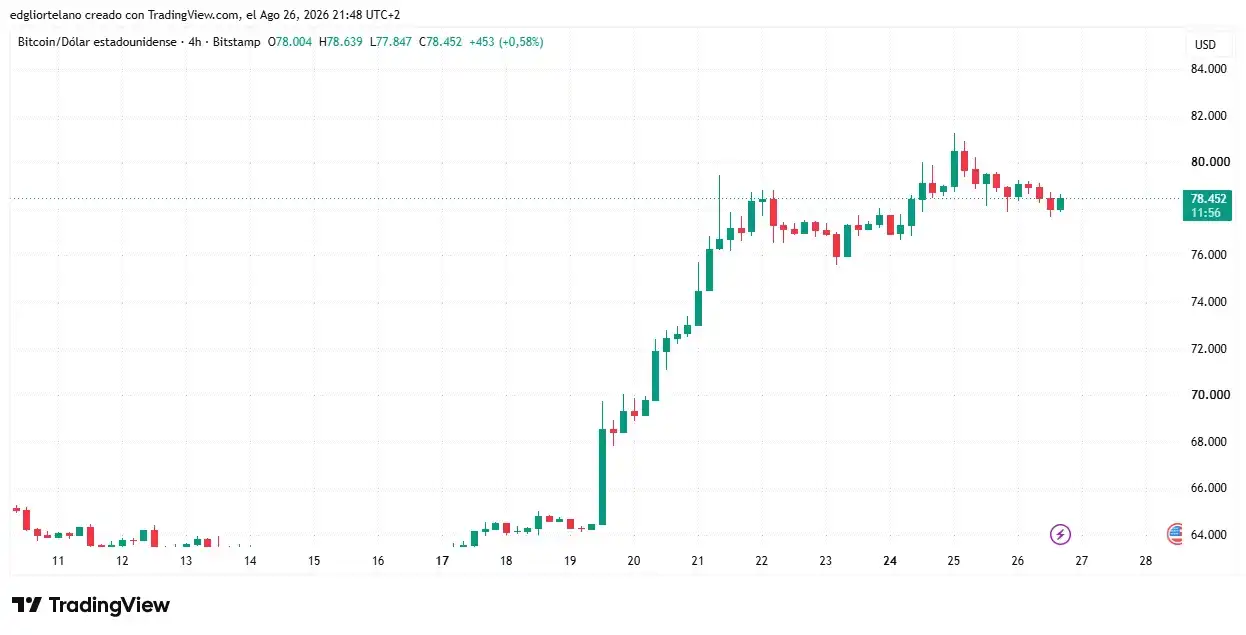
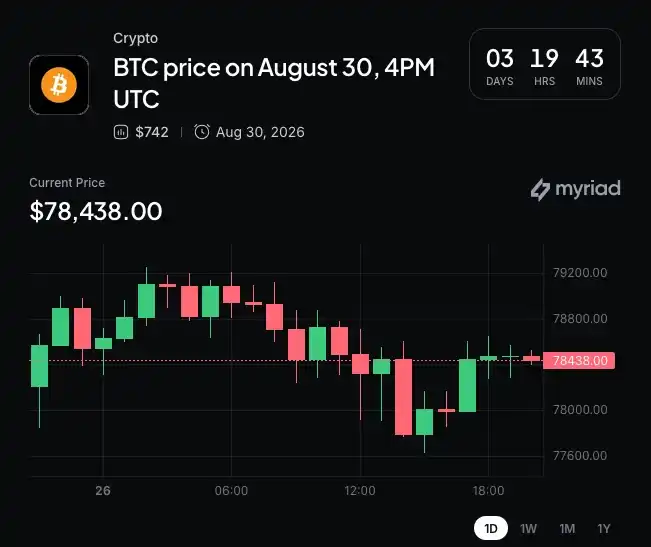
Bitcoin has stabilized around $78,000 after a rally that briefly broke above $81,000 was interrupted—by a hot inflation report. That single data point erased about $3,000 from Bitcoin's price within hours, reminding the market how quickly sentiment can reverse when positions are so crowded.
For crypto traders, the bigger issue now might be "timing." Over the next 48 hours, five catalysts will layer on top of each other: economic data, a huge options expiry, the new Fed Chair's first major speech, Nvidia earnings, and the interest rate decision that won't land for another three weeks.
Each one pulls a different lever on Bitcoin's price. Combined, they make this period one of the most influential windows for Bitcoin this year. Here's why each catalyst matters for market sentiment and fundamentals.
The two most watched data releases this week arrived early Wednesday. The July Personal Consumption Expenditures (PCE) report—the Fed's preferred inflation gauge—showed prices rose 3.7% year-over-year, above the 3.6% consensus; core PCE was flat at 3.3% as expected.
The government's second estimate of Q2 GDP showed annualized growth of 1.5%, with consumer spending revised upward to be stronger than the initial reading.
PCE matters more than other inflation gauges because it's the yardstick the Fed anchors its 2% target to, not the more commonly cited CPI. A hot reading leaves policymakers with fewer reasons to cut rates; GDP data showing resilient consumption also removes any argument that "the economy urgently needs support."
This combination weighed on Bitcoin on Wednesday. Higher-for-longer rate expectations tend to boost the dollar and raise bond yields, both of which pull capital away from non-yielding assets. Bitcoin fell from above $81,000 to below $78,000 within hours of the data release.
$6.4 Billion Options Expiry on Friday
This Friday, roughly $6.4 billion worth of Bitcoin options contracts are set to expire on derivatives exchange Deribit—the same day as the Jackson Hole keynote. Traders are eyeing a price level known as "max pain"—the strike price at which the vast majority of contracts expire worthless—which currently sits around $78,000, below Bitcoin's current price.
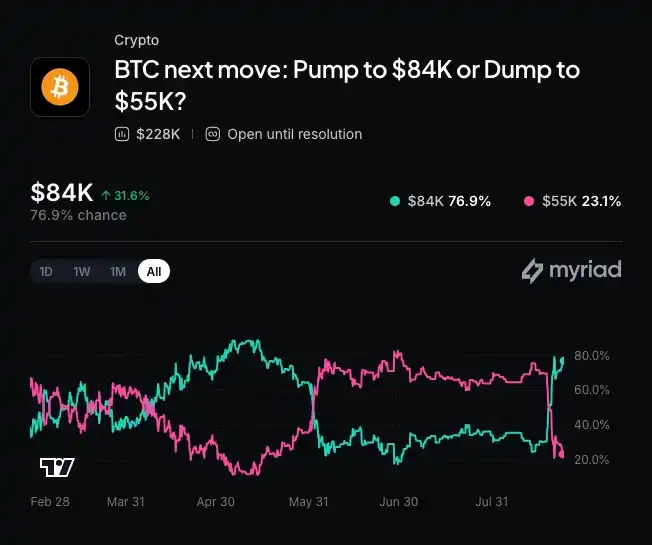
An expiry of this size matters because the institutions that sold these options must buy or sell actual Bitcoin to hedge their exposure as the price moves; a $6.4 billion book can move the market on hedging flows alone, independent of any news. The larger the gap between the spot price and max pain, the more intense hedging activity tends to be as settlement approaches.
If Bitcoin remains significantly above max pain by Friday, market makers who sold call options may need to keep buying the underlying asset to maintain their hedge, adding upward pressure to the price. If the price gets pulled toward the $68,000 range, this dynamic reverses—and with an expiry of this size, position unwinding tends to amplify volatility in either direction.
Nvidia Earnings: A Barometer for the AI Narrative
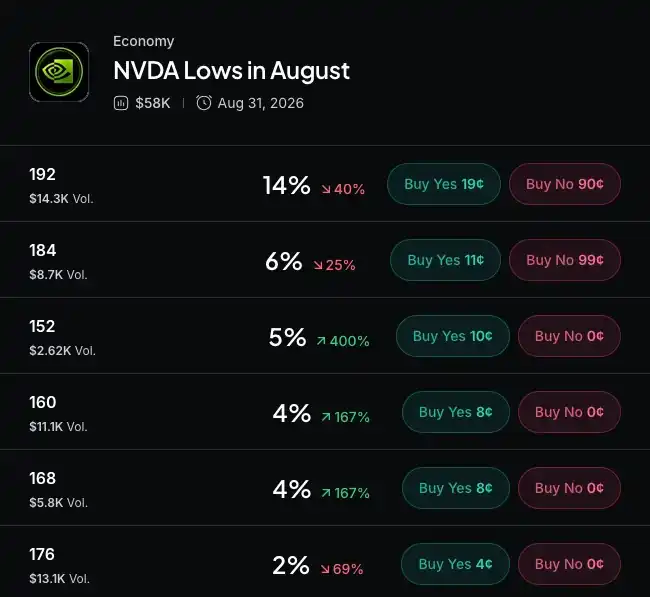
Nvidia reports Q2 earnings after the close on Wednesday, with Wall Street expecting revenue around $92.3 billion. The company matters to crypto traders because it's the clearest barometer for "how much capital is still flowing into AI infrastructure"; this year's Bitcoin rally has danced more to the tune of AI stock sentiment than as an independent move.
When investors are confident in tech earnings, they tend to add exposure across the risk curve, including crypto assets. Remember, AI/tech stocks are currently pulling the S&P 500 higher but are also in a high-risk sentiment zone that conservative traders are unwilling to touch.
Strong beats and confident guidance could pull more capital into broad risk assets and extend Wednesday's dip-buying into Bitcoin; disappointing results or cautious guidance on AI spending would do the opposite. Given their high correlation this year, tech stocks and crypto could fall together.
Warsh's Jackson Hole Debut: How the New Chair Sets the Tone
Kevin Warsh, who took over as Fed Chair in May, will deliver his first keynote speech at the Fed's Jackson Hole symposium on Friday. His remarks come just three weeks before the September 16 interest rate decision, where policymakers will also release updated economic projections (as reported by Decrypt).
This is the market's first chance to hear how a new Chair actually "talks policy," not just what the data says. Traders will parse both wording and tone—a single line about inflation risks or labor market weakness can swing rate expectations for weeks.
A dovish tone, downplaying the hot PCE and leaning into softer labor markets, could push yields and the dollar lower—the same mix that ignited this month's rally earlier. A hawkish tone, hammering inflation risks, would do the opposite, extending Wednesday's pullback into the weekend.
Futures pricing has swung wildly over the past month. The CME FedWatch tool, which translates bond market bets into implied odds for rate decisions, currently shows a 38.4% chance of a rate hike in September, down from 82% a month ago, with 61.6% leaning toward "no change."
ETF Flows: A Real-Time Signal of Institutional Demand
U.S. spot Bitcoin and Ethereum ETFs attracted $2.6 billion last week, their best weekly performance since October 2025, though much of the growth came from rising prices of held assets rather than net new inflows.
ETF flows are the cleanest real-time signal of institutional demand, independent of retail trading or derivatives speculation. The shrinking supply on exchanges is another metric worth tracking simultaneously, as it means fewer coins are available to sell, making prices more sensitive to both buying and selling pressure than a deeper market.
This scarcity helped fuel a short squeeze last week: traders betting on a drop were forced to cover their positions, wiping out roughly $3 billion in short positions in a single day.
If ETFs continue to see net inflows while exchange supply keeps shrinking, the same mechanism can push prices higher with relatively modest buying pressure; a shift to sustained net outflows, however, would see that support vanish just as quickly.