Bitcoin Quantum-Proofing Push Could Open New Attack Risks, Mow Warns

bitcoinistPublished on 2026-04-07Last updated on 2026-04-07

Abstract

Samson Mow, founder of Bitcoin firm Jan3, warns that a rushed transition to post-quantum cryptography could introduce new risks to Bitcoin rather than securing it. This comes in response to calls from Coinbase executives to act immediately against quantum computing threats. Mow argues that larger post-quantum signatures could increase transaction sizes by up to 125 times, leading to network congestion, compatibility issues, and reduced transaction capacity—potentially reigniting past conflicts similar to the "Blocksize Wars." While not dismissing quantum risks, Mow believes capable quantum computers are still over a decade away, and implementing a premature fix could create more vulnerabilities than it solves.

Post-quantum cryptography could make Bitcoin’s signature sizes balloon by as much as 125 times — a technical reality now fueling a sharp debate over how fast the network should act.

Mow Calls Out The Rush

Samson Mow, founder of Bitcoin firm Jan3, went public over the weekend with a pointed warning: moving too fast on quantum security could leave Bitcoin more exposed, not less.

His comments came after Coinbase CEO Brian Armstrong and the company’s chief security officer, Philip Martin, called on the industry to start acting now against quantum computing threats.

Mow pushed back hard. A rushed transition to post-quantum cryptography, he said, risks opening up fresh vulnerabilities — including compatibility breakdowns and a sharp drop in how many transactions the network can handle at once.

“Simply put: make Bitcoin safe against quantum computers just to get pwned by normal computers,” Mow wrote on X.

A Ghost From Bitcoin’s Past

At the center of his concern is block size — the cap on how much transaction data fits inside a single Bitcoin block. Larger post-quantum signatures mean more data per transaction, which means fewer transactions per block, which means a slower and more congested network.

Former Bitcoin developer Jonas Schnelli put numbers to it, and Mow cited them directly. The implications go beyond speed. Block size has been a flashpoint before.

BTCUSD trading at $68,731 on the 24-hour chart: TradingView

Between 2015 and 2017, a bitter community dispute over whether to expand Bitcoin’s block size tore the ecosystem apart and ultimately led to a chain split.

That fight raised deep questions about decentralization, network security, and who really gets to decide Bitcoin’s direction. Mow is warning the same battle could be coming back — what he’s calling “Blocksize Wars 2.0.”
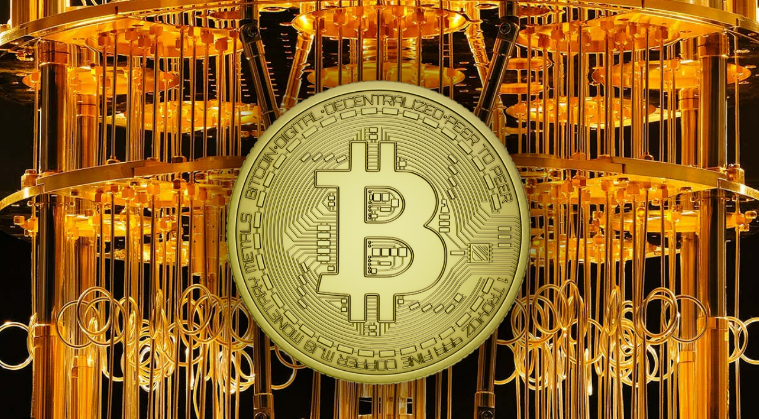
Image: Wccftech

Where Mow Draws The Line

Mow isn’t saying quantum threats should be ignored. His argument is about timing, not priority. Research on potential solutions is already underway, he said, and that work should continue.

But quantum computers capable of cracking Bitcoin’s encryption, he argued, are still a decade or two away at minimum. Rushing a fix for a threat that doesn’t yet exist, he said, creates real risks today in exchange for protection against something hypothetical tomorrow.

The debate is gaining urgency as new research from Google and the California Institute of Technology has stoked fresh concern about how quickly quantum computing may develop.

Armstrong and Martin flagged those findings as reason enough to move the timeline up. Mow’s position: the cure could be worse than the disease, at least for now.

Featured image from Trade Brains, chart from TradingView

Related Questions

QWhat is the main concern raised by Samson Mow regarding the push for post-quantum cryptography in Bitcoin?

ASamson Mow's main concern is that a rushed transition to post-quantum cryptography could create new vulnerabilities, including compatibility breakdowns and a significant reduction in the network's transaction capacity, rather than making it more secure.

QHow much could post-quantum cryptography increase Bitcoin's signature sizes, according to the article?

APost-quantum cryptography could make Bitcoin's signature sizes balloon by as much as 125 times.

QWhat historical Bitcoin event does Mow reference as a warning for the current debate?

AMow references the 'Blocksize Wars' that occurred between 2015 and 2017, a bitter community dispute over expanding Bitcoin's block size that led to a chain split, and warns that a similar conflict, 'Blocksize Wars 2.0,' could be coming.

QWhat is the core technical issue that larger post-quantum signatures would create for the Bitcoin network?

ALarger post-quantum signatures mean more data per transaction, which would result in fewer transactions fitting into each block, leading to a slower and more congested network.

QWhat is the key difference in perspective between Mow and Coinbase's executives on the timeline for addressing quantum threats?

ACoinbase's executives believe the industry should start acting now against quantum computing threats, while Mow argues that capable quantum computers are still a decade or two away, and rushing a fix for a non-existent threat creates real risks today.

Related Reads

TAO is Elon Musk who invested in OpenAI, Subnet is Sam Altman

The article, titled "TAO is Elon Musk who invested in OpenAI, Subnet is Sam Altman," presents a critical analysis of the Bittensor (TAO) project. It argues that Bittensor functions as a decentralized AI marketplace where TAO tokens fund AI research via subnets. However, the author highlights a fundamental flaw: subnet operators have no obligation to return any value, such as AI models or profits, back to the TAO ecosystem or its token holders. This structure is likened to Elon Musk's early investment in the non-profit OpenAI, which later commercialized its technology without returning value to its initial benefactor. The bear case posits that Bittensor is essentially a wealth transfer from crypto speculators to AI researchers ("miners"). Subnets can use TAO incentives for development and then take their successful products elsewhere, leaving TAO holders with diluted tokens from inflation and no captured value. The lack of enforced equity or binding mechanisms means the project relies on a "hope" that subnet tokens maintain value. The optimistic perspective counters that two factors could create a successful, self-sustaining economy: 1) AI's perpetual and massive resource needs could incentivize subnets to stay for continued funding, and 2) crypto has a proven ability to aggregate resources through token incentives, as seen with Bitcoin and Ethereum. The conclusion states that investing in TAO is a bet on a博弈论 (game theory) miracle—that soft incentives alone will be enough to keep the best subnets within the ecosystem and create a flywheel effect. This outcome is possible but represents a highly skewed, low-probability success scenario amidst significant risks of failure.

marsbit17m ago

TAO is Elon Musk who invested in OpenAI, Subnet is Sam Altman

marsbit17m ago

Hermes Agent Guide: Surpassing OpenClaw, Boosting Productivity by 100x

A guide to Hermes Agent, an open-source AI agent framework by Nous Research, positioned as a powerful alternative to OpenClaw. It is described as a self-evolving agent with a built-in learning loop that autonomously creates skills from experience, continuously improves them, and solidifies knowledge into reusable assets. Its core features include a memory system (storing environment info and user preferences in MEMORY.md and USER.md) and a skill system that generates structured documentation for complex tasks. The agent boasts over 40 built-in tools for web search, browser automation, vision, image generation, and text-to-speech. It supports scheduling automated tasks and can run on various infrastructures, from a $5 VPS to GPU clusters. Popular tools within its ecosystem include the Hindsight memory plugin, the Anthropic Cybersecurity Skills pack, and the mission-control dashboard for agent orchestration. Key differentiators from OpenClaw are its architecture philosophy—centered on the agent's own execution loop rather than a central controller—and its autonomous skill generation versus OpenClaw's manually written skills. Installation is a one-line command, and setup is guided. It integrates with messaging platforms like Telegram, Discord, and Slack. It's suited for scenarios requiring a persistent, context-aware assistant that improves over time, automates workflows, and operates across various deployment environments.

marsbit1h ago

Hermes Agent Guide: Surpassing OpenClaw, Boosting Productivity by 100x

marsbit1h ago

Trading

Spot
Futures

Hot Articles

How to Buy PUSH

Welcome to HTX.com! We've made purchasing Push Protocol (PUSH) simple and convenient. Follow our step-by-step guide to embark on your crypto journey.Step 1: Create Your HTX AccountUse your email or phone number to sign up for a free account on HTX. Experience a hassle-free registration journey and unlock all features.Get My AccountStep 2: Go to Buy Crypto and Choose Your Payment MethodCredit/Debit Card: Use your Visa or Mastercard to buy Push Protocol (PUSH) instantly.Balance: Use funds from your HTX account balance to trade seamlessly.Third Parties: We've added popular payment methods such as Google Pay and Apple Pay to enhance convenience.P2P: Trade directly with other users on HTX.Over-the-Counter (OTC): We offer tailor-made services and competitive exchange rates for traders.Step 3: Store Your Push Protocol (PUSH)After purchasing your Push Protocol (PUSH), store it in your HTX account. Alternatively, you can send it elsewhere via blockchain transfer or use it to trade other cryptocurrencies.Step 4: Trade Push Protocol (PUSH)Easily trade Push Protocol (PUSH) on HTX's spot market. Simply access your account, select your trading pair, execute your trades, and monitor in real-time. We offer a user-friendly experience for both beginners and seasoned traders.

3.2k Total ViewsPublished 2024.03.29Updated 2025.04.02

How to Buy PUSH

Discussions

Welcome to the HTX Community. Here, you can stay informed about the latest platform developments and gain access to professional market insights. Users' opinions on the price of PUSH (PUSH) are presented below.

活动图片