Bitcoin drops to $78K – Decoding the $1.3B liquidation ‘freefall’

ambcryptoPublished on 2026-02-01Last updated on 2026-02-01

Abstract

Bitcoin dropped to around $78,000 due to a significant market sell-off driven by heavy leverage and thin liquidity, resulting in approximately $1.3 billion in forced liquidations. The decline was not primarily caused by external factors like geopolitics but rather by a lack of market liquidity, which amplified the downturn. As leveraged positions were automatically closed, prices fell rapidly due to insufficient buyer support, and bearish sentiment further accelerated the sell-off. The crypto market decline coincided with a broader global sell-off, where over $12 trillion was wiped from markets within 48 hours. Precious metals like gold and silver saw sharp declines after rapid rallies, and equities also fell. Margin calls and increased exchange margin requirements exacerbated the selling pressure. Technical analysis indicates Bitcoin traded below its major moving averages for the first time since 2022, suggesting continued volatility. Experts recommend cautious capital management, such as dollar-cost averaging, rather than deploying all funds at once during such periods.

Bitcoin slipped to around $78K after a big selling event hit the crypto market. The drop was caused by heavy leverage and thin liquidity, causing forced liquidations and a fast fall in prices.

A drop of liquidity, not the news

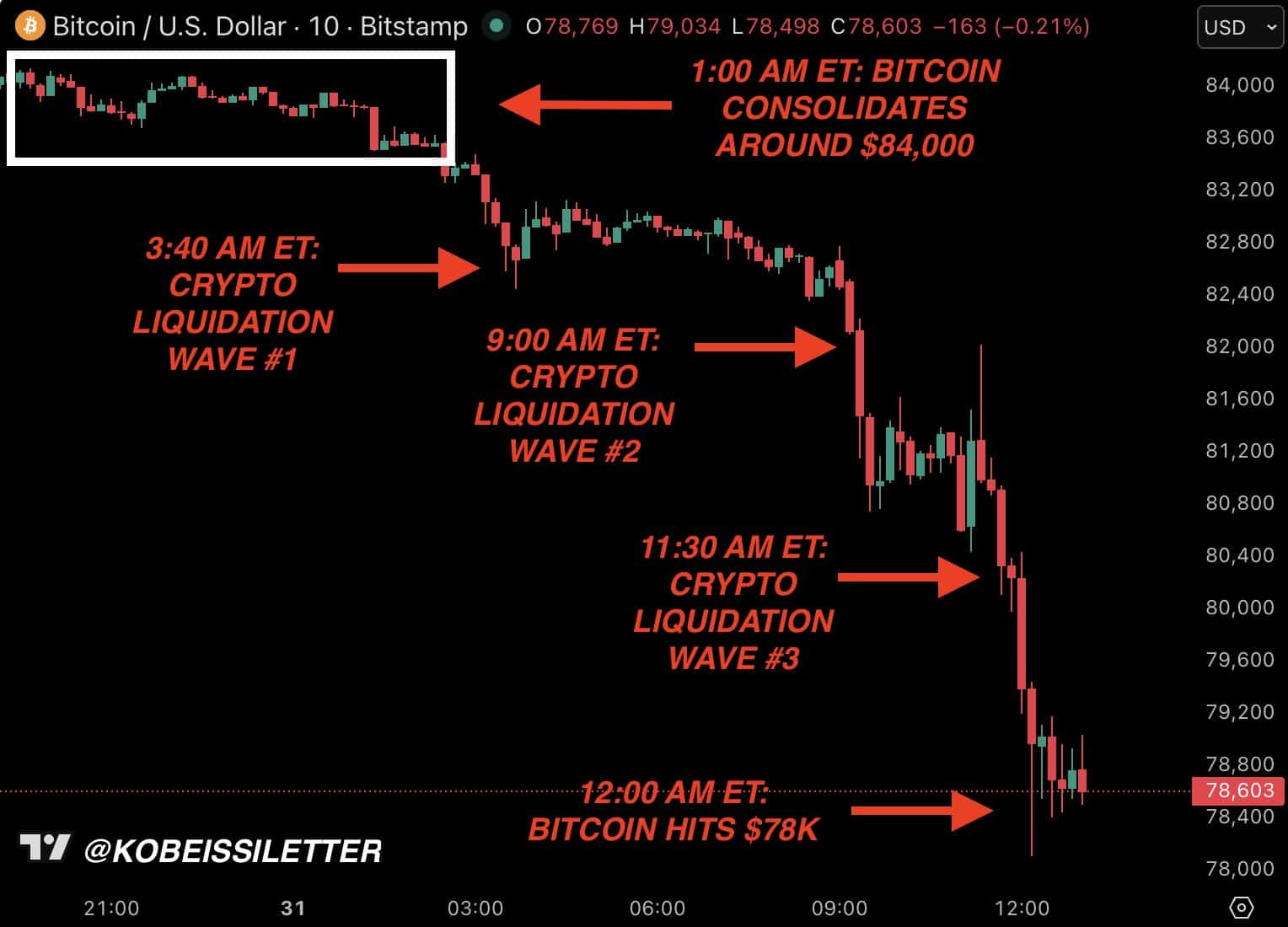
A lot of factors are being thrown around for today’s crypto selloff, from geopolitics to central banks. But the flow data shared by The Kobeissi Letter on X draws it down to one simple reason.

The market just ran out of liquidity.

Source: X

Bitcoin’s freefall state happened alongside three distinct liquidation events over about 12 hours, wiping out roughly $1.3 billion in positions. Each wave pushed prices lower as leveraged trades were automatically closed.

When liquidity is thin, heavy leverage leaves very little room for error. Prices can fall quickly because there aren’t enough buyers stepping in. Once liquidations start, they cause more selling, which pushes prices down even faster.

Crowd behavior amplified this.

As sentiment went bearish, traders rushed to the exit at the same time. A response like that stretches far beyond what the fundamentals alone would tell you.

Beyond crypto

According to Bull Theory, more than $12 trillion was wiped out from global markets in just 48 hours, as metals and equities sold off at the same time.

Precious metals took the hardest hit: gold fell over 16%, silver nearly 39%, and platinum and palladium dropped sharply as well. Equities followed, with losses across major U.S. indices.

Metals had rallied too far, too fast.

Silver, for example, had posted nine straight green monthly candles. That’s something we’ve never seen before.

Prices attracted late buyers using leverage.

When prices turned, margin calls kicked in, and it caused selling. Exchanges then raised margin requirements, which poured fuel on the fire. Traders were forced to post more collateral in falling markets, leading to even more liquidations.

A sudden shift in Federal Reserve leadership expectations (which removed a key bullish narrative) added to the unwind.

What the charts say about the future

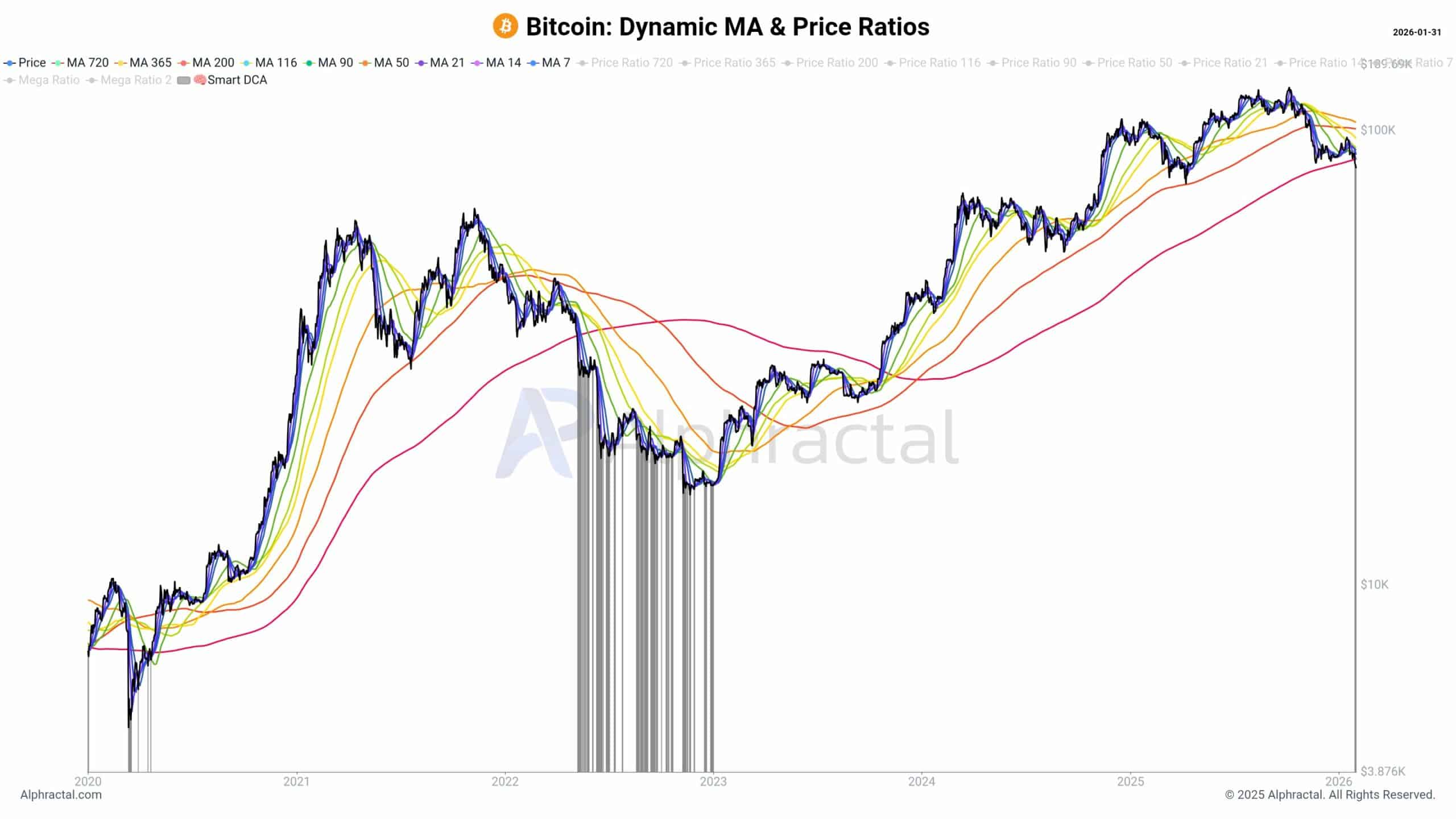
Source: Alphractal

According to Alphractal CEO Joao Wedson, Bitcoin [BTC] traded below its major moving averages for the first time since 2022. Price is going beneath long-term trend lines that often mean broader phases.

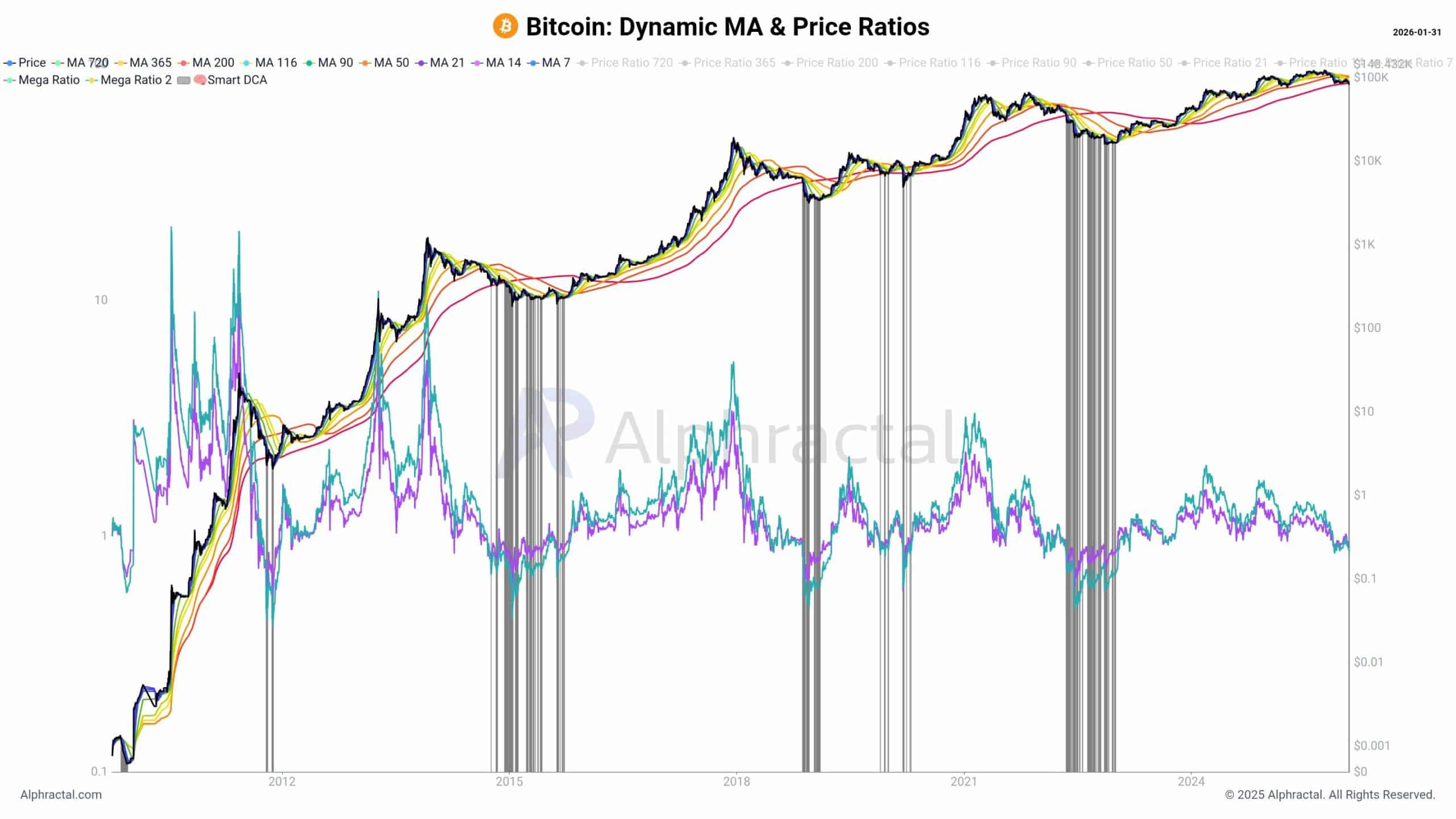
Source: Alphractal

This has so far been an early buying zone, with these phases lasting months! For more conservative investors, this is where gradual dollar-cost averaging has worked best.

Wedson noted that the key is capital management. Deploying everything at once rarely pays off in periods like this.

Instead, past cycles have said to hold back some cash and add exposure slowly. This is especially when fear is abound and most people expect things to get worse.


Final Thoughts

  • Bitcoin’s drop to $78K was caused by liquidations and thin liquidity.
  • With BTC now below key MAs, volatility is here to stay for a while.
Next: Solana: On-chain activity rises, but SOL isn’t done falling – Here’s why
Share
  • Share
  • Tweet

Related Questions

QWhat was the primary cause of Bitcoin's sharp drop to $78,000 according to the article?

AThe drop was primarily caused by heavy leverage and thin liquidity, which led to forced liquidations and a rapid decline in prices.

QHow much in leveraged positions was wiped out during Bitcoin's three liquidation events?

ARoughly $1.3 billion in leveraged positions was wiped out during the three liquidation events over about 12 hours.

QBeyond the crypto market, what other assets experienced significant losses according to Bull Theory?

APrecious metals and equities experienced significant losses, with over $12 trillion wiped out from global markets in 48 hours. Gold fell over 16%, silver nearly 39%, and platinum and palladium dropped sharply.

QWhat key technical indicator did Bitcoin break below for the first time since 2022?

ABitcoin traded below its major moving averages for the first time since 2022, breaking beneath long-term trend lines that often indicate broader market phases.

QWhat investment strategy does the article suggest for conservative investors during this volatile period?

AThe article suggests gradual dollar-cost averaging as the best strategy for conservative investors, holding back some cash and adding exposure slowly during periods of high fear and volatility.

Related Reads

Cook's Curtain Call and Ternus Takes the Helm: The Disruption and Reboot of Apple's 4 Trillion Dollar Empire

Tim Cook has officially announced he will step down as CEO of Apple in September, transitioning to executive chairman after a 15-year tenure during which he grew the company’s market value from around $350 billion to nearly $4 trillion. He will be succeeded by John Ternus, a 50-year-old hardware engineering veteran who has been groomed for the role through increasing public visibility and internal responsibility. Ternus’s appointment signals a strategic shift toward hardware and engineering leadership, with Johny Srouji—head of Apple Silicon—taking on an expanded role as Chief Hardware Officer. This consolidation aims to strengthen Apple’s core technological capabilities. However, Cook’s departure highlights a significant unresolved issue: Apple’s delayed and fragmented approach to artificial intelligence. Despite early efforts, such as hiring John Giannandrea from Google in 2018, Apple’s AI initiatives—particularly around Siri—have struggled with internal restructuring and reliance on external partnerships, including with Google. The transition comes at a critical moment as Apple faces paradigm shifts with the rise of artificial general intelligence (ASI). The company’s closed ecosystem of hardware, software, and services—once a major advantage—now presents challenges in adapting to an AI-centric world where intelligence may matter more than the device itself. Ternus must quickly articulate a clear AI strategy, possibly starting at WWDC, to reassure markets and redefine Apple’s role in a new technological era. His task is not only to maintain Apple’s operational excellence but also to reinvigorate its capacity to innovate and lead in the age of AI.

marsbit2h ago

Cook's Curtain Call and Ternus Takes the Helm: The Disruption and Reboot of Apple's 4 Trillion Dollar Empire

marsbit2h ago

Trading

Spot
Futures

Hot Articles

What is $BITCOIN

DIGITAL GOLD ($BITCOIN): A Comprehensive Analysis Introduction to DIGITAL GOLD ($BITCOIN) DIGITAL GOLD ($BITCOIN) is a blockchain-based project operating on the Solana network, which aims to combine the characteristics of traditional precious metals with the innovation of decentralized technologies. While it shares a name with Bitcoin, often referred to as “digital gold” due to its perception as a store of value, DIGITAL GOLD is a separate token designed to create a unique ecosystem within the Web3 landscape. Its goal is to position itself as a viable alternative digital asset, although specifics regarding its applications and functionalities are still developing. What is DIGITAL GOLD ($BITCOIN)? DIGITAL GOLD ($BITCOIN) is a cryptocurrency token explicitly designed for use on the Solana blockchain. In contrast to Bitcoin, which provides a widely recognized value storage role, this token appears to focus on broader applications and characteristics. Notable aspects include: Blockchain Infrastructure: The token is built on the Solana blockchain, known for its capacity to handle high-speed and low-cost transactions. Supply Dynamics: DIGITAL GOLD has a maximum supply capped at 100 quadrillion tokens (100P $BITCOIN), although details regarding its circulating supply are currently undisclosed. Utility: While precise functionalities are not explicitly outlined, there are indications that the token could be utilized for various applications, potentially involving decentralized applications (dApps) or asset tokenization strategies. Who is the Creator of DIGITAL GOLD ($BITCOIN)? At present, the identity of the creators and development team behind DIGITAL GOLD ($BITCOIN) remains unknown. This situation is typical among many innovative projects within the blockchain space, particularly those aligning with decentralized finance and meme coin phenomena. While such anonymity may foster a community-driven culture, it intensifies concerns about governance and accountability. Who are the Investors of DIGITAL GOLD ($BITCOIN)? The available information indicates that DIGITAL GOLD ($BITCOIN) does not have any known institutional backers or prominent venture capital investments. The project seems to operate on a peer-to-peer model focused on community support and adoption rather than traditional funding routes. Its activity and liquidity are primarily situated on decentralized exchanges (DEXs), such as PumpSwap, rather than established centralized trading platforms, further highlighting its grassroots approach. How DIGITAL GOLD ($BITCOIN) Works The operational mechanics of DIGITAL GOLD ($BITCOIN) can be elaborated on based on its blockchain design and network attributes: Consensus Mechanism: By leveraging Solana’s unique proof-of-history (PoH) combined with a proof-of-stake (PoS) model, the project ensures efficient transaction validation contributing to the network's high performance. Tokenomics: While specific deflationary mechanisms have not been extensively detailed, the vast maximum token supply implies that it may cater to microtransactions or niche use cases that are still to be defined. Interoperability: There exists the potential for integration with Solana’s broader ecosystem, including various decentralized finance (DeFi) platforms. However, the details regarding specific integrations remain unspecified. Timeline of Key Events Here is a timeline that highlights significant milestones concerning DIGITAL GOLD ($BITCOIN): 2023: The initial deployment of the token occurs on the Solana blockchain, marked by its contract address. 2024: DIGITAL GOLD gains visibility as it becomes available for trading on decentralized exchanges like PumpSwap, allowing users to trade it against SOL. 2025: The project witnesses sporadic trading activity and potential interest in community-led engagements, although no noteworthy partnerships or technical advancements have been documented as of yet. Critical Analysis Strengths Scalability: The underlying Solana infrastructure supports high transaction volumes, which could enhance the utility of $BITCOIN in various transaction scenarios. Accessibility: The potential low trading price per token could attract retail investors, facilitating wider participation due to fractional ownership opportunities. Risks Lack of Transparency: The absence of publicly known backers, developers, or an audit process may yield skepticism regarding the project's sustainability and trustworthiness. Market Volatility: The trading activity is heavily reliant on speculative behavior, which can result in significant price volatility and uncertainty for investors. Conclusion DIGITAL GOLD ($BITCOIN) emerges as an intriguing yet ambiguous project within the rapidly evolving Solana ecosystem. While it attempts to leverage the “digital gold” narrative, its departure from Bitcoin's established role as a store of value underscores the need for a clearer differentiation of its intended utility and governance structure. Future acceptance and adoption will likely depend on addressing the current opacity and defining its operational and economic strategies more explicitly. Note: This report encompasses synthesised information available as of October 2023, and developments may have transpired beyond the research period.

363 Total ViewsPublished 2025.05.13Updated 2025.05.13

What is $BITCOIN

Discussions

Welcome to the HTX Community. Here, you can stay informed about the latest platform developments and gain access to professional market insights. Users' opinions on the price of BTC (BTC) are presented below.

活动图片