BIT Makes First Appearance After Brand Upgrade, Hosts 'Trust in Digital Finance' Industry Event in Singapore

marsbitPublished on 2026-03-27Last updated on 2026-03-27

Abstract

BIT (formerly Matrixport) held its first industry event, "Trust in Digital Finance," in Singapore on March 27, 2026, following its recent rebranding. The event brought together global financial institutions and digital asset industry representatives to discuss governance standards, compliance frameworks, and operational infrastructure as the sector becomes increasingly institutionalized. Cynthia Wu, Co-Founder and Chief Commercial Officer, highlighted the approval of U.S. spot Bitcoin ETFs in early 2024 as a key turning point, attracting more mainstream institutional capital. This has elevated requirements for platforms and infrastructure, making custody architecture, compliance, and operational transparency essential rather than optional. Chief Brand Officer Wendy Sun explained that the rebrand to BIT—which stands for "Bridge Into Tomorrow," "Build on Integrity and Trust," and "Build It Together"—reflects the group’s vision to advance digital finance infrastructure collaboratively and trustworthily. Discussions also centered on BIT’s recently published Trust Whitepaper, which outlines a trust framework covering risk governance, multi-jurisdictional compliance, custody security, and independent auditing. Cactus Custody CEO Daniel Lee and Chief Compliance Officer Christopher Liu elaborated on its practical implementation, including SOC audits and ISO certifications. BIT, headquartered in Singapore, is a global digital asset financial services group with over $6 billion in ...

On March 27, 2026, BIT (formerly Matrixport) hosted the "Trust in Digital Finance" industry event in Singapore this week, inviting representatives from global financial institutions and the digital asset industry to discuss governance standards, compliance frameworks, and operational infrastructure in the process of institutionalization. This marks BIT's first public industry event since completing its brand upgrade.

Cynthia Wu, Co-founder and Chief Business Officer of BIT, stated that the approval of the U.S. spot Bitcoin ETF in early 2024 was a critical turning point for the industry's move toward institutionalization, further integrating digital assets into the asset allocation strategies of mainstream institutions. As institutional capital accelerates its entry into the market, the requirements for platforms and infrastructure have significantly increased, with custody architecture, compliance systems, and operational transparency shifting from value-added features to entry-level prerequisites.

Chief Brand Officer Wendy Sun noted that the transition from Matrixport to BIT reflects the group's strategic positioning for the future of digital finance. BIT not only stands for "Bridge Into Tomorrow" but also embodies the dual meanings of "Build on Integrity and Trust" and "Build It Together," conveying the group's vision of fostering trust and collaborating with industry partners to advance the development of digital financial infrastructure.

The event also featured in-depth discussions around the "Trust White Paper" released by BIT last week. Daniel Lee, CEO of Cactus Custody, elaborated on the trust framework outlined in the white paper, covering risk governance, multi-jurisdictional compliance, custody security architecture, and independent audit mechanisms. Chief Compliance Officer Christopher Liu provided practical insights into the implementation of these frameworks in daily operations, including SOC audit reports and independent verification of ISO security standards.

About BIT

BIT (formerly Matrixport) was founded in 2019 as a global digital asset financial services group built on integrity. Headquartered in Singapore, the group has offices in seven countries and regions worldwide, connecting traditional finance and digital asset markets through robust governance systems, technological capabilities, and compliant operations.

BIT provides global institutions and professional investors with services spanning trading, custody, asset management, liquidity, and financing solutions, while also enabling the on-chain introduction and application of real-world assets (RWA). Its entities hold licenses and are regulated in Singapore, Hong Kong, Switzerland, the UK, the U.S., and Bhutan, including a Major Payment Institution (MPI) license in Singapore and a collective asset management license issued by Switzerland's FINMA.

Currently, the group manages over $6 billion in assets, with a monthly trading volume exceeding $7 billion and cumulative interest payments to clients totaling over $2 billion. With a valuation surpassing $1 billion, BIT has been featured in the "2024 Hurun Global Unicorn List" and the "2025 Singapore FinTech Unicorn List."


Related Questions

QWhat was the main theme of the industry event hosted by BIT in Singapore?

AThe main theme of the event was 'Trust in Digital Finance', focusing on governance standards, compliance frameworks, and operational infrastructure in the institutionalization of the digital asset industry.

QAccording to Cynthia Wu, what was the key turning point for the institutionalization of the digital asset industry in early 2024?

ACynthia Wu stated that the approval of the U.S. spot Bitcoin ETF in early 2024 was a key turning point, as it further brought digital assets into the asset allocation scope of mainstream institutions.

QWhat does the new brand name 'BIT' represent, as explained by Chief Brand Officer Wendy Sun?

AWendy Sun explained that 'BIT' not only stands for 'Bridge Into Tomorrow' but also carries the meanings of 'Build on Integrity and Trust' and 'Build It Together', conveying the group's vision of building digital financial infrastructure based on trust and in collaboration with industry partners.

QWhat key document was discussed at the event, and what framework did it introduce?

AThe event discussed BIT's recently published 'Trust White Paper', which introduced a trust framework covering risk governance, multi-jurisdictional compliance, custody security architecture, and independent audit mechanisms.

QWhat are some of the key statistics and achievements mentioned about BIT at the end of the article?

ABIT manages over $6 billion in assets, has a monthly trading volume exceeding $7 billion, has paid a cumulative total of over $2 billion in interest to clients, and has a valuation exceeding $1 billion. It has been listed on the '2024 Hurun Global Unicorn List' and the '2025 Singapore FinTech Unicorn List'.

Related Reads

Once-Popular Web3 Enters Wave of Layoffs

The once-hot Web3 industry is experiencing a severe wave of layoffs. While many companies attribute job cuts to AI-driven restructuring, the primary reason is often financial pressure. The Web3 sector, at the intersection of tech and finance, has been hit particularly hard. Employees at major cryptocurrency exchanges report sudden, impersonal layoffs—often with system access revoked overnight—and minimal or no severance. Common tactics include setting impossible performance targets or terminating employees for minor policy violations. The working atmosphere has become toxic, marked by intense monitoring, excessive meetings, and management obsessed with control and internal politics rather than product innovation. The industry's core business model is collapsing. Exchange revenue from trading fees and listing charges has plummeted due to a decline in quality projects and retail investor exodus. Events like the massive forced liquidation on October 10th further shattered confidence. Competition from on-chain derivatives platforms and prediction markets is intensifying the downturn. As layoffs continue, displaced workers struggle to find new opportunities. Many transition to the AI sector, but face significant bias from traditional finance and even some AI firms, which view crypto industry experience with suspicion. The current downturn appears more structural than cyclical, driven by unsustainable practices, internal strife, and a failure to innovate, raising questions about the industry's future trajectory.

marsbit48m ago

Once-Popular Web3 Enters Wave of Layoffs

marsbit48m ago

Sales Drop 26% But Prices Rise? Xiaomi's Dilemma

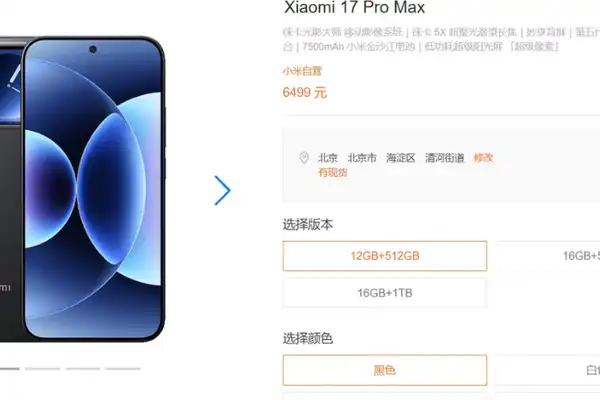
Xiaomi, facing a significant 26.3% year-on-year decline in global smartphone shipments in Q2 2026, has implemented its third price hike of the year. On August 2nd, prices were raised for nine models, including the flagship Mi 17 series (up 400-500 yuan) and Redmi K90/Turbo 5 series (up 300 yuan). This move completes a pattern where cost pressure, originating from surging memory chip prices, has climbed from entry-level to mid-range and now flagship products. The primary driver is a severe supply squeeze on consumer-grade DRAM and NAND flash memory, as major manufacturers like Samsung shift advanced capacity to more profitable HBM for AI applications. According to Xiaomi President Lu Weibing, memory prices for the same configuration have skyrocketed nearly fourfold since Q1 2025, adding roughly 1500 yuan to the cost of a mainstream 12GB+512GB phone. IDC estimates consumer memory costs have risen nearly 300% year-on-year. While the price increases hurt demand and contributed to the sales slump, Xiaomi's strategy of reducing entry-level models and upgrading its product mix also played a role. Domestically, its market share in China fell to 12% (5th place), while leaders Huawei and Apple saw shipments grow over 24%. To mitigate future risks, Xiaomi is accelerating its in-house "Surge" chip development and optimizing memory configurations across its lineup. Xiaomi is not alone; major brands like OPPO, vivo, and Apple have already raised prices in 2026, with industry insiders predicting another round of increases (200-800 yuan) in the second half. A full-scale industry-wide涨价 cycle is underway, forcing both manufacturers and consumers to recalibrate their strategies and purchasing decisions amid sustained cost pressures.

marsbit59m ago

Sales Drop 26% But Prices Rise? Xiaomi's Dilemma

marsbit59m ago

Trading

Spot
活动图片