Bank of Korea Interprets the AI Semiconductor Cycle: The Most Dangerous Signal Lies in Financing

marsbitPublished on 2026-04-13Last updated on 2026-04-13

Abstract

The Bank of Korea (BoK) released a report examining the sustainability of the current AI-driven semiconductor supercycle, concluding that the expansion is likely to continue until at least the first half of 2026. The report highlights three key differences from past cycles: unprecedented demand growth (driven by HBM and AI accelerators), severely constrained supply (due to complex HBM production and conservative industry expansion), and a significantly larger and longer supply-demand gap. Five critical factors will determine the cycle's longevity: 1. The profitability of AI investments, as market focus shifts from market share capture to earnings. 2. The ability of major tech firms to secure financing, with internal cash flows already insufficient to cover massive CAPEX, leading to increased corporate debt issuance and risky vendor financing structures reminiscent of the telecom bubble. 3. Uncertain impact of AI model efficiency improvements, which could either reduce per-unit demand or increase total consumption. 4. Expansion speed of major memory manufacturers, with significant new capacity from SK Hynix, Micron, and Samsung only expected from late 2027. 5. Ramping production from Chinese manufacturers, whose DRAM market share is projected to grow rapidly, pressuring prices. The report warns that financing fragility—evidenced by rising CDS spreads, off-balance-sheet SPV financing, and redemption halts in private credit funds—is the most critical risk. While the cycle rem...

Compiled by: Macro_Lin

Recently, I read a special report released by the Bank of Korea (BoK) titled "Examination of the Sustainability of the Global Semiconductor Boom." This report is quite unique.

South Korea is a major global exporter of memory chips. The financial reports of Samsung and SK Hynix are, to some extent, the national economic reports for the BoK. When this central bank itself steps in to seriously discuss how far this AI-driven semiconductor super cycle can actually go, the attitude itself is noteworthy. Sell-side research reports have their biases, bearish reports carry emotion; BoK's document is permeated with the restrained tone characteristic of a central bank, with a much higher density of argumentation than emotional charge.

Core View

The Bank of Korea judges that the amplitude and duration of the supply-demand imbalance in this memory cycle significantly exceed those of the past three cycles, and expansion is certain to continue at least until the first half of 2026. However, starting in 2027, five variables will jointly determine the timing of the reversal, with two of the most concerning signals already emerging.

I. How This Round Differs from the Past Three

BoK divides the semiconductor cycles since 2010 into four rounds: smartphone普及 (2013-2015), cloud expansion (2017-2018), pandemic non-contact demand (2020-2021), and the current round of AI diffusion (2024-present).

The script for the past three rounds was the same. New technology pulls up demand, supply lags behind to catch up, concentrated release of expanded production leads supply to surpass demand, inventory accumulates, prices fall, and the cycle reverses. Post-2017, this reversal point highly coincided with the inflection point in CAPEX of large US tech companies.

This round differs in three aspects.

First, demand growth is the fastest in history. HBM is exploding with the loading volume of AI accelerators, and general-purpose DRAM is also being driven up by inference needs. It's a synchronous expansion across all categories.

Second, supply elasticity is the worst in history. HBM processes are difficult with long expansion cycles. Memory manufacturers, having experienced the bloodbath of 2022-2023, are conservative in expansion. General-purpose DRAM production lines are being switched to HBM, further exacerbating the tightness of general-purpose products.

Third is the result. BoK created a crucial chart plotting the demand-production gap of the four cycles on the same coordinates. The imbalance amplitude and duration of this round significantly exceed those of the past three. Inventory levels at both the DRAM manufacturing and demand ends are declining, with no signs of accumulation.
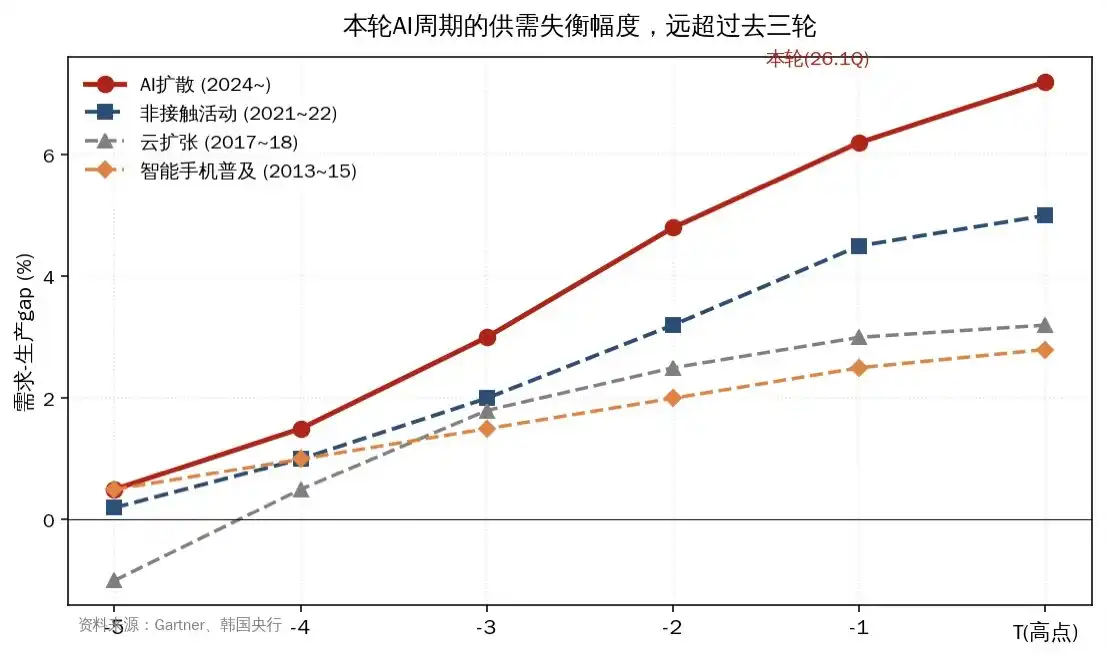
Figure 1: Comparison of Demand-Production Gaps in Past Semiconductor Cycles, Current AI Cycle Amplitude Significantly Exceeds History

II. The Five Variables Determining How Far the Cycle Can Go

BoK provides a clear five-factor framework: three on the demand side, two on the supply side. I'll explain them in order of importance.

1. Timing of Profitability Verification for AI Investments. Currently, OpenAI, Anthropic, etc., are operating at a loss. What supports their valuations and investments is the market's expectation of future dominance. BoK's judgment is subtle: starting next year, the market's focus will shift from grabbing territory to whether it can make money. Coupled with risks like data center power bottlenecks, accelerated GPU depreciation, and insufficient utilization, it's difficult for CAPEX growth to maintain its current pace.

2. Whether Large Companies Can Continuously Raise Funds. This section is the most informative part of the entire report. BoK explicitly compares the present to the telecom bubble of the late 1990s and points out a worsening fact: the internal cash flow of large companies can no longer support CAPEX of this magnitude. Starting in the second half of last year, large companies reduced buybacks and significantly issued corporate bonds; the CDS spreads of some companies have already widened.
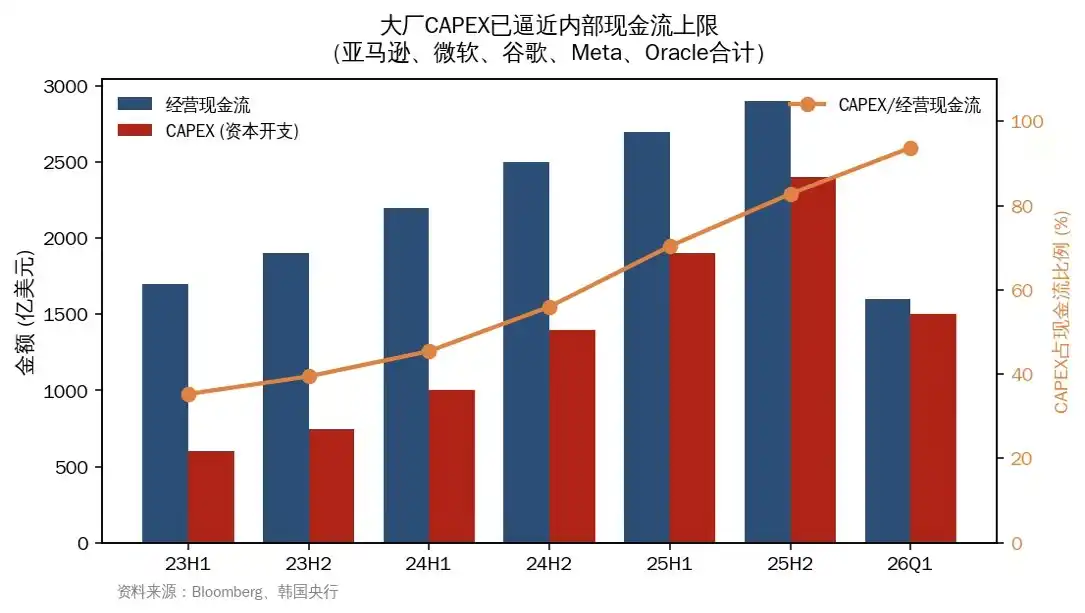
Figure 2: Large Companies' Operating Cash Flow Can No Longer Cover CAPEX, Ratio Soared from 25% to Nearly 100%
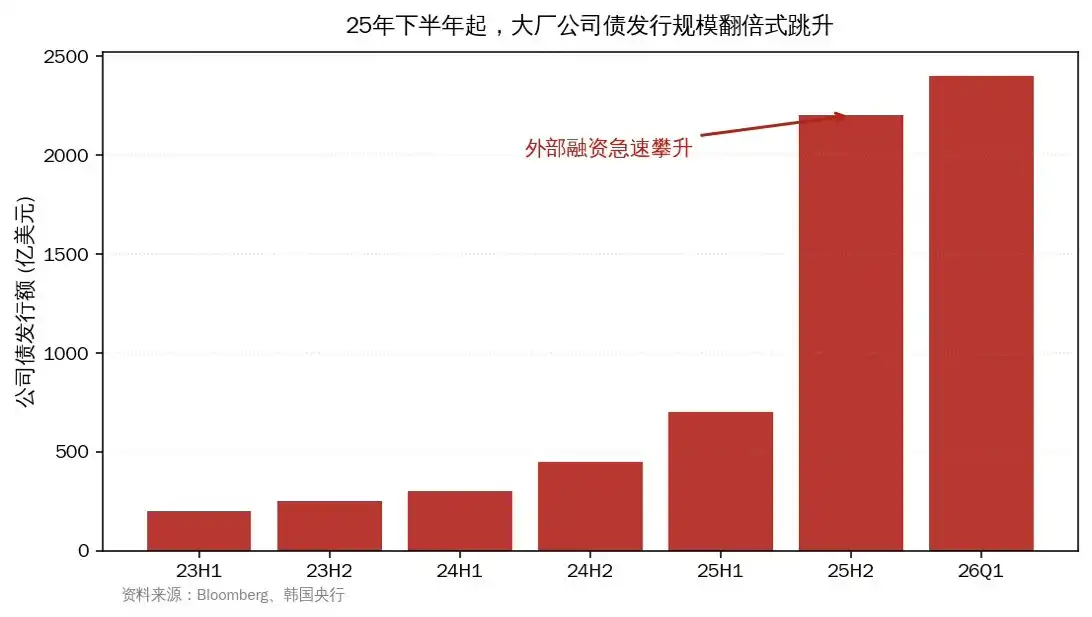
Figure 3: Corporate Bond Issuance Volume Jumped in H2 2025, External Financing Becomes Main Supplement

Even more alarming is the financing behavior itself. Neocloud companies (e.g., CoreWeave) are much smaller than large firms but must continuously procure GPUs and build AI data centers. Nvidia provides them with credit support to boost sales of its own GPUs. This structure is highly similar to the vendor financing provided by Cisco and Lucent to nascent telecom companies back then.

Another layer is off-balance-sheet financing. Meta's Hyperion data center, through SPVs and private credit, has $29.5 billion in liabilities not on Meta's balance sheet. Oracle's Stargate ($66 billion), xAI's Colossus ($20 billion) use similar structures. BoK mentions a detail: in February-March 2026, institutions like Blue Owl, BlackRock, Morgan Stanley, and Cliffwater suspended redemptions for some private credit funds due to AI disruption concerns. This is a crack.

3. Progress in AI Model Efficiency. After DeepSeek, memory-saving technologies like quantization compression, MoE, Mamba, Nvidia's CMX, Google's TurboQuant are rapidly emerging. BoK frankly admits the bidirectional impact is uncertain. Efficiency gains could either reduce unit demand or, due to Jevons Paradox, increase total demand. This factor is marked with a bidirectional arrow in BoK's overall assessment table, the only one among the five without a definitive direction.

4. Expansion Speed of Major Memory Manufacturers. This year, Samsung's P4 and SK Hynix's M15X have exhausted existing cleanroom space but it's still insufficient. The real supply release window is in the second half of 2027. SK Hynix's Yongin, Micron's new fab in 2027H2, Samsung's P5 in 2028. These are hard constraints on the supply side that can be calendared.

5. Catch-up Speed of Chinese Manufacturers. BoK assesses the technology gap between China and South Korea is about 4 years, for both HBM and general-purpose DRAM. So the high-end landscape remains stable short-term. But one number is noteworthy: the DRAM shipment share of Chinese manufacturers may rise from 10.5% in 2025 to 17% in 2027, with a growth rate over the next two years more than 3 times that of major memory makers. This share will pressure general-purpose DRAM prices, accelerating the timing of imbalance relief.
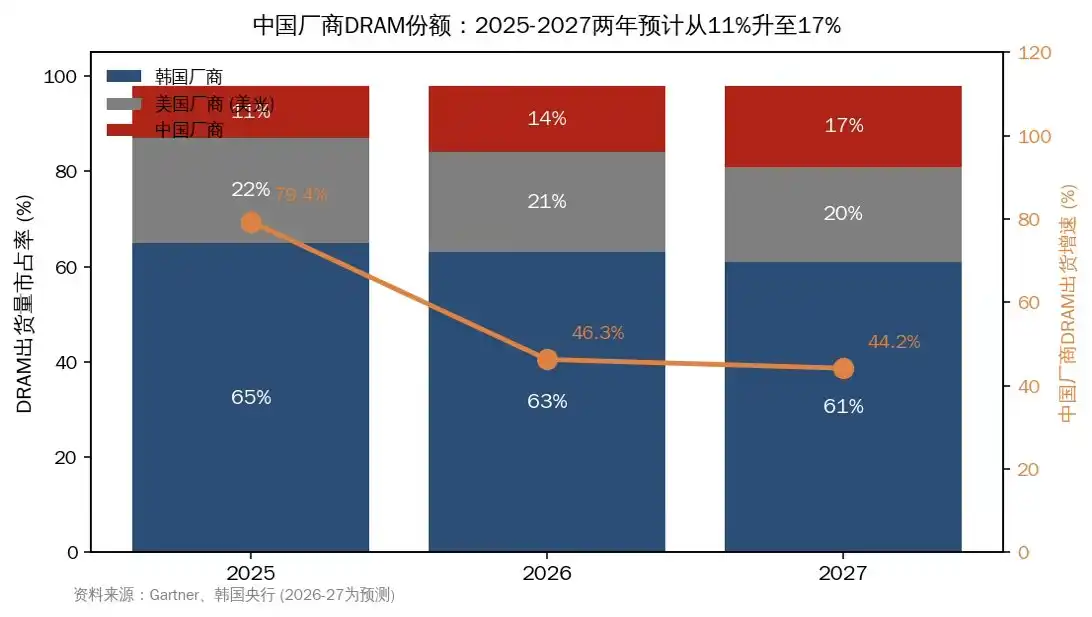
Figure 4: Chinese Manufacturers' DRAM Share Rises from 11% to 17%, Shipment Growth Far Exceeds Major Memory Makers

III. Regarding the Middle East War, BoK's Judgment is Calmer Than Expected

Currently, there are no signs of data center construction delays or memory supply slowdowns. The AI investment cycle is led by US companies, with 74% of data centers under construction in the Americas. The correlation between the global economy and semiconductors has significantly weakened in recent years.

But BoK lists several potential transmission channels. Rising oil prices increase data center operating costs, tightening financial conditions increase large companies' financing difficulties, supply disruptions of Middle Eastern raw materials and equipment (bromine, helium), and if Taiwan's energy issues affect system chip production, it would drag down memory. The most direct backlash is on the consumer side: Gartner already predicts that due to memory price increases, PC shipments will fall 10.4% YoY and smartphones 8.4% in 2026.

IV. Piecing Together the Timeline

BoK concludes with a color-coded matrix visualizing the impact strength of each of the five factors for the years 2026, 2027, and 2028. I translate the implications of this chart into a narrative timeline.

2026: The pattern of demand dominance and supply constraints continues. This is the most certain year.

2027: Contradictions begin to accumulate. Large company financing pressure rises, Chinese expansion accelerates, new fabs are not yet operational but vulnerabilities in financing end are exposed.

2028: Concentrated release from Samsung's P5, SK Hynix's Yongin, Micron's new fab. Risks on the supply side significantly amplify.

An Extension

The truly interesting part of this report is its narrative style. A central bank whose national foundation is memory did not cheerlead for its domestic industry. It spent significant篇幅 arguing the fragility of the financing structure, the bidirectional uncertainty of technological efficiency, and the微妙 inflection point in 2027 on the timeline. This restraint is an attitude in itself.

Its comparison to the telecom bubble is the part I reread several times. The script back then was: strong initial demand叠加competitive expansion,再叠加a technological innovation that arrived faster than expected (WDM - Wavelength Division Multiplexing), ultimately pushing the industry into rapid oversupply. Today's AI industry has all three conditions present, the difference is just that the critical technology equivalent to WDM hasn't appeared yet.

When domestic investors focus on the memory industry chain, their attention habitually falls on supply-side matters like HBM yield rates, CXMT progress. BoK's report pulls the focus back to the other side: the real variable in this cycle lies on the demand side, more precisely, hidden in the financing sustainability of the AI industry. Signals like Neocloud's vendor financing, off-balance-sheet leverage of SPVs, redemption halts in private credit funds—these deserve closer scrutiny than any expansion timetable.

At least until the first half of 2026, the story continues. The script thereafter depends on how the five variables above play out.

Related Questions

QAccording to the Bank of Korea (BoK), what is the main reason this AI-driven semiconductor super cycle is different from the previous three cycles?

AThe BoK identifies three key differences: 1) The fastest demand growth in history, driven by HBM and general DRAM for AI; 2) The worst supply elasticity in history due to HBM's complexity and conservative post-2022 expansion; 3) The resulting supply-demand gap is significantly larger and longer-lasting than in past cycles.

QWhat are the two most critical warning signals for the cycle's sustainability that the BoK report highlights in the financing sector?

AThe two critical warning signals are: 1) Major tech companies' internal cash flow can no longer cover their massive CAPEX, forcing them to reduce buybacks and issue corporate debt. 2) The rise of vendor financing for Neocloud companies (e.g., by Nvidia) and the use of off-balance-sheet SPV financing (e.g., by Meta and Oracle), which resembles the structure of the telecom bubble. Additionally, some private credit funds have halted redemptions due to AI disruption concerns.

QHow does the BoK assess the potential impact of Chinese semiconductor manufacturers on the global market?

AThe BoK estimates a technical gap of about 4 years between Chinese and Korean manufacturers for both HBM and general DRAM. However, it notes that the shipment share of Chinese DRAM is projected to rise from 10.5% in 2025 to 17% in 2027, with a growth rate more than three times that of major manufacturers. This expansion is expected to put downward pressure on general DRAM prices and accelerate the timeline for the supply-demand imbalance to ease.

QWhat is the BoK's projected timeline for the semiconductor cycle based on its five-factor framework?

AThe BoK's projected timeline is: 2026: The expansion continues as demand outweighs constrained supply. 2027: Contradictions begin to accumulate with rising financing pressure for big tech and accelerated Chinese expansion, while new fabs are not yet online. 2028: Significant supply-side risks emerge as major new fabs from Samsung, SK Hynix, and Micron begin concentrated production.

QWhy does the BoK draw a comparison between the current AI investment cycle and the telecom bubble of the late 1990s?

AThe BoK draws the comparison due to structural similarities: strong initial demand, competitive expansion, and the potential for a rapid technological innovation to trigger oversupply. Specifically, it highlights the parallel between vendor financing provided to new cloud companies today (like Nvidia's support for CoreWeave) and the vendor financing provided by companies like Cisco and Lucent to new telecom firms during the bubble. The report suggests that today's AI industry has all the conditions present that existed before the telecom bubble, except for the specific critical technology (like WDM) that ultimately caused the crash.

Related Reads

Trading

Spot
Futures

Hot Articles

What is $BANK

Bank AI: A Revolutionary Step in the Future of Banking Introduction In an era marked by rapid advancements in technology, Bank AI stands at the intersection of artificial intelligence (AI) and banking services. This innovative project seeks to redefine the financial landscape, enhancing operational efficiency, security measures, and customer experiences through the power of AI. As we embark on this exploration of Bank AI, we will delve into what the project entails, its operational dynamics, its historical context, and significant milestones. What is Bank AI? At its core, Bank AI represents a transformative initiative aimed at integrating artificial intelligence into various banking operations. This project harnesses the capabilities of AI to automate processes, improve risk management protocols, and enhance customer interaction through personalised services. The primary objectives of Bank AI include: Automation of Banking Functions: By leveraging AI technologies, Bank AI aims to automate routine tasks, reducing the burden on human resources and enhancing efficiency. Enhanced Risk Management: The project utilises AI algorithms to predict and identify risks, thereby fortifying security measures against fraud and other threats. Personalisation of Banking Services: Bank AI focuses on offering tailored financial products and services by analysing customer data and behaviours. Improving Customer Experience: The implementation of AI-driven solutions, such as chatbots and virtual assistants, aims to provide users with more human-like interactions, revolutionising the way customers engage with banks. With these goals, Bank AI positions itself as a crucial player in rendering banking more efficient, secure, and user-centric. Who is the Creator of Bank AI? Details regarding the creator of Bank AI remain unknown. As such, no specific individual or organisation has been identified in the available information. The anonymity surrounding the project's inception raises questions but does not detract from its ambitious vision and objectives. Who are the Investors of Bank AI? Similar to the project's creator, specific information regarding the investors or supporting organisations of Bank AI has not been disclosed. Without this information, it is challenging to outline the financial backing and institutional support that might be propelling the project forward. Nevertheless, the importance of having a robust investment foundation is pivotal for sustaining development in such an innovative field. How Does Bank AI Work? Bank AI operates on several innovative fronts, focusing on unique factors that differentiate it from traditional banking frameworks. Below are key operational features: Automation: By applying machine learning algorithms, Bank AI automates various manual processes within banks. This results in reduced operational costs and allows human workers to redirect their efforts towards more strategic activities. Advanced Risk Management: The integration of AI into risk management practices equips banks with tools to accurately predict potential threats such as fraud, ensuring that customer information and assets remain secure. Tailored Financial Recommendations: Through continuous learning from customer interactions, the AI systems develop a nuanced understanding of user needs, enabling them to offer tailored advice on financial decisions. Enhanced Customer Interactions: Utilizing chatbots and virtual assistants powered by AI, Bank AI enables a more engaging customer experience, allowing users to have their queries resolved quickly, thus reducing wait times and improving satisfaction levels. Together, these operational features position Bank AI as a pioneer in the banking sector, establishing new benchmarks for service delivery and operational excellence. Timeline of Bank AI Understanding the trajectory of Bank AI requires a look at its historical context. Below is a timeline highlighting important milestones and developments: Early 2010s: The conceptualisation of AI integration into banking services began to gain attention as banking institutions recognised the potential benefits. 2018: A marked increase in the implementation of AI technologies occurred when banks started using AI tools like chatbots for basic customer service and risk management systems for improved security handling. 2023: The sophistication of AI continued to advance, with generative AI being introduced for more complex tasks such as document processing and real-time investment analysis. This year marked a significant leap in the capabilities afforded to banks by AI technology. 2024-Current Status: As of this year, Bank AI is on an upward trajectory, with ongoing research and developments poised to further enhance capabilities in banking operations. Continued exploration of AI applications hints at exciting developments yet to come. Key Points About Bank AI Integration of AI in Banking: Bank AI focuses on adopting artificial intelligence to streamline banking processes and improve user experiences. Automation and Risk Management Focus: The project strongly emphasises these areas, aiming to shift the burden of routine tasks while enhancing security frameworks through predictive analytics. Personalised Banking Solutions: By harnessing customer data, Bank AI enables tailored banking services that cater to individual user needs. Commitment to Development: Bank AI remains committed to ongoing research and development efforts, ensuring its adaptability and ongoing relevance as technology continues to evolve. Conclusion In summary, Bank AI exemplifies a crucial step forward in the banking industry, leveraging artificial intelligence to reshape operational paradigms, enhance security, and promote customer satisfaction. Despite gaps in information surrounding the creator and investors, the clear objectives and functional mechanisms of Bank AI provide a strong foundation for its ongoing evolution. As AI technology continues to advance and merge with the banking sector, Bank AI is well-positioned to significantly impact the future of financial services, enhancing the way we understand and interact with banking.

152 Total ViewsPublished 2024.04.06Updated 2024.12.03

What is $BANK

Discussions

Welcome to the HTX Community. Here, you can stay informed about the latest platform developments and gain access to professional market insights. Users' opinions on the price of BANK (BANK) are presented below.

活动图片