Author: Ernesto Lopez
Compiled by: Felix, PANews
How can a complete beginner earn MRR (Monthly Recurring Revenue) by developing an app? Recently, a blogger (Ernesto Lopez) shared a practical guide based on personal experience on how to develop and promote an app from scratch to achieve high MRR. The details are as follows.
My first app made $20,000 within 30 days of launch. What I'm about to share might change your life. The reason I entered the B2C app space is that apps are the only business model that can truly generate passive income.
Build once, sell forever, no phone calls or annoying meetings, and it's subscription-based. More importantly, having an app feels really cool.
In the next five years, apps will create more millionaires than e-commerce. But opportunities are limited, and only a very few will succeed. How to start developing a B2C app? It's not that hard.
I launched my first app, "Snapout," with zero experience and made $20,000 in 30 days with 2 viral videos.
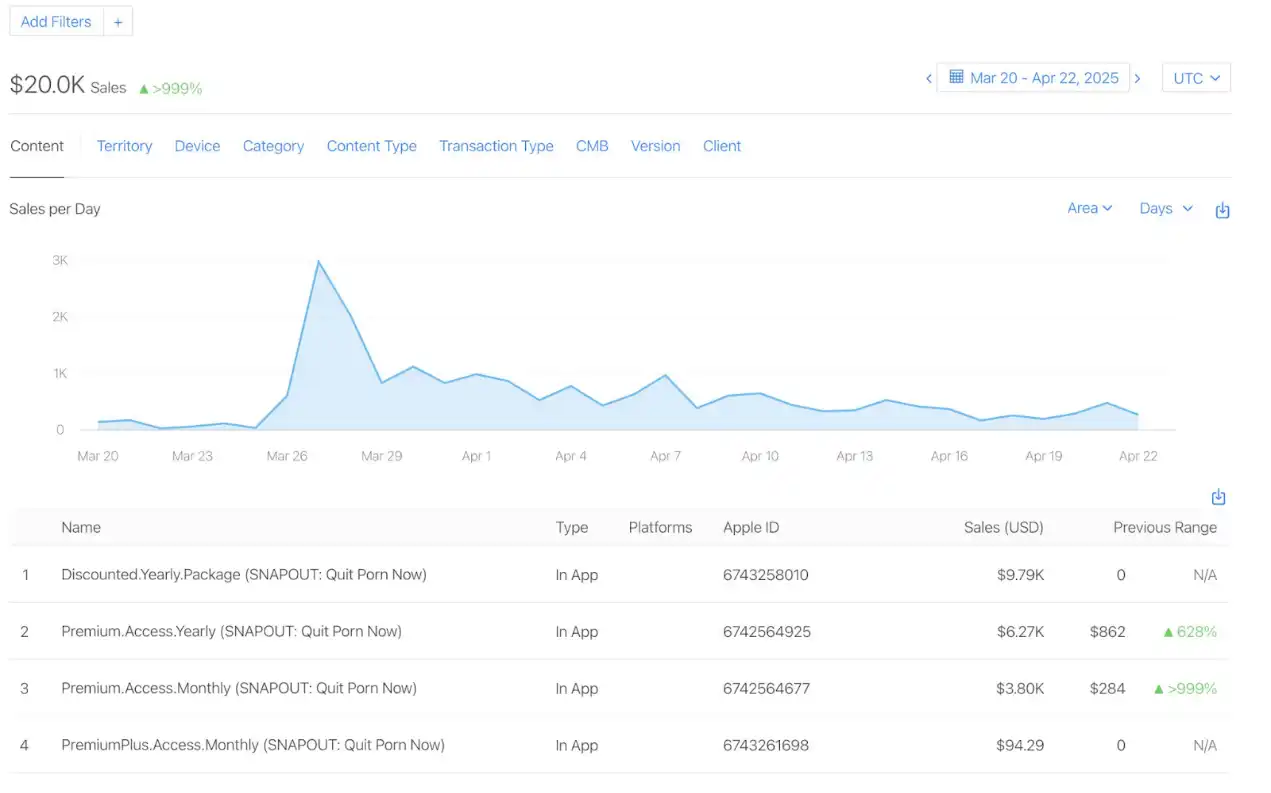
Was it luck? Of course not, it was the result of a series of carefully planned steps. If you follow the steps below, you can achieve similar results.
1. Validate Your App Idea (Don't Waste Time)
Most people fail before they even start. Ideas are a double-edged sword; everyone wants to develop their "dream app." But the most important step before you start building is to choose a niche and validate your app idea. Make sure it's something consumers actually want.
Here is the process I use for developing 10 apps:
1. Find a Pain Point: Find a problem that people struggle with every day, which you can solve with an app. Here are some proven app niche areas for you to choose from:
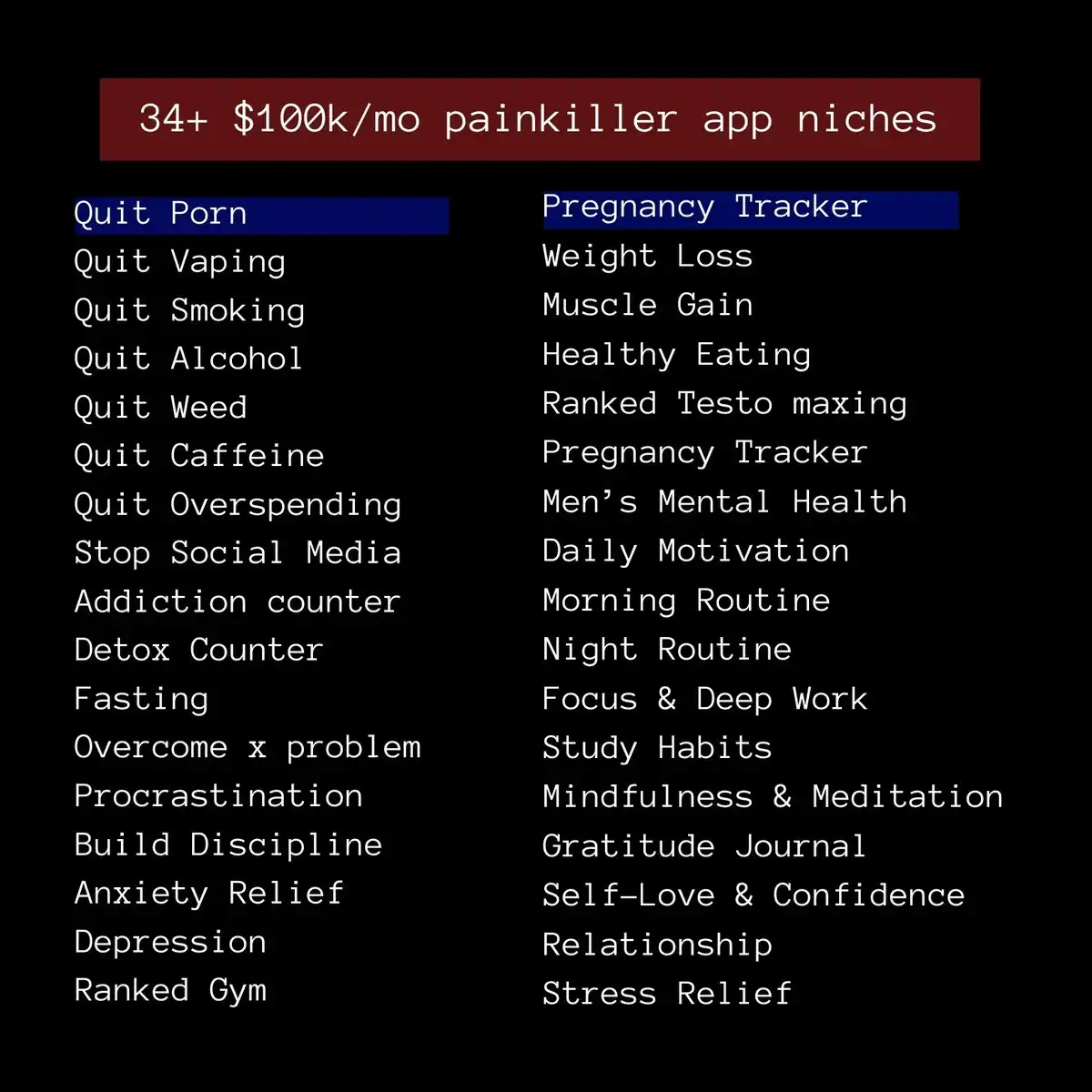
(34 App Niches with Over $100k MRR: NoFap, Quit Vaping, Quit Smoking, Quit Drinking, Quit Weed, Quit Caffeine, Quit Overspending, Quit Social Media, Sobriety Counter, Detox Counter, Fasting, Overcoming X Problem, Overcoming Procrastination, Building Discipline, Anxiety Relief, Depression, Gym Rankings, Pregnancy Tracking, Weight Loss, Muscle Gain, Healthy Eating, Testosterone Maximization, Pregnancy Tracking, Men's Mental Health, Daily Motivation, Morning Habits, Night Habits, Focus & Deep Work, Study Habits, Mindfulness & Meditation, Gratitude Journal, Self-Love & Confidence, Relationships, Stress Relief)
2. Check the App Stores: Make sure people are already paying in this space.
If there are apps making over $10k MRR, it's a good sign.
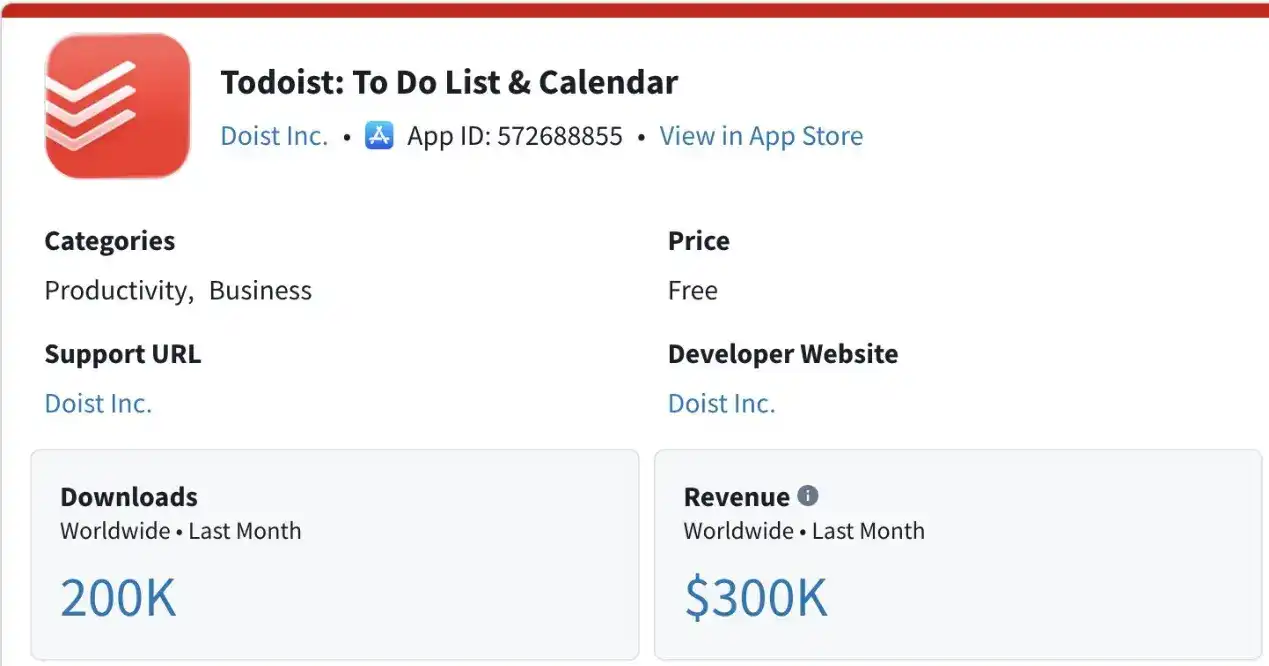
3. Download Top Competitor Apps: You need to study your competitors' strategies (the ones making the most money) carefully.
After downloading the app, take screenshots of the onboarding and core app loop. Study every detail.
4. Search on TikTok/Instagram: Figure out their main growth strategies.
It usually boils down to these four points:
- Influencer Marketing
- Faceless Slideshows
- User-Generated Content (UGC) Creators
- Paid Ads
Once you see competitors making money and creators consistently producing related content, your idea is validated, and you can start building.
2. Build the App + Tool Stack
In 2026, building an app has never been easier. The key is to build fast.
The first MVP version of all my apps is usually ugly. Sometimes weeks equal decades; sometimes decades equal weeks. For apps, it's about doing decades of work in weeks.
I usually build apps in 3-7 days using the following tool stack:
- Rork and Cursor → Write code with AI
- ChatGPT → Write prompts
- Superwall → Build paywalls
- Firebase → Database (not always needed)
- Pinterest and Dribbble → Design inspiration
- Xcode → Publish the app
The process is like this:
1. Get inspiration from Pinterest,Dribbble and competitors.
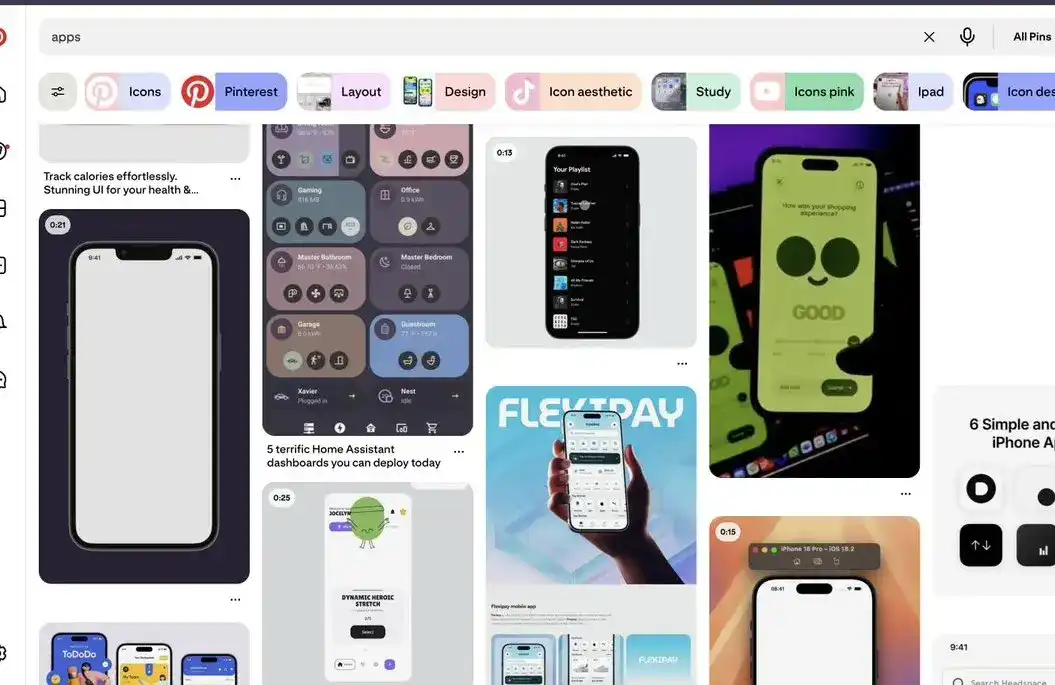
Once you find an app style you like, save the image and send it to ChatGPT along with the following prompt:
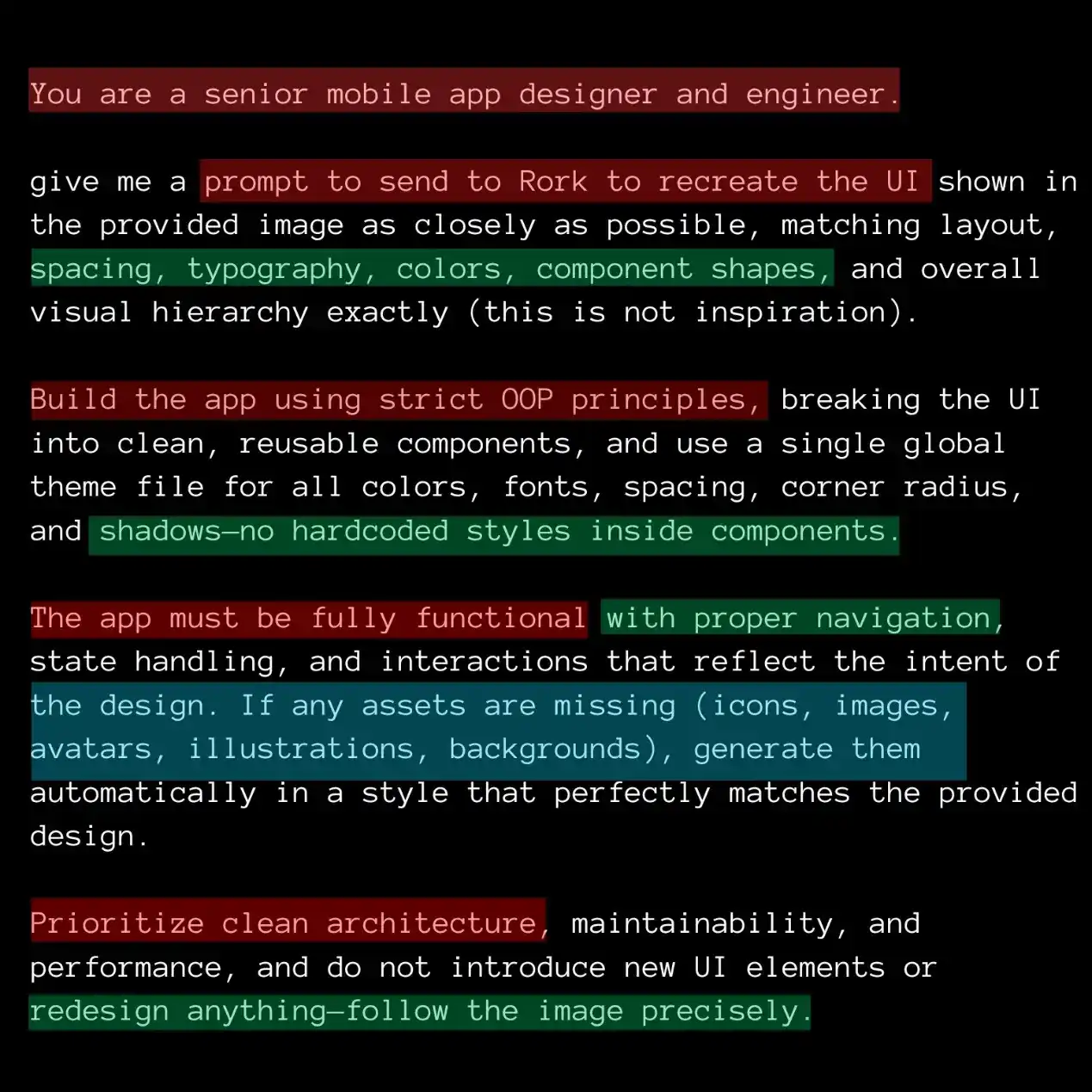
It will generate a prompt that you can send to Rork or Cursor to turn your design into a working app.
Important: Be sure to add the reference image to Rork or Cursor along with the prompt for best results.
2. Copy the Onboarding and Pricing
Once you have an app design and style you're happy with, copy the onboarding flow from your main competitor.
Onboarding accounts for 70% of an app. It's what actually converts downloads into paying users. If your onboarding is bad, no one will pay for your app.
If their app is making over $10k MRR, it means their onboarding is proven to work.
The main purpose of onboarding is to remind users why they downloaded the app in the first place, make them aware they have a problem, and that your app is the solution.
Here is the best onboarding structure:
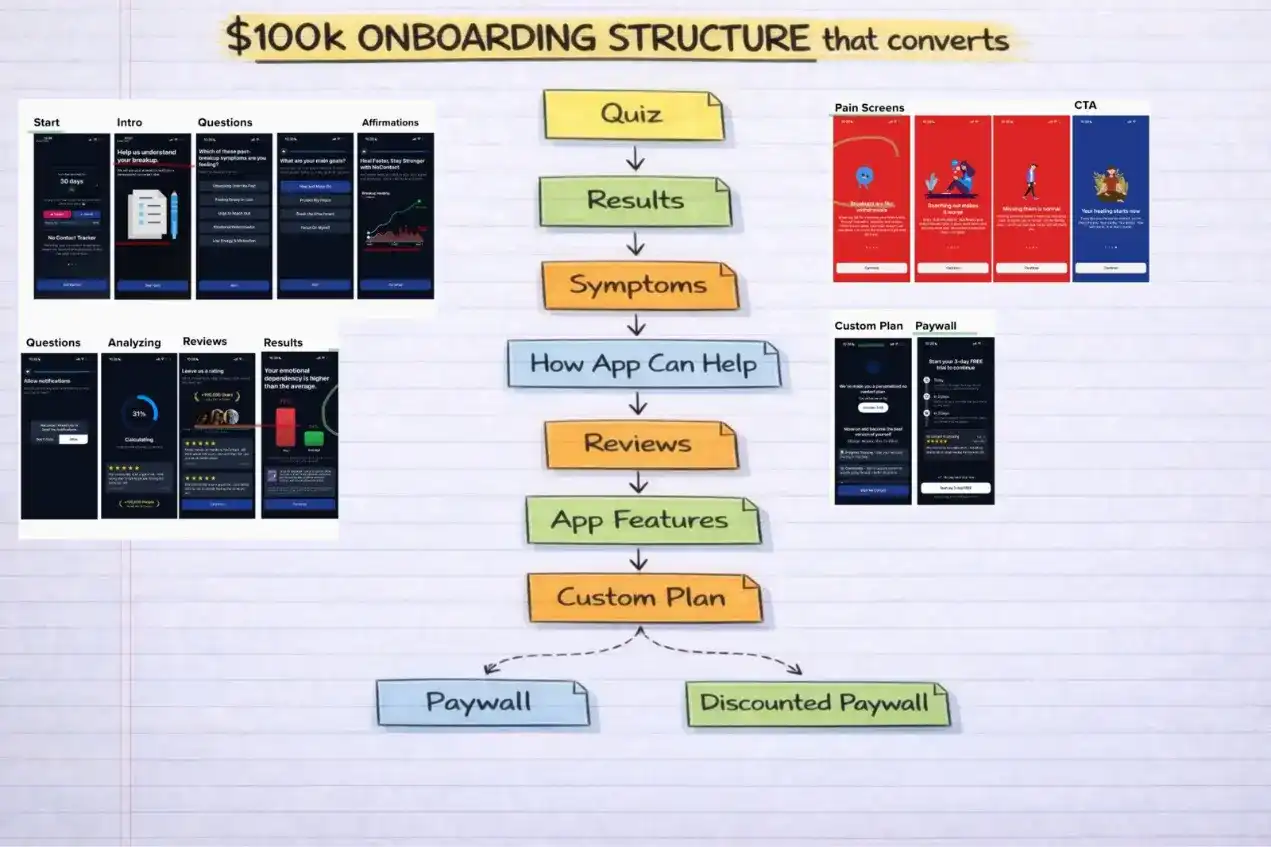
"Copying the onboarding" doesn't mean copying it exactly, but copying the structure they follow.
You can design the onboarding in your own style, and of course, the internal content of the app must be unique,
but the key is that you are building your onboarding based on validated data that your competitors have already gathered.
After the onboarding is complete, add a non-skippable paywall at the end.
Force users to pay upfront or start a free trial. This method has been proven repeatedly and is the best way to maximize revenue.
Don't be afraid to charge, use the same pricing and offers as your competitors. You can use Superwall or RevenueCat to build the paywall. I personally use Superwall.
3. Publish the App
To publish an app, you first need an Apple Developer license, which costs $99 per year. Apply as it usually takes 3-5 days for review.
1. App Store Setup (Minimum Requirements)
You only need the following:
- App Name (Make it clear)
- A catchy subtitle
- 3-5 screenshots
- A concise description
The subtitle + the first screenshot decide everything.
- Bad example: "An AI-powered productivity experience"
- Good example: "Block distractions, stay focused longer"
State clearly what the app does, don't be fancy.
2. Converting Screenshots
Screenshots are key to conversion. They should be clear, straight to the point, with large fonts, one concept per screen, and a clean interface. Like Cal AI (an app making $3.6M MRR):
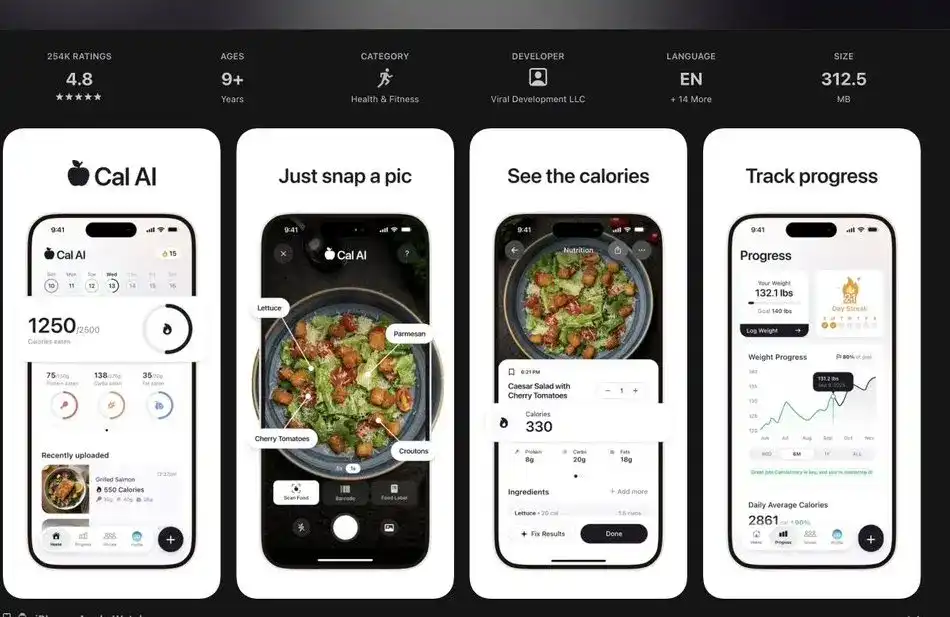
Ugly but clear screenshots > Beautiful but confusing screenshots.
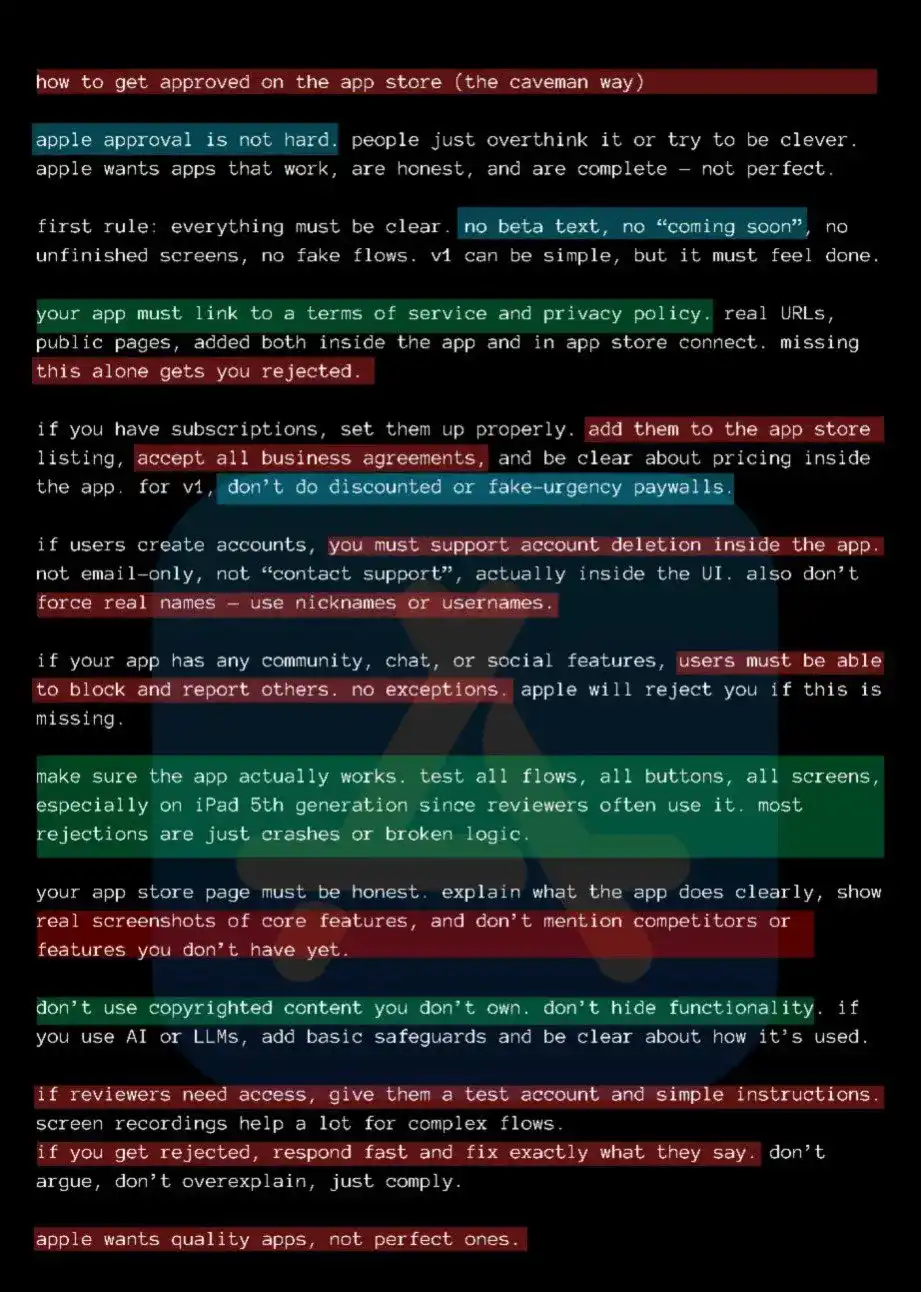
3. How to Avoid App Store Rejection
The App Store loves to reject apps, so here is a guide to avoid pitfalls:
4. Promote the App
Once the "idea code" is live on the App Store, it's time to start making money.
Attention brings wealth, so you need to be good at marketing. If you master this part, you will eventually make a fortune from apps.
You can use the following 5 channels to attract user attention to your app:
1. User-Generated Content (UGC)(Paid)
UGC stands for User-Generated Content. Hire creators to open new TikTok/Instagram accounts specifically for your app and post videos. Usually 30-60 posts per month. They are great for generating ad creatives, and if one of your creators finds a viral content pattern, you can have other creators replicate it. It's common to reach 100 million views in 30 days.
I usually pay UGC creators $15 per video, with extra bonuses if the video goes viral:
- 100k views = $150
- 250k views = $300
- 500k views = $600
- 1M views = $800
A single video can earn up to $850, and 1 million views will bring you far more revenue than that.
Where to find UGC creators? Two methods:
- Find creators through platforms or agencies like Sideshift
- Scroll like crazy on TikTok and manually email creators
I don't recommend using agencies. My method is to hire a relative who is addicted to TikTok. Have them scroll daily and send 100 DMs and emails to creators.
Make sure to optimize your For You page (raise the account) to only relevant creators.
Pro Tip: Always have a contract and text them at least once a day.
2. Influencers (Paid)
This is one of my favorite methods. Because one good influencer can make your app blow up quickly. I hired an influencer for $1 per thousand views (CPM). That is, 1000 views = $1.
This influencer's first video went viral quickly, bringing in $20,000 for my first app. All within 30 days.
You can find influencers using the same method discussed in the "User-Generated Content" (UGC) section above.
If you can get a deal for $1 CPM, you have nothing to lose. Because if they don't perform, you don't lose money. And if they perform well, you get a ton of app sales.
Pro Tip: Set a cap of $1000 for the CPM deal.
3. Faceless Content (Free)
This is the most underestimated method, and most people don't do it. These faceless accounts usually take the form of:
- Slideshow videos
- Screen recordings
- On-screen text
- Stock footage + captions
- Eye-catching app demos
Using these accounts, you can post 3-5 times a day, for free.
If a format goes viral, double down immediately. Same hook, same structure, but different text. This is the secret to faceless accounts getting millions of views.
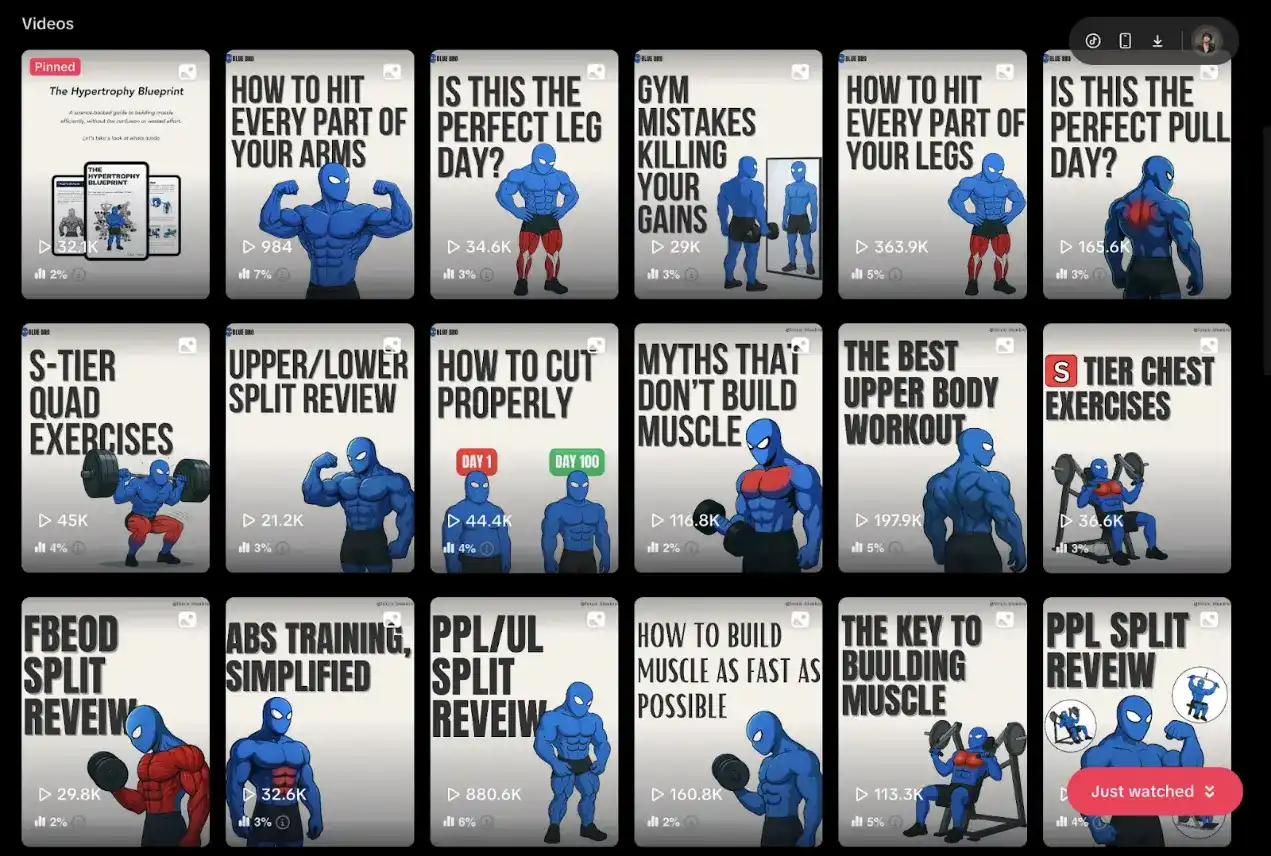
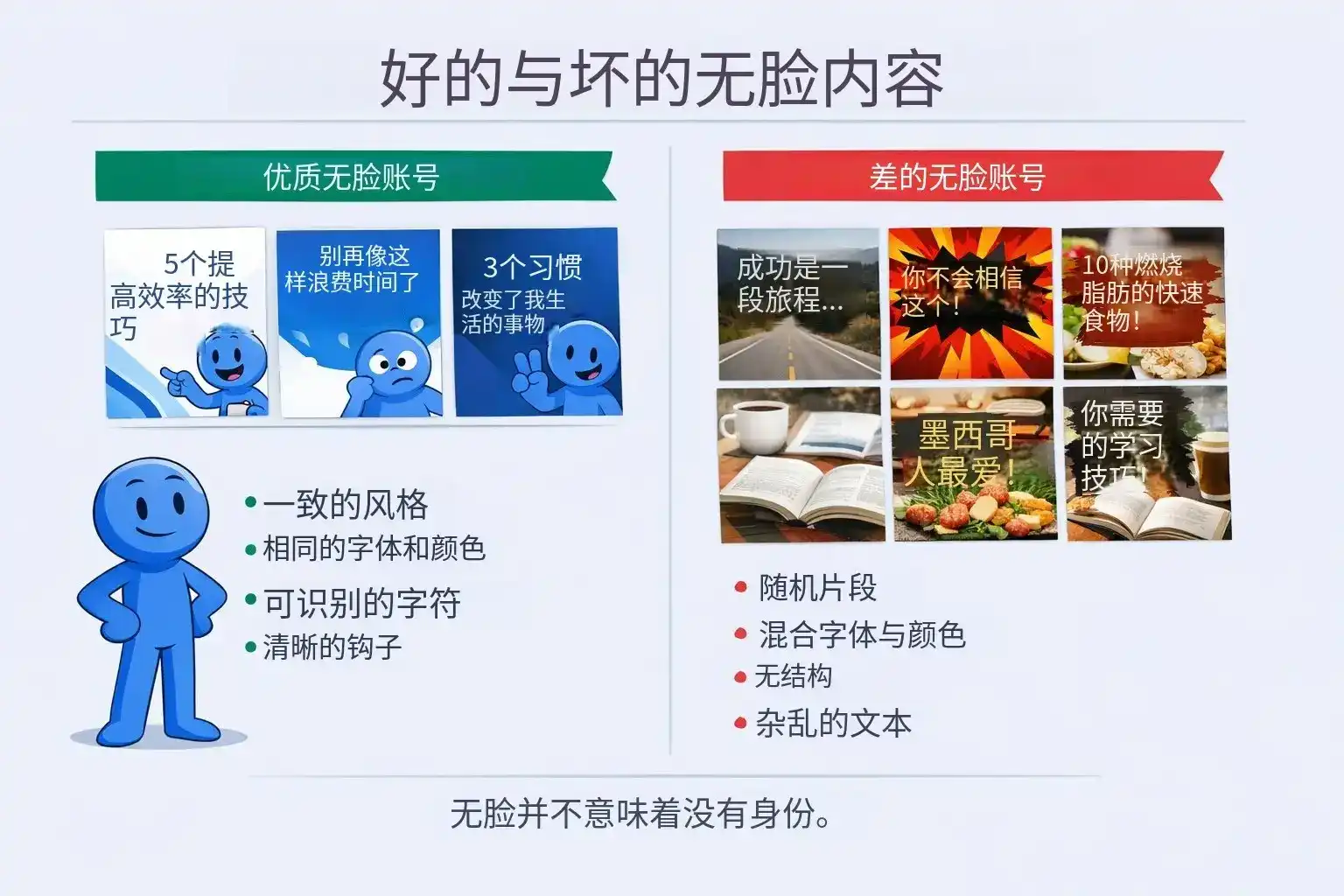
The most important advice is consistency. Even for faceless accounts, build a brand. If your faceless account looks like a Pinterest feed, it's over. Instead, maintain a consistent style. Sometimes, even use a fixed character.
For example, the blue character below got over 50 million views, all generated with CHATGPT.
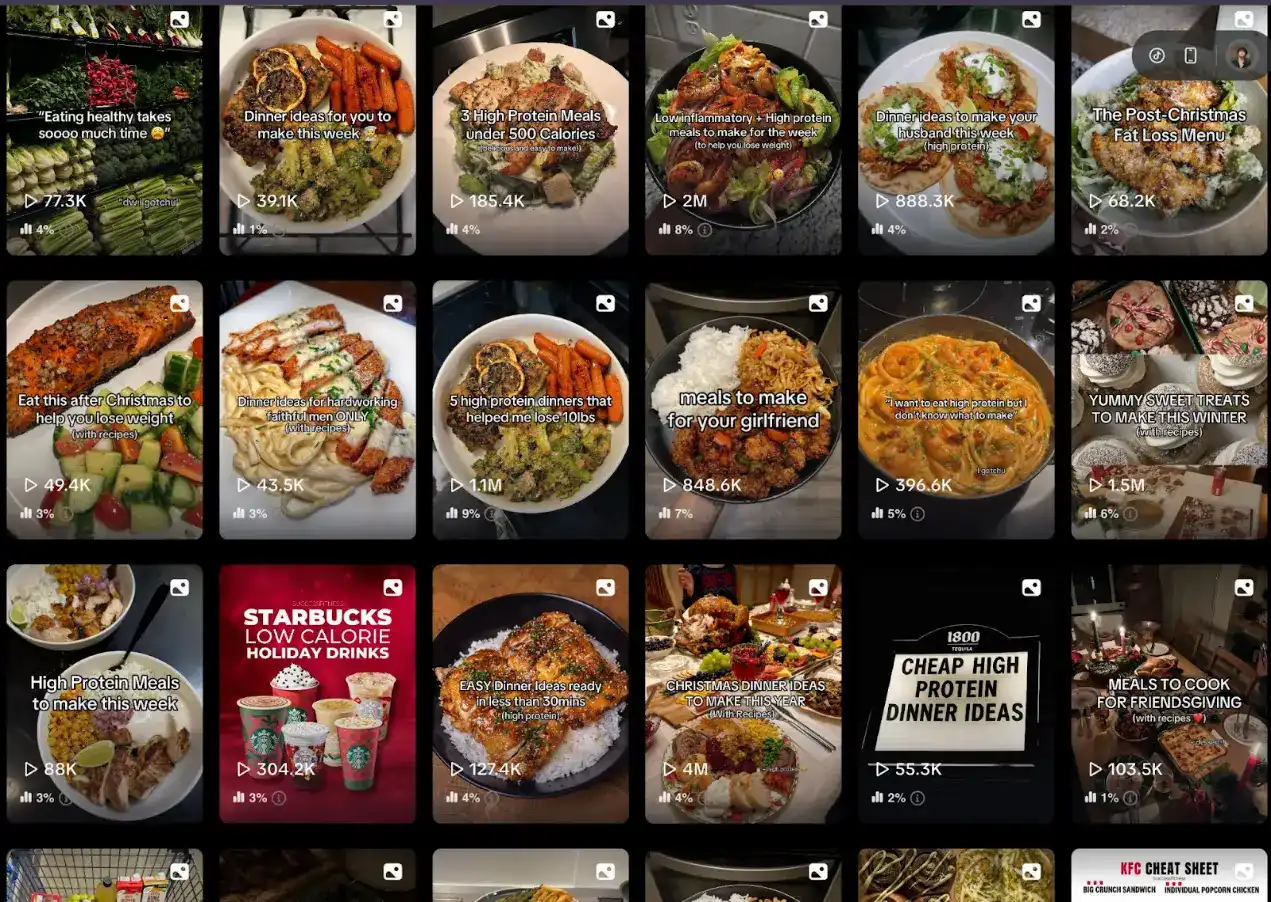
Here is another example of an account using the slideshow format with millions of views:
Here is an example of a bad faceless account:
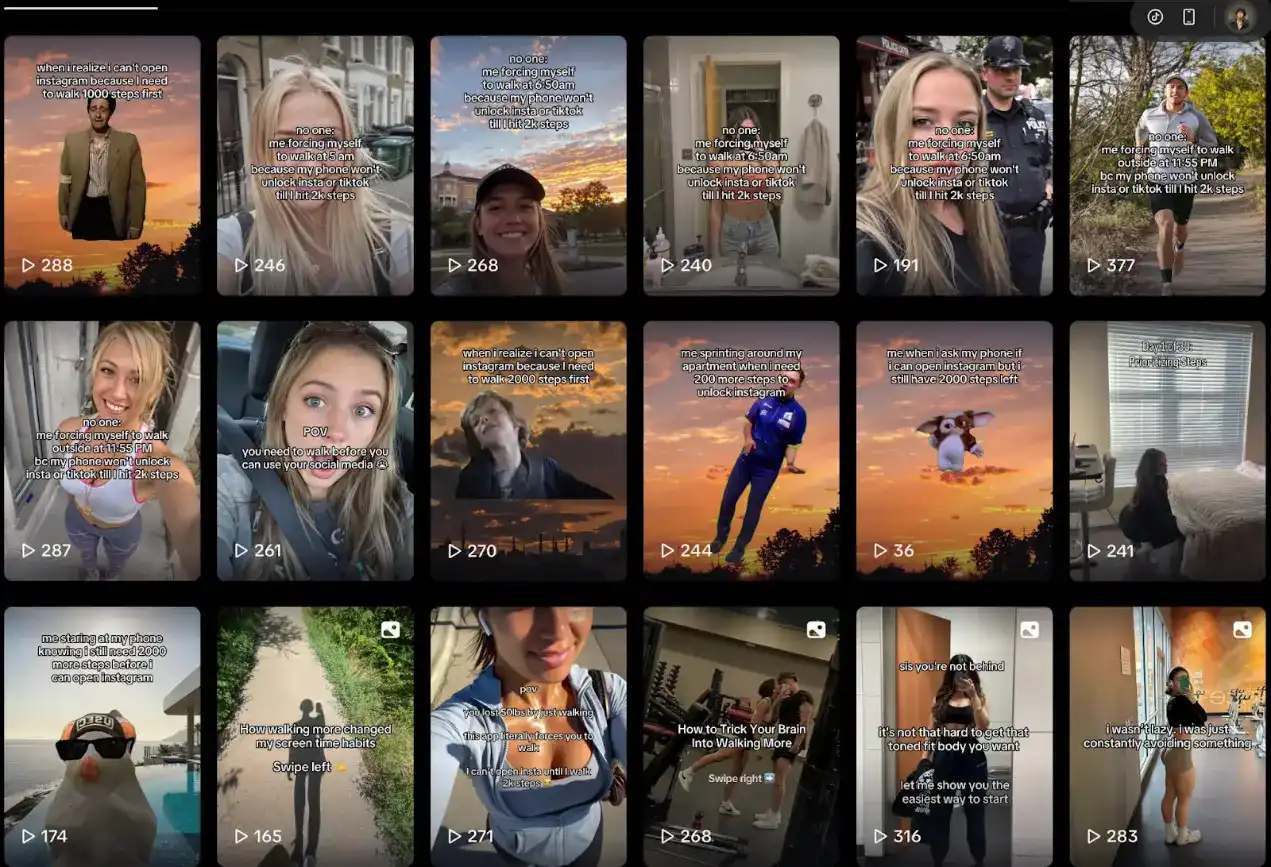
It looks random and lacks consistency.
Summary:
4. Founder-Led Content (Free)
This model is hard to succeed with if you have no content creation experience. But I still encourage you to try.
A great example of founder-led content is Cormac, whose Oasis Health App found a viral pattern and got millions of views with it. His MRR last month was over $100k.
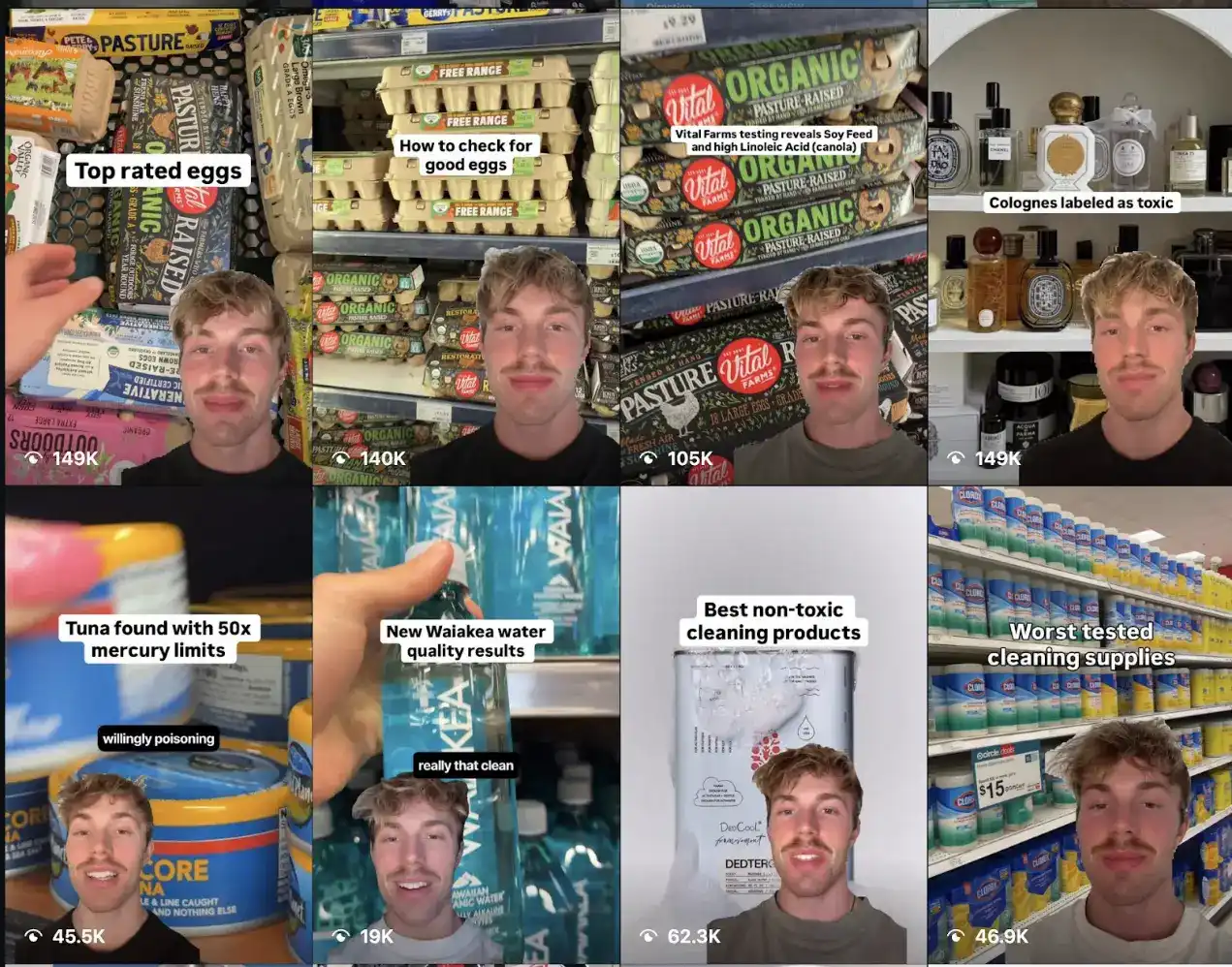
I tried it recently, copied a 200k view content pattern, and the video got 549k views. Even if you have money for influencers, do founder content. Because it helps you develop a sense of virality. Then you can pass that sense to your creators and operate like a real founder.
5. Paid Ads (Costs Money)
Paid ads are severely underestimated, but in my opinion, they are the best growth channel. Because they are scalable and predictable. Once you find the right CPA (Cost Per Acquisition) and have some winning creatives, you can scale almost infinitely.
Summary
Developing an app is like developing digital real estate. Think of the app as property and users as tenants. Once you understand this formula, you can replicate it infinitely.
Recurring revenue is the only true business model, and apps are the perfect way to achieve it.
Related reading: Deconstructing X's New Algorithm: The Ultimate Guide to Content Gold Mining in 2026






