Anthropic Tests "Lobster" Conway: Supports Independent UI, Webhook Activation, and Custom Extension Standards

marsbitPublished on 2026-04-02Last updated on 2026-04-02

Abstract

Anthropic is actively developing "Conway," a persistent agent solution designed to provide Claude with an always-on, independently running intelligent environment. It features a standalone UI instance, operating as a traditional chat interface and more of a dedicated workspace. Conway can directly control browsers, connect to external services, and integrate Claude Code for deeper code execution and task handling. It supports Webhook-based invocation, enabling external services or events to trigger automated workflows. Additionally, Conway will support for extensions through the upcoming CNW ZIP standard, allowing developers to build custom tools, UI tabs, and context handlers, similar to an app store ecosystem. This enhancement aims to transform Claude from a reactive conversational tool into a proactive, multi-step task assistant, positioning it as a strong competitor in the AI agent space and advancing the trend toward always-on AI capabilities.

Anthropic is actively developing a persistent agent solution named Conway, aimed at creating an always-on, independently running intelligent environment for Claude.

According to related information, Conway will feature an independent UI instance, moving beyond the traditional chat interface to operate as a standalone agent workspace. It will be capable of directly controlling browsers, connecting external connectors, and integrating Claude Code functionality (potentially involving Epitax-related features), enabling deeper code execution and task handling. Simultaneously, Conway supports invocation via Webhooks, allowing external services or events to trigger agent workflows, thereby boosting automated response capabilities.
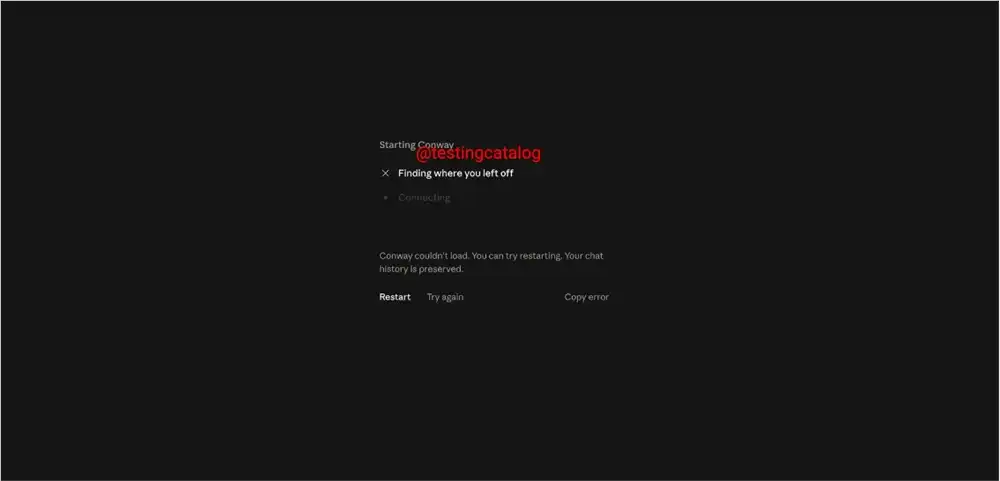
Additionally, Conway will support an extension system. Anthropic is set to launch the CNW ZIP standard, which developers can use to easily build custom tools, UI tabs, and context handlers, forming an ecosystem expansion capability similar to an "app store." This will significantly enhance Claude's flexibility and scalability in handling complex tasks.
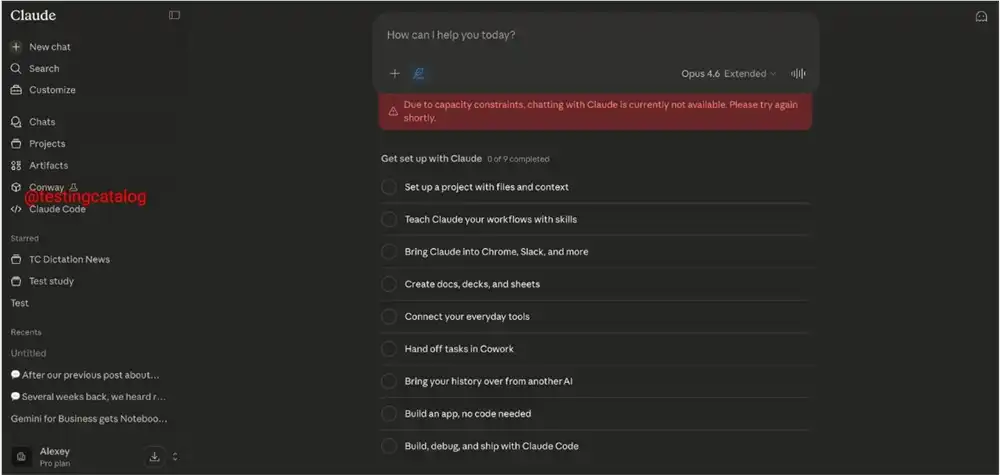
The emergence of Conway is seen as a key strategic move by Anthropic in the AI agent domain, aiming to transform Claude from a passive conversational tool into a persistent assistant capable of continuous operation and autonomous execution of multi-step tasks. It not only supports browser automation and event triggering but also strengthens code generation, execution, and problem-solving capabilities through native integration of Claude Code.

Industry observers believe that Conway has the potential to become a strong competitor to rivals like OpenClaw, driving the advancement of AI agents toward an "always-on" direction. The era where Claude can truly "show its prowess" may be just around the corner.


Related Questions

QWhat is the name of the persistent agent solution being developed by Anthropic for Claude?

AThe persistent agent solution being developed by Anthropic for Claude is named Conway.

QHow does Conway differ from a traditional chat interface?

AConway differs by being an independent UI instance that operates as a standalone agent workspace, capable of directly controlling the browser, connecting to external connectors, and integrating Claude Code functionality.

QWhat method does Conway support to allow external services or events to trigger its work?

AConway supports being invoked via Webhook, which allows external services or events to trigger the agent's work and enhance automated response capabilities.

QWhat is the name of the extension standard that will allow developers to build custom tools for Conway?

AThe extension standard that developers can use to build custom tools, UI tabs, and context handlers for Conway is called the CNW ZIP standard.

QHow is Conway expected to transform the role of Claude according to the article?

AConway is expected to transform Claude from a passive conversational tool into a persistent assistant that can run continuously and autonomously execute multi-step tasks, moving towards an 'always-on' AI agent direction.

Related Reads

Bitcoin Withdrawals Continue: 8 Years of Storage in a Coldcard Cold Wallet Ended in Zero

Coldcard Hardware Wallet Hacked: Losses Mount Due to Vulnerable Seed Generation A critical vulnerability in Coldcard hardware wallets has led to a continued wave of fund thefts. According to Galaxy Research, the total stolen has reached 1,367.05 BTC (approx. $88.6 million) from 4,585 addresses, a significant increase from the initial 594.5 BTC reported on July 30, 2026. Most of the stolen funds remain on the attackers' addresses. The issue is not with the current firmware, which Coinkite has updated, but with seed phrases generated on vulnerable devices between March 2021 and the release of fixed firmware versions. Due to a programmer error, devices switched from using a hardware random number generator to the software-based Yasmarang generator, which was initialized with publicly accessible data like the chip's serial number. This made the seed phrases predictable through offline brute-force attacks, meaning wallets remain at risk until funds are moved to a new wallet generated with the patched firmware. Affected devices include Mk2/Mk3 with firmware 4.0.1–4.1.9 (and up to 5.0.3), Mk4/Mk5 up to version 5.6.0, and Q models up to 1.5.0Q. The only exceptions are seeds created with a high-entropy method like at least 50 independent dice rolls or a strong unique BIP-39 passphrase. All other owners must generate a new seed on the fixed firmware and transfer their assets. A case highlighting the human impact involves a 39-year-old long-term investor who lost 2 BTC (approx. $130,000) in minutes. He had accumulated the Bitcoin over eight years through physical labor, viewing it as a financial lifeline and a retirement plan in a country suffering from hyperinflation. His story underscores that even conservative "buy and hold in cold storage" strategies can be compromised by such underlying technical flaws. From a technical perspective, this incident echoes historical failures where weak random number generators undermined cryptographic security, challenging the assumption that offline storage is automatically foolproof.

cryptonews.ru5h ago

Bitcoin Withdrawals Continue: 8 Years of Storage in a Coldcard Cold Wallet Ended in Zero

cryptonews.ru5h ago

Trading

Spot
活动图片




