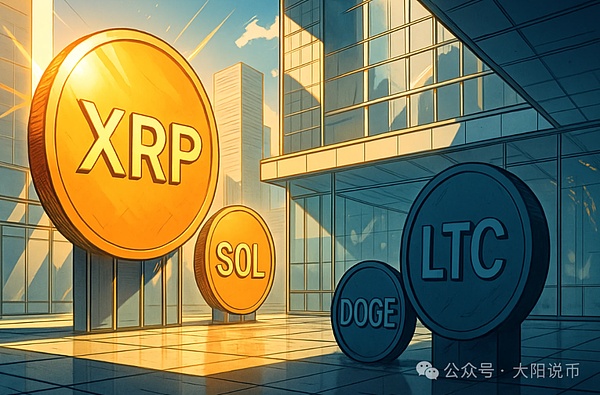
Altcoin ETF Market Reshuffle: XRP in Focus, Why Are LTC and DOGE Being Abandoned by the Market?

金色财经Published on 2025-12-10Last updated on 2025-12-10

Abstract

The first batch of four altcoin ETFs (Litecoin, XRP, Solana, Dogecoin) launched in the U.S. in November 2025, revealing a sharply divided market. XRP emerged as the clear winner, with over $600 million in net inflows and price appreciation, attributed to its clear regulatory status, utility in cross-border payments, and competitive fees. Solana also attracted over $600 million in inflows, but its price fell nearly 30%, showing that ETF demand can be overshadowed by broader market sentiment, though its staking yield remained a draw. Litecoin and Dogecoin were largely ignored, with combined inflows under $8 million due to lack of new narratives, high fees, and limited functionality. The divergence highlights two distinct investor groups: traditional institutions withdrew over $40 billion from Bitcoin and Ethereum ETFs amid market volatility, while crypto-native investors viewed the dip as an opportunity to enter new altcoin ETFs. This debut underscores that ETF approval alone isn’t a guarantee of success; long-term viability depends on real-world utility, regulatory clarity, and ecosystem strength. The altcoin ETF era marks a shift from speculative hype toward institutional value assessment, with only assets possessing strong fundamentals likely to thrive in an increasingly crowded market.

In November 2025, the first four altcoin ETFs (Litecoin, XRP, Solana, Dogecoin) were approved for listing in the U.S. Against the backdrop of massive losses in Bitcoin and Ethereum ETFs during the same period, their performance was starkly different, revealing a new era of market divergence.

Key Highlights: A Tale of Two Extremes in the Debut Performance

XRP

The clear winner, with net inflows exceeding $600 million, it was the only asset whose price increased. Its success stems from a clear regulatory status, practical value as a cross-border payment infrastructure, and competitive fee structures.

Solana

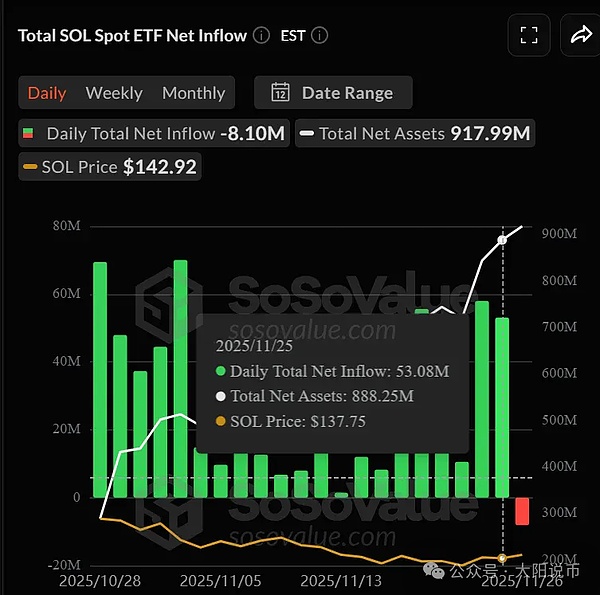
The awkward runner-up, also attracting over $600 million in inflows, yet its price plummeted nearly 30%. This exposed the limited effect of ETF inflows in the face of systemic market panic, though its offered staking rewards remain a unique attraction.
Litecoin and Dogecoin

Forgotten by the market, with combined inflows of less than $8 million. A lack of new narratives, high fees, and insufficient functionality made them unattractive to institutional investors.

Underlying Logic: Investors in Two Parallel Worlds

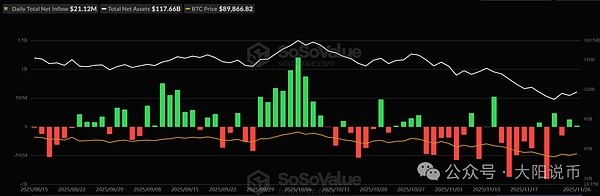
The most contradictory market phenomenon in November was this: Bitcoin and Ethereum ETFs saw net outflows of over $40 billion, while altcoin ETFs saw net inflows of $13 billion. This wasn't a rotation of funds but reflected a fundamental difference between investors in the "traditional finance world" and the "crypto-native world":
Traditional Institutions Are Retreating

Triggered by risk controls during the market flash crash, they took massive profits by exiting BTC/ETH ETFs.

Crypto-Native Institutions Are Entering

They viewed the market adjustment as an opportunity to allocate to new instruments (altcoin ETFs), executing their established plans.

Future Implications: ETFs Are Not a Panacea, But a "Litmus Test"

This debut shows that the "new product effect" of ETFs has a time limit. Once the initial hype subsides, the asset's inherent practical value, regulatory clarity, and ecosystem fundamentals will become the decisive factors attracting capital.

By 2026, hundreds of crypto ETFs could emerge in the U.S. market. However, it's foreseeable that only a few assets with real value and strong narratives will stand out, while a large number of uncompetitive products will face elimination. The launch of altcoin ETFs marks crypto's transition from speculative narratives into a new phase where institutions use real capital to screen for value.

Related Questions

QWhich cryptocurrency ETF was the clear winner in terms of net inflows and price performance upon their US debut in November 2025, and why?

AThe XRP ETF was the clear winner, attracting over $600 million in net inflows and being the only one to experience a price increase. Its success is attributed to its clear regulatory status, utility as a cross-border payment infrastructure, and competitive fee structure.

QDespite significant inflows, why did the Solana ETF's price drop nearly 30% after its launch?

AThe Solana ETF's price dropped nearly 30% despite over $600 million in inflows because the ETF inflows were not enough to counteract a broader, systemic market panic. However, its ability to offer staking rewards remained a unique attraction for investors.

QWhat was the combined net inflow for the Litecoin and Dogecoin ETFs, and what were the primary reasons for their poor performance?

AThe combined net inflow for the Litecoin and Dogecoin ETFs was less than $8 million. They performed poorly due to a lack of new compelling narratives, high management fees, and insufficient perceived utility, making them unattractive to institutional investors.

QWhat does the simultaneous massive outflow from Bitcoin/ETH ETFs and inflow into altcoin ETFs in November 2025 reveal about different investor groups?

AThis divergence reveals a fundamental difference between 'Traditional Finance (TradFi) World' and 'Crypto-Native World' investors. TradFi institutions were retreating, taking profits and triggered by risk controls during a market crash, while crypto-native institutions saw the market adjustment as an opportunity to deploy capital into new altcoin ETF products according to their plans.

QAccording to the article, what will be the decisive factors for an asset's success in the future crypto ETF landscape beyond the initial 'new product effect'?

ABeyond the initial hype, the decisive factors for success will be an asset's practical utility, regulatory clarity, and fundamental strength of its ecosystem. The ETF acts as a 'litmus test,' and only assets with real value and powerful narratives will thrive in the long term.

Related Reads

Didi in Latin America: Already a Digital Banking Giant

Didi, known in China primarily as a ride-hailing giant, has transformed into a digital banking powerhouse in Latin America, serving over 25 million users. While its financial ambitions were stifled in China by the dominance of Alipay and WeChat Pay—which left little room for competitors—Didi found fertile ground in Latin America’s underbanked markets. Facing a cash-dominated economy and low banking penetration, Didi built its own financial infrastructure from scratch. It partnered with OXXO, a ubiquitous convenience store chain in Mexico, to allow cash top-ups via its DiDi Pay system—effectively creating an alternative banking network. This move not only improved transaction efficiency but also addressed critical safety issues, as drivers carrying cash were often targets of robbery. Leveraging its vast data on driver and passenger behavior, Didi developed a unique "behavioral credit" system, enabling it to offer loans to individuals with no formal banking history. Products like DiDi Préstamos and high-yield savings accounts (DiDi Cuenta) helped capture and retain user funds, turning Didi into a central financial hub. Beyond finance, Didi now facilitates broader economic activities: it supports e-commerce partnerships (like AliExpress’ "buy now, pay later" service) and accelerates the adoption of Chinese electric vehicles by providing auto loans to drivers. This evolution from ride-hailing to integrated fintech and industrial enabler highlights Didi’s adaptability and the success of its "infrastructure-first" strategy in emerging markets. The company’s journey in Latin America underscores a broader lesson for Chinese tech firms expanding abroad: success requires not just exporting technology, but rebuilding the foundational systems that make it relevant—especially in regions where basic services are lacking. Didi’s growth in the region reflects a return to the gritty, ground-up innovation that once defined China’s internet boom.

marsbit3m ago

Didi in Latin America: Already a Digital Banking Giant

marsbit3m ago

In Surgut, 'Money Launderers' Laundered Nearly ₽100 Million Through Cryptocurrency

In Surgut, Russia, enforcement authorities have dismantled an organized criminal group that laundered nearly 100 million rubles using cryptocurrency. The group specialized in the illegal circulation of payment means, according to an official statement from the Ministry of Internal Affairs. The criminals purchased bank cards from individuals to gain access to their accounts, which were then used to collect illicitly obtained funds. The group subsequently cashed out the money, converted it into cryptocurrency, and transferred it to their "curators," charging a commission of 3-15% for their services. According to data from a cryptocurrency exchange, the transaction volume involving the suspects exceeded 94 million rubles. The purchased bank cards were also used for remote thefts across Russia. Three members of the group have been detained, with another placed under travel restrictions. A criminal case has been initiated under the relevant article of the Russian Criminal Code. The Bank of Russia plans to enhance monitoring of the crypto market and strengthen measures against fraud, including the launch of the "Antidrop" system by mid-2027. This system will provide banks with information on "drops" – individuals whose bank details are used for shadow transactions. As part of this effort, banks will be required to link Russian citizens' accounts to their tax identification numbers (INN).

RBK-crypto7m ago

In Surgut, 'Money Launderers' Laundered Nearly ₽100 Million Through Cryptocurrency

RBK-crypto7m ago

Trading

Spot
Futures
活动图片