Algorand Foundation cuts 25% of workforce, citing macro and market pressures

ambcryptoPublished on 2026-03-20Last updated on 2026-03-20

Abstract

The Algorand Foundation has laid off 25% of its workforce, citing macroeconomic environment and a broader crypto market downturn as reasons. The foundation stated this restructuring allows it to sustainably align resources with its long-term goals. This follows similar cuts at other crypto entities like the Hedera Foundation, Blockworks, and Crypto.com, the latter also pointing to AI disruption. Community reaction was mixed, with some criticizing the foundation's leadership and spending. A transparency report noted the AF spent $12 million after selling millions of ALGO tokens, while a critic pointed to a lack of liquidity, users, and funding. Data confirms a significant decline in the chain's activity; its DeFi Total Value Locked (TVL) has halved since last year to under $40 million, and daily fees remain below $50. Consequently, the price of ALGO dropped roughly 10% amid a wider market pullback.

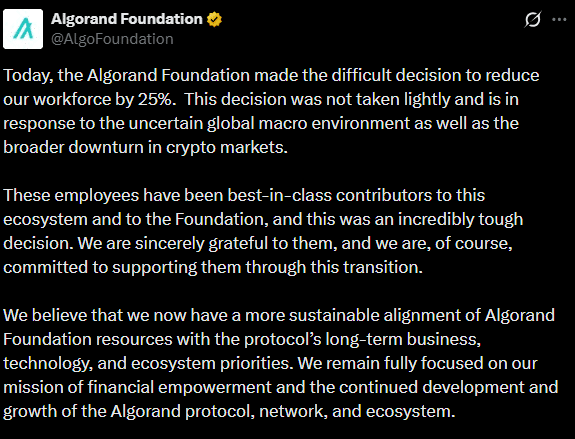
The Algorand Foundation (AF), the steward of the Algorand chain, is in the news after it announced it has axed 25% of its workforce.

According to the AF, the restructuring was informed by the ongoing “global macro environment” and “broader downturn in crypto markets.”
Source: X

Following the layoffs, AF now believes it is lean enough to “sustainably align” the remaining resources with the protocol’s long-term goals.

However, the ongoing crypto rout is not affecting Algorand alone. In January, the Hedera Foundation declared some of its core functions redundant and let go of employees who handled them.

Beyond protocols, crypto media has also been hit, with Blockworks axing its entire newsroom last year.

Besides, pressure is also coming from AI adoption, which, like other global segments, is disrupting the crypto market labour sector. This week, crypto exchange Crypto.com let go 12% of its workforce, citing the need to position itself to rising AI capabilities.

That said, the AF layoffs were met with mixed reactions.

Community and ALGO reaction

As expected, a section of the community sympathized with those affected by the AF layoffs and the disrupted livelihoods.

However, one user pointed out that the AF spent $100 million last year and yet, saw no meaningful impact.

He added,

Using macro uncertainty as cover for doing this feels piss weak. Love the tech. Hate the leadership. Same issues as always. No liquidity. No users. No funding. No mindshare.

According to the AF transparency report, it spent about $12 million as of September 2025 after selling 66.4 million ALGO tokens. Its overall expenditure has been around $18 million per year, covering even staff, which includes 65 employees.

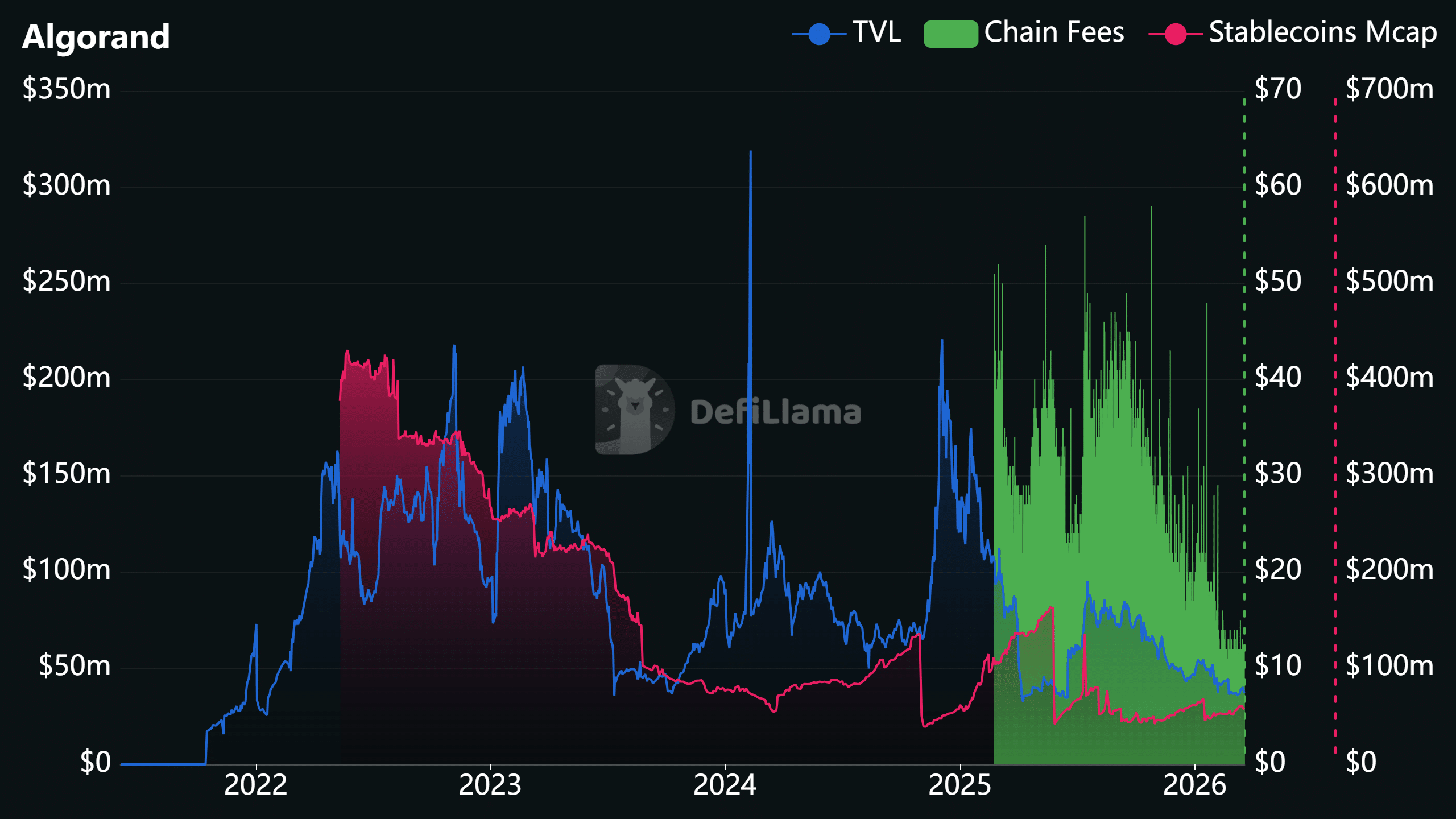
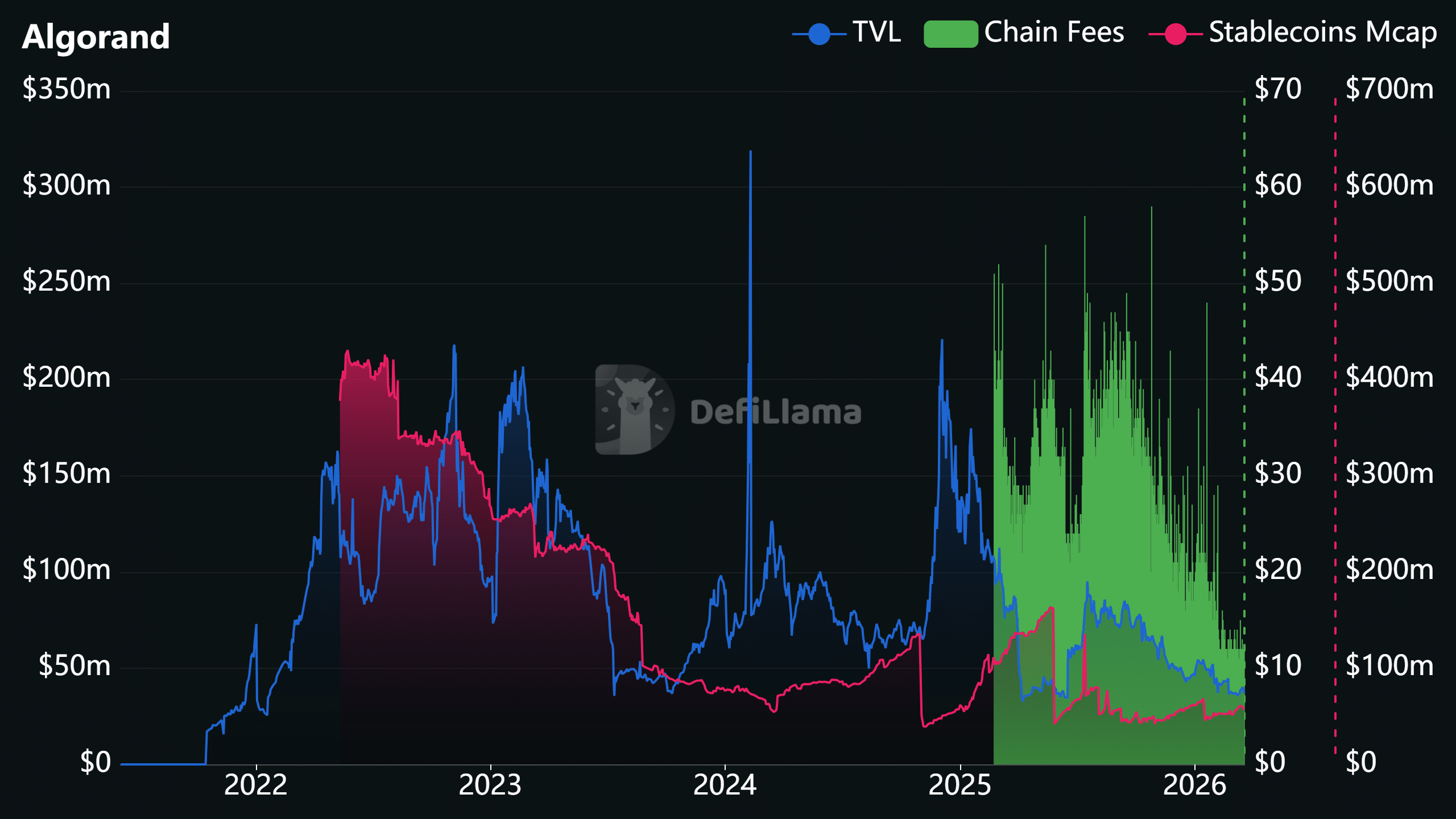
However, the critic was right about lagging chain activity. Its stablecoin liquidity has been declining alongside DeFi activity, as shown by the TVL (total value locked) drop.
Source: DeFiLlama

Since last year, DeFi activity has dropped by half, slipping from $80 million to below $40 million. In fact, the chain’s fees have been hovering below $50 throughout last year.

Meanwhile, ALGO was down about 10% and traded at $0.088 at the time of writing, amid a broader pullback following de-risking linked to traders’ caution after the Fed rate decision.


Final Summary

  • Algorand Foundation axed 25% of its workforce, as bear market, geopolitical tensions, and AI disrupted the labor sector in the space.
  • Algorand chain activity has slowed down with DeFi activity by half, generating less than $50 in daily average fees.

Related Questions

QWhy did the Algorand Foundation lay off 25% of its workforce?

AThe Algorand Foundation cited the ongoing 'global macro environment' and 'broader downturn in crypto markets' as reasons for the layoffs.

QHow has the Algorand chain's DeFi activity changed in the past year?

ADeFi activity on the Algorand chain has dropped by half, falling from $80 million to below $40 million in total value locked (TVL).

QWhat was the community's reaction to the Algorand Foundation's decision?

AThe community had mixed reactions. Some sympathized with the affected employees, while others criticized the leadership for poor performance, citing a lack of liquidity, users, funding, and mindshare despite significant spending.

QHow much did the Algorand Foundation spend according to its transparency report as of September 2025?

AAccording to its transparency report, the Algorand Foundation spent about $12 million as of September 2025 after selling 66.4 million ALGO tokens, with an overall annual expenditure of around $18 million.

QWhat other companies in the crypto space have recently announced layoffs?

AOther companies that have recently announced layoffs include the Hedera Foundation, which declared some core functions redundant, crypto media outlet Blockworks, which axed its entire newsroom last year, and Crypto.com, which let go of 12% of its workforce citing the need to adapt to rising AI capabilities.

Related Reads

Goldman Sachs: July Smashes Through Crowded Trades, U.S. Stock Bull Market Not Broken but Harder to Navigate

Goldman Sachs: July Sees Crowded Trades Unwound, U.S. Bull Market Intact but Getting Tougher. The U.S. stock market in July did not see an index-level crash, but rather a significant unwinding of speculative positions. While the S&P 500 remained stable—trading within a narrow 3.5% range and staying within 2% of its high—underlying market dynamics were volatile. Heavily crowded trades, particularly in high-momentum tech, AI-linked stocks, and Asian strategies, faced severe pressure and forced deleveraging. Data indicates this was a meaningful cleanse, not a minor adjustment. Global tech exposure saw its largest sell-off in over five years, leverage in Korean equity ETFs plummeted, and Goldman's prime brokerage recorded the largest gross exposure reduction since late 2022. Leverage on momentum factors among fundamental long/short clients fell to the 28th percentile of its one-year range. The AI trade narrative shifted from pure potential to a focus on tangible returns. While Meta failed to show clear AI monetization, Microsoft and Amazon provided evidence that massive capital expenditure is translating into scalable revenue and product growth, preventing a blanket sell-off of the AI sector. The Federal Reserve's more opaque communication style and volatility in long-end Treasury yields have introduced new friction, particularly for rate-sensitive growth and tech stocks. The broader outlook for U.S. equities remains favorable, supported by a strong economy, robust earnings, and substantial AI capital expenditure. However, risk/reward is no longer cheap, and the market's upward elasticity has weakened. The Nasdaq 100's trajectory—up 12% year-to-date despite significant pullbacks—illustrates that the bull trend persists but the path is becoming more difficult. The key lesson from July is that the market no longer rewards crowded, highly leveraged trades, requiring more disciplined and liquid portfolio approaches.

marsbit4h ago

Goldman Sachs: July Smashes Through Crowded Trades, U.S. Stock Bull Market Not Broken but Harder to Navigate

marsbit4h ago

Trading

Spot
活动图片