Airdrop Feast and Staking Trap: How Far Can SKR's 'Golden Shovel' Narrative Go?

marsbitPublished on 2026-01-22Last updated on 2026-01-22

Abstract

The Solana Mobile Chapter 2 smartphone, "Seeker," distributed an airdrop of its ecosystem token SKR on January 21, allocating nearly 2 billion tokens (20% of the total 10 billion supply) to users and developers. The airdrop value was significant, with top-tier recipients receiving up to 750,000 SKR (approx. $30,000 at the time). Following its listing on major exchanges like Coinbase and Bitget, SKR’s price surged over 350%, briefly pushing its market cap above $300 million. The primary driver behind Seeker’s over 150,000 pre-orders and activations is not the device’s utility as a Web3 smartphone but the expectation of lucrative airdrops—positioning it more as a "golden shovel" for crypto rewards than a consumer electronics product. SKR tokenomics feature a fixed supply of 10 billion tokens, with 57% already in circulation. To prevent massive sell-offs, the project incentivizes staking through a high initial inflation rate of 10% (decreasing annually to 2%), effectively forcing holders to stake to avoid dilution. The staking APY is currently around 23.9%, with a 48-hour cooldown period for unstaking. Despite claims of ecosystem growth—over 265 dApps, 9 million transactions, and $2.6 billion in transaction volume—SKR’s current utility remains weak. Governance rights and partner benefits (like fee discounts and early access) do not create strong demand or consumption scenarios for the token. The success of SKR largely depends on sustained price appreciation and staking reward...

Original Author: Sanqing, Foresight News

On January 21, Solana Mobile officially distributed the ecosystem token SKR airdrop to Seeker phone users and ecosystem developers. This airdrop distributed nearly 2 billion tokens, accounting for approximately 20% of the total supply (10 billion tokens). At the same time, SKR tokens have been listed for trading on centralized exchanges such as Coinbase, Bitget, Bybit, and on Solana's on-chain DEX. The next day, Hyperliquid launched SKR perpetual contracts with up to 3x leverage, and Bithumb announced it would list the SKR/KRW trading pair.

The value of this airdrop was relatively high. At the current price of approximately 0.04 USDT, some developers and the highest-tier users could receive 750,000 tokens, worth about $30,000; subsequent tiers could receive 125,000 tokens (approx. $5,000), 40,000 tokens (approx. $1,600), 10,000 tokens (approx. $400), and 5,000 tokens (approx. $200), respectively.

According to Bitget market data, after a brief consolidation post-listing, the price of SKR began to climb around 2:00 AM today, reaching a high of 0.061552 USDT. Its market capitalization once exceeded $300 million, with a 24-hour increase of over 350%.

Hardware Narrative: Buying an Electronic Product for the 'Golden Shovel'

Solana Seeker is the second-generation Web3 smartphone following the Saga. Its goal is to break the centralized landscape of the current mobile app market by building an open mobile platform.

The device integrates a hardware-level security mechanism called 'Seed Vault' and features a zero-fee dApp store to lower the barrier for developers and ensure user asset security.

Currently, Seeker has officially disclosed over 150,000 pre-orders and activations. But we must ask honestly: Are these 150,000 users really buying it to use a Web3 phone?

The driving force behind the vast majority of orders stems from the wealth creation myth brought by the Saga phone airdrop. Users aren't buying a phone; they are buying an expected 'golden shovel.'

This airdrop mechanism confirms this: the highest-tier 'Sovereign' users received 750,000 SKR, while the base-level 'Scout' received 5,000 tokens.

As a phone, it faces overwhelming competition from mainstream devices; as a mining machine, its payback period depends entirely on SKR's secondary market performance.

Token Model: Using 'Staking' to Mask the Lack of Utility

In terms of allocation, 30% of the tokens are allocated for airdrops (Season 1 distributed approx. 20%), 25% for ecosystem growth and partner incentives, 10% to the community treasury; the remainder is allocated to the Solana Mobile team (15%), Solana Labs (10%), and liquidity bootstrapping (10%).

The total fixed supply of SKR tokens is 10 billion, with the current circulating supply being approximately 5.7 billion tokens. While 'over half in circulation' appears very decentralized, this is actually a carefully designed 'open scheme' by the project team.

How to prevent massive airdrop sell-offs? The answer is: force you to stake. According to SKR staking page data, the total amount of SKR staked has reached approximately 3.8 billion tokens.

SKR has a high initial inflation rate of 10% in the first year, decreasing by 25% each subsequent year until stabilizing at 2%. This means that if you hold SKR without staking, your share will be diluted. To combat inflation, holders are forced to lock their tokens into the staking contract.

The current staking APY for SKR is approximately 23.9%, with rewards auto-compounding every 48 hours. Although unstaking requires a 48-hour cooldown period, this combination of high inflation + high yield has successfully locked a large amount of liquidity back on-chain.

If you have one batch of SKR in the 48-hour redemption cooldown period and you wish to initiate redemption for another batch, the system will forcibly merge the two batches and recalculate a new 48-hour cooldown period.

Ecosystem Status: Besides 'Nesting Dolls,' What Else Can SKR Do?

At the end of Season 1, Seeker claimed to have over 265 dApps live, generating 9 million transactions and $2.6 billion in trading volume. Furthermore, Season 2 offers multiple pathways beyond staking for收益, including governance participation and application interaction.

However, this 'governance utility' and 'ecosystem participation' appear particularly feeble at this stage.

Officially, holders can participate in dApp store rule-making and application review through staking. But for retail users, this governance right is neither a meal ticket nor does it generate cash flow for buybacks.

Moreover, at this stage, Solana Mobile is the only active Guardian, making current SKR staking more like handing money over to official custody.

Although Season 2 has launched multiple applications, the so-called empowerment is mostly forced linkage. Helium Mobile offered 3 months of free service in the US; Backpack offered up to $1000 in trading fee rebates; Parallel Colony offered early access to AI games; Amp Pay offered some card issuance rewards and point multipliers.

These benefits, while decent, do not construct a rigid consumption scenario for SKR. There is currently no large-scale burn mechanism, nor are there core functions that require paying SKR to use. Users trading meme coins on Dev.fun or scanning whiskey on Baxus do not inherently rely on SKR itself.

The Seeker (Solana Mobile) team has bought a 'window period' using SKR's price pump effect and high APY staking. During this window, as long as the price holds and staking yields outpace inflation, holders will dutifully lock up their tokens.

But in the long run, if the Seeker ecosystem fails to produce a 'killer app' that truly gives SKR practical application scenarios, SKR could face a sharp value correction once staking unlocks and inflation accumulates. For now, SKR knows how to market and pump, but it still doesn't know how to 'land'.

In conclusion, although SKR currently carries strong marketing colors, and even its staking mechanism seems slightly 'sneaky' due to details like the cooldown reset, in this extremely realistic market environment, even the grandest technical vision often can't beat a continuously green candlestick chart. For participants, the coin that makes everyone money is the best coin for now.

Foresight News提醒, new token prices are highly volatile. Investors should cherish their personal assets, carefully evaluate, and participate rationally.

Related Questions

QWhat was the main purpose behind the majority of Solana Seeker smartphone purchases according to the article?

AThe vast majority of purchases were driven by the expectation of lucrative airdrops, viewing the phone not as a device for use but as a 'golden shovel' for potential profits, a narrative fueled by the previous success of the Saga phone's airdrop.

QHow does the SKR tokenomics model incentivize holders to stake their tokens?

AThe model uses a high initial inflation rate of 10% in the first year, which decreases over time. To combat this dilution of value, holders are incentivized to stake their tokens to earn a high APY (currently around 23.9%), effectively locking liquidity on-chain.

QWhat is a key criticism the article raises about the current utility of the SKR token?

AThe article criticizes the lack of a rigid consumption scenario or 'killer app' for SKR. Its current utilities, such as governance and partner perks, are seen as weak and not creating mandatory spending or burning mechanisms for the token.

QWhat potential risk does the article identify for SKR's long-term value if the current model fails?

AThe article identifies the risk of a sharp value correction if the Seeker ecosystem fails to develop a killer application that provides a real use case for SKR. Once staking unlocks and inflation accumulates, the token's price could face significant downward pressure.

QWhat mechanism is used to prevent massive selling (dumping) of the airdropped SKR tokens?

AThe primary mechanism to prevent dumping is the staking system, which offers high yields to incentivize locking tokens. An additional feature is that initiating an unstaking process triggers a 48-hour cooldown period, and any subsequent unstaking request resets the timer for the entire amount, further discouraging quick sells.

Related Reads

The AI Agent Era Accelerates Its Arrival: Questflow Defines a New Paradigm of Financial Intelligence with On-Chain AI Brokerage

The AI Agent era is accelerating, with the CB Insights AI 100 list highlighting global investment confidence. The focus has shifted from whether AI works to its speed of deployment and ability to manage complex workflows, with autonomous AI Agents driving this transformation. At the forefront is Questflow, a Singapore-based startup redefining financial intelligence through its on-chain AI brokerage. Unlike tools that merely provide data dashboards, Questflow deploys AI Agents that proactively scan markets, form judgments, and execute trades via a conversational interface—operating 24/7 without requiring manual confirmation for each decision. This embodies the new AI paradigm of agents capable of executing multi-step workflows autonomously. Questflow's mission is to democratize institutional-grade trading intelligence. Historically reserved for the ultra-wealthy, this capability is now accessible starting from just $1 through Questflow's "AI Clone + Copy Trade" model. The platform charges only a 1% execution fee, aligning its incentives directly with users and eliminating traditional management or performance fees. The timing is opportune, aligning with key trends identified by CB Insights: the scalable deployment of AI Agents, accelerated AI adoption in financial services, and the maturation of on-chain infrastructure. With robust liquidity on platforms like Hyperliquid and Polymarket, alongside advancements in AI reasoning and non-custodial wallet security, Questflow is positioned to merge the roles of broker, fund, and exchange into a single, accessible platform for millions.

链捕手2m ago

The AI Agent Era Accelerates Its Arrival: Questflow Defines a New Paradigm of Financial Intelligence with On-Chain AI Brokerage

链捕手2m ago

Why Pricing Social Interactions is Doomed to Fail?

Titled "Why Putting a Price on Social Interaction Is Doomed to Fail," this article critiques attempts to monetize social networks directly through SocialFi models, arguing their inevitable failure stems from a fundamental misunderstanding of media dynamics. Using Marshall McLuhan's theory of "hot" and "cold" media, the author posits that social networks are inherently "cold" media. Their value isn't contained in individual posts but is co-created through user participation, interpretation, and fragmented, ongoing interaction (e.g., replies, shares). This ambiguity and need for user involvement are core to their function. The article asserts that SocialFi projects like Friend.tech failed because introducing real-time, tradable financial pricing (a definitive "hot" signal) into this "cold" environment doesn't add a layer—it replaces the medium's essence. The unambiguous price signal overshadows and nullifies the nuanced, participatory social signal. Users become traders, not participants, and when speculative profits vanish, the underlying social ecosystem—never genuinely cultivated—collapses entirely. This principle extends beyond crypto. The author argues platforms like Twitter have gradually "heated up" through metrics (likes, retweets counts, algorithmically defined value), shifting users from participants to performers and eroding organic engagement. The solution isn't to abandon capital but to manage its entry point. Successful models like Substack, Patreon, or Bandcamp allow capital to "condense" at specific, isolated nodes (e.g., subscriptions, one-time payments) without permeating and "heating" every social interaction. They preserve the core "cold," participatory medium while enabling monetization at designated boundaries. The NFT boom and bust serves as a stark parallel: the ancient "cold" medium of collecting (valued for story, community, gradual accumulation) was rapidly destroyed by platforms that introduced real-time floor prices, rarity scores, and trading dashboards, transforming collectors into speculators and vaporizing cultural value when prices fell. The core lesson: "Liquidity equals heat." Injecting high liquidity and definitive pricing into a "cold" participatory medium doesn't optimize it; it fundamentally alters and destroys its value-creating mechanism. The future lies not in pricing every social gesture but in finding precise, non-invasive points for capital to condense without overheating the entire ecosystem.

marsbit10m ago

Why Pricing Social Interactions is Doomed to Fail?

marsbit10m ago

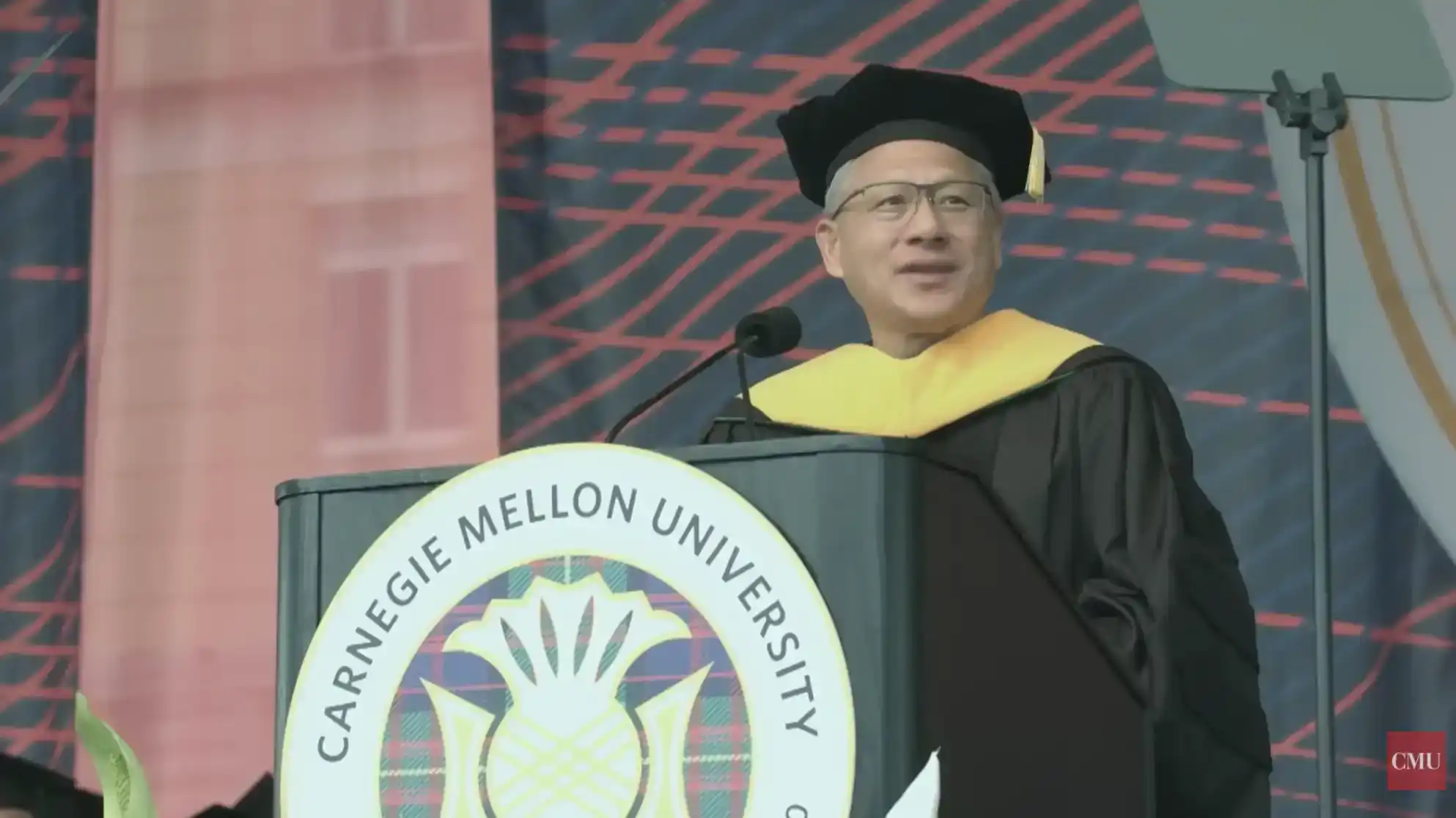
Jensen Huang's CMU Speech: In the AI Era, Don't Just Watch, Build

Jensen Huang, CEO of NVIDIA and a first-generation immigrant, delivered the commencement address to Carnegie Mellon University's class of 2026. He shared his personal journey from a humble background to founding NVIDIA, emphasizing resilience, learning from failure, and the responsibility that comes with leadership. Huang framed the present moment as the dawn of the AI revolution, a shift he believes is more profound than previous computing waves. He described AI as fundamentally resetting computing—moving from human-written software to machines that understand, reason, and use tools. This will create a new industry for generating intelligence and transform every sector. While acknowledging AI's potential to automate tasks and displace some jobs, Huang distinguished between the *tasks* of a job and its core *purpose*. He argued AI will augment human capability, not replace humans. The real risk, he stated, is not AI itself, but people being left behind by those who effectively use AI. He presented AI as a generational opportunity for massive infrastructure investment—in chip factories, data centers, energy grids, and advanced manufacturing—that could re-industrialize nations like the U.S. and bridge the digital divide by making computing and intelligent tools accessible to all. Huang called for a balanced approach: advancing AI safely and responsibly, establishing prudent policies, ensuring broad access, and encouraging universal participation. He urged the graduates not to fear the future but to engage with optimism and ambition, reminding them of CMU's motto, "My heart is in the work." His core message was clear: this is their moment to actively build and shape the AI-powered future, not merely observe it.

marsbit1h ago

Jensen Huang's CMU Speech: In the AI Era, Don't Just Watch, Build

marsbit1h ago

Trading

Spot
Futures

Hot Articles

Discussions

Welcome to the HTX Community. Here, you can stay informed about the latest platform developments and gain access to professional market insights. Users' opinions on the price of SOL (SOL) are presented below.

活动图片