After SEC relief, Aave confronts its biggest governance question yet

ambcryptoPublished on 2025-12-16Last updated on 2025-12-16

Abstract

The U.S. SEC has closed its four-year investigation into Aave, providing regulatory relief to the protocol. Shortly after, a new governance proposal was introduced, calling for AAVE token holders to take full ownership of Aave’s brand, domains, social channels, and developer gateways. If approved, this would mark one of the most significant decentralization efforts in DeFi history. The proposal, put forward by BGD Labs co-founder Ernesto Boado, argues that key assets like the Aave trademark and digital properties should be controlled by the DAO rather than private entities, including Aave Labs. It emphasizes that this is not an attack on Aave Labs but an effort to establish clear, neutral ownership under community governance. This move could strengthen Aave’s decentralization, improve institutional trust, set a precedent for other DAOs, and enhance the value of AAVE tokens. The proposal has garnered significant attention from token holders and delegates, marking a potential turning point in DeFi governance and ownership structures.

Aave’s regulatory cloud lifted this week after founder Stani Kulechov confirmed that the U.S. SEC has formally closed its four-year investigation into the protocol.

But almost immediately, a second development emerged inside the Aave ecosystem. There is a new governance proposal calling for AAVE token holders to take full ownership of the Aave brand, domains, social channels, naming rights, and developer gateways.

If approved, the proposal would trigger one of the most significant decentralization restructurings in DeFi’s history, reshaping how Aave operates and redefining who truly “owns” the protocol.

SEC conclusion clears a major hurdle for Aave

The proposal arrives just days after confirmation that the SEC has ended its multi-year investigation into Aave without recommending enforcement.

While the letter does not represent exoneration, the lack of enforcement is still seen as a major relief for the DAO.

Crucially, the moment aligns with broader industry trends: regulators increasingly evaluate whether DeFi systems are truly decentralized or reliant on core corporate actors.

By transferring brand and identity control to a DAO-owned wrapper, Aave strengthens its decentralization profile at a strategically important moment.

A proposal that challenges the foundations of DeFi governance

The proposal, introduced by BGD Labs co-founder Ernesto Boado, argues that the platform’s most important soft assets — including aave.com, app.aave.com, the “Aave” trademark, X and Discord handles, GitHub organizations, and various communication channels — should never be controlled by private companies.

Instead, Boado says they should be transferred into a DAO-controlled legal entity with strict anti-capture protections.

“A private party, regardless of its past or present role in the community, should not have unilateral ownership and control over them,” he wrote.

“The DAO should control its brand, its gateways, and its identity.”

The proposal stresses that even long-time contributors such as Aave Labs should not possess permanent control over assets that fundamentally represent the broader Aave ecosystem.

What this is not

The author explicitly states that this proposal is not an attack on Aave Labs. It does not:

  • Remove Aave Labs as a contributor
  • Challenge the legitimacy of Aave Labs’ work
  • Attempt to punish or restrict past actions
  • Prohibit delegation of responsibilities to contributors

Instead, it aims to define clear ownership boundaries so the ecosystem can operate under a neutral, defensible governance structure.

A pivotal moment for Aave and DeFi

The proposal raises fundamental questions about what decentralization means in practice. For a protocol of Aave’s scale, brand and gateway control are not superficial details. They are governance levers, trust signals, and economic chokepoints.

A shift of this magnitude could:

  • Strengthen incentives for independent contributors
  • Increase transparency around app gateways
  • Reduce governance risk for institutions
  • Improve AAVE’s perceived value as a governance asset
  • Set a precedent other DAOs may follow

The vote has not yet opened, but early sentiment suggests strong attention from both token holders and governance delegates.

The DeFi platform just closed one chapter with U.S. regulators. This proposal could open another — one that redefines who owns the future of the protocol.


Final Thoughts

  • Aave’s decentralization is entering a new phase where governance extends beyond code and into brand, identity, and public representation.
  • How the community votes on this proposal could redefine DAO power structures across the entire DeFi ecosystem.

Related Reads

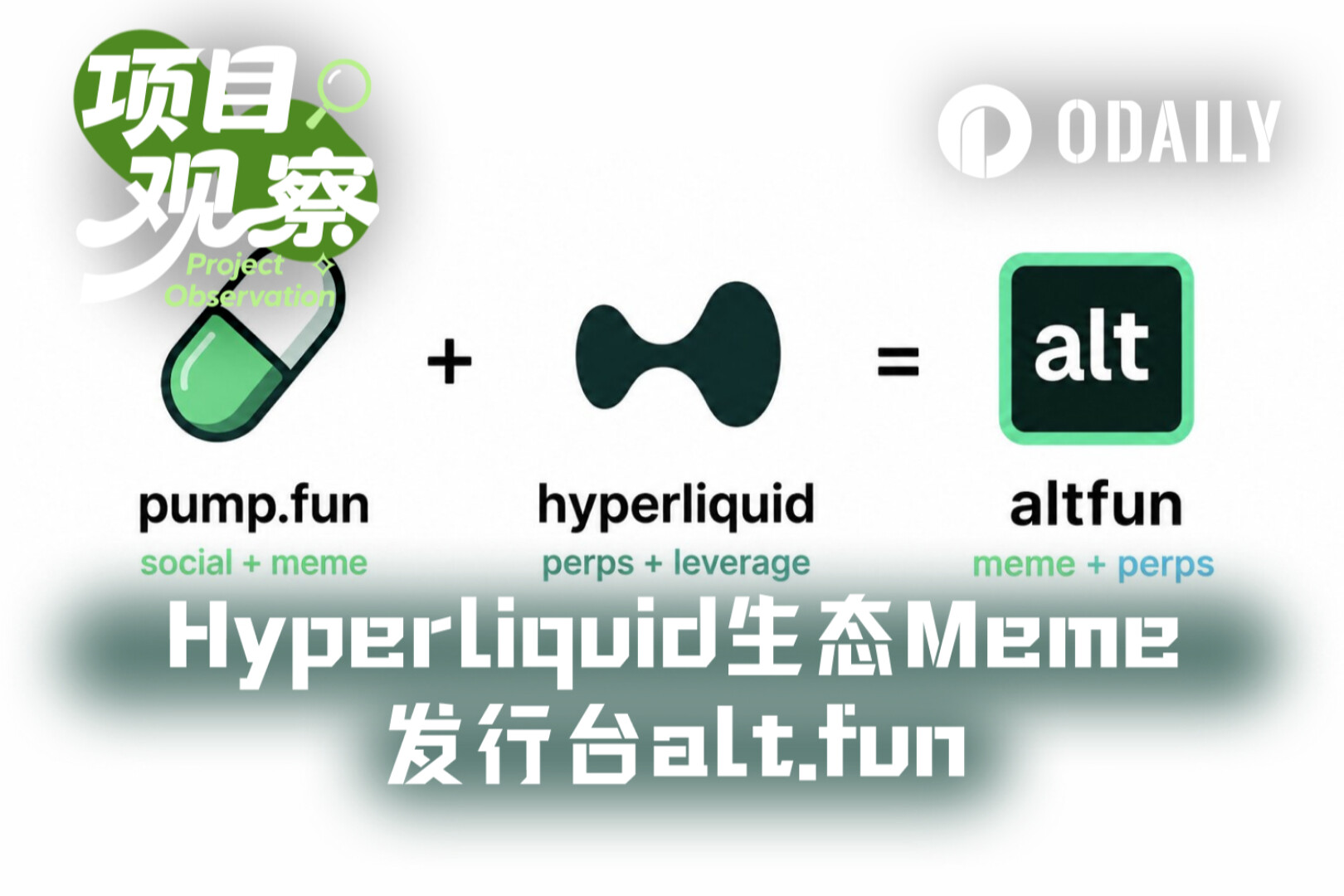
Meme Wrapped Contracts: Is alt.fun Real Innovation or Pseudo-Demand?

"Last week, the new Meme token launch platform alt.fun on Hyperliquid gained significant attention. Its flagship token ALT reached a peak market cap of $8.8 million. The platform's novelty lies in combining the mechanics of Pump.fun with leveraged trading on Hyperliquid. When a user creates a Meme token on alt.fun, they must also open a leveraged long/short position (2x, 3x, or 5x) on an underlying asset like HYPE. The platform then mints a corresponding leveraged token (LT) on BounceTech, which represents that perpetual contract position. Essentially, users are trading a tokenized derivative. This creates a dual price driver: the token's value is influenced both by market buying/selling via a bonding curve and by the performance of its underlying leveraged position. Hence the slogan: 'Your token pumps even when nobody's buying.' Tokens 'graduate' to a liquidity pool when their market cap (effectively the LT's value) reaches $9,000, achievable through either mechanism. However, this model faces key challenges. Gains are amplified only in strong, one-directional markets for the underlying asset. In volatile conditions, the mandatory 'rebalancing' of LTs leads to value decay. More fundamentally, alt.fun struggles to foster the community consensus vital for Meme tokens. Investment is driven primarily by price speculation on the underlying asset, not by narrative or cultural appeal. With limited underlying assets, token differentiation is low. The article concludes that while mechanically innovative, alt.fun may be better suited as a DeFi platform than a true Meme launchpad, as its core product lacks the community-driven essence of successful Memes."

Odaily星球日报5m ago

Meme Wrapped Contracts: Is alt.fun Real Innovation or Pseudo-Demand?

Odaily星球日报5m ago

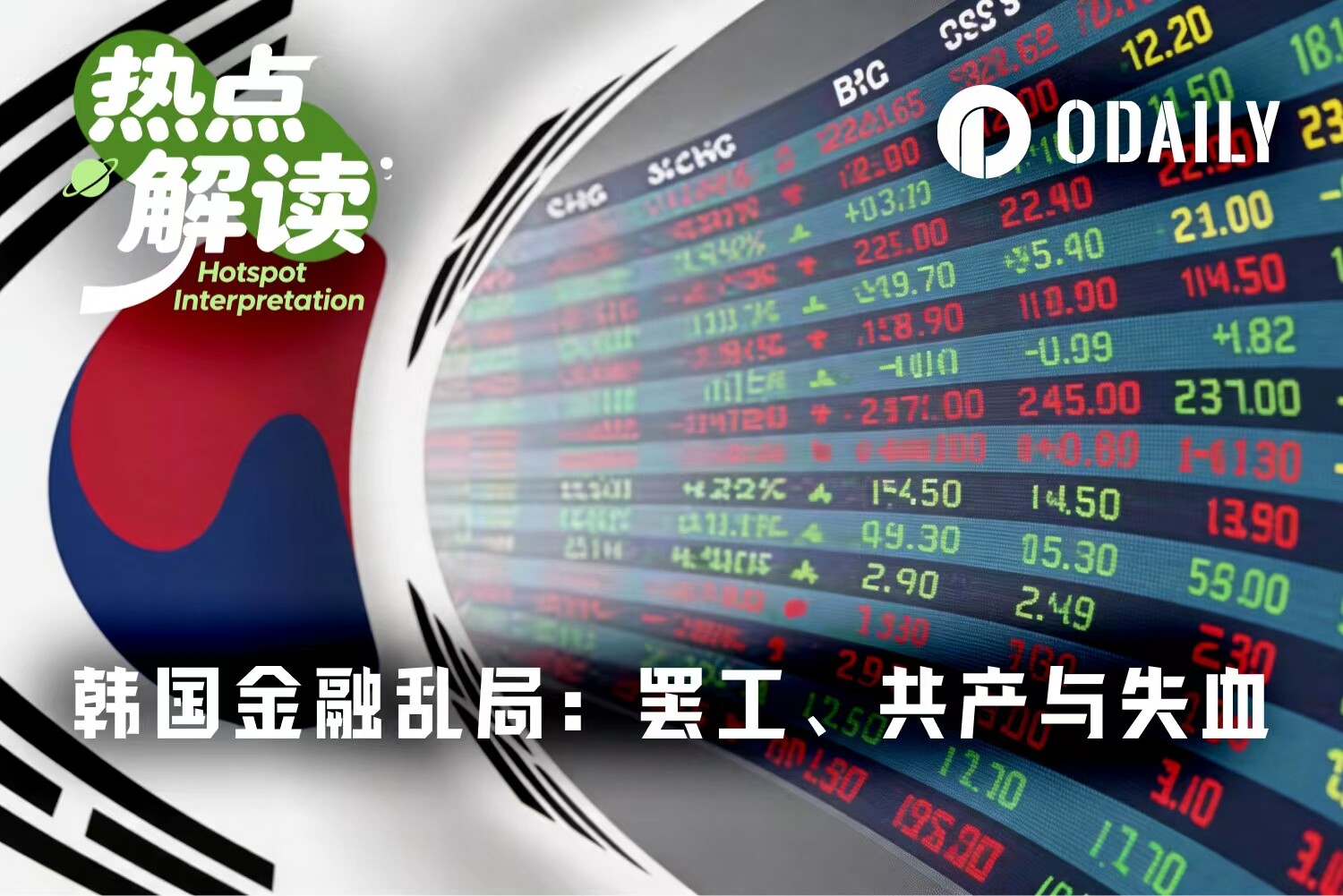
South Korea's Financial Turmoil: Samsung Strike, AI Communism, and Crypto Market Bleeding Out

The South Korean financial market is facing a turbulent period marked by a triple threat: labor unrest at Samsung Electronics, controversial government proposals for redistributing AI profits, and a severe downturn in the cryptocurrency sector. The stability of the "Korean stock market bellwether," Samsung Electronics, is under threat as its largest union plans to strike on May 21st despite a partial court injunction. The government warns a prolonged strike could cause catastrophic losses, highlighting the high stakes for Korea's critical semiconductor industry. Simultaneously, a proposal by a presidential policy chief to redistribute "AI citizen dividends" from excess corporate taxes triggered significant foreign capital outflow and market volatility last week. While clarified as not a direct tax on company profits, the discussion underscores intense debates over wealth distribution in the AI era, where profits are concentrated in a few chip giants like Samsung and SK Hynix. In stark contrast to the booming AI-driven stock market, Korea's cryptocurrency sector is experiencing a dramatic collapse. Major exchanges Upbit and Bithumb reported steep declines in revenue and profits for Q1 2026. The overall crypto market valuation has nearly halved since early 2025, with trading volumes plummeting 74%. This is exacerbated by tightening regulations, including impending crypto taxes, strict anti-money laundering rules, and frozen assets from defunct exchanges affecting nearly 200,000 users. While regulators are tightening risk controls on financial institutions, the situation presents a new era of financial instability for Korea, caught between AI-fueled growth, social equity debates, and a crumbling crypto market.

Odaily星球日报21m ago

South Korea's Financial Turmoil: Samsung Strike, AI Communism, and Crypto Market Bleeding Out

Odaily星球日报21m ago

Nvidia's Wednesday Earnings Night: The Battle That Decides the Fate of the AI Bull Market is Here

NVIDIA is set to report its quarterly earnings after the U.S. market closes on Wednesday, May 20. This event is widely seen as a crucial test for the current AI-driven bull market. The semiconductor sector is exhibiting severe technical overbought conditions, with the Philadelphia Semiconductor Index (SOX) trading approximately 60% above its 200-day moving average—the most extreme deviation since the dot-com bubble peak of 1999/2000. Market sentiment is highly concentrated on a few AI-related stocks, raising concerns about overall market breadth. Analysts highlight a key contradiction: while fundamentals for AI and semiconductors remain strong, significant technical pressures are building. Option market activity reflects this tension. Positions are heavily skewed towards bullish calls, yet there is also notable hedging activity through put options on broad indices and sector ETFs, signaling preparation for potential downside volatility. An unusual pattern of rising stock prices alongside rising implied volatility further underscores the market's expectation for a major move. For NVIDIA specifically, the market's primary focus will be on its forward guidance for the next quarter, which is deemed more critical than the immediate earnings results. Despite a recent seven-day rally adding roughly $1.7 trillion in market cap, historical data shows NVIDIA's stock has often declined the day after its past five earnings reports. The outcome of this report is expected to have a significant ripple effect across the broader technology and semiconductor markets, given NVIDIA's pivotal role.

marsbit44m ago

Nvidia's Wednesday Earnings Night: The Battle That Decides the Fate of the AI Bull Market is Here

marsbit44m ago

Trading

Spot
Futures

Hot Articles

How to Buy AAVE

Welcome to HTX.com! We've made purchasing Aave Protocol (AAVE) simple and convenient. Follow our step-by-step guide to embark on your crypto journey.Step 1: Create Your HTX AccountUse your email or phone number to sign up for a free account on HTX. Experience a hassle-free registration journey and unlock all features.Get My AccountStep 2: Go to Buy Crypto and Choose Your Payment MethodCredit/Debit Card: Use your Visa or Mastercard to buy Aave Protocol (AAVE) instantly.Balance: Use funds from your HTX account balance to trade seamlessly.Third Parties: We've added popular payment methods such as Google Pay and Apple Pay to enhance convenience.P2P: Trade directly with other users on HTX.Over-the-Counter (OTC): We offer tailor-made services and competitive exchange rates for traders.Step 3: Store Your Aave Protocol (AAVE)After purchasing your Aave Protocol (AAVE), store it in your HTX account. Alternatively, you can send it elsewhere via blockchain transfer or use it to trade other cryptocurrencies.Step 4: Trade Aave Protocol (AAVE)Easily trade Aave Protocol (AAVE) on HTX's spot market. Simply access your account, select your trading pair, execute your trades, and monitor in real-time. We offer a user-friendly experience for both beginners and seasoned traders.

5.1k Total ViewsPublished 2024.03.29Updated 2025.05.06

How to Buy AAVE

Discussions

Welcome to the HTX Community. Here, you can stay informed about the latest platform developments and gain access to professional market insights. Users' opinions on the price of AAVE (AAVE) are presented below.

活动图片