After Nvidia's Earnings, Why Is the Market Still "Yawning"?

marsbitPublished on 2026-02-26Last updated on 2026-02-26

Abstract

Nvidia's earnings report, often dubbed the "Super Bowl" of earnings season, met expectations, yet its stock became stuck around the key $200 level in after-hours trading. Surprisingly, the market's reaction was muted, with the VIX 1-day volatility measure rising less than anticipated before falling sharply. This calm suggests a potential major shift in market structure—from extreme individual stock movements toward a broader, more macro theme: "Dispersion Unwind." Prior to earnings, heavy options activity, particularly out-of-the-money calls at strikes like $200 and $195, had set up aggressive bets. However, as the stock failed to break above these levels, the options market shifted from being a potential catalyst to a drag, with gamma squeeze dynamics likely working in reverse and accelerating the stock's stagnation. This overall market "boredom" post-Nvidia indicates that the previous high-dispersion regime—where a few AI winners like Nvidia and AMD saw extreme volatility while many other stocks lagged—may be ending. Key indicators like the 3-month dispersion vs. correlation spread (DSPX-COR3M) suggest a reversion to the mean is likely, meaning individual stock volatility will converge toward index volatility, and correlations between stocks will rise. This would make alpha-generating long/short strategies more difficult and could prompt a broader sector rotation. Adding to the technical backdrop is the settlement of approximately $1370 billion in US Treasury securities ...

The "Super Bowl" of earnings season has just concluded. Nvidia (NVDA) delivered a report that met expectations, yet its stock price seemed glued to the crucial psychological barrier of $200 in after-hours trading, unable to move significantly up or down. Meanwhile, the VIX index, a measure of market fear, saw its 1-day volatility (VIX 1-day) rise much less than many traders anticipated following the earnings release, before opening significantly lower, dropping to around 9. It felt like a highly anticipated concert where the lead singer performed steadily, yet the audience remained unusually calm, with some even dozing off.
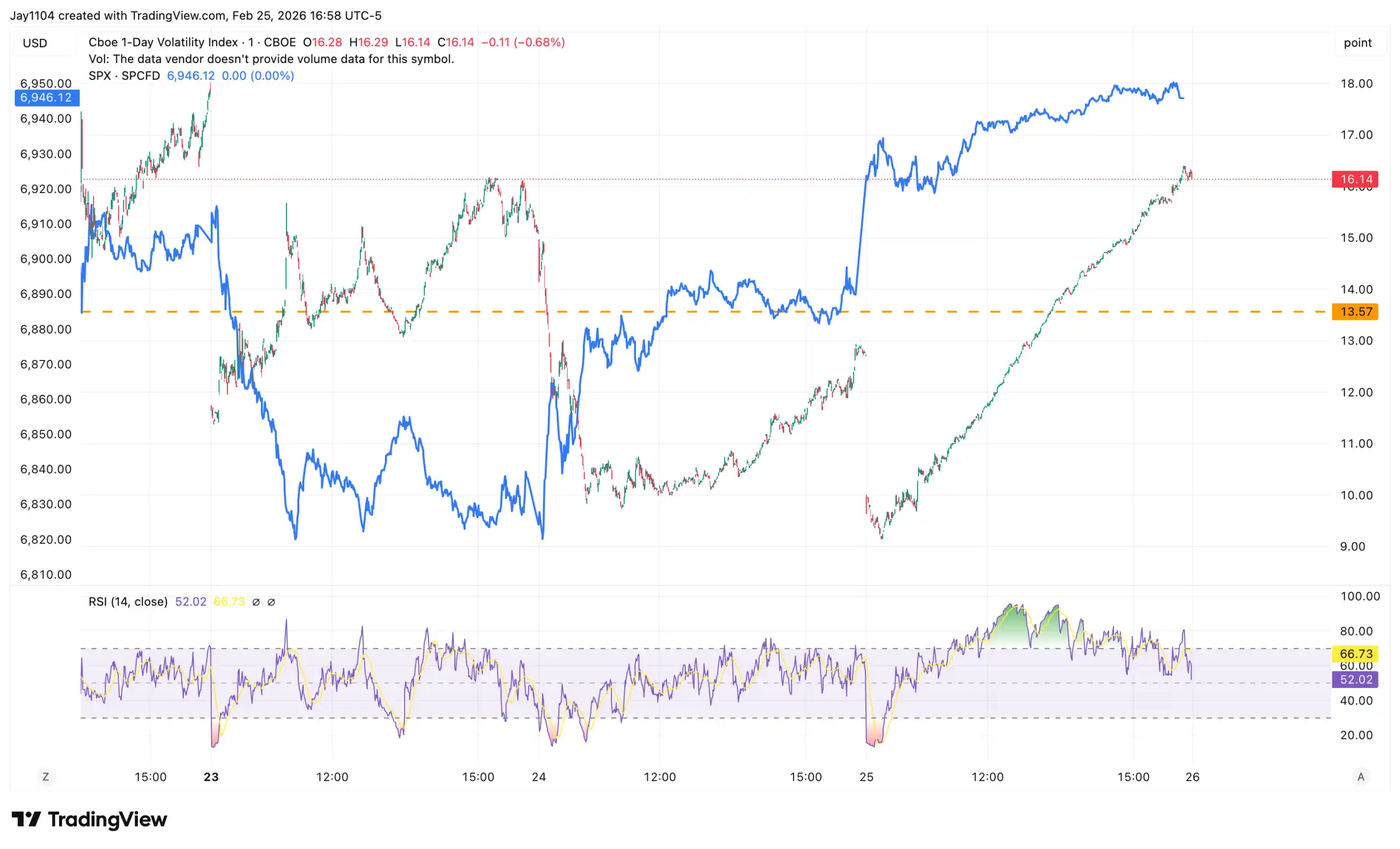
Behind this calm, a significant shift in market structure might be brewing. After the most heavyweight "shoe" has dropped, the market's focus is shifting from extreme individual stock performances to a broader, and perhaps drier, theme: "Dispersion Unwind."

The Options Dilemma of "Buy the Rumor, Sell the News"

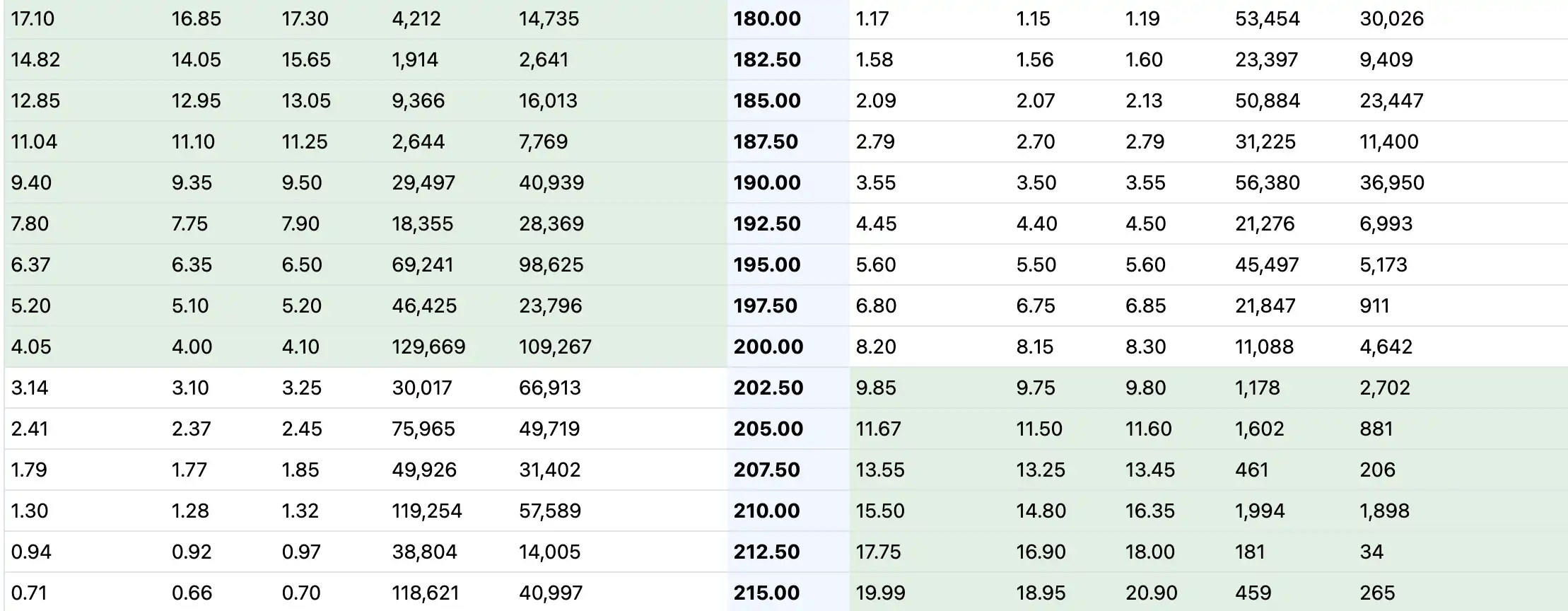
First, look at Nvidia itself. Pre-earnings, market sentiment was maxed out, especially in the options market. Significant capital was bet on the stock breaking above the $200-$205 range post-earnings. However, reality was harsh. After the report, the stock hovered around $200, causing the value of numerous out-of-the-money options (particularly the $200 and $195 call options) to evaporate rapidly.

I recall a similar scenario during a tech earnings season in 2023. A star company then reported better-than-expected earnings, but its stock opened high and then fell, largely due to the reverse effect of a Gamma Squeeze—when the stock price fails to break through key strike prices, the selling operations conducted by market makers for hedging purposes actually amplify the downward pressure on the stock. The situation with Nvidia's options chain this time feels somewhat familiar. When the most optimistic expectations aren't met, the options market turns from a "booster" into a "speed bump."
Intermission After the Market "Blockbuster": Dispersion Unwind Takes the Stage

Why did the entire market seem a bit "boring" after Nvidia's earnings? It's likely because the main logic driving the market recently—extreme divergence in individual stock performances—is approaching an inflection point.

Dispersion, simply put, is the difference between the volatility of individual stocks and the overall market volatility. During the AI frenzy, we've seen a few giants like Nvidia and AMD surge ahead with剧烈 volatility, while many other stocks have performed modestly. This high-dispersion environment is a playground for active stock pickers and quantitative hedge funds. However, this state cannot last forever.

A key indicator to watch now is the three-month dispersion vs. correlation spread (DSPX-COR3M). When this spread is high, it means individual stock movements are highly divergent (high dispersion), while the co-movement between stocks (correlation) is low. Historical experience suggests this state tends to mean-revert. That is, the implied volatility of individual stocks will gradually converge towards the volatility of the broader market index, leading to decreased dispersion and increased correlation among stocks.
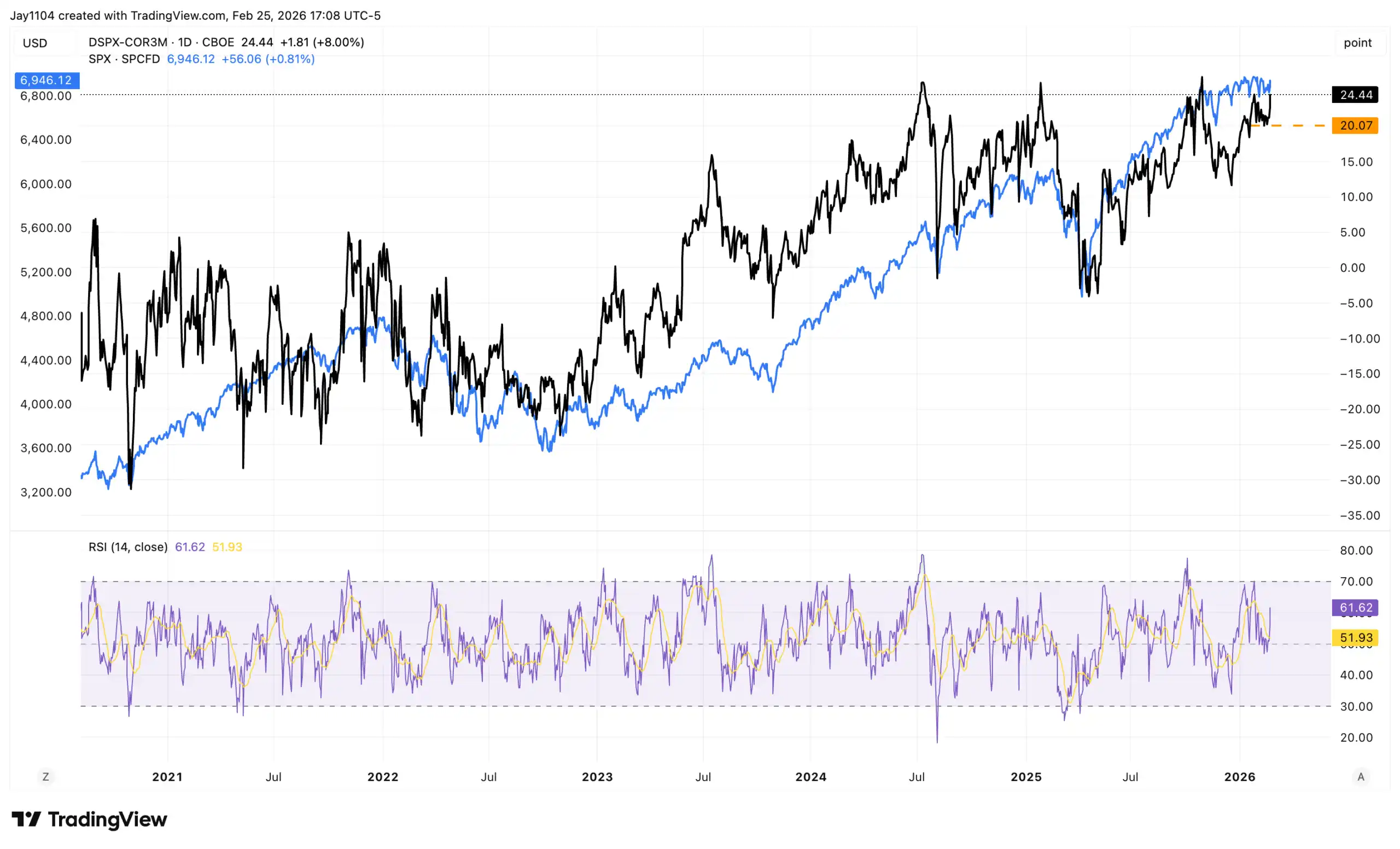
In plainer terms: the "star solo performance" might be taking a brief intermission, and what follows could be a time for a "chorus." If dispersion begins to unwind, the profitable environment for long-short strategies—which made money by going long strong AI stocks and shorting weak ones over the past few months—could deteriorate. Capital might重新审视 sector rotation or return to trades more focused on macro beta (the overall market's rise and fall).

The Unignorable "Background Noise": Massive Treasury Settlement

While the market ponders this style shift, a technical factor is humming in the background—the settlement of a massive amount of US Treasury securities.

According to the public settlement schedule, approximately $1370 billion in Treasuries are set to settle in the immediate following trading days (including $22 billion on the earnings day, $37 billion the next day, etc.). While these massive fund transfers don't directly represent capital flowing out of the stock market, they can impact liquidity in the financial system in the short term, potentially exacerbating short-term market volatility. It's like a swimming pool simultaneously draining and refilling; beneath the calm surface, undercurrents are swirling.

I recall similar liquidity disturbances during a "rebalancing week" at a previous quarter-end last year. At that time, the US market experienced several days of low-volume sell-offs into the close without any fundamental negative news, largely due to the combined effect of institutional position adjustments and bond settlements. For short-term traders, these dates represent additional "calendar risk" to be mindful of.

Where Does the Market Go From Here?

Overall, Nvidia's earnings might signal a temporary lull in micro-driven forces. The market needs a new catalyst. This catalyst could come from:

  1. Further clarity on macro policy: The monetary policy path of major global central banks, especially the Fed, will come back into focus. Any hints regarding the timing and pace of interest rate cuts could trigger a repricing of market styles.
  2. Broad validation through earnings: The AI narrative cannot be sustained by Nvidia alone. The market needs to see more companies (whether tech giants or traditional industries) provide concrete AI capital expenditure plans and revenue contributions in their earnings calls to prove the breadth and depth of this wave.
  3. The self-fulfilling prophecy of dispersion unwind: Once more and more investors begin anticipating and trading the "dispersion unwind," the process itself will accelerate. Capital partially withdrawing from the crowded AI trade to seek other valuation洼地 could facilitate a healthy sector rotation.

For investors, strategy adjustments might be necessary now. Chasing after single明星 stocks that are fully valued and have extremely crowded options is seeing a changing risk-reward ratio. Instead, one might start focusing on two aspects: First, sectors that could benefit from dispersion unwind (e.g., macro-sensitive cyclical or financial stocks that have lagged recently). Second, monitoring changes in overall market volatility; if the VIX is at low levels, it might be time to buy some "insurance" for the portfolio (like index put options).

The market will never be高潮迭起 (continuously climactic) forever. "Flat periods" like the present are precisely windows to observe capital flows and adjust positioning. After all, when the choir starts tuning their instruments, the next piece isn't far from beginning. Of course, any judgment must be combined with real-time market dynamics. At nodes of liquidity change and style rotation, staying flexible is more important than stubborn persistence.

Related reading: A 10,000-Word Deconstruction of Nvidia's 20-Year Rise: From Two Gaming GPUs to a $5 Trillion Empire


Related Questions

QWhy did Nvidia's stock price remain stagnant around $200 after its earnings report, despite meeting expectations?

AThe stagnation was largely due to the 'buy the rumor, sell the news' effect in the options market. Many out-of-the-money call options (e.g., at $200 and $195 strikes) lost value quickly as the stock failed to break above key levels, leading to gamma squeeze dynamics where market makers' hedging activities added downward pressure instead of upward momentum.

QWhat is 'Dispersion Unwind' and how does it relate to the market's reaction to Nvidia's earnings?

A'Dispersion Unwind' refers to the convergence of individual stock volatility towards the broader market's volatility, reducing the divergence in stock performances. After Nvidia's earnings, the market's focus shifted from extreme individual movements (like Nvidia's previous rallies) to this broader theme, indicating that the high-dispersion environment driven by AI hype might be pausing, leading to a calmer, more correlated market.

QHow did the VIX 1-day index behave after Nvidia's earnings report, and what does this suggest about market sentiment?

AThe VIX 1-day index initially rose less than expected after Nvidia's earnings and then fell sharply to around 9 at the open. This indicates that market anticipation and panic were low, suggesting a lack of fear or surprise despite the high-profile event, which aligns with the overall theme of dispersion unwind and reduced volatility in individual stocks.

QWhat role did the settlement of U.S. Treasury bonds play in the market dynamics around Nvidia's earnings?

AThe settlement of approximately $1370 billion in U.S. Treasury bonds around the time of Nvidia's earnings created liquidity pressures in the financial system. While not directly causing equity outflows, this technical factor could amplify short-term market volatility by affecting liquidity, similar to past events where such settlements led to unexplained end-of-day market moves.

QWhat future catalysts might drive the market following Nvidia's earnings, according to the article?

AThe market may seek new catalysts from: 1) Macro policy clarity, especially from the Fed on interest rate cuts; 2) Broader validation of AI earnings and capital expenditure plans across more companies; and 3) The self-fulfilling process of dispersion unwind, which could lead to sector rotation into undervalued areas like cyclical or financial stocks, away from crowded AI trades.

Related Reads

What Happens to Ethereum Developer Tools After the Grants Run Out?

On February 27th, the Ethereum Foundation (EF) announced Project Odin, a structured sustainability support program designed for a select group of strategic, previously grant-funded teams. Unlike a standard grant, Odin offers a long-term advisory mechanism focused on helping these teams establish credible, sustainable paths within a two-year framework, thereby reducing long-term dependence on single funding sources. The program addresses a critical post-grant challenge: how essential public goods, especially major developer tools, can achieve financial sustainability beyond initial funding. While grants from EF and programs like Gitcoin or RetroPGF remain vital for startups and research, they often fall short for mature, widely-used infrastructure. Tools like compilers, languages, and network stacks are deeply embedded but struggle with monetization, trapped between being too foundational to lose and too public to generate natural revenue. Project Odin provides teams with a dedicated Strategic Advisor to guide them through a three-phase process: 1) analyzing current funding and realistic options, 2) validating potential paths with stakeholders, and 3) executing plans, which may include crafting support contracts, service agreements, or other recurring revenue models. The first pilot participant is Vyper, a critical smart contract language for the EVM, highlighting the need for sustainable models for core infrastructure. The initiative reframes the public goods conversation from "who should be funded" to "how do already-proven teams avoid perpetual funding crises?" It encourages ecosystem participants—protocols and projects that depend on these tools—to view sustainable support not just as charity, but as essential risk management for their own operational supply chains.

marsbit17m ago

What Happens to Ethereum Developer Tools After the Grants Run Out?

marsbit17m ago

MARA Reports Q1 Revenue Below Expectations, Net Loss of $1.3 Billion, Stock Plunges After Hours

Bitcoin mining firm MARA Holdings reported disappointing Q1 2024 results, causing its stock to erase all daily gains and fall 3.44% in after-hours trading. Revenue dropped 18% year-over-year to $174.6 million, missing Wall Street estimates of $192.7 million. The company posted a net loss of $1.3 billion, a significant increase from a $533.4 million loss a year ago, primarily driven by unrealized losses on its holdings of 38,689 Bitcoin, which depreciated in value during the quarter. MARA also sold over 15,100 BTC in late March to repurchase debt at a discount. The broader mining environment remains challenging due to a 35% decline in Bitcoin's price from its all-time high and a nearly 30% increase in mining difficulty over the past year. MARA's market cap ranking among U.S. miners has slipped to seventh. Critically, the company announced a strategic pivot away from Bitcoin mining expansion. It stated it has no plans to purchase new mining equipment and is fully transitioning toward AI data centers. Its strategy involves retrofitting existing mining sites for AI and high-performance computing (HPC) and leveraging its recent $1.5 billion acquisition of Long Ridge Energy & Power, a gas-fired power plant and data center. This infrastructure could eventually support 600 MW of AI compute capacity, allowing MARA to redeploy up to 90% of its non-custodial mining power for AI and IT workloads.

marsbit17m ago

MARA Reports Q1 Revenue Below Expectations, Net Loss of $1.3 Billion, Stock Plunges After Hours

marsbit17m ago

The AI Investment Landscape Is Being Reshaped: Beyond the 'Magnificent Seven', What Opportunities Lie in the Semiconductor Supply Chain?

AI Investment Map is Reshaping: Opportunities Beyond the 'Magnificent Seven' Since ChatGPT ignited the AI wave, investment initially focused on the "Magnificent Seven" tech giants dominating cloud infrastructure. However, the rise of DeepSeek and debates on AI capital expenditure effectiveness are shifting this dynamic. Investors now recognize opportunities deeper in the supply chain—the companies providing the essential "picks and shovels." Early concerns about an AI investment "arms race" and potential low returns were partly alleviated by strong Q1 earnings from cloud providers, validating robust compute demand. This has highlighted a more certain investment thesis: regardless of which AI applications ultimately win, massive capital expenditure will first fuel demand for semiconductors and related components. This "pick-and-shovel" logic has driven semiconductor ETFs to record highs. Key beneficiaries include: * **Memory Chipmakers (e.g., SK Hynix, Samsung, Micron)**: High Bandwidth Memory (HBM) is a critical bottleneck for AI training. * **Photonics Companies**: Crucial for high-speed data transfer within AI data centers. * **The Broader "AI-11" Semiconductor Ecosystem**: This encompasses foundries & lithography (TSMC, ASML), logic & custom chips (AMD, Broadcom, Intel, Marvell), and enterprise storage (SanDisk, Western Digital). Every dollar of AI infrastructure spending flows through this chain. While the "Magnificent Seven" remain dominant in market size, their earnings growth premium over the rest of the S&P 500 ("S&P 493") is narrowing. Market attention and marginal investment are shifting towards the expanding semiconductor supply chain. The investment narrative is evolving from "betting on the ultimate AI winner" to "investing in the certainty of the infrastructure build-out." Understanding this shift from the demand side to the supply side is key to identifying future AI investment opportunities.

marsbit46m ago

The AI Investment Landscape Is Being Reshaped: Beyond the 'Magnificent Seven', What Opportunities Lie in the Semiconductor Supply Chain?

marsbit46m ago

Trading

Spot
Futures
活动图片