a16z Gathering: 7 Key Rules to Become a Top KOL

marsbitPublished on 2026-01-11Last updated on 2026-01-11

Abstract

Hosted by a16z and Tech Week, a gathering of 50 creators—including meme lords, TikTokers, bloggers, and podcasters—revealed key strategies for success in the creator economy. Seven core insights emerged: 1. Own your audience through email lists to ensure direct, lasting connections beyond algorithmic platforms. 2. Build offline touchpoints like events and dinners to deepen community trust and explore high-value collaborations. 3. Bundle sponsorships across newsletters, podcasts, and social media for predictable income and integrated campaigns. 4. Focus on niche markets; specialized audiences often yield stronger, more valuable businesses. 5. Collaborate through cross-promotion and joint ventures to accelerate growth and expand reach. 6. Dominate one primary platform first before expanding, as it remains the core of community connection. 7. Distribution is the ultimate moat—combining brand and distribution creates a competitive edge. The creator economy is maturing, with refined strategies and larger opportunities. Success hinges on ownership, offline engagement, strategic partnerships, and distribution power.

Original Title: 7 Insights from Hosting 50 Creators at a16z

Original Author: Ish Verduzco

Original Compilation: Deep Tide TechFlow

Last night, I hosted a gathering with the Tech Week team at a16z, inviting about 50 creators to participate.

Participants included meme lords, TikTok creators, lifestyle bloggers, cinematic video creators, Substack authors, email newsletter operators, podcast producers, YouTube bloggers, social media managers, and more.

Almost covering the entire spectrum of internet content creators.

In this article, I will share 7 key insights summarized from multiple conversations.
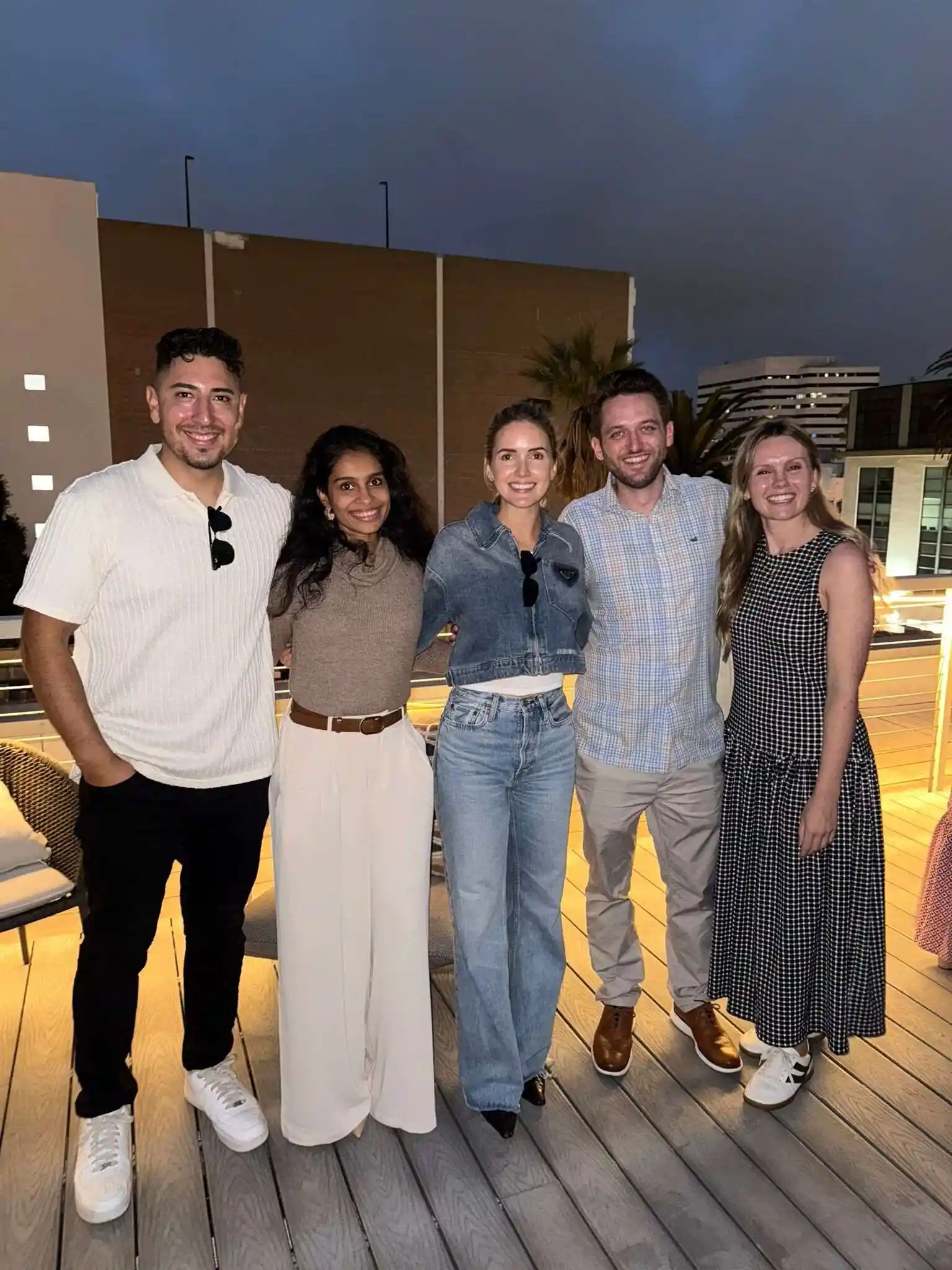
a16z and Tech Week team

1. Own Your Audience

Everyone is building an email list.

Even creators focused on short-form videos like TikTok or Instagram see email as the core foundation of their business.

Some attract new subscribers through events, some through paid ads, creating lead magnets, or using ManyChat to turn Instagram DMs into a growth engine.

Frequency doesn't matter; some publish weekly, some monthly, some quarterly, or even occasionally.

What matters is ownership.

Every creator seems to desire a direct, lasting way to connect with their audience, rather than relying on algorithm changes.

2. Build Offline Touchpoints

Offline interactions are heating up.

Many creators have spent years building their audience, community, and fan base online.

Now, they are looking for ways to turn these connections into offline interactions.

Podcast producers are starting to host live recording events; social media creators organize private dinners, local meetups, and even retreats.

These are not just "fan events" but channels to deepen relationships, build trust, and explore higher-value collaborations.

The flywheel effect of online-to-offline interaction is showing its powerful force.

3. Package Sponsorship Deals

The advertising sponsorship model is being packaged.

Creators are gradually moving away from single-ad deals.

They choose to integrate their newsletters, podcasts, social media content, and offline events into a packaged sponsorship deal.

This model is more beneficial for creators: more predictable income, less negotiation, building long-term relationships, and better multi-platform integration with the audience.

It's also better for brands: one partnership can cover multiple channels, generate a large amount of reusable content, and provide more creative collaboration methods than traditional ad placements.

This shift marks the maturity of the industry, and I really appreciate it.

4. Deep Dive into Niche Markets

Wealth lies in niche markets.

The more precise the niche, the stronger the business.

Just like the Car Dealership Guy, whom I recently invited on my podcast and met for the first time yesterday.

His total target audience is 155,000 car dealerships and their employees, but he has built a huge business because his content and products are completely focused on his ideal customer profile (ICP).

Many people think their niche is too small, but in reality, as long as the positioning is precise, its value is often beyond imagination.
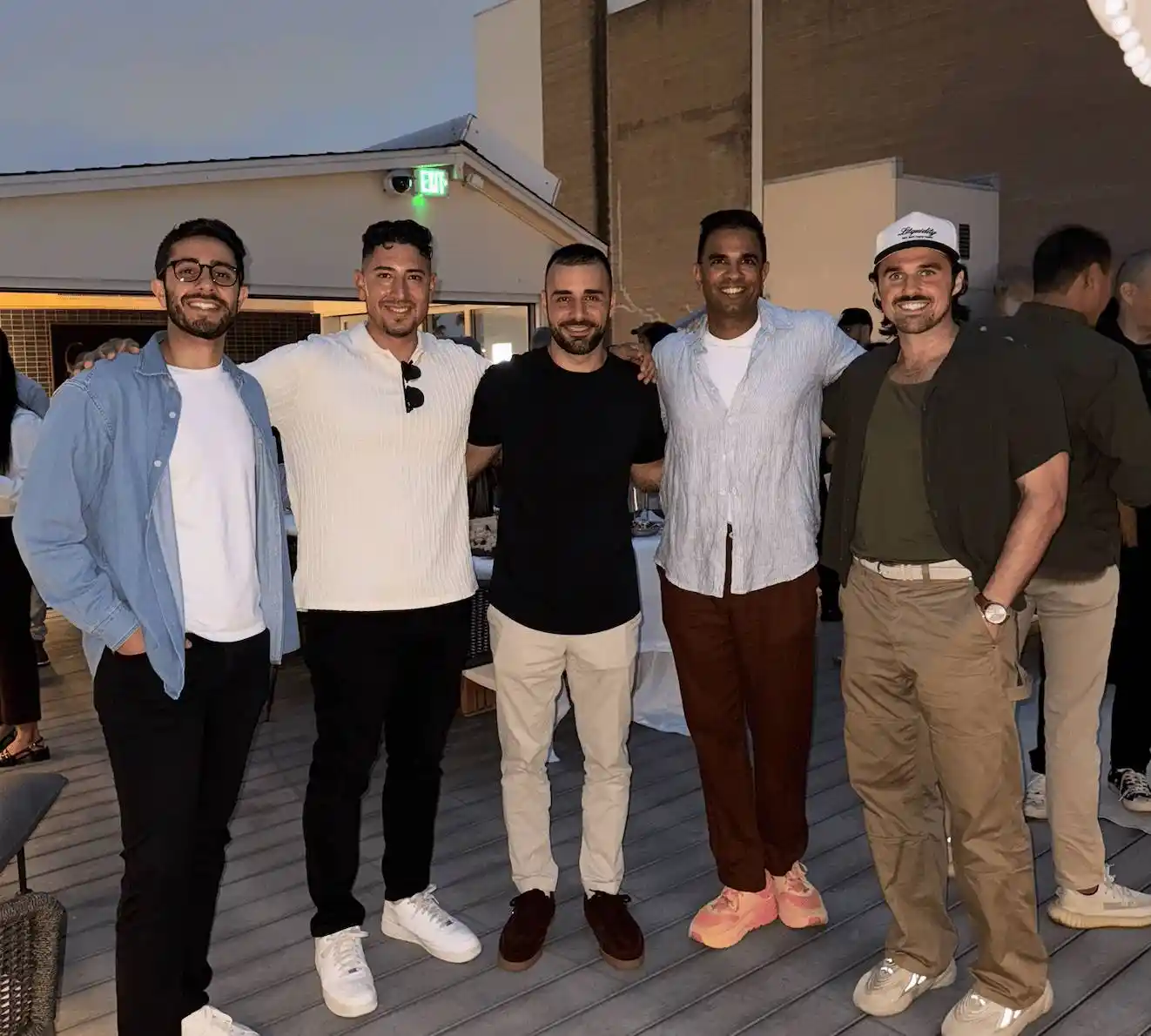
Adam (Blueprint), Yossi (Car Dealership), Avi (Creator Logic), Litquidity

5. Collaboration Leads to Win-Win

Collaboration accelerates growth.

1 + 1 = 3.

Creators are actively seeking collaboration.

Newsletter swaps, podcast guest exchanges, joint events, and cross-promotion of products.

If you can find partners with similar target audiences, growth speed increases exponentially. This is not only faster but also more fun than going it alone.

Although this strategy is not new, it is still reassuring to see it happening in reality.

More and more people are choosing the "make the cake bigger" mindset.

6. Dominate One Platform

Platform dominance still matters.

Almost every creator has a "home base."

Although they may have expanded across platforms, the platform that initially brought them traffic remains their core—whether it's YouTube, Substack, Instagram, or TikTok.

This is where their community has the strongest connection with them.

Expansion is important, but dominance is key.

Some creators even hire teams to fill gaps on other platforms while still firmly controlling the platform that initially made them successful.

First build your empire on one platform.

7. Distribution is the Ultimate Moat

This is something almost everyone agrees on.

In an era where anyone can launch a product, tool, or service, what distinguishes creators is not what they create, but how they distribute it.

Brand + Distribution = Moat.

This is a point I have been emphasizing and will continue to insist on until more people realize its importance.

Honestly, it's refreshing to see such a strong consensus—especially considering that many industries outside the creator economy are still lagging behind this idea.

Summary

The creator economy is maturing.

Strategies are becoming more sophisticated, business models are more complex, and opportunities are greater than ever.

If you are building content online, please pay attention to the following points:

  • Own your audience (email)

  • Build offline touchpoints

  • Package sponsorship deals

  • Deep dive into niche markets

  • Collaborate for win-win outcomes

  • Dominate one platform

  • View distribution as a moat

This is the successful playbook I've seen in practice.

Looking forward to the next wave of innovation and breakthroughs from creators!

Recommended reading:

RootData 2025 Web3 Industry Annual Report

Xiao Hong: From Small-Town Youth to Manus CEO, a Bitcoin Believer's Long-Termism

Binance Power Shift: The Dilemma of a 300 Million User Empire

Has the Project Buyback红利 Really Come to an End?

Related Questions

QWhat is the first key insight for becoming a top KOL according to the a16z event?

AThe first key insight is to own your audience, primarily through building an email list to establish a direct and lasting connection with your audience, independent of algorithm changes.

QHow are creators enhancing their relationships with their audience beyond online interactions?

ACreators are building offline touchpoints by organizing events such as live podcast recordings, private dinners, local meetups, and even retreats to deepen relationships and build trust.

QWhat shift is happening in the sponsorship model for creators?

ACreators are moving away from one-off ad deals and instead bundling their newsletters, podcasts, social media content, and offline events into packaged sponsorship deals for more predictable income and better integration.

QWhy is focusing on a niche market considered valuable for creators?

AFocusing on a niche market is valuable because the more specific the niche, the stronger the business, as it allows creators to tailor their content and products precisely to their ideal customer profile, often yielding higher value than expected.

QWhat is identified as the ultimate moat for creators in the content economy?

ADistribution is identified as the ultimate moat, as the key differentiator is not what creators create but how they distribute it, combining brand and distribution to build a sustainable competitive advantage.

Related Reads

WeChat Agent Issues a 'Heroic Summons,' Half of the Internet Responds

WeChat AI Agent is on the horizon. The WeChat Open Platform has issued a guide for developers, offering them ways to integrate into the WeChat AI ecosystem. This will enable mini-programs to be discovered and invoked by the AI. Meituan has already announced its integration, allowing users to access services like food delivery through WeChat AI. Other platforms like Ctrip and Tongcheng have followed suit. Furthermore, WeChat is collaborating with major smartphone manufacturers to enable their native AI assistants to perform actions within WeChat, such as initiating calls or sending messages, through a controlled protocol called Agent-to-Agent (A2A). Reports indicate the WeChat AI Agent will be accessible by swiping right on the main interface. It aims to understand user intent within the rich context of chats, groups, and past interactions, then automatically call upon relevant mini-programs to complete tasks like ordering coffee or booking restaurants. This positions it as a potential "super app" with direct access to WeChat's vast ecosystem of services, social connections, and payment systems. Technically, this is a complex endeavor. It requires advanced natural language understanding, a "world model" to predict interactions within mini-programs (UI-Oceanus), multi-model orchestration for cost efficiency, and careful coordination with millions of third-party service providers. Tencent's development follows a "Co-Design" approach, where product teams and the Hunyuan model team collaborate closely, allowing capabilities honed in other AI products (like Yuanbao for chat, ima for search, WorkBuddy for office tasks) to be transferred to the WeChat Agent. Tencent is strategically opting for the A2A protocol over GUI-based automation (which it has blocked in the past), maintaining control over its ecosystem. To manage the immense scale and cost of serving 1.4 billion monthly active users, Tencent is deepening its ties with DeepSeek, known for its cost-effective training, to secure a low-cost inference backbone. The ultimate goal is to solve practical, everyday problems for users within the WeChat ecosystem, moving beyond technical benchmarks to deliver real utility, which Tencent sees as the key to winning in the long-term AI game.

marsbit19m ago

WeChat Agent Issues a 'Heroic Summons,' Half of the Internet Responds

marsbit19m ago

Humanity Loses $31 Million in Attack, Token Price Plummets 90% Due to a Single Private Key

On June 9th, the digital identity project Humanity Protocol suffered a major security breach resulting in over $31 million in losses. According to on-chain analyst Specter, hundreds of wallets holding the project's H token were drained. The attack was confirmed by founder Terence Kwok to be caused by the compromise of a foundation member's private key. As a precaution, users are advised to avoid interacting with Humanity's cross-chain bridge or liquidity pools. The incident caused the H token price to crash over 90%, from around $0.70 to a low of $0.052, wiping its market cap from $2 billion to approximately $35.7 million. The attacker allegedly minted 100 million new H tokens and is selling them for BNB. This breach adds to existing controversies surrounding Humanity Protocol. Founded in 2024, it aimed to verify human users via palm-print biometrics and zero-knowledge proofs. However, a leaked conversation in 2025 revealed that only about 1 million of its 9 million claimed Human IDs had completed biometric verification, suggesting 88% might be bots. Furthermore, the project has faced allegations of being a repackaged product from a Chinese access control vendor, raising privacy and authenticity concerns. Founder Terence Kwok's previous venture, Tink Labs, a hotel smartphone startup that raised $170 million, failed and entered bankruptcy in 2020 after burning through its funding. The current attack highlights the persistent critical issue of private key management in crypto. Unlike smart contract exploits, a private key compromise bypasses all on-chain security mechanisms. With no user compensation plan announced yet, this $31 million breach may be a final blow to the project's credibility, already weakened by previous controversies and a heavily depreciated token.

marsbit53m ago

Humanity Loses $31 Million in Attack, Token Price Plummets 90% Due to a Single Private Key

marsbit53m ago

MicroStrategy Will Not Die in This Downturn: Reflexivity, STRC Anchoring Back to Par, and the Self-Rescue Logic of "Sell Stock, Not Bitcoin"

This article analyzes the recent sharp decline in Bitcoin and MicroStrategy (MSTR), framing it as a targeted "reflexivity" attack. The trigger was MSTR using its cash reserves to buy back convertible notes, raising market concerns about a liquidity crisis. The playbook follows George Soros's principle: market expectations can shape reality. Fears that MSTR might be forced to sell BTC caused panic selling, lowering BTC's price and worsening MSTR's financial ratios, thus reinforcing the negative narrative. The author argues that MSTR's Structured Convertible (STRC), while falling in price, is a floating-rate security that will eventually return to par value (100). The price drop reflects the market demanding a higher yield due to perceived risk, but as a floating-rate instrument, its coupon can adjust, naturally pulling the price back to par over time. This is crucial for MSTR's continued ability to raise funds. The core thesis is that MSTR's best move to counter the attack is to **issue new equity (sell shares)**, not sell its Bitcoin holdings. While selling BTC would solve the immediate cash crunch, it would destroy the company's core investment thesis and premium. It would dilute the BTC per share, likely erase the market premium over its net asset value (mNAV > 1), and worsen its debt-to-asset ratio. Issuing shares while mNAV is high (e.g., 1.25x) allows MSTR to raise cash for reserves without harming shareholder value or the "perpetual accumulation" narrative. It improves the debt ratio and reassures STRC holders, breaking the negative reflexivity cycle. In conclusion, while MSTR could survive this episode even by selling BTC, doing so would fundamentally alter its investment proposition and weaken it for future cycles. The optimal, value-preserving strategy is to sell equity to rebuild reserves and maintain the long-term growth flywheel.

marsbit54m ago

MicroStrategy Will Not Die in This Downturn: Reflexivity, STRC Anchoring Back to Par, and the Self-Rescue Logic of "Sell Stock, Not Bitcoin"

marsbit54m ago

Trading

Spot
Futures
活动图片