By|Sleepy
Last weekend, Kimi held a celebration party at a nightclub in Beijing.
Three lines of text were displayed on the nightclub's large screen:
K3, scale up
K4, scale the fuck up
To the moon
Someone posted on Xiaohongshu that night, saying Kimi's programmers were quite reserved, sitting in the booth playing on their phones with heads down, and that person got rejected when trying to add their WeChat. Co-founder Zhang Yutong was reportedly also present.
The next day, the verdict in community groups and on social media was that it was flashy, decadent, and that people working on large models shouldn't act like that. Some said they hadn't yet achieved world-class technology but were already drinking first.
The fact that Kimi held a celebration at a nightclub shouldn't have attracted so much criticism. The Kimi K3, released not long ago, has already caused a huge international stir, even becoming one of the key catalysts for recent debates about open-source models in the U.S. tech industry and political circles. The team certainly had reason to be happy.
Yet, an ordinary celebration turned into a trial about 'original intent' once it happened in Beijing.
Strangely, if the same scene happened elsewhere, the perception would be completely different.
Silicon Valley Worship
Imagine if it were a Silicon Valley company celebrating at a Silicon Valley nightclub, wouldn't it seem much more acceptable?
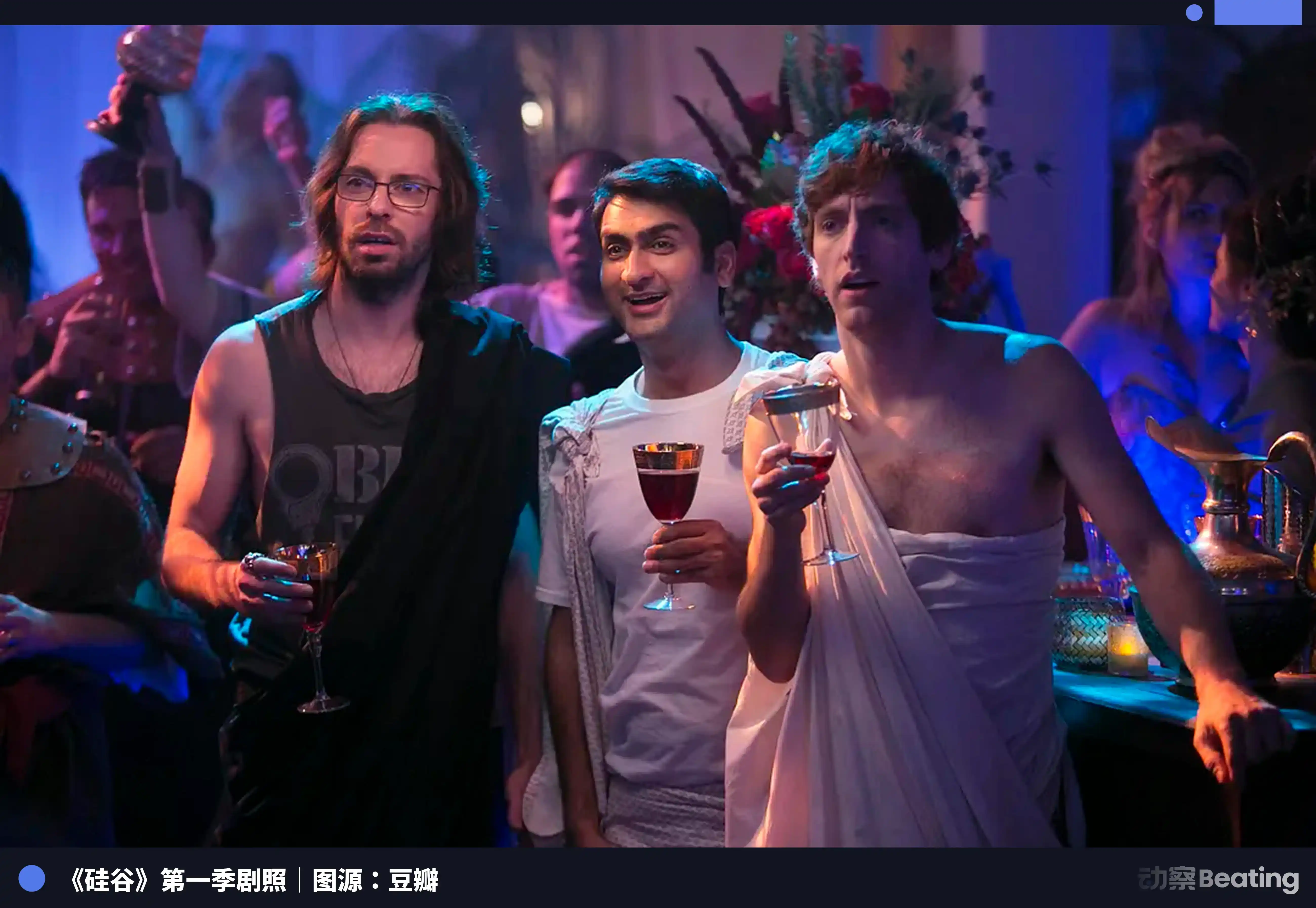
A group of engineers who just finished training a model, wearing T-shirts, get drunk at a bar, the founder stands in the crowd, a slogan with swear words on the screen. When tech media write about it the next day, the headlines would likely include words like ambition, crazy, young. Readers would finish and say, that's Silicon Valley.
When we talk about Silicon Valley, we have always been generous.
Silicon Valley's most valuable product is not just chips, models, and software. It also produces a whole language to explain success.
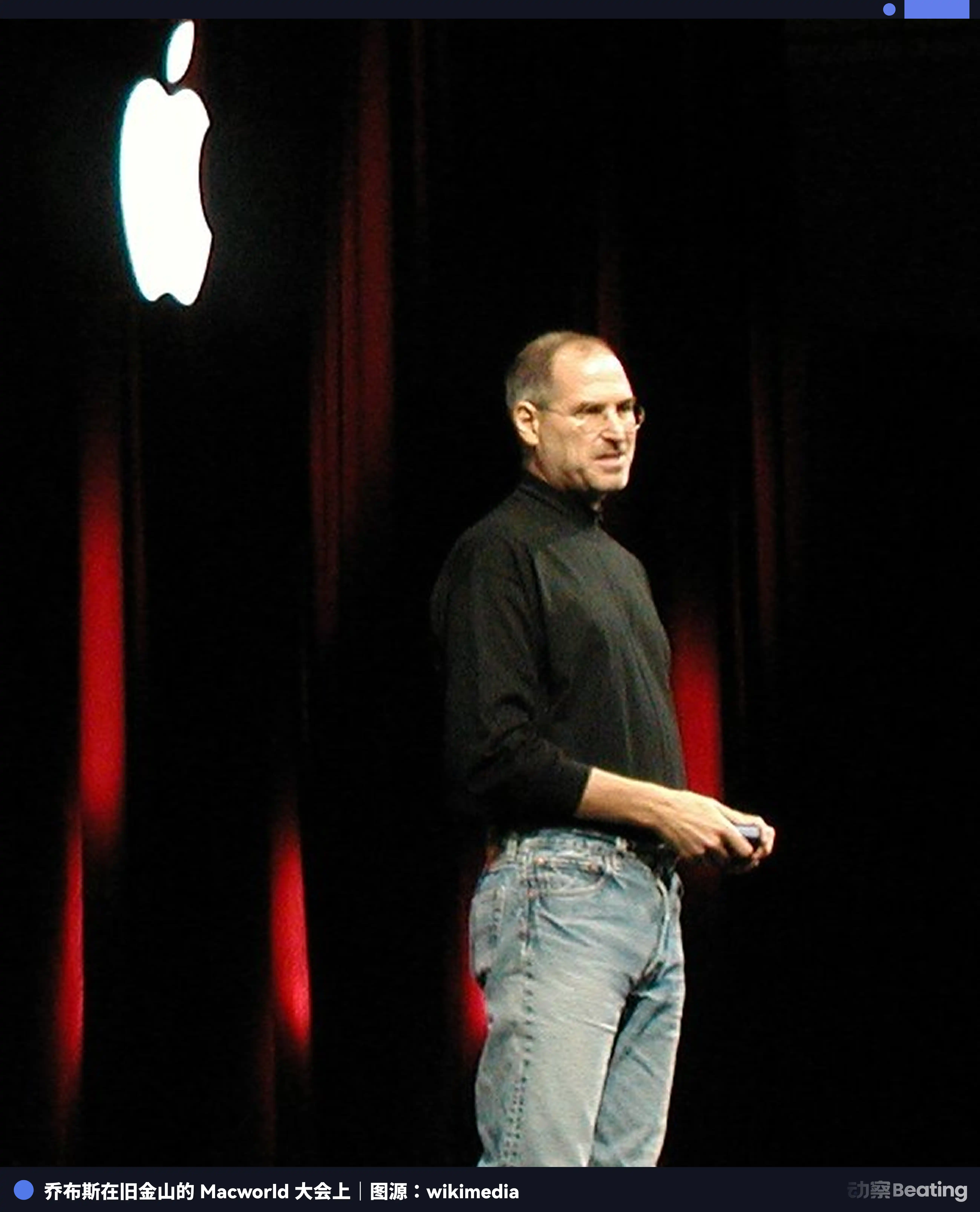
Steve Jobs wearing a black turtleneck all year round? That's focus. Mark Zuckerberg wearing slippers to meet investors? That's disregarding convention. Sleeping in the office is dedication to the cause; making money and going to Burning Man is releasing creativity.
What Silicon Valley sells to the world is not just chips, models, and software, but also a whole set of rhetoric used to explain why someone is successful and what counts as respectable for them to do after success.
People in Silicon Valley can be proud, can be offensive, can swear a bit when drunk, and no one minds. They don't have to constantly prove they are good students, because in this rhetoric, they by default represent the future.
But Chinese companies have never received this kind of treatment.
They must first prove the technology is real, the growth is real, the valuation isn't inflated. After proving all that, they must then prove they aren't getting carried away. If they use too much English at a launch event, some criticize them for worshipping foreign things. If the founder is articulate, some say he's just good at marketing. If the company makes money and employees go out to celebrate, others worry they've lost their 'original intent'.
To put it bluntly, there's a kind of Silicon Valley worship here.
For a long time, Silicon Valley was not only the birthplace of advanced technology but also the origin of modern life. Garage startups, hacker culture, venture capital, equity incentives, flat management—even the posture of rebellion was learned from there.
The problem lies precisely here. We can accept Chinese companies learning how Silicon Valley endures hardship, but we are less able to accept Chinese people also learning to enjoy life like successful Silicon Valley figures.
This is actually a kind of implicit cultural inferiority. The Silicon Valley worship here isn't simply thinking Silicon Valley is more advanced. It's that we subconsciously believe:
Western success stories have the right to define lifestyle, while Chinese success stories only have the obligation to undergo a lifestyle trial.
A recent article in The Information, "Private Jets Are Scarce. Blame the Gusher of AI Wealth," described this reality:
Today, about 30% of consumers of high-end private jets in the U.S. come from Silicon Valley. This includes not only tech company founders. Thanks to the frenzy of AI in capital markets, many researchers and engineers at AI companies have also started consuming private jets.
Top AI engineers in the U.S. are already researching buying Gulfstream G650s, while we are still debating whether Chinese AI engineers going drinking at Workers' Stadium is too flashy.
We are not advocating a luxurious lifestyle. Honestly, if you were this top talent, in which kind of public opinion environment would you prefer to work?
The Moralism of Suffering
We are particularly lenient towards American tech elites but particularly harsh on our own people, not just because of Silicon Valley worship, but also because the education we received since childhood tells us that a respectable success should come with hardship.
We learned very early to judge a person's character by their ability to endure hardship.
When a child gets poor grades, what often angers parents the most isn't the score, but "you didn't even work hard." Lack of ability leaves room for discussion, but unwillingness to endure hardship becomes a character flaw. Conversely, failing a test is okay, as long as the child studies late into the night every day, adults will still say this child is sensible. The matter of working hard very early on shifted from a question of ability to a moral question, even becoming a debt the child owes parents, the student owes teachers.
This judgment follows people as they grow up.
School requires early rising, the workplace requires overtime, entrepreneurship requires all-nighters. Whether the thing gets done is one matter; whether the person doing it bears the marks of suffering is another, and the latter is easier to see. Dark circles, instant noodles, the office at 3 AM—these are all evidence easier to spread than results.
This mindset has certainly made many people successful. In an era of scarce resources and opportunities, hard work was one of the few things ordinary people could control on their own. Families couldn't provide money, nor connections, so they could only repeatedly tell their children, endure a bit more, fight a bit harder.
Chinese children grow up hearing "Only by enduring the hardest hardship can one rise above others." "Hardship" gradually shifted from the price of success to the receipt for success.
This has also shaped our imagination of scientists, which even today seems to remain stuck in an extremely singular personality template. Scientists are best unkempt, carrying an old backpack, preferably with a plastic water bottle, no entertainment, no desire for consumption, no worldly vanity of any kind. Their minds filled daily with nothing but formulas and papers. This type of scientist is certainly very worthy of respect. But the problem is, we are turning one scientist's lifestyle into a moral template that all scientists must adhere to.
Thus, the more a scientist doesn't care about money, the more moved we are; the shabbier they dress, the purer we think they are; the drier their life, the more we believe in their high academic level.
That's why recently, mathematician Wang Hong resonated with more people: it turns out mathematicians can also be elegant, beautiful, wearing luxury brands. Neither Wei Dongyi's nor Wang Hong's lifestyle is a problem. The only problem is us, the spectators. When will we finally understand that lifestyle has nothing to do with scholarship?
This holds true for mathematicians, and for AI scientists as well.
Simultaneously Playing the Roles of Silicon Valley Elite and Ascetic
How strong Kimi K3 really is should be answered by benchmarks, developers, and real usage. Whether Moonshot AI can become a great company depends on whether it can continue to produce products, control costs, and build a healthy business model in the future.
A nightclub proves none of this, but a nightclub also disproves none of this.
Much of the criticism isn't actually opposing the celebration, but feeling it's not yet time. Chinese companies still have a distance to go to become world number one, how can they first adopt the style of the world number one? This sentiment is understandable; it's the caution accumulated over the past decades, fearing joy too early, fearing yet another empty hope.
If Kimi held the celebration at a large hotel, a banquet room with round tables, management toasting at each table, a screen saying "Achieve new glories," probably some would also criticize it as bureaucratic, stale, not at all like a young tech company. Going to a nightclub is flashy; going to a hotel is putting on airs; staying in the office eating boxed meals would inevitably be suspected of performing hardship. Whatever they do, someone says it's wrong.
This also shows that the crux of the controversy is never about how exactly a celebration should be held. People expect Chinese tech companies to have both the ambition and vitality of Silicon Valley, yet remain forever restrained, humble, preferably not even showing signs of success after succeeding.
It's just that this kind of misunderstanding creates barriers, and barriers, over time, drive people away. Perhaps no one intends to drive anyone away; we just hope for these people to emerge, hope for them to return from overseas, while simultaneously rushing to mold them into the image in our own imagination.
That nightclub in Beijing will eventually close. The "To the moon" on the big screen will be turned off, the glasses will be cleared by waitstaff, and the people sitting in the booth playing with their phones will return to their workstations to continue working. The challenges remain just as difficult, the compute resources just as insufficient.
A truly mature tech culture doesn't need to package a nightclub as innovative spirit, nor does it need to assess a company's worth from a glass of alcohol. That night holds little weight in these people's lives.
They just did something difficult and wanted to be happy for a while. And if even being happy requires explanation to others, it suggests we might not yet be accustomed to something even simpler.
Chinese geniuses can also be happy.