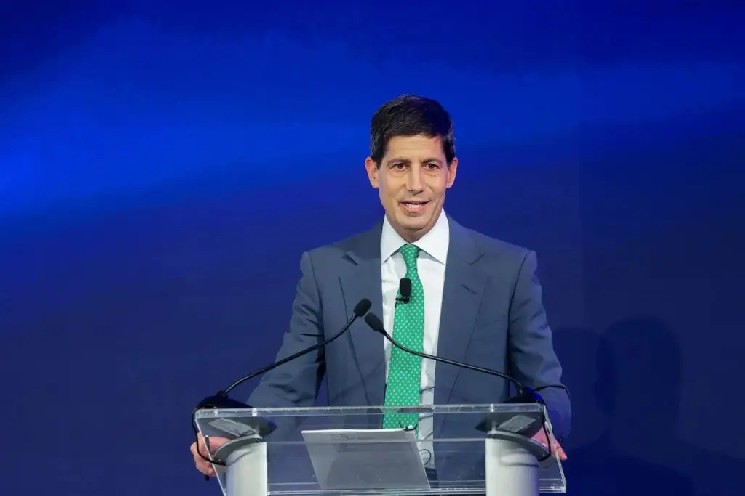
Breaking News: Full Detailed Rationale and Explanation of the Fed's Interest Rate Decision Released!

cryptonews.ruPublished on 2026-07-29Last updated on 2026-07-29

Abstract

As expected, the Federal Reserve kept its key interest rate unchanged at 3.50-3.75 percent, marking the fifth consecutive meeting without a rate change. The Federal Open Market Committee's (FOMC) decision passed with a 9-3 majority vote. Cleveland Fed President Loretta Mester, Minneapolis Fed President Neel Kashkari, and Dallas Fed President Lorie Logan dissented, voting in favor of a 25 basis point rate hike. This was the first meeting since 2016 where three regional Fed presidents voted against holding rates steady, signaling growing influence among members advocating for tighter monetary policy to combat inflation. The Fed's statement noted that economic activity has been expanding at a solid pace despite high uncertainty, partly due to Middle East conflicts. It highlighted that growth in productivity and investment remained strong, employment gains have aligned with labor force growth, and the unemployment rate has remained relatively stable. The Fed also committed to maintaining ample reserves in the banking system. The statement emphasized that inflation remains above the Fed's 2% target. It noted that supply shocks, including in the energy sector, are adding to inflationary pressures. The Committee stated it will continue to closely monitor incoming data and risks in pursuit of its price stability goal. The dissenting members argued that the target range for the federal funds rate should have been increased by 25 basis points.

As expected, the Fed kept its key interest rate unchanged at 3.50-3.75 percent. Thus, the Fed has not changed interest rates for the fifth consecutive meeting.

The Federal Open Market Committee (FOMC) decision was approved by a majority vote of 9 to 3. Cleveland Fed President Beth Hammack, Minneapolis Fed President Neel Kashkari, and Dallas Fed President Lorie Logan voted in favor of raising the discount rate by 25 basis points.

The fact that three regional Fed presidents voted against a rate hike at the same meeting was the first such case since 2016. This decision indicated that Fed members advocating for tighter monetary policy to fight inflation were gaining strength.

Fed: Economic Activity is Growing at a Rapid Pace.

In its decision, the Federal Reserve noted that economic activity had been growing at a high rate, despite high uncertainty partly caused by conflicts in the Middle East.

The statement noted that growth in labor productivity and capital investment remained high. It also pointed out that job growth was in line with the increase in the labor force size, and the unemployment rate remained relatively stable.

The Federal Reserve also stated it would continue its policy of ensuring sufficient reserves in the banking system.

The statement on the decision emphasized that inflation remains above the Fed's 2% target. It noted that supply shocks, which have led to price increases in some sectors including energy, were adding to inflationary pressures.

The Committee stated it would continue to closely monitor economic data and risks in accordance with its goal of ensuring price stability.

Hammack, Kashkari, and Logan, who supported raising the interest rate, stated at the meeting that the target range for the federal funds rate should be increased by 25 basis points.

*This is not investment advice.

end-content
Related Questions

QWhat key interest rate did the Fed leave unchanged?

AThe Federal Reserve left its key interest rate unchanged at 3.50-3.75 percent.

QWhat was the vote count in the FOMC decision and who dissented?

AThe FOMC decision was passed with a vote of 9 to 3. The dissenting voters, who favored a 25 basis point rate hike, were Cleveland Fed President Beth Hammack, Minneapolis Fed President Neel Kashkari, and Dallas Fed President Lorie Logan.

QAccording to the Fed's statement, what was the state of economic activity and inflation?

AThe Fed stated that economic activity was growing at a high pace. It also emphasized that inflation remained above its 2% target, with supply shocks, including in the energy sector, adding to inflationary pressures.

QWhen was the last time three regional Fed presidents dissented in the same manner at a single meeting?

AThe article states that three regional Fed presidents voting against the rate decision on the same meeting was the first such occurrence since 2016.

QWhat did the dissenting Fed presidents specifically propose?

AThe dissenting Fed presidents, Beth Hammack, Neel Kashkari, and Lorie Logan, stated that the target range for the federal funds rate should be increased by 25 basis points.

Related Reads

Top 10% of American Households Capture 88% of Wealth, How Is the AI Era Cake Divided?

AI Worsens Wealth Inequality as Top 10% of US Families Garner 88% of Stock Gains (2019-2026) A report from the China Finance 40 Forum highlights that the AI boom is significantly widening wealth inequality in the United States. From 2019 to Q1 2026, wealth from directly held stocks by US households nearly doubled from $29 trillion to approximately $55 trillion, with rapid growth concentrated post-2023, coinciding with the AI-driven stock market surge. The distribution of these gains has been starkly uneven. Between 2022 and Q1 2026, the wealth increase of about $21 trillion was captured almost entirely by the wealthiest families: the top 10% secured roughly 88% ($18.5 trillion), while the bottom 50% received only about 1% ($0.2 trillion). This has contributed to a growing disparity in disposable income shares. The report, referencing economic historian Robert Allen, draws parallels to historical technological shifts like the "Engels' Pause" during the First Industrial Revolution, where worker wages stagnated despite productivity gains. It suggests AI could induce a similar period where capital收益 outpace labor income, exacerbating inequality. Huang Yiping of Peking University identifies four mechanisms through which AI impacts income distribution: capital-bias (reducing labor's income share), task polarization (hollowing out middle-skill jobs), skill-based digital divides, and wealth amplification through assets. He warns that if this trend continues, strong supply growth driven by AI could be undermined by persistently weak consumer demand, threatening sustainable economic growth. To address these challenges, the report proposes a three-pronged strategy: 1) Defensive measures like strengthening social safety nets and antitrust enforcement; 2) Empowering workers through education reform and lifelong learning to collaborate with AI; and 3) Rebalancing via policies such as potential taxes on AI超额收益 and mechanisms for broader sharing of technology's benefits, ensuring AI's红利 are more equitably distributed.

marsbit6m ago

Top 10% of American Households Capture 88% of Wealth, How Is the AI Era Cake Divided?

marsbit6m ago

After the Fed's Interest Rate Decision and Comments from Kevin Walsh, Experts Gathered and Shared Their Latest Insights!

Following the Fed's decision to hold interest rates steady, experts highlight a potential shift towards more independent policymaking within the FOMC, as three members dissented. Market strategists note the slight decline in bond yields and a weaker dollar post-announcement, but caution that a rate hike in September remains possible. Experts like Mark Hackett point to the three dissenting votes as a sign of growing committee independence. While markets initially rallied in relief, the final direction hinges on Fed Chair Kevin Warsh's upcoming press conference. Analysts, including Audrey Childs-Freeman, interpret the dissent as the Fed maintaining a hawkish stance. They suggest the Fed will continue monitoring data, with a summer scenario of high bond yields supporting the dollar still in play. Chris Anstey emphasizes that markets will closely watch the 10-year Treasury yield during Warsh's conference. A continued rise could signal investor fears that the Fed is not acting aggressively enough on inflation, posing a challenge for the Chair. The long-term yield is also viewed as critical for mortgages and economic management. Diane Swonk of KPMG argues a September rate hike is likely, stating that an increase now would have been more appropriate given nearly five years of high inflation. She warns that prolonged high prices risk becoming embedded in the economic system. *This is not investment advice.

cryptonews.ru4h ago

After the Fed's Interest Rate Decision and Comments from Kevin Walsh, Experts Gathered and Shared Their Latest Insights!

cryptonews.ru4h ago

Trading

Spot
活动图片