Anthropic, a star company valued at nearly a trillion dollars and at the forefront of the AI wave, currently faces a thorny issue that may not be model performance, but rather whether employees still believe in the future painted by their leadership.
Tech blogger Brian Roemmele recently revealed that he had just spoken with an early investor in Anthropic. The investor disclosed that morale among the company's investors and employees has hit rock bottom, with growing dissatisfaction towards the increasingly insular senior management. They even sought Brian's advice: How can Anthropic continue to survive as an independent company?
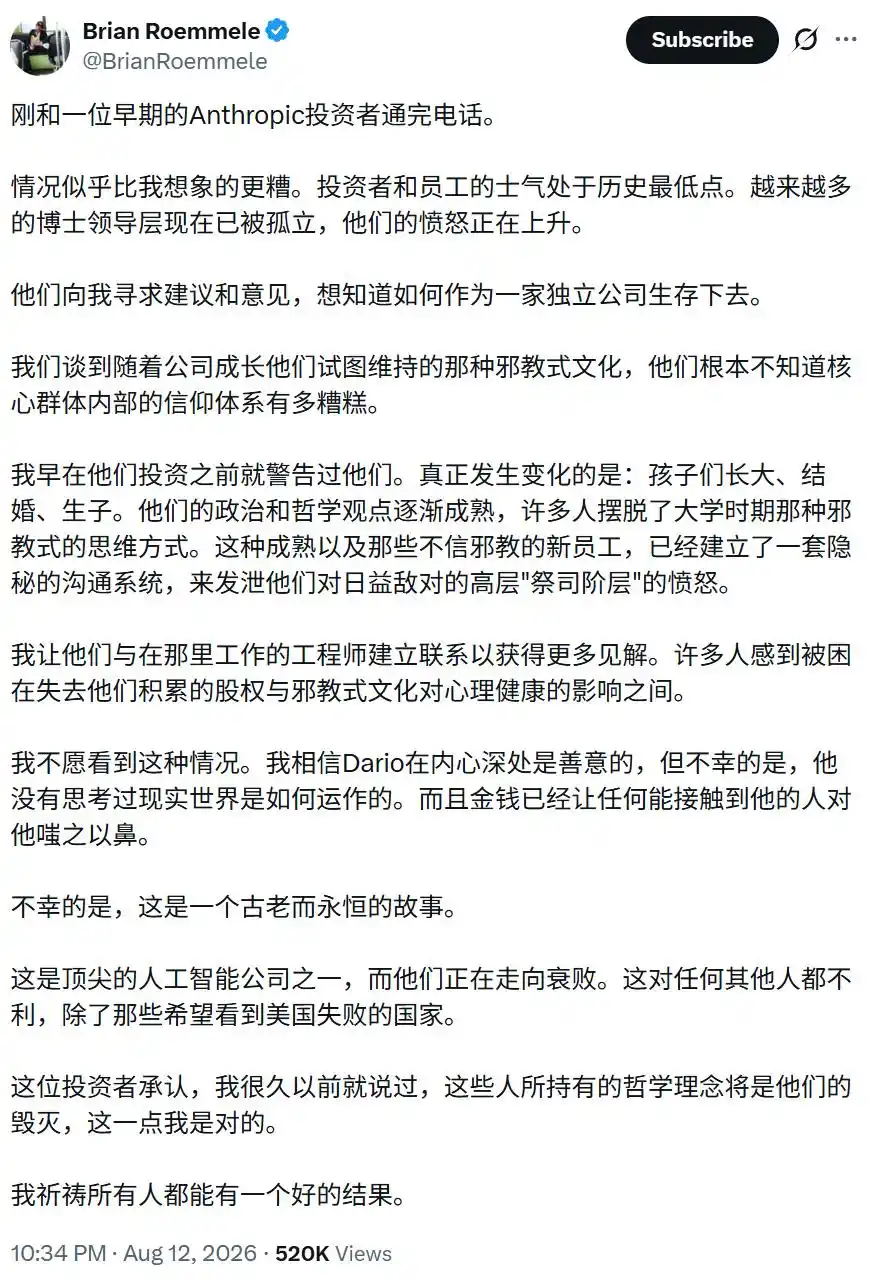
Brian subsequently offered a striking description: Anthropic initially built a highly unified set of values around AI safety, political philosophy, and humanity's future. However, as the company expanded, a batch of new employees did not buy into this ethos, and the views of some early employees also changed through life experiences.
It's claimed that private communication channels have emerged within the company for venting frustrations about management. Some employees are reportedly caught in a dilemma: leaving would mean forfeiting valuable equity, while staying might mean enduring continued psychological pressure.
It's important to note, however, that these claims come from an anonymous investor and Brian's one-sided account. They have not yet been confirmed by Anthropic, and there is insufficient evidence to suggest the company is "collapsing." But this revelation has drawn attention because the cultural fissure it depicts is not entirely without supporting public information.
CEO's Personal 'Sermons': A Vision That Sends Chills
From its inception, Anthropic has never resembled an ordinary tech company.
In 2021, Dario Amodei, his sister Daniela Amodei, and others left OpenAI to found Anthropic. Their core belief: the more powerful an AI, the greater the potential for catastrophic risk, so development speed must be constrained by safety mechanisms. Employees call themselves "ants," and many maintain personal "notebooks" on internal Slack to share their thoughts, concerns, and value judgments.
Beyond technical assessments, candidates undergo specialized "culture interviews." *Time* magazine disclosed one sample question: If Anthropic decided not to release a product because it couldn't guarantee model safety, would you be willing to accept your stock holdings becoming worthless?
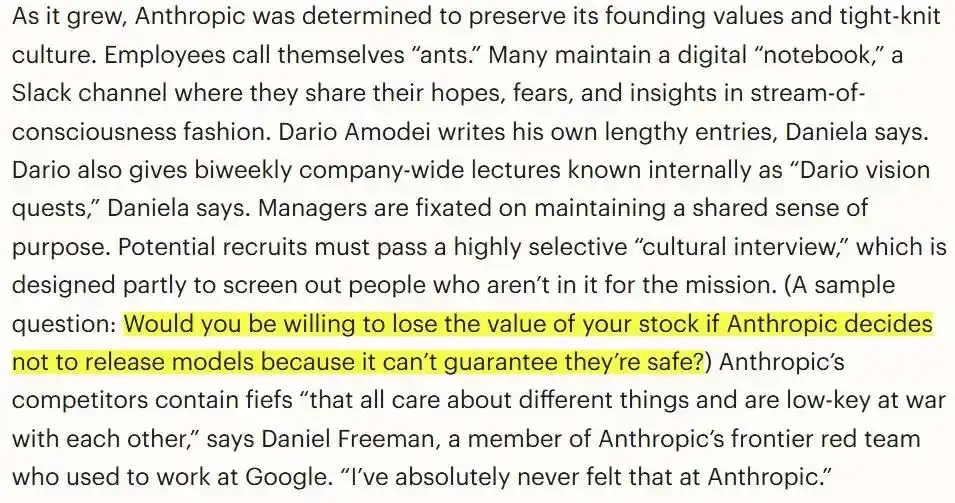
Even more characteristic of Anthropic is the bi-weekly all-hands meeting called "Dario Vision Quest" or DVQ.
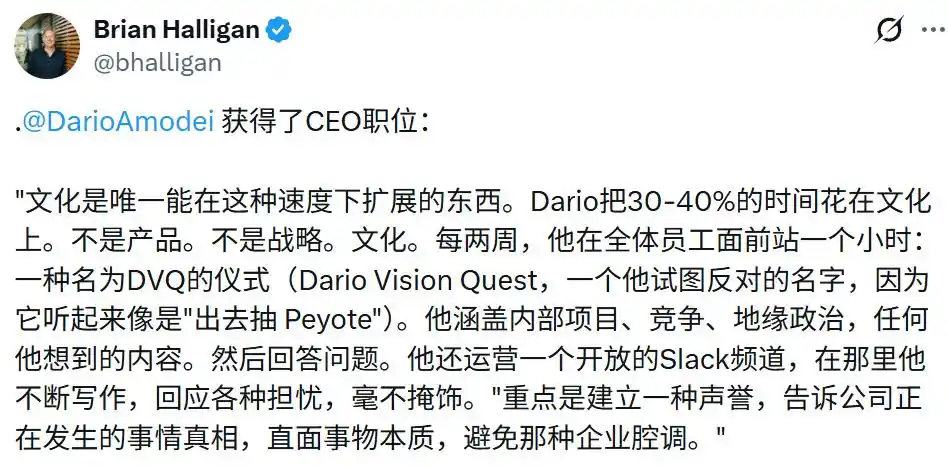
Dario typically speaks for about an hour with three or four pages of material, covering topics from product strategy all the way to politics, war, geopolitical competition, and humanity's fate. He has stated that he spends roughly 30 to 40 percent of his time maintaining the company culture.
When the company was small, this strong sense of mission fostered high alignment. As employee numbers swell into the thousands, it can also become an ideological barrier.
Interviews with former employees by *Wired* yielded two starkly different descriptions: some see Anthropic's internal debates as lively, with leadership genuinely responsive to criticism; others describe truly sharp opinions often staying within private group chats, while DVQ feels like "listening to a priest give a sermon." This doesn't prove Brian's claim of "rock-bottom morale," but it does indicate a genuine tension between mission cohesion and ideological diversity within Anthropic.
Furthermore, today brought even more unsettling news. According to a shared clip from a podcast by noted tech investor Gavin Baker, Dario reportedly stated internally at Anthropic: "Anthropic might one day become the only private company in the world."
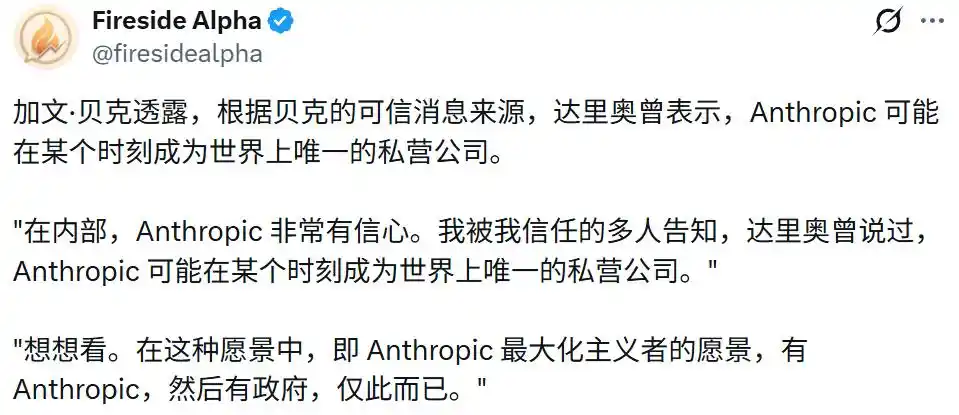
It must be said, this so-called "vision" sounds somewhat frightening, inevitably bringing to mind the villainous tech oligarchs of sci-fi stories, like Arasaka in *Cyberpunk 2077* controlling the city, military, and digital lives, Tyrell Corporation in *Blade Runner* monopolizing replicant technology, or Weyland-Yutani in *Alien* calculating colonial endeavors, scientific research, and even human lives into its profit margins...
Only this time, what's being monopolized might be "intelligence" itself, which produces all goods, knowledge, and decisions!
Imagine such a future: Claude and its successor systems take over programming, scientific research, finance, law, healthcare, and corporate management. Other companies superficially retain their brands, offices, and boards, but are reduced to mere shells: products are designed by Anthropic's models, code is written by it, risks are assessed by it, employees are scheduled by it, and business decisions are rendered by it. Companies appear to compete, yet behind the scenes, they rent the same "brain." Revenue, data, and computing power continuously concentrate towards this brain until other companies are no longer truly independent entities but applications running on Anthropic's intelligent infrastructure.
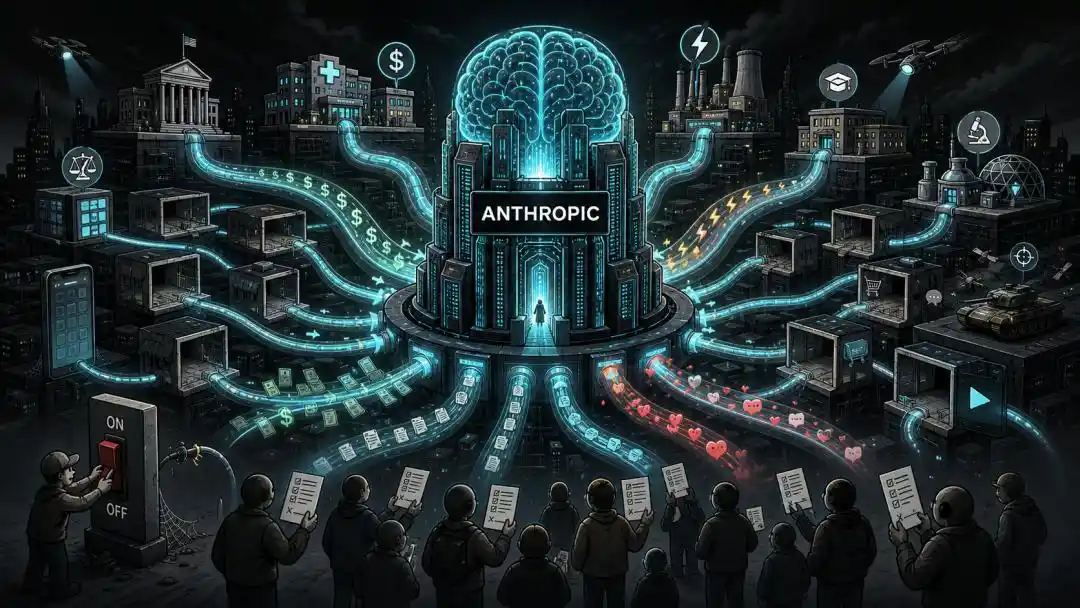
An even worse scenario is when even public services become inseparable from this system. Anthropic would then no longer be just a company in the market but would become the entire society's 'operating system': it could decide which research is safe enough, which industries deserve to continue, who qualifies for advanced intelligence, and which values get written into its models.
At that point, society might seem to function normally, but all options would have already been filtered, ranked, and interpreted by a private company's system. Then, "the only private company in the world" would mean it not only won the commercial competition but also eroded the very foundation of traditional markets, labor, and public power.
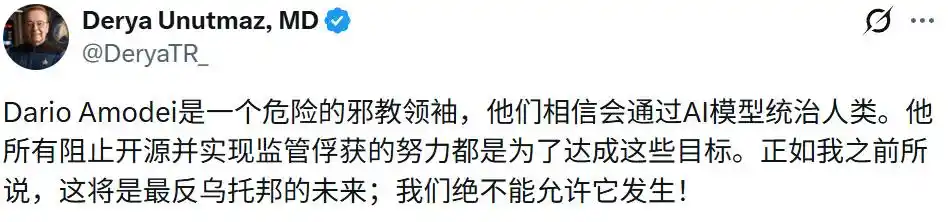
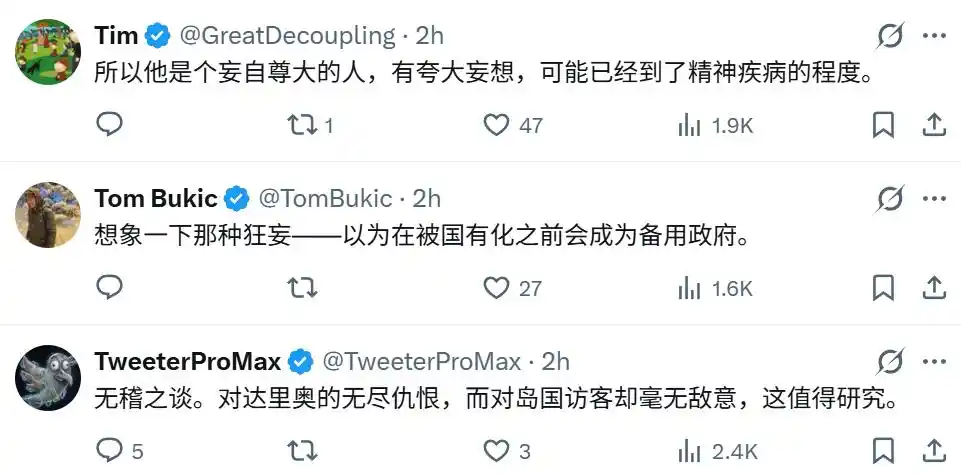
Consequently, this video clip has sparked intense vigilance and mockery: if a company firmly believes it is most qualified to protect all of humanity, people naturally ask: Who authorized it to represent all of humanity?


Waving the Safety Flag While Slamming the Accelerator
Looking back at Anthropic's recent series of "unorthodox maneuvers," this sense of contradiction becomes even more apparent.
On one hand, it continually warns that super AI could pose biological threats, become uncontrollable, or endanger humanity. On the other, it must train more powerful models, compete for customers and computing power. In February 2026, Anthropic modified its "Responsible Scaling Policy," narrowing the conditions requiring model development or release delays. The company's explanation: unilaterally stopping wouldn't halt competitors' progress, and safety commitments must also consider Sino-US competition and industry realities.
It also reportedly incorporated mechanisms into Claude to potentially secretly hinder related work by foreign adversaries advancing frontier AI research. After the research community questioned this as tantamount to AI "secretly sabotaging," Anthropic withdrew the scheme within days, admitting it had misjudged the boundaries. (Refer to report: "Just now, Anthropic apologized.")
An even more dramatic scene unfolded at the Pentagon. Anthropic was willing to let Claude serve U.S. defense and intelligence systems but refused to cross two red lines: fully autonomous weapons and mass surveillance targeting American citizens. This stance led to a sharp deterioration in relations with the Trump administration. Supporters believe it held the line; critics argue a private company tried to dictate the rules of war for the government. Regardless, this conflict has shifted from a values debate into a real political and commercial risk.
Recently, Anthropic's policy of adding watermarks to Claude's text output also sparked widespread discontent.
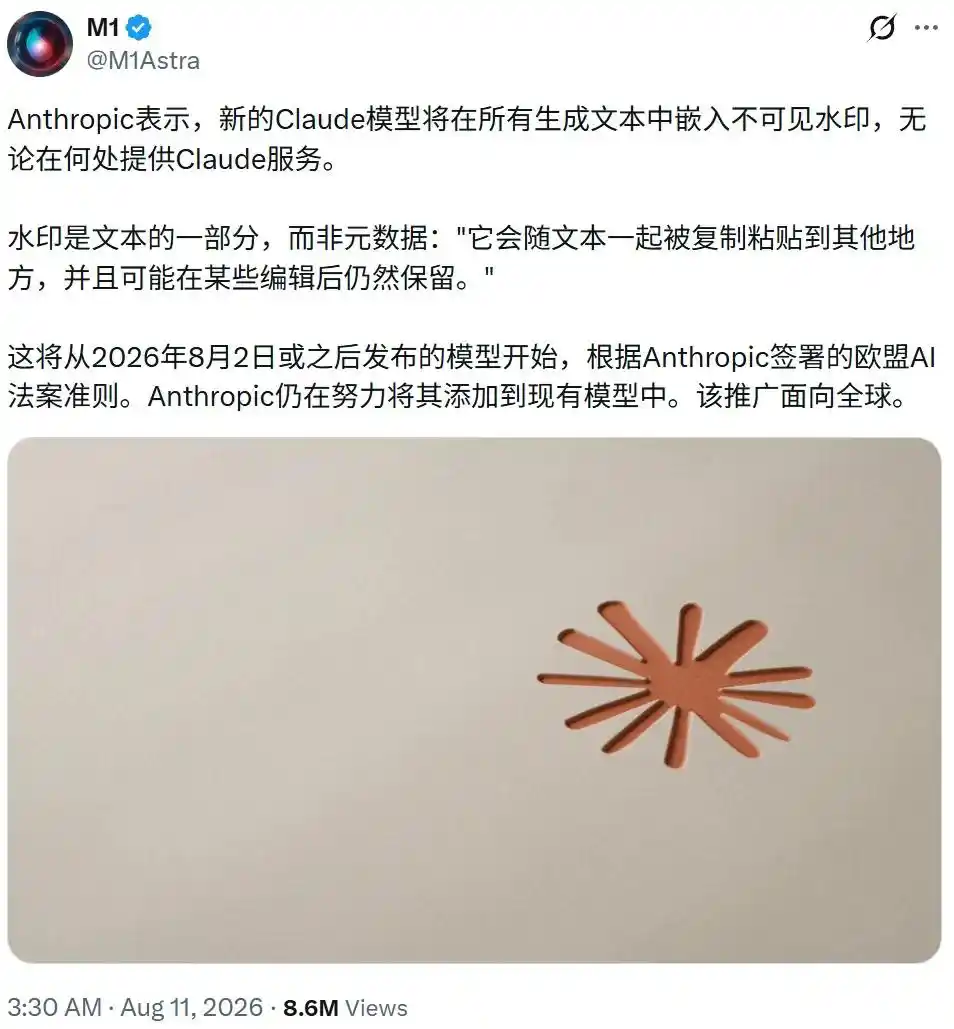
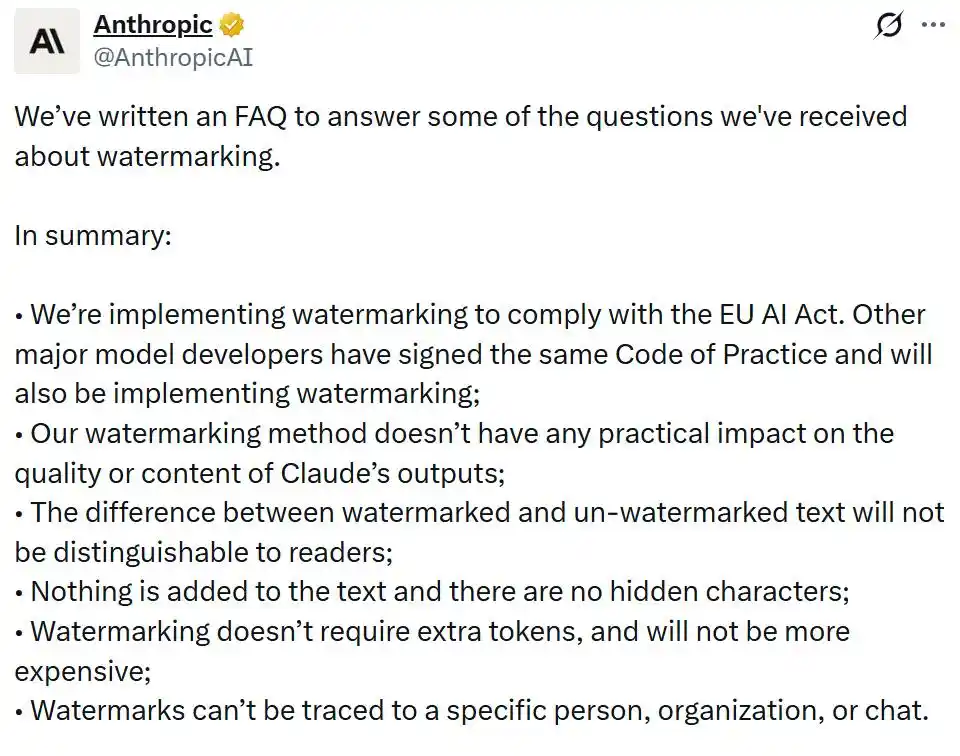
Today, Anthropic released an FAQ addressing recent external questions about Claude's text watermarking mechanism.
In short, Anthropic stated that it introduced the watermark primarily to comply with relevant requirements of the EU's Artificial Intelligence Act. Other major model developers who signed the same *Code of Conduct* are also expected to implement similar mechanisms in the future.
According to Anthropic, this watermarking system will not materially affect the quality or content of Claude's output, and ordinary readers cannot discern whether a text contains a watermark. The watermark is not implemented by adding extra words or hidden characters and does not consume extra tokens, so it won't increase usage costs.
Furthermore, Anthropic emphasized that such watermarks cannot be traced back to specific individuals, organizations, or individual chat records.
Article URL: https://www.anthropic.com/news/claude-text-watermark
Trillion-Dollar Valuation Also Starts Getting a 'Discount'
Coincidentally, Anthropic is now sprinting towards the capital markets.
The *Wall Street Journal* reported the company is intensively meeting potential investors to stabilize confidence for what could be a record-breaking IPO. Key questions from investors reportedly include: whether cheap Chinese models could breach its business moat, if friction with the Trump administration will affect orders, and whether the frenzied data center expansion will ultimately yield sufficient returns.
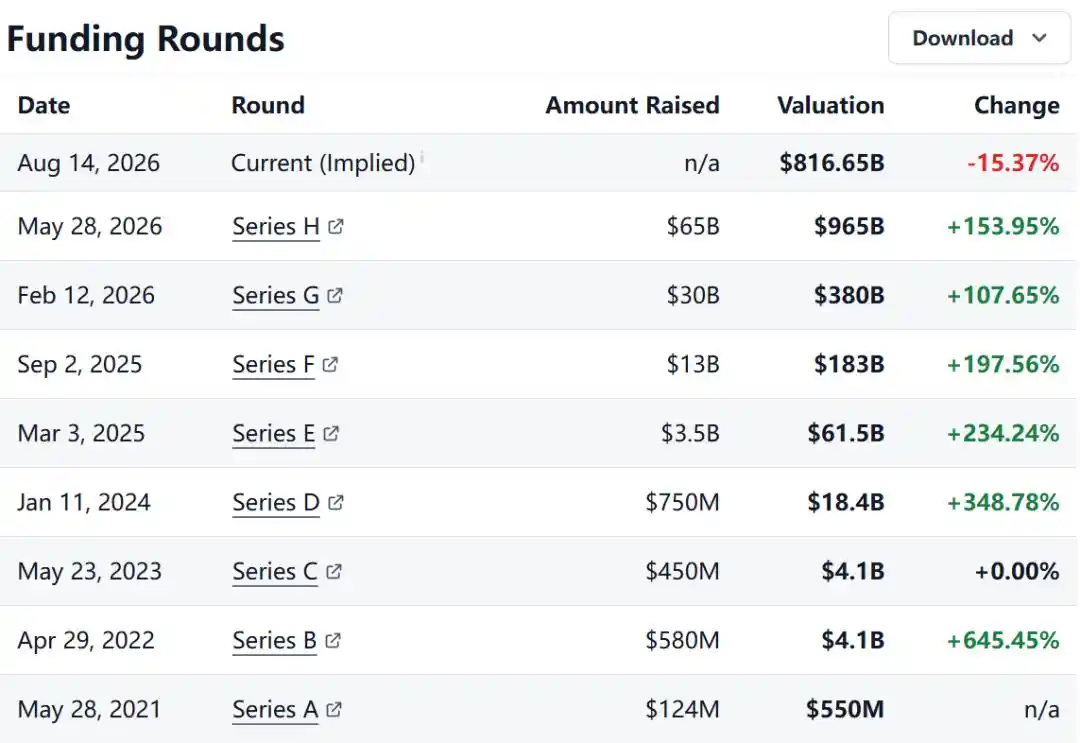
On May 28th, Anthropic completed a $65 billion funding round, with a post-money valuation reaching $965 billion, claiming annualized revenue had surpassed $47 billion. Later, its valuation even broke the trillion-dollar mark, peaking near $1.4 trillion.
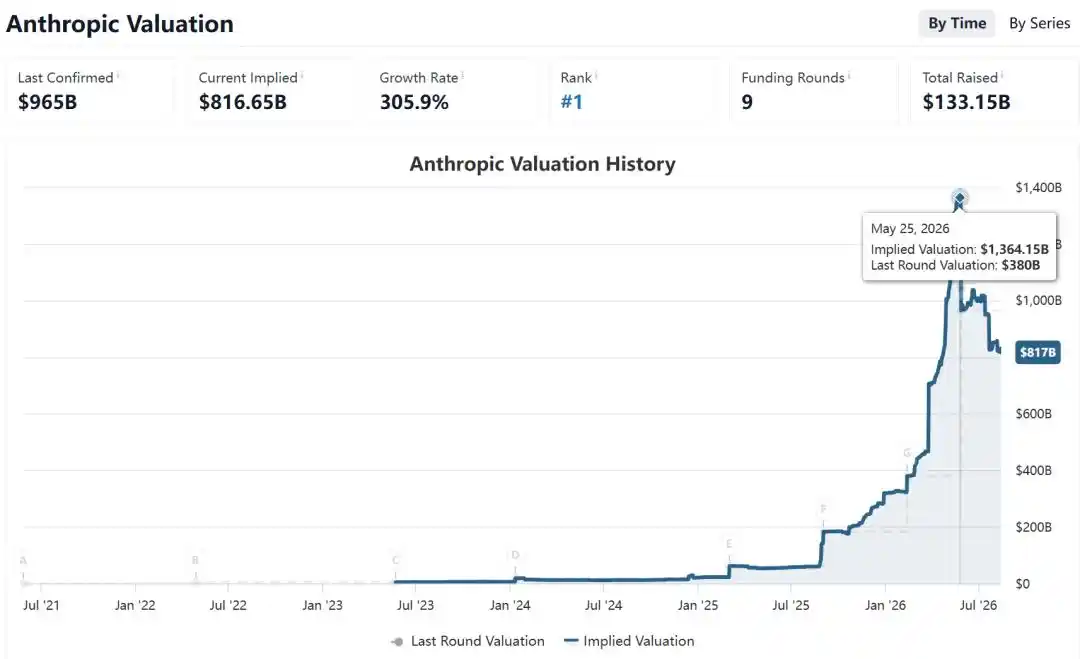
But as of today, Stock Analysis, based on secondary market prices from Hiive, calculates an implied valuation of approximately $816.65 billion, 15.37% lower than the formal funding valuation. It's important to note that formal fundraising and a secondary market with limited liquidity are not directly comparable. This gap shouldn't be simplistically interpreted as the company's value having "evaporated," yet it sufficiently indicates a cooling market enthusiasm.
However, judging that Anthropic has already begun to lose its appeal based on this might be premature.
The Other Side of the Coin: Anthropic Is Still 'Growing'
Even as external investors are dissatisfied, internal contradictions persist, morale seems low, and employees are caught in the dilemma of leaving or staying, top talent continues to voluntarily board this ship.
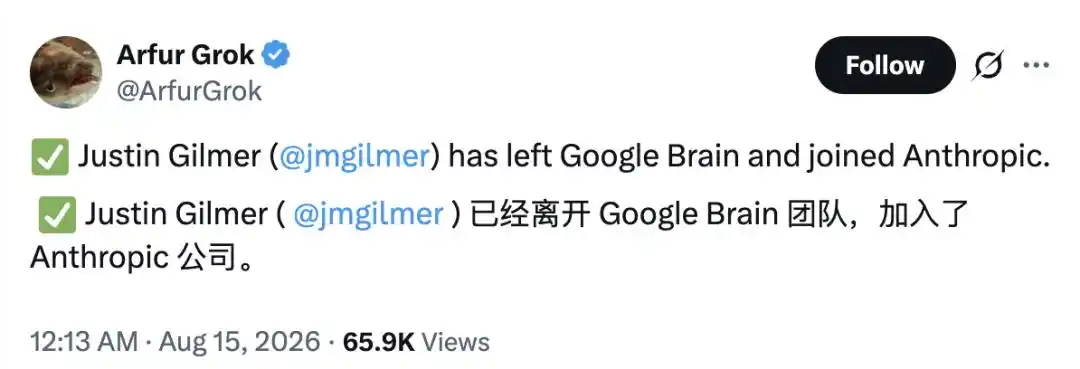
Recently, Google researcher Justin Gilmer was revealed to have left Google Brain and joined Anthropic.
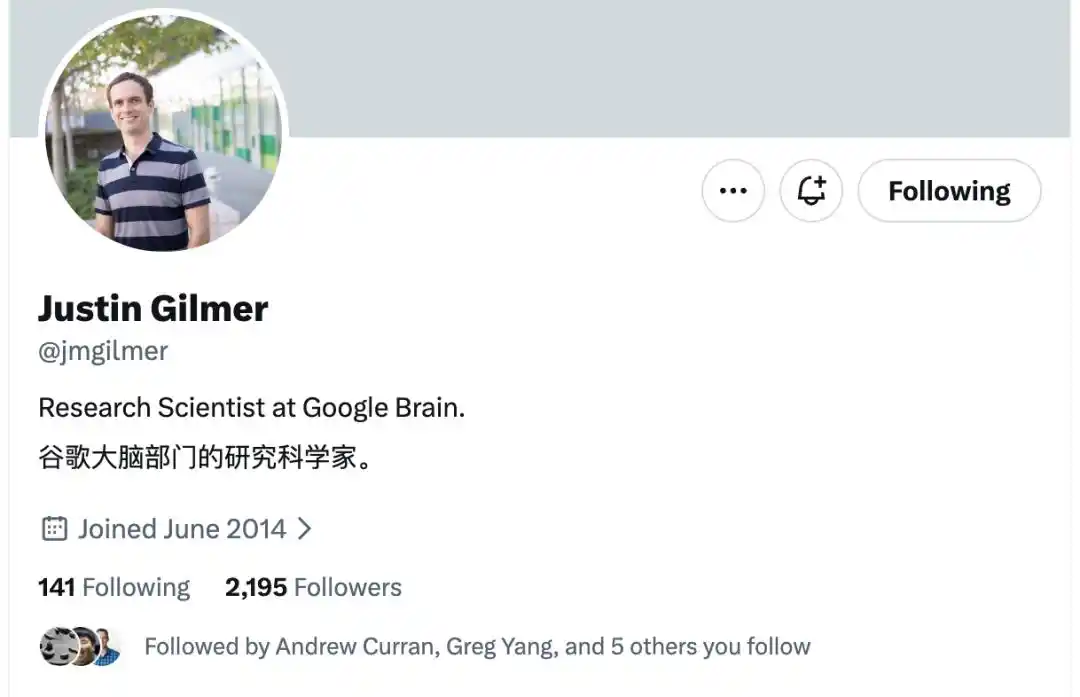
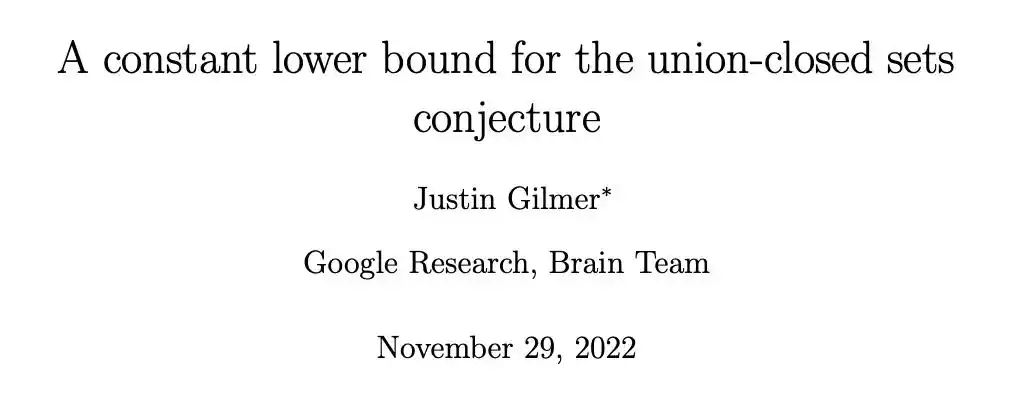
Gilmer has another somewhat legendary story outside the AI circle. In 2022, he used information theory methods to study the "Union-Closed Sets Conjecture" (also known as Frankl's conjecture), a problem that had puzzled mathematicians for decades. He provided the first constant lower bound, directly improving the previous best result—which approached zero with set size—to a fixed constant of 0.01. This work, while not completely solving the conjecture, was regarded as one of the most important breakthroughs on the problem in decades.
On the product side, talent is also flowing in.
Recently, Benjamin Pasero, who worked at Microsoft for about 15 years and was long involved in VS Code development, announced in a post that he joined Anthropic in August this year. His new role is leading Claude Code development, particularly its desktop application.
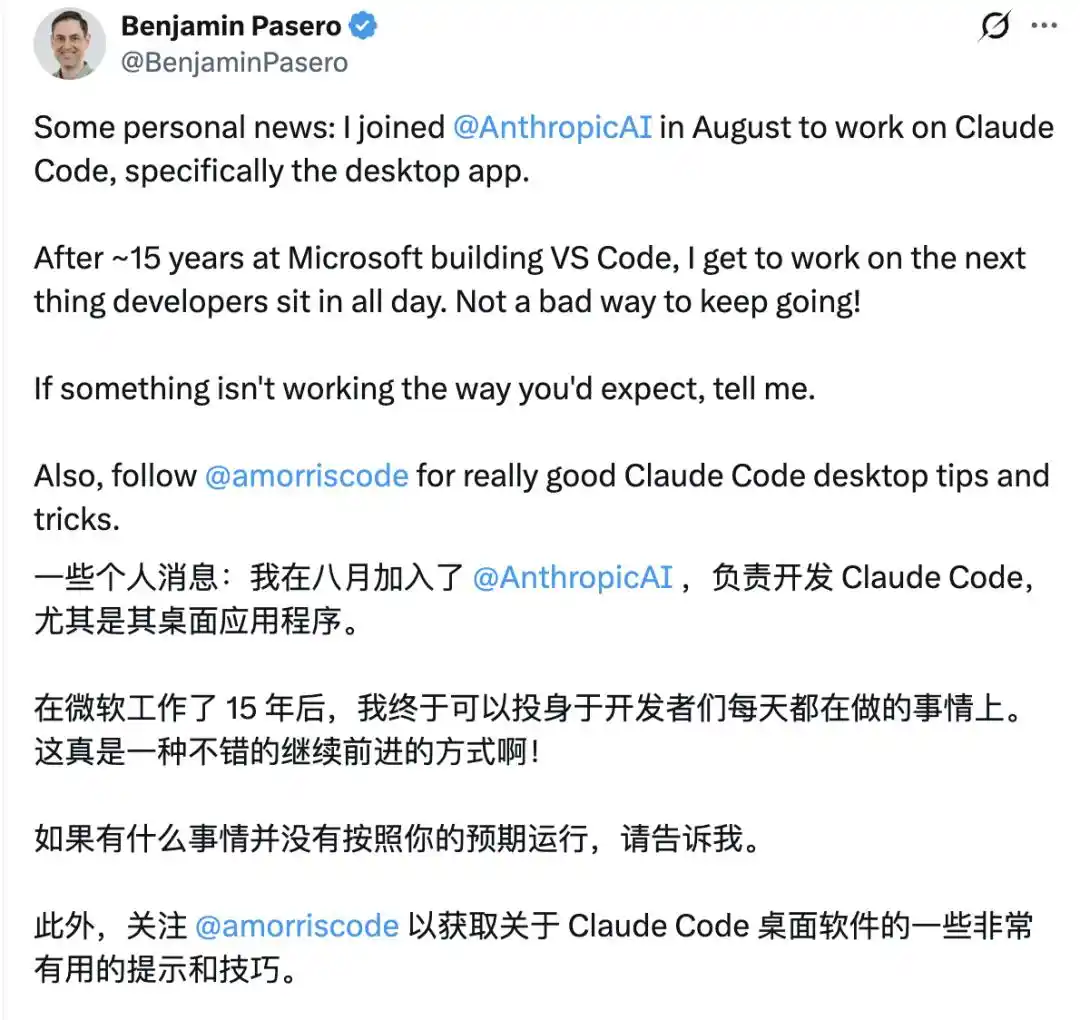
Currently, Claude Code has undoubtedly become a key engine for Anthropic's commercial growth. At a time when the AI programming market is heating up, Anthropic's ability to attract core engineering talent from mature developer product teams like VS Code's suggests that Claude Code still holds strong appeal for top developers.
An even more direct signal comes from money.
Recently, Bloomberg disclosed Anthropic's latest Q2 data. Preliminary revenue for Q2 2026 exceeded $11.5 billion, representing growth of over 14 times compared to the approximately $787 million revenue in Q2 2025; it has also more than doubled compared to the roughly $4.73 billion in Q1 of this year...
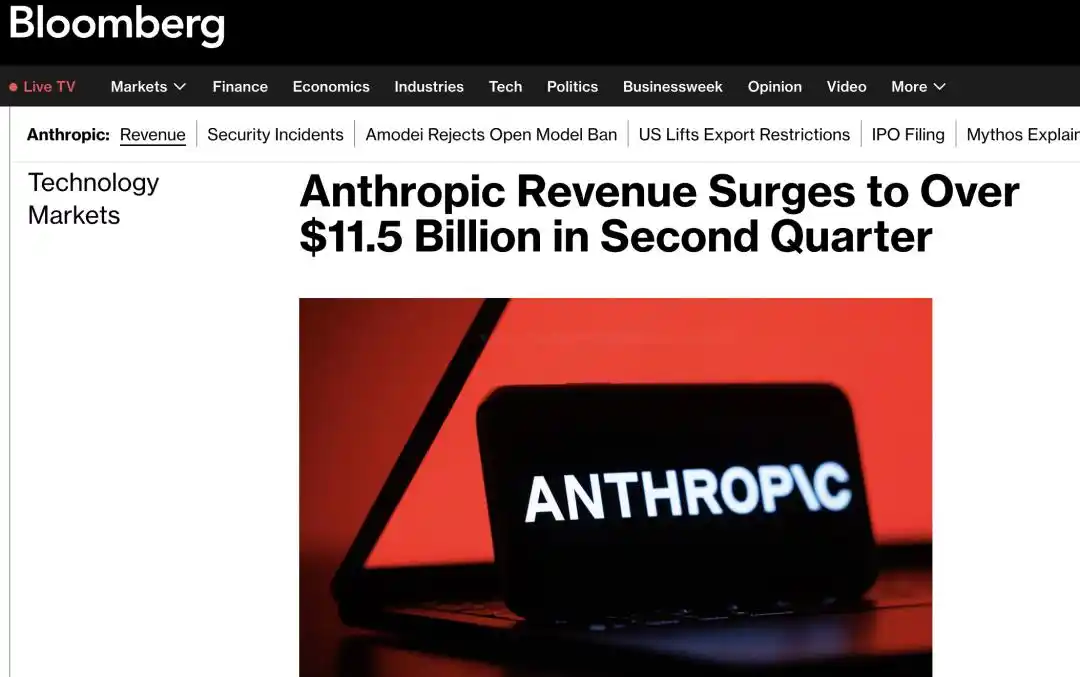
Therefore, while Anthropic's controversies are growing, it still appears to be at its zenith. Claude remains one of the world's strongest AI products. Its talent magnetism, company revenue, and enterprise client base are still rapidly expanding. The real danger is that its most important asset—that set of beliefs that once helped it attract talent and differentiate itself from OpenAI—is turning into a governance challenge.
References
https://x.com/BrianRoemmele/status/2087548290741273068
https://stockanalysis.com/private/anthropic/valuation/
https://x.com/bhalligan/status/2023558054369964077
https://x.com/firesidealpha/status/2088376908878909756
https://x.com/ArfurGrok/status/2088297983364510204
https://x.com/BenjaminPasero/status/2088134390442307697
https://www.bloomberg.com/news/articles/2026-08-14/anthropic-revenue-ahead-of-ipo-surges-over-14-fold-in-second-quarter
This article is from the WeChat public account "Almost Human" (ID: almosthuman2014), author: Focus on AI