Momentum across tokenized stocks accelerated sharply in June as investors increasingly embraced blockchain rails for trading traditional stocks.
The surge reflected more than speculative enthusiasm. Improving infrastructure, expanding token offerings, and demand for 24/7 trading continued attracting institutional and retail participants.
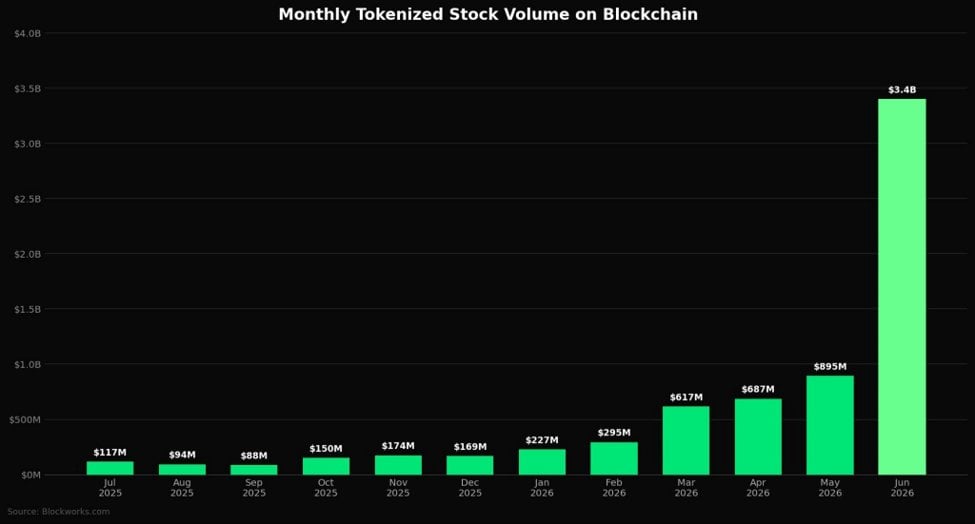
Monthly trading volume reached a record $3.4 billion, rising 279% month over month and 1,400% year over year. SpaceX’s tokenized IPO and Solana’s [SOL] dominant market share largely drove that growth.
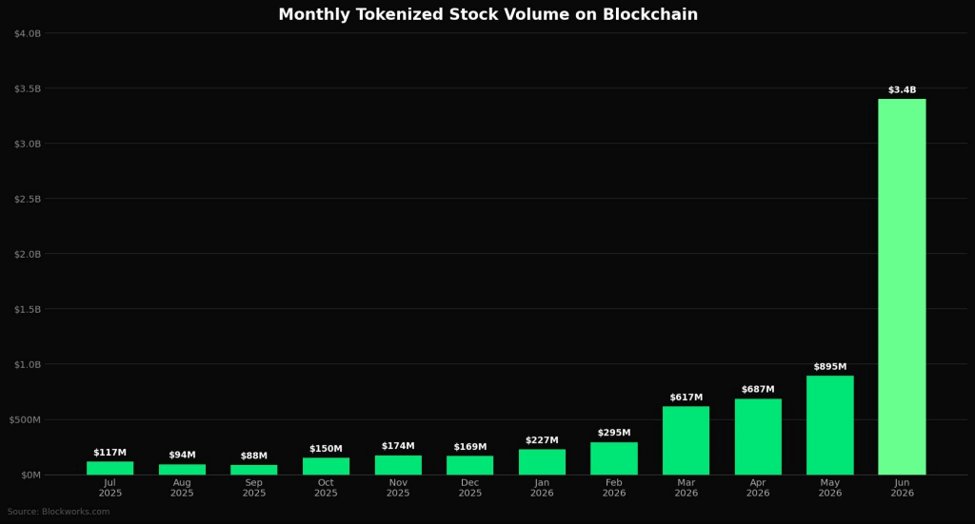
As AMBCrypto previously reported, tokenized stocks are increasingly becoming a structural bridge between traditional finance and blockchain markets.
That transition gathered further momentum as monthly transfer volume climbed 91.66% to $8.70 billion. Moreover, Distributed Value rose 31.59% to $1.94 billion, and holders increased 15.59% to 409,240.


However, monthly Active Addresses dropped 77.18% to 49,290. The decline suggested larger investors accounted for a greater share of activity.
That trend pointed to stronger institutional participation. However, broader retail involvement could still improve liquidity and price discovery over time.
Tokenized funds move into DeFi
As capital entered tokenized markets, attention shifted from ownership to capital deployment.
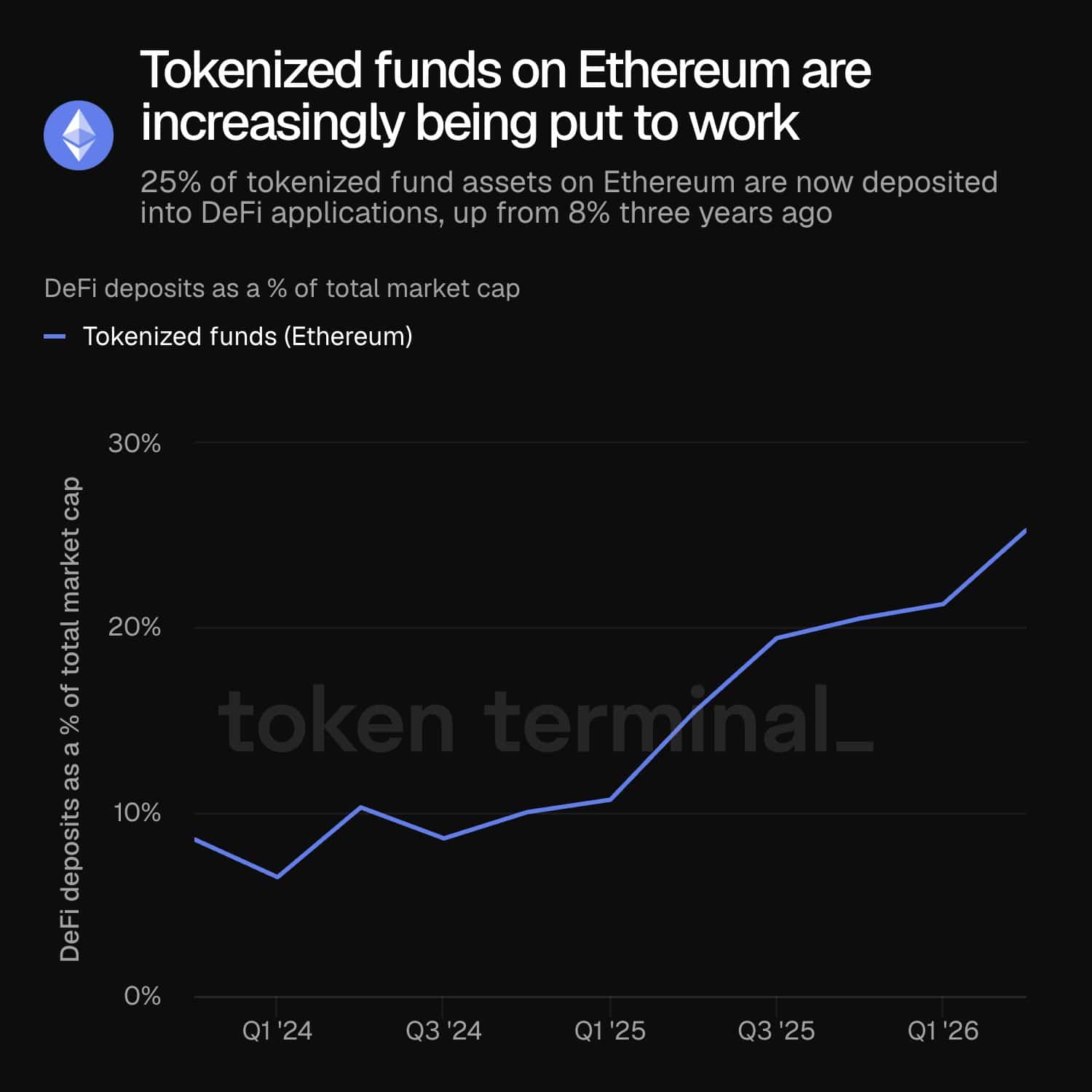
Ethereum [ETH] increasingly reflects that evolution, with 25% of tokenized fund assets deployed across DeFi applications, up from 8% three years earlier.
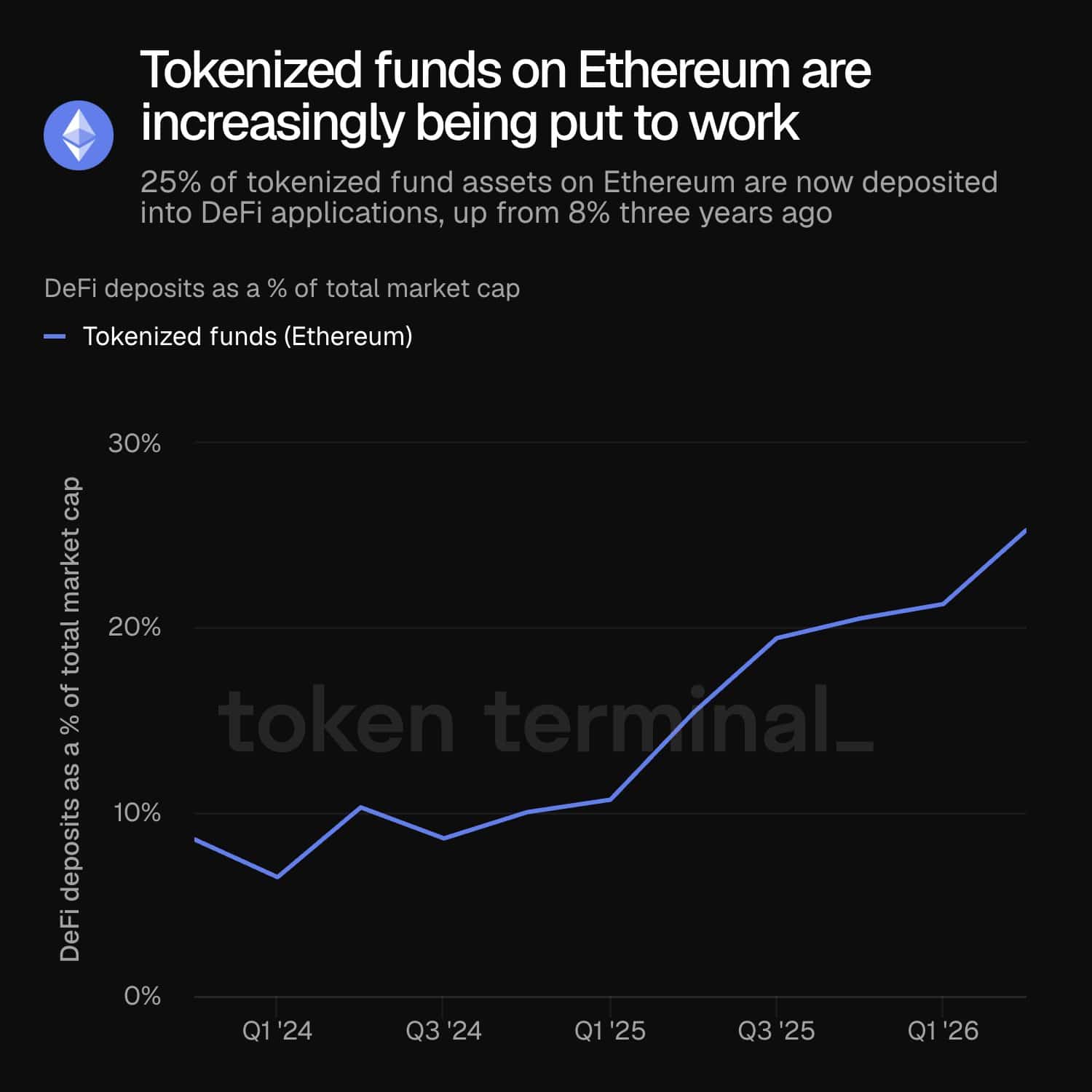
Rather than remaining idle, institutions are increasingly using tokenized funds for lending, liquidity provision, and yield generation, improving capital efficiency across the ecosystem.
This trend is complementary to the growth in tokenized equity trading. It also demonstrates the extension of adoption from simply transactional activities into actual financial activity.
Still, broader integration and regulatory clarity remain essential. If utilization continues expanding alongside issuance, tokenized finance could evolve into a more resilient and self-sustaining financial system.
Institutional demand reshapes tokenization
Capital deployment is now becoming the clearest indicator of tokenization’s maturity.
Institutions are no longer just looking at issuance or trading volumes to judge blockchain networks. Instead, they are increasingly focused on settlement efficiency, liquidity, and capital composability across multiple networks.
For context, Solana remained the leading network for tokenized equity settlement because of its throughput and lower transaction costs.
By contrast, Ethereum continued leading tokenized fund deployment across DeFi, supporting lending, liquidity provision, and yield strategies.
Together, those ecosystems highlighted how different blockchains served complementary roles rather than competing for identical use cases.
Growing Distributed Value, larger transaction sizes, and expanding cross-chain activity suggested that tokenized finance continued developing into functional market infrastructure.
Final Summary
- Tokenization is evolving beyond asset issuance as capital increasingly flows into productive on-chain financial applications.
- Tokenization is maturing into financial infrastructure as institutional adoption, capital deployment, and real-world utility continue expanding.