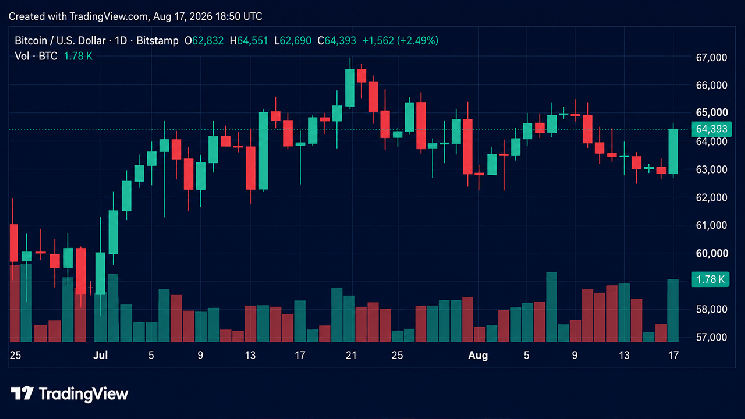
Around midday on August 17, the Nasdaq Composite Index was down about 56 points, the Dow Jones Industrial Average lost about 189 points, and the S&P 500 fell about 23 points. Meanwhile, the leading cryptocurrency asset—bitcoin (BTC)—gained about 1–1.5% over the past 24 hours and was trading around $64,000 by 1:30 PM Eastern Time (EDT).

This divergence led to an unusual trading session. Stocks of cryptocurrency companies, which often crash alongside other speculative assets when investors become defensive, this time received support from bitcoin, while geopolitical worries hit the broader stock market harder.
Strategy and Strive Stand Out as Bitcoin Refuses to Back Down
Bitcoin reserve management company Strategy was among the top gainers, rising about 5% to around $97.50. The company holds a huge stockpile of bitcoins, which ties its share price closely to bitcoin's price. When bitcoin rises, Strategy's stock can show even sharper gains, as traders regularly use it as a publicly traded instrument for leveraged exposure to cryptocurrencies.
Shares of Strive rose about 5–6%, and MARA Holdings gained about 4–5%. Shares of Circle Internet Group also rose about 4%, and crypto exchange operator Bullish gained about 4%. By noon, Coinbase Global shares were up about 1–2% (depending on the data source), recovering from losses after opening lower.
Not all crypto-related companies were in demand. Shares of Bitgo Holdings fell about 1%, and bitcoin mining hardware manufacturer Canaan dropped about 2%. Cleanspark and Hut 8 showed more modest gains, indicating that traders were picking "winners" rather than blindly buying anything crypto-related.
Trump's Threat Against Oman Heightens Tensions in Global Markets
The split emerged against the backdrop of escalating tensions over the Strait of Hormuz—one of the world's most critical energy shipping routes—from President Donald Trump. Trump told Fox News journalist Trey Yingst that the US would launch airstrikes against Oman if that country impedes Washington from reaching a deal with Iran regarding this waterway.
Oman is conducting separate negotiations with Iran on shipping through the strait while diplomatic efforts stall. The 60-day negotiation period outlined in a June memorandum expired on Monday without resulting in a broader settlement between Washington and Tehran.
The Strait of Hormuz matters far beyond the Middle East. Before the conflict paralyzed shipping, roughly one-fifth of the world's oil and gas supplies passed through this narrow waterway, so disruptions to shipping could lead to higher fuel prices, transportation costs, and inflation worldwide.
Oil-Related Risks Keep Wall Street Traders on Edge
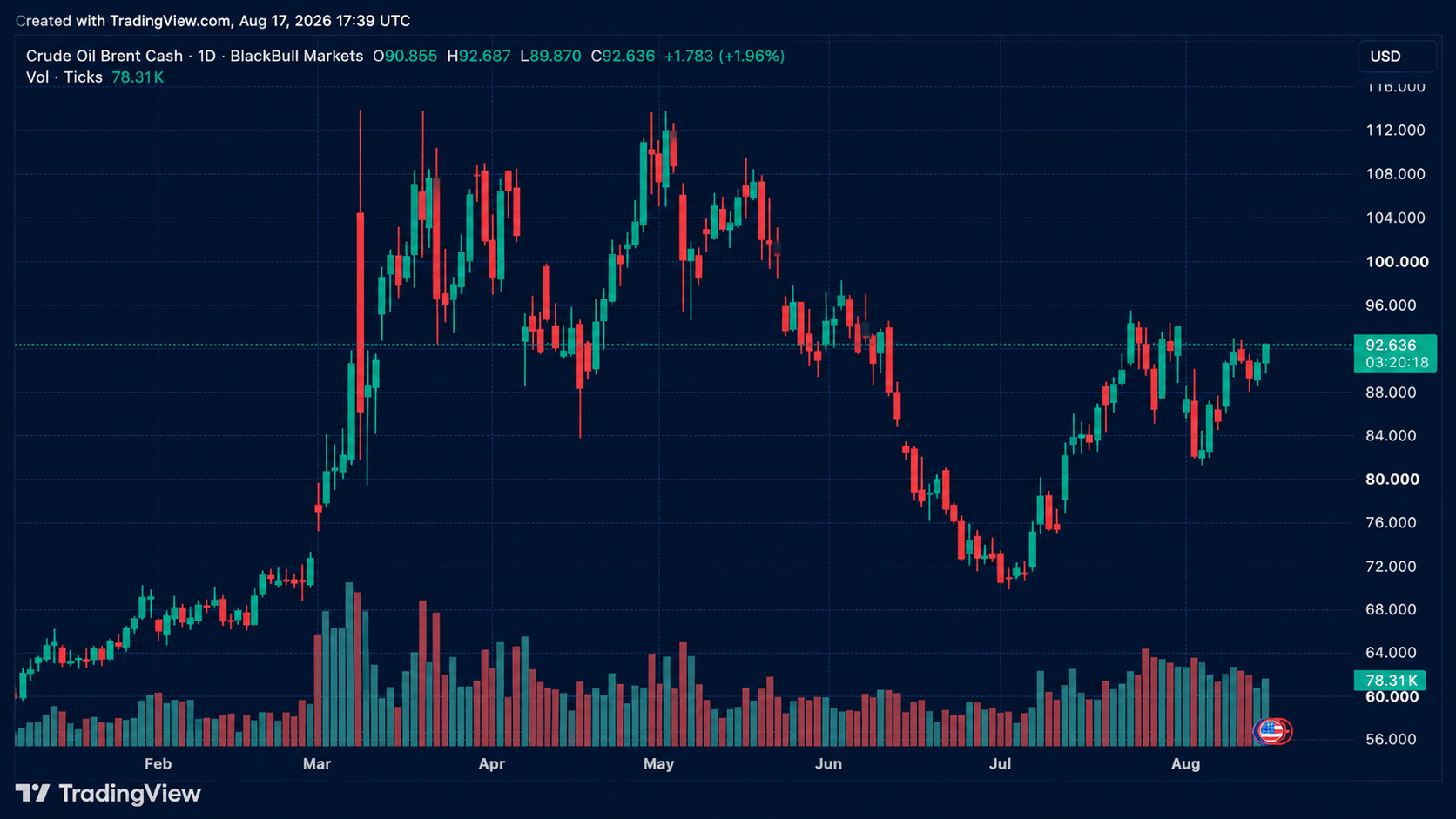
Oil markets reflected this tension. On Monday, Brent crude oil fluctuated around $92 per barrel, while West Texas Intermediate crude remained above $84. Shipping through the Strait of Hormuz has slowed dramatically, leaving traders anxiously watching whether negotiations can restore anything resembling normal shipping.
For crypto market observers, Monday's split between bitcoin-related company stocks and the major indices is significant because shares of many of these companies remain well below their 2025 highs. Stocks of Strategy, Coinbase, MARA, and other crypto-sensitive companies can amplify bitcoin's moves, meaning a sustained crypto recovery could fuel further gains, but another bitcoin sell-off could erase them just as quickly.
The true test will be whether this divergence lasts longer than one trading session. Investors will watch to see if bitcoin can hold at the $63,000 and $64,000 levels, as well as corporate earnings, mining costs, and global crypto legislation, while world markets remain focused on the responses from Oman and Iran and on any breakthroughs towards resuming shipping through the Strait of Hormuz.
end-content