Garden Finance disables app as Blockaid reports $450,000 exploit

cointelegraphPublished on 2026-07-27Last updated on 2026-07-27

Abstract

Garden Finance has temporarily taken its app offline following an incident reported by Blockaid involving approximately $450,000. Blockaid stated an attacker drained funds from Garden's hash time-locked contracts (HTLCs) on multiple blockchains. However, Garden Finance clarified that its protocol and HTLC smart contracts were not compromised. The company attributed the loss to a breach of an independent solver's off-chain database, where fraudulent records caused the solver to release its own funds for unfunded swaps. Garden emphasized no user funds were lost or at risk, with the incident confined to solver-owned assets. The firm is working with security companies to trace and recover the funds and expects to restore services after completing security reviews. This follows a previous solver-related breach in October 2025.

[Updated July 27, 2026, 2:16 UTC: Revised to reflect clarifications from a Garden Finance spokesperson.]

Garden Finance said an independent solver’s off-chain database was compromised in an incident that prompted the cross-chain bridge and atomic swap protocol to temporarily take its app offline.

On Sunday, Blockaid said an attacker drained about $450,000 in USDT from Garden’s hash time-locked contracts (HTLC) on Ethereum, Base, Arbitrum and BNB Smart Chain. HTLCs are time-bound escrow contracts that Garden uses to facilitate atomic swaps between Bitcoin and assets on other networks. Blockaid described the exploit as ongoing and published addresses linked to the attacker and affected contracts.

However, a Garden Finance spokesperson told Cointelegraph that neither the protocol nor its HTLC smart contracts had been compromised. The company said the attacker breached the off-chain database of an independent solver and inserted fraudulent transaction records, causing the solver to release funds for swaps that had not been funded by the counterparty.

Garden said no user funds were lost or placed at risk and that the incident affected only solver-owned assets. The company is still confirming the total amount, assets and networks involved. It said services were paused as a precaution while the affected infrastructure was isolated and reviewed.

Blockaid acknowledged Cointelegraph’s request for comments.

Garden works with security firms to trace funds

Garden said it is working with zeroShadow, Quantstamp and Blockaid to trace and recover the funds. The protocol expects to restore services shortly, subject to completing security checks, but did not give a specific timeline.

“Garden’s protocol and HTLC smart contracts were not compromised, and no user funds were lost or at risk,” the company told Cointelegraph, adding that the incident was isolated to the off-chain infrastructure of one solver in its network of independent solvers.

The company also pointed to its recent SOC 2 Type II attestation as evidence of its investment in security and operational controls. Garden told Cointelegraph that its immediate priorities are securing the affected systems, tracing the solver’s funds and ensuring services resume only after the relevant reviews are completed.

Related: WEMIX says attacker moved about $724,000 after contract breach

The incident follows an October 2025 breach in which an attacker stole about $11.4 million after compromising the operating environment of one of Garden’s solvers. Garden said that incident also did not affect its protocol contracts or put user funds at risk.

Magazine: Inside the ‘fake police raid’ that forced a $1M Bitcoin transfer

Related Questions

QAccording to the article, what was the root cause of the $450,000 exploit affecting Garden Finance?

AThe root cause was the compromise of an independent solver's off-chain database. The attacker inserted fraudulent transaction records, which caused the solver to release funds for swaps that were not actually funded by the counterparty.

QDid the exploit compromise Garden Finance's core protocol or smart contracts, according to the company's statement?

ANo, according to Garden Finance's statement, neither the protocol nor its HTLC smart contracts were compromised. The incident was isolated to the off-chain infrastructure of a single independent solver.

QWhat action did Garden Finance take in response to the incident, and which security firms are they working with?

AGarden Finance temporarily took its app offline as a precaution. They are working with the security firms zeroShadow, Quantstamp, and Blockaid to trace and recover the stolen funds.

QWhat type of contracts were specifically targeted by the attacker, and on which networks?

AThe attacker targeted hash time-locked contracts (HTLCs) on the Ethereum, Base, Arbitrum, and BNB Smart Chain networks.

QHow does this recent incident relate to a previous security event involving Garden Finance mentioned in the article?

AThe article mentions a previous breach in October 2025 where an attacker stole about $11.4 million after compromising a solver's operating environment. Similar to the recent incident, Garden stated that the 2025 breach also did not affect its protocol contracts or user funds.

Related Reads

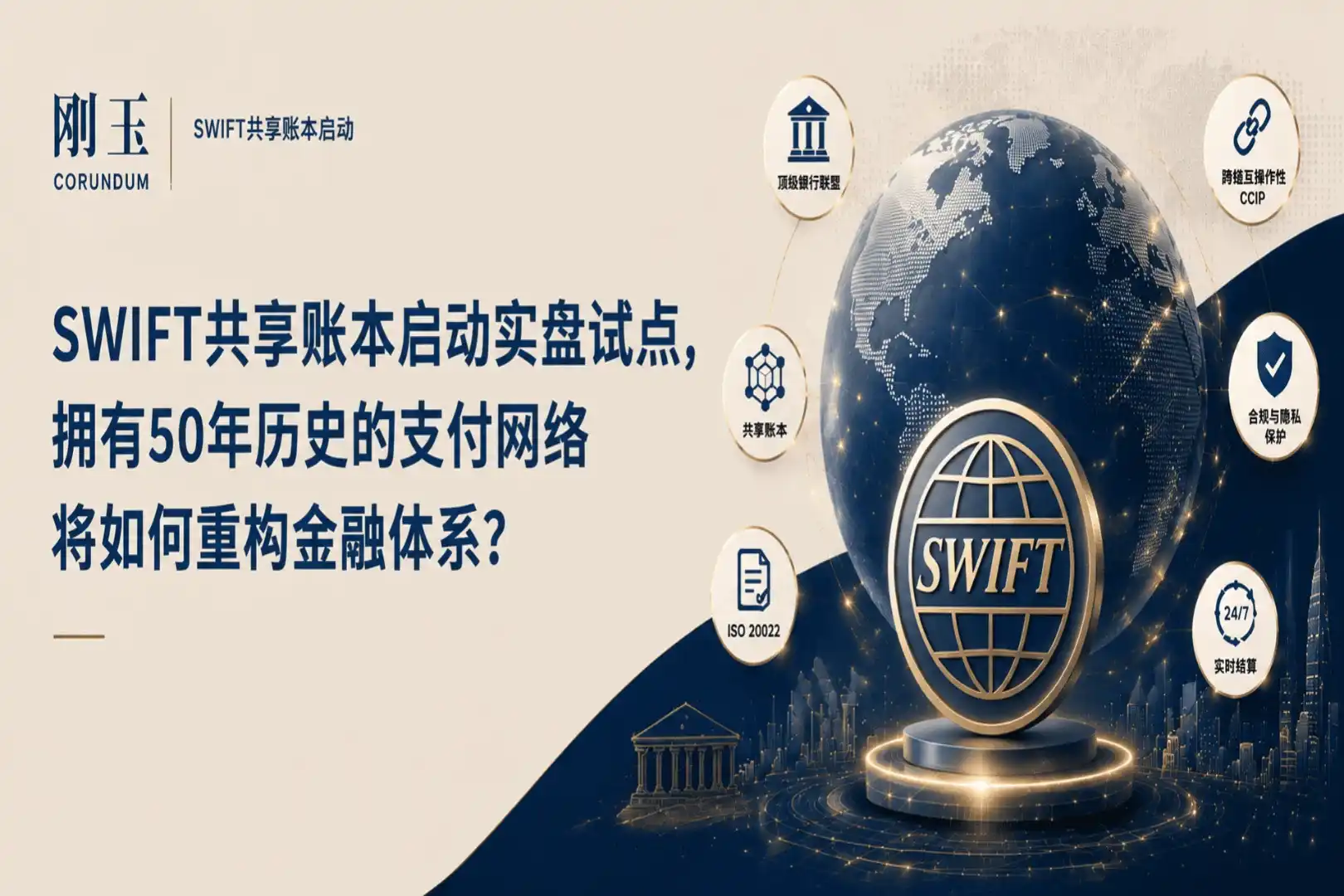
SWIFT Shared Ledger Launches Live Pilot, How Will the 50-Year-Old Payment Network Reconstruct the Financial System?

SWIFT, a global financial messaging provider with a 50-year history, has launched a live pilot of a blockchain-based "shared ledger" in July 2026, involving 17 major banks. This marks a direct move by traditional finance to upgrade its core payment infrastructure using blockchain technology, transforming SWIFT's role from a messaging channel to a "value orchestration layer" for digital payments. The system is built on Hyperledger Besu (EVM-compatible) and integrates Chainlink's CCIP for cross-chain interoperability. It deepens the fusion of the ISO 20022 messaging standard with smart contracts to automate compliance (KYC/AML). The primary settlement medium in this network is "tokenized deposits"—digital representations of traditional bank deposits, not independent stablecoins—preserving the existing two-tier banking system. The move introduces "atomic settlement" (24/7, instant) but requires banks to adopt "pre-funding" models, increasing demands on liquidity management. It presents direct competitive pressure on native blockchain payment tokens (e.g., XRP) by offering an efficient, bank-backed alternative for cross-border settlement. Significant regulatory hurdles remain, including legal jurisdiction over cross-border digital assets, legal definitions of "settlement finality" for smart contracts, and balancing blockchain transparency with data privacy/localization laws. Technologies like zero-knowledge proofs may be needed to resolve privacy-compliance conflicts. Industry views are mixed: participating banks and SWIFT emphasize extending trusted, compliant finance into the digital realm with real-time efficiency, while crypto analysts warn of potential "liquidity backlash" as capital flows back to the traditional, now-tech-enhanced banking system. This pilot signifies that traditional finance and crypto are entering a phase of direct competition and fusion at the infrastructure level, likely leading to a future of interconnected, highly regulated financial networks rather than a fully decentralized system.

marsbit3m ago

SWIFT Shared Ledger Launches Live Pilot, How Will the 50-Year-Old Payment Network Reconstruct the Financial System?

marsbit3m ago

Why P2P and Exchangers Are Becoming Obsolete, and What Will Replace Them

Titled "Why P2P and Exchanges Are Becoming Obsolete, and What Will Replace Them," this article discusses the evolution of stablecoins, particularly USDT, from a trading tool to a global payment method. However, converting crypto back to fiat for daily expenses remains a challenge. The process of using P2P platforms or crypto exchanges has become increasingly risky and complex due to stricter banking anti-fraud measures, new legislation in Russia, and rampant fraud schemes like "triangles," where sellers can inadvertently receive stolen funds. The article highlights that while P2P was convenient, banks now scrutinize frequent peer-to-peer transfers, often freezing accounts. Exchanges also pose risks like unfavorable rates and unclear compliance. The market is therefore shifting towards integrated services that eliminate the manual conversion step. It cites OneSix as an example—a crypto wallet accessible via Telegram and web that embeds currency conversion directly into payment and withdrawal scenarios. Users can pay bills or send money as if using a bank app, with the crypto-to-fiat exchange happening seamlessly in the background. It also offers invoicing for freelancers and conducts AML checks, returning suspicious transactions instantly instead of freezing them. In conclusion, as crypto integrates into everyday finance, the demand for manual, risky exchange methods is declining. The future lies in unified platforms that combine storage, compliance, conversion, and payments into a single, secure user experience.

cryptonews.ru57m ago

Why P2P and Exchangers Are Becoming Obsolete, and What Will Replace Them

cryptonews.ru57m ago

The CEO of MARA Holdings Compares AI Operations to Bitcoin Mining! Which is More Profitable?

Fred Thiel, CEO of MARA Holdings (a major Bitcoin mining company), states that the rapid growth of the artificial intelligence (AI) sector is transforming mining companies' business models. He claims that powering data centers for AI is significantly more profitable than Bitcoin mining. In a recent interview, Thiel explained why many mining firms are diversifying into AI infrastructure. According to Thiel, the energy demands of data centers are surging, especially due to the spread of generative AI applications. This creates new revenue opportunities for Bitcoin mining companies with robust power infrastructure. MARA Holdings is among those monitoring this shift and aims to develop its energy and infrastructure services for AI data centers. Thiel emphasized that this move toward AI does not mean the end of Bitcoin mining. He stated that Bitcoin mining remains a sustainable business model, especially for miners in regions with low electricity costs, and it is still a crucial field for utilizing excess or idle power capacity. In recent years, many Bitcoin mining companies have begun using their energy-intensive infrastructure not just for block production but also for high-performance computing (HPC) and AI applications. This strategy aims to diversify revenue sources and increase resilience against cryptocurrency market volatility. Analysts note that the growing energy demand in the AI sector presents significant transformation opportunities for mining companies. The need for high-power, uninterrupted electricity supply, particularly for large data centers, gives Bitcoin miners with existing energy infrastructure expertise a considerable advantage.

cryptonews.ru1h ago

The CEO of MARA Holdings Compares AI Operations to Bitcoin Mining! Which is More Profitable?

cryptonews.ru1h ago

Trading

Spot
活动图片