Satlantis Launches Bitcoin Lightning Ticketing Platform

TheNewsCryptoPublished on 2026-02-24Last updated on 2026-02-24

Abstract

Satlantis has launched a new events and ticketing platform that integrates Bitcoin Lightning Network wallets directly into user accounts and individual event pages. Similar to services like Eventbrite, it allows organizers to create ticket tiers, manage attendees, and accept Bitcoin payments directly without relying on traditional payment processors. Each event receives a unique Bitcoin wallet, enabling direct transactions. The platform also supports fiat payments via Stripe and plans to add stablecoin support, offering a unified dashboard for multiple payment options. The model aims to reduce ticketing fees and improve payment access in regions with limited traditional banking infrastructure. The Lightning Network facilitates fast, low-cost off-chain transactions. This move is part of a broader trend of crypto adoption in event ticketing, following early examples like the Sacramento Kings and Dallas Mavericks accepting Bitcoin. Other initiatives, such as TIX's tokenized tickets and FIFA's NFT-based "right-to-buy" tokens for the 2026 World Cup, highlight growing interest in blockchain-based ticketing solutions.

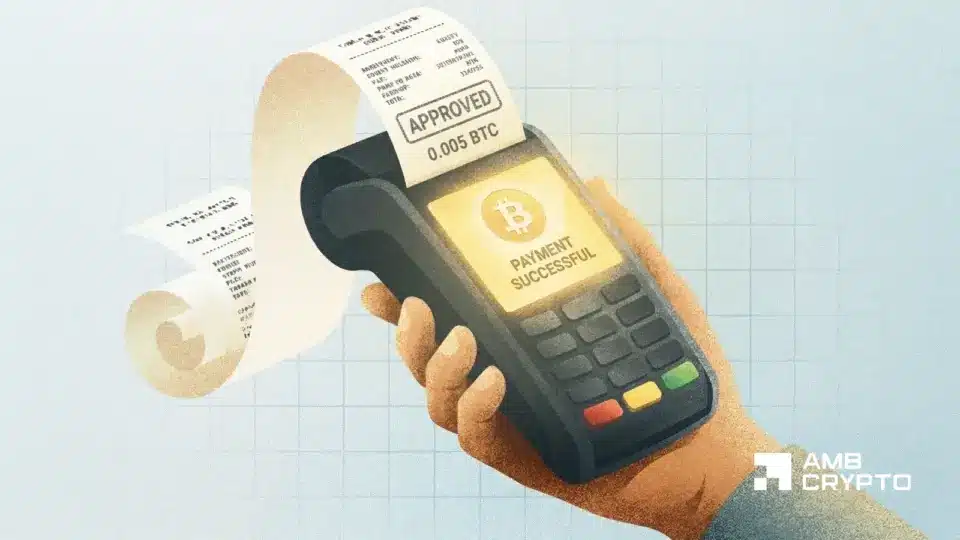
Satlantis has rolled out an events and ticketing platform that implants Bitcoin Lightning Network wallets right into user accounts and individual events. This allows organisers to issue tickets and accumulate Bitcoin payments without tracking traditional payment processors.

The platform works likewise to services such as Eventbrite and Luma, providing ticket tiers, attendee management, and event pages. Every event on the platform usually gets a unique Bitcoin wallet, permitting organisers to accept payments and extract funds directly in Bitcoin.

Satlantis has also amalgamated with Stripe to operate fiat payments and has said it plans to add stablecoin support, providing organisers the capability to accept Bitcoin, traditional currency, or both via a single dashboard.

The firm mentioned its model is made to suppress ticketing fees and widen payment access in areas where conventional payment infrastructure is finite. The Lightning Network permits reduced-cost quick transactions by processing payments off-chain instead of settling every transaction directly on the Bitcoin base layer.

The Craze of Crypto into Event Ticketing

As per the data quoted by River marketing director Sam Wouters, the network listed around $1.1 billion in transaction volume over 5.2 million transactions in November. As per the firm’s crowdfunding page, investors in Satlantis comprise Bitcoin Opportunity Fund and Timechain Capital, a venture capital fund aimed at Bitcoin infrastructure projects.

The history of bringing crypto into event ticketing traces long back. The Sacramento Kings was the first NBA team to accept Bitcoin for tickets and merchandise back in 2014, and the Dallas Mavericks followed in 2019.

Talking about blockchain settlement, TIX, the on-chain network behind KYD Labs, is working to tokenise tickets as real-world assets that can be used to access capital and automate repayment.

FIFA has also set its foot into the space before the 2026 World Cup, selling “right-to-buy” NFT tokens that grant holders a reserved window to buy match tickets at face value if some given conditions are met.

Highlighted Crypto News Today:

WLFI Stablecoin USD1 has Recovered from Coordinated Attack

TagsBitcoinCryptotickets

Related Questions

QWhat is the main feature of Satlantis's new ticketing platform?

AThe main feature is that it implants Bitcoin Lightning Network wallets directly into user accounts and individual events, allowing organizers to issue tickets and accept Bitcoin payments without traditional payment processors.

QHow does the Lightning Network help reduce ticketing fees?

AThe Lightning Network enables low-cost, quick transactions by processing payments off-chain instead of settling every transaction directly on the Bitcoin base layer.

QWhich traditional ticketing services does Satlantis's platform work similarly to?

AIt works similarly to services like Eventbrite and Luma, providing features such as ticket tiers, attendee management, and event pages.

QBesides Bitcoin, what other payment methods does Satlantis support or plan to support?

ASatlantis has integrated with Stripe for fiat payments and plans to add stablecoin support, allowing organizers to accept Bitcoin, traditional currency, or both through a single dashboard.

QWhich major sports organizations have previously adopted cryptocurrency for ticketing?

AThe Sacramento Kings (NBA) started accepting Bitcoin for tickets and merchandise in 2014, followed by the Dallas Mavericks in 2019. FIFA has entered the space with NFT-based 'right-to-buy' tokens for the 2026 World Cup.

Related Reads

AI Agents Are About to Take Market Share from Visa

Artificial intelligence agents are poised to disrupt Visa's business model by bypassing the traditional credit card interchange fee structure. Unlike humans, AI agents are purely rational: they don't accumulate rewards, seek fraud protection, or desire premium cards. Their sole objective is to complete transactions at the lowest cost, fastest speed, and with minimal fees. This shift threatens the 2-3% interchange fees that underpin Visa’s $500 billion valuation, as these fees essentially tax human irrationality—something agents lack. Recent developments, such as the launch of Tempo (a high-volume stablecoin settlement blockchain), the Machine Payment Protocol (enabling autonomous micro-payments), and Visa’s own command-line payment tool for AI, indicate a rapid move toward agent-driven commerce. While current transaction volumes remain small, infrastructure is being built to support machine-to-machine payments that avoid card networks. Major players like Stripe, Mastercard, and Circle are investing heavily in this space. Visa network’s distribution advantage relies on human behavior—consumer trust and merchant acceptance—a cycle that doesn’t apply to agents. They optimize for efficiency, not brand loyalty. Although widespread consumer adoption is still emerging, the infrastructure for agent-commerce is advancing quickly, starting with micro-payments for AI services. The fundamental challenge is that interchange fees are a tax on human psychology, and agents are purely rational actors.

marsbit1h ago

AI Agents Are About to Take Market Share from Visa

marsbit1h ago

Polymarket Smart Money Panorama: 26 Long-Term Trackable Addresses (Categorized by Sector)

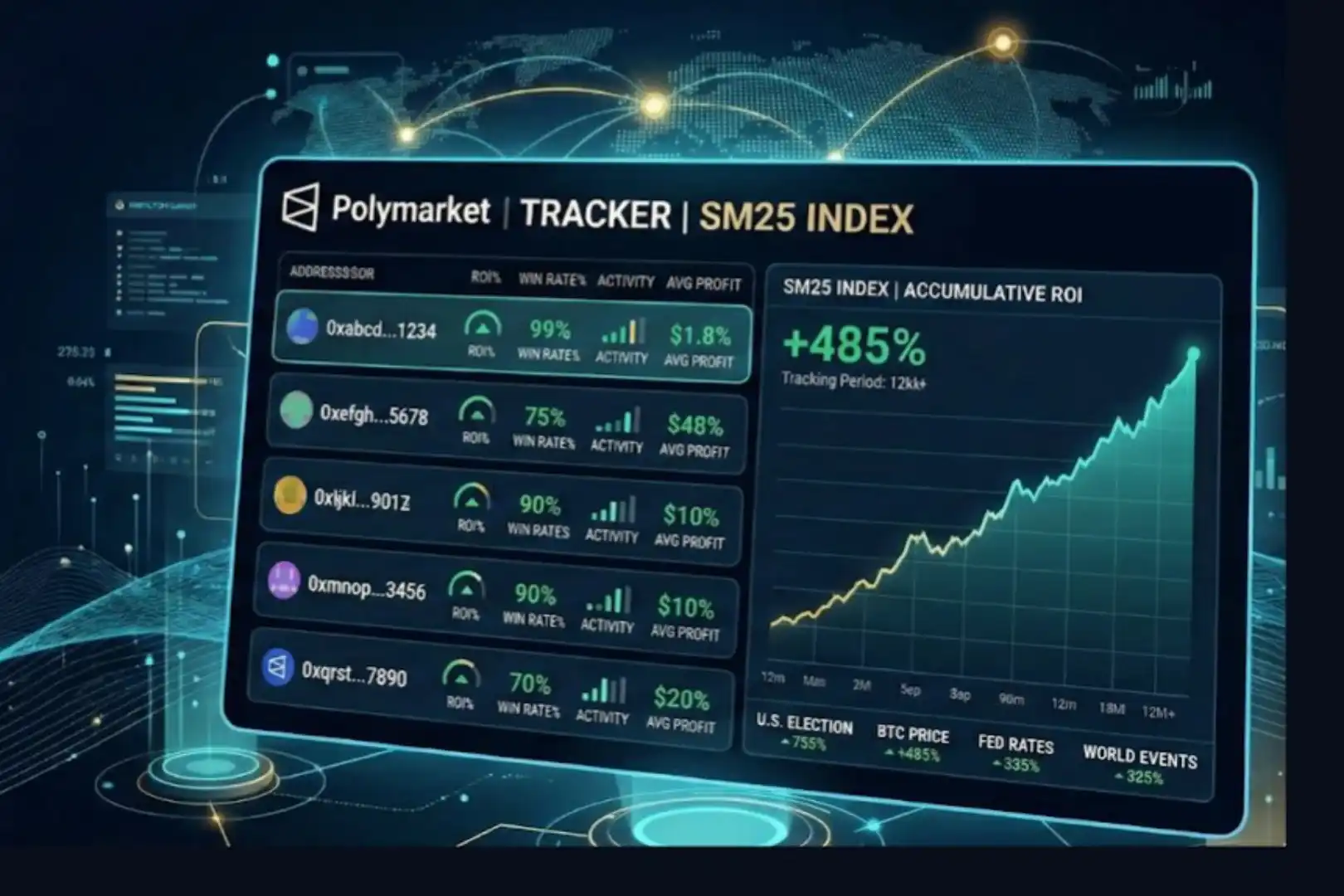
This article profiles 26 high-performing "smart money" addresses on Polymarket, categorized by their expertise in five distinct prediction market sectors. The selection criteria focused on proven Profit and Loss (PNL), a diversified winning structure (not reliant on a single bet), and high transaction volume to distinguish informed speculation from arbitrage. The addresses are broken down as follows: * **Politics & Geopolitics (5 addresses):** Experts in long-cycle macro events like Fed rates, US elections, and Middle Eastern geopolitics. They often bet against consensus (NO) in low-probability markets, achieving high ROI. * **Weather (6 addresses):** Specialists in temperature prediction markets for specific cities. Strategies range from high-frequency, small bets across thousands of markets to focused, high-conviction wagers. * **Tech (5 addresses):** Focused on Big Tech and AI product timelines (e.g., Google, OpenAI). They typically target high-probability outcomes or use a high-volume, low-cost approach on undervalued options. * **Culture (5 addresses):** Experts in movie box office results and Twitter-related markets. Strategies include betting on high-probability outcomes or taking contrarian, high-odds positions in low-probability markets. * **Sports (5 addresses):** Specialists in specific leagues like UFC, Soccer, and Tennis. They excel at identifying mispriced odds, often in medium-probability markets, and hold positions until settlement. A key warning is emphasized: a trader's success is often not transferable across sectors. An expert in sports may perform poorly in politics. The article advises followers to only mirror trades within a trader's proven area of expertise to avoid losses from their cross-sector ventures. All addresses are for reference only and not financial advice, as prediction markets carry significant risk of capital loss.

marsbit1h ago

Polymarket Smart Money Panorama: 26 Long-Term Trackable Addresses (Categorized by Sector)

marsbit1h ago

Trading

Spot
Futures

Hot Articles

What is $BITCOIN

DIGITAL GOLD ($BITCOIN): A Comprehensive Analysis Introduction to DIGITAL GOLD ($BITCOIN) DIGITAL GOLD ($BITCOIN) is a blockchain-based project operating on the Solana network, which aims to combine the characteristics of traditional precious metals with the innovation of decentralized technologies. While it shares a name with Bitcoin, often referred to as “digital gold” due to its perception as a store of value, DIGITAL GOLD is a separate token designed to create a unique ecosystem within the Web3 landscape. Its goal is to position itself as a viable alternative digital asset, although specifics regarding its applications and functionalities are still developing. What is DIGITAL GOLD ($BITCOIN)? DIGITAL GOLD ($BITCOIN) is a cryptocurrency token explicitly designed for use on the Solana blockchain. In contrast to Bitcoin, which provides a widely recognized value storage role, this token appears to focus on broader applications and characteristics. Notable aspects include: Blockchain Infrastructure: The token is built on the Solana blockchain, known for its capacity to handle high-speed and low-cost transactions. Supply Dynamics: DIGITAL GOLD has a maximum supply capped at 100 quadrillion tokens (100P $BITCOIN), although details regarding its circulating supply are currently undisclosed. Utility: While precise functionalities are not explicitly outlined, there are indications that the token could be utilized for various applications, potentially involving decentralized applications (dApps) or asset tokenization strategies. Who is the Creator of DIGITAL GOLD ($BITCOIN)? At present, the identity of the creators and development team behind DIGITAL GOLD ($BITCOIN) remains unknown. This situation is typical among many innovative projects within the blockchain space, particularly those aligning with decentralized finance and meme coin phenomena. While such anonymity may foster a community-driven culture, it intensifies concerns about governance and accountability. Who are the Investors of DIGITAL GOLD ($BITCOIN)? The available information indicates that DIGITAL GOLD ($BITCOIN) does not have any known institutional backers or prominent venture capital investments. The project seems to operate on a peer-to-peer model focused on community support and adoption rather than traditional funding routes. Its activity and liquidity are primarily situated on decentralized exchanges (DEXs), such as PumpSwap, rather than established centralized trading platforms, further highlighting its grassroots approach. How DIGITAL GOLD ($BITCOIN) Works The operational mechanics of DIGITAL GOLD ($BITCOIN) can be elaborated on based on its blockchain design and network attributes: Consensus Mechanism: By leveraging Solana’s unique proof-of-history (PoH) combined with a proof-of-stake (PoS) model, the project ensures efficient transaction validation contributing to the network's high performance. Tokenomics: While specific deflationary mechanisms have not been extensively detailed, the vast maximum token supply implies that it may cater to microtransactions or niche use cases that are still to be defined. Interoperability: There exists the potential for integration with Solana’s broader ecosystem, including various decentralized finance (DeFi) platforms. However, the details regarding specific integrations remain unspecified. Timeline of Key Events Here is a timeline that highlights significant milestones concerning DIGITAL GOLD ($BITCOIN): 2023: The initial deployment of the token occurs on the Solana blockchain, marked by its contract address. 2024: DIGITAL GOLD gains visibility as it becomes available for trading on decentralized exchanges like PumpSwap, allowing users to trade it against SOL. 2025: The project witnesses sporadic trading activity and potential interest in community-led engagements, although no noteworthy partnerships or technical advancements have been documented as of yet. Critical Analysis Strengths Scalability: The underlying Solana infrastructure supports high transaction volumes, which could enhance the utility of $BITCOIN in various transaction scenarios. Accessibility: The potential low trading price per token could attract retail investors, facilitating wider participation due to fractional ownership opportunities. Risks Lack of Transparency: The absence of publicly known backers, developers, or an audit process may yield skepticism regarding the project's sustainability and trustworthiness. Market Volatility: The trading activity is heavily reliant on speculative behavior, which can result in significant price volatility and uncertainty for investors. Conclusion DIGITAL GOLD ($BITCOIN) emerges as an intriguing yet ambiguous project within the rapidly evolving Solana ecosystem. While it attempts to leverage the “digital gold” narrative, its departure from Bitcoin's established role as a store of value underscores the need for a clearer differentiation of its intended utility and governance structure. Future acceptance and adoption will likely depend on addressing the current opacity and defining its operational and economic strategies more explicitly. Note: This report encompasses synthesised information available as of October 2023, and developments may have transpired beyond the research period.

363 Total ViewsPublished 2025.05.13Updated 2025.05.13

What is $BITCOIN

Discussions

Welcome to the HTX Community. Here, you can stay informed about the latest platform developments and gain access to professional market insights. Users' opinions on the price of BTC (BTC) are presented below.

活动图片