Do Robots Also Need Encrypted Wallets? Stablecoin Giant Tether Bets on German Company NEURA Robotics

marsbitPublished on 2026-06-16Last updated on 2026-06-16

Abstract

Do Robots Need Crypto Wallets? Stablecoin Giant Tether Bets on German Firm NEURA Robotics German robotics company NEURA Robotics has secured up to $1.4 billion in what is claimed to be the largest-ever funding round in the full-stack robotics industry, valuing the company at $7 billion. The Series C round attracted major investors like Tether, Qualcomm, Amazon, NVIDIA, Bosch, and the European Investment Bank. NEURA, founded in 2019, initially focused on AI-powered collaborative robots (cobots) for industrial automation, later expanding to autonomous mobile robots, service robots, and humanoid robots. Its core strategy is evolving from a hardware manufacturer to the operator of "Neuraverse," a platform designed to enable different robots to share learned experiences and data, creating network effects. A key, crypto-focused aspect of this investment is Tether's involvement. Tether plans to integrate its open-source Wallet Development Kit (WDK) into NEURA's robot platforms. This would embed self-custody wallet functionality, allowing robots to autonomously handle payments and settlements for tasks under pre-set rules—envisioning use cases in logistics or Robotics-as-a-Service (RaaS) models. This move could position stablecoins and crypto wallets as potential "machine payment infrastructure." Additionally, the partnership will see Tether's QVAC (QuantumVerse Automatic Computer) edge-AI framework tested and deployed within Neuraverse. This aims to enable low-latency, offline-c...

Author: Zen, PANews

Over the past few years, discussions around humanoid robots and embodied intelligence have shifted focus toward whether robots can create actual value. From factory handling, warehouse sorting to collaborative service scenarios, robots are increasingly entering real-world environments.

Compared to locomotion capabilities themselves, the industry is more concerned with when robots can be deployed at scale and consistently handle jobs in the real world. And if robots truly start undertaking real-world labor, will they also need their own payment and settlement capabilities? After German robotics company NEURA Robotics completed its latest funding round, this question has been pushed to the forefront again.

On June 10th, NEURA Robotics announced the completion of a Series C funding round of up to $14 billion, with Tether participating as a major investor. Other investors include Qualcomm Technologies, Amazon, NVIDIA, Bosch, Schaeffler, the European Investment Bank, and others.

Just looking at this financing, touted as the "largest in the history" of the full-stack robotics industry, is enough to make NEURA one of the most watched robotics companies in Europe and globally. However, a point easily overlooked in this round of funding, yet actually worth noting, is that Tether is also attempting to embed self-custody wallets, stablecoin payments, and edge AI into robot systems.

The "Largest" Funding Round in German Corporate History

NEURA Robotics was founded in 2019 and is headquartered in Baden-Württemberg, Germany. Looking at its development path, the company did not initially enter the market with humanoid robots, but rather gradually expanded along the industrial automation route most familiar to European manufacturing, then continuously layered AI capabilities onto the robot system.

According to reports by the German business media Handelsblatt, NEURA completed the largest funding round for a German company to date, bringing its valuation to $7 billion. For comparison, Unitree's IPO valuation was around 42 billion RMB, making their current valuations roughly equivalent.

When founding NEURA, founder David Reger believed that although traditional industrial robots were already widely used in manufacturing, they were essentially "blind" machines. They could repeat preset actions but lacked the ability to understand their environment and safely collaborate with humans. Therefore, NEURA did not directly chase the humanoid robot concept early on but first launched collaborative robot (Cobot) products, hoping to give robots the ability to perceive their surroundings and autonomously respond to changes through vision, sensor fusion, and AI software.
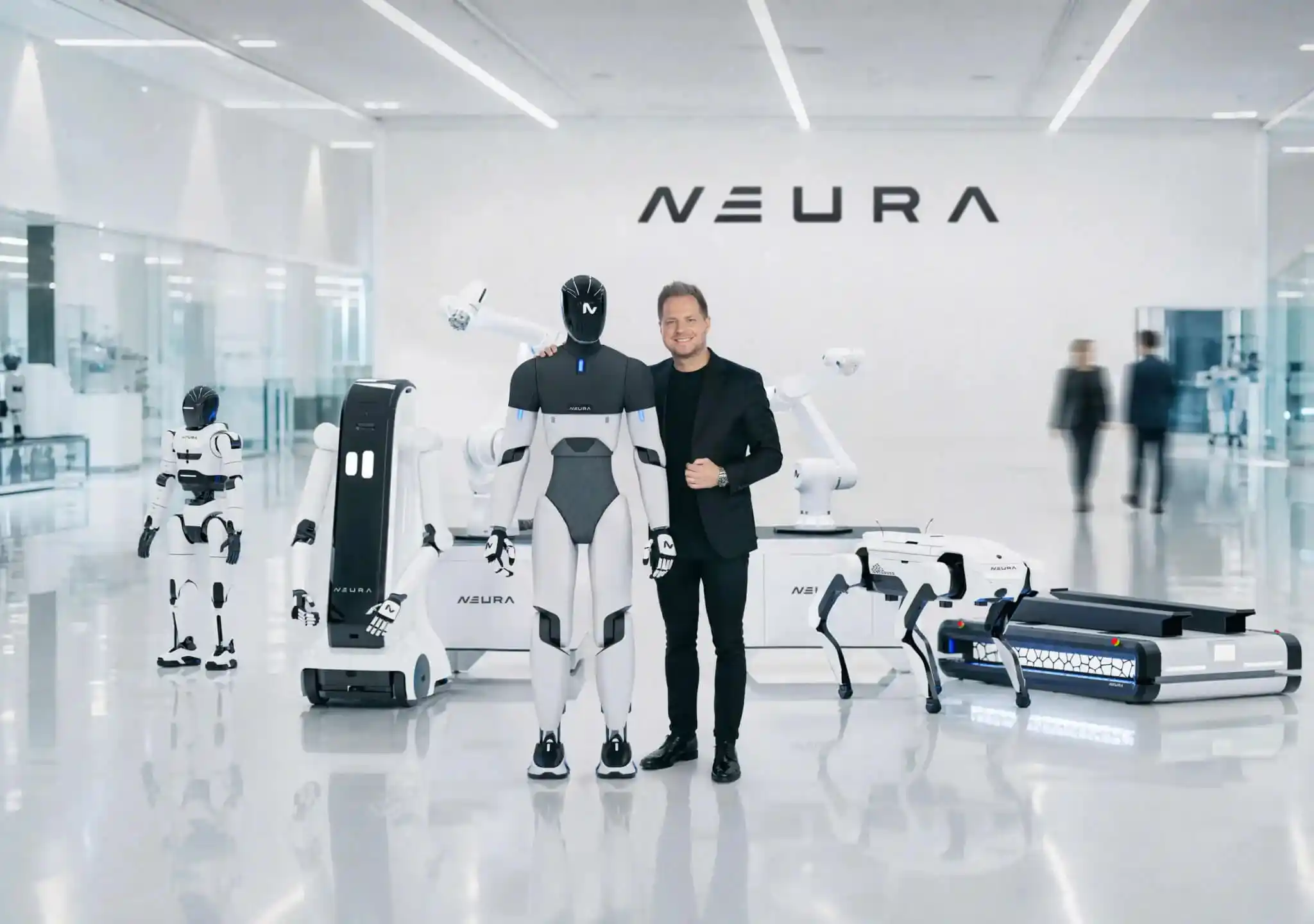
NEURA Founder David Reger

Around 2021, the company launched the MAiRA (Multi-Sensing Intelligent Robotic Assistant) collaborative robot product line, representing the first systematic implementation of its "Cognitive Robotics" philosophy.

Compared to traditional collaborative robots, MAiRA integrates vision systems, force feedback, safety perception, and AI software into the robot body, enabling it to recognize personnel, objects, and the work environment, and work alongside humans without complex fencing or isolation. For European manufacturing customers, this solution is easier to implement than fully replacing human labor and aligns better with the practical needs of industrial automation upgrades.

Building the Network Underlying Platform for Silicon-Based Lifeforms

After establishing its collaborative robot portfolio, NEURA began expanding into broader robot forms. The company successively launched Autonomous Mobile Robots (AMR), service robots, and mobile manipulator robots, aiming to extend cognitive capabilities from fixed workstations to warehousing/logistics, medical/nursing, and service scenarios. At this stage, NEURA's strategic focus shifted from single robot products to robot ecosystem building.

As generative AI and embodied intelligence gained more attention, humanoid robots also gradually became a significant part of its product roadmap. NEURA launched the humanoid robot project 4NE-1 (pronounced "for anyone") in 2022, hoping to enter broader scenarios like manufacturing, logistics, services, and homes with a general-purpose robot form. Last year, the third-generation 4NE-1 product debuted at the 2025 German automation exhibition; at this year's Consumer Electronics Show (CES), NEURA introduced the 4NE1 Mini and a quadruped robot.

NEURA believes that the key to future competition is not just mechanical structure, but who can accumulate more real-world data and enable different robots to share learning outcomes. This thinking ultimately evolved into the Neuraverse platform, and NEURA shifted its strategy from robot manufacturer to robot platform operator.
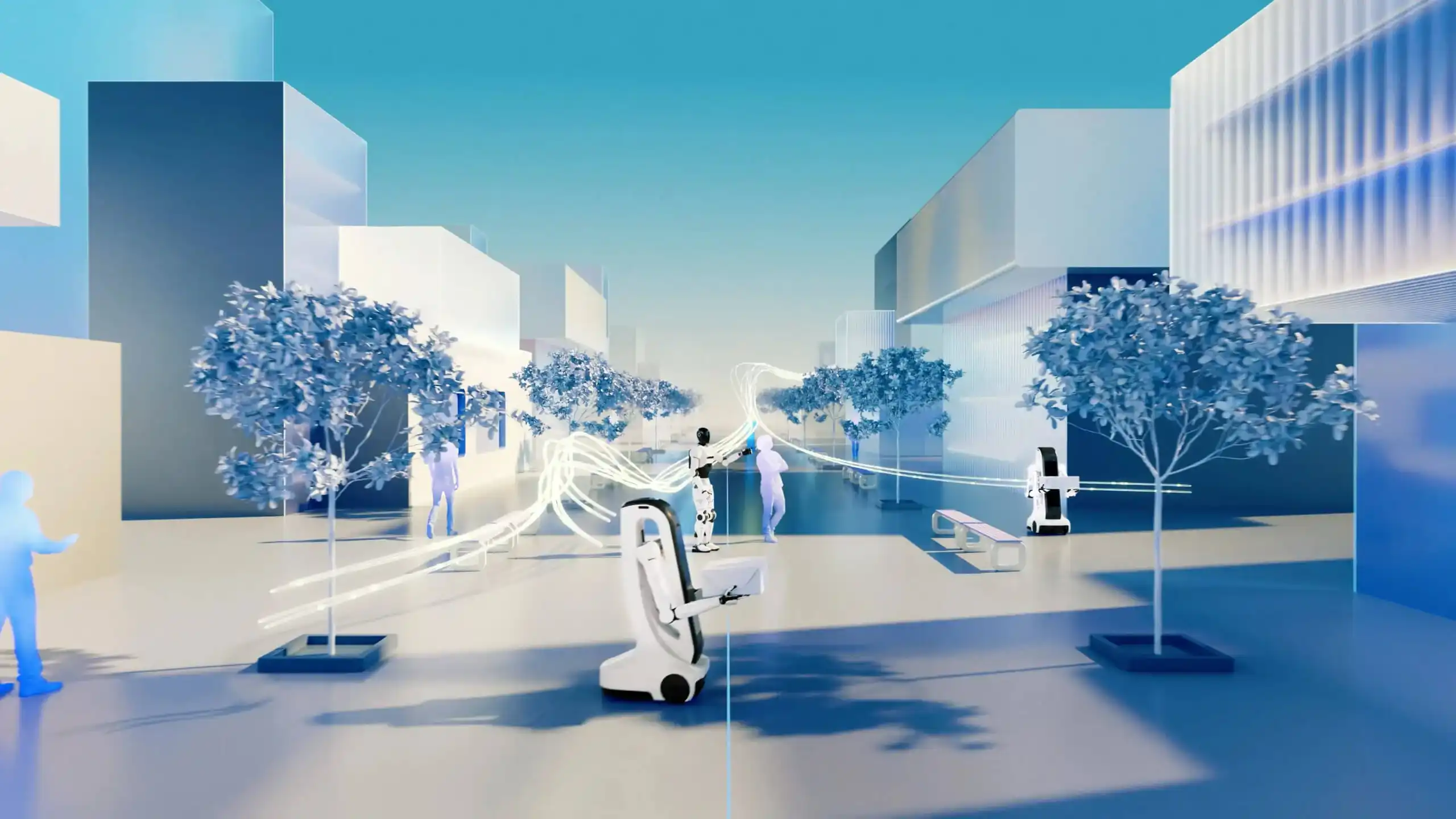
According to NEURA's vision, Neuraverse allows different robots, sensors, AI models, developers, and enterprise clients to connect to the same ecosystem. This enables experience gained by robots in different scenarios to be continuously accumulated and reused, forming network effects similar to the mobile internet app ecosystem. NEURA subsequently began using the term "Physical AI" more frequently to describe its technological direction, though its core narrative still revolves around robots perceiving, understanding, and autonomously deciding in their environment, learning tasks, and continuously evolving.

Tether's Ambition: Robots Could Become a New Foothold for the Crypto Industry

Prior to this funding round, NEURA's story belonged solely to the robotics and AI industry. But with Tether's entry, NEURA gained an angle unique to the crypto industry, also completing the settlement layer for its network.
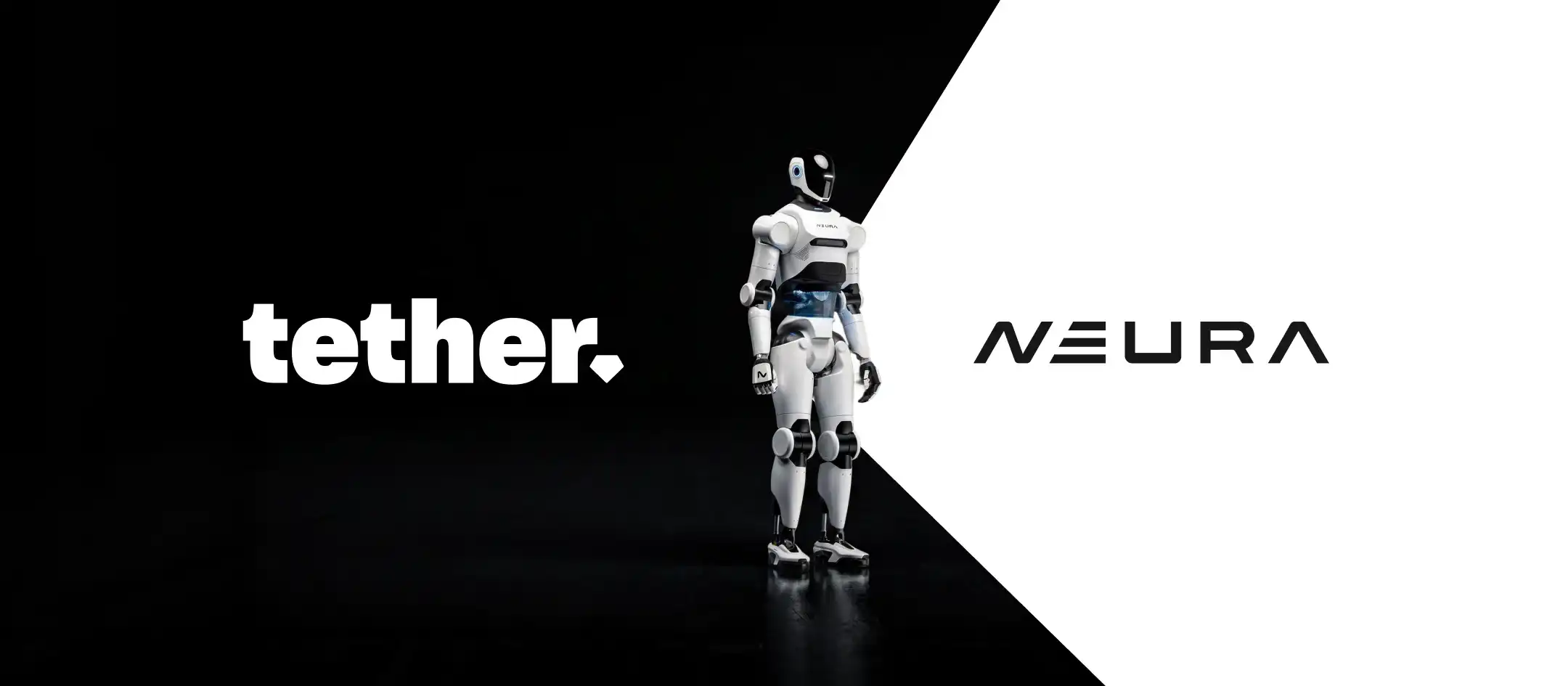
According to Tether, NEURA's robot platform is expected to integrate Tether's open-source Wallet Development Kit (WDK), embedding self-custody wallet functionality into the robot system. The idea is not to allow robots complete autonomous control over funds, but to enable robot systems to handle receiving, paying, and settling within preset rules.

In practical scenarios, such a design could apply to industrial and logistics fields. For example, after a warehouse robot completes a handling task, the system could automatically trigger settlement; a service robot could receive payment based on task volume, duration, or distance after completing cleaning, delivery, or inspection tasks; robots from different companies, charging equipment, warehousing systems, and dispatch systems might also settle small amounts through programmable payment rails.

This capability has particular imaginative potential under the Robot-as-a-Service (RaaS) model. Companies might not necessarily purchase the robot itself but pay based on usage. If every task, every hour worked, every device call can be automatically logged and settled, robots become not just production tools creating value, but also a settlement node within a company's automated financial system.

This is precisely the part Tether finds compelling and why the crypto industry should pay attention. In the past, stablecoins primarily served exchange transfers, on-chain transactions, cross-border payments, and dollar liquidity needs. However, if a large number of machines begin entering real-world production processes in the future, crypto payments, on-chain settlement, and self-custody wallets gain a new narrative interface, potentially extending stablecoins and self-custody wallets from "human financial tools" to "machine payment infrastructure."

Furthermore, the collaboration between the two parties is not limited to the WDK wallet tool; it also includes testing, optimizing, and deploying Tether's QVAC (QuantumVerse Automatic Computer) edge-first AI runtime framework within the Neuraverse ecosystem.

For robots, local execution means lower latency, stronger operational resilience, and reduced dependence on a few major cloud computing service providers. In industrial scenarios, equipment downtime costs, execution precision, and data control capabilities are all critical, making such an edge computing architecture beneficial for improving system reliability. According to Tether's vision, true autonomy requires instant response, and QVAC's goal is precisely to keep intelligence at the terminal side, enabling local execution in scenarios where millisecond-level decision-making is crucial.

From this perspective, Tether is attempting to enter two foundational layers of the robotics era: first, the financial layer, enabling machines to use wallets and stablecoins for settlement; second, the intelligence layer, allowing machines to run AI capabilities at the edge, rather than relying entirely on remote cloud.

This aligns with Tether's trend in recent years of continuously expanding its boundaries. It is no longer just a USDT issuer but is extending its reach toward AI, energy, data, and other infrastructure directions. And NEURA's financing provides Tether with a testing ground to place stablecoins, self-custody wallets, and edge AI into real-world machine networks.


Related Questions

QWhat is the significance of Tether's investment in NEURA Robotics, and what specific technology is Tether looking to integrate into NEURA's platform?

ATether's investment in NEURA Robotics is significant as it represents a strategic move to embed crypto and AI infrastructure into real-world robotics. Specifically, Tether plans to integrate its open-source Wallet Development Kit (WDK) for self-custody wallets and stablecoin payments into NEURA's robot systems. It also intends to test and deploy its QVAC (QuantumVerse Automatic Computer) edge AI framework within the Neuraverse ecosystem.

QAccording to the article, why did NEURA Robotics initially focus on collaborative robots (Cobots) rather than humanoid robots?

ANEURA Robotics initially focused on collaborative robots (Cobots) because its founder, David Reger, believed traditional industrial robots were 'blind' machines lacking environmental understanding and safe human collaboration. Starting with Cobots allowed NEURA to first equip robots with perception, sensor fusion, and AI software for understanding their surroundings, which was more aligned with the practical needs of European manufacturing for automation upgrades.

QWhat is the 'Neuraverse' platform, and what strategic shift does it represent for NEURA Robotics?

AThe 'Neuraverse' platform is an ecosystem designed by NEURA to allow different robots, sensors, AI models, developers, and enterprise clients to connect and share data and learning experiences. It represents a strategic shift for NEURA from being a robot manufacturer to becoming a robot platform operator, aiming to create network effects similar to those in the mobile internet by enabling continuous accumulation and reuse of real-world robot data across various scenarios.

QHow does the article describe the potential practical application of crypto wallets and stablecoins in robotics?

AThe article describes that integrating crypto wallets and stablecoins into robotics could enable automated micro-transactions and settlements in practical scenarios. For example, a warehouse robot could automatically trigger a payment after completing a搬运 task, or a service robot could receive payment based on completed tasks, duration, or distance. In a Robot-as-a-Service (RaaS) model, this would allow robots to function not only as productivity tools but also as automated settlement nodes within a company's financial system.

QWhat are the stated benefits of running AI on the edge, as mentioned in the context of Tether's QVAC framework for robots?

AThe stated benefits of running AI on the edge, as per Tether's QVAC framework, include lower latency, greater operational resilience, and reduced dependency on a few large cloud computing providers. For industrial robots, this edge computing architecture is crucial for minimizing downtime costs, ensuring execution precision, maintaining data control, and enabling millisecond-level decision-making critical for true autonomous operation.

Related Reads

Behind HYPE's Repeated Record Highs, the 'Minions' in the Ecosystem Can't Keep Up

While HYPE, the native token of the Hyperliquid ecosystem, surges to new all-time highs above $76 and attracts significant institutional ETF inflows, a starkly different reality unfolds within its HyperEVM application layer. Multiple core DeFi protocols across lending, NFTs, stablecoins, and DEXs have announced shutdowns between May and June. The article argues HYPE functions more like an "application stock" than a traditional ecosystem token. Its value is anchored to the trading fees from Hyperliquid's core perpetual contracts platform (HyperCore), which boasts a diversified revenue stream from crypto, commodities, and indices. Approximately 97% of protocol fees fund buybacks and burns of HYPE. This means HYPE's price is largely decoupled from the health of projects built on HyperEVM. The closures of significant projects like lending protocol HypurrFi (peak TVL >$300M) and NFT marketplace Drip.Trade highlight a structural tension. Hyperliquid's minimalist philosophy offers infrastructure without official grants, liquidity support, or marketing coordination for HyperEVM projects. This forces protocols into a fiercely competitive environment from day one. Furthermore, the success of HyperCore creates a liquidity vacuum, and mechanisms like HIP-3 (allowing direct perpetual market deployment) divert user attention and capital away from application-layer projects. The stronger the core perpetual trading business becomes, the more difficult it is for peripheral "DeFi lego" projects to survive and capture value, despite the flagship token's rising price.

Foresight News16m ago

Behind HYPE's Repeated Record Highs, the 'Minions' in the Ecosystem Can't Keep Up

Foresight News16m ago

Conversation with Arthur Hayes: AI Has Drained Market Liquidity, BTC Will Be Below 100k by Year-End

In this June 2026 podcast interview, BitMEX co-founder Arthur Hayes explains his decision to sell his major crypto holdings (HYPE, NEAR, Worldcoin, Zcash). His rationale is based on a macro view linking oil prices, the Iran conflict, US politics, and an impending AI bubble burst. Hayes argues that high oil prices, driven by the ongoing war, will pressure domestic US inflation. To salvage the Republican Party's chances in the midterm elections, he believes Donald Trump may pivot to a populist, anti-AI stance—advocating for taxes and regulation—which would deflate the AI investment narrative. He sees the AI sector, particularly massive capital expenditure on data centers, as having absorbed nearly all excess market liquidity (around $1.5 trillion in debt issuance since 2025), starving other assets like Bitcoin. He highlights the upcoming SpaceX IPO at a ~$1.8 trillion valuation and 100x price-to-sales ratio as a potential tipping point. If these hyped IPOs underperform, it could shatter market confidence in AI. In such a scenario, all risk assets, including crypto, would fall together as correlations converge to 1 during a broad correction. Hayes has moved his portfolio into Treasuries and energy stocks (like ExxonMobil), predicting Bitcoin will be below $100k by year-end. He sees a potential crypto bull market only after the AI frenzy cools, liquidity stops flowing exclusively into AI, and possibly after a significant market downturn prompts new monetary stimulus.

marsbit27m ago

Conversation with Arthur Hayes: AI Has Drained Market Liquidity, BTC Will Be Below 100k by Year-End

marsbit27m ago

Fed's Internal Doves Flock to Hawkish Stance, Warsh's Debut "Between a Rock and a Hard Place"

U.S. Federal Reserve officials who previously advocated for rate cuts, including Governor Christopher Waller, have recently shifted their stance, with many now not ruling out the possibility of future rate hikes. This sets a challenging stage for new Fed Chair Kevin Warsh's first policy meeting. Appointed by President Trump based on his dovish views, Warsh now faces a committee where the debate has pivoted from "when to cut" to "whether to hike," driven by persistent inflation above 3%, a strong labor market, and supply-side pressures from AI infrastructure demands and geopolitical tensions. Key figures illustrate the shift. Governor Waller, once concerned about employment, now says data has pushed him toward considering rate increases. Even moderate voices like Governor Lisa Cook, while expecting inflation to ease, have indicated readiness to hike if it fails to do so. Long-time hawks such as regional Fed presidents Beth Hammack, Lorie Logan, and Neel Kashkari have grown more vocal, arguing that the real policy rate is effectively falling and that action may soon be needed. The upcoming Fed meeting is expected to keep rates steady but will likely remove the "easing bias" from its statement, signaling a neutral stance between cuts and hikes. The quarterly "dot plot" is anticipated to show most officials projecting no cuts this year, with some potentially indicating hikes. Chair Warsh, a critic of the Fed's reliance on forward guidance like the dot plot, must navigate communicating this pivot using tools he has questioned, all while steering policy in a direction counter to the preferences of the president who appointed him. The consensus suggests the Fed's next move could well be a rate increase.

marsbit1h ago

Fed's Internal Doves Flock to Hawkish Stance, Warsh's Debut "Between a Rock and a Hard Place"

marsbit1h ago

The Trillion-Yuan Market Cap 'Yi Zhong Tian': Who is the True Value King?

The article analyzes the three leading Chinese optical module companies, collectively nicknamed "Yi Zhong Tian": Xinyisheng, Zhongji Innolight, and TFC Optical Communication. It evaluates their "cost-performance" not by current stock price, but through three lenses: PEG ratio (growth vs. valuation), earnings quality, and premium/discount for certainty. Xinyisheng shows the most attractive PEG ratio and high profitability, but its valuation reflects discounts for risks like high customer concentration and reliance on overseas markets. Zhongji Innolight, the most expensive, commands a premium for its market leadership, dominant share in key products like 800G/1.6T modules, and higher earnings certainty, though it faces geopolitical risks. TFC Optical, as an upstream component supplier ("water seller"), has the highest gross margin and bets on the long-term CPO/NPO architecture trend, but trades at a high valuation with more stable, less explosive growth. The core argument is that while these companies dominate module assembly, the true profit pool and technological moat lie upstream in laser and switch chips, currently controlled by U.S. firms like Lumentum and Coherent. The long-term "cost-performance" for these Chinese leaders hinges on whether the domestic industry, exemplified by companies like Yuanjie Technology, can successfully move up the value chain into high-power laser chips. Otherwise, their high growth may remain confined to the lower-margin assembly segment.

marsbit1h ago

The Trillion-Yuan Market Cap 'Yi Zhong Tian': Who is the True Value King?

marsbit1h ago

Trading

Spot
Futures
活动图片